‘Online Content Can Amplify Fantasy, Distort Realty; A Child May Not Process It’
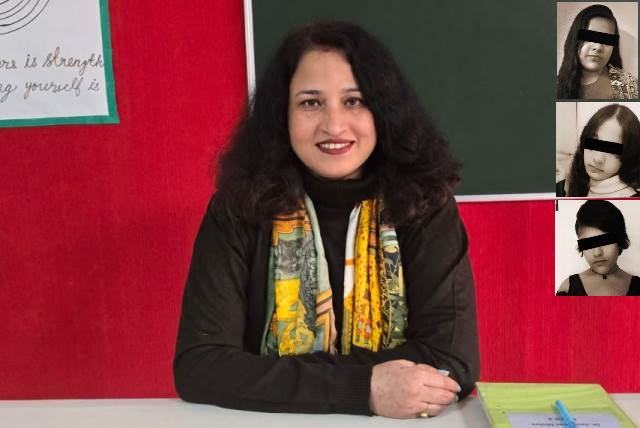
Dr Saudamini Mishra, a child counsellor, says when online content becomes the emotional refuge, we must ask if something is missing offline. Her views
The heartbreaking news from Ghaziabad about three young sisters who died by suicide has left many of us stunned and searching for answers. As a school counsellor, I have spent years listening to teenagers—hearing their fears, dreams, insecurities, and silent cries for help. When I read that these girls were “glued to their phones,” immersed in a Korean virtual world, I did not see obsession. I saw escape.
It is tempting to blame what is visible: K-dramas, K-pop, social media, mobile phones. But the truth is rarely that simple. Teenagers do not disappear into screens without a reason. They go there because something in the real world feels overwhelming, lonely, or unsafe.
Adolescence is an emotionally intense period. The teenage brain is still developing, especially the part responsible for impulse control and decision-making. Emotions are heightened. Rejection feels unbearable. Comparisons feel brutal. Identity feels fragile. When young people find a digital world that offers belonging, beauty, excitement, and validation, it can feel safer than reality.
The “Korea craze” is not inherently dangerous. Many young people enjoy global culture in healthy ways—learning languages, appreciating music, forming friendships. But when online content becomes the primary emotional refuge, we must ask: what is missing offline?
Is it parenting? Sometimes. Not in the sense of blame, but in the sense of awareness. Today’s parents are stretched—financial pressures, work stress, digital gaps. Many do not fully understand the online ecosystems their children inhabit. Teenagers often curate two lives: one for family, one for the internet. If communication at home is limited to academics, rules, or criticism, a child may stop sharing emotional struggles.
Is it social media overdose? Partly. Algorithms are designed to hold attention. They amplify fantasy, beauty standards, intense storylines, and sometimes even self-harm narratives. Continuous consumption can distort reality, making ordinary life seem dull and inadequate. When a young mind compares its messy reality to polished fiction, dissatisfaction can grow silently.
Is it the virtual world itself? The virtual world is not the enemy; emotional isolation is. A phone becomes dangerous when it replaces human connection instead of supplementing it.
What worries me most is not fandom—it is silence. Many teenagers today appear “fine.” They attend school, complete homework, smile in photographs. But inside, they may be battling anxiety, depression, identity confusion, or feelings of invisibility. When three siblings retreat into the same digital cocoon, it suggests a shared emotional climate—perhaps shared loneliness, shared pressure, or shared disconnection.
As adults, we must move from blame to responsibility. We need homes where feelings are discussed without judgment. Schools must prioritize mental health education alongside academics. Parents need digital literacy, not to spy, but to understand. And most importantly, we must listen—not only when a child is in crisis, but in ordinary moments.
The question is not “Why were they obsessed with Korea?” The deeper question is, “Why did real life feel less livable than a screen?”
If we truly want to prevent such tragedies, we must create environments where teenagers feel seen, heard, and valued beyond marks, beyond achievements, beyond online personas.
Because no virtual world should ever feel safer than coming home.
As told to Deepti Sharma

‘Part of the Blame for a Weakened Federal Structure Lies With Greedy Regional Parties Too’

‘Iran Has Forced The Global Hegemon US To Eat Humble Pie’

‘Shifting Nitish to Rajya Sabha is an Insult to Bihar People’s Mandate’