
‘Why Can’t Indians Act Orderly & Civilised As Domestic Tourists?’
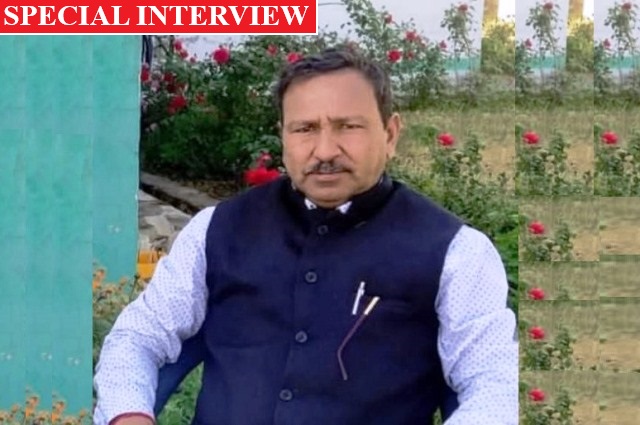
Dr Mohit Awasthi, a traveler and an Assistant Professor at Dr Vishwanath Karad MIT World Peace University, Pune, wonders if civic sense travel from one place to another. His views:
You can see an Indian searching carefully for a dustbin on a European and Western street abroad. In Sweden, Northern Ireland, even in Bhutan, they hesitate before throwing even a piece of waste paper. Back home in Shimla, Manali, Haridwar or Kashi, the same hand casually chucks a plastic water bottle, paper cup and snack pack down a hillside, river bank or in the water bodies. This person has not changed — the behavior changes as per specific geographical location.
The question is: does civic sense travel from one place to another?
This contrast has become visible in tourist places across India. Hill stations like Shimla, Manali, Nainital, Mahabaleshwar, Lonawala, Khandala; beaches in Goa, Orissa and Konkan range; pilgrimage towns like Varanasi, Haridwar, Pryagraj, Gaya, and heritage sites like Sarnath, Khujarao, Agra, bear the burden of overcrowding, too much noise and unruly behavior, anti-social social activities, random, compulsive littering. and basic disregard for public norms.
Not all Indian tourists behave this way, but the repetition is frequent enough to form a pattern, especially in India. So, why is civic discipline seemingly effortless in western countries, and so fragile at home? Is it a problem of culture, or social structure?
The question is not about lack of education or awareness, but this is something we need to think about. Historically, many societies have struggled with such behavior, which has been shaped by social structures, not by cultures.
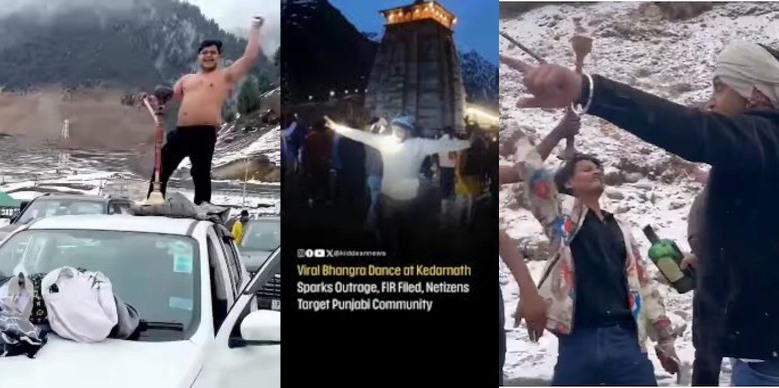
In countries where there is a clear communication among authorities and citizens, with strong a rule enforcement system and fines, where social condemnation is immediate, and civic norms are non-negotiable –good civic sense has become integral, as well as the management of sanitation and waste management. In India, rules often exist only on paper; selective enforcement of law and avoidance of penalty has led citizens to take cleanliness for granted.
India is full of contradictions. Few cities in India like Pune, where I live now, are comparatively clean. Varanasi is starkly different, where I have spent more than a decade as a student of BHU. Indian homes, private vehicles, places of worship and private spaces are often clean, but public spaces are treated as disposable and dumpyards — like streets, railway platforms, tourist spots and riverbanks, rivers and hills. This sharp divide between private and public spaces weakens the idea of shared responsibility.
In the long history of sanitation in India, the labour of cleaning has been somebody else’s job, most often from invisible, marginalised, oppressed communities. People distanced themselves from their own waste. During the Independence movement, this tendency was criticised by Mahatma Gandhi, who cleaned his own toilet as a symbolic gesture.
After Independence, cleanliness has been one a major programes run by governments. Gandhian ideals are apparently followed in the Central Rural Sanitation Programme (1986), Total Sanitation Campaign (TSC) (1999), Nirmal Bharat Abhiyan, and now Swachh Bharat Abhiyan. Gandhi’s ideals have been glorified, but people think that waste management is someone else’s responsibility. Social and individual discipline is rejected.
When people with such habits travel to western countries, they collide with those societies, who refuse to accept such behaviour. Consequently, they face criticism. In digital spaces and public discussions, civic critique often shapes cultural stereotypes where behaviour becomes identity and nationality becomes fault. Like other migrants and tourist groups, Indians get questioned on actions, misrepresented sometime because of racism and other political factors. They get targeted. It is high time we must acknowledge problematic behaviour without supporting prejudices. It will help in rectifying the issues and shaping a respectable image.
The recent conflict around Indian tourists in Bhutan reflects the vulnerability and importance of cleanliness and good habits to protect our ecology. Bhutan is ecologically fragile; it has implanted strong civic rules. It has redefined its tourism policies to protect shared spaces and environment.
India is full of moral appeals on conservation of environment, tree plantation, cleanliness, equality, good behaviour, truthfulness, etc., but little is practised, and there is immense tolerance for everyday violations. We can see number of cleanliness campaigns which urge for responsibility but hardly enforce it. We celebrate citizenship verbally but not institutionally. There is a serious need to think about our way of life and change our behaviour, take collective responsibility, and not leave it to the individual conscience.
Strict and visible enforcement should be done in tourist zones, violators should be fined and punished. Waste-return/recycling, in ecologically sensitive areas is a must. To maintain the dignity and cleanliness of the place, tour operators and local administrators must have accountability. Civic orientation, cleanliness, decent behaviour, sanitation manners have to be made an integral part of the tourism and hospitality industry.
We need to understand and accept that global respect is not earned through economic power, demographic size, or cultural/patriotic pride, but it is built silently, through our behaviour and how we treat spaces that do not belong to us. Taking care of that will take care of each one of us living on earth.
As told to Amit Sengupta
‘BJP Trying Hard to Carve Space in Kerala But Can’t Overshadow Left’
‘Do Not Panic Over LPG Shortage, Find Alternative Resources’
‘Dhurandhar 2 is a Compelling Joyride; Those Who Call It Propaganda Miss the Point’
‘Part of the Blame for a Weakened Federal Structure Lies With Greedy Regional Parties Too’

What changes is not the person — it is the environment and the system around them.
In metro spaces, people hesitate before littering, stand in queues, follow signs, and avoid damaging public property. Not because they are suddenly more educated or moral, but because the system communicates clear expectations through cleanliness, design, surveillance, and visible rule enforcement. The space itself “teaches” behaviour.
The same logic applies to foreign countries and ecologically sensitive tourist destinations. Where rules are visible, consistently enforced, and socially supported, people adapt. Where laws exist only on paper and violations carry no consequence, disorder becomes normal.
This shows that civic sense does not automatically “travel” — it is activated by structure, accountability, and collective standards. India does not lack responsible people; it lacks environments that consistently reward responsibility and discourage violations.


As Indians, we take pride in our rich cultural heritage, epitomized by the philosophy of “Vasudhaiv Kutumbakam” – the world is one family. However, there’s a stark contrast between our ideals and actions. We meticulously follow rules and maintain cleanliness in foreign lands, but often neglect these values when it comes to our own country. It’s time we bridge this gap by instilling civic sense and promoting responsible conduct, particularly regarding cleanliness, safety, and environmental stewardship, in public spaces, industries, and beyond. And education at primary level will play crucial role in this endeavour. Let’s embrace the change we wish to see.
Eye opening article by Dr. Mohit Awasthi.

Dr Mohit Awasthi has penned an eye opening article.Human behavior is always shaped by environment in which we live and subjected to operant conditioning. During formatting years ie 3 to 7 years if civic sense ,manners and etticates are imbibed then they will reflect in any geographical conditions. We need paradigm shift in our pre primary education system. We can probably emulate Japanese in this regard. Academic qualifications is no guarantee of somebody’s educatednes but only a possibility. We Consciously try our best when we behave in other countries but take it for granted when in our places. This is Stark reality. Mohit has brought out this aspect very succinctly. Highly appreciated..