Jaishankar Thanks Armenian FM For Evacuation Support For Indian Fishermen In Iran

External Affairs Minister S Jaishankar on Saturday expressed gratitude towards Armenian counterpart Ararat Mirzoyan for facilitating the evacuation of Indian fishermen from Iran amid the conflict in West Asia.

“Thank FM Ararat Mirzoyan and the Government of Armenia for facilitating the evacuation of Indian fishermen today from Iran, through Armenia to India,” Jaishankar wrote on X.

Armenia has been facilitating the evacuation of Indian nationals in Iran.

On Thursday, the Ministry of External Affairs (MEA) said that more than 1,200 Indian nationals have been safely evacuated from Iran, out of which 996 moved to Armenia.

Addressing an inter-ministerial briefing in the national capital, MEA spokesperson Randhir Jaiswal said the evacuation is being carried out through Armenia and Azerbaijan with the Centre closely coordinating efforts on the ground.

According to Jaiswal, “Some 1200 Indian nationals have been evacuated, of which 845 are students.”

He added, “996 moved to Armenia and 204 to Azerbaijan, from where they are being helped by the MEA.”

The spokesperson said the Ministry has been working closely with Indian missions and local authorities in both Armenia and Azerbaijan to ensure the safe return of citizens. He noted that arrangements are in place to assist evacuees in transit before they are brought back to India.

Over 6 lakh passengers have returned to India amid the developing security situation in West Asia.

Aseem R Mahajan, Additional Secretary (Gulf) at the Ministry of External Affairs, said, “Since February 28th, around 6,24,000 passengers have travelled from the region to India. Airlines continue to operate limited non-scheduled flights based on operational and safety considerations between the UAE and India. Around 90 flights are expected to operate from the UAE to various destinations in India today.”

The West Asia crisis began on February 28 with US-Israel strikes on Iran, and subsequent Iranian retaliation engulfed the region in the conflict, affecting the airspace in the Gulf region. (ANI)

NZ Beat SA By 66 Runs, Clinch ODI Series 2-1

New Zealand clinched a series win after defeating South Africa in the third and final ODI, which also gave it crucial ICC Women’s Championship 2025-2029 points.

After securing a 66-run victory in Wellington, the White Ferns now sit atop the ICC Women’s Championship points table with 10 points from their six matches, whereas South Africa are in third place with six points to their name, according to the ICC website.

South Africa won the toss and elected to field first. And soon enough, Ayanda Hlubi and Tumi Sekhukhune had the Kiwis on the mat, with the hosts at 3/3 within a space of 19 balls. This included the wicket of skipper Melie Kerr, the protagonist of White Ferns’ record win from the last ODI, who fell for a golden duck.

Maddy Green and Brooke Halliday then combined to rebuild the innings and boost New Zealand past 200 before the 40th over mark. Their 211-run stand is the highest fourth-wicket stand for New Zealand in Women’s ODIs, overtaking the 172-run partnership between Amy Satterthwaite and Melie.

Halliday fell agonisingly short of her hundred, being dismissed two short by Nadine de Klerk. But Maddy Green continued going for her shots, eventually returning to the pavilion undismissed at 141 off 128 balls with 15 fours to her name. This was her highest-individual score in ODIs.

The Proteas chase was right on mark with skipper Laura Wolvaardt (69) and Annerie Dercksen (47) giving them a fabulous start. But the fall of Wolvaardt to Kayley Knight and Dercksen to Rosemary Mair in the middle overs rattled the tourist innings.

The chase was never able to recover, even as Mair finished with a career-best haul of 5/50. This was also her maiden five-for in the format.

With this win, New Zealand took the ODI series 2-1. They had also secured a 4-1 T20I series win against the Proteas earlier last month. (ANI)

When The Might Of Dhurandhar Meets The Magic Of PVR

The phenomenal success of ‘Dhurandhar 2: The Revenge’ has been nothing short of historic, with the film recently shattering records to become the first Bollywood release to cross the 900 crore milestone in India and over 1,400 crore gross worldwide.

Watching this massive 3-hour and 49-minute spy thriller at PVR, I realised how much the right ambience, from the immersive sound to the premium seating, can truly elevate such a grand cinematic experience.

It was this very realisation of how a theatre’s environment sets the tone for a blockbuster that sparked my curiosity and led me to interact with Sanjeev Kumar Bijli, Executive Director, PVR INOX Limited, to understand the strategy behind PVR’s evolving excellence.

It was fascinating to interact with Sanjeev and dive into the strategic machinery behind the PVR INOX merger. One of my initial observations was the apparent shift away from the massive ‘Megaplex’ obsession toward something more surgical, which Sanjeev described as ‘right-sizing.’

He pointed out that while they still value large formats, they are finding immense success in boutique setups, like their new three-screen format in Moti Nagar or four-screen multiplex in Agra, which is already seeing great occupancy. This isn’t just about shrinking the footprint; it’s about identifying untapped catchments within metros where a smaller, premium environment actually yields better results than a massive, sprawling complex.

(Image courtesy: PVR INOX)

Our conversation naturally turned to the financial health of the entity, especially considering the debt-heavy reputation the industry carried post-pandemic. I was curious how they managed such a quick turnaround, as their balance sheet is now the cleanest it has been since the merger.

Further, Sanjeev added that they have aggressively brought down net debt to just 365 crore, largely by leveraging 300-400 crore in synergies across manpower and utilities. Perhaps most impressive was his insight that the business is now profitable at a mere 28 per cent to 29 per cent occupancy. They are no longer waiting for a miracle blockbuster to stay in the green, though they are setting their sights on a 32 per cent to 33 per cent benchmark for the coming year.

One of the highlights of our conversation was the impact of Dhurandhar, and I shared with Sanjeev that I’ve actually watched it three times now, noting how it seems to be pushing occupancies toward the 40% mark. Sanjeev’s perspective was that both films have effectively ‘defied all myths’ of the modern box office. He pointed out that despite the conventional wisdom that long films or overly violent content might struggle, Dhurandhar, with a first part running three and a half hours and a second reaching nearly four hours, has been a massive success. Beyond just the numbers, he noted that its blend of intense violence and patriotic themes has not only resonated with audiences but has also been vital for the entire industry’s ‘value chain,’ proving that there is a hunger for bold, boundary-pushing storytelling.

(Image courtesy: PVR INOX)

I’ve always been struck by the sheer volume of cinema consumption in the South, and Sanjeev confirmed that this remains one of their primary engines for growth. They are planning to scale their South Indian portfolio from 34 per cent to nearly 45 per cent. He explained that the strategy there is twofold: rolling out high-end luxury formats like IMAX and LUX (complete with recliners and blankets), while simultaneously pushing into smaller towns with low-cost entries priced between 100 and 150 INR. It’s a sophisticated asset-light approach that balances premium experiences with mass-market accessibility.

Finally, we touched on the evolution of the movie-going experience itself, which Sanjeev sees as a broader leisure destination. A standout insight for me was their strategy around Food and Beverage, which now accounts for 25 per cent of their revenue. They’ve incubated their own brand, The Dogfather, and are now insulating themselves from the volatility of film content by delivering snacks via Swiggy and Zomato. By making their F&B ‘content-immune,’ they’ve ensured that even if a weekend lacks a major release, the PVR brand remains a fixture in the customer’s life through home delivery. It is clear that the goal for this year is to move beyond the traditional theatre model into a comprehensive social and leisure ecosystem.

I always say that in the world of cinema, the credits are just the beginning of something new, and for PVR INOX, I think the script is clear: the show doesn’t just go on- it gets bigger, bolder, and better.

(Disclaimer: The author is an expert in the fields of lifestyle, auto and consumer technology. Views shared here are personal) (ANI)

Rajinikanth Announces ‘Jailer 2’ Wrap; Confirms August Shoot With Kamal Haasan

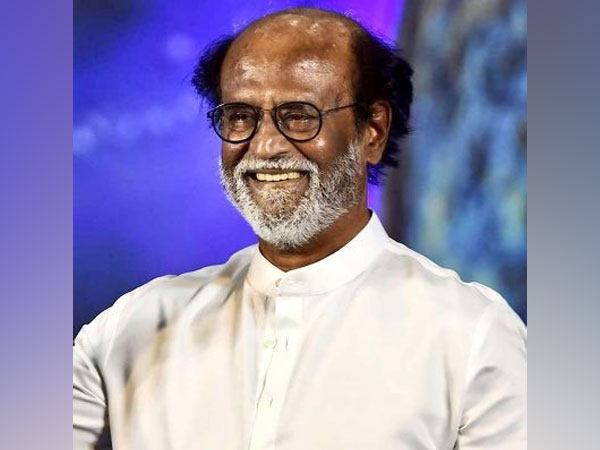
Veteran actor Rajinikanth on Saturday confirmed that the shooting of his much-anticipated sequel ‘Jailer 2’ has been completed and the film is now in its final stages of post-production.

The superstar added that the production team will soon officially announce the release date, heightening expectations among fans.

Speaking to the media at the Chennai airport, Rajinikanth said, “The shooting of the upcoming film Jailer 2 has been completed and is currently in its final stages. The production team will soon officially announce the release date.”

The sequel follows the success of the original ‘Jailer,’ which performed strongly at the box office.

Beyond ‘Jailer 2’, Rajinikanth also gave a major update on the new collaboration with fellow industry icon Kamal Haasan.

The project, tentatively referred to as KH x RK, is expected to bring together two of Tamil cinema’s most influential figures on screen. According to Rajinikanth, shooting for the film is scheduled to begin in August 2026.

The collaboration has already generated considerable buzz, especially after a promo video released earlier in February showcased the distinct style of director Nelson Dilipkumar and music composer Anirudh Ravichander. The clip featured a lively exchange between Rajinikanth and Kamal Haasan, ending with a signature moment of Rajinikanth’s screen presence.

The project is being backed by Red Giant Movies, further adding to its scale and anticipation.

Meanwhile, he is also set to appear in ‘Thalaivar 173’, directed by Cibi Chakravarti and backed by Kamal Haasan.

Kamal Haasan, on his part, was last seen in ‘Thug Life’, directed by Mani Ratnam. (ANI)

‘I Believe Number 3 Is A Good Position For Ayush Mhatre’: Sunil Gavaskar

Chennai Super Kings (CSK) suffered their second defeat of the Indian Premier League (IPL) 2026 when they failed to defend a big total of 209 runs against Punjab Kings (PBKS) at the MA Chidambaram Stadium in Chepauk on Friday, but youngster Ayush Mhatre’s big knock was a positive for them.

The 18-year-old batter played a knock of 73 runs off just 43 balls, which helped CSK post a 200-plus total while batting first. He hit six fours and five sixes while hitting his first half-century of the season. Coming to bat in the power play, Mhatre played some beautiful shots, and the former India captain Sunil Gavaskar believes the batting position at number three is best suited for the youngster.

Speaking on Star Sports, Sunil Gavaskar talked about Mhatre’s best-suited batting position and the mindset of the fearless prodigies.

“I believe number 3 is a good position for Ayush Mhatre. He has batted lower down the order in the Under-19 setup, but three could suit him well. He was dismissed first ball in the previous game, but showed no signs of being affected by it. That’s the beauty of the ‘Gen Next’ mindset; they don’t dwell too much on the past and focus on the present. It’s a fantastic attitude,” said Gavaskar.

Asked to bat first, CSK set a 210-run target for the last year’s finalists thanks to Mhatre’s 73-run knock and crucial contributions from Shivam Dube (45 not out) and Sarfaraz Khan (32 off 12 balls).

Punjab Kings chased down the target with eight balls and five wickets to spare, thanks to valuable contributions from the top-order and captain Shreyas Iyer.

Gavaskar also reflected on CSK’s struggles in the bowling department. The legend said, “From what we’ve seen so far, CSK’s biggest concern for the rest of the tournament will be their bowling. It means they may have to consistently score around 225-230 to give their bowlers a chance.”

“Most teams now have significant batting depth, like we saw with Punjab Kings, where Marcus Stoinis came in at No. 7 and struck the ball cleanly with proper cricketing shots. With many sides batting deep, Chennai will need to get their bowling in order,” he concluded. (ANI)

Petroleum Ministry Refutes Crude Cargo Diversion To China Due To ‘Payment Issues’

The Petroleum Ministry on Saturday refuted the reports alleging that an Iranian crude cargo heading to India was diverted to China due to ‘payment issues’.

In an X post, the Petroleum Ministry stated that India has faced no payment hurdle in securing crude oil imports. Rubbishing the media reports, the ministry said that the Bills of Lading often carry indicative discharge ports and destinations, and on-sea cargoes can change destinations mid-voyage based on trade optimisation and operational flexibility.

The ministry said, “The news reports and social media posts of an Iranian crude cargo being diverted from Vadinar, India, to China due to ‘payment issues’ is factually incorrect. India imports crude oil from 40+ countries, with companies having full flexibility to source oil from different sources & geographies based on commercial considerations. Amid Middle East supply disruptions, Indian refiners have secured their crude oil requirements, including from Iran, and there is no payment hurdle for Iranian crude imports as per some rumours being circulated.”

“Claims on vessel diversion ignore how oil trade works. Bills of Lading often carry indicative discharge ports, destinations and on-sea cargoes can change destinations mid-voyage based on trade optimisation and operational flexibility,” the post stated.

Addressing the rumours around LPG supply, the ministry clarified that the LPG vessel Sea Bird, carrying around 44 TMT Iranian LPG, berthed at Mangalore on Thursday and is currently discharging.

“It is reiterated that India’s crude oil requirements remain fully secured for the coming months. On LPG too, some claims being made are incorrect as LPG vessel Sea Bird carrying around 44 TMT Iranian LPG berthed at Mangalore, India on April 2 and is currently discharging,” the X post read.

This comes after media reports, citing a commodity market analysis firm, claimed that a crude oil vessel heading to India diverted to China due to payment issues.

Earlier today, India-flagged large gas carrier Green Sanvi safely transited the Strait of Hormuz on Friday night, carrying approximately 46,650 metric tonnes of Liquefied Petroleum Gas (LPG) cargo, official sources said.

The Centre has been in talks with Iranian authorities to allow Indian vessels to pass through the Strait of Hormuz amid a maritime blockade due to the ongoing West Asia conflict.

The West Asia crisis began on February 28 with US-Israel strikes on Iran, and subsequent Iranian retaliation engulfed the region in the conflict, affecting global fuel supplies. (ANI)

A Please-All-Please-None Festival

The international film festival movement began as an artistic showcase in Venice in 1932 and in Berlin in 1934, and soon became an event for political debate against Fascism and Nazism. Hollywood stars attended the Berlin fest. A “counter-festival” was staged at Cannes. The festivals’ political nature has often caused friction between organisers, participants, and states.

Last week’s International Film Festival of Delhi (IFFD) witnessed no such friction. It was Delhi state’s own show while three of the major filmmaking centres, West Bengal, Tamil Nadu and Kerala, having their own film events, besides Assam, a cinema pioneer, are preoccupied with perform-or-perish state assembly elections.

Delhi got a political walkover of sorts after a standoff with the International Film Festival of Kerala (IFFK), 2025. The Union Ministry denied sensor exemptions for several films, including those from Palestine. The Kerala government framed this as a defence of artistic freedom against a “shadow ban”.

While IFFD’s programming favoured broad inclusiveness over strict “cinephile” curation, the strategy seemed aimed at building a new, urban and hopefully, apolitical audience.

The IFFD saw a clever combination of populism with a heavy dose of piety and politics. The ceremony began with a tribute — forget the controversy — marking 150 years of Vande Mataram, setting a cultural tone for the evening. It ended with the screening of Laalo – Krishna Sada Sahaayate, a story of redemption, faith and divine intervention and the first Gujarati film to cross ₹100 crore at the box office.

Popular cinema was the flavour. As can be expected, the current Bollywood biggie, Dhurandhar 2 – The Revenge, which has crossed ₹1,000 crore, got many top awards and was screened. And Sholay (1975) catered to the older audience, grandmothers included. Its maker, Ramesh Sippy, received a “lifetime achievement” award to mark 50 years of the film.

A defining feature was its inclusive “free entry” model, which required only online registration, and encouraged high participation from students as well as general film buffs. Beyond screenings, the festival hosted the CineXchange Film Market and ‘masterclasses’ by experts like cinematographer K K Senthil Kumar and actor Piyush Mishra.

The ‘Night of Honours’ closing ceremony recognised several industry veterans and contemporary successes: Lifetime Achievement Awards were presented to Sharmila Tagore, Nandamuri Balakrishna (celebrating 50 years in cinema), and posthumously to Dharmendra.

Women were in focus, right from the opening ceremony. Significant emphasis was placed on ‘Women in Cinema’, with panels featuring the award-winning Guneet Monga and the launch of the ‘Her Lens’ program to amplify female narratives. So were children. ‘Most Inspiring Film of the Year’ was Aamir Khan’s Sitaare Zameen Par, directed by R S Prasanna. ‘Delhi on Reel’ featured directors Imtiaz Ali and Rakesh Omprakash Mehra. Actor Boman Irani conducted a masterclass in script-writing.

For unknown reasons, the festival remained under-reported. Regular critics shied away after the opening, and day-to-day reporting of the events was restricted and ‘magazine-ish’, and largely on social media. Optics matter, more so for a media event.

The first IFFD was overdue, considering the national capital’s growing dominance at the national level, its rising global profile and its status as the world’s largest film producer.

It was also in keeping with Delhi’s role in cinema, despite never becoming a filmmaking centre, and despite several unsuccessful efforts in the past. It has been a favourite film location, though.

But Delhi is where film policy is laid and enforced. From here, political ‘inspiration’ flows and policy directions are set, although the Central Board of Film Certification, where the buck stops in any dispute, is located in Mumbai, with multiple regional offices.

‘Babu’, the officer class, has enforced the cinema’s working, and that has included the film festivals.

The first edition of the International Film Festival of India was held in Bombay in 1952, organised by the Films Division, under the I&B Ministry, with the patronage of the then Prime Minister Jawaharlal Nehru. He was unable to make it to the inaugural ceremony, and Minister R R Diwakar opened it.

New Delhi became the festival hub for the next four decades thereafter. It hosted 24 international film festivals, called IFFI, and later, Filmotsav. Its logo reflected the sublime vision ‘Vasudhaiva Kudumbakam’ (The world is one family), inspired by the Maha Upanishad.

From the 3rd edition (1965) onwards, the festival introduced a competition section. Satyajit Ray chaired it. The major landmark of the third edition was that the FIAPF (International Federation of Film Producers Association), the Paris-based International body to control film festivals across the world, recognised IFFI with an ‘A’ Grade, bringing it at par with the major festivals of the world, Cannes, Berlin, Venice, Karlovy Vary and Moscow.

But filmmaking centres clamoured to host it. Filmostavs were held in Kolkata (1975), Mumbai (1976), Chennai (1978), Bangalore (1980), Kolkata (1982), Mumbai (1984), Hyderabad (1986) and Thiruvananthapuram (1988). From the 12th edition onwards, the title ‘Filmostav’ was abandoned and the name IFFI was retained for all festivals irrespective of the venue being in New Delhi or elsewhere. A new chronology for the festival was charted in 1993, re-scheduling it as the 24th edition, accounting for all the previous festivals.

Held in January, IFFIs had to deal with problems getting the best films and filmmakers, so soon after the Christmas holiday. The Indian filmmakers and enthusiasts from the South braved Delhi’s chill. Several cinemas showed the festival films, and in that pre-Internet era, they incited curiosity about the ‘uncensored’ content.

To its credit, India received films, even if not the best that were reserved for the more prestigious festivals elsewhere, from both sides of the ‘blocs’ in the Cold War era. Some of the best cinema from Eastern Europe, for one, and filmmakers like Carlos Saura (Spain), Márta Mészáros (Hungary), to name just two, were on the International Jury. The “East-West” politics were always there, but India managed them.

Perhaps, the most ‘apolitical’ IFFI was in 1977, organised during the Emergency, one of India’s darkest periods. Indira Gandhi made it a ‘prestige’ event, getting the best films and filmmakers from the West, which was, anyway, critical of her in that Cold War era.

Seated together were some of the world’s best: Italy’s Michelangelo Antonioni, Greek-American Elia Kazan, Japan’s Akira Kurosawa and India’s Satyajit Ray. Gandhi hobnobbed with Gina Lollobrigida, both photographing each other. And the very next day, Gandhi declared elections that she eventually lost.

IPL 2026: Iyer, Priyansh, Vyshak Shine As PBKS Beat CSK By Five Wickets

A fine half-century from skipper Shreyas Iyer and quickfire knocks from Cooper Connolly and Priyansh Arya helped Punjab Kings (PBKS) chase down 210 runs against Chennai Super Kings (CSK), winning by five wickets at the Chepauk on Friday.

CSK have slipped to their second loss in the tournament, while PBKS have gained their second successive win. CSK was put to bat first, scoring 209/5, with knocks from Ayush Mhatre (73 in 43 balls, with six fours and five sixes), Shivam Dube (45* in 28 balls, with five fours and a six) and Sarfaraz Khan (32 in 12 balls, with six fours and a six) standing out. In the run-chase, a 61-run stand between Priyansh Arya (39 in 11 balls, with three fours and four sixes) and Prabhsimran Singh (43 in 34 balls, with six fours and a six), a fiery 22-ball 36 from Cooper Connolly with six fours and a fifty from skipper Iyer (50 in 29 balls, with four boundaries and three sixes) took PBKS to the target in 18.4 overs.

During the run-chase of 210 runs, Priyansh Arya smoked Khaleel Ahmed for a four and a six in the opening over. The left-armer also bowled three wides, giving away 14 runs in the first over.

The second over by Matt Henry leaked 20 runs as Priyansh started with a four, then a six, followed by a four on the first three balls. Prabhsimran Singh pulled the penultimate delivery for a four, making it 20 runs.

Prabhsimran continued his attacking ways, smashing Anshul Kamboj for three fours in an over, taking his side to the 50-run mark in 3.2 overs.

Priyansh started the next over with a six over Henry’s head, but the bowler got the last laugh, dismissing him for 39 in 11 balls, with three fours and four sixes. PBKS was 61/1 in 4.2 overs.

At the end of the powerplay, PBKS was 68/1, with Prabhsimran (25) and Cooper Connolly (0) unbeaten.

Prabhsimran was marching towards his fifty, but was run out in the ninth over for 34-ball 43 (with six fours and a six). PBKS was 95/2 in 8.5 overs.

Courtesy of a four over Rahul Chahar’s head, Cooper helped PBKS reach the 100-run mark in 9.5 overs. Halfway through their innings, PBKS was 103/2.

A fine catch from Henry helped Kamboj remove PBKS’s hero against Gujarat Titans, Connolly for a 22-ball 36, with six fours. PBKS was 127/3 in 11.5 overs.

In the 13th over, skipper Shreyas Iyer launched Chahar for two massive sixes over extra cover and deep square leg. PBKS reached the 150-run mark in 14.1 overs, with Iyer hitting Henry for two successive fours to end the over at a score of 163/3, with 15 runs looted.

The skipper continued to fire, getting boundaries against Chahar and Kamboj, scoring his half-century in 26 balls, with four boundaries and three sixes. However, Kamboj ended the 17th over by getting Iyer for a 29-ball 50, with four boundaries and three sixes. PBKS was 186/4.

PBKS marched to the 200-run mark in 18.1 overs, losing Nehal Wadhera in between for a nine-ball 10. PBKS ended the chase in 18.4 overs at 201/5, with Shashank Singh (14) and Marcus Stoinis (9) unbeaten.

Kamboj (2/43) and Henry (2/50) were among the wickets for CSK.

CSK posted a big total of 209 runs against Punjab Kings (PBKS), courtesy of a stunning half-century from Ayush Mhatre and cameos from Sarfaraz Khan and Shivam Dube.

Asked to bat first, the Ruturaj Gaikwad-led side lost their first wicket in the second over when Sanju Samson got caught behind on Xavier Bartlett’s delivery after making just seven runs. CSK was 14/1 in two overs.

Ayush Mhatre came in to bat and added 96 runs for the second wicket with his captain. He completed his first half-century of the season in just 29 deliveries, with four boundaries and four sixes.

The 96-run stand ended as skipper Gaikwad failed to convert a good start and holed out to Nehal Wadhera on Yuzvendra Chahal’s delivery after making a struggling 28 off 22 balls with the help of a couple of fours. CSK was 110/2 in 11.1 overs.

Soon after, Mhatre followed, giving an easy catch to Yuzi Chahal and a wicket to Vijaykumar Vyshak. CSK was 123/3 in 12.3 overs. Kartik Sharma, the Rs 14.20 crore big buy’s poor start in the IPL continued as he fell for just one run to pacer Marco Jansen, and suddenly CSK was down to 130/4 in 13.4 overs.

Sarfaraz Khan made a quick 32 off just 12 balls with the help of six fours and a six. He produced a stunning counter-attack with a hat-trick of fours against Arshdeep Singh and Vyshak, but was caught by Nehal Wadhera as Vyshak’s second victim. CSK was 168/5 in 16.5 overs.

Shivam Dube shifted towards the end, smashing Jansen for a huge six in the 18th over, two fours against Xavier Bartlett in the 19th over and three fours against Arshdeep in the final over, scoring an unbeaten 45* in 28 balls, with five fours and a six. Prashant Veer also remained unbeaten on six runs as the five-time champions posted a big total of 209 runs.

Vijaykumar Vyshak was the best bowler for the Kings with the bowling figures of 2/38. Chahal, Jansen and Bartlett also shared one wicket each.

Brief Scores:CSK: 209/5 (Ayush Mhatre 73, Shivam Dube 45*, Vijaykumar Vyshak 2/38) lost to PBKS: 210/5 in 18.4 overs (Shreyas Iyer 50, Prabhsimran Singh 43, Anshul Kamboj 2/43). (ANI)

Honey Singh’s Concert In Pune Postponed Due To Bad Weather, Check Out New Date

Singer and rapper Honey Singh has rescheduled his upcoming concert at Pune due to unexpected bad weather.

Taking to his Instagram handle, Honey Singh shared a note about his upcoming Pune concert, saying that he, along with the organisers have decided to postpone the concert due to “anticipated rain and thunderstorms” in the city as per the government advisory.

The show, which was scheduled for tomorrow in Pune, will now take place on April 18.

He wrote, “Fans!!! Despite being completely sold out for Saturday (04.04.2026), we have to reschedule the show to 18.04.2026 due to anticipated rain and thunderstorms. This decision has been made in line with the government advisory, as the safety of my fans remains the top priority.”

He added, “All tickets purchased will remain valid for the new date (18.04.2026). See you soon, Pune – in just 2 weeks!”

https://www.instagram.com/p/DWpOPtlgbN3/?

Honey Singh is currently on a concert spree, with his previous shows held in Mumbai and Delhi. The videos from his shows have gone viral, in which he was seen performing with actress Soundarya Sharma on the stage.

Meanwhile, singer and rapper Honey Singh’s song Volume 1 has been directed to be taken down from all social media platforms and sharing platforms after the Delhi High Court directed the same to the Central Government on Thursday.

The Delhi High Court said that the song is obscene, vulgar and derogatory towards women. This cannot be allowed in the name of artistic freedom and freedom of speech and expression.

The song was released in 2006 by Honey Singh and Badshah.

Justice Purushaindra Kumar Kaurav issued the direction to the Central Government on a petition moved by an organisation, namely Hindu Shakti Dal and others.

The high court has also issued notice to Singers Honey Singh and Badshah and listed the matter on May 7 for hearing. (ANI)

NMACC Completes 3 Years: Shahid Kapoor, AR Rahman, Suniel Shetty Attend Grand Celebration

The Nita Mukesh Ambani Cultural Centre (NMACC) has completed its three years on Friday. From Shahid Kapoor to Javed Akhtar, several Bollywood stars attended the celebration today in Mumbai.

At the third anniversary of NMACC, Nita Ambani highlighted the cultural significance of the number ‘Three’ through examples of goddesses and sacred rivers.

“Today, Neeta Mukesh Ambani Cultural Centre completes three glorious years, and in our culture, the number three is very auspicious. We have our Trimurti Brahma Vishnu Mahesh, three Devi, Ma Saraswati, Ma Lakshmi and Ma Kali. We also have Triveni, Ganga, Yamuna, and Saraswati. When we started the Neeta Mukesh Ambani Cultural Centre, we made a promise to bring the best of India to the world and to get the best of the world to India, and we are trying our best to live up to that promise and shine the spotlight on our Indian artists and artisans on the global stage,” said NMACC founder Nita Mukesh Ambani.

Shahid Kapoor attended the celebration with his wife, Meera Kapoor. The ‘O Romeo’ actor donned an all-black outfit for the event.

Veteran lyricist and screenwriter Javed Akhtar graced the event with his wife, Shabana Azmi. Actor Kajol also posed with the couple.

Suniel Shetty attended the NMACC celebration event with his wife, Mana Shetty. The actor looked classy in the bandh gala shervani.

Master blaster Sachin Tendulkar attended the event with his wife Anjali Tendulkar and daughter Sara Tendulkar.

Actress Neetu Kapoor was all smiles as she attended the event.

Oscar-winning musician AR Rahman attended the event in an all-black outfit.

According to the website, NMACC is a first-of-its-kind, multi-disciplinary cultural space in the sphere of arts. Envisioned by Nita M Ambani, it aims to preserve and promote India’s rich art, culture and heritage through varied art forms. (ANI)