Month: April 2026
NZ To Sign Free Trade Deal With India Tomorrow
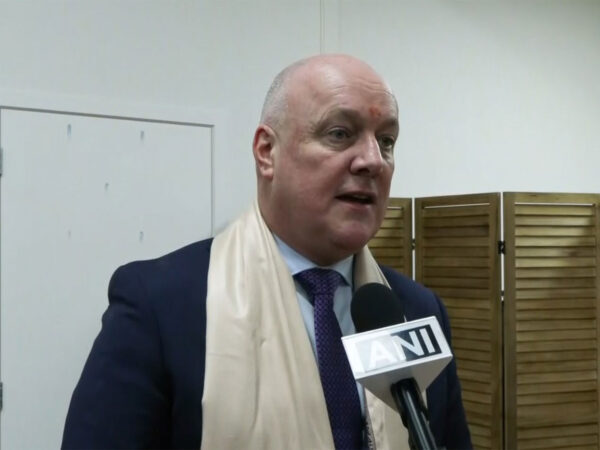
New Zealand’s Prime Minister Christopher Luxon on Sunday said that New Zealand will sign a Free Trade Agreement (FTA) with India on Monday, calling it a “once in a generation agreement” that will open access to one of the world’s largest markets for Kiwi exporters.
In a post on social media, Luxon said, “New Zealand’s Free Trade Agreement with India will be signed on Monday night,” while sharing a video outlining the expected benefits of the deal.
In the video message, he highlighted the scale of the opportunity, stating, “We are signing a Free Trade deal with India that opens one of the biggest markets in the world to Kiwi exporters.”
He underlined that the agreement would give exporters access to India’s large consumer base and fast-growing economy. “It’s a once-in-a-generation agreement that gives New Zealand exporters unprecedented access to 1.4 billion people, in an economy that is set to become the third largest in the world,” he said.
Luxon also stressed that the deal would improve New Zealand’s competitive position globally. “It puts New Zealand exporters on an equal or better footing to our competitors, and it opens the door [to] India’s rapidly expanding middle-class,” he added.
Highlighting the importance of trade to New Zealand’s economy, he said, “One in four of our jobs in New Zealand are already linked to trade, and this FTA means more jobs on New Zealand farms and orchards.”
According to Luxon, the agreement is expected to boost incomes and economic activity across the country. “It means more money coming into local communities, and it means more opportunity for your family to get ahead,” he said.
He further noted that a stronger economy would allow greater public investment. “A stronger economy means that we can invest in the roads, the schools, the hospitals and the police, all the services that New Zealanders rely on,” he said.
Calling the agreement a “big win,” Luxon said it would help expand exports across key sectors. “This is a big win for New Zealand, and it makes it easier for Kiwis to sell more of what we are great at to the world,” he said, listing products such as “Kiwifruit from the Bay of Plenty, wine from Central Otago, seafood, meat, honey.”
He reiterated the central role of exports in driving growth. “Exports underpin our economy, and enabling these sectors to compete on the world stage means supporting jobs, higher wages and economic growth,” Luxon said.
Summing up the expected benefits for citizens, he added, “That means more money for Kiwis’ back pockets.” (ANI)
Hand Transplant Gives New Life To Young Mother Who Lost Both Hands
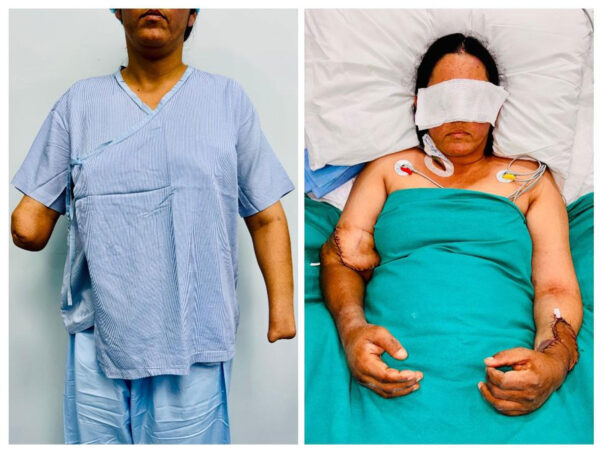
The Department of Plastic, Cosmetic and Hand Microsurgery at Private Hospital has successfully performed its second bilateral hand transplant on a young mother of two who had lost both her hands in a chaff-cutting machine accident. The complex 12-hour surgery marks another major milestone in advanced reconstructive microsurgery at the hospital.
The patient had been on the transplant waiting list following the accident that left her completely dependent on others for daily activities. A suitable donor was identified after the family of a brain-dead patient consented to donate the upper limbs, enabling the life-changing transplant.
The highly intricate procedure involved transplantation of both donor upper limbs, with the right side performed at the supracondylar level and the left at the distal forearm level. The surgery required meticulous sequential repair of bones, tendons, arteries, veins, and major nerve groups under high magnification.
Commenting on the achievement, Dr Mahesh Mangal said, “This successful bilateral hand transplant is a matter of immense pride for the department and the hospital. Such procedures represent the pinnacle of reconstructive microsurgery and offer a second life to patients who have lost both limbs and independence.”
Dr Anubhav Gupta said, “Bilateral hand transplantation is not merely a surgery but a carefully orchestrated sequence where every minute is critical for graft survival. Our goal was not just to restore anatomy, but to help the patient regain dignity and functionality.”
Highlighting the technical precision involved, Dr Bheem Nanda said, “Maintaining tissue viability during prolonged ischemia and ensuring stable skeletal fixation before vascular reperfusion are among the most crucial steps in the procedure.”
Dr Nikhil Jhunjhunwala added, “Postoperative care, including immunosuppression, rehabilitation, and physiotherapy, will be vital in determining long-term functional recovery.”
The hospital stated that the transplant was made possible through a multidisciplinary team approach involving specialists from Plastic Surgery, Orthopaedics, Anaesthesia, Nephrology, Neurology, Psychiatry, Pathology, Genetics, Physiotherapy, Intensive Care, and Hospital Administration.
The hospital also expressed heartfelt gratitude to the donor and the donor’s family for their extraordinary act of generosity, noting that their selfless decision has given the patient renewed hope and a new lease of life. (ANI)
China Intensifies Livestock Slaughter Push In Tibet
A recent report highlights growing concerns over Chinese government campaigns in Tibetan regions that allegedly pressure nomadic communities to sell livestock to slaughterhouses, a move critics say threatens traditional livelihoods and cultural practices, as reported by Tibet Times.
According to Tibet Times, official notices dated April 6, authorities in Gade County, part of the Golog Tibetan Autonomous Prefecture, deployed around 100 officials across multiple townships to promote what they describe as “livestock off-take policies”.
These initiatives emphasise subsidies and incentives aimed at encouraging herders to sell yaks and sheep, with officials conducting outreach meetings to boost participation and stabilise rural incomes.
However, sources suggest these measures are part of a broader pattern of state intervention that has steadily undermined pastoral life. Policies such as grassland fencing and land division based on household size have reportedly led to severe pasture shortages, forcing nomads to rent grazing land.
Combined with annual livestock quotas for slaughter, these pressures are said to be pushing families toward urban relocation. A local Tibetan source stated that such policies not only disrupt economic stability but also conflict with cultural and religious traditions, particularly the practice of freeing animals destined for slaughter. Despite longstanding directives, many Tibetans reportedly resist compliance.
The report also outlines a complex system of taxes, subsidies, and insurance schemes tied to livestock ownership. Herders must meet strict documentation requirements, including ear tags, registration certificates, or even animal remains, to claim compensation for livestock losses. Taxation varies by region, with some areas imposing per-animal fees and mandatory livestock contributions, alongside housing and land taxes, as highlighted by Tibet Times.
Insurance initiatives, including programmes linked to Ping An Insurance, have introduced additional financial obligations, requiring premiums in exchange for compensation on livestock deaths. Critics argue that such systems effectively place control of livestock and land in the hands of the state.
Data referenced in the report indicates that large-scale relocation policies have affected hundreds of thousands of Tibetans over the past two decades. Human rights groups warn that these programmes risk eroding the nomadic way of life, with millions potentially impacted, as reported by Tibet Times. (ANI)
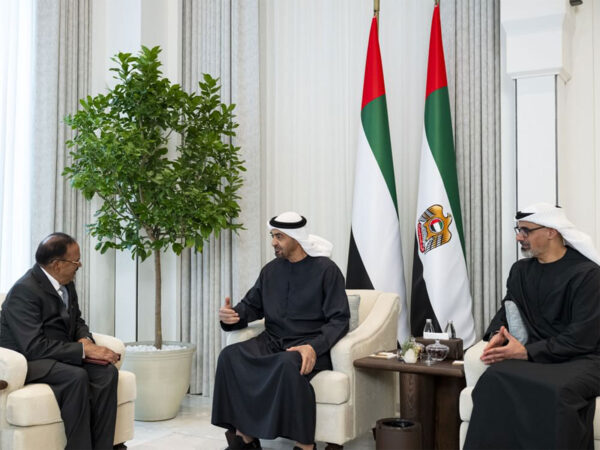
Doval Meets UAE Prez ; Discusses Strengthening Partnership
National Security Adviser (NSA) Ajit Doval met with UAE President Sheikh Mohamed bin Zayed Al Nahyan in Abu Dhabi on Saturday as part of his official visit to the Middle Eastern country.
During the meeting, both sides discussed ways to strengthen the Comprehensive Strategic Partnership between the two countries and enhance cooperation on energy security amid evolving regional developments.
According to a post on X by the Indian Embassy in the UAE, NSA Doval, during his meeting with the UAE President, conveyed greetings from Prime Minister Narendra Modi and also discussed measures to deepen bilateral ties, the regional security situation, and other issues of mutual interest.
“He called on President HH Sheikh Mohamed bin Zayed Al Nahyan. Conveyed greetings of PM, Narendra Modi. Measures to deepen the Comprehensive Strategic Partnership, the regional situation, and other issues of mutual interest were discussed,” the Embassy stated in its post.
The UAE state-run news agency WAM further reported on the meeting, stating that Sheikh Mohamed bin Zayed received NSA Doval, following which greetings were exchanged between the leadership of both countries.
Doval conveyed PM Modi’s greetings and best wishes for the UAE’s continued progress and prosperity, while the UAE President reciprocated with his greetings for the Indian leadership and wished further development and prosperity for India and its people, as per WAM.
The discussions also focused on recent developments in the Middle East and their implications for regional and international security and stability, along with global energy security concerns.
The meeting was also attended by Sheikh Khaled bin Mohamed bin Zayed Al Nahyan, Crown Prince of Abu Dhabi, and Ali bin Hammad Al Shamsi, Secretary-General of the Supreme Council for National Security.
This is the second high-level meeting between the two countries in one month.
Earlier in the month, External Affairs Minister S Jaishankar met with the UAE President as part of his two-nation tour.
Jaishankar pointed out the robustness of the India-UAE strategic partnership, noting that the ongoing dialogue between the two nations remains strong and transparent despite a complex regional environment.
He travelled to the UAE after participating in the 9th Indian Ocean Conference in Mauritius. (ANI)
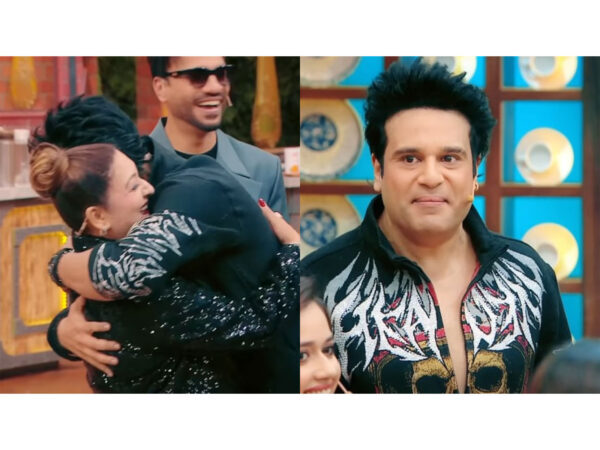
Krushna Hugs Maami, Ssunita, Kashmera Apologises
Emotions ran high on the sets of ‘Laughter Chefs 3’ as actor Govinda’s wife Ssunita Ahuja shared an emotional reunion with Krushna Abhishek and Kashmera Shah.
In a new promo released by Colors TV, Ssunita Ahuja is seen making a surprise entry on the show and calling out to Krushna.
The comedian is seen rushing towards her and embracing her warmly. The moment soon turns emotional as Krushna says that 14 years have passed before bending down to touch her feet.
Despite the emotional reunion, Krushna made sure to add his trademark humour. He joked that he had found a parking space at her feet and that now two cars needed parking, referring to himself and wife, Kashmera Shah.
Kashmera Shah also appeared visibly emotional during the reunion and apologised to Ssunita Ahuja, saying, “I’m so sorry.”
Take a look
For the unversed, the family fallout dates back to 2018 when Ssunita Ahuja had reportedly taken offence to a tweet by Kashmera Shah about “people who dance for money,” believing it was directed at Govinda. The incident led to a rift between the families, with both sides maintaining distance over the years.
Krushna Abhishek had later clarified that the tweet was not aimed at Govinda but referred to his sister Arti Singh. However, the misunderstanding led to a prolonged public fallout between the families. (ANI)
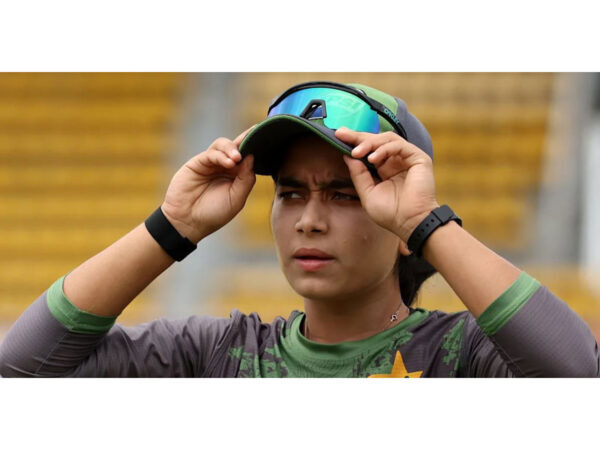
Pakistan Announce 15-Member Squad For Zimbabwe ODI Series
Pakistan on Sunday announced a 15-member squad for the upcoming three-match ODI series against Zimbabwe, set to begin on May 4, as part of the ICC Women’s Championship 2025-2029 build-up ahead of the ICC Women’s T20 World Cup in June.
Momina Riasat has earned her maiden call-up to the ODI side for this important assignment, according to the ICC.
The side will be led by Fatima Sana, who will be aiming to bounce back after Pakistan’s recent white-ball series defeat against South Africa, where they lost both the ODI and T20I series 2-1 during their tour.
Pakistan are currently placed fifth in the ICC Women’s Championship 2025-2029 points table with two points after notching up a win in the ODI series against South Africa earlier this year.
Zimbabwe will be on their maiden tour of Pakistan for the white-ball series and will arrive in Karachi on 29 April before training at the National Bank Stadium from 30 April to 3 May.
The second and third ODIs will be played on May 6 and May 9, respectively, followed by a three-match T20I series commencing on May 12. All the matches will be played at the National Bank Stadium, Karachi.
Pakistan women’s ODI squad for the Zimbabwe series:
Fatima Sana (captain), Aliya Riaz, Ayesha Zafar, Diana Baig, Gull Feroza, Momina Riasat, Muneeba Ali (wk), Najiha Alvi (wicketkeeper), Nashra Sundhu, Natalia Parvaiz, Rameen Shamim, Sadaf Shamas, Sidra Amin, Syeda Aroob Shah and Tasmia Rubab.
Pakistan vs Zimbabwe white-ball women’s series Schedule:
1st ODI – May 3
2nd ODI – May 6
3rd ODI – May 9
1st T20I – May 12
2nd T20I – May 14
3rd T20I – May 15. (ANI)
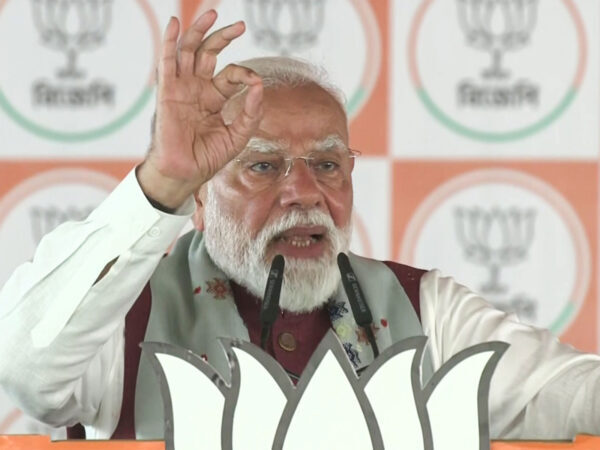
Modi: 200M+ Records Digitised, Urges Public To Explore Abhilekh Patal
Seventh century Gilgit manuscripts written on Bhoj Patra, an eighth-century text, ‘Siribhoovalay’ and some important letters related to Rani Lakshmibai were among the various ancient texts present in the database of the National Archives of India, Prime Minister Narendra Modi said on Sunday while urging people to visit the ‘Abhilekh Patal’ website to get what he described as a “wonderful experience” of the country’s history.
In his monthly Mann ki Baat program, PM Modi reflected on the unique database shared by the National Archives of India on the special portal, which comprises over 200 million digitised documents related to India’s patriots, along with ancient manuscripts and texts.
“Just a few days ago, the National Archives of India shared a unique database on a special portal. This organisation has digitised and made public over 200 million invaluable documents. Some of these are very interesting, 7th-century Gilgit manuscripts written on birch bark. Here, you will also find an interesting 8th-century text, Shri Bhuvalaya. This text, based on numbers, is in the form of a grid. You can also view some important letters related to Rani Lakshmibai. These reveal some of the decisions she made in 1857, which reflect her bravery,” he said.
“For those who are great admirers of Netaji Subhash Chandra Bose, there are many documents related to Netaji’s life, the Azad Hind Fauj, and his speeches. You will also find many documents related to Pandit Madan Mohan Malaviya. These include important information related to the founding of BHU and the Hindi Sahitya Sammelan. Many unique documents related to our Constituent Assembly are also available here. I urge you all to visit www.abhilekh-patal.in . It will give you a wonderful experience of our history,” he added.
Abhilekh is a Sanskrit term used in India for records since ancient times and Patal is a Sanskrit word meaning a board, platform, or a surface. A combination of both these words has been adopted as an acronym for Portal for Access to Archives and Learning.
Meanwhile in his Mann ki Baat address today, the Prime Minister also emphasised the contributions by Rabindranath Tagore ahead of his birth anniversary and Pochchishe Boishakh on May 9. Reminiscing about his visits to Shantiniketan, PM Modi paid homage to Tagore.
“My dear countrymen, this month, many parts of the country celebrated numerous festivals, including the New Year. A few days later, on May 9th, on the occasion of Pochchishe Boishakh, we will celebrate Gurudev Tagore’s birth anniversary. Gurudev was a multifaceted personality. He was not only a great writer and thinker, but also shaped many renowned institutions. Gurudev Tagore advocated for industries that provided sustainable employment and fostered the welfare of villages. The influence of his Rabindra Sangeet continues worldwide. My visits to Shantiniketan were unforgettable. This is the institution he nurtured and nurtured with complete dedication. Once again, my humble tribute to him,” he stated.
Further noting the momentous occasions in the month of May, the PM paid tribute to all patriots as the anniversary of the First War of Independence of 1857 approaches.
“The month of May also reminds us of the First War of Independence of 1857. I salute all the brave sons of Mother India who awakened the spirit of patriotism among the people,” he said. (ANI)
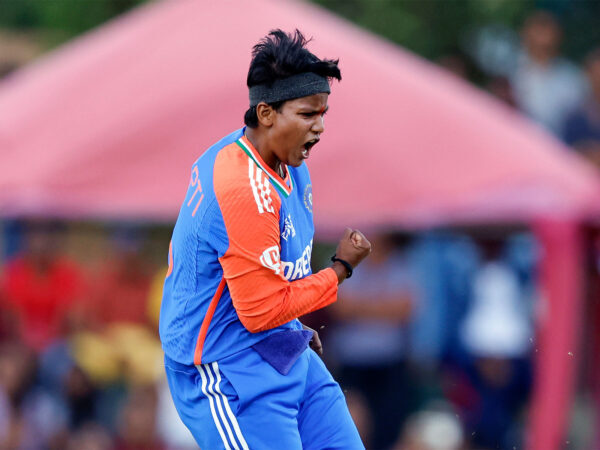
Deepti Sharma: Belief Led India To 14-run Win In 4th T20I
India all-rounder Deepti Sharma credited her self-belief and teammates’ support after delivering a match-winning bowling performance in India’s 14-run victory over South Africa in the fourth Women’s T20I.
Deepti, who was adjudged Player of the Match, said she thrives in pressure situations and always backs herself to make a strong comeback when needed. She returned with career-best figures of 5/19, registering her maiden T20I five-wicket haul and guiding India to their first win of the ongoing five-match series
“I’m very pleased, because I’m good in crunch situations. I keep believing in myself that I’ll come back hard. All credit to my teammates who believe in me,” Deepti said after the win, as quoted by the ICC.
Deepti Sharma had been enduring a lean run of form, going wicketless in her last five T20Is while also struggling to make an impact with the bat. India head coach Amol Muzumdar, however, continued to back his star player to bounce back, and Deepti repaid that faith in stunning fashion with a match-winning performance in Johannesburg.
“She’s a class player, there’s no doubt about it. We have seen it in the World Cup, in bigger tournaments, in pressure situations. She has stood up for India and had some stellar performances, especially in the last (Women’s Cricket) World Cup,” said Mazumdar after the third T20I against South Africa, backing Deepti Sharma to bounce back.
“I think it’s just a matter of time when she hits a form, and I and the entire country would be hoping it starts from tomorrow. She’s been a marquee player for a long time, and she has shouldered that responsibility in the middle order, I mean, she’s one of the pillars of Indian women’s cricket at the moment,” Mazumdar added.
A brilliant all-round performance from Deepti Sharma powered India to a 14-run victory over South Africa in the fourth Women’s T20I at Johannesburg on Saturday. Despite already losing the series 1-3, India produced a strong display to secure a consolation win with one match remaining.
Batting first, India posted 185/5 in 20 overs, thanks to a fluent 43 from Jemimah Rodrigues and a crucial unbeaten 36 off 26 balls from Deepti Sharma. Richa Ghosh also chipped in with a quickfire 34 not out to boost the total in the final overs.
In reply, South Africa started steadily but lost momentum after regular breakthroughs. Deepti Sharma starred with the ball as well, picking up a five-wicket haul (5/19), dismantling the Proteas’ middle order. Despite resistance from Sune Luus and Eliz-Mari Marx, South Africa was restricted to 171/9 in 20 overs.
With this win, India ended South Africa’s dominance in the fourth T20I, though the visitors continue to lead the series 3-1 with one match remaining. (ANI)

Swiss Airplane Catches Fire During Takeoff From Delhi Airport, 4 Injured
A major aviation emergency unfolded late Sunday night at Terminal 3 of Delhi’s IGI Airport. According to reports, smoke was observed emanating from the left wheel of Swiss Air Flight LX147 (Delhi-Zurich) during takeoff, following which the flight was immediately halted.
According to sources, four passengers of the total of 232 passengers on board the Swiss Air flight sustained minor injuries during evacuation via chute. The take-off of the flight was aborted after smoke was observed from the left-side wheel, the sources told ANI.
The Delhi Airport said that the operations remained unaffected.
In a statement on X, the Airport said, “In the early hours of this morning, a full emergency was declared at Delhi Airport involving Swiss International Airlines flight LX 147 (DEL-ZRH) on Runway 28/10. All prescribed safety protocols were promptly executed, and passengers were safely evacuated. Airport operations remained unaffected.”
The incident involving Swiss Air Flight LX147 (DEL-ZRH) occurred around 2 am. As per sources, 232 passengers were onboard.
Assessing the situation, the crew members immediately declared an emergency. Subsequently, passengers were evacuated via emergency slides, resulting in minor injuries to four passengers.
Meanwhile, at 2:06 am, the fire department was alerted to a “full hydraulic emergency” on Runway 28 (the night runway) at IGI Airport. Upon receiving the alert, five fire tenders were dispatched to the scene. According to the fire department, the situation was brought under control, and a safe landing of the aircraft was successfully executed around 3:30 am.
Earlier on March 28, an IndiGo made an emergency landing at Indira Gandhi International (IGI) Airport in the national capital after experiencing an engine failure-like situation, as per the police.
According to Delhi Police, the flight was coming from Visakhapatnam, Andhra Pradesh, to Delhi when the emergency occurred. The Delhi Fire Service received an alert at 10:53am and responded promptly. (ANI)