DGCA Issues Show-Cause Notice To Air India Pilot For Accepting Aircraft Despite Snags
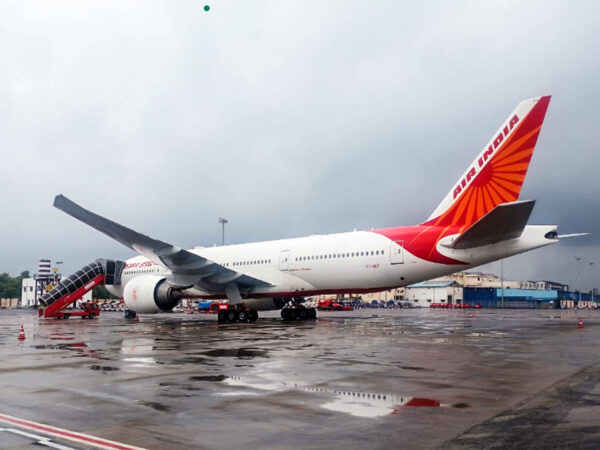
Directorate General of Civil Aviation (DGCA) has issued a show-cause notice to an Air India pilot amid safety concerns on flights AI-358 and AI-357, pertaining to aircraft dispatch, Minimum Equipment List (MEL) compliance, and flight crew decision-making.
DGCA, in its notice, said that the pilot accepted the aircraft despite repeated snags and system degradation.
The civil aviation authority noted that there was a smell of smoke reported near a door in the AI-358 flight.
DGCA in the show cause notice said, “Whereas, it has been observed that M/s Air India Limited, during the operation of Flight AI-358 (and related operations of AI-357), serious safety concerns arose pertaining to aircraft dispatch, Minimum Equipment List (MEL) compliance, and flight crew decision-making.”
“Whereas, during the operation of Flight AI-358, the operating crew received PACK ACM L and Pack Mode advisories. And a smell of smoke was reported near the R2 door. Whereas repetitive snags related to the same systems had been recorded on five previous sectors, indicating a known history of system degradation,” the notice added.
The operating crew in AI-358, as per DGCA, accepted the aircraft without adequate understanding of MEL limitations, as on December 28, the conditions of the lower right recirculation fan were not aligned with the MEL ‘O’ conditions.
The notice stated, “Whereas, the aircraft VT-ANI was dispatched with incompatible MEL items, in contravention of CAR Section 2, Series B. Part 1. Paras 2.2 and 2.3. Whereas, despite the above, the pilots of Flights AI-358 and AI-357, including yourself, accepted the aircraft for operation with prior knowledge of repeated snags and existing system degradations.”
“Whereas, on 28.06.2025, there was non-compliance with MEL ‘O’ conditions pertaining to the lower right recirculation fan on Flight Al-358, in violation of CAR Section 2, Series B, Part 1, Para 5.3. Whereas, the operating crew accepted the aircraft without adequate understanding of MEL limitations and system interdependencies, contrary to the provisions of CAR Section 8, Series O, Part II, Para 3.1.2. Whereas the operating crew failed to adequately assess the combined operational and safety impact of multiple inoperative systems, as required under CAR Section 8, Series O, Part II, Para 4.5.1,” the aviation body said.
“Now, therefore, you are hereby directed to show cause within 14 days of receipt of this notice as to why appropriate enforcement action should not be initiated against you under the relevant provisions of the Aircraft Rules and Civil Aviation Requirements for the above-mentioned violations. Failure to submit your reply within the stipulated period shall result in the matter being decided ex parte based on the evidence available on record,” the notice read.
Earlier on December 22, an Air India flight bound for Mumbai was forced to return to Delhi’s Indira Gandhi International Airport shortly after departure on Sunday. Pilots of flight AI-887 opted to turn back as a precaution after detecting a technical glitch mid-air.
The crew operating flight AI-887 from Delhi to Mumbai returned to Delhi shortly after take-off due to a technical issue, in accordance with standard operating procedure. (ANI)