Germany Commits EUR1.3 BN To India For Climate, Energy, Sustainable Development
Germany on Monday committed about EUR 1.3 billion in India, primarily in the form of concessional loans, across the key areas of climate and energy, sustainable urban development, green urban mobility, and sustainable management of natural resources.
In addition, bilateral cooperation in the skills development sector, in particular, renewable energy will be strengthened through these loans, as per an official statement.
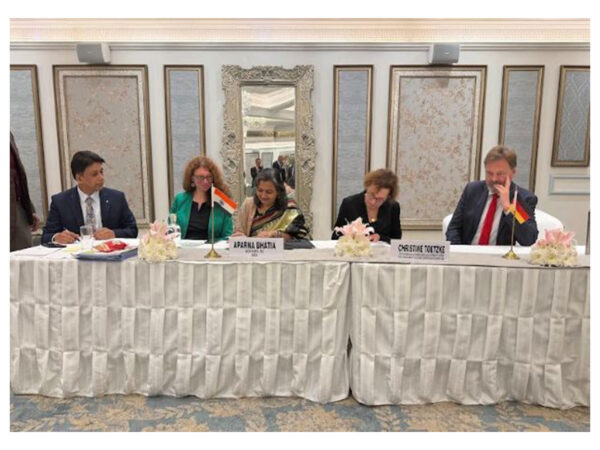
Germany and India successfully concluded the IndiaGermany Government Negotiations on Development Cooperation 2025, reaffirming their strong and future-oriented partnership under the Green and Sustainable Development Partnership (GSDP).
“During the negotiations, Germany announced new commitments amounting to almost EUR 1.3 billion, primarily in the form of concessional loans, across the key areas of climate and energy, sustainable urban development, green urban mobility, and sustainable management of natural resources. In addition, bilateral cooperation in the skills development sector, in particular, renewable energy will be strengthened,” the statement read.
Christine Toetzke, Director General for Asia, Latin America, Middle East, Eastern/South Eastern Europe at the German Federal Ministry for Economic Cooperation and Development (BMZ) said India remains a major strategic partner country, also under the new German government.
“I am delighted to continue our trustful development cooperation- under the umbrella of GSDP, guiding our commitment to the bilateral cooperation. With the projects committed today, Germany and India jointly follow the path to sustainable prosperity and overcome global challenges,” Christine Toetzke said.
Philipp Ackermann, German Ambassador to India emphasized about the unique nature of the GSDP cooperation between the two countries.
He said, “Our negotiations under the Green and Sustainable Development Partnership are serious in purpose but deeply rewarding, because they take place with partners we know well and value greatly. Germany has no partnership quite like the GSDP with any other country (apart from India), its scale, its ambition, and its spirit of equal collaboration make it truly unique. It is not traditional development cooperation; it is two mature nations working together to find solutions to the most pressing challenges of our time. I am very pleased that we were able to conclude the negotiations efficiently, and I look forward to the important work we will take forward together in the coming year.”
Ahead of the negotiations, Christine Toetzke, travelled to Bengaluru to gain first-hand insights into the ‘Indo-German Green Urban Mobility Partnership for All’.
Her programme in Bengaluru showcased India’s pioneering mobility landscape-from largescale public transport projects to cutting-edge digital and accessibility innovations. The ‘Indo-German Green Urban Mobility Partnership for All’ is a flagship initiative under the GSDP, aimed at advancing low-carbon, people-centric, safe, accessible and affordable mobility solutions.
A notable example of ongoing Indo-German cooperation is the recently inaugurated Yellow Line Metro segment in Bangalore, supported by a EUR 340 million KfW (Germany’s development bank) loan.
The project not only strengthens sustainable urban transport and reduces emissions, but has also contributed to the creation of an estimated 25,000 jobs, with German companies such as Siemens, Knorr-Bremse, Hubner and Voith involved in essential deliveries and services.
In addition, the Living Lab in Bangalore, powered by a partnership between government, industry, academia, civil society and companies such as Bosch and Nunam, demonstrates how Indo-German cooperation is driving climate-smart innovation. India’s first rooftop solarpowered EV charging station with second-life batteries, developed by Nunam, has already been scaled from Bangalore to Surat to support the city’s public e-bus fleet.
The Indo-German Partnership for Green and Sustainable Development (GSDP), launched in 2022, is a strategic cooperation framework supporting sustainable and climate-aligned development. (ANI)