Gujarat – Some Bottled Up Issues
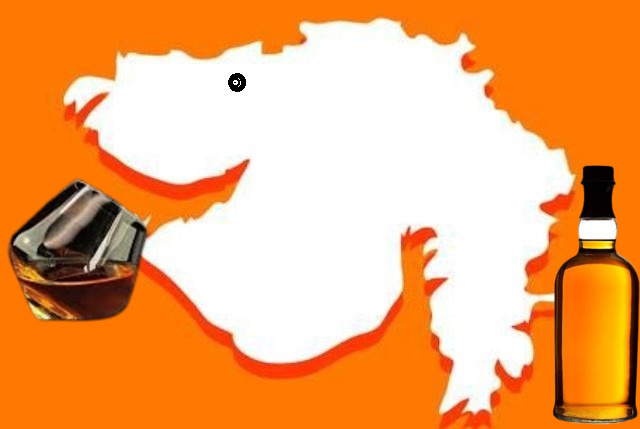
In Gujarat, the Western Indian bastion of Prime Minister Narendra Modi and his number two, Amit Shah, pragmatism is overriding prohibition, and ideals are being set aside, cautiously and gently, to introduce alcohol by law. But certainly, not all the way.
Despite the political and ideological changes and the inevitable shifts in values over the years, Gujarat cannot forsake Mahatma Gandhi’s legacy. Its greatest son once sought a complete ban on alcohol consumption across India, even if it meant, in his words, being a “dictator for a day.”
Gujarat is where Modi, in a calmer era of one-to-one diplomacy, hosted both Donald Trump and Xi Jinping. It has also emerged as an economic powerhouse, hosting several international gatherings, sports events and bidding to host the Olympic Games. How does Prohibition, or abstinence from alcohol, it is realised, fit into this global quest?
A new law, which tweaks the existing one, was introduced in December 2023 to attract investors to the Gujarat International Finance Tec-City (GIFT City), envisioned as a global financial hub near Ahmedabad. Although not the sole reason, major international corporations such as JP Morgan, Morgan Stanley, IBM, Oracle, and Google have established their presence or operations in the area, contributing to the city’s overall growth.
GIFT City is a smart city and the first operational International Financial Services Centre (IFSC) in India, spanning 880 acres along the Sabarmati River. It is designed to be a global financial and IT hub located between Ahmedabad and Gandhinagar.
The signals were coming fast and clear. “After a hard day’s work, what does one wish for? A good drink, and maybe to watch a game of football,” a visiting foreign diplomat mused as his government made significant investments. In 2022, the Singapore High Commissioner to India, Simon Wong, described GIFT City as a “ghost town after working hours”.
But socially, accepting the change has not been easy. Gujarat is where an individual is judged thus: “He is a good man, but you know, he drinks!” This co-exists with a well-earned reputation that alcohol is available to all, rich or poor, and is a thriving business. Prohibition sustains, but so too does corruption.
ALSO READ: Can Prohibition Tip Scales In Bihar Politics?
Remember the film Raees (2017), about a bootlegger, played by Shah Rukh Khan? Of course, like the real-life character on which the film is based, he has to be shot dead. Gujarat, also predominantly vegetarian (although disputed, and claimed to be an estimate based largely on the upper castes), enjoys this message.
Prohibition remains part of the Indian Constitution’s Directive Principles of State Policy, to be cherished and enforced. Left to the states (provinces) to implement, it respects the federal nature of a vast country and its diverse faiths and cultures. Perhaps, framers of the Constitution were also being pragmatic, realising that alcohol had been consumed down the ages.
While some others have tried and given up, Gujarat is one of the only two states that are ‘dry’ today. The story of the larger and more populous Bihar, a recent convert, is strikingly similar – millions spent to enforce the law and many more millions of deemed revenue lost. Corruption is inbuilt. Both the bootleggers and the authorities are supposed to check them, thrive.
Casualties due to ‘poisonous’ alcohol made from chemicals, particularly methyl alcohol, are rampant. Porous interstate borders make smuggling easy. All this and human nature dictate what is, putting bluntly, demand and supply.
The poor are the victims. Social tensions are inevitable, and they are across India – of indebtedness and domestic violence. Women’s protests do not go beyond demonstrations. They receive promises from the authorities that are rarely kept. Sympathetic media do get angry when politicians or their wards are caught for “drunken driving”, after killing poor pavement dwellers. The incidence is rising as India gets urbanised, and the rich drive the growing number of big cars.
Gujarat’s paradox is more glaring since it follows Prohibition, or rather, cannot give it up: 82 lakh liquor bottles worth ₹144 crore were seized in 2024. In Ahmedabad, police say a bottle of liquor is seized every other minute.
Gujarat has even tried the death penalty. A BBC report on December 6, 2011, stated that Governor Kamala Beniwal withheld her assent on a bill passed by the legislature for two years because it lacked this provision. She signed only after the federal government’s approval. As of now, no individual has been hanged.
A cursory look at media reports in Gujarat indicates that the incidence of deaths due to hooch may have come down since 2022, or is being played down. But the booze business is booming.
This persistence reflects a complex interplay of demand, enforcement challenges, and socio-economic factors. While stricter policing is commendable, social scientists say, addressing root causes such as public awareness and alternative livelihoods for those involved in bootlegging is crucial for sustainable change. What is essential, but absent, is a balance between the state’s prohibition ideals and practical realities.
Of the new GIFT-confined law, neither support nor criticism is loud, since the decision supposedly came “from the top.” The set of rules, temporary and with riders, is business-friendly. Business is not a sin, after all.
Six decades back, in a report dated February 16, 1964, culled out from the New York Times archives, Thomas S. Brady had rightly predicted: “As anywhere else, law enforcement depends not only on consent but on approval of the governed. Murder and stealing are threats to everybody, and they can be held to a minimum. But tippling, despite Gandhi, is another matter and seems to be here to stay, inside or outside the law.”
Amidst this unending debate, there is a general realisation, resignedly, that the policy, with more cons than pros, has failed. What is Gujarat doing? Being pragmatic, simple. But who knows the future?