M’rashtra: Leopard’s Jaws Can’t Quell 5-Yr-Old’s Will To Live!
A 5-year-old boy named Nimish from Maharashtra, India, is a true fighter. He miraculously survived a leopard attack that left him with severe injuries, including deep wounds on his head, face, and ears.
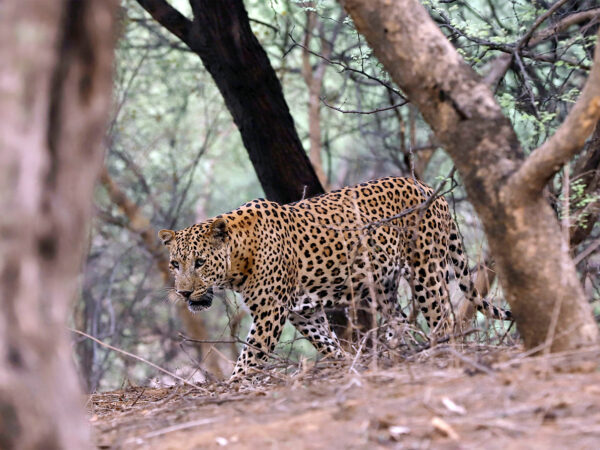
The leopard pounced on Nimish as he played outside his home in Shevgaon Taluka, near Sangamner, and his mother, Revati Shinde, had to wrench the leopard’s jaws from his neck physically.
According to Nimish’s mother, Revati Shinde, he was playing outside with other children in their village in Shevgaon Taluka near Sangamner, nestled in the Western Ghats, when the leopard suddenly emerged from the nearby forest.
“When the leopard came, everyone ran to hide inside their homes. All the children managed to escape, but my son was too young to understand. He just stood still,” she said, recalling the nightmare. “The wild cat pounced on my son and held him with its neck, biting his head, thigh, and ear, leaving deep wounds. I myself pulled the leopard’s jaws away from my son’s neck. Nobody else came to save him.”
Nimish was rushed to Surya Hospital in Pune, where a team of 7 doctors from various departments worked tirelessly to save his life. He was on life support for 7 days and received multiple blood transfusions, rabies medicine, and tetanus shots. Against all odds, Nimish made a remarkable recovery and was discharged within 2 weeks, with no long-term health repercussions.
Nimish was rushed to Pravara Medical Hospital for immediate first aid and wound care, as he bled profusely from his wounds and went comatose. Given the severity, he was transferred to Surya Hospital in Pune on September 11, where a multidisciplinary team of 7 doctors from Pediatric Intensive Care, Plastic Surgery, Ophthalmology, and ENT took over his care.
“When Nimish arrived, his condition was beyond critical,” said Dr. Sachin Shah, Director- Neonatal and Paediatric Intensive Care Services. “The leopard had torn through the delicate skin of his head, face, and ears, leaving deep and extensive wounds. His tiny body had gone into complete trauma and went into a coma. Infections had spread rapidly through his system, and we began to see his organs fail one after another. His nervous system and blood circulation were collapsing, and he had even developed acute kidney injury. It was a death-like state for a five-year-old. The odds were completely stacked against us, but our team refused to give up. We drew strength from the little boy lying before us, fighting valiantly for his life.”
Another senior doctor, Amita Kaul, HOD and senior consultant Paediatrics, who was part of the treatment team, added, “Our approach had to be completely multidimensional. Our team of plastic surgeons worked to reconstruct the parts of his scalp, face, and ears that the leopard had torn apart. ENT and eye specialists managed his ear perforation and internal bleeding in the eyes. He was on life support for about 7 days.”
“We also administered immediate rabies medicine and tetanus, given the high-risk nature of the bite. Due to the profuse bleeding from the wounds, the patient also required multiple blood transfusions. Later, due to the young age of the patient, Nimish also experienced episodes of confusion and restlessness, which had to be carefully managed,” she added.
Hospital sources confirmed that survival in such cases is usually low, especially when multiple organs are affected. Nimish, however, beat all odds and emerged as a healthy boy within 2 weeks of the treatment, without any long-term health repercussions.
The incident throws light on the growing concern of rising leopard attacks in Maharashtra. Forest department data shows that tigers and leopards together account for the highest number of human deaths in human-wildlife conflicts in the state.
Over the last 5 years, leopard attacks have risen into the double digits as the animals move closer to human settlements. Officials say leopard populations are expanding into new territories, increasing encounters. In Pune district alone, at least five human deaths were reported between March and August last year. (ANI)
IndiGo Revises Schedules, Air India Cancels Flight To Dubai Amid West Asia Crisis
Trump Reportedly Demands Iran ‘Surrender’, Says He’s Hearing New Leader ‘Not Alive’

Akshay Kumar Emphasizes Regular ‘PSA Check’ To Detect Any Symptoms Of Prostate Cancer