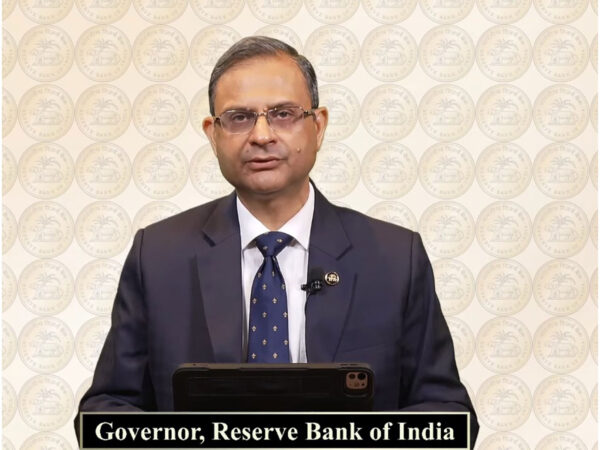
RBI Keeps Repo Rate Unchanged At 5.25% In First Policy Of FY27 Post West Asia Ceasefire
The Reserve Bank of India on Wednesday kept the policy repo rate unchanged at 5.25 per cent in the first monetary policy announcement of the financial year 2026-27, citing rising global uncertainties and geopolitical tensions.
Announcing the decision, RBI Governor Sanjay Malhotra said that the Monetary Policy Committee (MPC) unanimously voted to maintain the policy repo rate under the liquidity adjustment facility at 5.25 per cent.
Governor stated “After the detailed assessment of the evolving macroeconomic and financial developments and the outlook, the MPC voted unanimously to keep the policy repo rate unchanged under the liquidity facility at 5.25 per cent. Consequently, the SDR rate remains at 5 per cent and the MSF rate and the bank rate at 5.5 per cent”.
“Consequently, the Standing Deposit Facility (SDF) rate remains at 5 per cent and the Marginal Standing Facility (MSF) rate and the bank rate at 5.5 per cent,” he said.
The MPC meeting was held on April 6, 7 and 8 to assess the evolving macroeconomic and financial conditions before arriving at the decision.
The central bank noted that the policy comes at a time when the global economy is facing significant challenges due to heightened geopolitical tensions, particularly the ongoing conflict in West Asia, along with disruptions in global supply chains.
The RBI Governor said that before the outbreak of the conflict, India’s macroeconomic fundamentals reflected strong growth and low inflation. However, conditions turned adverse in March as the conflict widened and intensified.
Despite these challenges, he emphasised that India’s economic fundamentals remain strong and are better positioned compared to previous crisis periods and many other economies, providing resilience against global shocks.
He highlighted that global growth is facing downside risks due to rising energy prices and shortages of key inputs, which have increased inflation concerns and pushed up geopolitical risk premiums in oil markets.
Heightened uncertainty due to the conflict has also impacted financial markets globally. Safe-haven flows have strengthened the US dollar, putting depreciation pressure on currencies of major economies.
At the same time, commodity prices such as metals and gold have moderated, while financial markets have witnessed increased volatility. Equity markets have seen broad-based corrections, and sovereign bond yields have hardened due to inflation fears and concerns over long-term fiscal sustainability. (ANI)
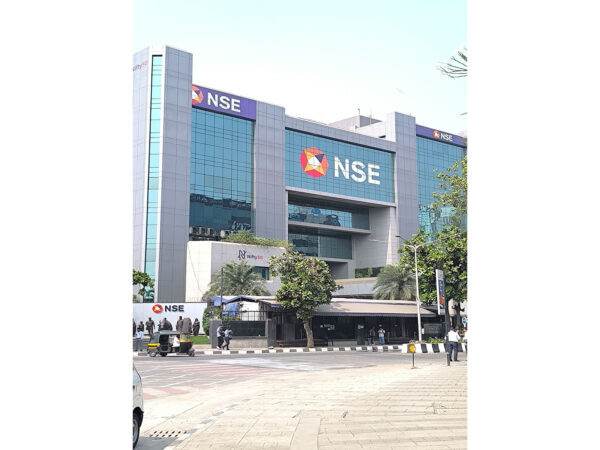
Ceasefire Cheer Lifts Stock Markets; Sensex, Nifty Close With Surge Of Nearly 4% In Broad-Based Rally

TMC Hits Back At ECI, Demands Polls Free From Delhi Control
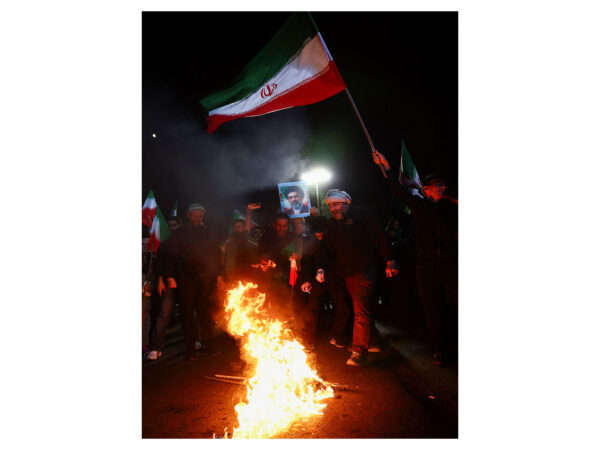
Indian Embassy In Iran Asks Citizens To ‘Expeditiously Exit Iran’