Mamata Alleges Central Forces Tried To Check Her Vehicle

West Bengal Chief Minister Mamata Banerjee on Wednesday alleged that the central forces attempted to check her vehicle near the Dum Dum Airport.

Addressing a rally in Islampur, Mamata Banerjee criticised the ‘selective’ targeting of Trinamool Congress leaders ahead of the West Bengal polls.

“Today, the Central force came near our vehicle at Dum Dum Airport. I told them to check our vehicle. If Trinamool leaders’ vehicles are checked, then why not those of the Prime Minister or the Home Minister? Only Trinamool’s vehicles will be checked? What is going on in the country?” she said.

“Central Minister, come here with money. I know what comes in your Central Force’s vehicle. If you have the guts, you check my car every day before checking anybody else,” she added.

Earlier in the day, Defence Minister and BJP leader Rajnath Singh said that for fifteen years, instead of development, West Bengal has seen destruction.

Singh held a roadshow in the Dakshin Dinajpur district while campaigning for the West Bengal assembly elections, drawing a huge crowd, reflecting strong public support.

Addressing the gathering, Rajnath Singh said, “Should the law and Constitution run according to Mamata’s wishes? Fifteen years have passed, yet instead of development, Bengal has seen destruction–reduced to vote-bank politics, with benefits handed out based on religion… In North Bengal, only Rs 900 crore is allocated for development, while Rs 5,000 crore is given to madrasas for development. This imbalance has left today’s youth struggling…”

Polling in West Bengal will be held in two phases on April 23 and April 29, with the results of the Assembly elections scheduled to be announced on May 4.

The state is set to witness a high-voltage contest between the incumbent Trinamool Congress, which is seeking a fourth consecutive term, and the BJP, which is aiming to form the government after a strong showing in the previous elections. (ANI)

Ex-Indian Diplomat Highlights New Delhi’s Dual-Trust Status With Iran, US

As tensions simmer in West Asia, New Delhi is increasingly viewed not just as a concerned bystander, but as a uniquely positioned mediator capable of cooling the region’s geopolitical temperature.

Speaking with ANI, former Indian diplomat and ex-Ambassador to Iran, Dinkar P Srivastava, highlighted that India’s “dual-trust” status with both Tehran and the Washington-Tel Aviv axis makes it a rare candidate for diplomatic de-escalation.

Speaking on the evolving geopolitical situation, Srivastava said, “India is uniquely positioned to act as a trusted interlocutor given its historical and diplomatic relations with countries across the divide.”

Srivastava emphasised that India’s foreign policy legacy provides it with a seat at two very different tables. While India maintains deep-rooted, historical ties with Iran, it simultaneously enjoys a robust strategic partnership with the United States and Israel.

“India has a role in the de-escalation in West Asia because India is trusted by both sides. We have historical relations with Iran. I was the Indian ambassador there. We also have good relations with the US and Israel. We have a reason, we have a role for de-escalation. As a major user of Strait, we have an interest in ensuring that the Strait remains open. India can come forward and make an offer, or at least we can state that we are willing to play a role,” said Srivastava.

For India, de-escalation isn’t just about regional peace–it’s about national survival. The Strait of Hormuz serves as the jugular vein for India’s energy needs. Any disruption to this narrow waterway would have an immediate, cascading effect on the Indian economy.

Highlighting India’s vulnerability to disruptions in the Strait of Hormuz, one of the world’s most critical oil transit chokepoints, Srivastava pointed to the country’s heavy reliance on energy imports passing through the route.

“India gets 25% of its oil and 30% of its LNG through the Hormuz. And we also get our LPG, which is from the other side of the Gulf, but it also comes from Saudi Arabia, where it also has to pass through the Strait of Hormuz. So any closure of the Hormuz Strait or restriction affects India. Iran has allowed Indian ships to sail through, but the volume of traffic remains limited. Fortunately, President Trump has announced that the next round of talks will take place, and this has calmed the markets. But otherwise, there is a possibility that things could go southwards.”

The Strait of Hormuz, connecting the Persian Gulf with the Arabian Sea, is widely regarded as a global energy lifeline, with a substantial portion of the world’s oil shipments passing through it. Any disruption in the corridor is known to have immediate repercussions on global crude prices and supply chains, with India among the most affected import-dependent economies.

Srivastava’s remarks come at a time when diplomatic efforts are being closely watched by energy markets, with periodic tensions in the region raising fears of supply disruptions. He suggested that India’s strategic interests align with ensuring stability and uninterrupted maritime traffic, especially given its growing energy demands.

His comments also reflect broader discussions within policy circles about India’s increasing role in global conflict mediation, particularly in regions where it maintains neutral yet constructive relationships with all major stakeholders. (ANI)

CBSE Class 10 Results 2026 Declared

The Central Board of Secondary Education (CBSE) on Wednesday announced the Class 10 board examination results for 2026, marking a successful transition to the new dual-examination format with a slight improvement in the national pass rate.

CBSE officially released the Class 10 board examination results for 2026, making them immediately available for students through the DigiLocker platform.

Apart from Digilocker, students can also access their CBSE Class 10 scores through multiple official portals, including results.cbse.nic.in, cbse.nic.in, and cbseresults.nic.in, as well as the UMANG app and results.gov.in platforms. Additionally, the board has made arrangements for results to be delivered via SMS services. The school-wise result will also be made available to schools at their email addresses.

According to a press release, the overall pass percentage for Class X is 93.70%, a slight increase from 93.66% in 2025. In line with the National Education Policy (NEP), CBSE introduced two Board examinations this year. The first was held from February 17 to March 10, 2026, and the second is proposed to start in mid-May

“This year, the pass percentage of students in class X is 93.70%, which is better than the pass percentage of last year i.e.93.66% of 2025 examination. This confirms that students are well prepared for competency-based assessment,” the release stated.

As per the earlier decision of the Board to avoid unhealthy competition amongst the students, no merit list is declared by the CBSE. Also, the Board does not award first, second or third divisions to its students.

The press release stated the Key Statistics and Highlights of the 2026 Examination, where Trivandrum and Vijayawada recorded the highest pass percentages at 99.79%, followed by Chennai at 99.58%, and Kendriya Vidyalayas (KV) achieved the highest pass rate among institutions at 99.57%.

Meanwhile, in a significant shift in evaluation methodology, the Central Board of Secondary Education (CBSE) has decided to reintroduce On-Screen Marking (OSM) for Class 12 Board examinations beginning 2026, aiming to enhance efficiency, transparency and accuracy in the assessment process.

CBSE conducted the Secondary and Senior Secondary Board Examinations 2026 for the students of more than 31,000 schools affiliated to it in India and 26 countries abroad from February 17 to April 10.

About 46 lakh students appeared for the examinations at more than 8074 centres across the country and abroad.

Earlier, a circular stated, “In its continuous effort to enhance efficiency and transparency, the Board has decided to introduce On-Screen Marking (OSM) for the evaluation of Class XII answer books beginning with the 2026 examinations. Evaluation of Class X answer books will continue in physical mode as before in 2026.”

On-Screen Marking is a digital system under which scanned copies of students’ answer sheets are evaluated by teachers on computers, with marks calculated automatically through software, thereby eliminating manual totalling errors.

CBSE said the system is expected to bring multiple advantages, including “elimination of totalling errors,” “automated coordination reducing manual intervention,” and “faster evaluation with wider teacher participation.” (ANI)

Sundar Pichai, Ranbir, Vikas Khanna Make It To TIME’s 100 Most Influential List

Bollywood star Ranbir Kapoor, chef Vikas Khanna, and Google CEO Sundar Pichai have been named in TIME magazine’s 2026 list of the 100 most influential people.

Released on Wednesday, the list features a diverse array of personalities from various sectors, including finance, entertainment, technology, sports, activism, and academia.

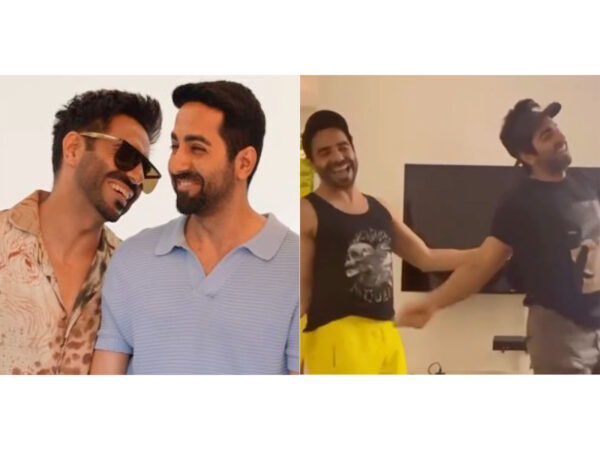
Ranbir’s piece in the feature was written by actor Ayushmann Khurrana.

“There are actors who chase legacy and there are actors who become one through their craft. Ranbir Kapoor is the latter. In an industry as prolific and passionate as Indian cinema, we often measure greatness in decibels–box-office numbers, fan frenzy, opening weekends. But every once in a while, an actor shifts something quieter yet far more enduring: our emotional vocabulary as an audience. Ranbir has been doing that film after film. In a world where performances are often amplified, Ranbir internalises. He shows our culture through quiet restraint. He represents the India that is finally learning how to listen to itself and leaves a mark through simple authenticity. Globally, actors like Ranbir become important cultural bridges. He embodies an India that is evolving not just in scale but also in sensitivity. Our cinema is influencing the world. Ranbir isn’t just a movie star–he’s a storyteller talking to a global audience and telling them stories of a fabled, mythical country where epics like The Ramayana have inspired other civilisations and cultures,” Ayushmann wrote.

Ranbir is yet to react to this honour.

Meanwhile, celebrity chef Vikas Khanna has expressed his happiness at making it to TIME’s 100 list.

Sharing his thoughts, Vikas, in a press note said, “Being on the 2026 TIME100 list of the most influential people in the world is a matter of immense pride for me. I owe this recognition to my grandmother, mother, and sister; they always believed in me, and it is their sacrifices, blessings, and guidance that have helped me reach where I am today. This achievement is a victory for India and our culinary legacy that is appreciated by people across the world. With this honour, I hope to inspire the people of my country to follow their ambition and represent India on the global stage.”

The coveted list also features the names of Ralph Lauren, Kate Hudson, Ethan Hawke, Mark Kelly, and Hilary Knight, among others. (ANI)

Iran’s 1,104-Hr Digital Blackout Intensifies On 47th Day Amid Escalating Regional Conflict

The persistent digital isolation of Iran continues, as the nation remains largely severed from the global web. According to the internet watchdog NetBlocks, the near blackout of the internet in Iran “is now entering its 47th day after 1,104 hours without international connectivity for the general public.”

Digital access began to crumble following a fresh wave of domestic demonstrations in early January. These restrictions were significantly tightened and “intensified after the start of the US-Israel war on Iran at the end of February.”

Monitoring groups report that the sustained disruption has crippled communication channels for millions of citizens, creating a massive information vacuum. While internal networks remain partially functional, the barrier to international platforms has effectively siloed the country during a period of escalating regional conflict and internal unrest.

The prolonged nature of the shutdown marks one of the most significant periods of state-mandated digital censorship in recent history, as the “1,104 hours” milestone underscores the severity of the connectivity crisis.

This domestic digital silence coincides with a deepening diplomatic and military confrontation. Iranian President Masoud Pezeshkian, on Wednesday, strongly hit back at what he described as external pressure and military aggression against Iran, asserting that any attempt to impose force on the Islamic Republic would ultimately fail. These remarks come amid a fragile ceasefire and ongoing diplomatic engagements aimed at securing a complete halt to hostilities in West Asia.

According to Iranian state media ISNA, Pezeshkian emphasised that while Iran remains committed to constructive dialogue, it will not yield to coercion. This defiant stance follows reports suggesting a potential second round of talks between Washington and Tehran, after the initial discussions in Islamabad ended in a stalemate. “We emphasise constructive dialogue, but will not be forced to surrender. Any attempt to impose will or force Iran to surrender is doomed to failure, and the people will never accept such an approach. Iran is not seeking war,” he stated, as quoted by ISNA.

The President’s rhetoric reflects the heightened tensions on the ground following a US-imposed blockade targeting Iranian ports, a move that has further crippled the already strained relations between Tehran and Washington. Pezeshkian specifically questioned the legality and morality of recent actions by US and Israeli forces, raising concerns over the impact of military strikes on civilian infrastructure.

“With what authorisation and for what crime was the attack on our country carried out?” he asked, as quoted by ISNA. He further challenged the justification for targeting civilians, elites, children, and destroying vital centres, including schools and hospitals, within the framework of international law and humanitarian principles. He reiterated that while the country seeks peace, it will firmly resist any external pressure that undermines its sovereignty.

This resistance is being tested by a massive military mobilisation. Earlier in the day, the United States Central Command, CENTCOM, announced that a full blockade of Iran’s ports has been successfully implemented. US forces have asserted maritime dominance across key regional waterways, particularly the strategic Strait of Hormuz, effectively synchronising the country’s economic isolation with its digital blackout.

In a formal statement, CENTCOM Commander Admiral Brad Cooper confirmed that, within just 36 hours of initiating the operation, US forces had effectively stopped all maritime trade flowing in and out of the country. “A blockade of Iranian ports has been fully implemented as US forces maintain maritime superiority in the Middle East. An estimated 90 per cent of Iran’s economy is fuelled by international trade by sea. In less than 36 hours since the blockade was implemented, US forces have completely halted economic trade going into and out of Iran by sea,” the statement read.

CENTCOM revealed the scale of the operation involves more than 10,000 US personnel, including sailors, marines, and airmen, alongside over a dozen warships and dozens of aircraft, ensuring the blockade remains absolute as the regional crisis continues. (ANI)

‘Middle Class Can Still Manage The LPG Shortage But Where Will The Poor Go?’

Sarita Sharma, a homemaker in Delhi-NCR, says every news update or rumour about lpg supply or prices creates anxiety. Her narrative:

As a housewife in a small family of just my husband and me, cooking has always been a simple, everyday routine powered by our LPG cylinder. It is something we never gave much thought to and had always taken it granted—until now. These days, with war clouds hovering over West Asia, the steady blue flame of our kitchen stoves in India feels uncertain.

Yes, my last cylinder was delivered, and for now, we are managing. But there is a constant worry at the back of my mind. The rule of booking the next cylinder only after 25 days makes me anxious. What if there is a delay next time? What if the supply chain is disrupted for unknown reasons? For a small family like ours, we may still somehow adjust. But what about larger families who cook multiple meals a day and need quicker refills!

In our area, that is western Uttar Pradesh, we do not have the option of a pipeline gas connection. LPG is our only lifeline as the trusted medium for cooking. This limitation makes the situation stressful. We feel dependent and, at times, helpless.

I also think about the people around us — domestic helps, daily wage workers, and roadside hawkers. Many of them are already struggling. Some domestic helps I know have left the city and went to their hometowns because of rising costs and uncertainty. Roadside vendors, who depend on small gas cylinders to run their food stalls, are in a particularly difficult position. For them, this is not just about cooking—it is about earning their daily bread, their livelihood.

The ongoing global tensions and war have made everything feel unstable. It reminds us of past situations when sudden overnight announcements disrupted daily life. That fear still lingers. Every new update or rumour about LPG supply or pricing creates anxiety. We are constantly wondering—will there be another sudden change?

For the poor, the situation is even more severe. While some of us may think of alternatives like induction cooktops, the reality is that not everyone can afford them. Even if they could, electricity costs and power cuts pose additional challenges. A simple solution for one family may not work for another.

It has been quite some time since these uncertainties began, and it feels like the problem is not going away anytime soon. Perhaps it is time we start thinking seriously about self-sustainability. Can we explore community kitchens, alternative fuels, or better resource management? These are questions we need to ask before it becomes too late.

The kitchen is the heart of every home. When its basic needs are threatened, it affects not just meals, but peace of mind. As a housewife, all I hope for is stability—a reliable flame that allows me to care for my family without fear.

As told to Deepti Sharma

A Complex War: No Beginning, No End

Within hours of a ceasefire, Israel broke it and Trump recreated the wording of the agreement reached on 7th April 2026 through Pakistan. He pleaded no knowledge of terms that Iran says were agreed. This war is far from over. The three main players have different ideological missions for different end games. It is difficult to see what can be negotiated apart from punitive matters, unless one of them is more or less completely defeated for the time being.

This badly planned two-day war has now gone into its seventh week. The ceasefire appears to be a mere pause. As expected, talks have faltered. Neither side has used their most potent weapons. US and Israel have refrained from using nuclear weapons. Iran has not mobilised the Muslim Ummah, a weapon more dangerous than missiles and blockage of Hormuz.

The three main actors, United States, Israel and Iran are locked in political cages of their own making and no one can really to open the door. This war is becoming very complex and multifaceted with potential to extend to South Asia as well as Far East. It is a war that has no beginning and may have no end. Let us look at it in its different components.

THE USA

This war has exposed one of the long held fallacies about American democracy and the State. Even in a decision as serious as waging a war, the fabled checks and balances of the United States governing system have failed to work. It appears that they are discretionary and dependent on the goodwill of the President as well as political will of the elected representatives. The President, persuaded by the Netanyahu team and the pro-Israeli Jewish lobby in America,  attacked Iran with a naïve plan of decapitation on first day, capitulation on second day and a revolution on the third day, metaphorically.

Despite reservations from United States’ competent intelligence service, an extremely informed and over financed Army, Air Force and Navy, a highly knowledgeable State Department, Netanyahu’s men were able to convince the President and his political team to dismiss their cautions and go in with guns blazing. Things haven’t quite worked as Trump was led to believe.

US arsenal is depleting, putting it at a risk if a conflict with China or Russia were to take place. Iran seems to have played a deft hand. Domestically Trump has broken a main pre-election MAGA pledge, not to engage in foreign wars. Public opinion won’t tolerate nuclear strikes, carpet bombing or boots on the ground.

America’s standing is diminishing as the unbeatable world power, a status it gained after collapse of the Soviet. Despite having lost wars in Iraq and Afghanistan, Americans still believe in their own invincibility. Many American policy makers are determined to regain that hegemony. The dollar is also being challenged. The Petro-dollar architecture of America’s financial muscle has been threatened to some extent in the current war as Iran has insisted being paid in the Chinese yuan. Therefore America’s mission is to regain its short lived undisputed hegemony and post war undisputed dominance of the Dollar against which privilege it has borrowed exponentially.

ISRAEL

The state of Israel as a promised land has long been a call of the Jewish people forced into exile intermittently for nearly 4,000 years. Following the Balfour agreement in 1917 and finally the exit of Britain from the region, modern Israel came into being, fulfilling that dream. However, problems started immediately as the displaced Palestinian people, whose land this was, started fighting back to recover their lost lands. The surrounding Islamic states were equally unforgiving.

Israel’s survival has been an uneasy one. Most of the European Jews who came to Israel also have long traumatic memories of persecutions and marginalisation. This was compounded many times over by the German holocaust. It is not surprising that Israel has a perpetual concern about its survival and Jews fear a return to exile.

This is further compounded by a religious narrative influencing extremist views that a significant part of the remaining Palestinian lands, of Jordan and Lebanon were promised to the Jews by God. Netanyahu has exploited that narrative a few times to whip up extremist support and justify wars. There are Jewish groups, growing in number, who want Palestinians out of Gaza and Muslims out of Lebanon and parts of Jordan to fulfil this prophecy.

Israel has also been a constant victim of Iran’s rhetoric to kick it out of Muslim lands. There are other Islamic groups with this agenda. Iran has circled Israel with well trained and armed militias. It is not surprising that Israel wants Iran defanged particularly as Iran has a nuclear programme that could be a big threat to Israel.

Unlike US that simply wants to denuclearise Iran to reassert its order and put in a regime that will not start it again, Israel wants to destroy Iran, reduce other neighbours to submission and gain further land for a greater Israel with a mission to become the regional superpower that no Muslim country would dare to attack.

Hence the aims of Israel and USA are different. Israel is unlikely to give up this war until it achieves its aims of a security project built on fears of annihilation and exile. And for some, the realisation of the Zionist dream of Greater Israel. Moderate Israelis need a new government that might seek reconciliation with the neighbours, return some of the land and find a common form of governance for Jerusalem, the holy land for Jews, Christian and Muslims.

IRAN

Contrary to Trump’s perspective of Iran, influenced by his win in Venezuela, Iran is much older and resilient civilisation. There is over 6,000 years of history. Iranians are people who have ruled large empires and have a deep sense of history, nationalism and pride. Their literature is rich and they have long list of geniuses in history. Unlike many other Islamic countries where the clergy interprets the Qur’an literary, often detracting from scientific development, and further to support the regime of the state, Iran’s Mullahs interpret the Qur’an to support science, development and their form of democracy. Hence it is one of the most intelligent countries in the Islamic world with natural resources, infrastructure and talent to make it a superpower. This threatens occidental hegemony.

The Fatwa by the late Ayatollah Khamenei, forbade development of nuclear weapons. Sadly the West has largely ignored this self-instituted brake by the Iranian state. Western political thinkers assume Iran thinks in the same way as they and simply creating deflective fatwas.

The largely Iranian Shia population has also lived through persecutions and marginalisation at the hands of the dominant Sunni powers for over a thousand years. It shares that history with the Jews although from different forces. The real unspoken threat that concerns Iran’s Shia leaders is not Israel but the Sunni extremist waves that want to destroy Shia Islam. Israel is a convenient ruse to deflect attention from that. Instead it has become the main focus now.

THE UMMAH

Islam gives the people of believers, the Ummah, considerable democratic voice in decision making and governance. However, powerful warlords and kings have denied it that privilege. There is general unease in the Muslim Ummah across the Middle East about current governing institutions. It briefly led to the Arab Spring. But the political hope of a more democratic governance system based on Islam still remains dominant aspiration in the people.

Iran has a form of Islamic democracy. It also has a number of militia groups aligned to it, armed and well trained to join its war against Israel. Its strategy has been to make life difficult for the average Israeli who has to run into shelters several times a day. Iranian missiles are piercing Israeli defence systems. Israel is being attacked from the North by Hezbollah who could break into Israel. Israel is also being rained by missiles from the south by the Yemeni Houthis.

Among the larger Sunni population of Middle East and North Africa, Iran has a mixed support from some of the leading disgruntled groups. A large faction of the Egyptian Muslim Brotherhood, and its branches across Middle East, has connections with Iran. The Sunni Al Qaeda groups have also had good relations with Iran. Some of its leaders have had sanctuary in Iran. However, there is also a considerable faction with Al Qaeda that calls the Shia a bigger Satan than America! The Islamic State movement is bitterly opposed to Shia Iran. The new Sunni regime in Syria is too dependent on Saudi Arabia and US to even consider supporting Iran. In fact it is opposed because Iran supported the ousted Syrian leader Assad. Hamas, a Sunni outfit, benefitted mostly from Iranian weapons, training and money. Hamas is down now but feels an obligation to support Iran. The Afghan Taliban and some of its associates across the Middle East also support Iran despite the Sunni-Shia rivalry. There are other Sunni groups with mixed relations with Iran.

Despite complex relationships with the main Sunni insurgent movements, Iran and these Sunni groups share some common goals. They all want Israel to be driven out of Muslim lands. They want US bases to be removed from Muslim lands. They see the land as sacred, now infiltrated by ‘infidels’. Al Qaeda’s main objective was to get rid of US bases. Thirdly, most of these groups are opposed to Monarchies as they feel they are inconsistent with the voice of the Muslim people, the Ummah.

Iran concentrated its counter attacks on the Gulf Kingdoms who are the main suppliers of oil, gas and fertilisers to much of the world. There appear to be three aims in this. One is to affect the world economy and the Petrodollar economy thus putting pressure on USA. The second is to make these Kingdoms unsafe for the major investors who thought the region is safe and low tax. The Third aim is the most dangerous one. It is to weaken the internal hold of these monarchies and mobilise the Arab street against the Monarchies and against Israel.

THE GULF MONARCHIES

The kings of the Gulf Kingdoms are among the very few absolute Monarchs left in a world where power has largely diffused to the people or experts and political coalitions. Most are legacies of colonialism and its pathological decolonisation process.

The Gulf monarchies have survived by bribing the citizens, meeting their needs from cradle to grave. They provide free health care, education, welfare housing etc. It has many layered protections against political aspirants. Most of the work in these monarchies is done by enterprising people from other countries which get resident rights but not citizenship. They benefit from extremely low taxes. The money flows from the huge revenues from oil and gas. The Monarchies are defended by the USA from whom they have bought defence systems and training for their armies. The defence pacts are however not solid. Unlike NATO, the USA is not obliged to come to the defence of these monarchies. The Monarchies have provided USA with over 18 bases in the region in return for security.

Iran appears to be destroying this cozy system. By hitting the economies and making the Gulf States unsafe, capital will flow out, foreign workers will leave, and the  tap of oil money will start to dry. The ability of the monarchies to provide for its citizens will be affected, thus inciting disaffection. The money given by the monarchies to other Sunni groups in the region will also start shrinking, testing their loyalties. The monarchies which are vast extended families may also find some members of their relatives facing economic hardship. This is a dangerous scenario. In the current conflict, people have noticed that the monarchies lack real influence with USA. America instead gave preference to Israel, the Muslim people’s most hated country!

MOBILISATION OF THE UMMAH

The Islamic ummah, or the ordinary Muslim people, are divided in largely two groups: The Shia and the Sunni. There have been historic tensions and some times conflicts. This division has prevented broader unity in Islam. However from time to time, the Ummah has come together. The most legendary was when Salahudin attacked Christian Jerusalem to end the crusade reign. His name and accomplishment is a legend in Islamic communities.

Iran has played the role of Salahudin to some extent. It has supported and trained Sunni Hamas, the Sunni Jihadist movement and the Muslim Brotherhood among others. They have been abandoned by the Sunni Kingdoms and even States. The Muslim Brotherhood won elections in Egypt but was forced out of Government by a coup backed by western powers.

If Iran is able to cross the Sunni-Shia divide, degrade the Monarchies and give leadership to a holy Jihad to rid the holy lands of ‘infidels’, the entire region could go up in flames with several groups fighting each other, against the Americans and Israel and depose the Monarchies. No amount of bombing can stop an army of people driven by belief. From the Muslim Brotherhood, the Islamic State, the Hezbollah, the Houthis, the dissident Shia groups in Iraq, the region will see conflicts long into the next decade. Iraq, Syria and Libia are tasters.

The USA will lose most if not all of its presence in the region. This will favour Russia and China. More dangerously, Israel’s existence may be short-lived then. Can it really defend against armed groups attacking from all sides and no countries to protect.

President Trump’s team has probably underestimated the abilities and cunning of the Iranians. Iran is unlikely now to end this war until it achieves its mission of ridding America off its back. The Muslim Ummah is a far more potent weapon than nuclear weapons. Ayatollah Khamenei probably factored this in his Fatwa. A nuclear Iran might frighten some of the Sunni dominated regions who may think a nuclear armed Shia will be a bigger threat to them than the status quo. To gain the confidence of the Sunni majority of Middle East, it seems Iran has had to sacrifice its ambition for the bomb. The Sunni Ummah has to feel comfortable and at least equal with Iran’s Shia. It is remarkable how thorough and clever the Iranian strategists have been. The Iranians have the diplomatic skills and political cunning to mobilise Sunni organisations to join in this multifaceted war.

Both the US and Israel will try their best to stop this larger brotherhood forming. They will bribe and split groups. However the pictures of the senseless attack on a school full of young children has shocked and reviled the Muslim people across the world. It will be hard for Sunni leaders to align with US and Israel especially if Iran plays its cards well. That is the war still waiting to happen.

DIFFUSING TENSIONS

For its survival, Israelis should consider electing a government that has diplomatic and negotiating skills. Through centuries, Muslims have protected Jews against the crusades. Annihilation of Jews is not an Islamic obsession. There are still 20000 Jews in Iran living comfortably. There were more but Israel propaganda persuaded them to come to the ‘security’ of Israel, even though there was no threat in Iran.

The seeds of this war go back thousands of years in the narrative of the promised land and the Exodus, both of which influence Jewish communities around the world. Having achieved the land, perhaps a policy of coexistence might be safer. The narrative of the promised land can be a shared land with others. In fact there are some Rabbinic religious Jewish groups who consider the promised land as an afterlife, Olam Ha-Ba, rather than real estate on this earth. A fact Israel may need to consider is that even if it destroys Iran’s regime, the conflict with the Islamic Ummah does not end. It will keep on rising even if Israel becomes a regional superpower. There is Turkey rattling its sabres. If it joins, there is going to be blood bath in Middle East.

Recent actions by the US Trump regime have been to reassert its power aimed to diminish Chinese political and monetary challenge. The more reactive America becomes, the quicker it seems to be reaching a  stage where it will either have to accept China’s power as equal in a multipolar world or become a much reduced shadow of  itself due to all the self-destructive policies.

In summary we have three different war aims. The United States’ mission is aimed at China, desperate to restore its own political and Dollar hegemony. However some American leaders have portrayed the war in Biblical terms of the end days. Israel is determined to expand its territory in pursuit of the promised land and become a regional power that will cower the rest of Middle East to guarantee its own security. And Iran is determined to be the major force in Islam finally gaining an upper hand with competing Sunni powers. It is targeting Israel as its first potential trophy. This is not a binary war where negotiations will bring enduring peace. The nuclear issue is a red herring to some extent.

Political institutions and academics pretend that modern wars are secular pursuits. Ancient religious conflicts are as much part of modern conflicts as ever and need different approaches to reconcile. No wonder the United Nations is a behemoth bystander. All three countries need to realise that this war has no clear beginning and no clear end. It is best to secure a peaceful present and let narratives find a common ground through dialogue, politics, diplomacy and desire for religious harmony.

Biswa Sarma Welcomes SC’s Stay On Transit Bail To Khera

Assam Chief Minister Himanta Biswa Sarma on Wednesday welcomed the Supreme Court’s decision to stay one week’s transit bail granted to Congress leader Pawan Khera, in connection with the FIR filed by Riniki Bhuyan Sharma over the passport row.

When asked about Congress MP Rahul Gandhi demanding a probe into multiple passports allegations against Himanta’s wife Riniki Bhuyan Sharma, the Chief Minister asked the Leader of Opposition in Lok Sabha to disclose his passport in public.

CM Sarma said, “According to me, the Telangana Court cannot grant transit bail as he is not a resident of Telangana. The law will take its own course… Will he (Rahul Gandhi) say the same if I level such allegations against him? Before speaking, Rahul Gandhi must remember that he is not god. He should disclose his passport before the media, and I will also present my wife’s passport.”

The Supreme Court today stayed the Telangana High Court’s order granting one-week transit anticipatory bail to Congress leader Pawan Khera, while issuing notice to him on a plea filed by the Assam government challenging the relief.

A bench of Justices JK Maheshwari and Atul S Chandurkar issued notice to Khera seeking a response within three weeks on a plea filed by the Assam government seeking a stay of the anticipatory (transit) bail granted to him by the Telangana High Court. The bench, however, noted that in case Khera wants to apply for anticipatory bail in Assam, today’s apex court order would not come in the way.

Khera had alleged that CM Sarma’s wife holds three passports, from India, the UAE, and Egypt, and owns undisclosed luxury properties in Dubai, along with a company in Wyoming, USA. The Sarma family has strongly denied these claims and filed an FIR against the Congress leader.

Meanwhile, Congress MP Rahul Gandhi had asserted that the party stands with party leader Pawan Khera. In an X post, Rahul Gandhi called Himanta Biswa Sarma the “most corrupt” CM in the country and demanded a probe into allegations levelled by Congress.

“The present CM of Assam is the most corrupt in the country. He will not escape the law. His abuse of state power to harass his political opponents and critics is against the Constitution. The questions that are being raised have to be probed. Transparency, accountability of power and the rule of law are the basis of our Constitutional values. The Congress Party stands with Pawan Khera. We will not be intimidated,” Gandhi wrote on X on Monday. (ANI)

Any Attempt To Impose Force On Iran Is Doomed To Failure: Prez Pezeshkian

Iranian President Masoud Pezeshkian on Wednesday strongly hit back at what he described as external pressure and military aggression against Iran, asserting that any attempt to impose force on the Islamic Republic would ultimately fail amid a fragile ceasefire and diplomatic engagements to secure a complete halt to hostilities in West Asia.

According to Iranian state media ISNA, Pezeshkian emphasised that Iran remains committed to constructive dialogue but will not yield to coercion, as reports suggest a possible second round of talks between Washington and Tehran after the first round of talks ended in a stalemate in Islamabad.

“We emphasise constructive dialogue, but will not be forced to surrender. Any attempt to impose will or force Iran to surrender is doomed to failure, and the people will never accept such an approach. Iran is not seeking war,” he said, as quoted by ISNA.

His remarks come amid heightened tensions following a US-imposed blockade targeting Iranian ports, further escalating the already strained relations between Tehran and Washington.

Pezeshkian also questioned the legality and morality of recent actions against Iran by the US and Israeli forces, raising concerns over the attacks impacting civilian infrastructure.

“With what authorisation and for what crime was the attack on our country carried out?” he asked, adding, “What justification does targeting civilians, elites, children, and destroying vital centres–including schools and hospitals–have within the framework of international law and humanitarian principles?” as quoted by ISNA.

The Iranian President reiterated that while the country seeks peace and diplomatic engagement, it will firmly resist any form of external aggression or pressure that undermines its sovereignty.

Earlier in the day, the United States Central Command (CENTCOM) announced that a full blockade of Iran’s ports has been successfully implemented, with US forces asserting maritime dominance across key regional waterways, particularly the Strait of Hormuz.

In a statement, CENTCOM Commander Admiral Brad Cooper stated that within just 36 hours of initiating the blockade, US forces had effectively stopped all maritime trade flowing in and out of Iran.

“A blockade of Iranian ports has been fully implemented as U.S. forces maintain maritime superiority in the Middle East. An estimated 90 per cent of Iran’s economy is fueled by international trade by sea. In less than 36 hours since the blockade was implemented, U.S. forces have completely halted economic trade going into and out of Iran by sea,” the statement read.

CENTCOM revealed that more than 10,000 US personnel, including Sailors, Marines, and airmen, alongside over a dozen warships and dozens of aircraft, are involved in the blockade operation. (ANI)

Madhuri-Tripti Starrer ‘Maa Behen’ Has A New Update, Check

Actors Madhuri Dixit and Triptii Dimri starrer ‘Maa Behen’ is now moving to the next stage.

Director Suresh Triveni, in a social media post, shared a glimpse from the film’s sets featuring the lead stars in a candid moment. “Agle padav ki taiyaar #maabehen,” he wrote.

Madhuri Dixit, along with Triptii and Dharna Durga, could be seen joining the frame as the trio smiled, looking at the mobile phone.

Many commented on the post, as many expressed high anticipation for the film.

Triptii dropped heart emojis in the comment section.

The teaser of ‘Maa Behen’ was unveiled in January this year.

Directed by Suresh Triveni, the film centres around the constantly squabbling mother and daughters who find themselves in the “middle of a situation with a dead body in their kitchen.”

Madhuri plays Rekha, while Triptii Dimri and Dharna Durga play her daughters in the film.

In the teaser, the ‘Animal’ actress was seen fighting with her on-screen mother, Madhuri Dixit, over her mannerisms as she wears a sleeveless blouse in the house. The situation takes a downturn when they discover a dead body in their kitchen. After getting over a panic attack, the trio decides to team up to cover the crime. Ravi Kishan also plays a prominent role in the film.

https://www.instagram.com/reel/DUTMS6ckhSF

The film was announced at the Netflix India Slate in Mumbai.

At the event, Dixit expressed her happiness at working in the comedy genre.

“It’s a dark comedy. When Suresh ji came, I am a big admirer of his work. When I heard the story, I felt like doing it because I haven’t done comedy in a long time,” said Madhuri Dixit at the event.

Triptii Dimri said she has learnt a lot from Madhuri Dixit in the film. “It was a very nice experience working with her. It was like one happy family together. I am her big fan, I learned a lot from her.”

The film’s release date has not yet been announced. (ANI)