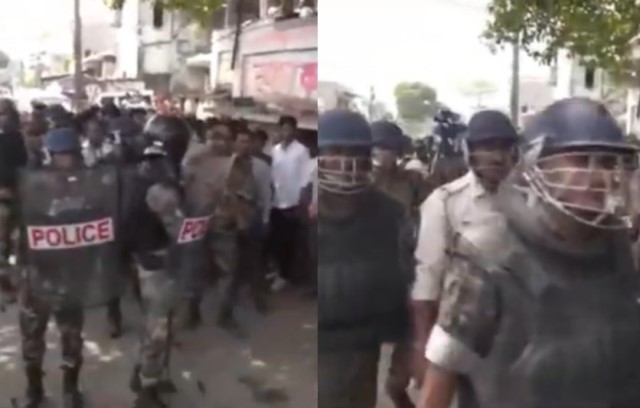
Two Shot Dead As Israeli-Arab Homicide Toll Climbs To 93

Two men were shot dead in a late-night attack in the central Israeli city of Lod on Wednesday night, in what police say may be linked to an ongoing criminal feud, as the year’s death toll from surging Israeli-Arab violence climbed 93.

The victims, identified as Mu’atz Abu Laban, 39, and Muhammad Abdel Hadi, 30, were inside a car at a highway junction when gunmen opened fire from a passing vehicle, according to an initial police assessment.

The driver was critically wounded while the second man attempted to flee, but was shot and killed on the roadway, authorities said. Emergency responders who arrived shortly afterward found both men unresponsive with severe injuries.

“We saw two men in their 30s lying unconscious after a violent incident,” said Lior Paz, a senior Magen David Adom medic. “We carried out medical checks, but their injuries were too severe, and we had to pronounce them dead at the scene.”

Shortly after the attack, a vehicle believed to have been used by the assailants was found burned in the nearby city of Ramla.

Police are investigating but have made no arrests.

The Lod killings came just hours after a separate fatal shooting in northern Israel. Earlier on Wednesday, a 35-year-old man, identified as Emil Hussein from the Druze village of Ein al-Assad in the Upper Galilee, was shot dead while inside his car. Police said that the incident was also under investigation and appeared to be criminal in nature.

According to the Abraham Initiatives, a non-profit organisation that promotes Arab integration into Israeli society, 93 Arab citizens have been killed in crime-related incidents so far this year, including six women.

The surging violence is widely attributed to organised crime groups engaged in turf wars and efforts to eliminate rivals. Arab criminal organisations have been involved in extortion, money laundering, and the trafficking of weapons, drugs, and women.

Critics argue the crime wave has worsened since Itamar Ben-Gvir, a far-right politician, became National Security Minister in 2022. (ANI/TPS)

IPL Records: Sanju Samson 1st Batsman To Score 100 Against Mumbai Indians

Sanju Samson etched his name in record books as he became the first Chennai Super Kings (CSK) batter to score a century against the Mumbai Indians, joining Rohit Sharma and Sanath Jayasuriya as the only centurions in the contests between the two teams.

Samson achieved the feat in the IPL clash against MI in Mumbai on Thursday at the iconic Wankhede Stadium.

This was Samson’s second hundred of this edition of IPL. He had notched up his first ton against Delhi Capitals on April 11.

Samson was at his fluent best, smashing 101 off 54 balls, laced with 10 fours and six sixes at a strike rate of 187.04. It was his fifth IPL hundred, taking him to joint fourth on the all-time list alongside KL Rahul, behind Virat Kohli (8), Jos Buttler (7) and Chris Gayle (6).

After a standout T20 World Cup, where he played a key role in India’s title triumph with scores of 97, 89 and 89 in the Super 8s, semi-final and final respectively, Samson endured a mixed start for his new IPL franchise.

The Kerala batter came under scrutiny after managing 6, 7 and 9 in his first three matches of the 2026 season, before bouncing back with a century against DC, followed by scores of 48 and 7 in his next two outings.

Samson is also CSK’s leading run scorer this season and third overall so far this season with 293 runs in seven matches at an average of 58.60 and a strike rate of 178.65.

Samson’s fluent hundred took Chennai Super Kings to a massive 207-6 against Mumbai Indians, setting a daunting target of 208. (ANI)

Sonam Bajwa Holds Up A Mirror To Paparazzi

Actor Sonam Bajwa has offered a candid glimpse into her relationship with Mumbai’s paparazzi culture, describing it as equal parts awkward, amusing, and inevitable.

In an interview with ANI, Bajwa admitted she often finds herself unsure of how to react when photographers surround her and ask to pose.

“I laugh out loud. I don’t know what to do in front of Paps. And, you know, they are waiting for you even outside the salon. I can’t say no to them. But, I feel very shy, I don’t know what to pose in front of them if I have just come out of a salon,” she said.

Despite the discomfort, the actor spoke warmly about the photographers, calling them “very cool” and praising their friendly nature.

“The Paps are very cool, by the way. They make you laugh so much. I feel like people will think, why she keep giggling in front of Paps?” Bajwa added.

She also highlighted the humorous side of these encounters, revealing that she often shares light moments with photographers.

“You must have heard their commentary in some videos. They are our legendary Paps. So, I laugh a lot with them. I have a good time talking to them. I love seeing them every once in a while,” she said.

However, Bajwa acknowledged that constant public scrutiny can be challenging, especially during unguarded moments.

“But sometimes, you have just woken up. You haven’t even had a cup of coffee. You are late for the gym. And, as soon as you reach the gym, you see Paps. And, your face is swollen. You might not have slept since last night. You haven’t had enough water. But paps are waiting for you…,” she said.

Reflecting on the inevitability of being photographed, Bajwa noted how deeply embedded paparazzi culture has become in Mumbai.

“Everybody gets conscious. Imagine if I catch you within 30 minutes of you waking up. You will not like it. So, that happens. But I think that’s part and parcel of our job. And, now this culture is set. Paps culture in Mumbai is set. So, I always tell myself, Always be prepared that the Paps are going to be there. No matter where you are going,” the ‘Baaghi 4’ actress said.

She also spoke about the advanced equipment used by photographers, comparing it to wildlife cameras.

“The cameras used in the wildlife, I am telling you, those cameras are capturing humans. So, I ask them, Why did you bring this camera?” Sonam Bajwa said.

Recalling advice from fellow actor and a close friend, Jacqueline Fernandez, Bajwa said, “Once Jacqueline briefed me, she said, Babe…those HD zooming cameras are dangerous… Always be mindful that they can use that camera. But, still humans forget. So, I forget. Sometimes I say, Paps are taking wildlife photography cameras. So, be prepared. Or mask. That’s a very good way. Jacqueline herself follows it. She is mostly in masks.”

Bajwa also emphasised that paparazzi often respect boundaries when requested. “But, the Paps are really sweet. A lot of times when I have requested them, please don’t capture me today. I am not feeling well. They always listen. They always respect that. And, I am very grateful for it.”

On the work front, Bajwa will next be seen in ‘Pitt Siyapa,’ an upcoming Punjabi comedy-drama directed by Rupinder Chahal.

The film, slated for release on May 1, 2026, features Bajwa alongside Paramvir Singh Cheema.

The story follows Nimmi, a character played by Bajwa, who launches a unique “funeral business” that organises virtual last rites for NRIs unable to return home.

The narrative blends chaos and comedy as she manages a team of misfits before taking a dramatic turn involving a Dubai-based crime ring, romance, and unexpected heroism. (ANI)

Akshay Announces Fourth Film With Vidya Balan For Anees Bazmee’s Next

Actor Akshay Kumar is reuniting with longtime co-star Vidya Balan, with the duo set to feature in Anees Bazmi’s next project.

Taking to his Instagram handle, Akshay shared a video of himself, boarding a flight with Vidya Balan, suggesting that they have kicked off to Keralam for their next film together.

“Next stop: God’s own country, the magical Keralam. Anees Bazmi’s next is my fourth film with the ever fabulous @balanvidya and I hope the good luck charm of our jodi continues,” he wrote.

https://www.instagram.com/p/DXd_gYxDxLs

The post quickly caught the fans’ attention, with many expressing heavy anticipation in the comment section.

Notably, Akshay Kumar and Vidya Balan have worked together in notable films like ‘Bhool Bhulaiyaa’, ‘Heyy Babyy’, and ‘Mission Mangal’.

Further details about their next film are yet to be unveiled.

On the work front, Akshay Kumar’s ‘Bhooth Bangla’ recently opened in theatres.

Balaji Motion Pictures, a division of Balaji Telefilms Ltd, in association with Cape of Good Films, presents Bhooth Bangla starring Akshay Kumar, Wamiqa Gabbi, Paresh Rawal, Tabu, and Rajpal Yadav.

Directed by Priyadarshan and Produced by Akshay Kumar, Shobha Kapoor, and Ektaa R Kapoor. Bhooth Bangla paid previews begin in theatres on April 16, 2026, 9 PM onwards.

Recently, in an interview with ANI, Akshay called the film a “real horror comedy” and clarified that it is completely different from his earlier hit ‘Bhool Bhulaiyaa’.

“Nahi ye bilkul alag hai (No, this is completely different). ‘Bhool Bhulaiyaa’..usme psychological thriller, horror..horror bhi nahi tha psychological comedy thi (That was more of a psychological comedy This is a fantasy. Iske andar vakai mein koi bhoot hai ya nahi dekhna hai (In this, whether there is a ghost or not, you have to see.) Yeh actually kahunga to asli mein horror comedy hai (So if I say, this is a real horror comedy),” he shared. (ANI)

Fire Breaks Out At Keralam’s Malayinkeezhu

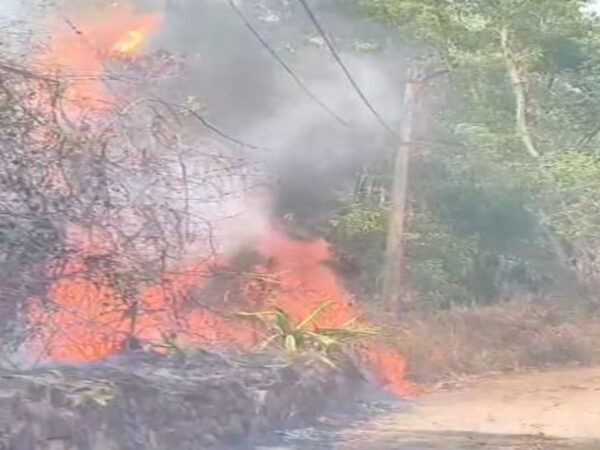
A fire broke out at Mookkunnimala locality in the Malayinkeezhu area of Thiruvananthapuram on Thursday, prompting a swift response from fire and rescue services, officials said.

Officials from three fire stations, including Tattinkara, Rajaji Nagar, and Kattakkada, were deployed to the spot to douse the blaze.

The hilltop locality houses a radar station and firing range used by the Keralam Police and the Army for training purposes.

However, the difficult terrain posed significant challenges for rescue and firefighting operations, hampering access to the affected area.

Firefighting efforts are currently underway. (ANI)

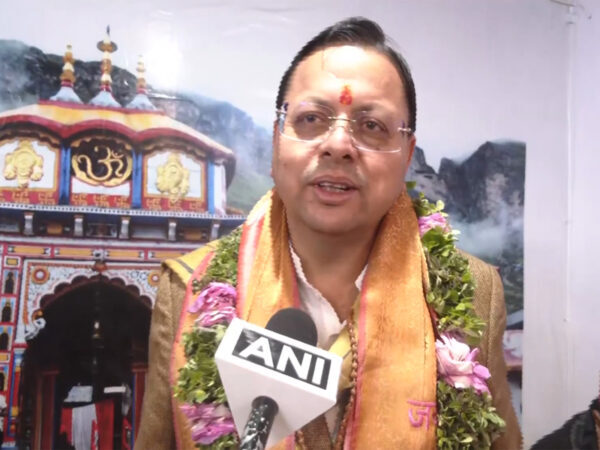
Dhami Welcomes Pilgrims As Badrinath Portals Open

The portals of Shri Badrinath Dham were opened for devotees at 6:15 AM on Thursday, following traditional rituals and the chanting of Vedic mantras. The temple premises were decorated to mark the commencement of the pilgrimage season.

Uttarakhand CM Pushkar Singh Dhami, in a post on X, said, “Today, with full rites and rituals and the chanting of Vedic mantras, the gates of the sacred Badrinath Dham, the earthly Vaikunth, will be opened for devotees. May the grace of Lord Badrinath Vishal bring happiness, peace, and prosperity into the lives of all devotees. May this sacred occasion bring a message of spiritual energy, faith, and a positive beginning for everyone. A hearty welcome and warm greetings to all of you for the Holy Char Dham Yatra – 2026.”

Speaking to ANI, CM Pushkar Singh Dhami said, “With the opening of the portals to Badrinath Dham today, Char Dham is completely open. With the blessings of all four dhams and the blessings of Bhagwan Badri Vishal, may the Char Dham yatra be safe and well. May the regulations of Yatra be followed…”

On the auspicious occasion of the opening of Baba Badrinath’s portals, Uttarakhand Chief Minister interacted with pilgrims and locals.

A devotee, while speaking to ANI, said, “We had great darshan. May Baba Badrinath bless everyone.”

Meanwhile, on Wednesday, Uttarakhand Chief Minister Pushkar Singh Dhami visited Mana, where he toured the area and interacted warmly with pilgrims and residents.

On the occasion, he appealed to everyone to contribute towards making the Char Dham Yatra safe, pleasant, and environmentally sustainable, emphasising the importance of a plastic-free green pilgrimage.

The Chief Minister expressed confidence that with continuous efforts by the state government and support from the central government, these villages will reach new heights of development and play a crucial role in building a self-reliant Uttarakhand.

Earlier on Wednesday, a remarkable confluence of faith, devotion, and spirituality was witnessed at Kedarnath Dham as the sacred doors of Lord Kedarnath were ceremonially opened for devotees amid full rituals and traditions.

Marking the opening of the temple, Chief Minister Dhami performed special prayers with Vedic chants and complete rituals. During the ceremony, he took a solemn pledge and offered the first prayer in the name of Prime Minister Narendra Modi.

Thousands of devotees from across the country and abroad gathered at Kedarnath Dham to witness the historic moment. As the temple doors opened, the premises resonated with chants of “Har Har Mahadev,” creating a deeply spiritual atmosphere.

CM Pushkar Singh Dhami stated that Kedarnath Dham, along with the Char Dham, represents the spiritual identity of Uttarakhand.

He reaffirmed that the state government is fully committed to ensuring a safe, smooth, and well-organised pilgrimage experience for all devotees. He added that he is personally reviewing arrangements regularly to ensure that no pilgrim faces inconvenience. (ANI)

Future of Reading: Will eBooks Help or Hurt Critical Thinking?

Last month in March 2026, I travelled on a crowded Metro in Bengaluru, and noticed how a young professional continued to scroll through an e-book on her phone during the short journey. An old man sat a few seats away, flipping through a battered paperback, pausing occasionally to think. Both were reading, but their experiences were not similar. This quiet contrast captures a larger question shaping modern intellectual life. With the transition of reading to screens, are we becoming better or worse deep thinkers?

Digital reading has increased access beyond imagination. E-books are portable, affordable and immediately accessible. Hundreds of titles can be stored on one device and the reader can easily change between genres and subjects. This democratisation of reading is important to a nation such as India where physical access to books may still be uneven. Geography no longer limits students, professionals, and casual readers to global literature.

Nonetheless, convenience is associated with minor trade-offs. Reading on screens tends to be fast and shallow. Alerts, links, and the urge to multi-task distract focus. Even when distractions are consciously avoided, the reading environment itself feels transient. A screen hints at impermanence, unlike a printed page, which encourages the viewer to focus their attention. The mind makes adjustments, and tends to skim instead of immerse.

Cognitive studies are increasingly pointing to medium as a factor of comprehension. Deep reading involves concentration, patience, and retention of complex concepts. It is not only about decoding words, but creating links, contemplating arguments and thinking critically. The physical nature of printed books facilitates this process. The feel of flipping pages and the visual memory of the information location in a text helps to comprehend better.

E-books, on the contrary, can divide attention. The scrolling process does not have the spatial cues that facilitate memory. Readers can skim through information without necessarily digesting it. This does not imply that digital reading is necessarily superficial, but it tends to follow the patterns of the wider digital ecosystem. Messaging, browsing, and entertainment are also done through the same device that is used to read.

Change of Habits

This change of habit is especially noticeable among younger readers. Lots of them are happy to receive information in brief. They are dominated by articles, summaries, and quick reads. Although it enables one to be exposed to a variety of ideas, it may undermine the skill of maintaining focus on long, complex reading. Thinking that requires continuous mental activity becomes more difficult to develop.

Meanwhile, it would be naive to put e-books in the context of pure evil. Online platforms have brought about features that can improve learning. Reading can be interactive and accessible through adjustable fonts, inbuilt dictionaries as well as search features. These tools are invaluable to visually impaired readers or learners of new languages. The problem is not with the technology, but with its application.

The actual issue is the slow change in the reading culture. Reading is no longer a singular and committed process. It is in rivalry with an unending flow of electronic stimulation. Patience to read long form content is becoming a luxury. Reading becomes a part of a multitasking routine, and the transformative potential of this process is reduced.

Psychological Aspect

It also has a psychological aspect. Printed books usually give the impression of commitment. There is an implicit purpose behind starting a physical book to complete it. E-books, being so numerous and easily available, may stimulate partial reading. Numerous titles are initiated, few are finished. This trend represents a larger culture of consumption, as opposed to reflection.

However, the future of reading does not have to be a print/digital choice. Both formats may co-exist with each having different functions. E-books are the perfect ones in terms of accessibility and convenience. Books are printed and still strong tools of profound engagement. It is up to the readers to identify these differences and develop purposeful habits.

Whether e-books are assisting or hampering deep thinking is not the issue. The question is if readers are making changes in their habits consciously. Technology influences behaviour but does not completely define it. The ability to think profoundly remains, but it must be carefully practiced in a distraction-oriented world.

When the metro arrives at its last destination, the two readers shut their books, one being electronic and the other being real. It is not the format they selected, but the extent of attention they could maintain. Ultimately, the future of reading will be not about devices but about the art of the mind that engages with them.

WB Leads With 78.77% Turnout, TN Records 70% Till 3 PM

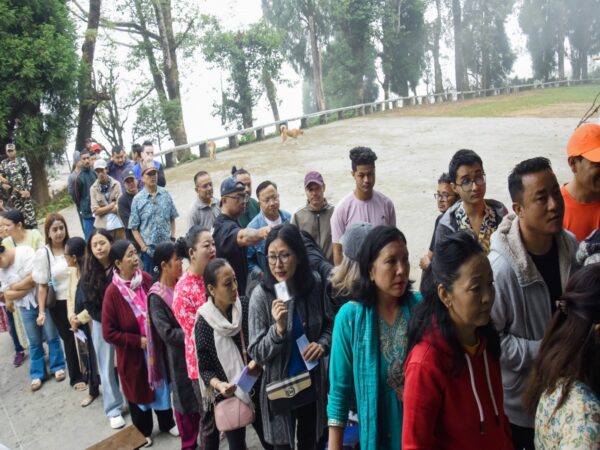
The voter turnout in the ongoing Assembly polling gathered strong momentum by 3 PM on Thursday, with West Bengal leading the charts at an impressive 78.77% turnout rate, significantly outpacing Tamil Nadu, which recorded a 70.00% turnout, according to the Election Commission of India (ECI).

The high participation levels signal robust voter engagement across both states, with several districts in West Bengal crossing the 80% mark well before polling hours conclude at 6 PM.

In West Bengal, multiple districts reported exceptionally high voter turnout figures, underscoring an energised electorate.

Dakshin Dinajpur emerged as the frontrunner with 81.49%, followed closely by Paschim Medinipur at 81.07%, Jhargram at 81.04%, and Birbhum at 80.22%. Murshidabad also saw strong participation at 79.72%, while Darjeeling and Malda recorded comparatively lower but still significant turnouts of 76.54% and 76.22%, respectively. The overall trend indicates a widespread and enthusiastic voter response across both urban and rural pockets of the state.

Tamil Nadu, while trailing behind West Bengal in overall turnout, still posted encouraging numbers across its districts. Namakkal led the state with 76.43%, closely followed by Karur at 76.08%, Salem at 75.79%, Erode at 75.61%, and Tiruppur at 75.38%. Other districts such as Dharmapuri (74.68%), Dindigul (74.35%), Kancheepuram (72.51%), Coimbatore (71.16%), Kallakurichi (71.11%), and Tiruchirappalli (71.05%) also reflected steady voter participation, contributing to the state’s overall healthy turnout figures.

Meanwhile, in the by-elections held across other states, turnout remained comparatively moderate by 3 PM. In Gujarat, the Umreth constituency recorded a voter turnout of 46.66%. In Maharashtra, Rahuri saw 39.60% polling, while Baramati registered a slightly higher turnout at 40.36%.

By 1 PM, Tamil Nadu and West Bengal witnessed massive voter turnout, recording 62.18 per cent and 56.81 per cent respectively at 1 pm, according to the Election Commission of India.

Polling for the 234 Assembly constituencies in Tamil Nadu and 152 constituencies in West Bengal began amid tight security this morning. The voting will conclude at 6:00 pm today. Polling in the remaining constituencies in West Bengal is slated for May 29, and counting of votes will take place on May 4.

Tamil Nadu Chief Electoral Officer (CEO) Archana Patnaik said that the state’s electorate comprises over 5.73 crore voters, featuring 2,93,04,905 female voters, 2,80,30,658 male voters, and 7,728 third-gender voters. The poll body is also catering to 14,59,039 first-time voters and 68,501 service voters, with 4,18,541 postal votes already received. Furthermore, 62 counting centres have already been established to ensure a smooth process after the high-stakes voting concludes.

The main contest is expected between the DMK-led Secular Progressive Alliance, which includes the Congress, DMDK and VCK, and the National Democratic Alliance (NDA) led by AIADMK with BJP and PMK as allies.

In West Bengal, the parties are contesting against one another for 294 Assembly seats. As per the ECI, the first phase covers 152 Assembly constituencies, while the second phase includes 142 seats. There are a total of 1,478 candidates in the fray in this phase.

Chief Minister Mamata Banerjee is aiming for a fourth consecutive term, while the BJP, which secured 77 seats in the previous election, is making a renewed push to form the government in the state. (ANI)

Remorseless Accused Used Fake Call To Dodge Suspicion

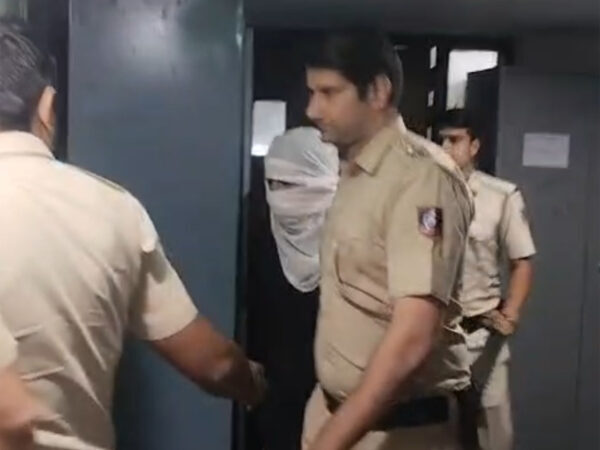
The Saket Court on Thursday sent the accused in the rape and murder of an IRS officer’s daughter, Rahul Meena to 4 days of  Police custody allowing Delhi Police to further interrogate him in the case. The accused, was produced before the Saket Court on Thursday, where the Delhi Police sought his custody.

India lost a young aspirant with civil services dreams after the brutal murder of a 22-year-old daughter of an Indian Revenue Service (IRS) officer in South Delhi’s Kailash Hills. The Kailash Hills victim was all set to appear for her first UPSC examination, carrying the aspirations of serving the nation through civil services.

Living a disciplined and focused life, the young computer engineer from IIT Delhi, an institution where only a limited number of female students secure admission had dedicated herself entirely to her preparation. Determined to create an environment conducive to intense study, she decided to have her study space separated from the main family floor.

Her study room was a single unit on the terrace, a decision the family took nearly two years ago after she resolved to prepare seriously for the civil services examination. The quiet, isolated setting was meant to help her concentrate on long hours of study and maintain a strict routine.

Officers who visited the crime scene later described her room as an ideal workspace for any civil services aspirant. Every corner of the room reflected discipline and determination it was filled with books, study material, notes, and carefully planned schedules.

Police sources revealed that the accused displayed an unusually calm demeanour after his arrest and showed no visible remorse. According to sources, during questioning, the accused repeatedly claimed that he had gone to the house only to take money and said that “it just happened.” Investigators noted that he appeared completely normal while responding to questions.

Sources further said that during interrogation, the accused kept insisting that “if Didi had given the money, this would not have happened.” He reportedly showed no signs of regret and answered questions in a composed and matter-of-fact manner.

In another set of revelations shared by police sources, the accused stated that the family treated him very well and paid him a monthly salary of Rs 20,000, and also gave him bonuses.

Investigators said the accused, who worked as a domestic help and was trusted by the family, gained entry into the house by falsely claiming that aunty ne bulaya tha for money.

Sources said that during the attack, the accused first attempted to strangulate the victim. After she fell unconscious, her clothes were found disturbed, and sexual assault is suspected to have taken place at that stage.

The accused then allegedly struck the victim at least three times with a heavy object, killing her in a particularly brutal manner. Blood stains were found across multiple areas of the house, indicating the intensity of the assault, sources said.

Investigators further revealed that the accused dragged the victim’s hand to use her finger to unlock the digital lock, leaving blood traces on it. When that failed, he used a screwdriver to break open another lock.

Police sources have also reconstructed the final moments before the crime, stating that the victim was allegedly confronted inside her room when the accused demanded money. An argument reportedly escalated after she refused, following which she was allegedly attacked. Sources said she was later found unconscious, and sexual assault is suspected to have taken place during the incident.

According to investigators, the accused then allegedly inflicted fatal injuries using a heavy object, leaving multiple bloodstains across the house. He is also suspected to have attempted to unlock security systems using the victim’s fingerprint and later forced entry into another section of the house using a tool, before fleeing with cash and valuables.

Sources further revealed that the accused allegedly used a fake phone call as a tactic to avoid suspicion immediately after committing the crime),

According to investigators, the accused had switched off his mobile phone and, after stepping out of the building, but pretended to be speaking to someone while heading towards Palam railway station. During interrogation, he admitted that the act was deliberate and aimed at misleading anyone who might notice his behaviour, sources said.

Sources further said that the accused had pre-planned the robbery days in advance and had taken several measures to prevent being traced. He allegedly sold three mobile phones, including his own and those of his family members, to eliminate digital footprints.

Police also revealed that after the incident, the accused used part of the stolen money in online betting and had planned to flee to his native village with the remaining amount.

Investigators said the accused reached Palam railway station to board a train but missed it. He then hired an auto-rickshaw and asked the driver to take him to any nearby hotel to avoid being tracked.

The sequence of actions, including the use of a fake phone call and disposal of mobile devices, is being seen as a calculated attempt to evade detection.

Further investigation is underway as forensic teams continue to examine evidence and reconstruct the full sequence of events.

The victim was found unconscious by her father and declared dead at a hospital shortly after being rushed for treatment. A case has been registered under sections of rape, murder, and robbery. (ANI)

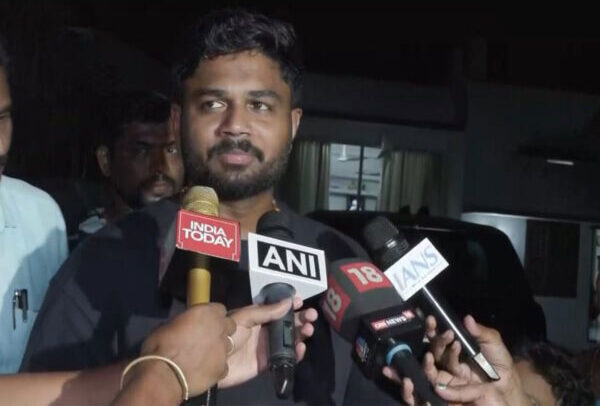
West Bengal: Violence In Murshidabad As TMC Workers Clash With Humayun Kabir’s Supporters

A clash broke out in Murshidabad during the ongoing West Bengal Assembly elections as Trinamool Congress (TMC) workers raised slogans and entered into an altercation with police upon the arrival of Aam Janata Unnayan Party (AUJP) founder Humayun Kabir in the area.

Security personnel were deployed to control the situation as tensions escalated between party workers and police during the polling process. The police were forced to use mild lathicharge to dispel some of the crowd, but denied that the situation was out of hand.

ASP Majid Khan said, “The situation is peaceful. Nothing has happened anywhere…”

AUJP Chief Humayun Kabir said that he had appealed to his party cadre to remain calm.

“I told all my people to stay calm. I want the voting and election to happen peacefully, and everyone should participate. My aim or intention is not to hit, scare, or threaten anyone,” he said.

Officials also confirmed that an incident of crude bomb hurling was reported in the same area a day earlier, adding to the tense atmosphere in the region during the election period.

One of the victims of the reported crude bomb incident in Murshidabad said, “I had stepped out yesterday to offer Namaz at around 8 pm… I was standing… two boys came and threw a bomb near my foot. Humayun Kabir’s party workers have done this…”

West Bengal is witnessing a high-voltage contest between the incumbent Trinamool Congress, which is seeking a fourth consecutive term, and the BJP, which is aiming to form the government after a strong showing in the previous elections.

Chief Minister Mamata Banerjee is aiming for a fourth consecutive term, while the BJP, which secured 77 seats in the previous election, is making a renewed push to form the government in the state.

In West Bengal, the parties are contesting against one another for 294 Assembly seats. As per the Election Commission of India (ECI), the first phase covers 152 Assembly constituencies, while the second phase includes 142 seats. There are a total of 1,478 candidates in the fray in this phase.

The counting of votes is scheduled for May 4. (ANI)