Shapoorji Pallonji Mistry Backs Tata Sons Listing, Cites Transparency Boost

Shapoorji Pallonji Group Chairman Shapoorji Pallonji Mistry on Friday reiterated the need for listing Tata Sons, calling it a “necessary evolution” that would strengthen transparency, governance and accountability within the conglomerate.

Shapoorji Pallohji group has about 18 per cent stake in Tata Sons.

In a media statement, Mistry said that a timely listing of Tata Sons is not merely a matter of regulatory compliance but a step that would reinforce the foundational principles of the Tata Group.

“To date, no clear, evidence-based case has been presented to explain how a public listing would materially damage the interests of the trusts or reduce their ability to serve beneficiaries,” he said.

He further emphasised that the listing is fundamentally in the public interest, as it would strengthen board accountability, broaden the investor base, and secure long-term value for stakeholders.

According to Mistry, a public listing would also unlock value for millions of retail shareholders and create a more defined and robust dividend stream for Tata Trusts, thereby expanding its social and philanthropic impact, particularly for economically weaker sections.

The SP Group Chairman noted that a group built on trust, integrity and public purpose would only be strengthened through compliance with the listing mandate of the Reserve Bank of India.

He added that while the SP Group remains in constructive engagement with Tata Sons leadership to arrive at an amicable resolution, it is looking towards the RBI for a decisive direction on the matter.

Mistry also expressed confidence in the Government of India and the Reserve Bank of India to act decisively regarding the proposed listing.

Tata Sons, which is the principal shareholder of Tata Group companies, falls under the RBI’s upper-layer NBFC framework, which requires listing. (ANI)

India Backs Lebanon’s Peace; Stresses Civilian Protection Amid Israel Strikes

India on Friday expressed deep concern over the rising number of civilian casualties in Lebanon amid continued strikes by Israel despite the two-week ceasefire imposed to halt the month-long conflict in West Asia, reiterating that the protection of civilians remains its foremost priority.

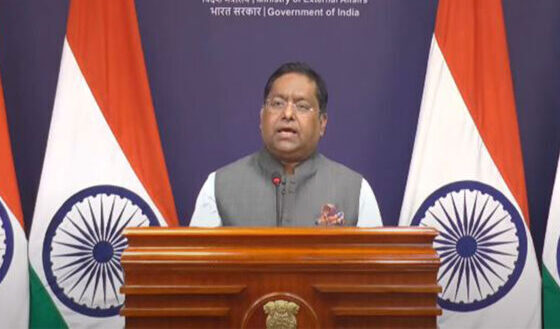
Addressing an Inter-Ministerial Briefing on recent developments in West Asia in New Delhi, Ministry of External Affairs (MEA) Spokesperson Randhir Jaiswal said that the current situation is “very disturbing”, particularly given India’s longstanding commitment to peace and stability in the region. He further said that there are about 1000 Indian nationals living in Lebanon.

“We are deeply concerned by reports of a large number of civilian casualties that have been reported in Lebanon. As a troop-contributing country to United Nations Interim Force in Lebanon (UNIFIL)–which is invested in Lebanon’s peace and security–the trajectory of events is very disturbing,” Jaiswal said.

He underscored that India has consistently emphasised the importance of safeguarding civilian lives during conflicts and called for adherence to international norms.

“India has always emphasised the protection of civilians as the foremost priority. Observing international law and respecting the sovereignty and territorial integrity of states is essential,” he added.

The MEA spokesperson also noted that the Indian government is closely monitoring the situation and remains engaged with its nationals in Lebanon. According to official estimates, around 1,000 Indian citizens are currently residing in the country.

“Our Embassy in Lebanon remains in close touch with the Indian community regarding their safety and security, and we have around 1,000 Indian nationals in Lebanon,” Jaiswal said.

The developments come as the fragile ceasefire agreement between the United States and Iran hangs in the balance, with Tehran stating that the truce also includes the halt to Israeli military operations in Lebanon.

However, both Washington and Israel have maintained that the ceasefire does not extend to Hezbollah targets, a disagreement that has further complicated diplomatic efforts and heightened the risk of the truce collapsing.

Lebanon’s Prime Minister Nawaf Salam is set to travel to the US capital of Washington DC, in the coming days, following Israel’s request for direct negotiations with Lebanon, a Lebanese government source told CNN on Friday.

The development comes amid a fragile two-week ceasefire between the United States and Iran, which continues to hold for now but faces mounting strain. A key point of contention remains whether ongoing hostilities in Lebanon fall under the scope of the truce.

According to CNN, despite the ceasefire, Israel has continued its strikes targeting Hezbollah positions in Lebanon. Lebanese authorities reported that a major wave of attacks earlier this week resulted in at least 300 deaths, raising concerns over further escalation in the region.

Earlier, Israeli Prime Minister Benjamin Netanyahu asserted that there is “no ceasefire in Lebanon” and vowed to continue military operations with “full force” against Hezbollah.

“I wish to inform you: There is no ceasefire in Lebanon. We are continuing to strike Hezbollah with full force, and we will not stop until we restore your security,” he said.

Netanyahu further stated that he has instructed the Cabinet to open direct negotiations with the Lebanese government to achieve “disarmament of Hezbollah” and “historic peace agreement”. (ANI)

Over 4 L Shift To PNG As Govt Pushes Cleaner Fuel

More than four lakh consumers have shifted towards piped natural gas (PNG) in the past five weeks as the government accelerates efforts to reduce dependence on LPG amid supply disruptions triggered by the ongoing West Asia geopolitical tensions.

Speaking at an inter-ministerial briefing on recent developments in the region, Sujata Sharma, Joint Secretary, Ministry of Petroleum and Natural Gas, said the push towards PNG is part of a broader strategy to ease pressure on LPG supplies while ensuring uninterrupted fuel access for households.

“In the last five weeks alone, around 4.05 lakh new LPG connections have been gasified, and over 4.41 lakh new consumers have been registered. Continuous support is also being received from state governments and Union Territory administrations, and it is expected that the expansion of the PNG network will accelerate further,” Sharma said.

The move comes as India continues to navigate supply-side challenges due to the volatile geopolitical situation in West Asia.

Officials said domestic consumers have been prioritised to ensure minimal disruption, with LPG distributors maintaining adequate stock and no shortages reported across the country.

Commercial LPG supplies, which were impacted earlier, have now been restored to around 70 per cent. Priority allocation has been given to key sectors such as hospitals, educational institutions, hotels, dhabas, pharmaceuticals, packaging, and labour-intensive industries.

To further support vulnerable sections, the government has doubled the supply of 5 kg LPG cylinders, particularly benefiting migrant workers and students.

“We have simplified access to 5 kg cylinders by easing documentation requirements and significantly increasing supply. As a result, nearly one lakh cylinders are being sold,” Sharma added.

Since March 14, India has recorded sales of about 106,000 tonnes of commercial LPG, with daily consumption stabilising at 6,000-6,500 tonnes.

Additionally, over 2,400 awareness campaigns have been conducted in the past week to improve accessibility and inform consumers about available options.

In the natural gas segment, domestic consumption continues to receive priority, while industries connected to the gas grid are being supplied around 80 per cent of their requirements.

Fertiliser sector supplies have been restored to 95 per cent, while city gas distribution companies have been directed to ensure uninterrupted supply to critical sectors such as food processing, cold storage, and healthcare.

The government also shared that India’s crude oil inventories remain sufficient, and refineries are operating at optimal capacity. Domestic LPG production has also increased and now meets nearly 60 per cent of the country’s requirements.

Meanwhile, select allocations of petroleum products, around 800 tonnes per day, have been made to pharmaceutical and petrochemical industries to ensure continuity in essential manufacturing. (ANI)

‘BJP Trying Hard to Carve Space in Kerala But Can’t Overshadow Left’

Nithin J S, a research scholar in University of Kerala, Thiruvanantapuram, dissects the reasons behind rise of right-wing influence in the state. His analysis:

Kerala, owing to its high literacy and a dynamic civil society, is also endowed with a vibrant political life. The boomer generation in Kerala has inculcated politics into their identity, making organisational life an indispensable part of Malayali life.

Kerala is also reminiscent of a classical combination of political forces: A liberal centrist Congress, the Muslim League, Communists and the nationalist Right, as represented by the BJP. However, the electoral contest is polarised between the CPI(M)-led Left Democratic Front (LDF) and the Congress-led United Democratic Front (UDF).

For almost four decades, this duopoly of LDF and UDF has dominated politics in Kerala who have shared power in turn. The advent of the BJP-led National Democratic Alliance has seriously destabilised this age-old political structure.

Although the third player is nowhere near holding power in Kerala, it has deeply entrenched itself. One should see that the Hindutva Right in Kerala already has a developed infrastructure. It holds the highest per capita RSS shakhas in India, even surpassing the so-called Hindu belt.

What is new is the BJP’s electoral growth, which rose to 12 per cent in the previous assembly election. This whooping growth is made possible by the sustained effort to woo the upper caste sections who are historically opposed to LDF. BJP also made successful inroads into OBC groups, a traditional vote bank of the Left, and even among the Christians who no longer feel BJP to be an exclusive Hindu party.

Between the 2019 and the 2024 Indian Parliament elections, for instance, electoral dynamics in the Thrissur Lok Sabha constituency underwent a notable transformation. In 2019, the UDF led with approximately 39% of the vote, followed by the LDF (30%) and the NDA (28%). By 2024, the NDA’s vote share increased to about 37%, while the UDF declined to nearly 30% and the LDF remained relatively stable at around 31%, enabling the victory of NDA candidate Suresh Gopi.

Analysts attribute part of this shift to the movement of a segment of the Christian electorate away from the UDF. Despite criticisms that the BJP has adopted positions perceived as adverse to minorities in other parts of India, in Kerala the party has pursued targeted outreach toward sections of the Christian community. This strategy appears to have contributed to localized electoral gains.

At the state level, the BJP-led NDA’s vote share rose from roughly 15% in 2019 to about 19% in 2024, though it declined to around 14% in the 2025 Kerala local body elections. These patterns indicate uneven growth, stronger in national contests but limited in grassroots governance, while the LDF and UDF continue to dominate local politics. Meanwhile, stiff ideological resistance to the expansion of the BJP and the RSS remains a strong part of Kerala’s Left political movements, which emphasize democratic and secular principles.

When compared to other states, the ruling LDF remains a formidable political force in Kerala. Moreover, the unprecedented two terms it received totally reshaped the public perception of the Left Front. The most noticeable achievement has been in the area of infrastructure development. The highway extension that was abandoned during the previous UDF government was commissioned and brought to its conclusion. LDF clearly showed its intention to upgrade the ‘Kerala Model’ to the next level.

The start-up ecosystem in Kerala achieved tremendous growth in this period. The state considered hostile to business ended up in the first place in the rankings. Public investments in health and education really paid off in terms of popular acceptance.

In addition to its development initiatives, the LDF government has demonstrated notable effectiveness in implementing welfare programs in Kerala. The increase of the welfare pension to ₹2000 and the disbursement of these benefits without arrears, along with the provision of more than five lakh houses through the LIFE Mission, are often cited as significant achievements that highlight the government’s administrative performance.

The government also did commendable work during the crisis times be it the pandemic, flood or landslides in Chooralmala. Overall, it remains a force to be reckoned with. While the BJP is trying hard to carve out a space, it is very unlikely to overshadow what the Left has established. 

As told to Amit Sengupta

Trump Warns Iran On Charging Oil Tankers Going Through Strait of Hormuz

US President Donald Trump said there are reports that Iran is charging fees to tankers going through the Strait of Hormuz and warned Tehran against it.

In a post on Truth Social, Trump said, “There are reports that Iran is charging fees to tankers going through the Hormuz Strait — They better not be and, if they are, they better stop now!”

In another post, Trump accused Iran of “doing a poor job” at allowing oil tankers to pass through the Strait of Hormuz, reminding Tehran of the temporary ceasefire agreement.

“Iran is doing a very poor job, dishonorable some would say, of allowing Oil to go through the Strait of Hormuz. That is not the agreement we have!” he said.

This puts the already fragile ceasefire in jeopardy as the disagreement between both parties continues to widen before the negotiations in Islamabad begin.

Earlier, Tehran had accused Israel of violating the agreement by attacking Lebanon, as it stated that the ceasefire in Lebanon is part of the truce.

However, both Washington and Israel have maintained that the ceasefire does not extend to Lebanon, a disagreement that has further complicated diplomatic efforts and heightened the risk of the truce collapsing.

Israeli Prime Minister Benjamin Netanyahu asserted that there is “no ceasefire in Lebanon” and vowed to continue military operations with “full force” against Hezbollah.

“I wish to inform you: There is no ceasefire in Lebanon. We are continuing to strike Hezbollah with full force, and we will not stop until we restore your security,” he said.

Netanyahu further stated that he has instructed the Cabinet to open direct negotiations with the Lebanese government to achieve “disarmament of Hezbollah” and “historic peace agreement”.

“Following repeated requests from the Lebanese government, last night I instructed the Cabinet to begin direct negotiations with Lebanon to achieve two goals. First, the disarmament of Hezbollah. Second, a historic peace agreement between Israel and Lebanon,” he said. (ANI)

AIMIM Cuts Ties With Humayun Kabir’s Party, To Contest Bengal Polls Independently

In a notable political development ahead of upcoming elections in West Bengal, the All India Majlis-e-Ittehadul Muslimeen (AIMIM), led by Asaduddin Owaisi, has announced its decision to withdraw its alliance with a party headed by Humayun Kabir.

The announcement follows remarks and revelations attributed to Kabir, which AIMIM said raised concerns regarding the “integrity of Muslims.” In a strongly worded statement, the party declared that it “cannot associate with any statements where the integrity of Muslims is brought into question,” and confirmed that it has officially ended the alliance with immediate effect.

AIMIM also used the occasion to highlight what it described as the continued socio-economic marginalisation of Muslims in West Bengal. The party stated that the community remains “one of the poorest, neglected and oppressed,” despite decades of governance by parties claiming a secular political framework, including the All India Trinamool Congress and previous administrations.

AIMIM in a post on X said, “Humayun Kabir’s revelations have shown how vulnerable Bengal’s Muslims are. That AIMIM cannot associate with any statements where integrity of Muslims is brought into question. As of today, AIMIM has withdrawn its alliance with Kabir’s party. Bengal’s Muslims are one of the poorest, neglected and oppressed communities. Despite decades of secular rule, nothing has been done for them. AIMIM’s policy in contesting elections in any state is so that the marginalised communities have an independent political voice. We will be contesting the Bengal elections INDEPENDENTLY and have will have no alliance with any party going forward.”

Reiterating its political strategy, AIMIM announced that it will contest the upcoming elections in the state independently, without entering into alliances with any political party. The party emphasised that its objective is to provide marginalised communities with an “independent political voice,” rather than relying on broader coalition politics.

The move is consistent with AIMIM’s recent expansion efforts beyond its traditional base in Hyderabad, where it has sought to establish a presence in multiple states by directly contesting elections.

Political observers believe AIMIM’s decision could influence electoral dynamics in constituencies with significant minority populations. While some critics argue that such a move could lead to a division of votes, the party has maintained that its participation enhances democratic representation and gives voice to underrepresented groups.

With this development, AIMIM has signalled a clear shift in its approach in West Bengal, setting the stage for a more competitive and multi-cornered electoral contest in the state.

Humayun Kabir was expelled from TMC following a controversial proposal to build the Babri Masjid in Murshidabad. He then formed the Aam Janata Unnayan Party to contest elections in West Bengal.

The polling for the 294-member Assembly in West Bengal will take place in two phases on April 23 and April 29, while counting of votes is scheduled for May 4. (ANI)

“Images And Stories Are Completely False”: US First Lady Melania Trump Denies Epstein Links

First Lady of the US, Melania Trump, has denied any links to Jeffrey Epstein, stating that the stories are false and clarified that she has never had any relationship with Epstein or his accomplice.

“The lies linking me with the disgraceful Jeffrey Epstein need to end today. The individuals lying about me are devoid of ethical standards, humility, and respect… I have never been friends with Epstein. Donald and I were invited to the same parties as Epstein from time to time, since overlapping in social circles is common in New York City and Palm Beach. I never had a relationship with Epstein or his accomplice,” Melania Trump said.

Backing her statement, the First Lady of the US said that her name has never appeared in court documents, depositions, victim statements, or FBI interviews linking her to Epstein.

“Numerous fake images and statements about Epstein and me have been circulating on social media for years now. Be cautious about what you believe. These images and stories are completely false. I am not a witness or a named witness in connection with any of Epstein’s crimes. My name has never appeared in court documents, depositions, victim statements, or FBI interviews surrounding the Epstein matter,” she said.

The first lady has never spoken publicly on the issue prior to Thursday’s remarks, ignoring a shouted question about Maxwell during an unrelated event in February. She has, however, filed lawsuits over past efforts to tie her to Epstein, countering what she characterised Thursday as “smears” that were “mean-spirited and politically-motivated,” CNN reported

Epstein, who had previously pleaded guilty to charges involving the procurement of a minor, was arrested in July 2019 on federal sex trafficking charges. He died by suicide in prison weeks later while awaiting trial. (ANI)

Gold Prices Record Worst Monthly Drop Since 2013 With 12% Fall In March: World Gold Council

Gold fell 12 per cent in March to USD 4,608/oz, its weakest month since June 2013, according to a report by the World Gold Council (WGC). The precious metal lost value across all major currencies but maintained a positive position for the year.

The council used its monthly Gold Return Attribution Model (GRAM) to identify that much of the decline stemmed from momentum factors, including global gold ETF outflows, a COMEX net long unwind, and a price trend reversal.

“Our monthly attribution model GRAM captured the sentiment – but not the magnitude – of the move, attributing much of the drop to momentum factors: global gold ETF outflows, a COMEX net long unwind and a price trend reversal,” the World Gold Council stated.

COMEX stands for the Commodity Exchange Inc., which is the primary futures and options market for trading metals like gold, silver, copper, and aluminum.

The report noted that “Global gold ETFs shed USD 12bn (84 tonnes) during the month, led almost entirely by North America with USD 14bn (-87t) and Europe with USD 0.1bn (-7t). Asia’s USD 1.9bn (10t) inflows were a welcome positive, and highlight how dipbuying in Asia translated into much larger fund flow but lower equivalent tonnes.”

“While real yields and the dollar undoubtedly contributed to net sales, other factors were also likely at play,” the report mentioned.

Positioning played a role as a reported build-up in retail exposure to gold risked a flush out. COMEX Non-Reportable positions, which the report associated with retail exposure, saw a cumulative 18-tonne net drop during the first three weeks of March. This aligned with a 22-tonne drop in Managed Money, reflecting more institutional activity.

A portion of gold ETF sales likely originated from retail hands, with the US accounting for the bulk of the 80 tonnes lost globally between the start of the month and March 24.

“CTA-driven selling likely amplified downside momentum. Estimated and anecdotally reported Commodity Trading Advisors (CTA) were very long heading into mid March. They reportedly unwound positions sharply when gold broke through its 50/55-day moving average on 16 March for the first time in seven months,” the Council observed.

Broader cross-asset deleveraging also spilled into gold as elevated margin debt relative to market capitalisation contributed to widespread equity selling. Gold faced liquidation pressure as multi-asset investors, including CTAs with equity exposure, reduced positions to meet liquidity needs and reduce portfolio risk. Bond market dynamics reinforced this pressure as US bonds were sold on a near-term inflation shock, causing 2-year nominal yields to shoot higher.

Central bank intervention further added to downward price pressure following “a decision by The Central Bank of the Republic of Turkiye (CBRT) to use approximately 50t of gold as collateral, predominantly via swaps, may have fuelled rumours of selling.”

“That this was liquidity driven and not a change in gold strategy is backed up by data at the US Fed suggesting increased outright selling of US Treasuries by central banks to buffer higher energy price risk was occurring in tandem,” the report said.

Looking ahead, the World Gold Council found that fundamentals began to reassert themselves as the dollar struggled to sustain gains and early April ETF flows turned positive. While risks remain regarding oil prices and potential cross-asset deleveraging, the report noted that investors continue to view gold favourably over a medium-term horizon. (ANI)

Artemis II Crew Reaches ‘Halfway’ Mark In Their Return Journey To Earth: NASA

The Artemis II crew is in the final hours of their journey to Earth and is currently preparing for splashdown in the Pacific Ocean, following a historic lunar flyby.

The crew broke the record for the farthest human spaceflight at 252,756 miles (406,771 km) from Earth while navigating the far side of the Moon.

The historic space mission Artemis II has hit its halfway mark between the Moon and the Earth, NASA said on Thursday. According to the space agency, the astronauts would splash down in the Pacific Ocean off the coast of San Diego on April 10, Eastern Time.

Sharing the details in a post on X, NASA said, “They’re halfway home. The Artemis II astronauts have hit the “halfway” mark between the Moon and the Earth. They will splash down in the Pacific Ocean around 8:07 pm ET on Friday, April 10 (0007 UTC on Saturday, April 11), off the coast of San Diego.”

During the mission, the crew also saw a solar eclipse from space.

After their splashdown, US Navy’s USS John P. Murtha (LPD 26) would retrieve the crew and Orion spacecraft, as per the US Indo Pacific Command.

Meanwhile, Senator Ted Cruz hailed the accomplishment of the astronauts and said that they inspired a whole new generation of space explorers.

The Artemis II mission marks a key step in NASA’s plans to return humans to the Moon and advance future deep space exploration.

The crew includes NASA astronauts Reid Wiseman, Victor Glover, and Christina Koch, along with Canadian Space Agency astronaut Jeremy Hansen.

The Artemis II mission has broken the record for the farthest distance travelled by humans from Earth, breaking the Apollo 13 mission’s record of 248,655 miles.

Artemis II is NASA’s first crewed test flight in the Artemis campaign.

As per the official website of NASA, there are five main priorities for Artemis II. These included the ability of systems and teams to sustain the flight crew in the flight environment, and through their return to Earth; demonstrate systems and operations essential to a crewed lunar campaign; retrieve flight hardware and data, assessing performance for future missions; demonstrate emergency system capabilities and validate associated operations to the extent practical, such as abort operations and rescue procedures, as needed and complete additional objectives to verify subsystems and validate data.

Earlier this week, US President Donald Trump spoke to the crew members after the mission broke the farthest distance record in human spaceflight.

He praised them for inspiring the world with their feat. Noting that they made history, the US President said that the mission paves the way for America’s return to the lunar surface. Trump also said that the US would eventually establish a permanent presence on the moon and then aim at Mars.

Artemis II marks the first crewed mission around the moon in more than 50 years, carrying four astronauts farther into space than any humans have travelled in history. (ANI)

IPL 2026: LSG Beat KKR In Thriller, Mukul Choudhary Shines With Unbeaten 54

Lucknow Super Giants (LSG) pulled off a spectacular victory at the Eden Gardens on Thursday, defeating Kolkata Knight Riders (KKR) by three wickets in a final-ball thriller. Chasing a target of 182, LSG rode on twin half-centuries from Ayush Badoni and Mukul Choudhary to clinch their second victory of the IPL 2026 season.

LSG’s pursuit of 182 began on a shaky note as KKR’s Vaibhav Arora struck early, removing Mitchell Marsh (15) and Aiden Markram (22) within the powerplay. Skipper Rishabh Pant could only manage 10 before falling to Cameron Green, leaving LSG reeling at 73/3 at the end of the ninth over.

The turnaround started with Ayush Badoni, who played a composed knock of 54 off 34 balls, including seven fours and two sixes. During his innings, Badoni achieved the milestone of 1,000 career IPL runs and became the third player to reach the l000-run landmark for LSG. Badoni kept the scoreboard ticking even as KKR spinners Sunil Narine and Anukul Roy maintained a tight grip on the scoring rate.

During the 15th over, Anukul removed Badoni as Lucknow were in a spot of bother at 125/6. However, uncapped powerhouse Mukul Choudhary became the star of the night.

The right-handed batter smashed an unbeaten 54 off 27 balls, including seven towering sixes. With LSG requiring 14 runs off the final over bowled by Vaibhav Arora, Choudhary’s aggressive finishing ensured LSG crossed the line, sealing a dramatic victory with three wickets in hand. His ability to find boundaries at crucial moments proved decisive in a high-pressure chase.

Anukul Roy (2/32) and Vaibhav Arora (2/38) were the pick of the bowlers for KKR, but their efforts were ultimately overshadowed by Choudhary’s late-game brilliance.

Earlier, the three-time champions posted a competitive 181/4 in 20 overs. After winning the toss, LSG opted to field first on a surface expected to aid both pace and spin as the game progresses. Kolkata’s innings saw early contributions, but regular wickets hindered a big score push.

LSG struck early as Prince Yadav dismissed opener Finn Allen for 9 in the second over. However, skipper Ajinkya Rahane (41 off 24) and Angkrish Raghuvanshi (45 off 33) countered with intent, powering KKR to 56/1 in the Powerplay.

The duo looked set to take the game away, dismantling Avesh Khan for 16 runs in the 6th over, including a towering six by Rahane.

The turning point came when LSG’s spin duo of Digvesh Singh Rathi and Manimaran Siddharth were introduced.

Rathi broke the dangerous 84-run stand for the second wicket by removing Rahane, who mistimed a pull to Mohammed Shami during the second ball of the 11th over.

The 84-run stand between Rahane and Raghuvanshi was also KKR’s second-highest against LSG for any wicket after 120* runs added by Shreyas Iyer and Salt for 3rd wicket at the same venue in 2024.

In the very next over, Raghuvanshi was dismissed by spinner Siddharth. During the second ball of the 14th over, speedster Avesh Khan clean bowled Rinku Singh (4), who returned to the dressing room after a sharp length delivery that crashed into the top of the off-stump.

After the end of 15 overs, the three-time champions reached 115/4 with LSG bowlers sticking with their disciplined approach that controlled the run-flow.

However, the powerful duo of Rovman Powell (39* off 24) and Cameron Green (32* off 24) provided a late flourish, adding valuable runs in the death overs to push the total past 180.

Veteran speedster Mohammed Shami was the pick of the bowlers for LSG in terms of economy, conceding just 27 runs in his 4 overs, while Siddharth, Rathi, Avesh, and Prince Yadav claimed one wicket apiece.

Brief Scores: Kolkata Knight Riders 181/4 in 20 overs (Ajinkya Rahane 41, Angkrish Raghuvanshi 45, Rovman Powell 39; Manimaran Siddharth 1/34) lost to Lucknow Super Giants (LSG) 182/7 in 20 overs (Mukul Choudhary 54, Ayush Badoni 54; Anukul Roy 2/32, Vaibhav Arora 2/38) by 3 wickets. (ANI)