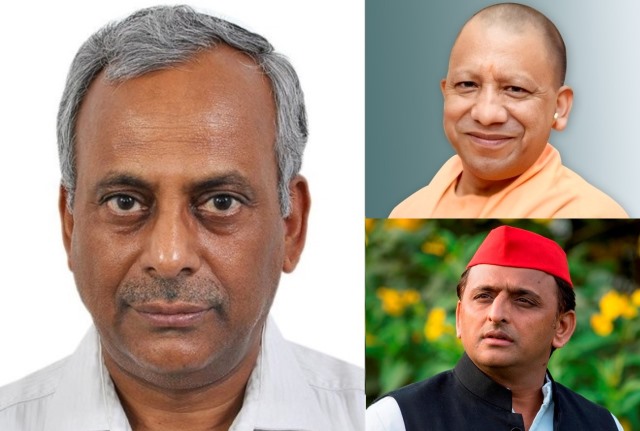
‘UP Will Witness A Critical Contest Between Akhilesh & Yogi in 2027’
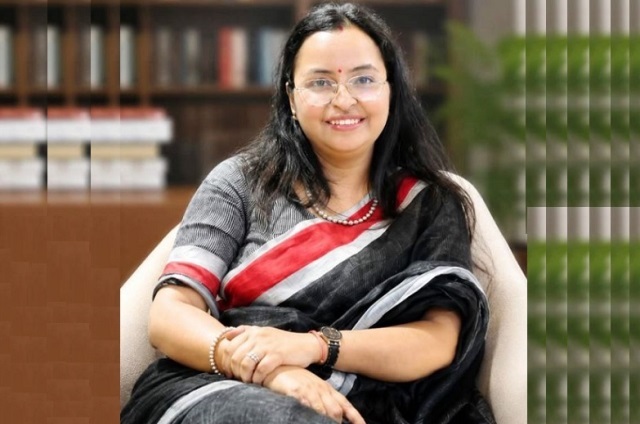
Prof (Dr) Satyam Tiwari says politics in Uttar Pradesh is a heady mix of caste arithmetic, symbolism, welfare delivery & leadership perception: Her views:
Since 2017, the BJP has succeeded in consolidating a broad social coalition by combining Hindutva mobilisation with welfare-oriented governance. Under CM Yogi Adityanath, the government has consistently foregrounded issues of law and order, religious-cultural nationalism, and infrastructural expansion and these have contributed to an image of administrative decisiveness and state-led transformation.
Nevertheless, prolonged incumbency inevitably produces zones of political vulnerability. While the BJP retains a strong electoral base, there are discernible indications of dissatisfaction among particular social groups. Concerns regarding unemployment, examination paper leaks, delays in public recruitment processes, inflation, and agrarian distress continue to shape public discourse, especially among younger and lower-middle-class voters.
Moreover, a large chunk of the BJP’s traditional voter seems to be deeply anguished by some recent turn of events such as recent UGC regulations proposed by the BJP govt.
Chances & Challenges Before SP
Within this context, Samajwadi Party supremo Akhilesh Yadav’s political position appears more significant than it did a few years ago. The SP has attempted to move beyond its earlier dependence on a narrowly defined Yadav-Muslim electoral framework by expanding outreach toward non-Yadav OBC and smaller caste communities.
Apart from this, the current political situation presents a golden opportunity for the SP to en-cash the anger of educated youth especially belonging to the general category (traditional vote-bank of the BJP) that is desperately in search of a viable option to side with. If Yadav could manage this tightrope-walk of attracting the general category youth along with holding its traditional vote-bank, the SP may pose a significant challenge to the BJP in the upcoming Assembly elections.
In this context, the political slumber of the BSP and fire-brand politics of Chandrashekhar Azad-led Azad Samaj Party (Kanshi Ram) and its limited acceptance have also created a favourable situation for the SP to rise again.
Yadav himself has undergone a gradual political transformation. His recent political interventions suggest a more disciplined and calculated approach, particularly in relation to issues such as caste census demands, constitutional protections, social justice, and employment generation. These themes have enabled the SP to cultivate greater resonance among sections of educated youth and marginalised caste groups seeking political representation alongside economic opportunity.
BJP’s Well Entrenched Electoral Machinery
However, the central challenge before the opposition remains organisational and perceptual rather than rhetorical. The BJP’s electoral machinery in UP possesses an extensive grassroots infrastructure supported by ideological networks, cadre mobilisation, and welfare penetration. Schemes related to food distribution, housing assistance, and direct benefit transfers have contributed to a durable welfare constituency, particularly among economically vulnerable populations especially women.
Furthermore, Yogi Adityanath’s political appeal extends beyond conventional governance metrics. His leadership has acquired symbolic significance within sections of the Hindu electorate, where he is perceived not merely as an administrator but also as a custodian of cultural assertion and political stability. This symbolic dimension remains central to the BJP’s continuing strength in UP. Consequently, any opposition challenge based exclusively on caste arithmetic or anti-incumbency sentiment may prove insufficient.
At the same time, UP has historically demonstrated a capacity for rapid political realignment when social dissatisfaction converges with effective opposition mobilisation. Electoral outcomes in the state often depend upon whether opposition parties can transform fragmented grievances into a coherent political narrative.
For Yadav, therefore, the immediate task is not only to criticise the incumbent government but also to articulate an alternative developmental and social vision capable of appealing across caste and regional divisions. Along with this, the persistent memory of the law-and-order crisis in the SP regime is still fresh among the voters and if the SP wants to regain its lost ground, it needs a complete image overhaul.
It would thus be analytically premature either to dismiss the SP’s prospects or to assume an inevitable decline of the BJP in UP. BJP continues to enjoy institutional strength, leadership centrality, and ideological consolidation, yet prolonged incumbency also exposes governments to cumulative public expectations and socio-economic pressures.
Conversely, the SP possesses renewed political relevance but still confronts limitations in organisational expansion and coalition durability. The 2027 Assembly elections are therefore likely to emerge as a critical contest over the future direction of political representation in Uttar Pradesh.
(The narrator teaches Political Science in Khun Khun Ji Girls PG College. Lucknow)
As told to Rajat Rai