US-Iran Deal: ‘Sanction Relief Linked To Nuclear Compliance’
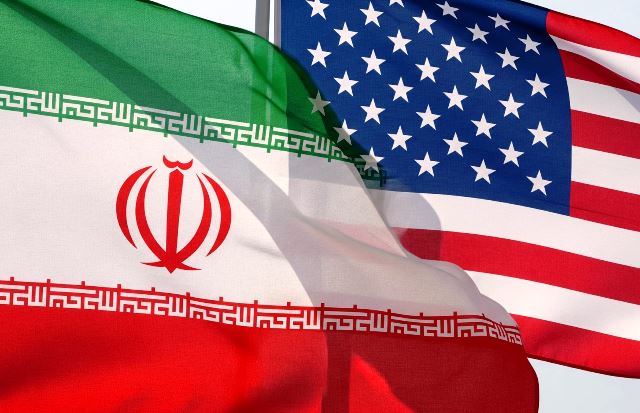
Senior officials in the Trump administration on Monday (local time) outlined the contours of a newly negotiated understanding with Iran, describing it as a framework that could reshape relations between Tehran and Washington while linking sanctions relief and economic reintegration to strict nuclear oversight and regional security commitments.
The agreement establishes a mechanism governing future engagement between Iran and the US, under which Tehran’s access to economic opportunities and relief from sanctions would be tied to verifiable cooperation on its nuclear programme and a reduction in activities the United States associates with regional destabilisation.
A senior US official said, “We have now signed some understanding with Iran and the memorandum provides a few basic things. The first is it provides a structure for how our negotiation, our relationship will operate in the future, and the basic way it works is that the more that the Iranians are willing to work with us on their nuclear program, on verifying that they’re not building a nuclear weapon, on not funding radicalism and terrorism in the region, the more that they’re going to be welcomed into the world economy through a combination of sanctions relief and other economic measures.”
The official added that the agreement was built around conditional reciprocity, stating, “If they’re willing to behave like a normal country, then we’re willing to treat them like a normal country. I think to the great prosperity of the people of Iran, of the Gulf region, and the United States.”
US officials also highlighted that there would be an immediate process to restore maritime traffic through the strategically vital Strait of Hormuz, one of the world’s most important energy transit corridors.
“You will see a significant increase in traffic in the Strait of Hormuz, actually starting already, and that will ramp up slowly over time,” the official said.
Another senior administration official highlighted how it has been a “47-year war”, arguing that successive administrations had struggled to address what Washington views as Iran’s support for militant groups and its pursuit of nuclear capabilities.
“Nobody has solved this in 47 years, and we go into this with eyes wide open. We understand the complexities of negotiating with the Iranians. We’ve studied all the negotiations that they’ve done in the past, and everything we’re going to do is going to be verified,” the official said.
The senior US official highlighted how Iran has the chance to economically flourish and added, “Pursuing nuclear weapons has cost them trillions and trillions of dollars of both costs, but also lost economic opportunity,” the official said. “They could be one of the wealthiest countries in the world if they change their course.”
The official said that the peace framework presents Iranian leaders with two possible paths- continued economic isolation or gradual reintegration into global markets under a stringent verification regime designed to prevent the reconstitution of any nuclear weapons capability.
“Iran’s nuclear weapons program has been systematically destroyed,” the official said, adding, “Option one for Iran is they don’t get any money, and so they don’t have the resources to rebuild their defence industrial base or their nuclear weapons program. Option two is they are invited into the world economy with all the prosperity that comes along with it, but only if they provide us enforcement verification mechanism to ensure they’re not going to rebuild that nuclear weapon.”
The official underlined that the ultimate outcome was dependent on decisions made in Tehran.
“We want it to be a win for the Iranian people as well, but that depends very much on the choices their leadership makes. We’re going to find out a lot about that over the next couple of weeks,” the official said.
The remarks by senior US officials come as the two long-time adversaries are set to sign a peace framework in Geneva later this week. (ANI)