Major Accident On Yamuna Expressway: Bus Overturns, Dozen Injured

A road accident occurred late Sunday evening on the Yamuna Expressway in the Mathura district, where a passenger bus travelling from Delhi to Bihar suddenly went out of control and overturned, causing chaos and panic at the scene.

According to reports, the bus was travelling at high speed when, near Milestone 76 within the Naujheel police station limits, the driver lost control, causing the vehicle to flip over. Approximately a dozen passengers are reported to have sustained injuries in the accident, with several said to be in critical condition. On a reassuring note, there have been no reports of any fatalities so far.

Upon receiving news of the incident, local police rushed to the scene and immediately initiated relief and rescue operations. The injured were transported via ambulance to the Naujheel Community Health Centre, where they are currently undergoing treatment. Additionally, some of the injured were shifted to the District Hospital, where a team of doctors is actively engaged in their care.

According to eyewitnesses, the bus was travelling at high speed, and the accident occurred due to a sudden loss of control. The police have initiated an investigation into the matter and are working to ascertain the exact causes of the accident.

Speaking to ANI, Circle Officer (CO) Sandeep Singh said, “A bus from Delhi en route to Darbhanga overturned on the Yamuna Expressway. The police teams arrived on the spot immediately and rescued the passengers. 10-12 people were injured in the incident and have been sent for treatment.”

City Magistrate Anupam Mishra on the incident said, “A bus, going to Bihar, met with an accident, where certain people were injured and are currently undergoing treatment in the district hospital. There is no risk currently.” (ANI)

IPL 2026: RCB Skipper Patidar Offers Virat Fitness Update After Win Over MI

Following his side’s win over the Mumbai Indians (MI), Royal Challengers Bengaluru (RCB) skipper Rajat Patidar offered some fitness updates on star batter Virat Kohli, saying that the 37-year-old veteran is doing okay.

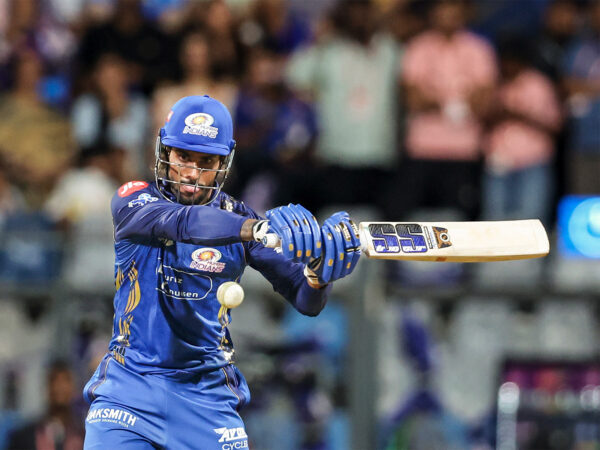
After a slip-up against the Rajasthan Royals (RR), RCB came back to winning ways with an 18-run win over arch-rivals Mumbai Indians (MI) at Wankhede Stadium. Phil Salt, Virat Kohli and Rajat Patidar scored magnificent fifties to power RCB to 240/4. MI fell 18 runs short, ending at 222/5 despite a stunner 71* in 31 balls by Sherfane Rutherford, which had nine sixes and a four. Notably, Virat did not come to the field and was seen wearing a jacket while sitting out of the field.

Speaking after the post-match about any possible injury to Virat as being reported, Patidar said, “I do not know yet, but I think he, I feel that he is okay right now.”

About the win, Patidar said that there is clarity given to all the players in the batting line-up and spoke on the atmosphere and fanfare at iconic Wankhede Stadium in Mumbai.

“Whenever we come here in Mumbai, especially at this ground, the atmosphere, the fans, and playing along with them and playing in a full-packed stadium – that is a different feeling. It was, I would say it is a more clarity about every individual, I would say (on the strong batting). And the way Virat Bhai and Salt started the innings, I think that kept us in the driving seat. Then a good cameo by me and Tim (David), I think that was a pure team effort.”

On his preference for spin or pace, both bowling forms that he has absolutely butchered in his season, Patidar said, “To be honest, people used to say that I love playing spin, but if someone asks me, I would say I love playing pace. And the playing pace on this track, I think it’s a very good track to play for a fast bowler. So I think I love facing fast bowling.”

Against spin this season, Patidar has faced 59 balls, scoring 129 runs at a strike rate of 218.94, with nine fours and 11 sixes, being dismissed twice. Against pace, he has made 66 in 32 balls, with a strike rate of 206.25, including two fours and seven sixes, being dismissed once.

Patidar is the joint-highest six-hitter with Vaibhav Sooryavanshi (18) this season and is the second-highest run-getter, with 195 runs in four innings at an average of 65.00 and a strike rate of 214.28, with two fifties. (ANI)

Asha Bhosle Demise: Devotees Observe Silence At Dashashwamedh Ghat Before Ganga Aarti To Pay Tribute

The devotees at Varanasi’s Dashashwamedh Ghat paid tribute to legendary singer Asha Bhosle by observing a two-minute silence prior to the commencement of the Ganga Aarti on Sunday.

Legendary playback singer Asha Bhosle passed away in Mumbai on Sunday at the age of 92, marking the end of an era in Indian music. She died at Breach Candy Hospital, where she had been admitted on Saturday evening following extreme exhaustion and a chest infection.

Confirming the cause of death, Dr Pratit Samdani said, “Asha Bhosle breathed her last today in Breach Candy Hospital. She passed away due to multi-organ failure.”

Her son, Anand Bhosle, confirmed the news and shared details of the final rites, saying, “My mother passed away today. People can pay their last respects to her at 11 am tomorrow at Casa Grande, Lower Parel, where she lived. Her last rites will be performed at 4 pm tomorrow at Shivaji Park.”

Observing a two-minute silence, people offered prayers for the peace of Asha Bhosle’s departed soul at Dashashwamedh Ghat. Holding posters in their hands and offering lamps in the waters of the Ganges, they prayed for the salvation of the departed soul.

Born Asha Mangeshkar on September 8, 1933, in Sangli, she entered a household steeped in classical music. The daughter of the revered Pt Deenanath Mangeshkar and the younger sister of Lata Mangeshkar, her destiny seemed intertwined with melody from the very beginning.

Yet her journey was far from easy. The sudden death of her father when she was just nine years old made her and her sister step into the world of playback singing.

Asha Bhosle’s breakthrough came in 1957 with ‘Naya Daur,’ in collaboration with composer OP Nayyar. It was a turning point that revealed her unique tonal quality, which was playful, expressive, and daring. Soon, she became the unmistakable voice behind some of Hindi cinema’s most vivacious characters, especially for the iconic dancer Helen.

‘Dil Cheez Kya Hai’ and ‘In Aankhon Ki Masti’ were not just songs; they were masterclasses in restraint and nuance. For this, she earned her first National Film Award, affirming her place among the greats of Indian classical and semi-classical music.

Her ability to evolve with time was perhaps her most remarkable trait. Decades into her career, she embraced change with the curiosity of a newcomer. Her collaboration with AR Rahman in ‘Rangeela’ (1995), particularly in songs like ‘Tanha Tanha,’ stunned audiences; here was a voice in its sixties sounding fresher and contemporary, just like the singers half her age.

She even ventured beyond Indian music, collaborating with international artists and genres, proving that her artistry knew no borders. Recognition followed her at every stage. She was awarded the Padma Vibhushan, India’s second-highest civilian honor, in 2008. The Dadasaheb Phalke Award, Indian cinema’s most prestigious recognition, came in 2000.

She won multiple Filmfare Awards and received international acclaim, including a historic Grammy nomination in 1997 for her album ‘Legacy.’ (ANI)

Asian Wrestling C’ships 2026: India Sign Off Campaign With Two Silver Medals, One Bronze On Last Day

India signed off their 2026 Asian Wrestling Championships campaign in Bishkek, Kyrgyzstan, on Sunday with two silver and a bronze medal to take their overall medal tally to 17 medals, which also includes two gold medals.

India finished with a tally of two gold, six silver and nine bronze. The Indian freestyle wrestlers finished with two gold, three silver and two bronze medals while the women bagged one silver and four bronze medals.

On the final day of competition, India had two wrestlers in gold medal bouts, but neither could find a way past their respective opponents, according to a release.

In the 61kg freestyle final, Aman Sehrawat went down to Kwang Myong Kim of North Korea in a high-scoring final that ended 13-10 in the Koreans’ favour.

Aman, a Paris Olympics bronze medallist in the 57kg weight category, was playing in a higher weight category in Bishkek.

Later, Mukul Dahiya went down 0-7 against Iran’s Kamran G Ghasempour in the men’s 86kg freestyle final to take India’s silver medal tally to six.

Dinesh then signed off the India campaign with a bronze medal as he registered a dominant 12-1 win over Arslanbek Turdubekov of Kyrgyzstan in the men’s 125kg freestyle bout. (ANI)

Kohli Continues Fine Run At Wankhede, Becomes First Batter To Reach 1,000 Runs Against MI

Star India and Royal Challengers Bengaluru (RCB) batter Virat Kohli continued his love affair with Mumbai Indians (MI) and the Wankhede Stadium as he became the first-ever batter to hit 1,000 runs against the five-time champions on Sunday.

During the high-octane match against MI, Virat held one end steady as Phil Salt and skipper Rajat Patidar fired massive sixes, scoring 50 in 38 balls, with five fours and a six, at a strike rate of over 131.

Now against MI, Virat has scored 1,030 runs in 36 innings at an average of 32.18 and a strike rate of 129.23, with a best score of 92* and seven fifties.

In his four innings in this edition of the season so far, Virat has made 179 runs at an average of 59.66, with a strike rate of 162.72, including two fifties and a best score of 69*.

In 23 matches and innings at Wankhede Stadium, Virat has made 888 runs at an average of 55.5, with a strike rate of 148.49, with nine fifties and a best score of 92*.

Virat also had a century partnership with Phil Salt, registering his 47th century partnership in T20s, the most by a batter in T20s, outdoing Chris Gayle, who was involved in 46 such stands.

A 120-run stand between Salt (78 in 36 balls, with six fours and six sixes) and Virat and a 65-run stand between Virat (50 in 38 balls, with five fours and a six) and skipper Patidar (53 in 20 balls, with four boundaries and five sixes) and later some brutal hitting from David (34* in 16 balls, with two fours and three sixes) pushed RCB to a massive score of 240/4 in 20 overs. (ANI)

India Has Most Ships Crossing Hormuz, Maintains Balanced Role: Rajnath

Defence Minister Rajnath Singh on Saturday said India has the maximum number of ships that have sailed across the Strait of Hormuz, as he underlined the country’s “balanced” approach amid the ongoing West Asia crisis.

He credited the leadership of Prime Minister Narendra Modi for helping India remain stable despite global uncertainty and said the country has maintained its economic momentum even as tensions in West Asia continue to affect energy prices and supply chains.

Addressing a gathering in Lucknow, the Defence Minister said India has managed these challenges through “balanced” diplomacy and a strong push for domestic production. He added that India’s ties with both the United States and Iran have helped protect its strategic interests.

“When such things happen, uncertainty increases. Regarding the ships that set sail, India has the maximum number of ships that have sailed. We have good relations with America and also with Iran. Prices rose in many places; they did not remain stable. What was said about LPG? Except for India, all other countries faced difficulties. A crisis is ongoing in West Asia; Iran’s missiles are not reaching America. If anyone has played a balanced role, it is India,” Singh said.

The Minister also spoke about India’s growing economic and defence strength. He said the country, once considered economically weak, is now among the top four economies in the world.

“We used to be considered weak in terms of the economy, but now we are in the top 4,” the minister said.

He also highlighted progress in defence production and said India is moving towards self-reliance.

“Previously, we used to import weapons and drones from other countries, but today we have become self-reliant. Defence production has seen a massive increase, and the country is becoming truly Atmanirbhar,” he added.

On the same day, at the release of the book Smriti Naad, Rajnath Singh spoke about the life and values of late leader Lalji Tandon on his 91st birth anniversary.

“Today, we have all gathered here on the 91st birth anniversary of the late Lalji Tandon… I have been told that Tandon ji was immensely enthusiastic about the publication of the very book ‘Smriti Naad’… While I have not read the book in its entirety, I have certainly read excerpts from it. The book contains numerous anecdotes illustrating that Tandon ji’s personal values bore the imprint of many great personalities, just as his own life left a lasting impression on countless others…” he said.

Later, he also visited an audio-visual museum set up at the venue. Uttar Pradesh Assembly Speaker Satish Mahana was present during the inspection of the digital archives and historical displays. (ANI)

Trump Issues Stern Warning To Tehran After Islamabad Talks Stall

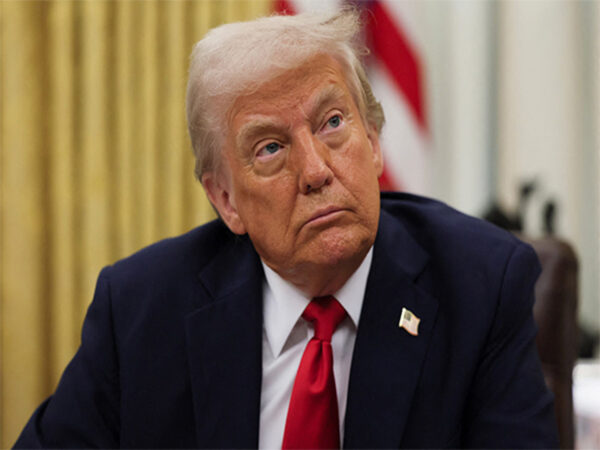
US President Donald Trump on Sunday expressed confidence that Tehran would eventually concede to American demands, while simultaneously issuing a stern warning regarding the potential for total military devastation.

Speaking to Fox News, the President suggested that Iran’s return to the bargaining table is inevitable. “I predict they come back and they give us everything we want,” Trump said.

Emphasising the perceived lack of leverage on the part of the Iranian leadership, he added, “I want everything… They have no cards.”

The President also stood by his recent provocative rhetoric, including a threat made last week that a “whole civilization will die tonight, never to be brought back again.”

He argued that such hardline messaging was the primary catalyst for the recent diplomatic engagement. “When I say about a civilization, it really has changed. It really has. But think of it. They’re allowed to say, ‘Death to America. Death to this,'” Trump told Fox News.

“And I make one statement. They say, ‘Oh, such a big deal.’ That statement got them to the bargaining table, and they haven’t left it.”

The President’s remarks follow the recent conclusion of marathon negotiations in Islamabad, which ended without a formal agreement.

Trump intensified his warnings during the interview, echoing previous threats to target the core of Iran’s national infrastructure. “I could take out Iran in one day,” the President asserted.

Detailing the scope of potential military action, he warned of a rapid and irreversible strike against the country’s power and logistical networks.

“In one hour, I could have their entire energy, everything, every one of their plants, their electric generating plants, which is a big deal. And I hate to do it, because if I do it, it takes you 10 years to rebuild. They’ll never be able to rebuild it. And the other thing you take out are the bridges,” he remarked.

This escalatory rhetoric from Washington comes in the immediate wake of a grueling 21-hour diplomatic session in Pakistan.

Following the marathon talks, US Vice President JD Vance departed for the United States as the stalemate persists between the two parties.

The Vice President left shortly after speaking to reporters in the early hours of Sunday, noting that this deadlock has pushed peace efforts significantly back in the first round of negotiations.

Confirming the lack of progress, Vance stated that no agreement had been reached, characterising the development as “bad news for Iran” more than for the United States.

“We’ve had a number of substance agreements with the Iranians–that is the good news. The bad news is that we have not reached an agreement. That is bad news for Iran, much more than it is bad news for the United States of America. We go back to the United States having not come to an agreement,” Vance said.

The Vice President underlined that while the US had clearly defined its “red lines” and areas of accommodation, Tehran “chose not to accept our terms.”

Responding to the media, Vance reiterated that Washington had sought an affirmative commitment from Tehran not to seek nuclear weapons or the tools to achieve them, adding, “We just could not get to a situation where the Iranians were willing to accept our terms.”

Despite being “very flexible and accommodating,” Vance noted that the talks could not make headway.

He revealed that Washington has left behind a “final and best offer” for the Iranian leadership to consider.

Meanwhile, Iranian state broadcaster Press TV reported that the dialogue ended because “excessive demands” by the US prevented a framework from being reached, citing nuclear rights and the Strait of Hormuz as the primary points of contention. (ANI)

‘You Can’t Dictate Terms’: Iran Ex-FM Slams US Approach

Former Iranian Foreign Minister Mohammad Javad Zarif has offered a sharp critique of the diplomatic approach adopted by Washington, questioning the underlying reasons for the lack of progress in the recent high-stakes dialogue.

Taking to social media platform X, the veteran diplomat challenged the premise of the discussions, asking, “Want to know why negotiations did not succeed?”

In his assessment, Zarif pointed to a fundamental misalignment in the negotiating strategy of the United States. He referenced a specific remark from US Vice President JD Vance, quoting him as saying, “They have chosen not to accept our terms.”

The former minister seized upon this statement to illustrate what he views as a recurring flaw in Western diplomacy. “Bingo,” wrote Zarif, adding that “no negotiations – at least with Iran – will succeed based on ‘our/your terms’.” His comments suggest that Tehran views any framework based on unilateral demands as a non-starter for sustainable peace.

Expanding on his critique, Zarif warned that the persistence of such an approach would likely result in continued deadlock. He emphasised that sovereign equality and mutual respect are essential for any diplomatic breakthrough, rather than a top-down mandate.

“The US must learn: you can’t dictate terms to Iran. It’s not too late to learn. Yet,” he noted, indicating that while the window for constructive engagement remains open, it requires a significant shift in Washington’s diplomatic posture.

This sentiment of deep scepticism was mirrored by Iranian Parliament Speaker Mohammad Bagher Ghalibaf, who broke his silence following the culmination of the discussions in the Pakistani capital.

Expressing a lack of confidence in the negotiating partners, Ghalibaf revealed that he had emphasised before the dialogue began that “we have the necessary good faith and will, but due to the experiences of the two previous wars, we have no trust in the opposing side.”

Reflecting on the outcome of the sessions, the Speaker confirmed that the gap in trust remained the primary obstacle, stating, “The opposing side ultimately failed to gain the trust of the Iranian delegation in this round of negotiations.”

Despite the deadlock, Ghalibaf acknowledged the mediation efforts of the host nation, noting, “I am also grateful for the efforts of our friendly and brotherly country, Pakistan, in facilitating the process of these negotiations, and I send my regards to the people of Pakistan.”

Providing further technical detail, Iran’s Foreign Ministry spokesperson Esmaeil Baqaei described the engagement with US officials as the longest round of negotiations over the past year.

“I believe this round of negotiations was indeed the longest we’ve had this past year–twenty-four or twenty-five hours… It continued non-stop until now,” he told local media, adding that diplomacy remains a vital tool to protect national interests even in an atmosphere of “mistrust, suspicion, and doubt.”

Baqaei further noted that military aggression by the American side and the “Zionist regime” twice in nine months made a comprehensive agreement unrealistic in a single session.

He revealed that the agenda had expanded to include the “Strait of Hormuz issue or the region,” and while some progress was made on a ten-point proposal, friction over “key issues” prevented a final agreement.

The spokesperson joined Ghalibaf in thanking Pakistani leadership for their “tremendous efforts” and “excellent hospitality,” while confirming that consultations with regional allies would continue.

These developments emerge amid heightened tensions after US President Donald Trump shared an article suggesting a potential naval blockade, as both nations remain divided over Tehran’s nuclear programme and strategic maritime control. (ANI)

PM Modi Pays Glowing Tributes To Asha Bhosle

Prime Minister Narendra Modi on Sunday mourned the demise of legendary playback singer Asha Bhosle, remembering her as one of India’s most iconic and versatile voices whose music enriched the country’s cultural heritage for over eight decades.

In a heartfelt message on X, Prime Minister Modi expressed deep sorrow, calling Bhosle “one of the most iconic and versatile voices India has ever known.”

He credited her extraordinary musical journey spanning decades for enriching India’s cultural heritage and said her songs would continue to inspire generations. “Her voice carried timeless brilliance,” he wrote, adding that he would always cherish his personal interactions with the singer.

“Deeply saddened by the passing of Asha Bhosle Ji, one of the most iconic and versatile voices India has ever known. Her extraordinary musical journey, spanning decades, enriched our cultural heritage and touched countless hearts across the world. Be it her soulful melodies or vibrant compositions, her voice carried timeless brilliance. I’ll always cherish the interactions I’ve had with her. My condolences to her family, admirers and music lovers. She will continue to inspire generations and her songs will forever echo in people’s lives,” PM Modi wrote.

Union Defence Minister Rajnath Singh also paid tribute on his X handle, describing Bhosle as India’s “melody queen” whose songs were cherished across generations. Calling her death an “irreplaceable loss” to the music world, he extended condolences to her family and admirers, concluding his message with “Om Shanti.”

Uttar Pradesh Chief Minister Yogi Adityanath termed her passing “extremely heartbreaking” and an “irreplaceable loss to the world of art.” In his tribute posted on his X handle, he highlighted her unparalleled contribution to Indian music and prayed for eternal peace for her soul.

Leaders, including Uttarakhand CM Pushkar Singh Dhami and West Bengal CM Mamata Banerjee, also expressed deep sorrow over her demise.

Bhosle, 92, passed away at Breach Candy Hospital in Mumbai due to multi-organ failure, as confirmed by Dr Pratit Samdani.

She had been admitted a day earlier following extreme exhaustion and a chest infection. Her son, Anand Bhosle, confirmed the news and shared details of her last rites.

The public will be able to pay their respects at her residence, Casa Grande in Lower Parel, at 11 am on April 13, with the final rites scheduled at Shivaji Park later in the day.

One of the most celebrated voices in Indian music history, Asha Bhosle, leaves behind a monumental legacy that shaped the soundscape of Indian cinema for over eight decades. Over the course of her career, she recorded thousands of songs in multiple languages, earning multiple Filmfare Awards, National Film Awards, and global recognition for her versatility across genres.

Born in 1933, Bhosle began her musical journey at a young age and rose to prominence in the 1950s. Her voice, playful, emotive, and adaptable, became synonymous with generations of film music.

From soulful ghazals like “Dil Cheez Kya Hai” to vibrant hits such as “Piya Tu Ab To Aaja” and timeless classics like “Chura Liya Hai Tumne,” her repertoire showcased an unmatched range.

Her contributions were recognised with some of India’s highest honours, including the Dadasaheb Phalke Award and the Padma Vibhushan. In 2011, she was acknowledged by the Guinness World Records as the most-recorded artist in music history. (ANI)

Nitish Calls Bihar Cabinet Meet On April 14; Resignation Likely

Bihar Chief Minister Nitish Kumar is set to chair a crucial Cabinet meeting on Tuesday, April 14.

Sources indicate that the meeting is likely to approve several important agenda items.

Sources told ANI that this could be the last meeting of the current Council of Ministers. Following the meeting, Nitish Kumar may tender his resignation.

Bihar could get a new Chief Minister on April 15, the sources confirmed to ANI.

Earlier in the day, Janata Dal (United) Working President and Rajya Sabha MP Sanjay Kumar Jha asserted that the Chief Minister of Bihar, Nitish Kumar, continues to remain deeply committed to the state’s development, even if he is not serving in that position.

Jha said that the party contested the 2025-30 mandate in Bihar under Nitish Kumar’s leadership with the support of the NDA, and the new government would carry forward his policies and governance model.

“As far as Bihar is concerned, we contested the 2025-30 election mandate under Nitish Kumar’s leadership with the support of the NDA. The Prime Minister campaigned regularly, and the new government will continue Nitish Ji’s policies and work under his guidance. Even if he is not Chief Minister, his focus remains on Bihar, travelling to Delhi only for Parliament sessions,” he said.

Nitish Kumar took oath as a Rajya Sabha MP on April 10.

His role in managing alliance politics has been key to the NDA’s rule in Bihar.

His move to the Rajya Sabha marks the fulfillment of his long-stated ambition to serve in every legislative house in India, including the Bihar Assembly, the Bihar Legislative Council, the Lok Sabha, and the Rajya Sabha.

Kumar resigned from his membership of the Bihar Legislative Council after being elected to the upper house of Parliament. MLC Sanjay Gandhi submitted his resignation to Council Chairman Awadhesh Narayan Singh. (ANI)