Tigers And Humans Need To Coexist For Mutual Survival

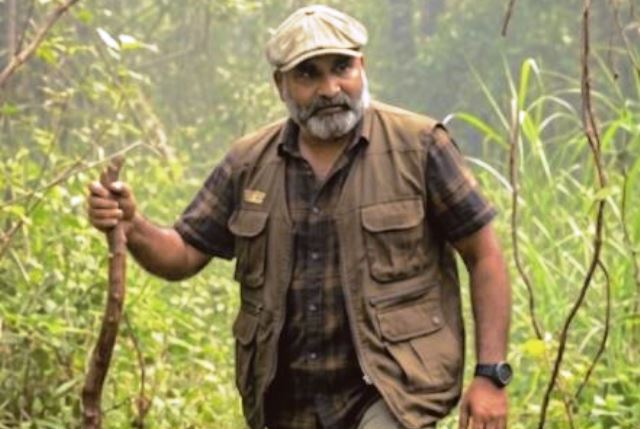
Dr Virendra Pratap Yadav, an anthropologist and a wildlife enthusiast, feels that it is because of the tigers that our forests are safe. His views:

According to our official records, there are 58 tiger reserves in India with an impressive area of about 84,500 square kilometers and it is about 2.56 per cent of the total geographical area of India. The idea of a tiger reserve in India was conceptualized in India in 1973 and the tiger population at that time was 1827. However, with the increasing number of reserves and the efforts made by the governments and the society, the population of tigers in 2022 was 3682 which accounted for 75 per cent of the total population of tigers in the world. At present, the estimated population of tigers in India is somewhere around 3900 to 4000.

While all efforts are being made since day one (1973) to conserve tigers and increase its population, a few things are yet to be taken initiative by all of us as a society, along with the government.

India conserves tigers primarily through Project Tiger (launched in 1973), managing all the dedicated reserves under the National Tiger Conservation Authority (NTCA). Key actions include strict anti-poaching measures, habitat restoration, voluntary village relocation from core areas, technology-driven monitoring (M-STrIPES), and international cooperation to prevent wildlife trade.

Recent additions to our kitty include International Big Cat Alliance (IBCA) that was launched in 2023 and it is a treaty-based intergovernmental organization aiming to conserve seven big cat species, including tigers, across range countries. In addition, 23 Indian tiger reserves have achieved Conservation Assured Global Standards (CA|TS) and Tiger Standards (CA|TS) accreditation, an international benchmark for excellence in management. Besides, India has also signed bilateral agreements with Nepal, Bhutan, China, and Bangladesh to combat illegal wildlife trade and manage trans boundary landscapes like the Sundarbans.
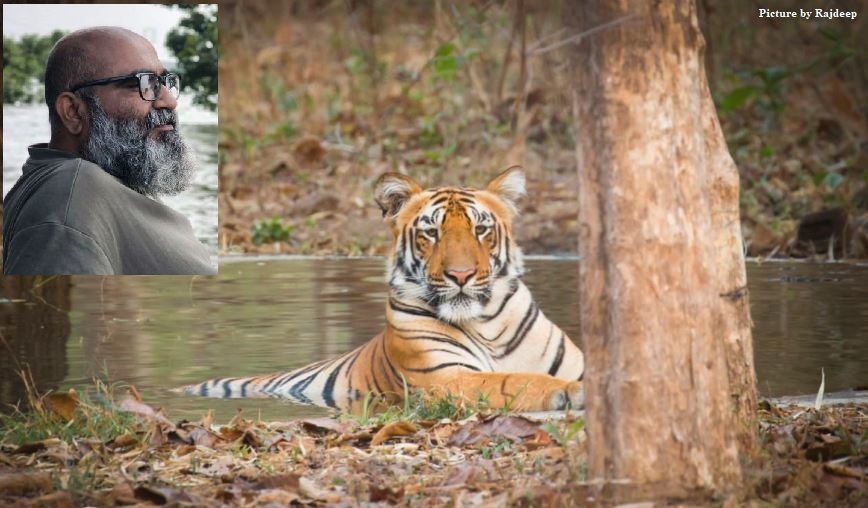
Dr Yadav (inset) says authorities should focus on reviving the corridors connecting tiger reserves

However, there are also some alarming backlashes or problems that are faced by us, the humans. According to the NTCA, 418 people were killed in tiger attacks in India between 2020 and 2025. In 2025 alone, 40 people lost their lives in tiger attacks. Meanwhile, 166 tigers were also killed in India in 2025 alone and 60% of tiger deaths occurred outside designated tiger reserves. This human-tiger conflict, though does not have a permanent solution due to the changing demography and the living habits of humans, we could well work on some of the feasible approaches.

Firstly, authorities should focus on reviving the corridors connecting tiger reserves so that as tiger populations increase in one area, tigers can use those corridors to migrate to other forests. This will amazingly minimize tiger-human conflict.

People should avoid entering the reserve knowingly or unknowingly and If it is unavoidable, visit the jungles in groups and make sure to talk loudly. Tigers have very keen hearing and it is more likely that they will move away from the path. Likewise, farmers should work in groups in the fields adjacent to the reserves. To a tiger, a mustard, sugarcane, or wheat field is grassland, and a human bent over in those fields is an herbivore like a deer, Nilgai, or a pig.
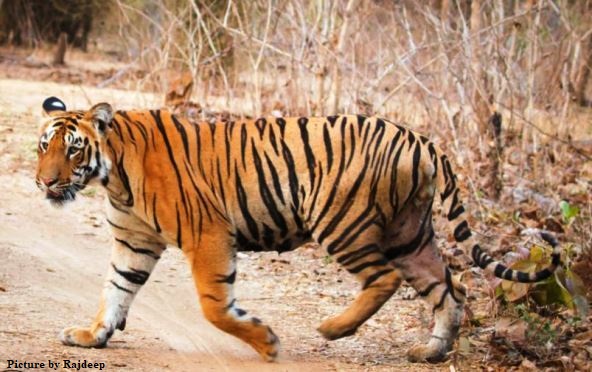
Statistics show that the highest number of people killed by tigers is in Central India and among the many reasons behind this is that natural reservoirs within tiger reserves dry up during the summer, forcing tigers, along with other wildlife, to come out of the forest for water. Though forest departments have constructed water holes within the reserves, they are only filled with water for a few months during the summer. It should be ensured that they remain water-rich throughout the year.

The tiger-human conflict can only be reduced through an understanding of coexistence and forests are preserved because of tigers. Fear of tigers keeps people from venturing into the forests and the day tigers disappear, people’s fear of venturing into the forests will also disappear. Humans will destroy the forests and all its wealth and ultimately, humans will destroy themselves.

As told to Rajat Rai

(The pictures of tiger used in the story are clicked by Rajdeep, a Mass Communication student at Wardha University and a wildlife photographer)
Lessons From Iran War: India May Recalibrate Its Missile Technology

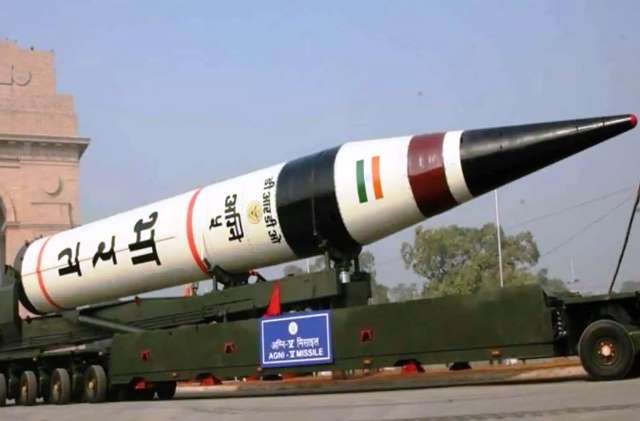
Defence Secretary Rajesh Kumar Singh on Thursday indicated that India may need to reassess its conventional missile capabilities in light of emerging global conflict, particularly developments in West Asia and neighbouring Pakistan’s military posture.

Speaking at the ANI National Security Summit 2.0 in the national capital, marking one year of Operation Sindoor, Singh highlighted the growing importance of advanced weaponry, strong air defence systems, and rapid procurement mechanisms.

Responding to a query on whether lessons from the West Asia conflict and concerns over civilian targeting necessitate a shift in India’s defence planning, Singh acknowledged a changing strategic environment.

Defence Secretary said, “So there is an emerging rationale for a conventional missile force given what has happened in West Asia and to the extent that Pakistan, for example, is building a conventional missile force. Its usage was–the paradigm was that it’ll be mostly used for strategic purposes–but now that that paradigm has shifted, we’ll have to adjust accordingly.”

He further added that India would not delay institutional processes while simultaneously boosting production capacity.

“We will not wait for the institutional part of raising a force will go on in parallel with providing the supply orders to industry to start scaling up production of missiles, which is a big challenge in India because so far we’ve essentially relied on one producer, one public sector producer and some in-house production capabilities of DRDO,” the Defence Secretary stated.

Highlighting the need for wider industrial participation, Singh added, “We’ll have to expand it and make it across industry on a much bigger scale, but yes both of these actions will have to be taken–that is the reading of our, of the Defence Ministry.”

His remarks come amid growing debates within strategic circles on whether recent conflicts in West Asia, including in West Asia, signal a shift towards increased use of conventional missile systems and broader targeting doctrines.

He outlined key priorities for modernising India’s armed forces, saying lessons from global conflicts are guiding India’s defence modernisation, with a focus on air defence, drones, and fast-track procurement to address capability gaps.

The Defence Secretary said lessons drawn from ongoing conflicts in West Asia and the Russia-Ukraine war are shaping procurement and capability-building efforts.

Responding to a question on the top priorities in defence modernisation amid global conflicts, the Defence Secretary said, “Both from Op Sindhu and from West Asia as well as the ongoing Ukraine conflicts, you do have lessons, things like the importance of standoff weaponry, of a layered and strong air defence system, of sufficient stockpiles of ammunition and missiles, of ensuring that your radars are mobile and your artillery is also mobile.”

He said these lessons have already influenced procurement decisions. “All of those lessons are fairly clear and we’ve taken those lessons and accordingly calibrated our procurements, which is why, for example, on the EP side, the bulk of what we did, almost Rs 30,000 crores worth of EP contracts after Op Sindhu, and the bulk of those contracts have gone primarily for drones and counter-drone systems, loitering munitions, and some types of radars and EW equipment as well,” Singh said.

The session “Future of Warfare and National Security” also featured DRDO Chairman Dr Samir V. Kamat and Chief of Integrated Defence Staff Air Marshal Ashutosh Dixit. The summit was inaugurated by Defence Minister Rajnath Singh.

Emphasising the need to strengthen these priorities further, Singh referred to a major defence initiative announced by the Prime Minister.

“As you are aware, the Hon’ble Prime Minister had announced a multilayered sort of air defence and offensive system called Sudarshan Chakra Mission from the Red Fort last year. A committee under the DRDO chairperson has already submitted a kind of pre-feasibility report on that mission. So we’ll be working on all of that,” he added.

The Defence Secretary also stressed the importance of speeding up procurement processes. “Even as these committee reports come in, whether it is this or whether it’s things like the revision of DAP, we will continue to also focus on ensuring that parallelly, we do the fast-track procurement that we really need,” he said.

Highlighting recent progress, Singh noted that procedural efficiency can significantly improve outcomes.

“When I say fast-track, I mean that even the procedural changes might take some time, but even within the existing procedures, you should be able to do things faster if you essentially pursue things effectively, which is what we’ve done over the last two and a half years,” he said.

He added, “We’ve signed almost Rs 4.5 lakh crores of contracts in the last two years. So yes, we are on the job and hopefully we’ll be ensuring that these lessons are not only learned, but they are adequately implemented in terms of filling any critical capability gaps that might exist.” (ANI)

TVK Vijay Will Form Govt In Tamil Nadu With Over 150 Seats: KK Anand

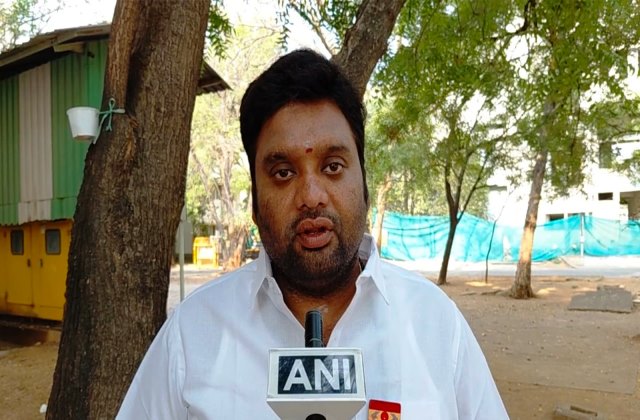
As exit polls for the Tamil Nadu Assembly elections sparked political reactions, Tamilaga Vettri Kazhagam (TVK) leader and Erode West Assembly constituency candidate K.K. Anand Mohan on Tuesday asserted that the party remains confident of forming the government with a clear majority.

Speaking to ANI, Anand Mohan said that the party does not attach any significance to exit poll predictions and expressed confidence that TVK founder Thalapathy Vijay will form the government on May 4 with more than 150 seats.

“Despite various exit polls coming out, we do not care about them. Vijay will form the government on May 4 with a single majority after winning more than 150 seats,” he said.

He further claimed that a large section of voters have supported the party, stating that “seven out of ten people” had voted for TVK’s whistle symbol, adding that the votes were cast in favour of Vijay’s leadership.

Reiterating the party’s stance, Anand Mohan said that both the leadership and candidates remain confident about their prospects. “Vijay is confident that he will form the government, and the people are also confident. We do not give importance to opinion poll results,” he said.

Anand Mohan further informed that Vijay has called for a consultation meeting in Chennai on Tuesday, which party candidates are set to attend. “We are now moving to attend the meeting. Only good things will happen, victory is certain,” he added.

Meanwhile, in Tamil Nadu, Axis My India exit poll projected that Tamilaga Vettri Kazhagam (TVK) would get 98-120 seats in its debut election, DMK-led alliance 92-100 seats and the five-party alliance led by BJP getting 22-32 seats.

According to Axis My India, Vijay is ahead of Chief Minister MK Stalin in terms of choice for the next Chief Minister. While Stalin was supported by 35 per cent of those polled, Vijay got the support of 37 per cent.

Several other exit polls predicted that the alliance led by the ruling DMK will return to power in the state. People Pulse projected 125-145 seats for the DMK-led alliance and AIADMK-led alliance, which includes the BJP, getting 65-80 seats. It projected Vijay’s Tamilaga Vettri Kazhagam (TVK) getting two to six seats. Tamil Nadu has 234 assembly seats.

According to exit poll projections by Matrize, DMK and allies will get 122-132 seats and AIADMK and allies 80-100 seats. It said TVK would get 0-6 assembly seats.

The exit poll by P-MARQ projected 125-145 seats for DMK-led alliance, 60-70 seats for AIADMK-led alliance and one to six seats for TVK.

People Insight projected 120-140 seats for DMK-led alliance, 60-70 for AIADMK-led alliance and 30-40 seats for TVK.

DMK-led Secular Progressive Alliance (SPA) in Tamil Nadu also includes the Congress.

The counting of votes will take place on May 4. (ANI)

Sensex Tanks Over 900 Points As Crude Prices Shoot Up

The domestic stock markets opened under heavy selling pressure on Thursday as Brent crude oil futures surged above USD 120 per barrel, denting investor sentiment amid continued uncertainty in West Asia.

The Nifty 50 index opened at 23,899.20, falling 278.45 points or 1.15 per cent, while the BSE Sensex opened at 76,582.24, down 914.12 points or 1.18 per cent.

Market participants said the sharp rise in crude prices and lack of clarity on the geopolitical situation have led to heightened volatility and risk aversion.

Ajay Bagga, Banking and market expert, told ANI that domestic markets are facing significant pressure, with early indications such as GIFT Nifty pointing to a gap-down opening of over 140 points.

He noted that as a major oil importer, India is witnessing pressure on its currency and bond markets, with the rupee weakening to near Rs 95 per US dollar and bond yields rising.

He said “Today marks the monthly expiry for BSE contracts, which is expected to amplify the downward volatility triggered by the crude spike and FII outflows. The market is currently in a ‘wait-and-watch’ mode regarding whether the U.S. will move beyond a blockade to direct military action, which remains the primary tail-risk for the coming weeks. With a long weekend coming up expect sharp moves and paring of positions in Indian markets”.

The geopolitical situation has intensified as US President Donald Trump stated that the naval blockade of the Strait of Hormuz will continue until Iran agrees to a new nuclear and security deal. The US has rejected Iran’s proposal to reopen the Strait before negotiations, increasing fears of prolonged supply disruptions.

Sectorally, all major indices on the NSE opened in the red, indicating broad-based selling. Nifty Auto declined 1.84 per cent, Nifty FMCG fell 1.04 per cent, Nifty Metal dropped 1.25 per cent, Nifty Media slipped 0.96 per cent, and Nifty Private Bank declined 1.48 per cent. Nifty IT was down 0.6 per cent, while PSU Bank stocks also saw pressure, falling 1.73 per cent.

In the commodities market, Brent crude futures surged to as high as USD 121 per barrel during early trade, a level not seen in last four years. July futures opened at around USD 111 per barrel. Meanwhile, WTI crude was also trading significantly higher, near USD 108 per barrel.

The energy market is reacting sharply to the ongoing deadlock in the US-Iran conflict, with the Strait of Hormuz effectively seen as “closed for business,” raising concerns of long-term supply constraints from West Asia.

Other Asian markets also reflected weakness, with Japan’s Nikkei 225 falling over 1.13 per cent to 59,242, Hong Kong’s Hang Seng declining 1.32 per cent to 25,766, and South Korea’s KOSPI down 0.27 per cent to 6,672. However, Taiwan’s weighted index bucked the trend, rising 0.48 per cent to 39,475. (ANI)

Security Summit 2.0: Rajnath Calls Pakistan Epicentre of Terrorism

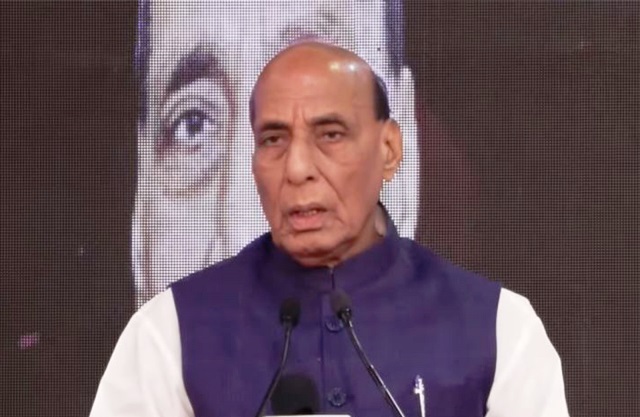
Defence Minister Rajnath Singh on Thursday affirmed that India voluntarily put a halt to Operation Sindoor on its own terms and was ready for a long war against Pakistan.

Addressing the ANI National Security Summit 2.0, Rajnath Singh called Pakistan the epicentre of International Terrorism and called for uprooting the ideological and political roots of terrorism.

Hailing Prime Minister Narendra Modi’s leadership, the Defence Minister lauded the “zero tolerance policy.” He also noted that India did not fall for the “bluff” of a nuclear attack.

Recalling Operation Sindoor, which came as India’s response to the deadly Pahalgam terror attack last year, the Union Minister said, “It’s been almost a year since Operation Sindoor, and our Operation Sindoor is also a symbol of this new world order. It was a turning point that sent a message to the entire world that India is no longer the one that adheres to the old way of thinking, where terrorist attacks occur on our soil, we merely issue diplomatic statements. And under Prime Minister Modi’s leadership, our government has maintained that no terrorist activity will be tolerated under any circumstances.”

He added that the Indian armed forces have expanded their capabilities since then and are robust in times of sudden need.

“During Operation Sindoor, we precisely targeted those who had attacked us. And I want to clarify here again that we didn’t stop this operation because our capabilities had diminished. We stopped it voluntarily, on our own terms, and if necessary, we were fully prepared for a long war. And we also had surge capacity, the ability to expand our capabilities in times of sudden need. Not only did we have it, but we still have it, and it’s even more robust than before. Therefore, I don’t think there’s any need to say anything more,” he said.

Slamming Pakistan, Defence Minister Singh noted three dimensions of terrorism: operational, ideological, and political. He called for destroying the political patronage of terrorism in the neighbouring country.

He said, “Terrorism is not just an anti-national act, it has multi-dimensions, and terrorism can only be dealt with if we tackle it in all its three dimensions–operational, ideological, and political. The true IP address of terrorism is its ideological and political roots, where it thrives. The ideological nourishment and political patronage of terrorism is the nectar in Ravana’s navel, which, after cutting off one head, regenerates another. I believe it is essential to dry up this navel that gives life to terrorism.”

“We have always seen that countries like Pakistan have consistently supported terrorism, and this is why both India and Pakistan gained independence at the same time, but today, India is known worldwide for its Information Technology, while Pakistan is considered the epicentre of other IT, i.e., International Terrorism. Our military industrial complex has proven that it is not only for the period of peace, but it is also prepared for rapid supply during wartime. We were even threatened with a nuclear attack, but we did not fall for that bluff,” the Defence Minister added.

As India mourned the 26 lives lost in the Pahalgam attack, what followed was decisive action by the Indian armed forces in the form of Operation Sindoor. Indian armed forces struck terror bases in Pakistan and Pakistan-occupied Jammu and Kashmir (PoJK).

In Operation Sindoor, launched on May 7, 2025, India successfully destroyed nine major terror launchpads in Pakistan and Pakistan-occupied Jammu and Kashmir (PoJK), targeting Lashkar-e-Taiba, Jaish-e-Mohammed, and Hizbul Mujahideen facilities. Indian armed forces killed over 100 terrorists in action.

Pakistan responded with drone attacks and shelling, which led to a four-day conflict between the two neighbouring countries. India showed formidable defence and conducted retaliatory strikes, destroying Radar installations in Lahore and Radar facilities near Gurjanwala.

Inflicted by heavy damage, Pakistan’s Director General of Military Operations (DGMO) called the Indian DGMO and a ceasefire was agreed on May 10. (ANI)

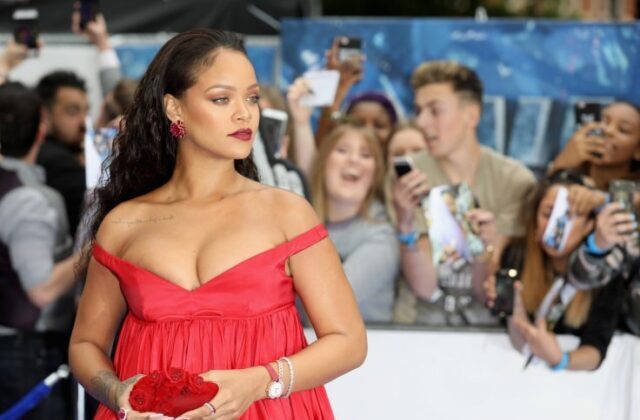
‘Unforgettable Experiences’: Rihanna Recalls Her India Visit

Global pop icon Rihanna has revisited her recent Mumbai visit with a heartfelt social media post, calling the launch of her Fenty Beauty “Ki Haveli” pop-up in India “one of the most unforgettable and heartwarming experiences.”

Sharing a series of vibrant photos on Thursday, the singer-entrepreneur greeted fans with “Namaste Mumbai!!” and reflected on the immersive in-person debut of her beauty brand’s India activation.

“Still daydreaming about one of the most unforgettable and heartwarming experiences…” she wrote, expressing gratitude for the warm reception she received during her visit.

The “Fenty Beauty Ki Haveli” pop-up, currently open in Mumbai until May 4, 2026, blends Fenty Beauty’s product range, including lip oils and mascaras, with culturally inspired design elements. The installation features pink vendor-style carts, ornate decor, and large branded backdrops, creating a festive, haveli-like atmosphere.

Rihanna also encouraged fans to attend the event before it concludes, writing, “It was so fun getting to debut the @fentybeauty Ki Haveli pop-up with you in person, and it will be open until May 4 so make sure you check it out before then!”

The post quickly garnered high engagement online, with fans praising the fusion of Fenty Beauty’s global identity with Indian cultural aesthetics.

Rihanna’s India visit has generated major buzz online, with several clips from the launch event circulating widely.

Videos showed her interacting warmly with influencers, greeting fans, and attending an after-party with Janhvi Kapoor and designer Manish Malhotra.

Another video that went viral from her Mumbai visit showed the pop star saying “shukriya” to the crowd stationed outside.

The ‘We Found Love’ singer also attended an intimate luncheon with the Ambani family.

Rihanna was welcomed at the Ambani residence by Isha, Shloka, Radhika, and Anant Ambani. The gathering went beyond a social call, offering a curated cultural experience with presentations of Indian dance, traditional art, and heritage displays.

The visit coincides with a key business development, the official launch of Fenty Beauty in India through Reliance Retail.

Images from the event show Rihanna interacting with the Ambani family in a setting adorned with floral arrangements and traditional artefacts, reflecting an immersive cultural theme.

Rihanna last visited Mumbai in 2024, when she attended Anant Ambani and Radhika Merchant’s wedding celebrations.

She launched Fenty Beauty on September 8, 2017, in collaboration with LVMH. The brand quickly made waves in the beauty industry for its commitment to inclusivity, debuting with a foundation line featuring 40 shades catering to a wide range of skin tones. (ANI)

Exit Polls: BJP Wins Assam, Bengal; UDF Gets Keralam; DMK Stays In Tamil Nadu

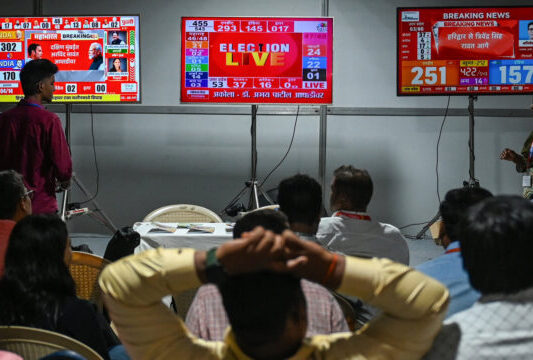
Exit polls on Wednesday projected that the BJP-led NDA was poised to win Assam and the Congress-led UDF Keralam with the most surveys also stating that the BJP is on its way to form its first government in West Bengal.

The surveys predicted that the DMK-led alliance would again return to power in Tamil Nadu, but Axis My India projected that actor-turned politician Vijay’s TVK is set for a blockbuster performance in the southern state and is poised to get as much vote share as DMK in its debut election.

In Puducherry, the exit polls projected the NR Congress-led alliance returning to power. Exit poll numbers projected an interesting tussle in West Bengal, with the BJP ahead in most of the projections.

Chanakya Strategies projected the BJP winning 150-160 seats in 294 West Bengal assembly and getting a majority of its own. It said that Chief Minister Mamata Banerjee-led Trinamool Congress (TMC) would win 30-40 seats and others six to 10 seats.

Matrize predicted BJP getting 146-161 seats in West Bengal, TMC 125-140 seats and others 6-10 seats. JVC projected that BJP would get 138-159 seats, the Trinamool Congress 131-152 seats, Congress 0-2 seats, Left parties 0-1 seat and others 0-1 seat. P-Marq exit poll projected 150-175 seats for BJP, 118-138 for Trinamool Congress and 2-6 for others. People Pulse projected 95-100 seats for BJP, 177-187 seats for Trinamool Congress, 1-3 seats for Congress and 0-1 seat for Left parties. Poll Diary exit poll projected 142-147 seats for BJP, 99-127 for Trinamool Congress, 3-5 for Congress, 2-3 for Left parties and 0-1 for others.

In Tamil Nadu, Axis My India exit poll projected that Tamilaga Vettri Kazhagam (TVK) would get 98-120 seats in its debut election, DMK-led alliance 92-100 seats and the five-party alliance led by BJP getting 22-32 seats.

According to Axis My India, Vijay is ahead of Chief Minister MK Stalin in terms of choice for the next Chief Minister. While Stalin was supported by 35 per cent of those polled, Vijay got the support of 37 per cent.

Several other exit polls predicted that the alliance led by the ruling DMK will return to power in the state

People Pulse projected 125-145 seats for the DMK-led alliance and AIADMK-led alliance, which includes the BJP, getting 65-80 seats. It projected Vijay’s Tamilaga Vettri Kazhagam (TVK) getting two to six seats. Tamil Nadu has 234 assembly seats.

According to exit poll projections by Matrize, DMK and allies will get 122-132 seats and AIADMK and allies 80-100 seats. It said TVK would get 0-6 assembly seats.

The exit poll by P-MARQ projected 125-145 seats for DMK-led alliance, 60-70 seats for AIADMK-led alliance and one to six seats for TVK.

People Insight projected 120-140 seats for DMK-led alliance, 60-70 for AIADMK-led alliance and 30-40 seats for TVK.

DMK-led Secular Progressive Alliance (SPA) in Tamil Nadu also includes the Congress.

Vijay, who is seen to have huge popularity among youth, had last week described the Tamil Nadu Assembly polling voter turnout as a “pinnacle historical event” in the history of the state’s electoral politics and said that the “victory is certain”.

“Greetings to all who reside in my heart,” he began his post on X.

“Politics is something only for some celestial warriors. Only for those with excessive experience. Only for those who enjoy positions. The illusory calculations of those who confined and controlled politics within such specific boundaries have been shattered and crushed by ordinary people,” he said.

“No one would have failed to be amazed seeing families, family by family, with little children, coming to vote, just like the crowds seen at temples anywhere for polling stations. And is that all? Can we not clasp our hands in salute to those democrats who came, spending great sums, from other states and even from foreign countries just to vote?” The meaning of calling it an election festival, a democratic festival, was truly felt only yesterday. This April 23, 2026. Yet, this is only a beginning,” he added.

Vijay’s entry had turned the Tamil Nadu polls triangular. The politics in the state has traditionally been dominated by alliances led by DMK and AIADMK.

In Keralam, exit polls projected that the Congress-led United Democratic Front (UDF) is poised to unseat ruling Left Democratic Front (LDF), bringing its 10-year rule in the state to an end.

Axis My India projected a comfortable majority for UDF and said it is poised to win 78 to 90 seats in the 140-member assembly. It said the Left Democratic Front would win 49 to 62 seats and the BJP-led NDA zero to three seats.

According to People’s Pulse, the ruling LDF is poised to win 55 to 60 seats, UDF 75 to 85 seats and NDA 0-3 seats.

JVC projected that UDF would win with 72 to 84 seats, LDF 52-60 seats and BJP-led NDA three to eight seats.

Matrize predicted 70-75 seats for UDF, 52-61 seats for LDF and 3-7 for BJP-led NDA.

The LDF had won the 2021 polls and broken the trend of the state having a change of government every five years.

The last assembly polls were a setback for UDF and exit poll predictions will be music to the ears of the leaders of the Congress-led alliance.

The results of Keralam elections will be out on May 4, along with the outcome of elections in Tamil Nadu, West Bengal, Assam and Puducherry.

The exit poll projections were released after the second phase of polling in West Bengal. Assam, Kerala and Puducherry went to the polls on April 9 and Tamil Nadu on April 23. West Bengal went to the polls in two phases on April 23 and April 29. States recorded a very high voter turnout. In Assam, exit polls predicted that the BJP-led National Democratic Alliance is poised to retain power for a third successive term.

Axis My India projected that the BJP-led NDA would secure 88-100 seats and Congress-led alliance 24 to 36 seats. The state has 126 assembly seats.

JVC predicted 88-101 seats for the NDA and 23-33 seats for the Congress-led alliance. It gave 0-2 seats in AIUDF and three to others.

Matrize projected 85-95 seats for the BJP-led alliance, 25-32 for the Congress-led alliance and 6-12 seats for others. P-Marq projected 82-94 seats for the BJP-led alliance, 30-40 for the Congress-led alliance and 1-5 for others. The Congress stitched a six-party alliance to take on the ruling BJP-led NDA in Assam.

In Puducherry, pollsters projected victory for the ruling All India NR Congress-led (AINRC) alliance, which also includes the BJP.

The exit poll by People Pulse projected 16-19 seats for NDA in the 30-member assembly. It said Congress and allies will win 10 to 12 seats. Axis My India also predicted that the NDA would win the Puducherry Assembly polls and get 16-20 seats. It projected Congress and allies getting six to eight seats, TVK two to four seats and others one to three seats. (ANI)

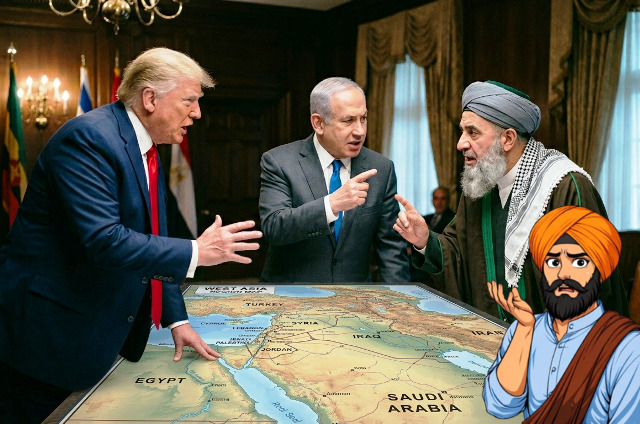
Trump Rejects Iran’s Peace Offer, Says Blockade To Continue

US President Donald Trump in an exclusive interview to Axios on Wednesday, said that he would continue to keep the naval blockade until Iran agrees to deal with the United States by addressing America’s concerns about the nuclear program.

As per Axios, Trump is rejecting the Iranian proposal to first open the Strait of Hormuz and lift the blockade, while postponing the nuclear talks to a later stage.

Trump told Axios he saw the blockade as “somewhat more effective than the bombing,” and, as sources said, he had yet to order any kinetic action as of Tuesday night.

“The blockade is somewhat more effective than the bombing. They are choking like a stuffed pig. And it is going to be worse for them. They can’t have a nuclear weapon,” Trump told Axios.

This comes on the heels of POTUS posting an AI-generated meme of himself holding a gun with a warning to Iran and the tagline, “NO MORE MR. NICE GUY.”

While, as of now, Donald Trump sees continuing the blockade as his primary source of leverage, according to Axios, sources said that he would consider military action if Iran still doesn’t cave.

However, Trump declined to discuss any military plans in Wednesday’s phone interview with Axios.

It further reported that while Trump said Iran wants to settle and does not want to see a continuation of the naval blockade, Trump on the other hand, does not want Tehran to have nuclear weapons.

“They want to settle. They don’t want me to keep the blockade. I don’t want to [lift the blockade], because I don’t want them to have a nuclear weapon,” Trump added.

As per Axios, Trump claimed that due to the blockade, Iran is not able to export oil, thus its storage and pipelines, “are getting close to exploding” because Iran can’t export oil due to the blockade. However, analysts doubt that Iran is in immediate danger on that front.

As the security situation develops in the region, Axios reported, citing three sources, that the US Central Command (CENTCOM) has prepared a plan for a “short and powerful” wave of strikes on Iran in hopes of breaking the negotiating deadlock.

It further mentioned that post the strikes, which would likely include infra targets, Washington would press the regime to come back to the negotiating table and show more flexibility.

Meanwhile, a senior Iranian security source quoted by English-language state media PRESS TV said on Wednesday the U.S. naval blockade “will soon be met with practical and unprecedented action.”

While the source said that Iran’s armed forces have shown restraint to give diplomacy a chance and provide Trump with an opportunity to end the war, the source stressed Iran’s armed forces “believe that patience has limits and that a punishing response is necessary” if the blockade continues.

Also on Wednesday, Iran’s Parliament Speaker, MB Ghalibaf, in an audio message, affirmed that Iran would defeat the “deceitful plan” of its adversaries and that US President Donald Trump is seeking the country’s surrender through “internal discord and naval blockade”, as reported by ISNA. (ANI)

Vicky Flaunts His Caffeinated Cheeks

Actor Katrina Kaif has carved a strong identity as a beauty mogul, with her brand Kay Beauty becoming a favourite among makeup lovers.

Since its launch in 2019, Kay Beauty has steadily grown in popularity. Recently, the brand added three new shades to its viral Jelly Lip & Cheek Popsicle range, Cotton Candy, Cherry Cola, and Iced Latte, bringing a nostalgic, summer-inspired twist to its collection.

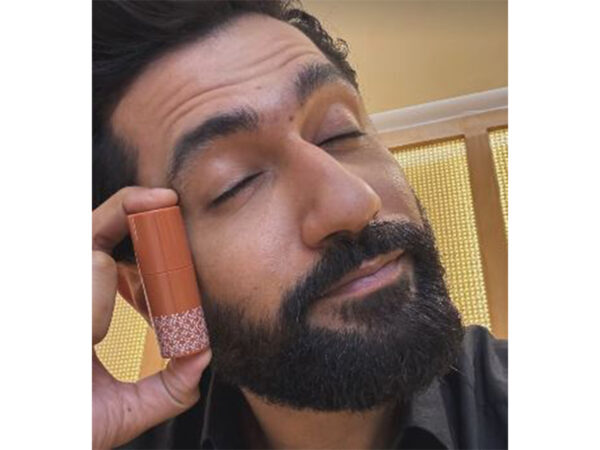
And the latest customer to try this Jelly lip and cheek wand is none other than Katrina’s husband and actor Vicky Kaushal.

On Wednesday, Vicky took to Instagram and shared a picture in which he could be seen flaunting his “caffeinated cheeks” after the application of the “Iced Latte” cheek product.

“caffeinated cheeks for caffeinated me. What a wow,” he captioned the post.

Meanwhile, on the work front, Vicky will be seen sharing screen space with Ranbir Kapoor and Alia Bhatt in Sanjay Leela Bhansali’s ‘Love and War’, which will hit the theatres on January 21, 2027.

The project has been mounted on a grand scale and is being billed as Bhansali’s most ambitious romantic drama to date.

‘Love and War’ will release in Hindi, Tamil and Telugu. The movie will be the second collaboration between Ranbir Kapoor and Sanjay Leela Bhansali since the actor’s 2007 debut ‘Saawariya’.

Alia Bhatt teamed up with Bhansali in the 2022 drama ‘Gangubai Kathiawadi’. This movie will mark Vicky Kaushal’s first project with Bhansali.

‘Love and War’ was officially announced in January 2024. The original announcement on Instagram read, “We bring you Sanjay Leela Bhansali’s epic saga ‘Love & War.’ See you at the movies.” (ANI)

Ranbir’s Impromptu Dance With Neetu Kapoor Wins Hearts

Ranbir Kapoor shares a strong and affectionate bond with his mother, veteran actor Neetu Kapoor, a relationship that is widely known in the film industry.

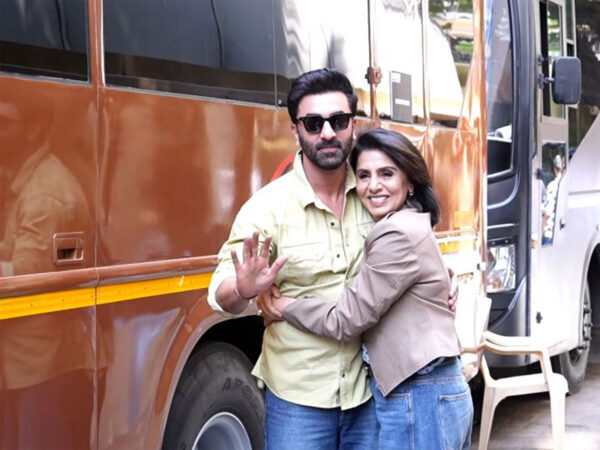
Interestingly, on Wednesday, Ranbir and Neetu gave fans a sneak peek into their adorable bond, thanks to Mumbai-based paps.

Earlier in the day, the mother-son duo stepped out together in the city for a work commitment. And, paps, in no time, stationed outside their vanity, and captured them.

Ranbir and Neetu happily posed for shutterbugs. Neetu hugged him and even gave a peck on his cheek.

Upon his mother’s request, Ranbir also cutely enacted steps from Neetu Kapoor’s song ‘Senti’ from her upcoming film ‘Daadi Ki Shaadi’.

Meanwhile, on the work front, Ranbir Kapoor will be seen in the much-awaited ‘Ramayana’. The film is directed by Nitesh Tiwari and produced by Namit Malhotra. It is planned as a two-part series and is one of the biggest projects in Indian cinema.

The film also stars Sai Pallavi as Sita, Yash as Ravana, Sunny Deol as Hanuman, and Ravi Dubey as Lakshman. The music for the film is composed by Hans Zimmer and A. R. Rahman.

He also has Sanjay Leela Bhansali’s directorial ‘Love and War’ with Vicky Kaushal and wife Alia Bhatt in his kitty.

The film hit the theatres on January 21, 2027.

Love and War will release in Hindi, Tamil and Telugu. The movie will be the second collaboration between Ranbir Kapoor and Sanjay Leela Bhansali since the actor’s 2007 debut ‘Saawariya’. (ANI)