
Tigers And Humans Need To Coexist For Mutual Survival
Dr Virendra Pratap Yadav, an anthropologist and a wildlife enthusiast, feels that it is because of the tigers that our forests are safe. His views:
According to our official records, there are 58 tiger reserves in India with an impressive area of about 84,500 square kilometers and it is about 2.56 per cent of the total geographical area of India. The idea of a tiger reserve in India was conceptualized in India in 1973 and the tiger population at that time was 1827. However, with the increasing number of reserves and the efforts made by the governments and the society, the population of tigers in 2022 was 3682 which accounted for 75 per cent of the total population of tigers in the world. At present, the estimated population of tigers in India is somewhere around 3900 to 4000.
While all efforts are being made since day one (1973) to conserve tigers and increase its population, a few things are yet to be taken initiative by all of us as a society, along with the government.
India conserves tigers primarily through Project Tiger (launched in 1973), managing all the dedicated reserves under the National Tiger Conservation Authority (NTCA). Key actions include strict anti-poaching measures, habitat restoration, voluntary village relocation from core areas, technology-driven monitoring (M-STrIPES), and international cooperation to prevent wildlife trade.
Recent additions to our kitty include International Big Cat Alliance (IBCA) that was launched in 2023 and it is a treaty-based intergovernmental organization aiming to conserve seven big cat species, including tigers, across range countries. In addition, 23 Indian tiger reserves have achieved Conservation Assured Global Standards (CA|TS) and Tiger Standards (CA|TS) accreditation, an international benchmark for excellence in management. Besides, India has also signed bilateral agreements with Nepal, Bhutan, China, and Bangladesh to combat illegal wildlife trade and manage trans boundary landscapes like the Sundarbans.
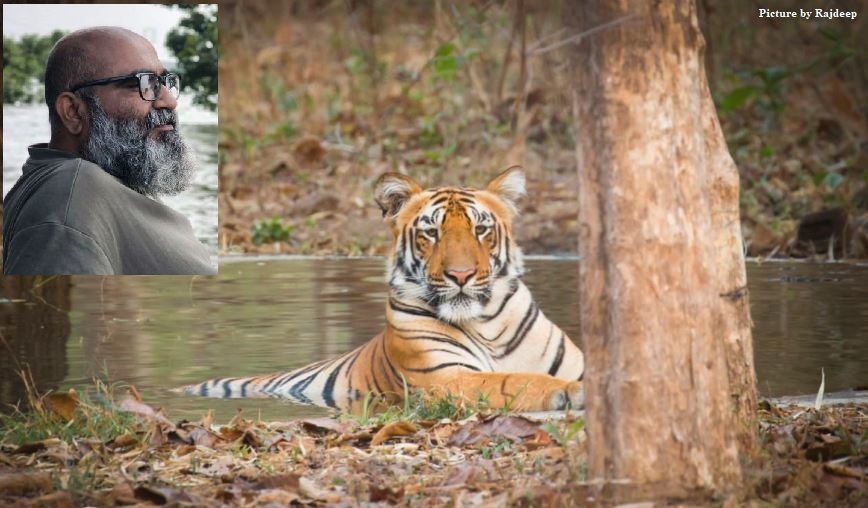
However, there are also some alarming backlashes or problems that are faced by us, the humans. According to the NTCA, 418 people were killed in tiger attacks in India between 2020 and 2025. In 2025 alone, 40 people lost their lives in tiger attacks. Meanwhile, 166 tigers were also killed in India in 2025 alone and 60% of tiger deaths occurred outside designated tiger reserves. This human-tiger conflict, though does not have a permanent solution due to the changing demography and the living habits of humans, we could well work on some of the feasible approaches.
Firstly, authorities should focus on reviving the corridors connecting tiger reserves so that as tiger populations increase in one area, tigers can use those corridors to migrate to other forests. This will amazingly minimize tiger-human conflict.
People should avoid entering the reserve knowingly or unknowingly and If it is unavoidable, visit the jungles in groups and make sure to talk loudly. Tigers have very keen hearing and it is more likely that they will move away from the path. Likewise, farmers should work in groups in the fields adjacent to the reserves. To a tiger, a mustard, sugarcane, or wheat field is grassland, and a human bent over in those fields is an herbivore like a deer, Nilgai, or a pig.
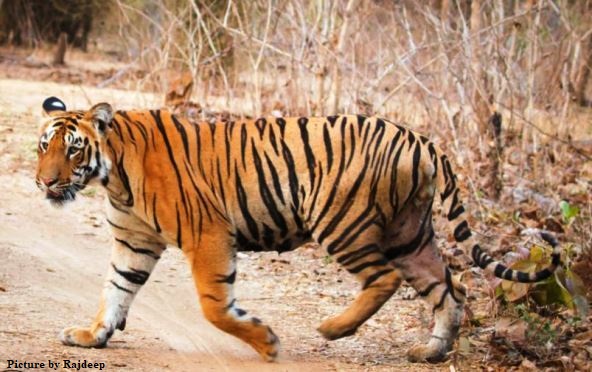
Statistics show that the highest number of people killed by tigers is in Central India and among the many reasons behind this is that natural reservoirs within tiger reserves dry up during the summer, forcing tigers, along with other wildlife, to come out of the forest for water. Though forest departments have constructed water holes within the reserves, they are only filled with water for a few months during the summer. It should be ensured that they remain water-rich throughout the year.
The tiger-human conflict can only be reduced through an understanding of coexistence and forests are preserved because of tigers. Fear of tigers keeps people from venturing into the forests and the day tigers disappear, people’s fear of venturing into the forests will also disappear. Humans will destroy the forests and all its wealth and ultimately, humans will destroy themselves.
As told to Rajat Rai
(The pictures of tiger used in the story are clicked by Rajdeep, a Mass Communication student at Wardha University and a wildlife photographer)