Court Rejects Complaint Against Kapil Mishra

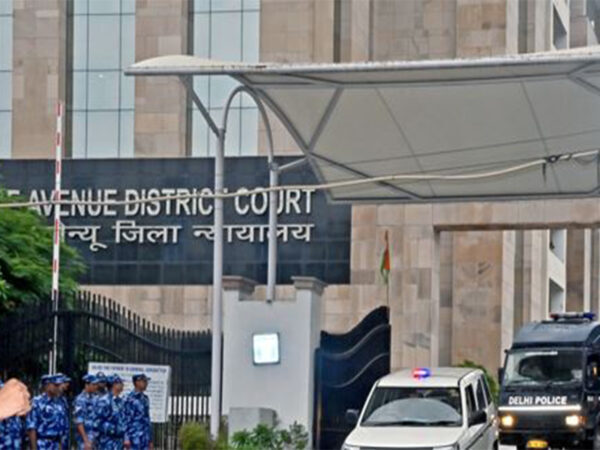
The Rouse Avenue court on Wednesday dismissed a complaint filed against Delhi Law Minister Kapil Mishra and other proposed accused for non-appearance of the complainant as well non prosecution. This complaint was filed by one Mohd. Ilyas in connection with the North East Delhi riots of 2020.

The court also expressed strong displeasure over the contradictory statements given by the counsel for the complainant.

Additional Chief Judicial Magistrate (ACJM) Ashwani Panwar dismissed the Complaint moved by Mohd. Ilyas for his non-appearance and non-prosecution of the same.

The court also noted that the complainant was absent on Wednesday and on previous dates.

ACJM Panwar said, “The absence of the complainant without any sufficient reason shows that the complainant is deliberately delaying the proceedings of the present matter.”

“In such circumstances, this Court is constrained to dismiss the present complaint case due to non-prosecution by the complainant. Accordingly, the present complaint case stands dismissed for non-appearance of the complainant as well as non-prosecution,” ACJM Ashwani Panwar ordered on April 29.

Earlier, the court had rejected the prayer for registration of an FIR. The court has asked the complainant to record his statment.

The court was earlier informed that a revision petition was filed against the order passed on March 13, 2026. Thereafter, the matter was listed for examination of the complainant on March 27.

The court noted that even on 27.03.2026, the complainant failed to appear before the Court for his examination and at the request of Counsel for the complainant, the matter was adjourned for 08. 04.2026 at 11:30 AM.

On 08.04.2026, again the complainant was absent, his Counsel submitted that a revision petition had been preferred before the Session Judge, Rouse Avenue court, against the order of March 13, 2026. The matter was adjourned for 17.04.2026.

On 17.04.2026, again, an adjournment was sought by the complainant side, citing the non-availability of arguing counsel Mehmood Pracha. The complainant was also not present on the said date. Accordingly, at request, the matter was adjourned for April 29, subject to the last and final opportunity.

On April 29, the submission was made that the revision petition will be filed shortly before the Sessions Court, which is in contradiction to the submissions of Counsel, which were duly recorded in an order dated 08.04.2026, the court noted.

“The conduct of the Learned Counsel for the complainant in making a contradictory statement before the Court speaks volumes about their casual approach in conducting the proceedings of the present matter,” the court said in the order.

The court further said that the absence of the complainant from the last three dates of hearing shows that he is not interested in pursuing the present matter.

“On specific query, no plausible explanation for non-appearance of the complainant has been stated by the Learned Counsels appearing on his behalf,” the court noted.

The court made a specific query with respect to the next date of hearing before the Learned Revisionist Court. The Counsel stated that they will be filing the revision petition within a short span of time. (ANI)

Kareena Channels Fan-Girl Moment As Diljit Performs ‘Morni’

Actor Kareena Kapoor Khan is clearly channelling a fangirl moment, swooning over Diljit Dosanjh’s latest stint on ‘The Tonight Show Starring Jimmy Fallon’.

Taking to her Instagram story, Kareena shared the video of Diljit performing ‘Morni’ on the stage of the popular American talk show and wrote, “Forever a Fan girl.”

It is worth mentioning that Kareena Kapoor and Diljit Dosanjh are known for sharing a long-standing friendship. From working together in films like ‘Udta Punjab’, ‘Good Newwz’, and ‘Crew’ to bonding off-screen, Kareena has often expressed her admiration for the actor-singer.

In a proud crossover moment, Diljit Dosanjh returned to ‘The Tonight Show Starring Jimmy Fallon’ for the second time.

During the episode, Diljit spoke about his journey and reflected on one of the biggest highlights of his recent tour, a concert in Vancouver, Canada, where he performed in front of nearly 55,000 people, many of them from the Indian community.

He also performed his energetic track ‘Morni’ on the show, adding another memorable performance to his growing list of international appearances.

This wasn’t Diljit’s first time on Fallon’s stage. In 2024, he made his debut on the show with crowd-favourite tracks G.O.A.T. and Born to Shine.

Introduced then as the “biggest Punjabi artist on the planet,” he impressed viewers with his signature stage presence and a vibrant Bhangra performance in a traditional white dhoti-kurta and turban.

On the professional front, Kareena Kapoor Khan is set to appear in Daayra, an investigative crime thriller directed by Meghna Gulzar. The film also stars Prithviraj Sukumaran.

The actor was last seen in ‘Crew,’ a 2024 heist comedy co-starring Tabu and Kriti Sanon. She also featured in ‘The Buckingham Murders’. (ANI)

Jaaved Jaaferi, Karisma, Terence Share Their Journey Of Dance

On the occasion of International Dance Day, judges of India’s Best Dance season 5 opened up about their love for the art form.

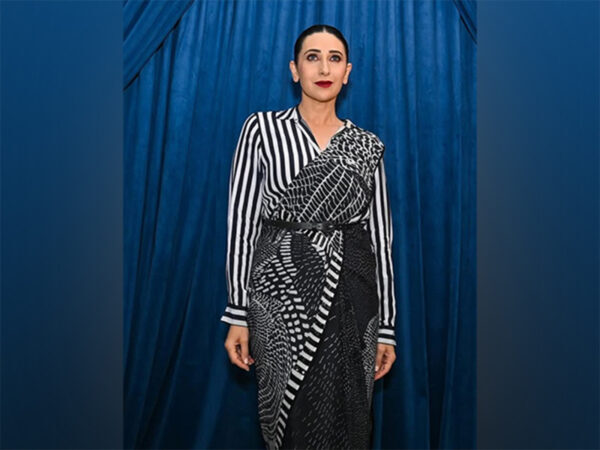
In a press note, Karisma Kapoor, who has enthralled audiences not only with her acting but also with her dancing prowess, said, “My journey with dance began at a very young age, and every performance has taught me something new. As we celebrate International Dance Day, I truly believe dance is more than just movement. It’s about feeling every beat and living every moment. I feel proud to be part of India’s Best Dancer Season 5, a platform that celebrates talent, dedication, and the transformative power of dance through its incredible contestants.”

Continuing the sentiment, Jaaved Jaaferi spoke about the importance of having your own style, “I’ve always believed dance isn’t about perfection, it’s about personality. It’s about carrying your own style. It’s that one space where you can truly be yourself, no filters, no boundaries. From the early days to now, I’ve always believed that your style is your signature. On International Dance Day, I celebrate that individuality in every dancer who dares to be different.”

Terence Lewis also shared, “Throughout my career as a choreographer, I’ve had the privilege of working with and shaping so many talented dancers, and each journey has been deeply enriching. Dance is not just movement it is a language of the soul that transcends boundaries and connects people across cultures. On this International Dance Day, I celebrate every dancer who dares to express their truth through rhythm and passion.”

India’s Best Dancer Season 5 will start from May 9th on Sony Entertainment Television, and streaming on Sony LIV. (ANI)

Axis My India Projects Blockbuster Debut For Vijay, Gives TVK Pole Position

Actor-turned politician Vijay’s TVK is set for a blockbuster performance in Tamil Nadu assembly polls, according to Axis My India exit poll, which also noted that the party is poised to get as much vote share as DMK in its debut election.

The exit poll projected that the seven-party alliance led by the DMK would get 92-100 seats, Tamilaga Vettri Kazhagam (TVK) 98-120 seats and the five-party alliance led by AIADMK would get 22-32 seats.

According to Axis My India, Vijay is ahead of Chief Minister MK Stalin in terms of choice for the next Chief Minister. While Stalin was supported by 35 per cent of those surveyed, the support was 37 per cent for Vijay.

Several other exit polls predicted that the alliance led by the ruling DMK will return to power in the state

People Pulse projected 125-145 seats for the DMK-led alliance and the AIADMK-led alliance which also includes the BJP, getting 65-80 seats. It projected Vijay’s Tamilaga Vettri Kazhagam (TVK) getting two to six seats

Tamil Nadu has 234 assembly seats.

According to exit poll projections by Matrize, DMK and allies will get 122-132 seats and AIADMK and allies 80-100 seats. It said TVK would get 0-6 assembly seats.

The exit poll by P-MARQ projected 125-145 seats for DMK-led alliance, 60-70 seats for AIADMK-led alliance and one to six seats for TVK.

People Insight projected 120-140 seats for DMK-led alliance, 60-70 for AIADMK-led alliance and 30-40 seats for TVK.

DMK-led Secular Progressive Alliance (SPA) in Tamil Nadu also includes the Congress.

Vijay, who is seen to have huge popularity among youth, had last week described the Tamil Nadu Assembly polling voter turnout as a “pinnacle historical event” in the history of the state’s electoral politics and said that the “victory is certain”.

“Greetings to all who reside in my heart,” he began his post on X.

“Politics is something only for some celestial warriors. Only for those with excessive experience. Only for those who enjoy positions. The illusory calculations of those who confined and controlled politics within such specific boundaries have been shattered and crushed by ordinary people,” he said.

“No one would have failed to be amazed seeing families, family by family, with little children, coming to vote, just like the crowds seen at temples anywhere for polling stations. And is that all? Can we not clasp our hands in salute to those democrats who came, spending great sums, from other states and even from foreign countries just to vote?” The meaning of calling it an election festival, a democratic festival, was truly felt only yesterday. This April 23, 2026. Yet, this is only a beginning,” he added.

Vijay’s entry had turned the Tamil Nadu polls triangular. The politics in the state has traditionally been dominated by alliances led by the DMK and AIADMK. The results will be announced on May 4. (ANI)

Polling Concludes For WB Assembly Elections, 90% Voter Turnout Till 5 PM

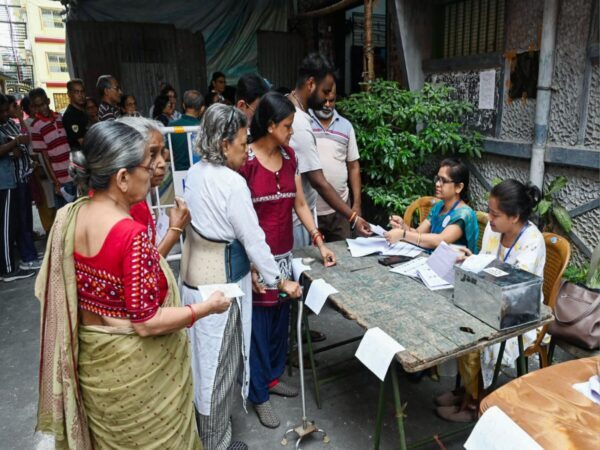
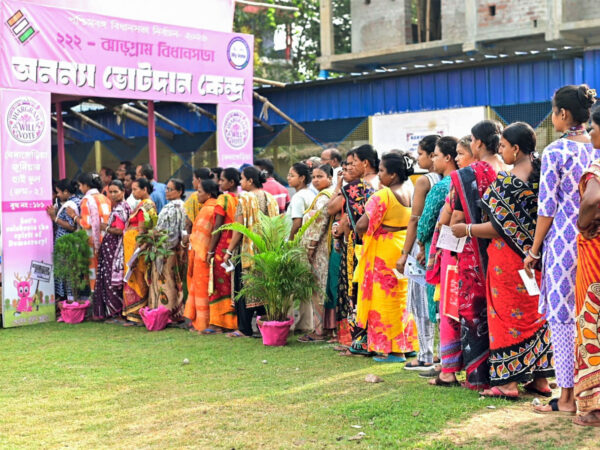
The final phase of polling for the high-octane West Bengal assembly elections concluded at 6 PM on Wednesday, with voter turnout hitting remarkable numbers at 90% before the closing hour.

Till 5 PM, Purba Bardhaman district continued to maintain the lead with a whopping turnout of 92.46%, followed by Hooghly (90.34%), Nadia (90.28%), Howrah (89.44%) and North 24 Paraganas. South 24 Paraganas witnessed a turnout of 89.74% and 89.57% respectively.

The healthy figures highlight an intense wave of voter participation across both states as polling for the 294-member Legislative Assembly drew to a close, setting the stage for counting scheduled on May 4.

The main contest in West Bengal in the 2026 Assembly polls is between the incumbent Trinamool Congress seeking to defend its throne for a fourth consecutive term and the resurgent BJP, looking for a historic victory in the state.

The second phase witnessed various key political figures casting their votes, including Chief Minister Mamata Banerjee, Leader of Opposition Suvendhu Adhikari, TMC General Secretary Abhishek Banerjee, BJP candidate and mother of the RG Kar Medical College rape and murder victim, Ratna Debnath, TMC MP Mitali Bag, West Bengal BJP President Samik Bhattacharya, among others.

The second phase of polling, along with a massive voter surge, also witnessed alleged incidents of violence with opposing parties levelling accusations of abuse and intimidation on the rival party.

West Bengal Leader of Opposition (LoP) and BJP candidate from Bhabanipur and Nandigram, Suvendu Adhikari, alleged that he was surrounded and attempted to be attacked by Trinamool Congress (TMC) supporters during his visit to a polling booth in West Bengal amid the 2026 Assembly elections.

The incident took place when he arrived to inspect a polling station, following which a group of TMC supporters raised slogans of “Jai Bengal” and allegedly surrounded him.

In West Bengal’s Panihati Assembly constituency, BJP candidate Ratna Debnath also alleged that she was targeted and threatened by Trinamool Congress (TMC) workers during voting.

Speaking to ANI, Ratna Debnath alleged that she was abused and intimidated, claiming that attempts were made to attack her during her visit to a polling area.

Meanwhile, BJP and TMC polling agents reportedly clashed at booth numbers 147 and 148 at the Ramchandrapur Adarsha Bidyabhaban polling station in the Khanakul assembly constituency.

According to CRPF Sub-Inspector Usha, the voting in the region has resumed peacefully following the “minor incident”. “It was a minor incident. Right now, voting is taking place in a peaceful manner. CRPF’s all-women 240th Battalion is deployed here,” she said.

A violent clash also erupted in the morning near the primary high school in the Hatra Bazaar area, located in the Nadia district. The polling booth is set up at Hatra Bazaar Primary School, where tensions reportedly flared between workers of the All India Trinamool Congress and ISF.

According to the Chapra police, several people have been arrested in connection with the incident. Congress candidate from Chapra (82), Ashif Khan, alleged that TMC supporters and leaders were intimidating voters across the area.

Earlier on Monday, TMC MP from Arambagh Mitali Bag, who cast her vote while sitting on a wheelchair in Hooghly, claimed that her car was attacked during campaigning and alleged that the BJP workers are responsible for the attack.

TMC accused the BJP of attacking Bag’s convoy when she was on her way to attend Abhishek Banerjee’s rally in Arambagh.

The second phase covered 142 out of 294 seats in West Bengal. The total electorate is around 3.21 crore, with 1,64,35,627 men, 1,57,37,418 women and 792 transgender voters.1,448 candidates are in the fray, including 220 women at 41,001 polling stations, with over 8,000 managed entirely by women.

The final phase of the polling is widely seen as the ‘litmus test’ for the TMC, as voting moves into the party’s traditional fortresses in South Bengal and Kolkata.

While 142 seats are up for grabs, all eyes are on the ‘Big Five’ urban contests. Apart from the high-stakes seat of Bhabanipur, Tollyganj, the heart of the Bengali film industry, is a high-profile, star-studded battle.

Key contests in the second phase included Bhabanipur and Tollyganj.

In the 2021 elections, the TMC dominated this specific belt, winning 123 of these 142 seats. For the BJP, this phase is about making inroads into the urban “bhadralok” vote and the Matua community. For the TMC, it is about holding the line to ensure a fourth consecutive term for Mamata Banerjee.

Political parties are interpreting the high turnout in their favour. The first phase witnessed a record voter turnout of 91.78 per cent. While Trinamool Congress said it will win at least 100 of 152 seats that went to the polls in the first phase, the BJP said it is confident of winning 110 seats in the first phase.

The first phase of polling was held on April 23. The main fight in West Bengal is being seen between the ruling Trinamool Congress and the BJP.

The results of West Bengal polls will be declared on May 4, along with the outcome of polls in Assam, Keralam, Tamil Nadu and Puducherry. (ANI)

Exit. Or, No Exit?

If Bengal is thinking today, what India thinks tomorrow, as the old-fashioned cliché goes, there are three clear scenarios which seem to be emerging. As a ‘probashi’ who has covered the last assembly polls on the ground, in the height of the pandemic, travelling on packed local trains, I have a million precious memories of ‘Shonar Bangla’ and its ordinary folks, especially the hardworking saree-clad women and school girls on cycles, in small towns and rural Bengal – all committed supporters of Didi.

I will share one memory, not to prove anything, only to cherish their instinctive intelligence.

After having managed a window seat in an over-crowded local from Howrah, I found a mother and her school-going daughter (without a mask) seated opposite me. She was eating an ice cream, no fancy stuff, simple, sweetened icy stuff, red in colour, which you can roll on your tongue for a long, long time.

“How much does it cost now?” I asked her.

“Five rupees,” she said, and smiled, satisfaction writ large on her dark face with big, black eyes.

“In my days, it would cost only 5 paisa,” I replied.

She laughed. “I wish it would cast the same – even now!”

I kept quiet.

“You are smiling now, I know,” she said – a naughty girl.

“How do you know? I am wearing a mask.”

“You might be wearing a mask. But your eyes are smiling,” she said.

Her happy mother agreed.

It is this sublime instinct which travels with the intelligent Bengali voter in the interiors, surrounded by paddy, coconut trees and mustard flower fields, with the cool wind blowing through the lush green landscape, the flapping banana tree leaves, and the serene waters of rippling ponds. Homeland, or no homeland, you can’t help but love its people and the place.

This is the instinctive intelligence, confident and subtle, which makes the Bengali mind, often not-so-easy-to-read, often remarkably radical, as the history of its revolutionary inheritance shows; from the freedom struggle, to the Naxalbari movement – those turbulent days of the late 1960s-early 70s, in the countryside, as much as on College Street and the prestigious Presidency College in Kolkata.

Let me tell you another story of two brave-heart schoolgirls, who remain etched in my mind. This is another forgotten story, especially in contemporary neo-Nazi times, a truly inspiring story.

In 1908, young revolutionaries (almost all our martyrs were young, the old usually are compromised) Khudiram Bose and Aurobindo Ghosh were tried in the Muzaffarpur-Maniktala bomb case. Dutt manufactured the bomb. He was sentenced to 12 years in the notorious ‘Kala Pani’ hell-holes in the Andaman jail. Suniti Choudhury, a schoolgirl, inspired by them, began to learn about shells, gunpowder and bombs. (Reference: A well-researched article by Ritesh Shukla, Bhaskar –English, November 2025).

Khudiram Bose was hanged on August 11, 1908, at the Muzaffarpur Jail. He was 18. As a kid, I grew up singing a song dedicated to him, with my sister, in our open-to-sky courtyard in Saharanpur, tears flowing from our eyes.

Ek baar bidaayi dei Ma ghure aasshi… haashi haashi chorbo phaashi… dekhbe Bharotbashi…

(Say goodbye to me finally, Mother, let me go travel… I will go to the gallows with a smile on my lips, the people of India will see…)

Rajguru, Sukhdev and Bhagat Singh were hanged on 23 March, 1931. Moments before he was taken to the gallows, Bhagat Singh was reading Lenin. When the guards came to take him, he reportedly said, “Hold on. One revolutionary is talking to another.”

Bhagat Singh was 23 and he had written the brilliant essay: Why I am an Atheist, still read and absorbed by young idealists and dreamers. He had famously stated that the finest army of revolutionaries were hidden in the villages and factories of India.

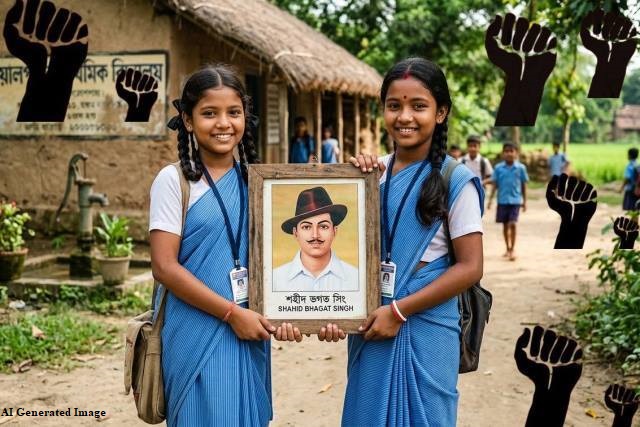
For Shanti Ghosh (15) and Suniti Chouduhry (14), two schoolgirls in Comilla (Chittagong, now in Bangladesh), Bhagat Singh and his comrades were icons.

Ritesh Shukla writes: “On 6 May 1931, Netaji Subhas Chandra Bose attended the annual conference of the Tripura District Students’ Union as chief guest. Suniti led the girls’ parade at the event. After the parade, she was appointed leader of the weapons-trained girls and entrusted with the custody of firearms. Later, (Nandini) Brahma (who trained the girls) asked Netaji what role women should play in war. He replied, “I would be very pleased to see you all on the front.” When Shanti asked him for an autograph, he wrote: “O Mother Power, take up arms in your hands for your honour.”

Meet Charles Geoffrey Buckland Stevens, District Magistrate of the Tripura district, then in Comilla. He seemed to be of the same ghastly breed as the infamous ‘Dyer the Butcher’ of the Jallianwalla Bagh massacre, finally assassinated by legendary Udham Singh in London, who made this project his only and ultimate goal in life. Mahatma Gandhi’s Salt Satyagraha-Dandi March began on 12 March 1930. He was arrested on May 4.

Following a crackdown across India, Stevens went berserk. Apart from the terror machine let loose by him, he faced allegations of sexual misconduct. He operated from his bungalow under armed protection.

Writes Shukla: “On 14 December 1931, a bullock cart stopped outside the District Magistrate’s bungalow. Laughing and chatting, Shanti and Suniti stepped down and approached the security guard. From their appearance and dress, they looked like ordinary schoolgirls. They asked for permission to meet Stevens and politely produced an application written in English, explaining that they needed the sahib’s approval to organise a swimming competition at their school…

“The police did not suspect the girls. They were allowed to enter the bungalow without being searched. Inside, Stevens was sitting in his office with the Sub-Divisional Officer Nepal Sen. The girls requested the orderly outside to deliver a note to the sahib. After reading it, both officers came out.

“Unbeknown to anyone, the girls had concealed a revolver each beneath their shawls. Addressing the District Magistrate as Your Majesty, they spoke with practiced politeness… Stevens granted permission for the swimming competition. Smiling, the girls asked him to write a note of approval and sign the application. Stevens and Sen went back into the office; after signing, Stevens came out alone…

“As he emerged, he saw that the girls’ demeanour had changed completely. Their shawls were cast aside, and each held a revolver aimed at his chest. Without hesitation, they pulled the triggers simultaneously. Stevens was killed on the spot.”

It was their revenge against the hanging of their icon: Bhagat Singh.

A revolutionary tribute, perhaps unprecedented in history. Perhaps, only the schoolgirls of Soviet Russia, who fought so valiantly and defeated Adolf Hitler’s army, could match this courage.

Hence, three scenarios are likely to emerge on and after May 4 in Bengal.

One, in the polls, it is Didi and entire Bengal versus Mr M, Respected Shri Gyanesh Kumarji and his SIR with over 90 lakh deletions of voters, and the massive paramilitary force in Bengal, also unprecedented in Indian electoral history.

In a free and fair poll, Didi will win hands down. No force can defeat her.

Two, in an un-free and unfair poll, backed by the might of a partisan State apparatus with zero justice as a priori (as it happened in the states where the BJP won contrary to poll predictions), BJP will have a fraudulent victory in a state where it is on the margins and where the majority care two hoots for Hindutva. Besides, Durga and Kali are cultural icons here – not Jai Shri Ram.

In this case, this will be final nail in the ravaged coffin of Indian democracy. The banana republic will start rotting now, for the world to see, in this heat.

Third, Bengal might explode, showing the way to other regions, especially Punjab and the South – sick of this crony-capitalist, quasi dictatorship hatched from Delhi by the BJP-RSS led by two Gujaratis.

And then will resurrect the memory of not only Khudiram Bose, Bagha Jatin, Master Surya Sen, Kalpana Dutt and Pritilata Wadeddar (Chittagong armed robbery), among other revolutionaries.

From the unwritten text books of unwritten history, will emerge the story of two brave schoolgirls of Comilla/Chittagong, holding a picture of Bhagat Singh, their icon.

Yes. Shanti Ghosh and Suniti Choudhury.
Pakistan: Power Failures Bring Karachi To A Halt, Spark Protests

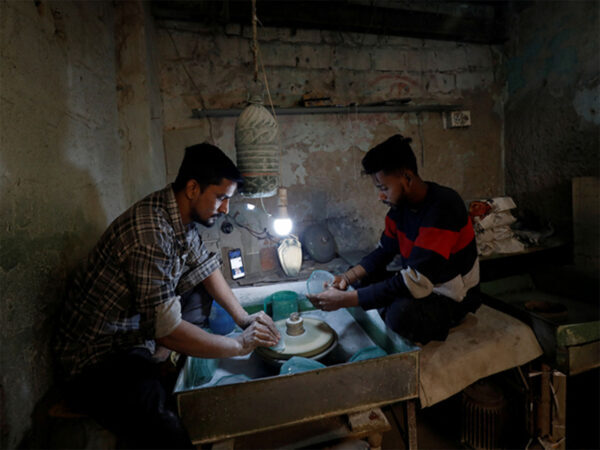
Severe gridlock gripped key arteries of Karachi’s commercial hub after residents of Railway Colony staged a protest against prolonged and unannounced power outages, reportedly stretching up to 16 hours a day.

The demonstration held on Tuesday near Shaheen Complex paralysed traffic along I.I. Chundrigar Road, Dr Ziauddin Ahmed Road, and surrounding areas for hours, as reported by Dawn.

According to Dawn, the protest began around midday, quickly escalating into a major disruption. Roads leading to Saddar and Pakistan Chowk became choked with vehicles, leaving commuters stranded in intense heat. Traffic queues extended for kilometres, compounding the difficulties faced by office workers, students, and patients.

Men, women, and children from Railway Colony gathered at the intersection, blocking traffic and raising slogans against K-Electric for what they described as excessive and unannounced load-shedding. Protesters demanded immediate restoration of electricity, arguing that the outages had made daily life unbearable in extreme temperatures.

Residents voiced frustration over weeks of unreliable power supply. One local complained that the outages had deprived families of sleep, disrupted water access due to non-functional pumps, and worsened conditions for the sick.

Another resident questioned why bill-paying consumers were subjected to such prolonged blackouts. Protesters described the situation as intolerable, citing spoiled food, inability to charge devices, and worsening heat conditions.

The protest also drew criticism from stranded commuters. A woman heading to a hospital in Saddar expressed concern over delays, saying lives could be at risk in such situations. Others acknowledged the right to protest but condemned road blockages that penalised the public, as highlighted by Dawn.

Police eventually intervened, negotiating with demonstrators and dispersing the crowd after about 30 minutes. However, the traffic chaos persisted for over two hours before normalcy returned. In response, K-Electric claimed that power supply to parts of Railway Colony had been cut due to non-payment of bills, adding that electricity was restored after assurances from local representatives regarding dues clearance, as reported by Dawn. (ANI)

WB Records A Healthy 78.68% Voter Turnout Till 3:00 PM

West Bengal recorded a voter turnout of 78.68% till 3:30 PM on Wednesday amid the ongoing second phase of polling for the assembly elections

According to the Election Commission of India (ECI), Purba Bardhaman district topped the charts with the highest voter turnout of 83.11% so far, with Hooghly following with 80.77% turnout.

Nadia district recorded a turnout of 79.79% while Kolkata North and South recorded 78% and 75.38% voter turnout, respectively, during the same period. Additionally, South 24 Paraganas also saw massive participation of people with 76.75% voter turnout.

The main fight in West Bengal in the 2026 elections is between the Trinamool Congress and the BJP.

The second phase of the polling is widely seen as the ‘litmus test’ for the Trinamool Congress (TMC), as voting moves into the party’s traditional fortresses in South Bengal and Kolkata.

The second phase covers 142 out of 294 seats in West Bengal. The total electorate is around 3.21 crore, with 1,64,35,627 men, 1,57,37,418 women and 792 transgender voters.1,448 candidates are in the fray, including 220 women at 41,001 polling stations, with over 8,000 managed entirely by women.

While 142 seats are up for grabs, all eyes are on the ‘Big Five’ urban contests. Apart from the high-stakes seat of Bhabanipur, Tollyganj, the heart of the Bengali film industry, is a high-profile, star-studded battle

In the 2021 elections, the TMC dominated this specific belt, winning 123 of these 142 seats. For the BJP, this phase is about making inroads into the urban “bhadralok” vote and the Matua community. For the TMC, it is about holding the line to ensure a fourth consecutive term for Mamata Banerjee.

The counting of votes will take place on May 4. (ANI)

Trump Posts Pic With Gun, Slogan ‘No More Mr. Nice Guy’

President Donald Trump has issued a stern warning to Tehran, stating that the United States will take a tougher stance if a diplomatic resolution regarding its nuclear programme is not reached soon.

In a post on his social media platform, Truth Social, the President posted a picture of himself holding an assualt rifle and the slogang ‘No more Mr Nice Guy’. Trump expressed frustration with the pace of negotiations, asserting that “Iran can’t get their act together.” He further criticised the Iranian leadership’s inability to finalise an agreement, noting, “They don’t know how to sign a nonnuclear deal.”

The President’s remarks come at a time of heightened regional tension and a continued diplomatic stalemate. Highlighting a shift in his administration’s approach, Trump warned, “They better get smart soon!”

The post from the US Trump signals a potentially more aggressive policy if Tehran continues to resist the terms proposed by Washington.

The statement follows recent efforts to negotiate a “Trump” deal that would replace previous agreements, which the President has frequently described as insufficient for ensuring global security.

Furthering this stance, Trump has voiced significant dissatisfaction with Tehran’s recent diplomatic overtures. He asserted that Washington will not advance negotiations unless the nuclear issue is tackled directly.

The President also claimed that Iran had indicated it was in a “state of collapse” and was consequently pushing for the reopening of the Strait of Hormuz “as soon as possible”.

During his assessment, Trump highlighted the global security risks inherent in Tehran’s atomic aspirations, warning that should Iran successfully obtain nuclear armaments, “the whole world would be held hostage”.

This rejection follows a proposal from Iran focused on an immediate ceasefire in West Asia and the restoration of traffic through the strategically vital Strait of Hormuz. Notably, the proposal sought to postpone discussions on its nuclear programme, missile technology, and existing sanctions.

While Foreign Minister Abbas Araghchi has been conducting a diplomatic blitz–visiting Islamabad and meeting Russian President Vladimir Putin in St Petersburg to secure international backing–regional powers have begun to voice their own opposition.

In a meeting held in Saudi Arabia, leaders of the Gulf Cooperation Council (GCC), convened under Crown Prince Mohammed bin Salman, formally rejected what they characterised as Iran’s “illegal actions” regarding the closure of the strait and threats to maritime passage.

The GCC summit, which included high-level representation from Qatar, Bahrain, Kuwait, and the UAE, issued a collective call for the return of “security and freedom of navigation” to levels seen before the conflict.

Furthermore, the bloc advocated for enhanced military integration, specifically the creation of shared infrastructure and a ballistic missile early warning system.

As regional and international pressure mounts, reports from The Wall Street Journal suggest that the US administration is bracing for an extended period of economic confrontation.

Trump has reportedly instructed his team to formulate plans for a sustained blockade of Iran, a strategy designed to cripple the Iranian economy and oil exports by strictly controlling maritime access to its ports.

According to The Wall Street Journal, the President prefers this blockade as a more effective, lower-risk alternative to either a renewed aerial bombing campaign or a policy of total disengagement, marking a shift toward a long-term strategy of economic attrition. (ANI)

Iran’s Navy Warns US Of ‘Surprise Tactics’ Amid Rising Tension

The Islamic Revolutionary Guard Corps (IRGC) Navy has issued a sharp warning to Washington, claiming that the elite force is prepared to employ unconventional methods should tensions escalate further.

According to Iranian media Press TV, Mohammad Akbarzadeh, the deputy for political affairs of the IRGC Navy, stated that the maritime force has “surprise tactics” in store for the United States if it makes any new miscalculation.

The warning underscores a heightening of military rhetoric as the IRGC Navy signals its readiness to respond to any perceived aggression. Akbarzadeh further indicated that in the event of fresh US military action against Iran, the IRGC Navy would deploy its newly developed capabilities.

These comments from Press TV come amidst a series of strategic maritime developments in the region, with Iranian officials repeatedly asserting that their naval forces have modernised their hardware and operational strategies to counter foreign military presence in nearby waters.

This military posturing coincides with a firm diplomatic stance from US President Donald Trump, who has voiced significant dissatisfaction with Tehran’s recent diplomatic overtures. The President asserted that Washington will not advance negotiations unless the nuclear issue is tackled directly, further claiming that Iran had indicated it was in a “state of collapse” and was consequently pushing for the reopening of the Strait of Hormuz “as soon as possible”.

During his assessment, Trump highlighted the global security risks inherent in Tehran’s atomic aspirations, warning that should Iran successfully obtain nuclear armaments, “the whole world would be held hostage”. This rejection follows a proposal from Iran focused on an immediate ceasefire in West Asia and the restoration of traffic through the strategically vital Strait of Hormuz, while notably seeking to postpone discussions on its nuclear programme, missile technology, and existing sanctions.

While Foreign Minister Abbas Araghchi has been conducting a diplomatic blitz–visiting Islamabad and meeting Russian President Vladimir Putin in St Petersburg to secure international backing–regional powers have begun to voice their own opposition. In a meeting held in Saudi Arabia, leaders of the Gulf Cooperation Council (GCC), convened under Crown Prince Mohammed bin Salman, formally rejected what they characterised as Iran’s “illegal actions” regarding the closure of the strait and threats to maritime passage.

The GCC summit, which included high-level representation from Qatar, Bahrain, Kuwait, and the UAE, issued a collective call for the return of “security and freedom of navigation” to levels seen before the conflict. Furthermore, the bloc advocated for enhanced military integration, specifically the creation of shared infrastructure and a ballistic missile early warning system.

As regional and international pressure mounts, reports from The Wall Street Journal suggest that the US administration is bracing for an extended period of economic confrontation. Trump has reportedly instructed his team to formulate plans for a sustained blockade of Iran, a strategy designed to cripple the Iranian economy and oil exports by strictly controlling maritime access to its ports.

According to The Wall Street Journal, the President prefers this blockade as a more effective, lower-risk alternative to either a renewed aerial bombing campaign or a policy of total disengagement, marking a shift toward a long-term strategy of economic attrition. (ANI)