‘If the Left Is Dead, Why Does Indian Politics Still Speak Its Language?’
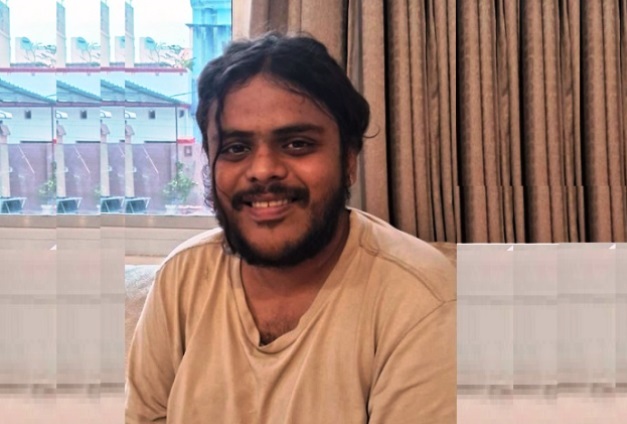
Shantam Nidhi, president of AISA, Lucknow University, argues that Left politics will remain relevant as long as exploitation, inequality and crony capitalism continue to exist. His views:
Following the electoral decline of the Left in Kerala, many political observers have begun to wonder whether the Left in India has reached its final chapter. Ironically, this echoes the sentiment that accompanied the declaration of the “End of History” after the collapse of the Soviet Union. Yet history did not end. Economic crises intensified, inequalities deepened, unemployment rose, public welfare weakened, and new waves of resistance continued to emerge across the world.
Before declaring the death of the Left in India, one must ask a simpler and more material question: have the conditions that gave rise to Left politics disappeared from Indian society? The answer is clearly no.
India remains one of the most unequal countries in the world. According to the World Inequality Lab, the top 1 per cent controls more than 40 per cent of the country’s wealth, while the bottom half survives amid deep economic insecurity. Youth unemployment remains historically high. Permanent jobs are shrinking, while contractual and informal employment is becoming the norm.
Public sector recruitment continues to decline. Farmers struggle with debt, unstable prices and rising input costs. Universities face recurring fee hikes, while labour protections are weakened in the name of “ease of doing business.” These are not the conditions of a post-Left society. In fact, they are precisely the contradictions from which Left politics has historically emerged.
Beyond Electoral Performance
The real crisis is that the organised parliamentary Left has weakened electorally and organisationally, even as the contradictions it once addressed have intensified. There is a tendency in India to reduce the entire Left to the electoral fortunes of parties such as the CPI(M) and the CPI.
This is a serious misunderstanding, not only of the Left but also of how ideology functions within society. The influence of the Left in India extends far beyond legislative seats and state governments. Modern Indian politics itself has been profoundly shaped by decades of Left-led struggles.
Many of the rights and expectations that citizens now consider fundamental—workers’ rights, land reforms, public welfare, labour protections and social justice—entered India’s political consciousness because communist, socialist and democratic movements pushed them into the centre of public life through prolonged struggles.
Even today, political parties that aggressively attack communists cannot openly contest elections by arguing that workers do not deserve rights, farmers do not deserve support or poor people do not deserve welfare. Every major political force, regardless of ideology, is compelled to speak the language of subsidies, welfare, employment and social justice because the legitimacy of the Indian republic has been deeply shaped by anti-inequality struggles led by the Left and other democratic movements.
When governments distribute free rations to crores of citizens, when unemployment becomes a central election issue, when students protest against fee hikes, paper leaks and privatisation, when farmers mobilise nationally against controversial laws, and when labour unions resist the dilution of worker protections, these are not signs of a society where Left politics has disappeared. They are signs that the contradictions the Left addresses remain deeply embedded within Indian society. In many ways, even the ruling classes are compelled to govern within a political terrain historically shaped by Left struggles.
Acknowledging the Left’s Failures
At the same time, one cannot romanticise the present condition of the Left or deny its failures. The decline of the parliamentary Left is real and demands serious assessment.
For decades, communist parties represented powerful social movements in states such as Kerala, West Bengal and Tripura. Land reforms, decentralisation, literacy campaigns and welfare expansion generated significant social legitimacy among workers, peasants and marginalised communities.
However, deep contradictions emerged over time, particularly after economic liberalisation in 1991 transformed India’s political economy. As private capital assumed a dominant role, state governments increasingly became dependent on corporate investment and market-oriented development. Even Left-led governments struggled to escape these structural pressures.
The crisis became especially visible in Singur and Nandigram, where industrialisation policies and land acquisition led to violent confrontations with peasants. For many supporters, this was not merely an electoral setback but a deeper ideological contradiction. A movement historically associated with workers and peasants increasingly appeared trapped within the same neoliberal development framework that privileged corporate capital over ordinary people.
Fragmentation and Renewal
The communist movement in India has also remained deeply fragmented. From the split between the CPI and CPI(M) to the emergence of various CPI(ML) streams and revolutionary organisations, the history of the Left has been marked by unresolved debates about the nature of political transformation itself.
Should communists prioritise parliamentary democracy or revolutionary change? Can socialism emerge through elections within a capitalist state structure? Should the focus remain on governments or on mass movements?
These debates were never merely theoretical. They emerged from concrete historical experiences and continue even today.
Yet the crisis of the older parliamentary Left has also created space for newer attempts to reorganise Left politics around contemporary challenges. Unlike an earlier era when communist politics was rooted in stable industrial working-class structures and long-term electoral strongholds, newer Left currents are attempting to organise amid the fragmented realities produced by neoliberal capitalism: precarious employment, gig work, privatised education, unemployment, caste violence, displacement and agrarian distress.
In many regions, sections of the Left continue to retain political relevance not through administrative stability or parliamentary management, but through sustained participation in struggles related to land, labour, education, democratic rights, caste oppression and state repression. This helps explain why, despite repeated declarations of its demise, the Left continues to persist in universities, workers’ movements, peasant organisations, anti-caste mobilisations and democratic rights campaigns.
Why the Left Still Matters
One of the biggest mistakes in contemporary political analysis is the assumption that the rise of aggressive nationalism and communal polarisation means that class contradictions have disappeared. The Right has succeeded not because it resolved these contradictions, but because it reorganised politics around nationalism, spectacle and polarisation, while the Left struggled to consolidate social grievances into a broad transformative movement.
Declaring the death of the Left is less an act of serious political analysis than a premature celebration. Political movements do not disappear simply because they lose elections. They disappear when the social contradictions they speak to cease to exist.
In India today, those contradictions are not weakening; they are becoming sharper with each passing year. This is precisely why the Indian ruling order continues to confront the Left so aggressively despite its electoral decline. Beneath the noise of television debates and electoral arithmetic lies an uncomfortable reality: the questions raised by the Left remain unresolved at the heart of Indian society.
As told toRajat Rai
‘If the Left Is Dead, Why Does Indian Politics Still Speak Its Language?’

‘Young Indians Want To Be Heard; Cockroach Party Provides The Platform’

‘Cockroach Party is More Than A Social Media Trend; It Reflects Gen Z Aspirations’