Jean Drèze – The Economist Who Put People Over Profit
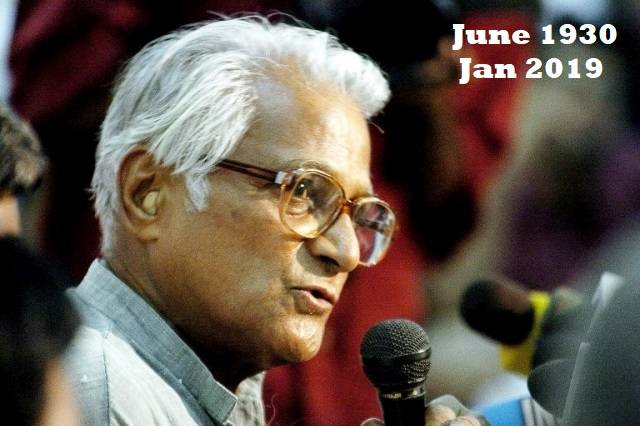
There are very few people in this world who are born into wealthy homes yet spend their entire lives in service of the poor. Jean Drèze is one of them. Born on 22 January 1959 in the Belgian city of Leuven, into the household of a distinguished economist, Jean Drèze is today considered one of the most important social economists in India. He has been living in India since 1979, and in 2002 he accepted Indian citizenship. On 5 June 2026, at the Global Inequality Conference held at the Paris School of Economics, he was honoured with the Global Inequality Research Award. He was not alone in receiving this recognition he himself noted that standing behind him were thousands of activists, marginalised communities, agricultural labourers, and tribal peoples whose collective struggle this award truly represented.
The award was conferred upon him for his outstanding research on the measurement of poverty and inequality in India, and for his unparalleled contribution to the Mahatma Gandhi National Rural Employment Guarantee Act (MGNREGA) and the National Food Security Act. This is no mere academic honour it is a collective receipt for that man’s decades of hard work, of wandering through forests and fields, of living in huts, and of fighting against policymakers.
What Jean Drèze said while accepting the award was deeply moving. He said, “This recognition is not something I have earned alone. Whatever work I do happens together with people striving for change and through collective effort. Dr. Babasaheb Ambedkar had rightly described India as a ‘museum of inequalities.’ Here one witnesses not only economic disparity but also the caste system, gender inequality, and the enormous gulf in education. Fortunately, India also has a rich tradition of fighting against inequality, and I am fortunate to be connected with those movements.”
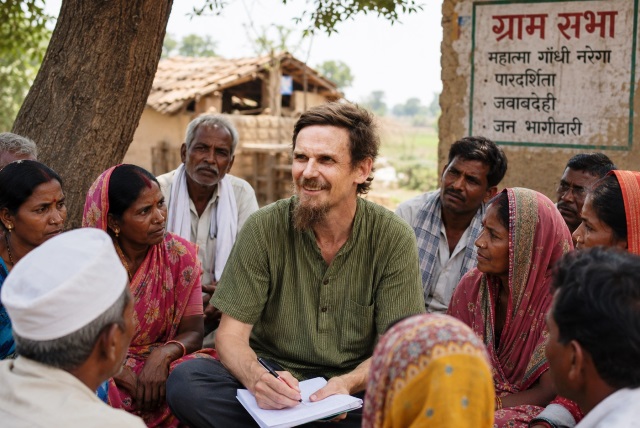
When one looks at how Jean Drèze was shaped, it becomes clear just how different his path was. His father Jacques Drèze was also a renowned economist. Jean studied mathematical economics at the University of Essex and completed his doctoral research at the Indian Statistical Institute in New Delhi. But refusing to be satisfied with bookish knowledge, he stepped directly into villages. Living among villages, sharing life with the poor, he built his research from the ground up. His approach is distinctive sitting with farmers, staying in tribal hamlets, personally observing transactions at ration shops and doing all of this while simultaneously producing high-quality analysis.
He co-authored several important books with Nobel laureate Amartya Sen. Amartya Sen himself once remarked with humour that the pleasant thing about working with Drèze is that most of the work is done by Drèze, while the credit goes to Sen! This remark is a testament to Drèze’s humility and extraordinary diligence.
Rural Employment Guarantee
His major books include Hunger and Public Action, The Political Economy of Hunger, Social Security in Developing Countries, and The Dam and the Nation: Displacement and Resettlement in the Narmada Valley none of these books merely present theories; they tell the stories of human suffering. An Uncertain Glory: India and Its Contradictions, co-written with Amartya Sen, is a sharp commentary on the chasm between economic development and social justice.
Drèze’s most significant contribution to Indian policy is undoubtedly the Mahatma Gandhi National Rural Employment Guarantee Act MGNREGA. It was Drèze himself who conceptualised and drafted the first version of this law. This legislation, which gives crores of rural labourers the right to demand at least one hundred days of employment per year, represents a historic turning point in the history of India’s social security. Through this law, tribal peoples, Dalits, women, and landless labourers gained not just employment but also the self-confidence to make demands of the government.
But merely creating a law and stopping there is not in Drèze’s nature. He has remained actively connected to many movements the Right to Information movement, the food security campaign, and peace movements. During the Iraq-Kuwait war of 1990–91, he participated in a peace camp near the Iraq-Saudi border. A man who puts his own life at risk and sits near a battlefield is not doing research for prestige he is driven by the voice of his conscience.
Today, regarding the efforts being made to repeal or modify MGNREGA in India, Drèze remains extremely vigilant and critical. Regarding the new ‘Viksit Bharat Guarantee for Employment and Livelihood Mission Rural’ legislation, he has said that this law guarantees employment, but gives no guarantee whatsoever that this guarantee will actually be implemented. This statement may seem pointed, but it is closer to reality. In many states across India, MGNREGA wages are not paid for months on end, work requests are evaded, and there is no mechanism for grievances this picture is one that Drèze has laid out through numerous studies and writings.
Fight Against Poverty And Hunger
He has also raised the issue of Aadhaar-linking in the ration system with great force. He has proven with data that millions of people are excluded from the Public Distribution System designed to ensure the poor receive food because of mandatory Aadhaar authentication. In Jharkhand, a tribal elderly person was denied rations for months simply because their fingerprints could not be scanned on a machine. A machine that does not recognise a human being leaves that human being hungry these contradictions are what Drèze has consistently highlighted. Surveys have shown that as many as 28 percent of ration card holders were denied grain due to Aadhaar-related difficulties, and in poor households this figure had risen as high as 39 percent.
This award is presented once every two years to researchers who have made significant contributions to the understanding of global inequality. This is the second year of the award. In the first edition in 2024 the award was jointly conferred upon Bina Agarwal and James K. Boyce for their work on social and environmental inequality. The award was established jointly by the World Inequality Lab and Sciences Po. This recognition of the questions of poverty and inequality in India on an international platform is deeply significant.
Jean Drèze demonstrates that research in the social sciences is not merely theory constructed within the rooms of universities it can change the lives of millions of people. By living in the heart of India, closely experiencing the suffering of ordinary people, and conducting high-quality analysis, he brings about a rare combination a researcher who lived, wrote, and brought about actual change.
Discussion of inequality in India is often trapped in numbers and statistics. But the distinctive quality of Drèze’s work is that he brings forward the human being hidden behind those numbers. The face of a grandmother sleeping hungry in a hut, of a tribal youth who goes to ask for work on a farm and returns empty-handed, of a Dalit woman who comes back with nothing because her Aadhaar scan would not work all these faces remain alive in Drèze’s research. He says India is a museum of inequalities and the road out of that museum leads only in the direction of rights.
Today, when he receives this award on a global platform, the first thoughts that came to his mind were of solidarity. He said, this is not something I did alone this is the earning of all those who have fought. And therein lies his true greatness. The man who has earned recognition across the world still travels through the villages of Jharkhand and Chhattisgarh, still speaks with the people standing outside ration shops, still asks policymakers the questions that make them uncomfortable.
The life’s work of Jean Drèze proves how deeply a man who came from abroad can make India his own, and how much he can wear himself down for the crores of dispossessed people of this country. He left Belgium, left a prestigious professorship at the London School of Economics, and found his home in the villages of India. No award can be greater than this. But when his name was announced at the global conference in Paris, that recognition truly belonged to all the activists fighting for MGNREGA’s employment guarantee, to all the organisations raising their voices for food security, and to the millions of poor people struggling for their rights.
The writer may be contacted via email at vikasmeshram04@gmail.com