Vivek Oberoi Wishes His Mom On Her Birthday

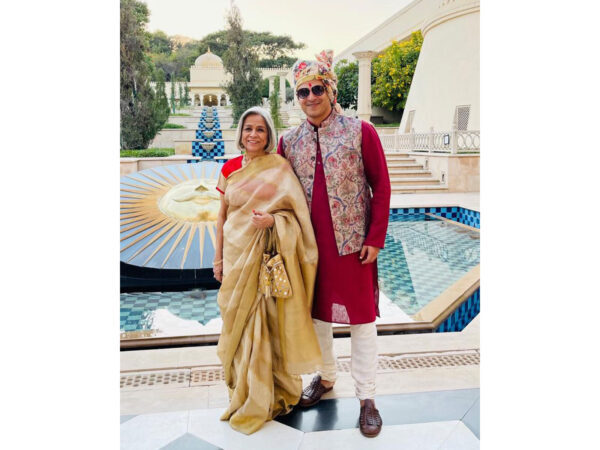
Actor Vivek Oberoi has penned a heartwarming message for his mother, sending birthday wishes with much love and warmth.

In an Instagram post, Vivek poured out his heart, further calling his mother the “first audience” and “forever hero.”

“The universe began with a single spark, but my world began with you. To my mum, who breathed life into my every dream, celebrating your birthday is like celebrating the source of everything good in my life. You are the grace in my steps and the love in my heart,” he wrote.

Crediting his mother for guiding his dreams, Vivek further added, “Maa, every time I stand tall, I am simply standing on the foundation of your love. You birthed me into a world of dreams and taught me how to keep my feet on the ground while reaching for the sky. May the smile you gave me when I was born be the one that lights up your face today and every day. I love you, Maa, my first audience, my forever hero. “

Reacting to the post, fans also dropped heartwarming comments along with birthday wishes for the actor’s mother.

On the work front for Vivek Oberoi, he will be next seen in Sandeep Reddy Vanga’s ‘Spirit’, also starring Prabhas and Triptii Dimri.

Earlier this year, the makers unveiled a fresh look from the world of ‘Spirit’, introducing Vivek Oberoi’s character to the fans.

In a never-before-seen avatar, commanding a powerful screen presence, the actor can be seen dressed in a dark robe, paired with a pair of sunglasses. He also holds a sword while exuding a confident, menacing aura.

Vivek Oberoi also shared the same on his Instagram handle and wrote, “A mystery buried in shadows and eyes that remember the darkest secrets.”

Also featured in the poster is Aishwarya Desai, a fresh face expected to bring an intriguing energy to the story.

Written, edited, and directed by Sandeep Reddy Vanga, the film is produced by Bhushan Kumar, Pranay Reddy Vanga, Krishan Kumar, and Prabhakar Reddy Vanga.

The film is set to release in eight languages on March 5, 2027. (ANI)

Rahul’s Influence Has Corrupted Kharge ji’s Language Too: Amit Shah

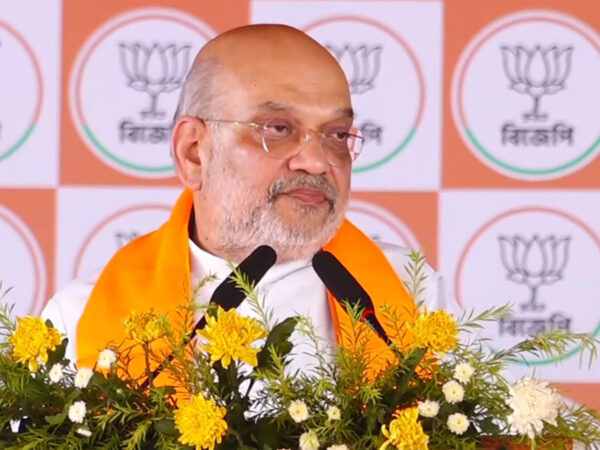
Union Home Minister and BJP leader Amit Shah on Wednesday launched a sharp attack on Congress president Mallikarjun Kharge over his remarks referring to Prime Minister Narendra Modi as a “terrorist”, saying Kharge’s language has been “corrupted” due to his proximity to Rahul Gandhi.

Addressing an election rally in Dum Dum, North 24 Parganas, Shah said, “The Narendra Modi ji who eradicated terrorism is being called a terrorist by Congress President Mallikarjun Kharge. Staying around Rahul Baba has started to corrupt Kharge ji’s language too.”

He further escalated his attack on Congress leader Rahul Gandhi, claiming that repeated criticism of Prime Minister Modi would not benefit the opposition.

“Listen up, Rahul Baba… The more abuses you hurl at Modi ji, the more mud you sling with your insults, the lotus will bloom with even greater pride, and we will bring UCC (Uniform Civil Code) in the state, which will put an end to Triple Talaq and end the provision to hold four marriages,” Shah said.

The controversy stems from Kharge’s speech during the last day of the election campaign in Tamil Nadu on Tuesday, where he criticised the AIADMK for aligning with the BJP while making sharp remarks against PM Modi. Kharge referred to PM Modi as a “terrorist who does not believe in equality”, sparking political backlash.

Kharge later clarified that he did not call the Prime Minister a terrorist, but was referring to what he described as “pressure politics” and “misuse of central agencies” against opposition leaders.

“I did not call him a terrorist… he is terrorising political opponents through agencies like ED, CBI and Income Tax,” Kharge said, adding that his remarks were being misinterpreted

The BJP had strongly objected to his remarks made during a campaign event in Tamil Nadu and demanded an apology, also filing a complaint with the Election Commission.

Separately, at the Dum Dum rally today, Shah also made strong political predictions for the upcoming elections, asserting that Congress would face major setbacks across several states.

“Today, I’ve come to tell you, Rahul Baba, that you’re not going to cross double digits in Tamil Nadu, there won’t be a double-digit cross in Puducherry, in Bengal you’ll be lucky to even open an account, and in Assam, Congress is headed for its biggest defeat ever,” he added.

Turning his attention to West Bengal Chief Minister Mamata Banerjee, Shah accused the TMC government of failing on law and order and development, while also targeting her nephew Abhishek Banerjee.

“The time has come to remove Mamata Banerjee. She has left Bengal in the hands of goons. Do you want to make ‘Bhaipo’ the CM? Mamata Banerjee is misleading the public by saying that the CM will be from outside the state. I am declaring today that the CM of Bengal would be the one who was born in the state, who has studied in the Bengali language and is a Bengali-speaking person. It will not be ‘Bhaipo’, but a BJP worker,” he said.

On governance promises, Shah outlined several welfare and development commitments, including financial assistance to women and youth, implementation of pay-related benefits, and infrastructure expansion.

“The BJP govt will transfer Rs 3000 per month into the accounts of women. The 7th Pay Commission will be implemented, and DA will be paid to government employees. Financial assistance of Rs 3000 will be transferred to the accounts of the unemployed youth. Our govt will expand the Kolkata Metro three times. We have made a roadmap for the development of Kolkata,” he said.

He also raised the issue of women’s reservation, accusing the Trinamool Congress of opposing it. “Should women get 33 per cent reservation in the Lok Sabha and Legislative Assemblies or not? Mamata Didi, in alliance with Congress, opposed women’s reservation and has blocked mothers and sisters from coming to the Lok Sabha and Legislative Assemblies,” Shah added.

The polling for the 294-member Assembly in West Bengal will be held in two phases on April 23 and April 29. The counting of votes is scheduled for May 4.

As per the Election Commission of India (ECI), the first phase covers 152 Assembly constituencies, while the second phase includes 142 seats.

The state is set to witness a high-voltage contest between the incumbent Trinamool Congress, which is seeking a fourth consecutive term, and the BJP, which is aiming to form the government after a strong showing in the previous elections.

Chief Minister Mamata Banerjee is aiming for a fourth consecutive term, while the BJP, which secured 77 seats in the previous election, is making a renewed push to form the government in the state. (ANI)

IPL: Krunal Pandya Clears Air On Rumours Of Rift With Bro Hardik

Royal Challengers Bengaluru (RCB) all-rounder Krunal Pandya broke his silence on the alleged rift with brother Hardik Pandya on Wednesday.

On the Royal Challengers Bengaluru (RCB) social media handle, during the programme ‘RCB Insider’ hosted by Danish Sait, who plays the character Mr Nags, he was asked by the host about his relationship with the Mumbai Indians (MI) skipper.

During the show, Danish Sait, aka Mr Nags, asked him, “All good there, or any fighting?” Later on, he quipped that “even Kane and Undertaker fight sometimes” (A reference to WWE legends Undertaker and Kane, who were portrayed to be half-brothers, switching between teaming up with each other as the “Brothers of Destruction” or having memorable one-on-one matches as rivals)

To this, Krunal said while laughing, “All okay”.

There has been a lot of speculation about the relationship between the Pandya brothers due to the lack of social media exchange between these two, especially after India’s T20 World Cup win earlier this year and recently, Krunal’s birthday.

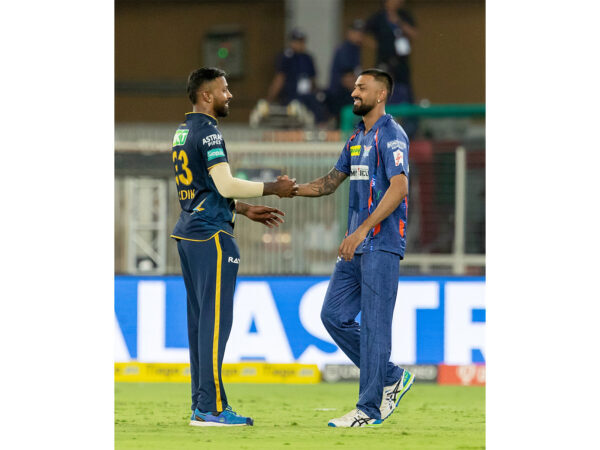
During the MI-RCB clash at Wankhede a few days back, Krunal and Hardik battled each other on the field, with Krunal hitting Hardik with an aggressive bouncer and the MI star staring him in return. After Hardik was dismissed, Krunal was seen celebrating his dismissal aggressively during the broadcast, and Hardik was staring back at him while taking the long walk back to the pavillion. There was no funny/warm banter, hugs and handshakes between the siblings before, during or after the match, neither on the broadcast nor on social media, as it had been the case for years.

In six matches for RCB, Krunal has taken eight wickets at an average of 22.50 and an economy rate of 8.57, with best figures of 2/30 and has scored 13 runs in two innings.

RCB will next play the Gujarat Titans (GT) at Bengaluru on April 24. RCB is placed at second spot in the points table, with four wins and two losses, losing their previous clash against Delhi Capitals (DC) in a last-over thriller. (ANI)

Iran’s IRGC Claims Seizure Of 2 Vessels In Hormuz Following US Ceasefire Extension

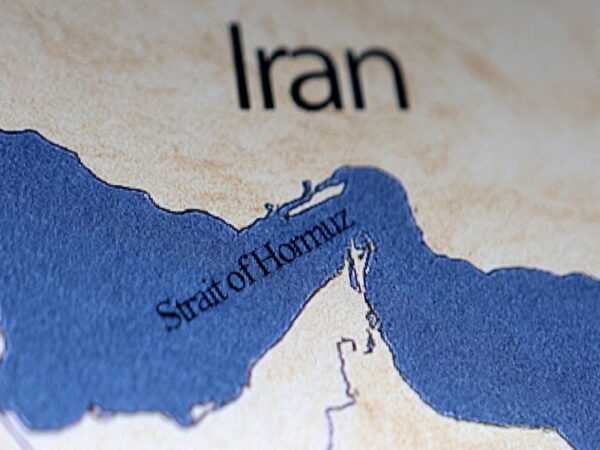
Iran’s Islamic Revolutionary Guard Corps (IRGC) on Wednesday claimed that its naval forces seized two vessels in the Strait of Hormuz, alleging that the vessels violated its territorial waters and tried to exit the strategic waterway without authorisation from Tehran.

This comes just hours after US President Donald Trump announced an indefinite extension of a temporary ceasefire.

In a statement as reported by Iranian state media, Islamic Republic of Iran Broadcasting (IRIB), the two ships — identified as “MSC-FRANCESCA” and “EPAMINODES” — were allegedly involved in violations while transiting the strategic waterway.

The IRGC, in its statement, stated that the vessels were attempting to exit the strait without authorisation, accusing them of repeated infractions, including tampering with navigational aid systems and endangering maritime security.

“In line with the intelligent control of the Strait of Hormuz, the Islamic Revolutionary Guard Corps Navy this morning identified two violating ships named ‘MSC-FRANCESCA’, belonging to the Zionist regime and the violating vessel ‘EPAMINODES’, which were attempting to secretly exit the Strait of Hormuz without authorisation by committing repeated violations and tampering with navigational aid systems and jeopardising maritime security,” the statement read as quoted by IRIB.

The statement further claimed that the vessels were intercepted following intelligence monitoring by IRGC forces and subsequently escorted into Iranian territorial waters, and that the vessels have been transferred for inspection of their cargo and documentation.

The IRGC Navy further emphasised that it maintains “intelligent control” over the strait and reiterated that any actions deemed to violate Iran’s maritime regulations or disrupt safe passage through the waterway would be closely monitored.

“The IRGC Navy reiterates that any action to disrupt the implementation of the Islamic Republic of Iran’s announced rules for traffic in the Strait of Hormuz, as well as any activity contrary to the safe passage of this strategic waterway, will be continuously monitored by the IRGC Navy, and violators will be dealt with decisively and legally,” the statement added, as quoted by IRIB.

This marks a significant escalation in maritime hostilities, highlighting heightened tensions in the region’s critical waterways.

Earlier in the day, two incidents of ship attacks were reported by the United Kingdom Maritime Trade Operations (UKMTO), underscoring a sharp spike in maritime security threats in the Strait of Hormuz and nearby waters.

According to the UKMTO, one incident involved an outbound cargo vessel that was fired upon approximately 8 nautical miles off the coast of Iran, forcing the ship to halt. While the crew was reported safe and no damage was observed, the episode added to growing concerns over vessel safety in the region.

In a separate incident earlier, a container ship located northeast of Oman was approached by an armed boat linked to the IRGC, as per UKMTO, citing “the master of a container ship”, who reportedly opened fire and caused significant damage to the vessel’s bridge. Despite the severity of the attack, all crew members were confirmed safe, with no casualties or environmental damage reported.

The back-to-back incidents highlight escalating risks in one of the world’s busiest shipping corridors, with authorities continuing to urge heightened vigilance for vessels transiting the waterway.

The maritime incidents come at a critical diplomatic juncture. On Tuesday, President Trump used social media to announce an indefinite extension of the two-week ceasefire with Iran, citing a request from mediator Pakistan and the need for Iran’s “fractured” leadership to submit a unified peace proposal.

However, the US has maintained a naval blockade of Iranian ports, a move Tehran officials have characterised as “no different from bombardment,” leading to the current military response in the Strait. (ANI)

India-New Zealand FTA to Boost Trade, Jobs, Mkt access

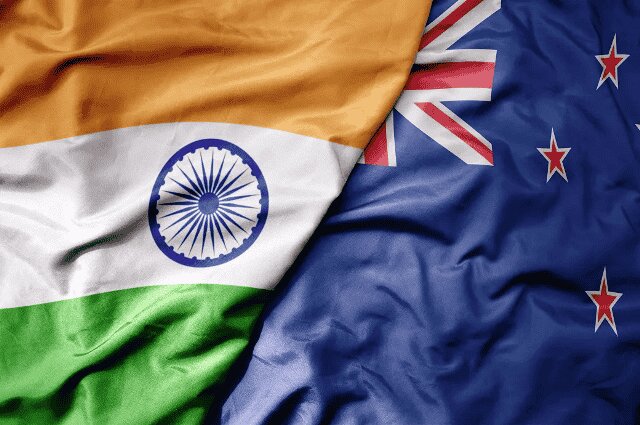
The Free Trade Agreement (FTA) between India and New Zealand is set to be signed next week, with New Zealand’s Trade and Investment Minister Todd McClay scheduled to visit India for the formal signing.

Sharing the update in a video message on social media, New Zealand Prime Minister Christopher Luxon said the agreement will open significant opportunities for exporters and strengthen economic ties between the two countries.

“Our Free Trade Agreement with India will be signed next week, an agreement that gives New Zealand exporters access to 1.4 billion customers,” he said.

Luxon added that the deal would create more jobs and income opportunities across sectors. “It means more jobs on farms and orchards, more money coming into local communities, and more opportunities for Kiwis to get ahead,” he stated.

Highlighting the significance of the pact, the Prime Minister said, “We’d deliver a Free Trade Agreement with India. They said it couldn’t be done, and on Monday, we will sign it. This is about opening the door to 1.4 billion people and one of the fastest growing economies in the world. 1 in 4 of our jobs are tied to trade, so for a country like New Zealand, this is huge.”

New Zealand Trade Minister Todd McClay also confirmed his visit to India, stating that he would be accompanied by a delegation of exporters.

“I’m heading to India with a big group of Kiwi exporters to get the deal signed. This agreement makes it easier for Kiwis to sell more of what we’re great at doing to the world. Kiwifruit from the Bay of Plenty, wine from Central Otago, seafood, meat, honey, right across the country,” he said.

He added that the agreement would allow more of these products to reach Indian consumers, boosting incomes and employment.

Luxon further emphasised that exports play a crucial role in New Zealand’s economy. “Exports drive our economy, and when we make it easier for New Zealand businesses to compete on the world stage, we support jobs, we lift wages, and most importantly put more money in Kiwis’ back pockets,” he said.

India and New Zealand had announced the start of FTA negotiations in March 2025, and after multiple rounds of discussions, the agreement was concluded in December 2025, marking one of India’s fastest-concluded FTAs.

According to the Indian government statement, the concluded agreement will provide unprecedented duty-free access for Indian exports to New Zealand while safeguarding sensitive sectors. It is also expected to strengthen economic resilience and promote inclusive growth aligned with India’s national priorities.

The FTA is set to enhance market access and tariff preferences for Indian exports, while also serving as a gateway to Oceania and Pacific Island markets. It opens opportunities for India to supply skilled workforce and expand services in areas such as IT, engineering, healthcare, education, construction, as well as sectors like AYUSH, including Yoga instructors, Indian chefs and music teachers

The agreement will be signed next week. (ANI)

Delhi Court Reserves Order On Engineer Rashid’s Bail Plea

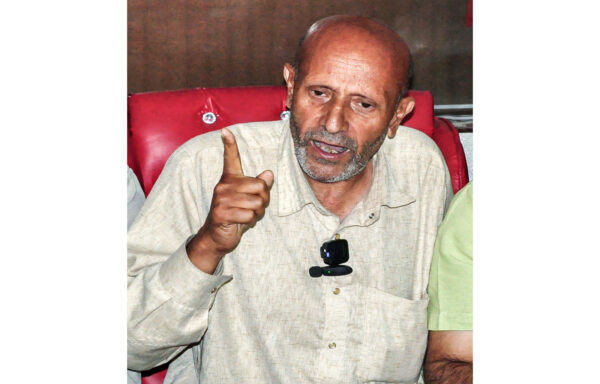
The Patiala house court reserved an order on the interim bail plea of Abdul Rashid Sheikh alias Engineer Rashid. He is seeking interim bail to meet his ailing father, who is on a ventilator.

Special Judge (NIA) Prashant Sharma reserved the order on the interim bail plea after hearing the submissions by counsel for accsued and Special Public Prosecutor (SPP) for NIA.

The court will pronounce the order on April 24

NIA’s SPP Gautam Khazanchi opposed the interim bail plea based on a secret report. However, the NIA said that Rashid may be granted custody parole.

The agency said that they have no problem if the accused is granted custody parole.

Advocate Vikhyat Oberoi, counsel for Abdul Rashid Sheikh, opposed the submissions of NIA, saying that the secret report is not admissible unless it is supplied to the accsued.

The counsel also said that Abdul Rashid Sheikh’s father is on a ventilator. Sheikh was granted interim bail to contest the election. But his interim bail is being opposed when his father is seriously ill.

He also said that it is a political case, and Abdul Rashid Sheikh was arrested immediately after the abrogation of Article 370.

The Court on April 20 granted time to the National Investigation Agency (NIA) to file a reply on Baramulla MP Abdul Rashid Sheikh’s plea for interim bail. Sheikh has sought interim bail to meet his ailing father.

Baramulla MP Abdul Rashid Sheikh alias Rashid Engineer has moved the court seeking interim bail to meet his ailing father. His father is seriously ill and hospitalised.

Rashid Engineer is in judicial custody in Tihar Jail in connection with a terror funding case lodged by the NIA.

Advocate Vikhyat Oberoi alongwith Nishita Gupta, appeared for Rashid Engineer.

On April 17, it was argued that his father is seriously ill and hospitalised. He is praying for a one-month interim bail.

On the other hand, Special Public Prosecutor (SPP) Gautam Khazanchi had opposed the plea for interim on various grounds. However, he submitted that Rashid Engineer may be granted custody parole to meet his father.

His regular bail application has been pending before the High court since long. Earlier, he was granted custody parole to participate in Lok Sabha sessions. (ANI)

Sanjay Jha Lalu Yadav

Nitish Reshuffles JD(U) Structure; Sanjay Jha New Working President

The Janata Dal (United) on Wednesday announced a reconstitution of its national office bearers, with Rajya Sabha MP and Janata Dal (United) chief Nitish Kumar approving key organisational changes.

According to a press release issued by the party, Sanjay Kumar Jha, Member of Parliament, has been named Working President, while Chandeshwar Prasad Chandravanshi, former MP, has been appointed Vice-President of the party.

The party also named Dr. Alok Kumar Suman as Treasurer and announced a wide list of appointments across key organisational positions, including several General Secretaries and Secretaries.

As per the release, Nitish Kumar continues as the President of the party.

The restructuring is aimed at strengthening the party’s organisational framework at the national level, with multiple leaders assigned responsibilities across various roles.

The list of office bearers also includes Manish Kumar Verma, Afaque Ahmad Khan, Shyam Rajak, Ashok Choudhary, Ramesh Singh Kushwaha, Ram Sewak Singh, Kahkeshan Parveen, Kapil Harischandra Patil, Raj Singh Maan, Sunil Kumar (Engineer Sunil), Harshvardhan Singh, and Maulana Ghulam Rasool Baliawi among the General Secretaries.

Several leaders, including Rajeev Ranjan Prasad, Rabinder Prasad Singh, Vidya Sagar Nishad, Dayanand Rai, Sanjay Kumar, Mohammad Nisar, Ruhi Tagung, and Nivedita Kumari, have been appointed as Secretaries.

On Monday, JDU leaders reached the residence of party chief Nitish Kumar to attend the high-level legislative meeting.

While supporters of the Janata Dal United (JDU) placed posters outside the residence of Nishant Kumar in Patna on Monday, urging the party to appoint him as the leader of the legislative party ahead of the party meeting.

Addressing reporters ahead of the meeting, Bihar Deputy Chief Minister and JDU leader Vijay Kumar Chaudhary said, “There is a meeting of the legislative party, in which our national president and all the big leaders of the party will be present. In that meeting, there will be discussions on how to proceed with the work related to the legislative party.” (ANI)

Samay Raina’s ‘Still Alive’ Is World’s Most Watched Standup Special

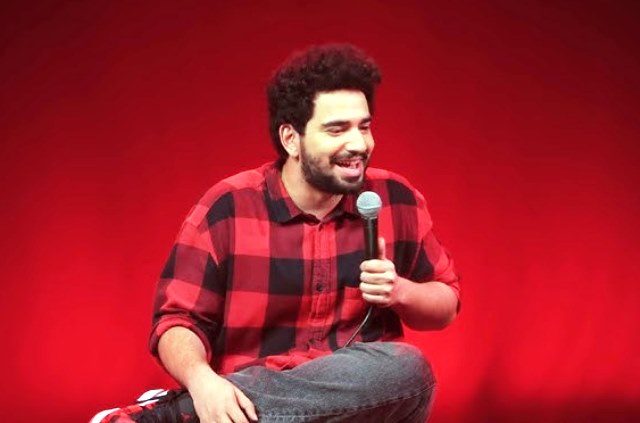
Comedian Samay Raina has made a strong comeback after more than a year away from the public eye following the ‘India’s Got Latent’ controversy, with his latest comedy special achieving a major global milestone online.

Raina recently released his debut stand-up special titled ‘Still Alive’ on YouTube, which has now crossed 53.4 million views. According to a release, it has emerged as the most-watched full-length stand-up comedy special in the world from a single upload.

With this achievement, Raina has reportedly become the first comedian to hold the record for the highest-viewed stand-up special globally on a single video platform upload.

‘Still Alive’ also marks Raina’s first official stand-up special. In the 1-hour and 21-minute-long performance, he speaks candidly about the ‘India’s Got Latent’ controversy, his one-year break from public appearances, personal and financial struggles, childhood bullying, his Kashmiri Pandit identity, mental health and the support he received from fans and close friends.

For those unversed, the ‘India’s Got Latent’ controversy began in February last year after Ranveer Allahbadia, Ashish Chanchlani, and Apoorva Mukhija appeared as panellists on the show. A remark made by Allahbadia triggered widespread backlash, following which FIRs were filed against Samay Raina and others involved.

Following the controversy, Raina removed the show from YouTube, while Allahbadia later issued a public apology. Despite the setback, Samay has also indicated that a second season of India’s Got Latent is in the works. (ANI)

Bollywood’s Border Issues

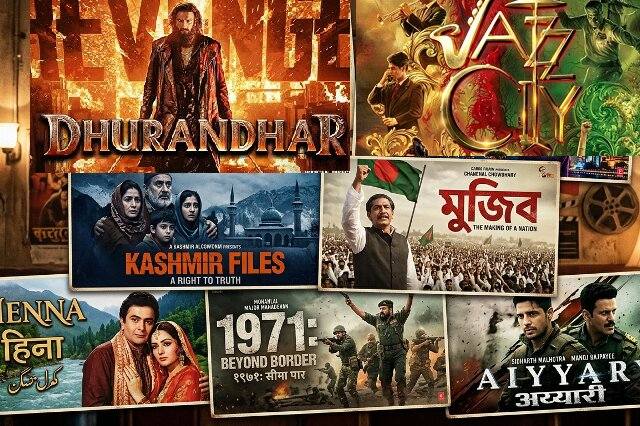
Bollywood blockbusters Dhurandhar (original and its sequel) and Sony LIV’s web series Jazz City have revived a debate on what Indian cinema supposedly does to its smaller neighbours, who call it “cultural hegemony”.

With cultural and language affinity, India enjoys an advantage. But it rankles the public mind and raises nationalistic sentiments since cinema, unlike say, a machine, is a product of direct public consumption.

This ‘hegemony’ is also a commercial reality. Of the 1,500 to 2,500 films India makes annually, the world’s highest, Hindi-Hindustani cinema, dubbed ‘Bollywood’, is a major contributor. Global web platforms have broken territorial barriers, enabling, along with others, an increased Indian cinematic presence.

Among cinema’s pioneers, the Subcontinent both emulated and resisted Hollywood and European cinema and developed its own in multiple languages. But since the 1947 Partition, cinema, especially in India, Pakistan, and Bangladesh, has been heavily fraught with geopolitical tension, often resulting in bans and controversies.

Interestingly, the hegemony charge does not exclude plagiarism that has gone on famously. All are guilty. But that is a different story.

Since 1962, Pakistan has frequently banned Indian films for portraying it negatively. Some of them are offensively poking in the Pakistani eye. Contentious themes include historical disputes and religious sentiments.

Most finger-pointing is done on terrorism. Pakistan’s response has been poor: Waar (2013), Yalghaar (2017) and Zarrar (2022). The Indian avalanche, backed by huge budgets, technical gloss and actors popular on both sides of the border, is massive. Indian films like The Kashmir Files, The Kerala Story, Aiyaary and Salman Khan-starred Tiger have provoked bans, also in the Gulf nations.

Some Indian films depicting Pakistan negatively inspire a ‘nationalist’ tone at home that is also anti-Muslim. When the two get clubbed, Pakistan alleges that through them, India is pandering to its domestic ‘Hindutva’ agenda.

Conscious of being the birthplace of goddess Sita, Nepal protested in 2023 against a dialogue in Adipurush. Led by its current Prime Minister, Balendra Shah, it caused a temporary ban on Indian films. The birthplace of Mala Sinha and Manisha Koirala, Nepal is generally forgiving.

But Bangladesh, where most of Bollywood’s Bengali film personalities have roots, gets upset. Post-independence, the early years saw co-productions like Ritwik Ghatak’s Teetas Ekti Nadir Naam. So was Shyam Benegal’s last film Mujib (2023). But successive governments, while allowing select films intermittently, have historically restricted Indian film imports to protect local cinema. Many see Bollywood as a threat to local language and culture.

The current controversy over Jazz City centres on the series being “about Bangladesh, without Bangladesh.” The period drama has a refugee running a club in Calcutta (now Kolkata), getting drawn into the politics and intelligence operations of 1971. Popular Bangladeshi actor Arifin Shuvu plays the role fairly well, but Dhaka’s issue is with its treatment by director Soumik Sen, an Indian.

“The question isn’t just what stories are told. It is rather who gets to tell them, who drives them, and whose perspective dominates,” Jannatul Naym Pieal writes in The Daily Star (March 21, 2026). “The framing is subtle but unmistakable. History happens, but its momentum seems to come from elsewhere. If this feels like déjà vu, that’s because Bollywood has been doing this for decades. India’s role dominates the screen, while Bangladesh’s struggle fades into the background.”

The freedom movement is a sensitive issue in Bangladesh. Pieal strongly recommends: “Perhaps it’s time we started telling 1971 our way.”

Well thought! But the problem in Pakistan and Bangladesh, both being cinema pioneers, is that local films, despite best efforts, cannot keep pace with the growing domestic demand. While artists and filmmakers oppose the imports, the film distributors and exhibitors prefer Indian films to keep their audiences.

The decline in Bangladesh’s homegrown film industry has led to the closure of over 1,000 movie theatres in the past decade. As for production, at one point, nearly 100 movies were made each year. Now there are only 30 or 40.

In Pakistan, most bans came in the Ziaul Haq era. It was not always strictly enforced. Benazir Bhutto permitted the partial shooting of Raj Kapoor’s Henna (1991). Relaxation came in 2008 under another military dictator, Gen Pervez Musharraf. The film exhibitors were asked to provide an equal share of screening time between Indian and Pakistani films. The cinema halls were full, and new ones were built.

Fawad Khan, Mahira Khan, Ali Zafar and Saba Qamar acted in Indian films. But it boils down to bilateral relations. The tenures of Musharraf and, later, Nawaz Sharif saw brief periods without conflict. Post the Pulwama terror attack, however, the ban was re-enforced in 2019.

The long no-talks phase saw former premier Imran Khan clubbing “Hollywood and Bollywood” as ‘vulgar’ and promoting Turkish cinema as part of the “Islamic renaissance”.

Currently, despite a Supreme Court-backed ban by PEMRA, the official media regulator, Indian songs, including Dhurandhar’s Jaiye Sajana, continue to dominate the Pakistani music audience. The regulator demanded action against Geo TV for telecasting Asha Bhosale’s songs. The channel defended it, saying that it was only paying a tribute to Bhosale, who passed away last week.

This essay is neither meant to uphold Bollywood’s supremacy and its cultural/commercial dominance, nor to lament the response of India’s neighbours. It seeks a somewhat larger perspective.

Actually, India is also a ‘victim’ of what it is accused of. Only a few years younger than Hollywood and much of the European cinema, the Indian cinema has carved its own place and audiences at home and abroad. Yet, foreign filmmakers, with ‘colonial’ perspectives to suit Western audiences, play down Indians, their mythology, literature and events like the freedom movement. Indian characters are reduced to bit roles.

British films on Lord Mountbatten made in 1986 and 2017, for instance, projected him as the hero, and Indian characters, from Mahatma Gandhi onwards, were but incidental.

But then, filmmaking is an artistic enterprise with millions placed on the shoulders of its makers. One cannot quarrel with, say Richard Attenborough for choosing a British-Indian to play Gandhi.

Numerous Hollywood films have left out Indians from their narratives. For example, The Bridge on the River Kwai (1957) was a World War II film on the Burma campaign, which involved thousands of Indian soldiers. But there is none in that classic.

Talking of the World Wars, India was not partitioned then. In World War I, 74,000 to 89,000 Indians were killed, and 67,000 wounded. In World War II, military deaths alone were over 87,000, wounded/missing were 34,354 and 67,340 were taken prisoners of war (POW).

Add to them the civilian deaths. Estimates vary from two to three million. Most of them were during the 1943 Bengal famine, partly caused by the British government’s wartime food shortages and policy decisions. The last bit is for Bangladesh.

Neighbours ought to share the gain or loss, and the credit with India. Is anyone willing to do that?
‘Public Will Punish Them’: Rijiju Slams Kharge For Calling PM Terrorist

A BJP delegation, comprising Parliamentary Affairs Minister Kiren Rijiju, Finance Minister Nirmala Sitharaman, Union Minister Arjun Ram Meghwal and others, met with the Election Commission of India on Wednesday demanding action against Congress President Mallikarjun Kharge over his remarks calling Prime Minister Narendra Modi “a terrorist.”

Speaking with ANI, Kiren Rijiju strongly condemned the remarks by Kharge, calling it “an issue for the entire nation”.

Stating that no political party has ever touched that level of disrespect as Congress, Rijiju said that the delegation demanded EC to take “strict action” and asked the Congress President to apologise from the country.

“Today, a high level delegation of BJP met with the Election Commission. We have met the EC with grief and anger because normally we meet the EC for election process related work but today our delegation went for the derogatory remarks made by Congress President Mallikarjun Kharge against Prime Minister Narendra Modi. This is not a BJP issue but an issue for the entire nation. Calling the PM of the country, a terrorist, you can understand the level of low the Congress has touched in terms of respecting an individual and the democracy. I don’t think any political party has ever used such insulting remarks against a PM,” he stated.

“The PM is not just a party’s PM but a country’s PM. He has been elected as the PM of the world’s largest democracy. Congress has often made derogatory remarks against PM, whether its vile, poisonous snake, commander-in-chief, and what not. But today they crossed all boundaries. PM Narendra Modi is considered as a global leader and the ideal of democracy. We have requested the EC that if any political party uses such language, then it is not a BJP issue, but a cheap tactic in the democracy. We have thus, asked for a strict action on this and also that Kharge should apologise to the entire nation. So that no one dares to disrespect the PM of the country and that in the presence of EC, no political party can make such remarks,” he added.

Rijiju further stated that the EC has assured action into the matter.

“The EC has taken cognisance of the matter. We have been assured that an investigation will be done in the matter,” he said.

The Parliamentary Affairs Minister also affirmed that all terrorists shall be eliminated under the PM’s leadership, while the Congress will be punished by the people.

“The investigation that EC has to do is different. But the terrorist who fight against our country will be finished under the leadership of same PM Modi, who has been called a terrorist. The public will punish the Congress, as PM Modi will punish the terrorists,” Rijiju affirmed.

The controversy stems from Kharge’s speech during the last day of the election campaign in Tamil Nadu, where he criticised the AIADMK for aligning with the BJP while making sharp remarks against PM Modi. Kharge allegedly referred to Modi as a “terrorist who does not believe in equality”, sparking political backlash.

“I also thank the Tamil Nadu people who have given MPs to us, that’s why we were able to fight and defeat the bill. This is the land of scientific thinking and ideals of Periyar, Dr. Ambedkar, Annadurai, great Kamaraj and Karunanidhi. These people stood for this women’s reservation, justice, equality, and fraternity. Modi is not for these principles and one more thing I want to tell how this AIADMK people who themselves put the photo of Annadurai, how can they join with Modi who is a terrorist and who won’t believe in equality, his party won’t believe in equality and justice and these people are joining with them, it means that they are weakening democracy, they are weakening the philosophy of Annadurai, Kamaraj, Periyar and Karunanidhi and Babasaheb Ambedkar. The Congress-DMK alliance will continue to deliver welfare, inclusive growth, quality education and accessible healthcare,” Kharge had said while addressing the gathering. (ANI)