Land Inequality Growing in the Shadow of Development
Agriculture is the backbone of India this is what we have been hearing for generations. But there is a pain hollowing out this backbone from within and that is the unequal distribution of land. On one hand, news of farmer suicides, indebtedness, and rural migration keeps coming; on the other, agricultural land across the country continues to concentrate in the hands of a few wealthy individuals.
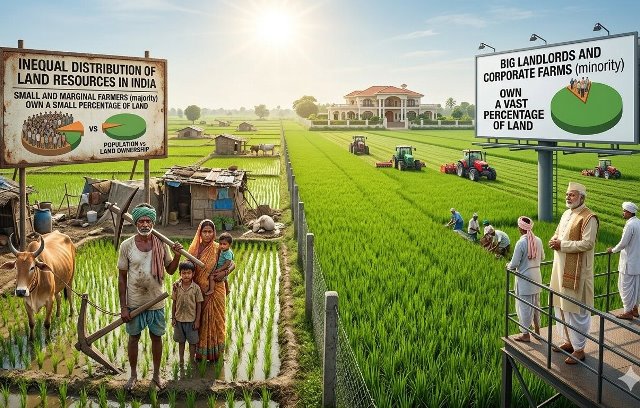
A significant report has recently come to light on this reality of inequality the research report titled Land Inequality in India: Nature, History, and Markets by the World Inequality Lab. Co-authored by Nitin Kumar Bharti, David Blakeslee, and Samreen Malik, this report involved an in-depth study of land ownership data across approximately 2.70 lakh villages in ten major states of India, covering a population of 65 crore people and its findings are shocking. Only the top ten percent of wealthy families in rural India control 44 percent of the land, while 46 percent of rural families are entirely landless. The richest five percent of families hold 32 percent of the land, while just one percent of ultra-wealthy families have 18 percent of rural land concentrated in their hands.
The Gini Index the standard measure of land inequality has reached an average of 71. In some villages, the situation is so severe that more than 50 percent of the village land is in the possession of a single landlord, and on average, the largest landholder controls approximately 12 percent of the total land. A person who has no land gets neither bank loans, nor government assistance during drought, nor any assurance of income from farming. He remains trapped in the web of wage labour for eternity and this vicious cycle continues to roll forward from generation to generation.
Regarding Maharashtra in this report the state is considered one of India’s progressive and agriculturally innovative states. It has all kinds of cash crops: sugarcane, cotton, orchards, and vegetables. Yet even within this market-oriented agricultural economy, land inequality persists and in some respects, it comes through even more starkly. According to this report, Maharashtra’s Gini coefficient stands at 0.709, which is indicative of an extremely high level of inequality.
Approximately 48.1 percent of families in the state are landless meaning nearly half of all families do not own even a single piece of land in their own name. The top ten percent of families hold 40.8 percent of the land, while just one percent of the wealthy families have 14.7 percent of the land concentrated with them. Furthermore, even proximity to roads or markets has not reduced this inequality this observation tells us that the roots of inequality do not lie in land productivity; they are deeply embedded in history, social structure, and power equations.
Across states nationwide, there are vast differences in land inequality. Punjab has the highest rate of landlessness, reaching up to 73 percent which is particularly astonishing since Punjab is considered an agriculturally advanced state. In Bihar, the share of the largest landholder goes as high as 20.1 percent. In Kerala, the landlessness rate is 65.4 percent, while in Tamil Nadu it is 66.5 percent. An important point emerges from this comparison Kerala and Tamil Nadu are considered frontrunner states in social indicators, yet even there, the rate of landlessness is high. This means that even if literacy, health, and education improve, land inequality does not automatically diminish. It requires special policy intervention.
One important cause of land inequality is the land revenue systems imposed during British colonial rule. In areas that were controlled under the zamindari system during British rule, greater land inequality is still found today, whereas in areas that were under princely states, this proportion appears comparatively lower. The three types of land revenue systems introduced under British rule ryotwari, zamindari, and mahalwari profoundly influenced the economic and social structure of rural India. The zamindari system gave intermediaries unlimited power over farmers.
These intermediaries remained in a race to extract maximum revenue from farmers. The farming class was pushed into the abyss of debt, and land continued to concentrate in the hands of the wealthy. After independence, land reform laws were enacted, zamindari abolition took place, land ceiling laws came into force, and through Vinoba Bhave’s Bhoodan movement, some land was distributed to the landless. However, although these post-independence efforts have shown positive results, the fundamental inequality in land ownership still remains.
Another major cause of land inequality is the caste system a cause equally historical and equally profound. The impact of social hierarchy is still clearly visible on land ownership. The proportion of landlessness is highest among Scheduled Caste and Scheduled Tribe families. For centuries, these communities were denied the right to hold land. Till the land, but the land remains in the names of the upper castes this vicious cycle still continues in many places.
Looking at tribal areas in Maharashtra in Nandurbar, Gadchiroli, Palghar, and Chandrapur districts, tribal farmers have been cultivating land for generations, yet their names do not appear on the 7/12 land extract. In the Sahyadri valleys, Vidarbha, and Khandesh in Maharashtra, many tribal and hilly-area farmers have been farming on forest or grazing land for generations. They nurture that land with their own sweat, but their names do not appear in government records. As a result, they receive neither crop loans nor government assistance during droughts. The reasons for this are the historical absence of land registration, fake purchase agreements, transactions carried out under pressure, and ignorance about the complexities of the law.
In Maharashtra, there are strict provisions under Section 36(A) of the Maharashtra Land Revenue Code, 1966 for the protection of tribal lands. A tribal person can sell land only to another tribal person; if the sale is to be made to a non-tribal, the prior written permission of the District Collector is mandatory. However, in the past, fake purchase agreements, fake powers of attorney, incorrect succession entries, or transactions carried out under pressure took place in many locations, and as a result, thousands of tribal people were deprived of their land. No matter how stringent the laws, as long as enforcement is not effective, as long as tribal communities are unaware of their rights, and as long as corruption and pressure persist, the prospect of reducing land inequality continues to recede.
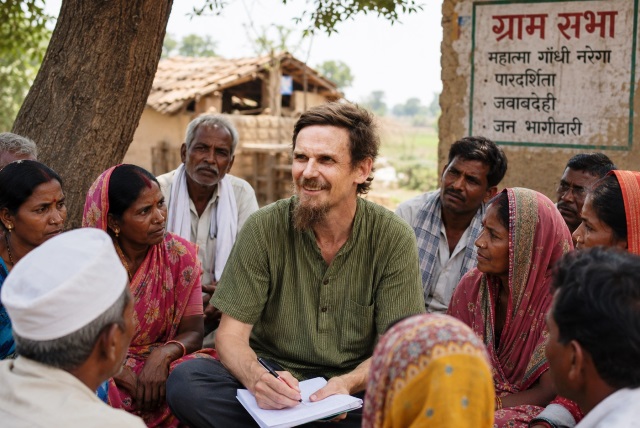
In 2006, the Government of India enacted the ‘Scheduled Tribes and Other Traditional Forest Dwellers (Recognition of Forest Rights) Act.’ This Act made an attempt to grant legal rights to tribal and forest-dwelling communities over the land they have been cultivating for generations. This was an important remedy for a historical injustice. With proper documentation, supplemented by modern satellite evidence and the strength of the gram sabha, legal rights over land can be obtained. However, the implementation of this Act is extremely slow. Many claims are rejected, the process is cumbersome, the government machinery’s response is inadequate, and claims still remain pending they remain trapped in the web of landlessness.
It is often argued that the development of markets, road networks, and agricultural trade will reduce land inequality. This argument may seem theoretically attractive, but the reality is different. Market integration does not completely eliminate historical land inequality. The proximity of cities, roads, and markets does not change the deeply entrenched patterns of land inequality that have been shaped by natural conditions and institutional history. On the contrary, market orientation often increases pressure on small farmers. Unable to afford the capital needed for cash crops seeds, fertilizers, irrigation small farmers sell their land, wealthy farmers and industrialists buy it up, and as a result, land inequality increases further.
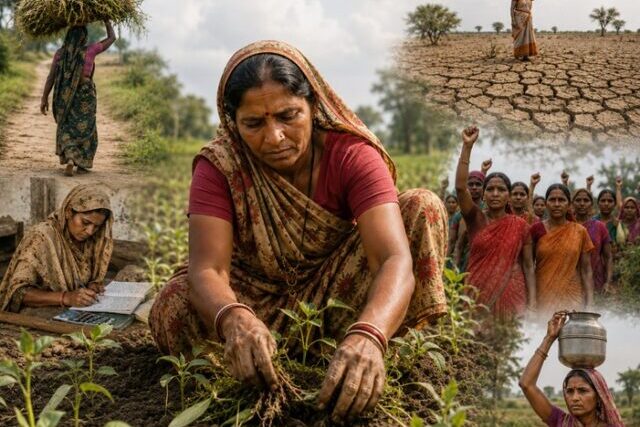
The unequal distribution of land directly impacts poverty, agricultural productivity, and rural development. Land is a crucial factor in rural India that determines income, social status, and access to credit. A farmer who owns land gets bank loans, government subsidies, and compensation in the event of crop failure. But a landless farmer is deprived of all these benefits. He works as a labourer on others’ farms, depends on seasonal employment, migrates to the city when the monsoon season ends, his children drop out of school to work as labourers, when health deteriorates, treatment is paid for through debt, and to repay the debt, whatever little he has must be sold. This vicious cycle continues from generation to generation.
If solutions are to be found for this situation, multi-dimensional policy intervention is needed. Digital land registration, computerisation of 7/12 extracts, and land surveys reduce fraudulent transactions. Maharashtra has made some progress in this area, but in rural and tribal regions, this work is still not complete. The lakhs of tribal families whose forest rights claims remain pending must be resolved immediately. Government lands, grazing lands, and Class-II lands in the possession of the state should be allocated on a priority basis to landless Dalit and tribal families. Through women’s self-help groups and cooperative organisations, collective land cultivation, group farming, and the formation of producer companies can include the landless in the production chain. Many non-governmental organisations are working in this direction, and the results of their efforts are also beginning to show.
The diversity of land inequality across states in India is almost as vast as the diversity found among nations across the world — this observation tells us that each state in India needs a different policy; a uniform national answer is not sufficient. The World Inequality Lab is a research institution affiliated with the Paris School of Economics that works to explain the causes of inequality worldwide through evidence-based research. This institution’s report has sparked discussion at the international level on India’s land inequality because as long as this issue remains confined to local discussions, it does not receive its rightful place in national and international policies.
This report by the World Inequality Lab reflects our reality. The data encompassing the land issues of 65 crore people tells us that much still remains to be done. The landless must receive land, tribal rights must be strengthened, and Dalit farmers must receive the fruits of their labour these are not merely welfare measures, but the indispensable necessity of a just society. Eliminating land inequality does not merely mean distributing pieces of land it means restoring to a person his dignity. These matters must be taken seriously.