MD Drug Case: Shraddha’s Brother Arrived To Record Statement

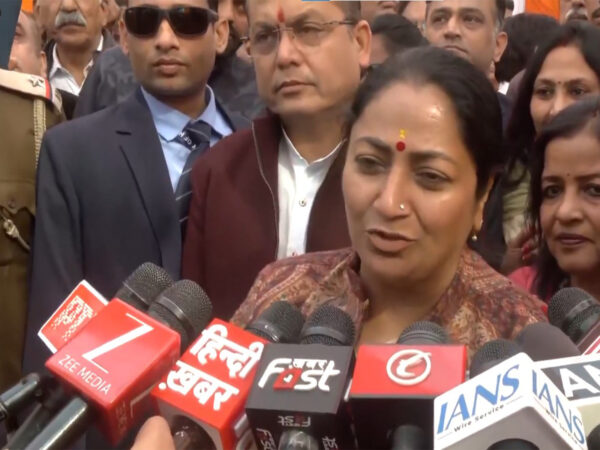
Siddhanth Kapoor, brother of Bollywood actress Shraddha Kapoor, arrived at the Anti-Narcotics Cell unit in Ghatkopar to record his statement in his alleged connection with the Rs 252 Crore MD Drugs case.

He reached the ANC office accompanied by Mumbai Police personnel, who escorted him inside for the questioning procedure.

A second summons has also been issued to social media influencer Orhan Awatramani, popularly known as Orry, directing him to appear before the ANC Ghatkopar Unit on Wednesday, November 26, to record his statement in the same case, according to Mumbai Police.

Meanwhile, in 2022, Siddhanth was released on station bail after he was arrested when his medical reports confirmed his consumption of drugs. The other four people detained were also released on station bail, as per the police.

Bengaluru Police detained Siddhanth Kapoor for allegedly consuming drugs at a party in the city.

In fact, Orry was also among several individuals named in an FIR lodged on March 15, 2025, by Katra police for allegedly consuming alcohol at a hotel in Katra.

As per a press release from the Jammu and Kashmir Police, “Taking cognizance of the complaint regarding an issue involving certain guests who were staying at Hotel of Katra and found taking Alcohol, Katra police has lodged an FIR on March 15 against Orhan Awatramani (ORRY), Darshan Singh, Parth Raina, Ritick Singh, Rashi Dutta, Rakshita Bhogal, Shagun Kohli, and Anastasila Arzamaskina, who consumed alcohol in hotel premises despite being told that alcohol and non-vegitarian diet is not allowed inside Cottage Suite as it is strictly prohibited at such a divine place of Mata vaishnodevi pilgrimage.”

The release noted, “Sensing the gravity of the matter, strict instructions were passed by SSP Reasi Paramvir Singh (JKPS) to nab the defaulters, thereby setting an example of no tolerance of any such act of drugs or alcohol at religious places, which hurts the sentiments of the common masses.”

As per the release, the team was constituted under the supervision of SP Katra, DySP Katra, and SHO Katra to track down the culprits who violated the rule of the land and showed disrespect to the sentiments of people associated with the faith. (ANI)

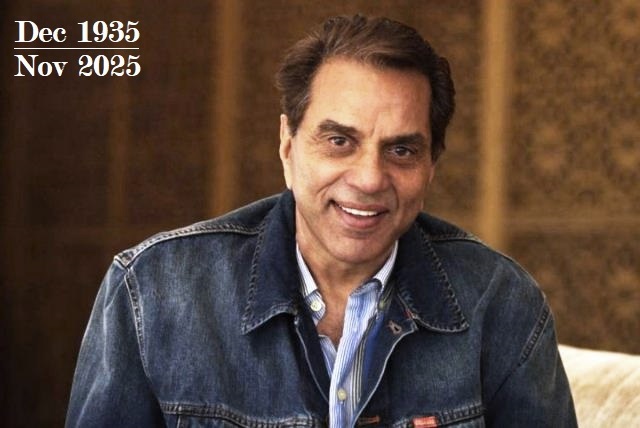
Vijay, Fatima Mourn Passing Of Legendary Dharmendra

Actor Vijay Varma shared his deep condolences following the demise of the legendary Dharmendra. Vijay was present in Goa for the screening of his upcoming film ‘Gustaakh Ishq’ and was accompanied by his co-actor Fatima Sana Shaikh and producer Manish Malhotra.

Speaking to mediapersons, Vijay expressed grief and said, “We have lost one of the pillars of Indian cinema. It’s unfortunate. He was going through a lot, but it still hurts a lot to see him go away. A loss for all of us.”

Fatima Sana Shaikh also paid tributes to the late actor and added, “It is very sad news. He is a legend. We were discussing the sudden pain that we are all going through, even when we were promoting our film here in Goa. A sad day for the industry.”

Dharmendra passed away at the age of 89 at his residence in Mumbai on Monday. The singer’s final rites were held at the Pawan Hans Crematorium in Mumbai, which was attended by the superstars like Amitabh Bachchan, Shah Rukh Khan, Salman Khan and others.

Celebrities have also been visiting Dharmendra’s Mumbai residence to share condolences with the family.

‘Gustaakh Ishq’ stars actors Vijay Varma and Fatima Sana Shaikh and is set to hit theatres on November 28.

The movie marks the debut of ace fashion designer Manish Malhotra as a producer in the Bollywood industry. The film is directed by Vibhu Puri.

As per the trailer, the film will follow the love story between the characters played by Vijay and Fatima.

The situation takes a downturn when a loan shark addresses the concern about Vijay Varma’s disturbed financial condition. The trailer ends on a heartbreaking note when Fatima Sana Shaikh bids farewell to Vijay Varma due to differences between them.

Besides Vijay Sharma and Fatima Sana Shaikh, the film also features Naseeruddin Shah and Sharib Hashmi in prominent parts. (ANI)

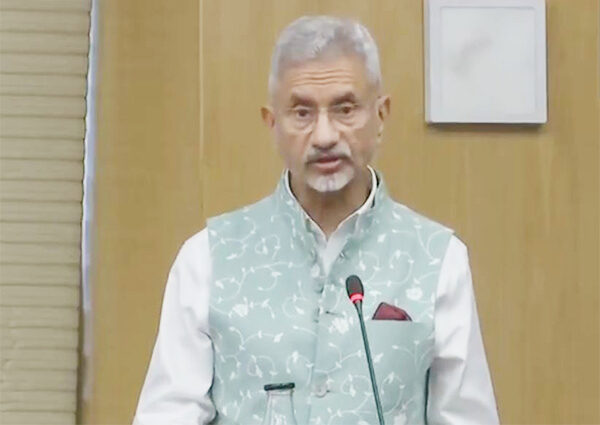
Jaishankar Reiterates India’s ‘Zero Tolerance’ For Terrorism On 17th Anniv Of 26/11

External Affairs Minister S Jaishankar on Wednesday reaffirmed India’s unwavering stand against terrorism as the nation marked the 17th anniversary of the horrific attack in Mumbai on November 26, 2008, that killed 166 people and injured 300, and left one of the busiest cities in the world to remain stand still.

In a post on X, the EAM said the world continues to remember the victims and brave responders who fought during the 2008 terror strikes.

“Zero tolerance for terror in all forms and manifestations. The world remembers the victims and heroes of 26/11. Reaffirm our resolve to bring all those involved to justice,” Jaishankar wrote.

November 26, 2025, marks the 17th year since terrorists from the Pakistan-backed Lashkar-e-Taiba (LeT) unleashed mayhem on the streets of India’s financial capital, Mumbai, in 2008.

Commonly referred to as 26/11, these coordinated assaults by a group of 10 terrorists sent shockwaves through the nation and the world. The terrorists had entered the city of Mumbai on the night of November 26, 2008, via sea route and over the course of four days, they killed 166 people and injured 300.

The targets were carefully chosen after being surveyed for maximum impact, viz., the Taj and Oberoi Hotels, Chhatrapati Shivaji Maharaj Terminus, the Jewish centre at Nariman House, Cama Hospital, Metro Cinema and the Leopold Cafe, since these places were frequented by foreign nationals along with a major part of Mumbai’s workforce.

The scars left by the tragic event continue to haunt those who witnessed it and the families who lost their loved ones.

The bullet marks at Leopold Cafe and Nariman House, the bust of Assistant Sub-Inspector Tukaram Omble, who gave up his life while capturing the lone surviving Pakistani terrorist Mohammad Ajmal Amir Kasab, and the streets of South Mumbai keep alive the memory of the gruesome terror attack.

The other nine LeT terrorists were killed while Kasab was arrested.

In May 2010, Kasab was handed the death penalty, and two years later, hanged in a maximum security prison in Pune. (ANI)

Manipur Congress Observes Samvidhan Bachao Diwas In Imphal

At the Samvidhan Bachao Diwas observance held at Congress Bhawan, Imphal, MPCC president Keisham Meghachandra accused both the state and central governments of failing to uphold constitutional values and restore peace in Manipur.

Addressing the programme organised by the MPCC Legal Department, Meghachandra said, “Saving the Constitution is saving democracy.”

He alleged that Manipur has been facing a complete breakdown of governance since the violence that erupted on 3 May 2023, with thousands of internally displaced persons (IDPs) still living in relief camps.

He said the state government’s three-phase resettlement plan has collapsed, leaving IDPs frustrated and prompting protests, including the call to boycott the Sangai Festival. Civil society groups have also extended support to the agitating IDPs, he added.

Meghachandra charged that government institutions and departments have “totally failed,” with no development despite the Centre’s funds and schemes. He said people continue to suffer due to restricted movement, insecurity, and financial hardship, reflecting a serious violation of constitutional rights.

“The state government has no initiative for peace, and the Centre is equally indifferent. Their failure to ensure the safe return of displaced people is the root of the ongoing crisis,” he said, adding that public dissatisfaction is growing across Manipur.

The Constitution of India, adopted on November 26, 1949, was drafted by the Constituent Assembly, which was presided over by Dr. Rajendra Prasad, who later became the first President of India.

The Constituent Assembly was established under the Cabinet Mission Plan and initially comprised 389 members. After the Partition of India, its membership was reduced to 299. (ANI)

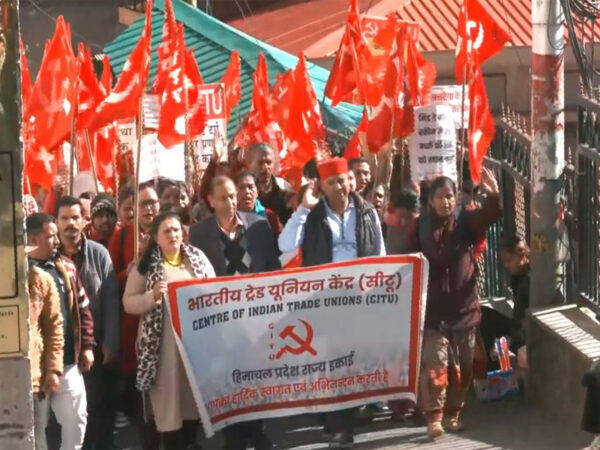
Workers & Faremrs Protest Agaisnt Four Labour Codes In Shimla

Workers, farmers, and horticulturists on Wednesday held a protest rally in Shimla against the four Labour Codes, alleging that the new laws undermine workers’ rights and benefit corporates.

The rally began from the Panchayat Bhawan and passed through Sabzi Mandi and Lower Bazar before reaching the DC Office, where the protesters raised slogans demanding the restoration of earlier labour protections and justice for farmers affected by land acquisition and natural calamities.

Speaking at the protest and addressing the media, Vijendra Mehra, State President, CITU Himachal Pradesh, strongly criticised the Central Government’s labour reforms.

“Today, workers and farmers across the country are protesting. Five years ago, a historic farmers’ movement took place when three black farm laws were brought in. Various claims were made that these laws were beneficial for farmers, but later the Central Government had to apologise to the farmers and withdraw those black laws. The intention was to hand over agriculture and labour entirely to corporate interests,” Mehra said.

He added that the government scrapped 29 existing labour laws and replaced them with four labour codes, which he claimed would push workers into bonded labour conditions.

“These labour codes will promote bonded labour and slavery. About 74% of workers employed in industries will be pushed out of the legal framework. The license fee for contract labour has been increased from Rs. 20 to Rs. 50. The retrenchment limit has been raised from 100 workers to 300, effectively removing 74% of labourers from the protection of the law,” he said.

Mehra further alleged that social security measures for workers had also been weakened.

“The EPF contribution has been reduced from 12% to 10%. The ESI contribution scheme has been damaged. The bonus, which workers had negotiated earlier, has been capped at 8.33%. You claim gratuity will be given, but with jobs lasting only 90-180 days, workers will never complete one year to qualify for it,” he added.

The CITU leader also highlighted issues affecting apple growers and small farmers in Himachal Pradesh, including land eviction notices issued under court orders and inadequate compensation for the National Highway expansion.

“Small and marginal farmers are not being given land rights. The National Highways Authority has constructed roads in such a way that farmers’ land, houses, cow sheds, and paths have collapsed, yet compensation has not been provided as per the law,” he said.

He also criticised the state’s handling of natural disasters.

“For the past three years, disasters have killed hundreds and caused huge losses to life and property. Under the 2013 law, people should have received compensation, but they haven’t. The Prime Minister announced Rs. 1500 crore in relief, but affected families have not received adequate support,” Mehra said.

He added that the ongoing farmer-worker movement would intensify nationwide.

“On January 19, massive protests will be held across the country, including Himachal Pradesh. Today, workers have gathered outside the DC Office in Shimla. We will continue this movement across the country,” he said.

A woman protester, Himi Devi, also criticised the Centre for pushing labour codes that she said harm workers and farmers.

“Today, protests are being held across the country and in Himachal. By scrapping labour laws and bringing in four labour codes, the Central Government has attacked workers and farmers. They claim that India’s economy is running at the fifth position globally, but if that is true, why are 80 crore people receiving 5 kg ration?” she asked.

She also expressed concern over the privatisation of health services, the new education policy, unemployment, and rising crimes against women.

“The government has privatised health services, and the new education policy has pushed children of the working class out of education. Youth are not getting jobs. Women are facing increasing harassment. By bringing these labour codes, the government is benefiting big corporations,” she said.

Himi Devi demanded the restoration of old labour laws and the creation of jobs for unemployed youth.

“The 45 labour laws that have existed since British times must be retained. Workers, farmers, and unemployed youth must get jobs. The government talks about giving two crore jobs, but instead distracts the public with Hindu-Muslim politics. If the forced labour codes are not withdrawn, today’s token protest will become a massive movement,” she said.

The protesters vowed to continue their agitation until the labour codes are scrapped and workers’ and farmers’ rights are protected. (ANI)

Jackie Chan, Chris Tucker Starrer ‘Rush Hour 4’ Officially In Works

In a major reunion, Jackie Chan and Chris Tucker starrer beloved buddy-cop series ‘Rush Hour’ is heading for a much-awaited sequel.

According to Variety, ‘Rush Hour 4’ is currently in work, with Paramount brought on board to distribute the latest instalment in the franchise. The film is reportedly arriving with the intervention of US President Donald Trump, who “personally requested” the studio to revive the franchise, Variety added.

Brett Ratner, who directed the previous three instalments, will return for the fourth film, which will also mark the epic return of actors Jackie Chan and Chris Tucker.

If in development, ‘Rush Hour 4’ will mark Ratner’s first feature film since Dwayne Johnson’s ‘Hercules’. He was later seen embroiled in #MeToo allegations. In 2017, he was accused of sexual assault by Melanie Kohler and also sued for defamation, following which both sides settled in the fall of 2018, as per Deadline.

At that time, this caused Warner Bros. to sever all ties with the producer-director with whom they had a lucrative deal.

Coming back to the ‘Rush Hour’ franchise, the original film was released in 1998, the second in 2001 and the third in 2007. The film follows two police officers who are forced to work together to rescue a Chinese diplomat’s abducted daughter.

‘Rush Hour’ was a big hit, collecting USD 244 million globally. The follow-ups turned out to be even bigger commercial hits, making USD 347 million and USD 258 million, respectively.

With a green signal to the next instalment, anticipation remains at peak about what the makers will bring to the audience. Further details on the plot or cast are yet to be unveiled.

Earlier in 2022, Jackie Chan, during his appearance at the Red Sea Film Festival in Saudi Arabia, that he was “talking” about it, according to People. (ANI)

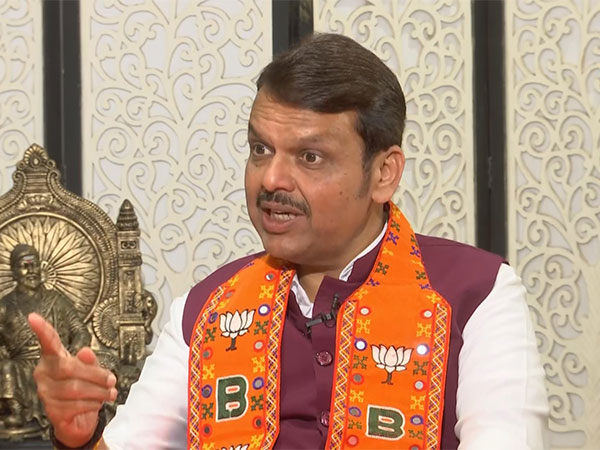
Deputy Chief Minister Devendra Fadnavis

Fadnavis Offers Tribute To Victims Of 26/11 Attacks

Maharashtra Chief Minister Devendra Fadnavis, along with multiple other dignitaries, paid a tribute to the victims of 26/11 attacks on Wednesday at the memorial in Mumbai.

Multiple other dignitaries, including state ministers Ashish Shelar, Mangal Prabhat Lodha also paid their tributes.

Maharashtra Director General of Police Rashmi Shukla and Mumbai Police Police Commissioner Deven Bharti were among those who paid their respects at the memorial dedicated to the victims of the 2008 attacks.

Earlier, leaders across party lines, including Prime Minister Narendra Modi, Leader of Opposition in Lok Sabha Rahul Gandhi, President Droupadi Murmu, Vice President Radhakrishnan, and multiple other leaders, remembered the victims of the attacks and condemned terrorism in all its forms.

President Droupadi Murmu paid a humble tribute to the soldiers who sacrificed their lives to protect the people of the country during the 26/11 Mumbai terror attack, remembering their supreme sacrifice.

“On the anniversary of 26/11 Mumbai terror attacks, I pay my humble tribute to the brave soldiers who sacrificed their lives to protect the people of our country. The nation remembers their supreme sacrifice with gratitude. Let us reaffirm our commitment to combat terrorism in all forms. Let us move forward together on the path of progress with a resolve to build a stronger and more prosperous India,” President Murmu wrote on X.

Earlier today, Rahul Gandhi paid heartfelt tribute to the victims and security personnel who laid down their lives in the line of duty during the 26/11 Mumbai terror attacks in 2008.

In a post on X, Rahul Gandhi said, “My humble tribute to the brave soldiers and common citizens who were martyred in the dussahasi terrorist attack in Mumbai on 26/11. India will never forget their courage, sacrifice, and martyrdom.”

This year marks 17 years since terrorists from the Pakistan-backed Lashkar-e-Taiba (LeT) unleashed mayhem on the streets of India’s financial capital, Mumbai.

Commonly referred to as 26/11, these coordinated assaults by a group of 10 terrorists sent shockwaves through the nation and the world. The terrorists had entered the city of Mumbai on the night of November 26, 2008, via sea route and over the course of four days, they killed 166 people and injured 300, in some of the busiest parts of the city.

The scars left by the tragic event continue to haunt those who witnessed it and the families who lost their loved ones. The bullet marks at Leopold Cafe and Nariman House, the bust of Assistant Sub-Inspector Tukaram Omble, who gave up his life while capturing the lone surviving Pakistani terrorist Mohammad Ajmal Amir Kasab, and the streets of South Mumbai keep alive the memory of the gruesome terror attack.

The nine LeT terrorists were killed while Kasab was arrested. In May 2010, Kasab was handed the death penalty, and two years later, hanged in a maximum security prison in Pune. (ANI)

Cabinet To Clear Rs 7000 Cr Rare Earth Magnet Manufacturing Scheme: Sources

The Union Cabinet is likely to clear on Wednesday, a Rs 7,000-crore incentive scheme aimed at boosting domestic manufacturing of rare earth magnets, sources told ANI.

The proposal, designed with a validity of seven years, seeks to reduce India’s import dependence on critical minerals and strengthen the supply chain for advanced manufacturing sectors.

The scheme is expected to support the creation of production capacity for nearly 6,000 tonnes of rare earth magnets. These magnets are essential components in electric vehicles, electronics, wind turbines, defence platforms, and other high-technology applications.

Sources further indicated that the Finance Ministry has already granted approval for the scheme, paving the way for the ongoing Cabinet meeting, which started today at 12:30 pm, to take up the proposal.

The Ministry of Mines has been working on the scheme framework with a focus on attracting global and domestic firms, promoting value addition within India, and ensuring long-term availability of strategic materials.

India currently relies heavily on imports of rare-earth permanent magnets, primarily from China. The proposed incentive mechanism is expected to support investment in processing, refining, and magnet-making capabilities, which remain underdeveloped in the country.

Sources said the scheme aligns with the government’s broader agenda of securing critical mineral supply chains and enhancing technological self-reliance across sunrise sectors. The Cabinet’s approval is anticipated shortly. (ANI)

The He-Man Who Mastered Softness on Screen

Dharmendra’s screen legacy cannot be confined to a single archetype. He was indeed the He-Man of Indian cinema, but that title often obscures the quiet brilliance he brought to sensitive, soft roles. His gentleness was never ornamental; it was integral, shaping some of the most memorable characters of Hindi film history.

In an era where masculinity is being re-evaluated, Dharmendra’s body of work offers a blueprint that strength and sensitivity are not opposites but complements. And perhaps that is his greatest achievement, proving that the toughest heroes can have the softest hearts.

For generations of Hindi film audiences, Dharmendra has been synonymous with the title “He-Man”, a signature born from his rugged good looks, muscular presence and the tough, unflinching characters he essayed in scores of action and drama films. Yet, to view Dharmendra only through the prism of virility is to ignore an equally remarkable facet of his artistry that is the sensitive, soft-edged, emotionally nuanced characters he played with rare grace, especially in the first two decades of his career. If the He-Man defined his public image, the tender man defined his cinematic soul.

Across a career spanning nearly seven decades, Dharmendra displayed a spectrum of emotional depth that few leading men of mainstream Hindi cinema could match. Long before the action star of Sholay (1975) or Dharam-Veer (1977) emerged, the actor from Punjab had already sculpted a reputation as the face of vulnerability, of a man whose silences spoke as powerfully as his later punches.

A Poet at Heart in the Early Years

In the early 1960s, Dharmendra became the preferred face of filmmakers who wanted a hero that could embody restraint, gentleness and introspection. He was strikingly handsome, but not in a way that overpowered the role; rather, he seemed to dissolve into the emotional undercurrents of his characters.

One of the earliest examples was Anupama (1966), where he played the quietly encouraging writer Ashok. With minimal dialogue and expressive eyes, Dharmendra conveyed empathy, patience and warmth, the qualities that made his chemistry with Sharmila Tagore feel timeless. Similarly, in Majhli Didi (1967), he portrayed a compassionate schoolteacher whose humanity held the film’s emotional center. And of course how could one forget Dr Deven in Bimal Roy’s iconic film Bandini, where the jail doctor proposes to a women prisoner.

ALSO READ: Chupke Chupke – The Comedy of Professors

In Baharein Phir Bhi Aayengi (1966), Dharmendra again balanced idealism with tenderness. As a journalist committed to truth, he stayed soft-spoken even in confrontation, playing the role with a gentle smolder rather than aggression. Naya Zamana (1971) repeated this template of the sensitive poet standing up for love, dignity and justice.

The Satyakam Peak: A Masterclass in Emotional Complexity

If one film must be chosen to represent Dharmendra’s sensitive-actor peak, it is Satyakam (1969). Directed by Hrishikesh Mukherjee, the film remains a landmark in Hindi cinema for its moral complexity and emotional depth. Dharmendra’s Satyapriya Acharya, an idealistic engineer unable to compromise with a corrupt world, remains one of the most layered performances delivered by any commercial star.

Here, vulnerability was not just a trait; it was the backbone of the narrative. Dharmendra brought quiet turmoil, dignity, internal conflict and ultimately tragic integrity to the role. Many critics still describe his performance in Satyakam as one of the finest in the history of Hindi cinema, a role that proved the He-Man was equally a humane man.

Softness Even in Tough Roles

A fascinating element of Dharmendra’s career is that even when he played characters with grit, there was often a core of tenderness within them. Phool Aur Pathar (1966), the film that established his macho image, is a perfect example. He played Shaka, a rugged criminal whose exterior is softened when he encounters a neglected widow (Meena Kumari). Dharmendra’s transformation from hardened loner to a man of compassion was marked by emotional restraint rather than melodramatic flourish.

In Sharafat (1970) and Chaitali (1975), he again portrayed men whose gentleness broke through challenging circumstances. His eyes, expressive to the point of being poetic, became his primary tool for communicating empathy.

A Hero Women Confided In

Dharmendra’s sensitive roles often made him the confidant or emotional anchor of women protagonists. In Mamta (1966) and Khamoshi (1969), his characters functioned not as dominating male leads but as emotional complements to powerful female narratives. His presence offered comfort, understanding and stability, rare qualities for male stars at the time.

This quality of being soft without being weak, comforting without losing screen presence cemented Dharmendra as one of Hindi cinema’s most versatile stars.

Reinvention Across Decades

While the 1970s and 1980s leaned heavily into his action persona, Dharmendra’s sensitivity resurfaced at various points. Films like Ek Mahal Ho Sapnon Ka (1975) carried echoes of his earlier poetic charm. Even in ensemble dramas or masala entertainers, he infused emotional honesty into his roles, keeping the softer Dharmendra alive beneath the He-Man exterior.

What makes his longevity remarkable is not just physical presence but emotional adaptability. The same actor who leapt across trains in Sholay could break hearts with a single glance in Anupama.

A Full-Circle Moment in Modern Cinema

In 2023, more than 60 years after his debut, Dharmendra moved audiences yet again in Rocky Aur Rani Ki Prem Kahani. As Kanwal Lund, an elderly man rediscovering love and dignity, he offered a performance rich with vulnerability and dignity. His portrayal reminded younger audiences of the actor he was in the 1960s, the gentle romantic, the soft-spoken poet, the emotional anchor.

It was not just nostalgia; it was a reaffirmation that sensitivity had always been Dharmendra’s superpower, not his muscle power.

(Sidharth Mishra is an author, academician and president of the Centre for Reforms, Development & Justice)

Delhi CM Rekha Gupta Inaugurates 70 New Ayushman Arogya Mandirs

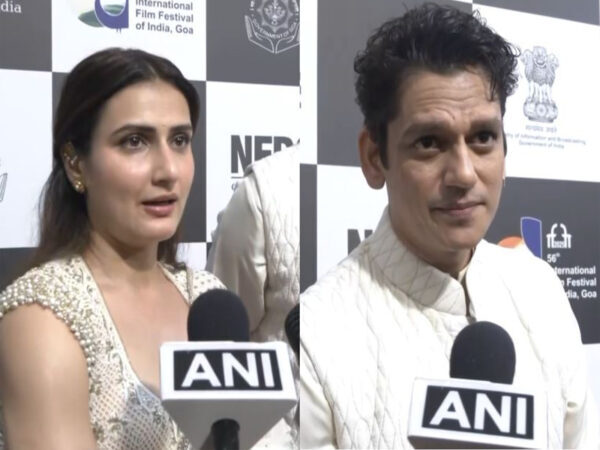
Delhi Chief Minister Rekha Gupta inaugurated 70 new Ayushman Arogya Mandirs across the national capital, marking a major push toward strengthening primary healthcare services.

Rekha Gupta also announced that the Delhi government has set an ambitious target to construct more than 1,000 such health centres in the coming months.

Speaking to ANI after the inauguration on Tuesday, Delhi Chief Minister said the expansion of Ayushman Arogya Mandirs reflects the commitment of her government to accessible and decentralised healthcare.

“Today we have inaugurated 70 new arogya mandirs in Delhi and dedicated them to the public… Our target is to construct more than 1000 Arogya mandirs in Delhi… I congratulate the people of Delhi; their decision to vote has given them so much strength that today, the work they need is getting done in Delhi,” she said.

Delhi Cabinet Minister Pankaj Kumar Singh, who was present at the inauguration ceremony, said the government had significantly accelerated its efforts to expand doorstep health facilities.

“We’re continuously opening Aayushman Aarogya Mandirs. Today, we inaugurated 70 across Delhi, bringing the total to 238. We’ve taken a step forward toward the promise we made to the people of Delhi: providing basic healthcare at every doorstep,” he told reporters.

The minister emphasised that the initiative aims to ensure that every citizen has easy access to essential health services. “The people of Delhi should have access to all the health facilities and be able to take advantage of those facilities… This was an initiative for that… We are opening these Aayushman Aarogya Mandirs to provide these facilities, and our goal is to benefit the public,” Singh added.

Earlier, on June 17, Delhi Chief Minister Rekha Gupta inaugurated an Ayushman Arogya Mandir at the Tis Hazari Court Complex, aimed at serving judicial staff and nearby residents. Following this, Delhi Minister Manjinder Singh Sirsa inaugurated another centre at Budh Bazar Road, B Block in Chaukhandi, noting that 33 Ayushman Arogya Mandirs were inaugurated on the same day, all equipped with modern infrastructure and healthcare provisions.

The Ayushman Arogya Mandir initiative seeks to strengthen Delhi’s primary healthcare delivery system through clinics providing basic diagnostics, preventive care, maternal health services, and management of common illnesses. (ANI)