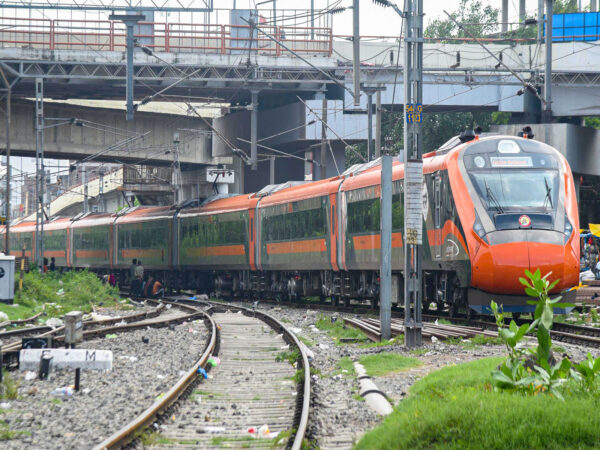
Indian Railways Operates Over 43,000 Special Trips in 2025 During Peak Seasons

Indian Railways has undertaken extensive measures to ensure smooth, safe, and convenient travel for passengers by operating a large number of special train trips during major religious events and peak travel seasons.

These initiatives reflect the Railways’ continued commitment to meeting increased passenger demand and providing seamless connectivity across the country.

In 2025, special train operations were significantly scaled up, highlighting enhanced planning and a stronger focus on passenger comfort.

During 2025, Indian Railways undertook one of its largest special train operations for Maha Kumbh, operating 17,340 special train trips between 13 January and 28 February 2025 to facilitate the movement of a very large number of pilgrims.

For Holi 2025, held from March 1 to March 22 2025, 1,144 special train trips were operated, nearly double the number run during Holi 2024, ensuring better availability and smoother festive travel.

The summer travel season of 2025, spanning 1 April to 30 June, saw the operation of 12,417 Summer Special train trips, maintaining a high level of service during peak vacation months.

Special arrangements for Chhath Puja 2025 were further strengthened, with 12,383 special train trips operated between 1 October and 30 November 2025, marking a substantial increase over the previous year.

These enhanced arrangements in 2025 were built upon the strong operational base created in 2024. During Aastha Special services conducted from 30 January to 11 March 2024, 326 special circular train trips were operated to facilitate pilgrim movement.

For Holi 2024, from 12 March to 2 April 2024, Indian Railways ran 604 special train trips to manage the festive rush.

The Summer season of 2024 witnessed 12,919 Summer Special train trips, while Chhath Puja 2024 arrangements included 7,990 special train trips between 1 October and 31 December 2024.

The marked expansion of special train operations in 2025 underscores Indian Railways’ sustained commitment to passenger comfort, efficient crowd management, and reliable travel during periods of high demand. (ANI)

Recycle Metal to Reduce Mining

I got a sweater the other day produced in Bangladesh, as good as you get anywhere but picked up by my daughter in the United States. The south Asian country in spite of serious political unrest, which has its expected fallout in the economy has managed to increase its share of US garment imports to 10.56 per cent in the first quarter of this year from 8.85 per cent in 2024.

The success in exports in a demanding market like the US is because of price competitiveness of Bangladeshi manufacturers not only due to comparatively low wages compared with China and India, factory ability to readily adopt design changes required by buyers, thanks to skilled manpower, advantage of low currency value and steady order shift from China. The other big manufacturer-exporters of garments, including India, Vietnam and Indonesia have also gained from China plus one policy of the Western countries.

Once you get a new garment, the tendency is to look at the label first before putting it on. You are curious about the brand, the origin of the garment, and also the fibre composition. What took me by surprise with the sweater I got is, as the label says, it is made with “a minimum of 40 per cent recycled materials.” The product has 60 per cent cotton and 40 per cent polyester.

I was told by my daughter, who is living in the US for over a decade and upholds eco-activism that the ranks of concerned Americans buying recycled products are fast growing. Going beyond, they have voted for green products and use of metals from copper to aluminium to steel sourced from secondary sources. What gives satisfaction to environmentalists is to the extent scrap from end-life products is recycled, industry reliance on mining of ores will be curbed. In the process of recycling of metals, electricity saving is considerable, almost to the extent of 90 per cent when seen against primary route of metal making. See, how environment friendly then is secondary route of producing metals.

Then in most instances, opening of new mines leads to displacement of original peoples whether in Australia, India or Brazil. Governments in ores bearing countries have come under growing pressure from civil society to ensure that mining groups take the rehabilitation of displaced people seriously. After all, tribal communities have been in occupation of the lands for centuries that they are asked to vacate to make room for mines.

So, the issue here is ethical and the mining groups are never short of funds. Mercifully, in more and more countries in the West, corporates and also final consumers will ungrudgingly pay a premium for anything made doing the least possible harm to the environment and also ethically.

Textiles offer the possibility of becoming an important part of circular economy and at the same time their recycling will curb carbon emissions and pollution. Besides saving natural resources like water, which is in short supply in majority of countries (India too faces high water stress) and electricity, recycling will ease pressure on waste disposal.

Environmentalists will say, less the use of textile dyes, which are found to be toxic and potentially carcinogenic, better it is for human beings and the environment. Eternally desirous of breathing fresh air free of floating pollutants and seeing the sky not covered by smoke, I appreciate the thoughts that have gone into making the sweater with 40 per cent recycled materials. Whoever will be using a garment like that will find the wear extra comforting.

Whether the recycling relates to minerals, especially the critical ones such as copper, lithium, nickel, cobalt and rare earths or textiles, the success of initiatives in that direction will depend much on policy environment. Looking at the scene globally, there is a positive movement in framing of new policies and regulations and sanctioning of financial incentives to promote recycling.

The International Energy Agency’s Critical Minerals Policy Tracker focussing on 22 countries found introduction of over 30 new policy moves related to critical minerals recycling since 2022. The policies, according to IEA tracker, fall into four categories: “Strategic plans, extended producer responsibility (EPR), financial incentives and cross-border trade regulations. Some also include regulatory mandates such as industry-specific targets for material recovery, collection rates and minimum recycled content.”

Let’s consider the indispensability of recycling for “security and sustainability” of critical minerals supply for transition to clean energy. As the transition gains in momentum across the continents, critical minerals such as copper, lithium, nickel, cobalt and rare earths will meet with higher and higher demand creating compulsion for fresh large investments in mines expansion and opening of new deposits. For importers of such minerals, relief will come by way of developing a robust infrastructure for collection of metals to be found in end of life be it vehicles, machinery, ships or a range of engineering products. The more the supply of secondary metals through scaling up of recycling, greater will be the mitigation of “environmental and social impacts related to mining and refining.” This besides, recycling will reduce the pressure of waste disposal.

But as it continues to happen, the use of recycled materials has failed to grow in sync with demand rises for metals. For example, IEA says in a report that in the case of copper, which has critical applications in electricals, the share of secondary supply, including direct scrap use, in total demand for the metal is down from 37 per cent in 2015 to 3 per cent in 2023. Nickel fared even worse where the share of recycled material in the same period retreated to 31 per cent from 35 per cent.

According to the report, aluminium benefiting from well-coordinated industry intervention by supporting collection of used metal and its remelting and supportive government regulations has, however, seen the rise in share of recycled metal’s use from 24 per cent to 26 per cent.

IEA says, “a successful scale-up of recycling can lower the need for new mining activity by 25 to 40 per cent by 2050 in a scenario that meets national climate pledges.” In case the pledges made by different nations are fulfilled, then recycling or secondary production will lead to cut in new mines development by 40 per cent for copper and cobalt and 25 per cent for lithium and nickel by 2050.
Bondi Beach Attack: MEA Says Australian Authorities In Touch On Matter

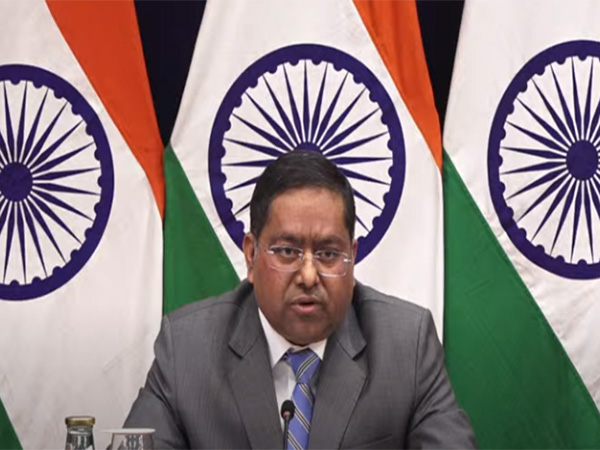
Ministry of External Affairs Spokesperson Randhir Jaiswal on Friday said that Australian authorities are in touch with Indian authorities on the matter of the Bondi Beach terrorist attack.

Speaking at the last media briefing of 2025 here in the national capital, Jaiswal, when asked about the individuals behind the Bondi Beach attack, said, “We are aware of the reports of the individuals responsible for the Bondi Beach terrorist attack. Australian authorities are in touch with our authorities on this matter.”

Telangana Police on December 16 stated that Sajid Akram, one of the accused in the Bondi Beach terror attack in Australia, was originally from Hyderabad, contrary to earlier reports that had identified the attackers as being of Pakistani origin.

The Telangana Police statement came as Australian authorities continue to investigate the December 14 massacre during the Jewish community’s Hanukkah celebration at Sydney’s iconic Bondi Beach as a terrorist attack, which was carried out by a father and son duo that left 15 people dead and dozens injured.

The attackers have been identified as Sajid Akram, aged 50, who was killed by Australian police, and his 24-year-old son Naveed Akram. Reports indicate that the two were inspired by ISIS ideology, and investigations into the case are ongoing.

According to Telangana police authorities, Sajid Akram completed his Bachelor of Commerce degree in Hyderabad before migrating to Australia in November 1998 in search of employment. He later married Venera Grosso, a woman of European origin, and settled permanently in Australia.

The couple has two children–a son, Naveed Akram, and a daughter. While Sajid Akram holds an Indian passport, both his children were born in Australia and are Australian citizens.

Relatives in India have indicated that Sajid Akram had limited contact with his family in Hyderabad over the past 27 years. After moving to Australia, he visited India on six occasions, primarily for family matters, including property matters and visits to his elderly parents. It is also understood that he did not return to India even at the time of his father’s death, police said.

Family members have said they were unaware of any radical mindset or activities linked to Sajid Akram and had no knowledge of the circumstances that may have led to his radicalisation. Authorities have stated that the factors contributing to the radicalisation of Sajid Akram and his son appear to have no connection with India or any local influence in Telangana.

In this context, Telangana Police said there is no adverse record against Sajid Akram during his stay in India prior to his departure in 1998.

The attack on December 14 was Australia’s deadliest mass shooting since 1996, when an attacker killed 35 people in the state of Tasmania, as per Al Jazeera.

The authorities are investigating the shooting as an act of “terrorism” targeting Jews.

Authorities believe the attackers were inspired by ISIL (ISIS) and said the group’s flags were found in the car the attackers took to Bondi.

While suspect Sajid Akram, 50, was shot dead by police at the scene, his 24-year-old son, Naveed Akram, who was also shot and emerged from a coma, has been charged with 59 offences, including murder and terrorism. He remains in custody in the hospital.

Some 13 of those wounded at Bondi also remained in Sydney hospitals on Sunday.

The Bondi Beach attack is the worst mass shooting in Australia in nearly three decades. (ANI)

Jamie Announces Break From Social Media After Tanya Mittal Mimicry Backlash

Comedian and mimicry artist Jamie Lever has announced that she has decided to take a short break from social media.

Jamie made the announcement days after facing heavy backlash from netizens over a video she shared on social media, mimicking Bigg Boss 19 contestant and social media influencer Tanya Mittal. The video did not go down well with many social media users, who felt she had gone over the top.

Taking to Instagram on Thursday, Jamie spoke about her love for her work and the support she has received over the years. Talking about how she has always worked with honesty and has been “bringing joy” to people, she wrote, “Those who truly know me know how deeply I love my work and how honestly I do it. I’m grateful to God for the gift of bringing joy to others and forever thankful for the love I’ve received over the years.”

“I’ve learned on this journey that not everyone will cheer for you or laugh with you. Recent events have made me feel like I’ve lost a small part of myself, this comes from reflection, not anger,” she added.

Jamie went on to say that she still loves entertaining people but needs time to “rest and reset.” Announcing her break, she wrote, “I love what I do and will always entertain. For now, I’m taking some time to rest and reset. See you next year. Thank you for the love, prayers, and support–always.”

Earlier this month, Jamie had shared a video on Instagram where she recreated emotional moments of Tanya Mittal from Bigg Boss 19. In the clip, Jamie mimicked Tanya’s expressions while cutting between scenes of the contestant crying on the show.

While some viewers saw the video as comedy, many netizens were upset and accused Jamie of “mocking” Tanya’s looks and her “emotional vulnerability”. The backlash quickly grew across social media platforms. (ANI)

Katrina Gives A Sneak Peek Into Christmas Celebration With Vicky

Actor Katrina Kaif enjoyed a cosy fam-jam Christmas celebration.

Taking to Instagram, she gave her fans and followers a sneak peek into Kaushal’s and Kaif’s Christmas bash.

She shared an adorable picture of herself smiling with her husband, Vicky Kaushal, brother-in-law Sunny Kaushal, and brother Sebastien.

Katrina looked radiant in a red sweater, exuding Christmas vibes. Vicky, Sunny and Sebastien embraced the Christmas spirit by donning Santa Caps.

“Love joy and peace to all… It’s a Merry Merry Christmas,” she captioned the post.

In November this year, Vicky and Katrina announced the arrival of their son, leaving fans and their friends joyous.

“Our bundle of joy has arrived. With immense love and gratitude, we welcome our baby boy. 7th November, 2025. Katrina & Vicky,” the note read.

They confirmed their pregnancy in September with an adorable picture from what appeared to be a maternity photoshoot. “On our way to start the best chapter of our lives with hearts full of joy and gratitude,” they wrote in a joint announcement on Instagram.

Vicky and Katrina tied the knot on December 9, 2021, at Six Senses Fort Barwara in Rajasthan. (ANI)

India Calls For ‘Free, Fair, Inclusive, Participatory Elections’ In Bangladesh: MEA

The Ministry of External Affairs (MEA) on Friday reiterated India’s consistent support for democratic processes in Bangladesh, stressing its call for free, fair, inclusive and participatory elections in the neighbouring country.

Outlining New Delhi’s position, MEA spokesperson Randhir Jaiswal said, “India stands for strengthening our ties with the people of Bangladesh. We favour peace and stability in Bangladesh and have consistently called for free, fair, inclusive and participatory elections in Bangladesh.”

The remarks come amid heightened scrutiny of political developments in Bangladesh ahead of the February 2026 elections. The MEA said it was closely monitoring the situation following the return of former prime minister’s son Tarique Rahman, even as concerns persist over the broader political and social environment.

Alongside the electoral context, India on Friday also condemned the killing of a Hindu youth in Bangladesh, describing the incident as a “matter of great concern.” The MEA linked its concerns to the wider issue of minority safety and the prevailing law and order situation in the country.

The Ministry noted that independent assessments have documented more than 2,900 incidents of violence against minorities during the tenure of Bangladesh’s interim government led by Muhammad Yunus, including cases of killings, arson and land grabbing.

Reacting to the latest killing, Jaiswal said, “The unremitting hostility against minorities in Bangladesh is a matter of great concern. We condemn the recent killing of a Hindu youth in Bangladesh and expect that the perpetrators of the crime will be brought to justice.”

The MEA’s comments follow recent incidents involving the lynching of Hindu men in Bangladesh, which have renewed focus on minority security concerns.

According to police, a 29-year-old Hindu man, Amrit Mandal, was killed on Thursday in Bangladesh’s Rajbari district, as reported by The Daily Star. The incident came days after another Hindu youth, Dipu Chandra Das, was killed in Mymensingh.

Sheikh Moinul Islam, officer-in-charge of Pangsha Model Police Station, said Mandal was allegedly accused of extortion by local residents, after which the situation escalated into mob violence.

Earlier, Dipu Chandra Das, a garment factory worker, was beaten to death by a mob, following which his body was tied to a tree and set on fire. While initial reports linked the killing to allegations of blasphemy, later details pointed to a workplace dispute as the likely trigger.

The MEA had earlier responded to media queries on Das’s killing by describing the incident as “horrendous” and urged that those responsible be brought to justice. (ANI)

Sabarimala Gold Theft Case: SIT Raids Residence Of D Mani In Tamil Nadu

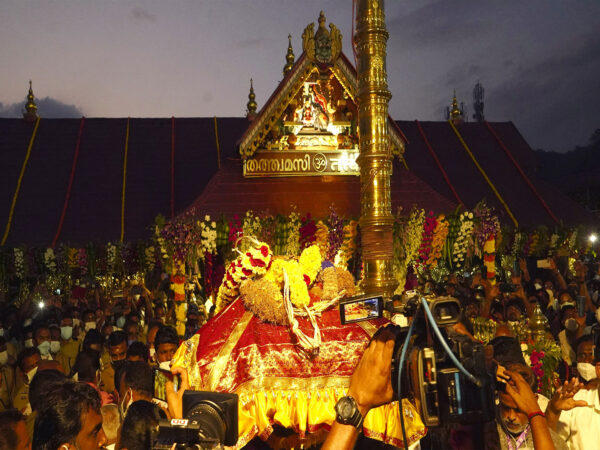
In connection with the Sabarimala gold theft case, the Special Investigation Team (SIT) on Friday conducted a raid at the residence of D Mani, alias Balamurugan, who is under the shadow of allegations in the case.

The search is underway at his house in the Dindigul district of Tamil Nadu.

As part of the probe, the SIT had earlier questioned Mani’s associate Sreekrishnan.

Meanwhile, a businessman has revealed that D Mani’s group had allegedly planned large-scale thefts targeting temples in Kerala. According to the disclosure, the gang had aimed at a theft worth nearly Rs 1,000 crore. In addition to Sabarimala, the group had planned to commit fraud at the Sree Padmanabhaswamy Temple, sources said.

Senior Congress leader Ramesh Chennithala made public the businessman’s claims. The businessman had further stated in his testimony that the gang sold Panchaloha idols taken from Sabarimala to an international antique smuggling racket.

The Sabarimala gold controversy centres on allegations of irregularities in the gold plating at the Sabarimala temple. This situation arose from a donation of 30.3 kilograms of gold and 1,900 kilograms of copper by industrialist Vijay Mallya in 1998, intended for the cladding of the sanctum sanctorum and the wooden carvings of the Sabarimala Ayyappa temple in Kerala.

Earlier this week, the SIT arrested Smart Creation CEO Pankaj Bhandari and Karnataka’s Bellary-based jewellery owner Govardhan in the Sabarimala gold theft case, said Kerala DGP Ravada Chandrasekhar.

On November 26, the SIT took into custody A. Padmakumar, former Sabarimala Executive Committee President and a CPI(M) Pathanamthitta district committee member, in connection with the sanctum gold heist case. Padmakumar, who also served as a former Konni MLA, was taken into custody after the Kollam Vigilance Court approved the SIT’s request. He had earlier been remanded to 14 days of judicial custody.

Earlier, on November 7, the SIT arrested former Thiruvabharanam temple Commissioner K.S. Baiju, while the prime accused, Unnikrishnan Potti, was taken into custody on October 17. The SIT has submitted multiple reports to the Kerala High Court, pointing to serious irregularities in the Travancore Devaswom Board’s records. (ANI)

‘Veer Sahibzadas Shook The Existence Of Religious Fanaticism, Terror’: Modi On Veer Baal Diwas

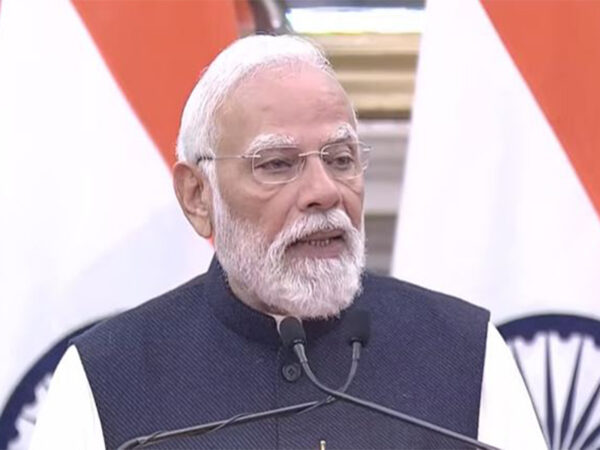
Prime Minister Narendra Modi on Friday bowed down to the sacrifices of the Veer Sahibzadas, hailing their bravery and valour to stand like a rock against the “cruel” Mughal Sultanate and shake down the “very existence of religious fanaticism and terror.”

Addressing the national programme marking ‘Veer Baal Diwas,’ PM Modi said that Veer Sahibzadas, who had to confront the Mughal empire at a very young age, broke all the circumstances in their fight against oppression.

“Today, the nation is observing Veer Bal Diwas. Today, we remember those brave Sahibzadas who are the pride of India. They represent the ultimate expression of India’s indomitable courage, valour and bravery. Those brave Sahibzadas broke the limits of age and circumstance. They stood like a rock against the cruel Mughal Sultanate, shaking the very existence of religious fanaticism and terror. A nation with such a glorious past can achieve anything,” PM Modi said.

On December 26, 1704, the younger sons of Guru Gobind Singh Ji, Sahibzadas Zorawar Singh and Fateh Singh, were bricked alive by the orders of Wazir Khan, the Nawab of Sirhind, for resisting conversion to Islam during the reign of Emperor Aurangzeb. The two elder sons, Sahibzada Ajit Singh and Sahibzada Jujhar Singh, attained shaheed status, fighting bravely in the Battle of Chamkaur.

Highlighting the significance of Veer Baal Diwas, PM Modi reminded people about the Veer Sahibzadas’ motive to stand against the Mughals

“Veer Bal Diwas is a day of deep emotion and reverence. Sahibzada Ajit Singh, Sahibzada Jujhar Singh, Sahibzada Zorawar Singh, and Sahibzada Fateh Singh had to confront the most powerful authority of their time at a very young age, That battle was between the fundamental ideals of India and religious fanaticism. It was a battle of truth versus falsehood,” he said.

“On one side of that battle was the Tenth Guru, Shri Guru Gobind Singh Ji, and on the other side was the cruel rule of Aurangzeb. Our Sahibzadas were young at that time, but Aurangzeb and his cruelty were indifferent to their age,” he added.

PM further said that despite Aurangzeb’s cruelty, his commanders could not shake even one of those four Sahibzadas

“But Aurangzeb and his military commanders had forgotten that our Guru was no ordinary man. He was the living embodiment of penance and sacrifice. The brave Sahibzadas had inherited that legacy from him, so even though the entire Mughal empire was arrayed against them, they could not shake even one of those four Sahibzadas,” PM Modi said.

PM Modi further noted that his initiative to celebrate Veer Baal Diwas has created a platform for courageous and talented young people.

“Whenever December 26th comes around, I feel a sense of satisfaction knowing that we have started celebrating ‘Veer Bal Diwas’ (Brave Children’s Day), inspired by the bravery of the Sahibzadas (sons of Guru Gobind Singh). In the last four years, this new tradition of Veer Bal Diwas has carried the inspiring stories of the Sahibzadas to the new generation. Veer Bal Diwas has also created a platform for courageous and talented young people. Every year, children who achieve remarkable feats for the country in various fields are honoured with the Prime Minister’s National Children’s Award,” he said.

Prime Minister Narendra Modi, on January 9, 2022, announced that December 26 would be observed as ‘Veer Baal Diwas’ to commemorate the martyrdom of the sons of Sri Guru Gobind Singh Ji. (ANI)

Women Protest Outside Delhi HC Against Bail To Unnao Rape Convict Sengar

A group of women activists and protesters gathered outside the Delhi High Court on Friday to oppose the conditional bail granted to former Uttar Pradesh MLA Kuldeep Singh Sengar in the Unnao rape case.

Raising slogans against the court order and the government, the protesters termed the bail a “setback to women’s justice” and demanded its immediate reconsideration.

The protestors, many of them women, assembled in significant numbers and shouted slogans questioning the decision to suspend Sengar’s sentence.

Police personnel were deployed in large numbers, and protesters were asked to remain peaceful as restrictions under the law were imposed in the area.

Addressing the gathering, women activist Yogita Bhayana said the protest was a peaceful appeal against what she described as grave injustice.

“Today, we have come to the High Court peacefully to appeal that the injustice done to our daughter be revoked and that the petition we are about to file be heard. If we do not get justice, we will protest and that is our right,” she said.

Congress leader Mumtaz Patel also criticised the order, calling it a dangerous precedent. “This is a huge setback. The way the High Court has given Sengar a free pass on a technicality will shake the confidence of not just the victim’s family but women across the country,” she remarked.

The victim’s mother, speaking emotionally, rejected the bail outright and announced plans to approach the Supreme Court.

“His bail should be rejected. We will knock on the doors of the Supreme Court. We have lost faith in the High Court. If we don’t get justice there, we will go to another country,” she said, also demanding strict punishment in the custodial death of her husband.

Recently, the Delhi High Court granted a suspension of sentence to Kuldeep Singh Sengar in the 2017 Unnao rape case. Sengar, who was convicted by a Delhi CBI court and sentenced to life imprisonment for the rape of a minor, has challenged his conviction before the High Court, where his appeal is presently pending.

A Division Bench of Justices Subramonium Prasad and Harish Vaidyanathan Shankar ordered suspension of sentence during the pendency of the appeal, subject to Sengar furnishing a bail bond of Rs 15 lakh.

However, the Court clarified that he will remain in judicial custody as he has not been granted bail in the separate case relating to the custodial death of the victim’s father, in which he was sentenced to 10 years’ imprisonment.

The Court imposed strict conditions while granting relief, directing that Sengar shall not enter a five-kilometre radius of the area where the victim resides in Delhi. He has also been ordered to remain in Delhi and to have no contact with the victim or her family members.

Senior Advocate N Hariharan, along with Advocate SP Tripathi, appeared for Sengar and argued that he was not a public servant at the time of the offence. It was also contended that there were discrepancies in documents regarding the victim’s age and that medical evidence should be relied upon.

Opposing the bail, Advocate Mehmood Pracha, appearing for the victim, submitted that there had been serious threats to the victim’s life in the past. He pointed out that the victim was earlier provided security, which was later withdrawn, and highlighted that her father was assaulted in police custody and later died due to his injuries, a case in which Sengar was separately convicted.

The protest concluded with calls for stronger safeguards for survivors of sexual violence and demands that courts exercise greater caution while granting relief in cases involving serious crimes against women. (ANI)

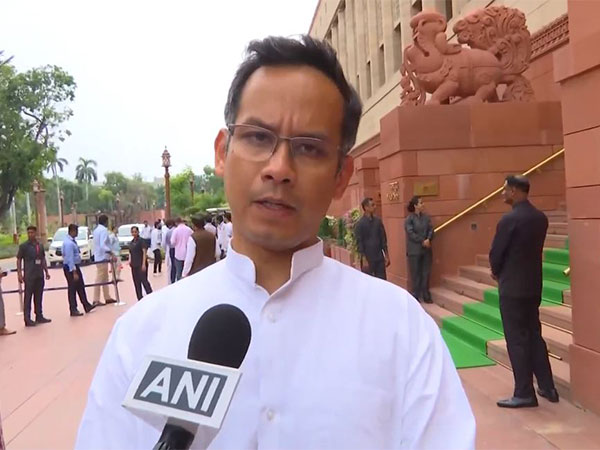
Congress MP Gaurav Gogoi Adani Ambani Modi

Gaurav Gogoi Condemns Slogans Against Karbi Community

Congress leader Gaurav Gogoi expressed shock and concern over reports of slogans raised against the Karbi community amid escalating tension in Assam’s Karbi Anglong region, urging unity, peace and a sensitive approach by the state government to resolve the crisis.

In a post on X (formerly Twitter), Gogoi said he was “shocked to hear about the slogans against the people of the Karbi community in Karbi Anglong,” describing them as ignorant and deeply disrespectful. “We must remember what Assam means and stands for. I appeal to everyone to remain united and urge for peace and calm. The state government need to find a way forward,” he wrote.

Gogoi’s remarks come against the backdrop of violent protests in Karbi Anglong and West Karbi Anglong districts that prompted the Assam government to impose strict prohibitory orders and transfer a senior police officer. On Tuesday, Faiz Ahmed Barbhuiya, Additional Superintendent of Police (HQ) of West Karbi Anglong, was transferred amid heightened tensions.

The administration has imposed Section 163 of the Bharatiya Nyay Suraksha Sanhita (BNSS) from December 22 until further notice to prevent ethnic or communal disturbances. The order bans the assembly of five or more people, restricts the movement of individuals and private vehicles between 5 pm and 6 am, and prohibits rallies, dharnas, torch processions and the use of loudspeakers without permission. Carrying firearms, firecrackers and making inflammatory speeches are also barred, though essential services, educational institutions and offices continue to function.

The unrest erupted after protesters demanding the eviction of alleged illegal encroachers from Village Grazing Reserve (VGR) and Professional Grazing Reserve (PGR) lands set fire to the house of the Chief Executive Member of the Karbi Anglong Autonomous Council near Dongkamukam in West Karbi Anglong. Clashes between protesters and security forces left three protesters and several personnel injured, forcing police to resort to blank firing.

Gogoi alleged that one protester died in police firing and criticised the government for using force instead of dialogue. Assam DGP Harmeet Singh, however, said violence cannot be justified, adding that 48 policemen were injured and the government is open to talks. Internet services have been suspended in both districts to curb misinformation. (ANI)