B’gladesh Minorities Protest Lynching Of Hindu Man In Mymensingh

As Bangladesh witnesses renewed unrest and protests over targeted violence, Hindu religious organisations and minority rights groups staged a demonstration in front of the National Press Club in Dhaka on Monday to condemn the lynching and killing of Dipu Chandra Das, a young Hindu man in Mymensingh, alleging growing religious extremism, attacks on minorities and administrative inaction.

The demonstration was held at the National Press Club premises, where several organisations that have long campaigned against attacks on minority communities gathered, linking the killing of Dipu Das to what they described as a broader pattern of violence and impunity across the country.

Explaining the reason for the protest, one of the demonstrators said, “Although we have been protesting for a long time, today’s gathering has a specific context. Today, a completely innocent person from a religious minority community was brutally murdered by religious fanatics.”

Referring to the victim, the protestor said, “Dipu Chandra Das worked in Bhaluka, Mymensingh. He was recently promoted because of his hard work and dedication.”

The protestors alleged that Dipu Das was falsely accused of religious defamation before being lynched. “Under the pretext of religious defamation, he was beaten to death, hung from a tree, and then set on fire. The whole country and the world have witnessed this,” the protestor said, adding that the incident had laid bare religious extremism and the persecution of minorities in Bangladesh.

Anger was also directed at what the protestors described as silence from authorities and political actors. “The brutal murder of Dipu Das was not properly covered by the media, nor did any political party raise its voice against it. Even the chief advisor has not issued any statement on this yet,” a protestor said.

“This shows his inhumanity as a chief advisor and how his actions are leading the country to ruin. We demand his immediate removal from his position,” the protestor added.

Placing the incident in a wider context, the protestor said December, traditionally observed as the month of victory, has seen repeated attacks on minorities.

“In this month of December, five people from religious minority communities have been killed, including Dipu Das,” the protestor said.

Referring to harassment in Jhenaidah, the protestor added, “Someone was harassed just for wearing a red thread, a religious symbol, and was labelled a ‘RAW agent.’ We live in this country.”

Alleging systemic failure, the protestor said, “Since January, more than 50 people from minority communities have been murdered, and over 40 cases of religious defamation have been filed against them. This is a disgrace to humanity.”

Warning of grave consequences, the protestor said, “If this persecution and oppression do not stop, the very existence of this country will be at stake.”

Concerns were also raised about the political climate ahead of elections. “The government has announced upcoming elections. We are concerned about whether religious minorities will be able to exercise their right to vote freely,” the protestor said, pointing to what they described as inadequate political representation for minorities.

Another protestor criticised what they described as state inaction, saying, “You are setting an example of a civilised nation, where a person is publicly burnt alive by hanging from a tree.”

Warning of continued agitation, the protestor added, “From now on, every day we will demand each DC office, district administration, and police department for a tree, so that they can remember that when the tree grows up, a body of someone from the minority community will hang from it if they fail to take proper measures.”

Appealing directly to authorities, the protestor said, “Just give us security and justice,” reflecting the central demand of the demonstration for protection, accountability and equal rights for minority communities in Bangladesh.

The protest and outrage over Dipu Das’s killing come amid an uneasy calm in Dhaka following days of violent unrest last week.

The situation escalated after the killing of Inqilab Moncho convenor Sharif Osman Hadi, a young activist associated with last year’s July uprising, who was shot at close range on December 12 while travelling in a rickshaw in Dhaka’s Bijoynagar area and later died on December 18 after being airlifted to Singapore for treatment.

Following Hadi’s death, activists gathered at Dhaka’s Shahbagh intersection, triggering protests and unrest in the capital as calls for justice intensified.

Reacting to the developments, former Bangladesh Prime Minister Sheikh Hasina, in an email interview with ANI, accused the Muhammad Yunus-led interim government of presiding over growing lawlessness and warned that continuing violence was destabilising both the country and its regional relationships.

“This tragic killing reflects the lawlessness that uprooted my government and has multiplied under Yunus. Violence has become the norm while the interim government either denies it or is powerless to stop it,” Hasina said.

She added that such incidents undermine Bangladesh’s standing abroad. “India sees the chaos, the persecution of minorities, and the erosion of everything we built together. When you cannot maintain basic order within your borders, your credibility on the international stage collapses. This is the reality of Yunus’s Bangladesh.”

Hasina also flagged concerns over the growing influence of radical Islamist forces, alleging administrative complicity. “Yunus has placed extremists in cabinet positions, released convicted terrorists from prison, and allowed groups linked to international terrorist organisations to take roles in public life,” she said.

Warning of wider implications, Hasina said, “This should alarm not only India, but every nation invested in South Asian stability,” stressing that Bangladesh’s secular political character was being eroded.

Linking domestic unrest to diplomatic consequences, Hasina expressed concern over the strain in India-Bangladesh relations amid anti-India protests and the killing of Dipu Das.

Holding the interim government responsible, she said, “The strain you are witnessing is entirely of Yunus’s making. His government issues hostile statements against India, fails to protect religious minorities, and allows extremists to dictate foreign policy.”

Reiterating the depth of bilateral ties, Hasina said, “India has been Bangladesh’s most steadfast friend and partner for decades. The ties between our nations are deep and fundamental; they will outlast any temporary government.”

Her remarks came as unrest continued across Bangladesh, with reports of protests, vandalism and attacks on media houses, and as the Indian Visa Application Centre in Chittagong announced the suspension of visa services following a security incident.

Calling India’s concerns justified, Hasina said, “This hostility is being manufactured by extremists who have been emboldened by the Yunus regime.”

She added, “A responsible government would protect diplomatic missions and prosecute those who threaten them. Instead, Yunus grants immunity to hooligans and calls them warriors.” (ANI)

‘Strain Entirely Of Yunus’ Making,’ Hasina Blames Interim Govt For Stressed Relations With India

The spiral of violence in Bangladesh which included the lynching of a Hindu man has elicited deep concern from India, especially in the light of recent threats by radical groups to Indian missions in the country. Former Bangladesh Prime Minister Sheikh Hasina believes that the stressed relations between India and her country are completely of the making of the interim government headed by Mohammad Yunus.

The former Bangladesh PM accused the Yunus government of issuing hostile statements against India and failing to protect religious minorities.

“The strain you are witnessing is entirely of Yunus’ making. His government issues hostile statements against India, fails to protect religious minorities, and allows extremists to dictate foreign policy, then expresses surprise when tensions rise. India has been Bangladesh’s most steadfast friend and partner for decades. The ties between our nations are deep and fundamental; they will outlast any temporary government. I am confident that once legitimate governance is restored, Bangladesh will return to the sensible partnership we cultivated over fifteen years,” she said.

“This hostility is being manufactured by extremists who have been emboldened by the Yunus regime. These are the same actors who marched on the Indian embassy and attacked our media offices, who attack minorities with impunity, and who forced me and my family to flee for our lives. Yunus has placed such figures in positions of power and released convicted terrorists from prison. India’s concerns about the safety of its personnel are justified, I am sorry to say. A responsible government would protect diplomatic missions and prosecute those who threaten them. Instead, Yunus grants immunity to hooligans and calls them warriors,” she added.

Hasina’s remarks come days after India’s Ministry of External Affairs summoned the Bangladeshi envoy in New Delhi over security concerns linked to protests outside Indian High Commissions in Bangladesh. Dhaka, in turn, had earlier summoned India’s High Commissioner to convey its objections over what it called “anti-election activities” linked to Bangladeshi political figures staying in India.

Hasina, who has been staying in India since her government was ousted last year following mass protests, defended New Delhi’s long-standing ties with Dhaka. “India has been Bangladesh’s most steadfast friend and partner for decades. The ties between our nations are deep and fundamental; they will outlast any temporary government,” she said.

She added that once “legitimate governance is restored”, Bangladesh would return to the “sensible partnership” cultivated during her 15-year tenure.

The diplomatic back-and-forth intensified after Bangladesh on December 14 summoned India’s High Commissioner Pranay Verma, alleging that “fugitive political figures”, including Hasina, were engaging in activities from Indian soil aimed at influencing Bangladesh’s upcoming parliamentary elections scheduled for February next year.

New Delhi rejected the accusations, reiterating that India has never allowed its territory to be used for activities harmful to the interests of the people of Bangladesh. India’s Ministry of External Affairs underlined that it remains committed to a stable and democratic Bangladesh.

Tensions further escalated following the killing of Inqilab Moncho leader Sharif Osman Hadi, who was shot at close range in Dhaka on December 12 and later died in Singapore on December 18. His death triggered widespread protests across Bangladesh, including demonstrations outside Indian diplomatic missions.

Following reports of security threats to the Indian High Commission and inflammatory anti-India statements from Bangladesh’s student leaders, during these protests, India summoned the Bangladeshi envoy in New Delhi.

On the death of Osman Hadi, Sheikh Hasina alleged that “lawlessness” that uprooted her regime has multiplied under Chief Advisor Muhammad Yunus. The former PM also flagged the persecution of minorities in the country, saying that India “sees the chaos.”

“This tragic killing reflects the lawlessness that uprooted my government and has multiplied under Yunus. Violence has become the norm while the interim government either denies it or is powerless to stop it. Such incidents destabilise Bangladesh internally but also our relationships with neighbours who are watching with justified alarm. India sees the chaos, the persecution of minorities, and the erosion of everything we built together. When you cannot maintain basic order within your borders, your credibility on the international stage collapses. This is the reality of Yunus’ Bangladesh,” Sheikh Hasina said. (ANI)

China To Officially Launch Online Visa Application System In India Today

The Chinese Embassy in India will officially launch the China Online Visa Application System, a move aimed at simplifying and streamlining the visa application process for Indian travellers, from Monday.

The announcement was shared by the Chinese Ambassador to India earlier in a post confirming that, from December 22, 2025, applicants can complete visa application forms and upload required documents online. The new system allows users to access the service through the official website, visaforchina.cn/DEL3_EN/qianzh, offering greater convenience and efficiency.

With the launch of the online platform, applicants are expected to save time during the initial stages of visa processing, as much of the documentation can now be submitted digitally.

The Chinese Visa Application Service Centre in New Delhi will continue to assist applicants alongside the online system. The centre operates from Monday to Friday, between 9:00 a.m. and 3:00 p.m. It is located on the Concourse Floor of Shivaji Stadium Metro Station, Baba Kharak Singh Marg, Connaught Place, New Delhi. Applicants can also reach the centre by phone at +91-9999036735. The information was shared by the envoy on his post on X, too.

According to an important notice issued by the Chinese Visa Application Service Centre in New Delhi, applicants must now visit the official website of the centre to create or sign in to their accounts. After logging in, applicants are required to fill out the visa application form online and upload all necessary supporting documents through the portal.

The notice clearly states that applicants should carefully follow the step-by-step instructions provided on the website. Crucially, before submitting their physical passport and other required documents at the Visa Application Centre, applicants must ensure their application status shows “online review completed” and that they have received a confirmation email.

The introduction of the online visa application system is seen as a step toward enhancing people-to-people exchanges and facilitating travel between India and China.

Earlier, the Ministry of External Affairs on Wednesday confirmed that the visa regime for tourism and business purposes for Chinese nationals is now “fully functional, “marking the end of a five-year suspension imposed after the 2020 border clashes.

MEA spokesperson Randhir Jaiswal, addressing the weekly media briefing, said, “Visas for tourists are being given to Chinese nationals and business visas were being given earlier. So you know, all those visas are now in place. The visa regime of tourism and business, etc, is fully functional.

“India officially resumed issuing tourist visas to Chinese nationals worldwide in November 2025, expanding on a limited reopening that began in July 2025. Business visas were already being issued prior to this recent announcement, and that process remains in place.

The resumption of visas is part of a series of “people-centric” confidence-building measures agreed upon by both sides in 2025, which also included the resumption of direct commercial flights in October 2025 and the revival of the Kailash Manasarovar Yatra pilgrimage.

This decision is expected to boost tourism and trade and enhance people-to-people exchanges between the two most populous countries in the world. (ANI)

MGNREGA Was Mahatma Gandhi’s Sarvodaya Vision, Its Death A Moral Failure: Sonia Gandhi

Congress Parliamentary Party Chairperson Sonia Gandhi, in a recent op-ed in a leading English daily, launched a sharp attack on the Central government, accusing it of dismantling the rights-based legislative framework through its proposed changes to the Mahatma Gandhi National Rural Employment Guarantee Act (MGNREGA) and other key laws.

In the article titled ‘The Bulldozed Demolition of MGNREGA’, Sonia Gandhi argued that the weakening of the rural employment scheme represents a collective moral failure, with long-term financial and human consequences for crores of working people across the country.

She wrote that MGNREGA was not merely a welfare initiative but a rights-based programme that provided livelihood security and dignity to rural households. According to her, the erosion of the scheme is “collective moral failure.”

“MGNREGA realised the Mahatma’s vision of Sarvodaya (welfare of all) and enacted the constitutional right to work. Its death is our collective moral failure – one that will have financial and human consequences for crores of India’s working people for years to come. It is imperative, now more than ever, to unite and safeguard the rights that protect us all,” she wrote.

Sonia Gandhi further claimed that several fundamental rights are facing systematic erosion.

Highlighting concerns over education policy, she stated, “The Right to Education has been undermined by a National Education Policy 2020, which has legitimised the shutdown of about one lakh primary schools around the country.”

She also flagged changes to environmental and land laws, noting that “The Forest Rights Act, 2006, was markedly weakened by the Forest (Conservation) Rules, 2022, which removed the gram sabha from any role in permitting the diversion of forest land.”

Sonia Gandhi added that the “Right to Fair Compensation and Transparency in Land Acquisition, Rehabilitation and Resettlement Act has been significantly diluted,” while asserting that the National Green Tribunal has been “emasculated” over the years.

Referring to agriculture reforms, she said, “Through the three black farm laws, the government attempted to deny farmers the right to a minimum support price,” and warned that “The National Food Security Act, 2013, may very well be next on the chopping block.” (ANI)

Bangladesh Elections Without Awami League Is Coronation: Hasina

As Bangladesh prepares to hold its national elections nearly a year after Sheikh Hasina’s government was ousted following a student-led uprising in July, the former prime minister has said that an election without her party would not be an election but a coronation, as the Awami League has been barred from contesting the upcoming polls.

“An election without the Awami League is not an election, but a coronation. Yunus governs without a single vote from the Bangladeshi people, and now he seeks to ban the party that has been elected nine times by popular mandate,” Hasina said.

“Historically, when Bangladeshis cannot vote for their preferred party, they do not vote at all. So millions will be effectively disenfranchised if this ban on the Awami League is maintained. Any government that emerges from such an exercise will lack the moral authority to govern. This would be a terrible missed opportunity at a time when Bangladesh badly needs a process of genuine national reconciliation,” she added.

Bangladesh is set to hold its elections in February 2026, with political tensions running high. As the polls draw closer, violence has intensified across the country, with reports of violent protests and attacks on Hindu minorities.

As Bangladesh struggles to maintain normalcy after days of violent unrest last week following the death of Inqilab Moncho leader Osman Hadi, Hasina has placed the blame for the violence entirely on the interim government led by Muhammad Yunus.

Hasina said the killing of Osman Hadi reflected the growing lawlessness under the current administration. “This tragic killing reflects the lawlessness that uprooted my government and has multiplied under Yunus. Violence has become the norm while the interim government either denies it or is powerless to stop it. Such incidents destabilise Bangladesh internally but also our relationships with neighbours who are watching with justified alarm. India sees the chaos, the persecution of minorities, and the erosion of everything we built together. When you cannot maintain basic order within your borders, your credibility on the international stage collapses. This is the reality of Yunus’ Bangladesh,” she said.

Meanwhile, the February 2026 polls will be the first national elections since the student-led uprising that ousted Sheikh Hasina in August 2024. Since then, Bangladesh has been governed by an interim administration headed by Nobel laureate Muhammad Yunus.

Alongside the parliamentary elections, a national referendum on the “July Charter” will also be held on the same day. The proposed charter seeks major reforms to state institutions, including curbing executive powers and strengthening judicial independence. Voting will take place simultaneously for all 300 parliamentary seats.

The main contest in the upcoming elections will be between former Prime Minister Begum Khaleda Zia’s Bangladesh Nationalist Party (BNP) and Jamaat-e-Islami. The newly formed National Citizens Party (NCP), which emerged from the student movement that led the uprising against Hasina, is also expected to take part in the elections. (ANI)

India, New Zealand Announce Free Trade Agreement

Prime Minister Narendra Modi on Monday held a telephone conversation with the Prime Minister of New Zealand Christopher Luxon as the two leaders jointly announced a landmark India-New Zealand Free Trade Agreement. The leaders agreed that the FTA would serve as a catalyst for greater trade, investment, innovation and shared opportunities between both countries

The leaders also welcomed progress in other areas of bilateral cooperation including defence, sports, education and people-to-people ties.

With negotiations having been Initiated during New Zealand PM Luxon’s visit to India in March 2025, the two leaders agreed that the conclusion of the FTA in a record time of 9 months reflects the shared ambition and political will to further deepen ties between the two countries. The FTA would significantly deepen bilateral economic engagement, enhance market access, promote investment flows, strengthen strategic cooperation between the two countries, and also open up new opportunities for innovators, entrepreneurs, farmers, MSMEs, students and youth of both countries across various sectors.

With the strong and credible foundation provided by the FTA, both leaders expressed confidence in doubling bilateral trade over the next five years as well as an investment of USD 20 billion in India from New Zealand over the next 15 years. The leaders also welcomed the progress achieved in other areas of bilateral cooperation such as sports, education, and people-to-people ties, and reaffirmed their commitment towards further strengthening of the India-New Zealand partnership.

Christopher Luxon, said in a post on X, “I’ve just spoken with India’s Prime Minister Narendra Modi following the conclusion of the NZ-India Free Trade Agreement. The FTA reduces or removes tariffs on 95% of our exports to India. It’s forecast that NZ exports to India could increase $1.1B to $1.3B per year over the coming two decades. Boosting trade means more Kiwi jobs, higher wages and more opportunities for hard working New Zealanders. The agreement builds on the strong friendship between our two countries. India is one of the fastest-growing economies in the world, and this gives Kiwi businesses access to 1.4 billion Indian consumers. Our Government is relentlessly focused on fixing the basics and building the future – with new trade deals like this helping to grow our economy so all Kiwis can get ahead.”

The agreement will significantly deepen cooperation across services, mobility, goods, investment and trade facilitation. As part of the deal, New Zealand has committed to invest USD 20 billion in India over a 15-year period, broadly on the lines of the European Free Trade Association (EFTA) model.

This investment commitment will be backed by a rebalancing mechanism, under which trade concessions may be suspended if the agreed investment targets are not achieved.

A major highlight of the agreement is services and mobility. New Zealand has offered market access in 118 services sectors and sub-sectors, along with Most Favoured Nation (MFN) treatment in 139 services sectors.

An annex on health and traditional medicine services has also been included to facilitate trade in health-related and traditional medicine services, marking the first time New Zealand has signed such an annex with any country.

The FTA places special emphasis on Micro, Small and Medium Enterprises (MSMEs), with provisions aimed at enhancing cooperation, strengthening institutional business linkages and improving access to trade-related information.

The agreement also establishes a balanced and robust Rules of Origin (ROO) framework, incorporating product-specific rules and safeguards to prevent circumvention, while ensuring the integrity of preferential market access.

On mobility, New Zealand has signed an Annex on Student Mobility and Post-Study Work Visas for the first time with any country. The arrangement includes no numerical caps and locks in 20 hours per week work rights for Indian students.

Post-study work visas have been agreed for up to three years for Science, Technology, Engineering and Mathematics (STEM) bachelor’s graduates, up to three years for master’s graduates, and up to four years for doctorate holders.

In addition, a new Temporary Employment Entry Visa pathway has been created, allowing up to 5,000 Indian professionals at any time in skilled occupations to stay in New Zealand for up to three years. These include Indian iconic occupations such as AYUSH practitioners, yoga instructors, Indian chefs and music teachers, as well as sectors such as IT, engineering, healthcare, education and construction.

A Working Holiday Visa with multiple entry for 1,000 young Indians annually for 12 months has also been agreed.

India, for its part, has offered market access to New Zealand in 106 services sectors and extended MFN treatment in 45 services sectors.

In goods trade, India’s simple average MFN tariff of 16.2 per cent will reduce to 13.18 per cent upon entry into force of the FTA, further to 10.30 per cent after five years, and to 9.06 per cent by the tenth year.

Market access has been offered on 70.03 per cent of tariff lines, while 29.97 per cent have been excluded, largely covering sensitive sectors such as dairy, select animal and vegetable products, sugar, fats and oils, arms and ammunition, gems and jewelry, and copper and aluminum products.

India-New Zealand economic engagement has shown steady momentum. Bilateral merchandise trade reached USD 1.3 billion in 2024-25, while total trade in goods and services stood at approximately USD 2.4 billion in 2024, with services trade alone reaching USD 1.24 billion.

The India-New Zealand FTA is expected to enhance trade flows, improve regulatory certainty and strengthen long-term strategic and economic ties between the two countries. (ANI)

Samantha Ruth Gets Mobbed By Fans, Keeps Calm

Actor Samantha Ruth Prabhu was mobbed by fans during her recent public appearance, just days after fellow actor Nidhhi Agerwal also faced a similar situation, drawing attention to issues surrounding celebrity safety and crowd management in such spaces.

In videos going viral on social media, Samantha could be seen struggling to make her way through the crowd as the security team made efforts to escort her safely to her vehicle.

Samantha appeared visibly calm and composed despite the chaotic crowd, which made movement nearly impossible. The actor was present at an event as a special guest when her exit from the venue triggered a rush among fans.

The incident has sparked strong reactions online, with many criticising the lack of civic sense displayed by the fans. Others pointed out how organisers and team management need to work toward strengthening security arrangements.

During the launch of the song ‘Sahana Sahana’ from her upcoming film ‘The Raja Saab’, Nidhhi faced a difficult situation as she was mobbed and pushed by fans while exiting the venue in Hyderabad.

Videos circulating on social media show the situation at the venue turning chaotic, with Nidhhi struggling to reach her car as a large crowd closed in around her.

Despite the presence of people escorting her, the actor appeared uncomfortable and terrified as she tried to move through the tightly packed group. Before long, clips from the event began spreading on social media, drawing strong reactions from users who raised concerns over safety at public events.

Cyberabad Police have registered a suo motu case against the organisers of the ‘Raja Saab’ song-release event. The case was registered under the jurisdiction of the KPHB police station.

Meanwhile, Samantha Ruth Prabhu, who became a recent target of the chaotic crowd, has yet to react to the situation.

On the work front, Samantha recently commenced the shoot of her next film, ‘Maa Inti Bangaram’.Produced by Raj Nidimoru, Samantha and Himank Duvvuru, the film marks yet another exciting collaboration between Samantha and director Nandini Reddy, following their much-loved blockbuster Oh! Baby. (ANI)

Mahayuti Eknath Shinde

BJP-Led Mahayuti Sweeps Local Body Polls In Maharashtra

Maharashtra Chief Minister Devendra Fadnavis on Sunday thanked the people of the state for putting their trust in the Bharatiya Janata Party (BJP) and the Mahayuti alliance and giving them a decisive victory in the local body polls which concluded recently.

“First of all, I thank the people of Maharashtra. The people of the state have given massive support to the BJP and the Mahayuti. I had already predicted that out of all the municipal council chairpersons elected, 75% would be from the Mahayuti, and the people have delivered exactly that verdict. It has also become clear that the Bharatiya Janata Party is the number one party,” he said in a press conference in Nagpur.

Vote counting for 286 Municipal Councils and Nagar Panchayats began at 10 AM today. The elections were conducted in two phases with some councils going to polls on December 2, and others conducting polls on December 20.

Multiple key local bodies, including Baramati, Ambernath, went to polls. Two councils saw candidates being elected unopposed too, in Angar in Solapur and Dondaicha in Dhule.

Around 129 municipal council chairpersons have been elected from the BJP. Together, all three alliance parties (Shiv Sena, BJP, and NCP (Ajit Pawar) account for 75% of the city council chairpersons. In terms of corporators, over 3300 candidates of the BJP have been elected, according to Fadnavis.

He also congratulated his alliance partners, including Eknath Shinde and Ajit Pawar, and BJP leaders for working hard to get this performance of the party.

“I congratulate our allies Eknath Shinde and Ajit Pawar, whose parties have also performed very well. Our performance has matched that of the Assembly elections. I also congratulate Ravindra Chavan, under whose leadership these elections were successfully conducted. Former president Bawankule, cabinet colleagues, and party workers — all have worked extremely hard,” Fadnavis said.

Posting about the Mahayuti win on X, CM Fadnavis said that these results are a “trailer” to the upcoming Municipal Corporation elections.

“This victory is just a trailer of what we will see in the upcoming Municipal Corporation elections. I urge every party worker to work even harder and with more efforts for driving us towards greater victories in the future!,” he wrote.

Meanwhile in Latur, the BJP has won 4 out of 5 posts president’s post in Latur district local bodies.

In Pune district, 17 local bodies went to polls, and the Maha Vikas Agadhi alliance was not able to open its account.

Durgadevi Indrajit Jagdale, candidate of Ajit Pawar’s NCP won the mayoral election in Daund Municipal Council, defeating Monali Veer by 4,891 votes.

She attributed her victory to the people, and said that she would work to live upto the expectations of the people and deliver her promises.

“This victory belongs to the people who voted for me and allowed me to serve them. I will try my best to live upto the expectations of the people and deliver the promises,” she said.

The local body elections also signal a run-up to the much awaited political contest set to happen in January 15, when multiple Municipal Corporations, including the Brihanmumbai Municipal Corporation (BMC), Pune Municipal Corporations, and multiple other local body polls will be held. The vote counting for BMC and other bodies is set to happen on January 15, with counting to happen on January 16. (ANI)

supreme court women dr

Congress Protests SC Order On Aravalli Hills, Seek Rollback

The Indian National Congress staged protests in Jaipur against the Supreme Court’s recent order accepting a revised definition of the Aravalli mountain range, with party leaders accusing the BJP-led Centre of endangering one of north India’s most fragile ecological zones on Sunday.

Reacting sharply to the court order, senior Congress leader Pratap Singh Khachariyawas said the party would oppose any move that harms the Aravalli hills.

“The opposition is clear: The Aravalli hills cannot be damaged at any cost. The BJP will have to reverse this decision. The Supreme Court’s order is based on a committee report constituted by the BJP government, and we do not accept it,” he said, alleging that the ruling party was acting arbitrarily and with arrogance.

The protests come amid a broader political pushback by Congress against changes in forest and environmental policies.

Earlier this week, Congress Parliamentary Party chairperson Sonia Gandhi launched a sharp attack against the Centre over the change in the definition of the Aravalli hills range, calling it a “death warrant” for the hills.

Further, she flagged deforestation and the eviction of local communities from forests as a “breach of the spirit of the Wildlife (Protection) Act, 1972.”

The Congress leader demanded policy-level change, asking the Centre to roll back amendments to the Forest (Conservation) Act, 1980, and the Forest Conservation Rules, 2022.

Earlier, on November 20, the Supreme Court bench headed by former Chief Justice of India BR Gavai pronounced an order accepting the definition of the Aravalli hills and ranges as per the Ministry of Environment, Forest and Climate Change.

The apex court also accepted the recommendations for sustainable mining in the Aravalli Hills and the steps to be taken for preventing illegal mining.

The three-judge bench directed the ministry to prepare a Management Plant for Sustainable Mining (MPSM), to “identify permissible areas for mining, ecologically sensitive, conservation-critical and restoration-priority areas within the Aravali landscape where mining shall be strictly prohibited or permitted only under exceptional and scientifically justified circumstances; incorporate a thorough analysis of cumulative environmental impacts and the ecological carrying 15 capacity of the region; and include detailed post-mining restoration and rehabilitation measures.” (ANI)

Pakistan Thrash India In U-19 Asia Cup ODI Final

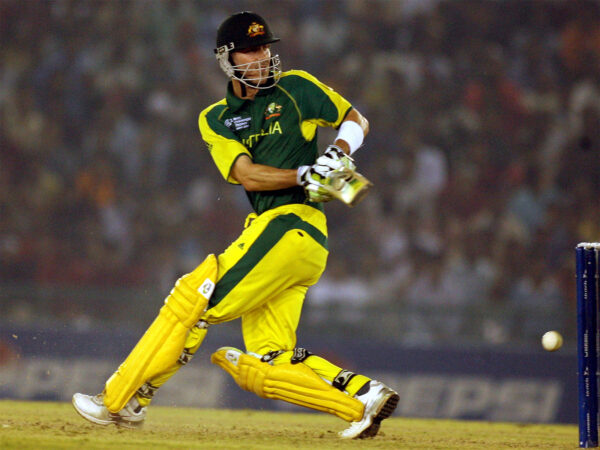
India Under-19 suffered a heavy defeat at the hands of Pakistan Under-19 in the final of the Under-19 Asia Cup, going down by a massive margin of 191 runs in Dubai.

This was the second Under-19 Asia Cup title for the Men in Green.

Chasing a massive target of 348, India never really looked in control as Pakistan’s bowlers produced a disciplined and ruthless performance to bundle them out for 156 in just 26.2 overs, without allowing them to bat the full 50 overs.

Ali Raza was the standout performer with the ball for Pakistan, finishing with figures of 4/42 in 6.2 overs. He was well supported by Mohammad Sayyam, who picked up 2/38, Abdul Subhan with 2/29, and Huzaifa Ahsan, who returned impressive figures of 2/12. Together, the bowling unit dismantled the Indian batting line-up with regular breakthroughs.

India began the chase with some early intent, as opener Vaibhav Suryavanshi came out attacking and provided a quick start. However, the momentum was quickly halted when captain Ayush Mhatre departed early, managing 2 runs. Aaron George was the next to fall after scoring 16, and Suryavanshi’s promising knock came to an end at 26 off 10 balls, an innings that included one four and three sixes. India were reduced to 49/3 in just 4.1 overs.

The collapse continued as Vihaan Malhotra was dismissed for 7, while Vedant Trivedi could add 9. Much was expected from Abhigyan Kundu, the double centurion against Malaysia Under-19, but he too failed to make an impact, scoring 13. Kanishk Chouhan managed 9 as wickets kept tumbling, leaving India struggling at 94/7 in 16.5 overs.

Lower down the order, Khilan Patel scored 19 and Henil Patel added 6. Deepesh Devendran showed some late resistance with a spirited knock of 36 off 16 balls, hitting six boundaries and two sixes. However, his effort proved to be in vain as he became the last wicket to fall, bringing an end to India’s innings and sealing a comprehensive victory for Pakistan.

In the first innings, Pakistan batter Sameer Minhas made history, outdoing Shahzaib Khan for the highest individual score by a Pakistani batter in Youth ODIs on Sunday.

Minhas achieved this milestone during his side’s ACC Asia Cup final against India at Dubai. In his innings, Minhas scored 172 in just 113 balls, with 17 fours and nine sixes, at a strike rate of 152.21.

This is the eighth-highest score ever in Youth ODI history, with South Africa’s J van Schalkwyk (215 in 153 balls, with 19 fours and six sixes earlier this year) at the top.

Coming to the match, India won the toss and opted to field first.

Pakistan did lose wicketkeeper-batter Hamza Zahoor (18 in 14) early at a score of 131, but Sameer had a 92-run stand with Usman Khan (35 in 45 balls, with three fours and a six) and a 137-run stand with Ahmed Hussain (56 in 72 balls, with three fours and a six) but after this partnership, Pakistan U19 kept losing wickets at regular intervals. After Minhas was dismissed at the score of 302 in 42.5 overs as the fourth wicket, Pakistan was restricted to 347/8 in 50 overs, with Niqab Shafiq (12) and Mohammad Sayyam (13) unbeaten.

Deepesh Devendran (3/83), Khilan Patel (2/44) and Henil Patel (2/62) were among the top wicket-takers. India needs to score 348 runs to secure the title. (ANI)