Mumbai Metro Authorities Call Out Varun Dhawan For Performing Pull-Ups In Metro Coach

The Mumbai Metro authorities called out actor Varun Dhawan for performing pull-ups inside a Mumbai Metro coach, following the success of his recently released film ‘Border 2.’

Taking to their X handle on Monday, the Maha Mumbai Metro Operation Corporation Limited (MMMOCL) described the stunt as a “punishable act under the sections relating to causing nuisance and/or damage to property given in the Metro Railways (Operations and Maintenance) Act, 2002.”

Sharing a video of Dhawan performing pull-ups inside the metro with fans, MMMOCL wrote, “This video should have come with a disclaimer like the ones in your action movies, Varun Dhawan- Do Not Try This On Maha Mumbai Metro. We get it, it is cool to hang out with friends inside our metros, but those grab handles are not for hanging. Acts like these are punishable under the sections relating to causing nuisance and/or damage to property given in the Metro Railways (Operations and Maintenance) Act, 2002, attracting penalties and even imprisonment depending on the gravity of the offence. So folks, hang out, but don’t hang in there. Travel responsibly on Maha Mumbai Metro.”

Meanwhile, Varun Dhawan recently expressed his gratitude for the overwhelming response of his fans towards his latest movie ‘Border 2‘ in which he has played the role of an Indian Army soldier.

Taking to his Instagram handle, Varun Dhawan shared a photo of Ahan Shetty and Sunny Deol, who were seen taking a selfie with the fans standing beside them. Hundreds of fans appeared to be flashing lights from their phones, making the moment extremely special for the actors.

Considering the film to be one of the milestones of his career, Varun Dhawan extended his heartfelt “thanks” towards the makers who provided him the opportunity to star in ‘Border 2’ and fans who appreciated his performance in the film.

Border 2, released in theatres on January 23, is inspired by the true events of the 1971 India-Pakistan War and showcases how the Army, Navy, and Air Force fight together as one force. It brings Sunny Deol back in uniform once again.

The film also starrer Ahan Shetty and Diljit Dosanjh in the lead roles. (ANI)

‘Rana Baali’: Vijay Deverakonda Unveils Fierce Avatar; Film To Hit Theatres On September 11

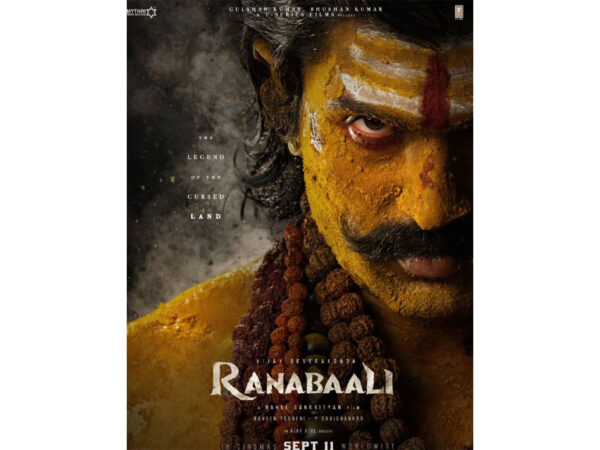
The makers of actor Vijay Deverakonda’s upcoming film VD 14 on Monday unveiled the film’s title as ‘Rana Baali’ and announced its release date, marking a major reveal on the occasion of Republic Day.

Helmed by director Rahul Sankrityan, ‘Rana Baali’ stars Vijay Deverakonda and Rashmika Mandanna in the lead roles and is slated for a worldwide theatrical release on September 11, 2026. Set in 19th-century India, the film is inspired by real historical events that took place between 1854 and 1878.

Along with the title announcement, the makers released an intense glimpse that introduces the world of ‘Rana Baali’. The video portrays the brutality of British colonial rule and depicts the suffering caused by imperial policies and officials during the period. Through powerful visuals and narration, the glimpse depicts regions pushed into drought and devastation, while setting the stage for the emergence of a legendary hero from what is described as a “cursed land,” as per the press release.

Vijay Deverakonda appears in a fierce and commanding avatar as Rana Baali, showcasing a striking new look. Rashmika Mandanna essays the role of Jayamma, while international actor Arnold Vosloo is seen as the antagonist Sir Theodore Hector, further adding weight to the narrative.

The film marks the third collaboration between Vijay Deverakonda and production house Mythri Movie Makers, headed by Naveen Yerneni and Y. Ravi Shankar, after Dear Comrade and Khushi. It also reunites the actor with director Rahul Sankrityan after their earlier hit Taxiwaala.

Additionally, ‘Rana Baali’ brings Vijay Deverakonda and Rashmika Mandanna together once again after the successful films Geetha Govindam and Dear Comrade, reviving their popular on-screen pairing, as per the press release.

Presented by T-Series, the film’s music is composed by renowned music duo Ajay-Atul. (ANI)

DJ Snake Cancels India Tour Due To Health Issue

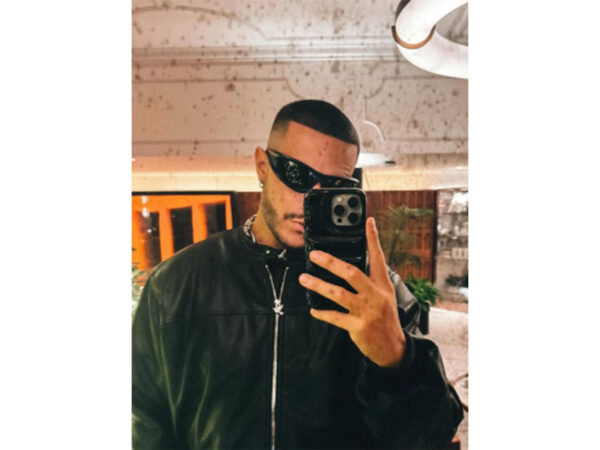
EDM artiste DJ Snake has cancelled his upcoming shows, including the India Tour, due to health issues.

On Monday, DJ Snake took to Instagram and informed his fans that he has been “battling a health issue” and the doctors advised him to undergo surgery next month.

“Hey guys, I’ve been battling a health issue for a while, and it’s finally caught up with me. After talking with my doctors, I need to have surgery in early February. It’s something I can’t push or delay anymore, and I’ll need a month to fully rest and recover after that,” he wrote.

“This means cancelling all my shows, including the India tour, and that decision has been incredibly hard. But I need to get back to 100% and this is the only way (sad face and broken heart emojis). Thank you for your love & understanding. I’ll be back soon, stronger than before. William,” DJ Snake added.

French EDM artist DJ Snake was supposed to perform in India this year for a massive six-city Sunburn Arena tour in February. (ANI)

Salman Khan Spends Republic Day With Niece, Nephew; Listens To Maatrubhoomi Song

Salman Khan Spends Republic Day With Niece, Nephew; Listens To Maatrubhoomi Song

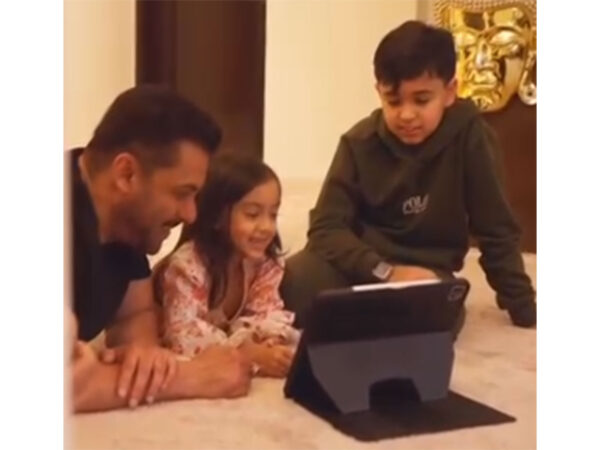
On the occasion of Republic Day, Bollywood superstar Salman Khan took to Instagram and shared an adorable video with his niece Ayat and nephew Ahil.

The video showed Salman spending quality time with little ones Ayat and Ahil as they listened to ‘Maatrubhoomi’, a patriotic song from his ‘Battle of Galwan’.

“This is for all the chota chota nanna munna desh bhakts and patriots . Happy Republic Day love your Maatrubhumi… Jai Hind @salmankhanfilmsmusic,” he captioned the post.

“Maatrubhumi” is composed by Himesh Reshammiya, with lyrics written by Sameer Anjaan. The song is sung by Arijit Singh and Shreya Ghoshal. The music and vocals aim to evoke strong patriotic emotions.

The film’s teaser was released in December last year and gave a glimpse of Salman’s character, who portrays an Indian Army officer. The teaser shows him with a serious and restrained expression. The visuals depict rough terrain, cold weather, and close combat, offering a preview of the challenges soldiers face at high altitudes.

Battle of Galwan is based on the Galwan Valley clash between India and China in 2020, in which 20 Indian soldiers lost their lives and an unspecified number of Chinese soldiers were killed.

Actor Chitrangada Singh is also a part of the movie, which will be released on April 17. (ANI)

On the occasion of Republic Day, Bollywood superstar Salman Khan took to Instagram and shared an adorable video with his niece Ayat and nephew Ahil.

The video showed Salman spending quality time with little ones Ayat and Ahil as they listened to ‘Maatrubhoomi’, a patriotic song from his ‘Battle of Galwan’.

“This is for all the chota chota nanna munna desh bhakts and patriots . Happy Republic Day love your Maatrubhumi… Jai Hind @salmankhanfilmsmusic,” he captioned the post.

“Maatrubhumi” is composed by Himesh Reshammiya, with lyrics written by Sameer Anjaan. The song is sung by Arijit Singh and Shreya Ghoshal. The music and vocals aim to evoke strong patriotic emotions.

The film’s teaser was released in December last year and gave a glimpse of Salman’s character, who portrays an Indian Army officer. The teaser shows him with a serious and restrained expression. The visuals depict rough terrain, cold weather, and close combat, offering a preview of the challenges soldiers face at high altitudes.

Battle of Galwan is based on the Galwan Valley clash between India and China in 2020, in which 20 Indian soldiers lost their lives and an unspecified number of Chinese soldiers were killed.

Actor Chitrangada Singh is also a part of the movie, which will be released on April 17. (ANI)

Vandana Pathak Expresses Pride As Her Dad Arvind Vaidya Honoured With Padma Shri

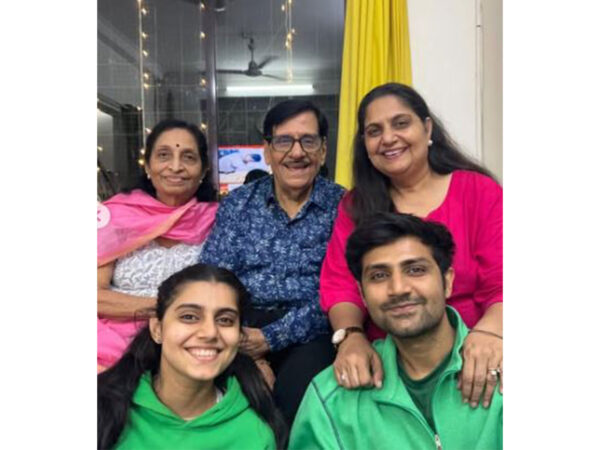
‘Khichdi’ fame Vandana Pathak is extremely happy as her father and veteran actor Arvind Vaidya has been honoured with Padma Shri award.

Taking to Instagram, Vandana wrote, “From Shri Arvind Vaidya to Padma Shri Arvind Vaidya.

Congratulations to my dad, my hero, my first teacher, my inspiration and my superstar.”

She also shared several pictures of her dad.

Renowned actor-director Arvind Vaidya has been conferred with the award in recognition of his remarkable contribution to the arts. With a career spanning 33 years, he has directed over 200 plays and remains a towering figure in Indian cinema.

On the eve of Republic Day, the Government of India announced the Padma Awards 2026, one of the nation’s highest civilian honours, celebrating outstanding contributions in fields ranging from public service and arts to science, education, medicine, sports and social work.Former Kerala Chief Minister V S Achuthanandhan and veteran Bollywood actor Dharmendra Singh Deol were awarded the Padma Vibhushan posthumously.

Cricketers Rohit Sharma, Harmanpreet Kaur and actor R Madhavan are among the Padma Shri winners. Late actor Satish Shah was also honoured with the Padma Shri posthumously.

Malayalam cinema icon Mammootty was awarded the Padma Bhushan.

Senior actor Murali Mohan was awarded the Padma Shri. Renowned comedian Rajendra Prasad also received the same prestigious honour. (ANI)

Reports Of Five Cases Of Nipah Virus Untrue In WB, Only 2 Cases Reported

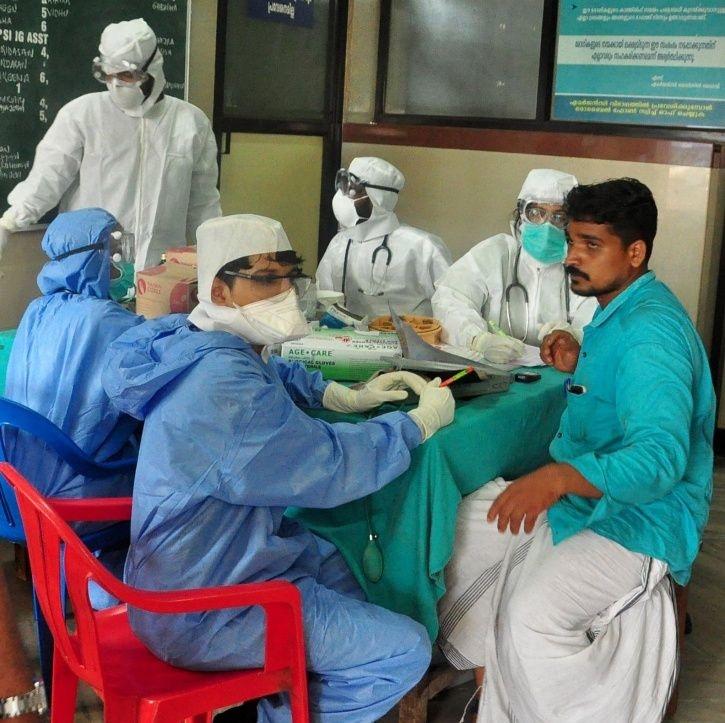
Amid concerns over the Nipah virus, former State Government Health Advisor and infectious disease specialist Dr Sayan Chakraborty on Monday said that only two confirmed cases have been reported so far, dismissing claims of a wider outbreak.

Speaking to ANI, Dr Chakraborty clarified, “We received an update an hour ago. It stated that there are only two such cases. Some news reports had claimed there were five cases, but that’s not true. There were some suspected cases, and those patients were admitted to our Beleghata ID Hospital. Their tests came back negative, and all those patients have already been discharged. No other cases have been found yet.”

He said that while there were initial apprehensions about a possible rise in cases, the situation has remained stable.

“Earlier, it seemed like the cases might increase, but nothing like that has happened. The government has done a good job. All the contact tracing, quarantining everyone, and testing have been done properly. The panic that was there earlier is no longer present, and people have followed all the precautions that were advised,” Dr Chakraborty added.

Explaining the containment protocol, Dr Chakraborty noted that the quarantine period for the Nipah virus is longer than that of COVID-19. “The quarantine period for COVID-19 was shorter. For Nipah, the quarantine period is 21 days, and only those who have come into direct contact with a patient are quarantined. Mostly, it’s the patient’s family members or those working in the hospital who cared for the patient, he said.

Detailing the symptoms and severity of the infection, the infectious disease expert said the Nipah virus initially presents like a common viral fever.

“There is a lot of headache, whole body. Along with it, there is a pain in the throat, and there is a cough. Cough becomes like pneumonia. There is difficulty in breathing. Then, gradually, the infection spreads in the brain. Eventually, the patient goes into a coma,” he explained.

Dr Chakraborty warned that the Nipah virus has a significantly higher death rate compared to COVID-19. “The death rate in Nipah cases ranges between 40 and 80 per cent, whereas in COVID-19 it was less than two per cent,” he said.

Meanwhile, Dr Subarna Goswami, Deputy Assistant Director of Health Services and Superintendent of Darjeeling TB Hospital, said nearly 190 contacts linked to the confirmed cases have been identified and quarantined.

“So far, only two patients have tested positive. The remaining contacts, approximately 190 of them, have been sent to quarantine, and those who showed symptoms have also been tested. So far, their swab tests have come back negative, meaning that apart from these two patients, no one else has tested positive yet,” he said.

Dr Goswami cautioned against declaring the outbreak over at this stage, citing the long incubation period of the virus.

“It’s not the time to say that the Nipah outbreak has ended and that no one else will test positive. Because the incubation period of Nipah, the time between the virus entering our body and the appearance of symptoms, ranges from 4 days to 45 days. We will have to search for active cases. We will have to follow up with their contacts. They will have to be kept under supervision. Only then, after three months, can we say that no third case has appeared, and the outbreak is over,” he said.

Highlighting the seriousness of the infection, Dr Goswami said Nipah is extremely dangerous due to the absence of specific treatment or a vaccine and its high fatality rate.

“The infection is very dangerous. There are three reasons for this. First, there is no cure for it, there is no specific treatment, no medicine works. Secondly, there is no vaccine or inoculation for it. And the third thing is that its morbidity rate, the fatality ratio, is very high,” he said.

Referring to past outbreaks, Dr Goswami said the death rate was around 75 per cent during the Siliguri outbreak in 2001 and reached 100 per cent in Nadia.

“When it happened in West Bengal in 2001 in Siliguri, the death rate was 75 per cent, and when it was in Nadia, the death rate was 100 per cent. In Kerala, there have been nine outbreaks to date, from 2018 to 2025, the mortality rate ranges from 50 per cent to 100 per cent, with an average of 91 per cent,” Dr Goswami added.

Earlier today, Dr Rajeev Jayadevan, Ex-President of IMA Cochin and Convener of the Research Cell, Kerala, on Monday warned that the Nipah virus spreads from bats to humans and can cause severe illness with a high death rate, stressing the importance of early detection to prevent further spread.

Jayadevan said there is no specific treatment or vaccine for the Nipah virus, making supportive care and contact tracing critical to prevent its spread, while noting that Nipah is a zoonotic disease that can jump from animals to humans. (ANI)

Viacom 18 BCCI

Pakistan Is Misleading Bangladesh: Rajeev Shukla

The Board of Control for Cricket in India (BCCI) Vice President Rajeev Shukla has said that Pakistan has misled Bangladesh, which took a stance to not play the T20 World Cup matches in India over “security concerns” and said that Dhaka was assured of full security and its concerns addressed.

The MP said it is very difficult to change the entire schedule at the last moment, and that’s why Scotland was brought as a replacement for Bangladesh.

“We wanted Bangladesh to play, and we also assured full security, but since they have made this decision, it is very difficult to change the entire schedule at the last moment. This is why Scotland was brought in,” Shukla told ANI.

“Pakistan is intervening in the matter without any reason and provoking Bangladesh… Everyone knows the brutality done by Pakistan on the Bangladeshis, and now they are trying to mislead them, which is completely wrong,” he added.

A day after Pakistan Cricket Board (PCB) chairman and the country’s Interior Minister Mohsin Naqvi indicated that Pakistan could rethink its participation in the T20 World Cup in India and Sri Lanka after Bangladesh refused to play in India, Islamabad announced 15-member squad for the tournament.

According to Dawn News, Naqvi had indicated that Pakistan could rethink its participation in the T20 World Cup in India and Sri Lanka.

The International Cricket Council (ICC) on Saturday announced that Scotland will replace Bangladesh in the ICC Men’s T20 World Cup 2026, following the Bangladesh Cricket Board’s (BCB) refusal to participate in the tournament per the published match schedule.

The announcement came after the ICC, in the absence of any credible or verifiable security threat to the Bangladesh national team in India, rejected the BCB’s demand to move its matches from India to Sri Lanka, in the 20-team tournament to be played from February 7 to March 8, a release said.

The decision followed an extensive process undertaken by the ICC to address concerns raised by the BCB regarding the hosting of its scheduled matches in India. Over a period of more than three weeks, the ICC engaged with the BCB through multiple rounds of dialogue conducted in a transparent and constructive manner, including meetings held both via video conference and in-person.

As part of this process, the ICC reviewed the concerns cited by the BCB, commissioned and considered independent security assessments from internal and external experts, and shared detailed security and operational plans covering federal and state arrangements, as well as enhanced and escalating security protocols for the event. These assurances were reiterated at several stages, including during discussions involving the ICC Business Corporation (IBC) Board, the release said.

The ICC’s assessments concluded that there was no credible or verifiable security threat to the Bangladesh national team, officials or supporters in India. In light of these findings, and after careful consideration of the broader implications, the ICC determined that it was not appropriate to amend the published event schedule. The ICC also noted the importance of preserving the integrity and sanctity of the tournament schedule, safeguarding the interests of all participating teams and fans, and avoiding the establishment of precedents that could undermine the neutrality and fairness of ICC events.

Following its meeting on Wednesday, the IBC Board requested the BCB to confirm, within a 24-hour timeframe, whether Bangladesh would participate in the tournament as scheduled. As no confirmation was received within the stipulated deadline, the ICC proceeded in line with its established governance and qualification processes to identify a replacement team.

Scotland are the highest-ranked T20I side not to originally qualify for the tournament. They are currently ranked 14th, ahead of seven teams already in the tournament: Namibia, the United Arab Emirates (UAE), Nepal, the United States of America (USA), Canada, Oman and Italy. (ANI)

Dhoni Focuses On Steady Defence, Back-Footed Play In Practice Session Ahead Of IPL 2026

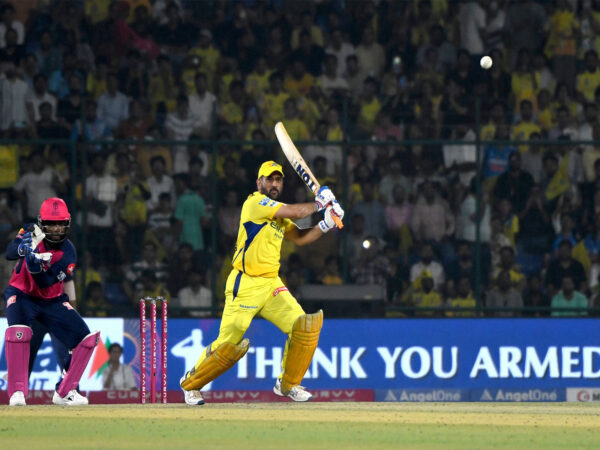
India and Chennai Super Kings (CSK)’s trophy-collecting icon MS Dhoni started batting practice ahead of this year’s Indian Premier League (IPL) season.

The official CSK Instagram handle posted a video of the 44-year-old legend’s practice session, focusing on defence and strong back-foot play.

“A treat, every time he bats. Superfans, you know what time it is,” said the caption of CSK’s post.

With his skipper Ruturaj Gaikwad in red-hot form in domestic cricket, CSK, the five-time champions, still have 44-year-old superstar Dhoni as their marquee player, and they would be aiming to make it six titles this season.

Last season, CSK finished at the bottom, with just four wins in 14 matches. Dhoni had a lacklustre season, scoring 196 runs in 13 innings at an average of 24.50 and a strike rate of 135.17, with a best score of 30*, and even captained CSK in Gaikwad’s absence due to injury. Fans would be hoping that the ‘Finisher Thala’ will unleash his fury after a tough 2025 season, with the arrival of wicketkeeper-batter Sanju Samson in the franchise in a trade with Rajasthan Royals (RR), putting Dhoni’s future in the spotlight.

Dhoni is one of the finest batters in IPL history, with 5,439 runs in 278 matches and 242 innings at an average of 38.80, with a strike rate of 137.45 and 24 fifties with a best score of 84*.

The emergence of young, hard-hitting stars Dewald Brevis, Ayush Mhatre and Urvil Patel was the best thing for CSK last season. Ahead of this season, they got two record-breaking buys in UP all-rounder Prashant Veer and Rajasthan wicketkeeper Kartik Sharma, each for Rs 14.20 crores, making them the most expensive uncapped players in tournament history.

Chennai Super Kings: Full squad for IPL 2026: Anshul Kamboj, Gurjapneet Singh, Jamie Overton, MS Dhoni, Mukesh Choudhary, Nathan Ellis, Noor Ahmad, Ramakrishna Ghosh, Sanju Samson, Ruturaj Gaikwad, Shivam Dube, Shreyas Gopal, Syed Khaleel Ahmed, Ayush Mhatre, Dewald Brevis, Urvil Patel, Sarfaraz Khan (Rs 75 lakh), Kartik Sharma (Rs 14.20 Cr), Prashant Veer (Rs 14.20 Cr), Matthew Short (Rs 1.50 Cr), Aman Khan (Rs 40 lakh), Zak Foulkes (Rs 75 lakh), Akeal Hosein (Rs 2 Cr), Rahul Chahar (Rs 5.2 Cr), Matt Henry (Rs 2 Cr). (ANI)

Rahman Was Sidelined Because He Chose Modernity Over Melody

Music composer AR Rahman is in news these days for wrong reasons. The Oscar-winning music director is reported to have stated in an interview to the BBC Asian Network that his work in the Hindi film industry has slowed down in recent years, which he attributes to a shift in power dynamics over the last eight years and, possibly, to a subtle communal bias that he does not directly encounter.

This raised a huge hue and cry, and Rahman quickly came out with a statement which expresses gratitude to India and reaffirms his commitment to creating music that, in his words, “honours the past, celebrates the present and inspires the future.” He has also made, what is being interpreted as ‘politically correct’ remarks, of having performed “in front of the Honourable Prime Minister and the honour of scoring Ramayana alongside Hans Zimmer.”

For the most the discussion on Rahman’s action could end with this clarification. However, this should also call fo an unbiased analysis of the composer’s claim to virtuosity. A music award, even if its Oscar or Grammy, at best is a certificate but certainly not an inevitability of virtuosity.

Beyond the political interpretations of his statement lies a deeper and far more significant conversation. What does Rahman’s legacy actually mean for Indian film music? Core artistic question whether his approach to music, particularly his heavy reliance on technology, enriched or impoverished the melodic traditions of Indian cinema.

To many, Ilaiyaraaja and MM Kreem (MM Keeravani) are any day more melodious and enchanting composers from down South than AR Rahman ever could be. Ilaiyaraaja and Kreem built their music around classical Indian scales, folk motifs, and live orchestration. Their compositions breathed, every violin, flute, and mridangam carried emotional weight. The orchestra was the protagonist.

Ilaiyaraaja, in particular, mastered the art of blending Western harmony with Indian ragas without allowing technology to dominate. His melodies lingered in the listener’s heart long after the film ended. Even his complex symphonic arrangements never overwhelmed the core tune. Similarly, Kreem’s music from Sur to Baahubali demonstrated that grandeur could coexist with melody, devotion, and simplicity.

The Oscar winning composer broke on the Hindi film industry scene with Roja, a 1992 terrorism story placed in Jammu and Kashmir. The film had catchy songs, fresh, slick, and modern but their brilliance lay less in traditional melody and more in sound design, orchestration, and digital layering.

Rahman did not merely compose tunes, he engineered soundscapes. He was rightly felicitated more for the technology used in delivering the melody than the melody itself. Technology sustained him, he commanded a market, Rahman’s music dazzled with synthesizers, drum machines, digital effects, and multi-layered production.

However, with time, the emotional directness of melody started to recede behind technical spectacle but not many cared. Directors got lured, even a Shyam Benegal could not resist hiring him for Zubeiddaa for his longtime composer Vanraj Bhatia. This despite Bhatia having given extra-ordinary compositions with Sardari Begum.

Vanraj Bhatia, who had composed hauntingly minimalist and deeply evocative music for Sardari Begum and many other films of Benegal, represented a dying breed of composers who trusted silence, simplicity, and live instrumentation. Rahman, by contrast, represented the new age of glossy, digitised cinema.

While Zubeidaa’s music was aesthetically pleasing, one cannot escape the feeling that Bhatia’s austere, classical sensibility would have been more thematically appropriate. Rahman’s lush arrangements, though beautiful, softened the film’s raw emotional texture.

His Oscar win for Slumdog Millionaire, celebrated Rahman’s global appeal but not his rootedness in Indian musical traditions. The film’s soundtrack was universally accessible, but far removed from the classical or folk idioms that shaped Indian music for centuries.

Rahman may have got venereable Gulzar the Oscar tag for having written the lyrics of the award winning composition but it was always Vishal Bhardwaj (and Rahul Dev Burman before him) who gave soul to poet-filmmaker’s cinematic and poetic compositions. Films like Maachis, Omkara, Maqbool, and Haider carried a musical soul that felt organic, earthy, and deeply Indian, something which came to be missing in Rahman’s later, more internationally tailored work.

Today, as Rahman reflects on his place in the industry, perhaps the deeper question is not whether Bollywood sidelined him, but whether he himself, in his quest for modernity, distanced Indian film music from its own heart. Composers like Ilaiyaraaja, Kreem and Vishal Bhardwaj proved that one could be innovative without sacrificing melody. They showed that technology should serve music, not dominate it.

Rahman tipped the balance too far toward technology. The natural melody of the orchestra, the soul of Indian cinema gradually gave way to programmed perfection. Emotional spontaneity was replaced by studio precision. Rahman, for all his brilliance, often let technology take the lead.

As Indian cinema continues to evolve, this melody versus technology debate remains relevant. The future of film music must balance innovation with tradition, ensuring that orchestras do not become museum relics, and that melody does not become a casualty of modernity.

Rahman’s legacy, therefore, is neither purely celebratory nor dismissive. It is complex, contradictory, and worthy of serious, unbiased reflection beyond politics, beyond awards, and beyond celebrity.

(Sidharth Mishra is an author, academician and president of the Centre for Reforms, Development & Justice)

‘Twilight’ Star Kristen Stewart Claims Actresses Are Treated Like Puppets In Hollywood

Hollywood actor Kristen Stewart went all out to call how actresses are treated like “puppets” in the film industry. In a recent interview, the ‘Twilight’ star shared her thoughts on the industry culture.

“Actresses get treated like shit, I’ve got to tell you. People think anyone could be an actress, but the first time I sat down to talk about my movie as a director, I thought, wow, this is a different experience. They are talking to me like I’m somebody with a brain,” the actor said, as quoted by Variety.

Stewart also opened up about her own experience, having made her recent debut as director, adding, “There’s this idea that directors have otherworldly abilities, which is not true. It’s an idea perpetuated by men. Not to sound like I’m complaining all the time, but it’s worse for female actors than male ones — they get treated like puppets, but they are not. Imogen Poots put her whole body and soul into this movie.”

Notably, this is not the first time that Kristen Stewart has voiced her opinion on the conditions that women face in Hollywood. “There’s a common act that happens before the acting happens on set: If male actors can protrude out of the vulnerability and feel like a gorilla pounding their chest before they cry on camera, it’s a little less embarrassing. It also makes it seem like a magic trick, like it is so impossible to do what you’re doing that nobody else could do it,” she said, further adding that men are “aggrandised for retaining self”, while women are not.

On the work front, Kristen Stewart, who is famously known for headlining the ‘Twilight’ series, switched to direction with her latest project, ‘The Chronology of Water’.

The film premiered at the Cannes Film Festival and received a standing ovation for 6.5 minutes.

The film, adapted from Lidia Yuknavitch’s memoir, tells the story of a woman’s journey to turn trauma into art, according to Deadline.

Stewart has been working on this project for eight years, and it is clear that it is a passion project for her. She co-wrote the screenplay with Andy Mingo, and the film stars Imogen Poots, Jim Belushi, and Thora Birch. (ANI)