Murshidabad, Bengal: Protests Erupt Over Lynching Of Migrant Labourers In Bihar

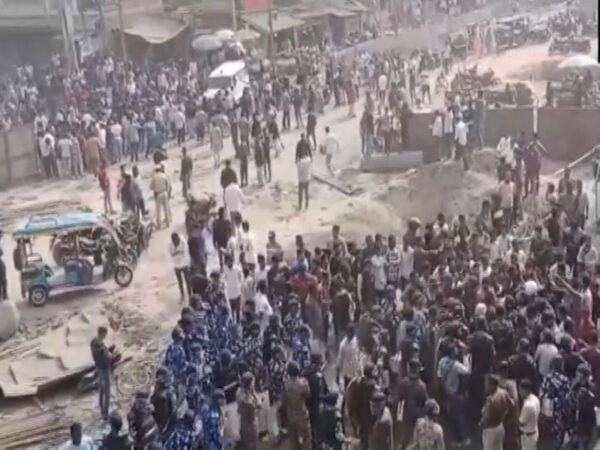
Violence erupted in Murshidabad, West Bengal, on Saturday, as locals protested the lynching of migrant labourers in Bihar.

Protesters from Beldanga Block Road blocked roads, demanding justice for the victims. Security forces were deployed to restore order.

On Friday, West Bengal CM Mamata Banerjee accused the Bharatiya Janata Party (BJP) double-engine government of violence against migrant workers in their respective states. Her remarks come amid rising reports of mob lynching incidents in Bihar.

Banerjee highlighted the alleged death of a worker in Bihar, stating, “One person was beaten to death in Bihar yesterday. Migrant workers are being tortured every day wherever there is the BJP’s double-engine government”.

She sharply accused the BJP-led goverment for these cases, claiming, “They are killing our people. Nothing could be worse than this”.

CM Mamata Banerjee also attended an event that laid the foundation stone for the proposed Mahakal Temple in Siliguri and levelled similar accusations against the BJP during her address.

The Chief Minister asserted that workers from West Bengal are often being specifically targeted for merely speaking Bengali.

“Bengali-speaking migrant workers are being tortured in BJP-ruled states. Migrant workers are living peacefully in West Bengal without any harassment. Why are Bengali-speaking workers being targeted elsewhere?… They are beaten up in Assam, Rajasthan, Madhya Pradesh, Delhi, or Bihar,” she accused.

In Patna, the Commission expressed deep concern over the tragic and worrying reports of mob lynching frequently emerging from the state and demanded prompt and effective action from the state government. In this regard, the Commission Chairman, Maulana Ghulam Rasool Balyawi, sent a letter to the Chief Secretary of the Government of Bihar and the Director General of Police.

According to the Commission, viral videos on social media and news published in various newspapers and channels make it clear that in several districts of Bihar, mobs are targeting people for violence based on rumours and religious identity by labelling them as “Bangladeshis,” which is highly condemnable.

The letter mentions several key incidents, stating that Mohammad Athar Hussain, a resident of Gagan Diwan village in the Laheri police station area of Nalanda district, who traded clothes as a peddler in Nawada district, fell victim to mob lynching and died during treatment.

Similarly, an attempt was made by a mob to attack an elderly Muslim man in Muzaffarpur district. Additionally, Mohammad Murshid Alam, a resident of Supaul district, was brutally beaten and seriously injured in Tichka village under the Rajnagar police station area of Madhubani district, the release noted. (ANI)

Stalin Announces Govt Job For Top Jallikattu Bull-Tamer

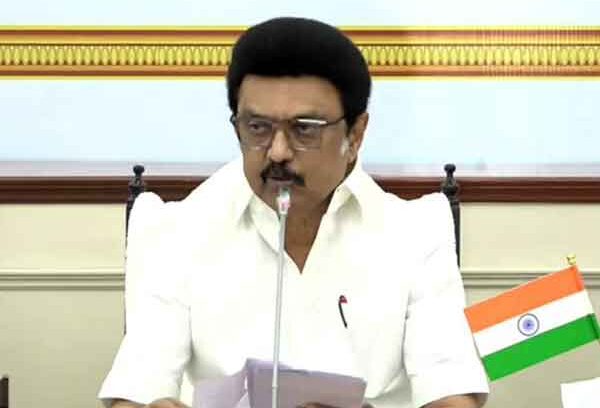
Tamil Nadu Chief Minister MK Stalin on Saturday announced that the person who tames the maximum number of bulls in the traditional Jallikattu competition will be offered a suitable government job in the Animal Husbandry Department.

Addressing the Jallikattu event in Alanganallur, “Madurai is a land where valour has flourished. Under the Dravidian administration, we have built the Kalaignar Centenary Library and the Kalaignar Centenary Jallikattu Arena in Madurai. This is a great achievement. In the traditional Jallikattu competition, the person who tames the most bulls will be offered a suitable government job in the Animal Husbandry Department,” he said.

Stalin arrived at Alanganallur in Madurai district on Saturday to witness the traditional Jallikattu event, celebrated as part of the Mattu Pongal festivities.

Jallikattu is a centuries-old sport of Tamil Nadu, observed on the third day of Pongal. The name is derived from two Tamil words – Jalli (silver and gold coins) and Kattu (tied). During the event, a bull is released into a crowd, and participants attempt to tame it to retrieve the coins tied to its horns.

Participants in the sport try to hold onto the animal’s hump to stop it. Sometimes, they run along with the bull. Pulikulam or Kangayam is the breed of bulls used for the sport. The bulls which win in the festival are in high demand in the market and fetch the highest price.

Ahead of the Chief Minister’s arrival, extensive preparations were made at the venue to ensure the safety of both participants and bulls. Medical facilities, animal health checks, and security arrangements were put in place well before the main event. (ANI)

‘Regime Is Continuing Without Any Change,’ Tharoor On Venezuela

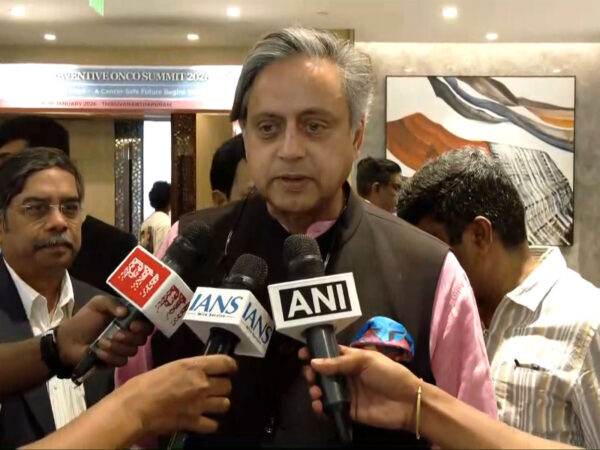
Congress MP Shashi Tharoor on Sunday said that the United States did not carry out a regime change in Venezuela but simply a decapitation.

Addressing reporters here, Tharoor said that as an interim president has taken over, the regime is continuing without any changes.

“Now, Venezuela, we’ve seen a very curious situation where the head of the government has been removed and taken away, but that the regime is continuing without any change. All the ministers, the National Assembly, the government, the interim president is the former vice president, the security forces, everything is under control. So it is literally a decapitation, but not a change of regime,” he said.

Tharoor said that the regime change is not to bring about democracy, but as Trump has opely said it is for oil.

“It’s the same regime that’s continued. And in those circumstances, it does look as if this change of government was brought about without any talk of democracy or any of those usual things we’re used to hearing from Washington when such changes happen. Instead, he has said very openly it’s about the oil, the only area that Americans have asserted control over is Venezuela and oil, American oil companies and so on, we’ll have to see how this plays out,’ he said.

Tharoor also said that although activist, Maria Corina Machado has given her Nobel prize to Trump, it holds no interest for her.

“We know that the Nobel Peace laureate from Venezuela, who is a democracy activist, Maria Corina Machado, she was in the White House and she handed over her peace medal to Mr. Trump as a tribute, but there’s also an implicit transaction there. Please try and help our side of the matter. He has made statements implying that he doesn’t believe in it as much support for that,” he said.

Tharoor noted that the Venezuelan incident is quite unprecedented.

“But in due course, I think it’s difficult to imagine that there can’t be elections that are more free and fair in which everyone can participate, with this kind of American overshadow, overseeing of the Venezuelan process. So for the moment, it seems to be minimal change, only at the top and with oil headed over to the Americans. In due course, we’ll have to see where this ends. But it’s certainly a very unusual situation. No one has ever seen anything like this in the recent history of the world,” he said.

Trump on Friday (local time) said that Venezuela has offered Washington “50 million barrels of oil” worth USD 5.2 billion, and he has agreed to that deal.

Addressing the press on the renaming of Southern Boulevard to Donald J Trump Boulevard, Trump said, “We’re dealing with the new President. We’re dealing with a lot of the people who are running the country…They said, we have 50 million barrels of oil, and we have to get it processed immediately because we have no room. Will you take it? I said, we’ll take it. It’s equivalent to USD 5.2 billion.” (ANI)

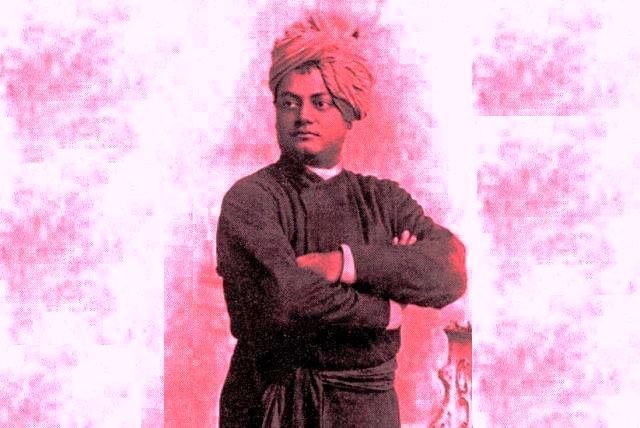
Swami Vivekananda’s Message for Universal Human Welfare

Swami Vivekananda combined national service with a message meant for all humanity. He was deeply rooted in Indian spiritual wisdom, yet his message addressed the whole of humanity. His ideas came not merely from books, but from direct inner experience. At the heart of his thought lies one central truth: the transformation of society begins with the transformation of the individual.

One of the most important roles in this transformation is that of the Guru, or teacher. Mere book learning, however vast, cannot ensure spiritual or moral growth. What truly awakens the soul is inspiration coming from another awakened soul. The teacher must possess inner strength and purity, and the student must be receptive. When both are ready, growth happens naturally, just as a living seed grows when placed in fertile soil. Education, therefore, is not the transfer of information but the transmission of life and strength.

Vivekananda strongly warned against the habit of constantly criticizing institutions. All institutions are imperfect by nature. Finding faults is easy, but real service lies in helping people rise above their weaknesses wherever they are placed. When individuals improve, institutions automatically improve, and with them the nation. Good and virtuous people often rise above bad customs and unjust laws through love, integrity, and sympathy. A society made strong by character needs fewer laws, because good people naturally uphold what is right.

He also spoke sharply about lifeless routine and lack of effort in human life. Many people perform daily actions efficiently but mechanically, without enthusiasm or inner joy. Their minds remain dull, untouched by beauty, hope, or creativity. Such people are not convinced that a higher state of life is possible. Even when effort exists, it lacks energy and passion. Without conscious striving, life becomes stagnant. True progress requires alertness, enthusiasm, and a willingness to seek something better.

This leads to Vivekananda’s powerful idea of education. Education is not mere accumulation of information; nor is the training which suppresses independent thinking. True education is that which strengthens the will and brings it under intelligent control. An education system that kills originality, turns humans into machines, and discourages free thinking is harmful. It is better, he says, to act wrongly using one’s free will than to behave correctly like an automaton. A society of lifeless, fearful individuals can never be great. India’s long period of decline, according to him, was not due to lack of intelligence but due to loss of strength, confidence, and freedom of thought.

On the subject of men and women, Vivekananda rejected unfair comparisons. Strength should not be measured only by physical power. Women show immense courage through patience, endurance, love, and sacrifice, especially in nurturing life and holding families together. Each has their own sphere of excellence. True greatness lies not in comparison but in contribution. Society progresses through both visible acts of bravery and silent acts of responsibility and care.

A central theme in Vivekananda’s philosophy is love. People see the world according to their inner state: lovers see love, haters see hatred, and peaceful minds see peace. At the highest level, the enlightened person sees only the Divine. Love is the force that binds the universe together, from atoms to human relationships. Even negative actions are driven by misdirected love. Without love, the universe would collapse. This all-pervading love itself is God.

When discussing morality and goodness, Vivekananda took a deeply psychological view. Many immoral actions become automatic habits. People are often good or bad not by conscious choice, but due to conditioning. Therefore, one should not feel proud of being good, nor hateful towards those who do wrong. If circumstances were reversed, outcomes might also reverse. Even wrongdoers teach society important lessons. Thus, humility, compassion, and self-reflection are essential.

He emphasized that all knowledge is rooted in experience. Even scientific knowledge is based on observed experience that can be verified by others. Science does not demand blind belief; it appeals to universal human experience. Similarly, spiritual truths must also be tested and realized through personal experience, not accepted merely on faith.

Vivekananda also spoke practically about food and purity. Pure food strengthens both body and mind, while impure food weakens the senses and distorts perception. He warned against careless eating habits, especially unhygienic food from bazaars, which lead to illness and mental dullness. Physical health, he believed, is closely linked with mental and moral health.

On the question of good and evil, Vivekananda stated that the world is neither good nor bad in itself. Each person creates their own world through their state of mind. Just as fire is neither good nor evil but depends on how it is used, the world reflects our inner condition. The universe is perfectly balanced for its purpose and does not depend on human approval to function.

Regarding equality, Vivekananda offered a realistic and scientific view. Absolute equality, he said, is impossible in the world of creation. Differences and inequality are essential for movement, growth, and progress. Creation itself arises from imbalance. However, the struggle to reduce inequality and move towards freedom is also necessary. The dream of perfect equality inspires effort, even though it can never be fully achieved. Balance lies in recognizing differences without oppression.

Finally, Vivekananda warned strongly against fanaticism. Trying to forcibly straighten the world is like trying to straighten a dog’s curly tail—it springs back as soon as pressure is removed. Fanaticism creates hatred, anger, and division, and slows human progress. True work is done with calmness, sympathy, detachment, and balance. The level-headed person, not the fanatic, contributes most to society and also grows inwardly.

In conclusion, Swami Vivekananda’s message is clear: strengthen the individual, awaken the inner power, act with love and balance, avoid fanaticism, and society will naturally rise. The future of a nation depends not on institutions alone, but on the character and consciousness of its people.
‘This Is A Very Dangerous Comment’: Shobhaa De On AR Rahman’s Recent Remarks On Bollywood

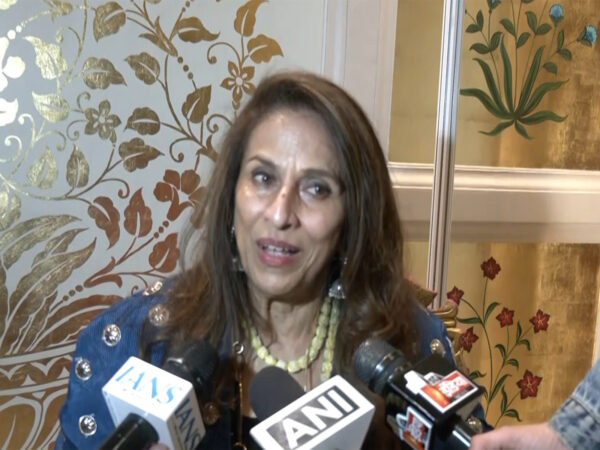
Veteran author and columnist Shobhaa De has termed AR Rahman’s recent remark on Bollywood as “very dangerous”, stressing that the film industry has always been a space where talent, not religion, determines opportunity.

Addressing a session on her new book at the ongoing Jaipur Literature Festival 2026, De said she disagreed with composer Rahman’s claims of religious bias in Bollywood.

“This is a very dangerous comment. I don’t know why he’s made it; you should ask him. But I’ve been watching Bollywood for 50 years. And if I’ve seen any place which is free of any kind of communal tension, it is Bollywood. If you have talent, you will get a chance. If you don’t have talent, there’s no question of religion being a factor, that they’re not giving you a chance. So, what he’s saying, he’s such a successful man, he’s such a mature man. He should not have said it, maybe he has his reasons, you will have to ask him,” she said.

Oscar-winning composer Rahman had in a recent interview on the BBC Asian Network said that work from the Hindi film industry has slowed for him in recent years, which he attributes to changing dynamics in the industry over the past eight years

She raised her concerns about Bangladesh and the murder of Hindus there. She highlighted the complexity of historical ties. However, she strongly condemned the recent treatment of Hindus in Bangladesh and expressed confidence in the Indian government’s ability to address the situation.

“Bangladesh is a very sensitive subject, because our history with Bangladesh is very complex and people there hate us. And the younger generation definitely hates us. They don’t like it that we are hosting a person who they think is the enemy of the state. But what they’re doing to our Hindu brothers and sisters in Bangladesh has to be condemned, strongly condemned. And I’m sure the government will take the necessary steps to deal with the situation,” De said.

Turning to global issues, De spoke about the ongoing atrocities in Iran. She said the Indian government has condemned the violence, issued a travel advisory, and is ensuring the safe return of its citizens. “The atrocities that are happening in Iran, I think the whole world is watching. The world is shocked. And in India, we have condemned it. We also have a travel advisory. We are getting our own people back, which shows the seriousness with which the government of India is taking the deteriorating situation in Iran. We are not ignoring it….,” she added.

Meanwhile, the second day at JLF began with morning music by Bhanwari Devi of the Bhopa community, whose soulful folk performance brought the rich traditions of Rajasthan to life, followed by the Festival’s first session, Lightning Kid, which saw World Chess Champion Viswanathan Anand in conversation with Rahul Bhattacharya. The session traced Anand’s illustrious career, tactical evolutions in the global chess circuit, and the personal motivations behind his latest literary work, Lightning Kid, as per the press release.

Day 2 also saw the announcement of a new JLF International edition. Following successful editions in the USA, Valladolid, and London, JLF will now make its advent at the Island of Ireland. JLF Island of Ireland will be held from 22-31 May 2026. (ANI)

Flights Delayed In Delhi Amid Dense Fog, AQI In ‘Very Poor’ Category

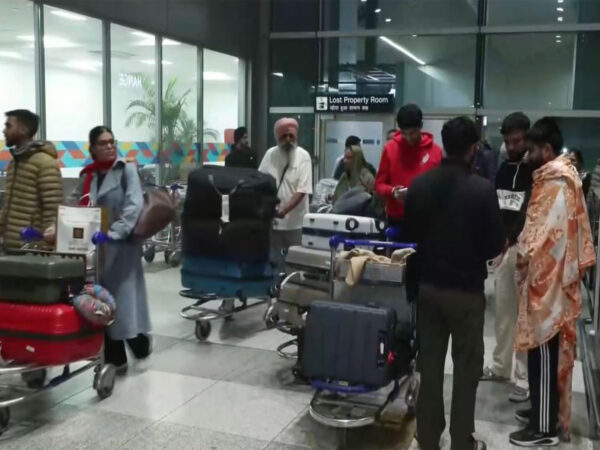
As cold wave conditions continued to prevail in the national capital, dense fog enveloped large parts of Delhi on Saturday morning, leading to reduced visibility and delays in several flights at Indira Gandhi International (IGI) Airport.

Passengers are advised to check flight statuses with their respective airlines before heading to the airport, as foggy conditions are likely to impact operations intermittently.

The India Meteorological Department (IMD) reported a slight improvement in minimum temperature, which stood at 7 degrees Celsius on Saturday morning, compared to 4 degrees Celsius recorded on Friday. Despite the marginal rise in temperature, visibility remained low during the early hours, affecting road, rail and air traffic movement across the city.

Meanwhile, Delhi’s air quality continued to remain a major concern. As per data from the Central Pollution Control Board (CPCB), the Air Quality Index (AQI) in the national capital stood at 368 at around 7 am on Saturday, placing it in the “very poor” category.

Earlier, on Tuesday, in view of deteriorating air quality in Delhi, the Sub-Committee on the Graded Response Action Plan (GRAP) of the Commission for Air Quality Management (CAQM) in NCR and Adjoining Areas convened a meeting.

During the meeting, the Sub-Committee reviewed the prevailing air quality scenario in the region, along with forecasts for weather and meteorological conditions and the Air Quality Index.

According to an official release, the Sub-Committee observed that the AQI in Delhi has shown an increasing trend, and forecasts by IMD and IITM indicate that air quality is likely to deteriorate further and may enter the ‘severe’ category in the coming days due to unfavourable meteorological conditions and slow, variable wind speeds.

“In view of the prevailing air quality trend, and with a view to preventing further deterioration of air quality in the region, the Sub-Committee has decided to invoke all actions envisaged under Stage-III of the extant Graded Response Action Plan (GRAP) – ‘Severe’ Air Quality (AQI range: 401-450) – with immediate effect across the entire NCR, as a proactive measure,” the release said.

This is in addition to the actions under Stages I & II of the extant GRAP already in force in NCR. Various agencies responsible for implementing measures under GRAP, including the Pollution Control Boards (PCBs) of NCR and DPCC, have also been directed to ensure strict implementation of actions under Stage-III of the extant GRAP, in addition to actions under Stages I & II of GRAP, during this period.

A nine-point action plan as per Stage-III of the extant GRAP is applicable with immediate effect, in the entire NCR. The nine-point action plan includes steps to be implemented/ ensured by different agencies, including the Pollution Control Boards of NCR and DPCC. (ANI)

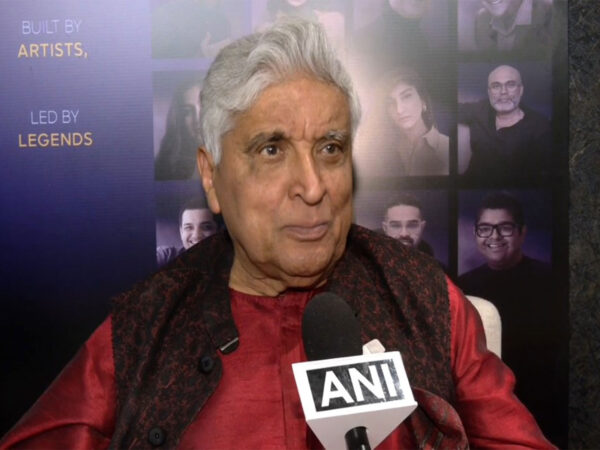
‘Main Ek Regular Life Guzarta Hun…Ice Cream Bhi Khata Hun,’: Javed Akhtar As He Turns 81

Living a simple, grounded life has always been a core principle for veteran screenwriter Javed Akhtar, regardless of his fame and success.

As he turns 81 today, Javed Akhtar spoke with ANI and shared a hilarious message for his fans.

“Main toh ek badi regular life guzarta hun…kabhi bhi so jata hun, kabhi bhi uth jata hun, jo jee chahta woh khaleta hun…Ice cream bhi khata hun…chai mein shakar bhi dalta hun..ek regular life hai meri. Aap bhi guzariye meri umar ke ho jayenge aap ya kamse kam meri umar ke lagne toh lagenge,” Javed quipped.

The way Javed Akhtar expressed it perfectly reflects how he has kept his inner child alive even today, a quality that truly deserves to be learned from.

Renowned for his remarkable contributions to Hindi cinema, the celebrated screenwriter has won five National Film Awards. His distinguished career has also been honoured with two of India’s highest civilian awards, the Padma Shri in 1999 and the Padma Bhushan in 2007.

Javed penned stories for numerous films over the years, but the most successful phase of his career came through his collaboration with fellow screenwriter Salim Khan.

Popularly known as Salim-Javed, the iconic duo went on to script several commercially and critically acclaimed classics, including Zanjeer, Deewaar, and Sholay, leaving an indelible mark on Hindi cinema. (ANI)

”Hum To Tere Hi Liye The’ Song From Shahid Kapoor-Starrer ‘O’ Romeo’ Out Now

‘Hum To Tere Hi Liye The’ song from director Vishal Bhardwaj’s directorial ‘O’ Romeo’ was unveiled on Friday.

The film stars Shahid Kapoor, Triptii Dimri, Vikrant Massey, Tamannaah Bhatia, Avinash Tiwary, and Farida Jalal among many others.

Set against the gritty, brooding backdrop of O’Romeo, ‘Hum To Tere Hi Liye The’ becomes a striking emotional contrast where harsh realities collide with fragile emotions. The composition by Vishal Bhardwaj bears his signature depth and melodic gravitas, while the poetic lyrics by the legendary Gulzar lend the song timeless elegance.

Brought to life by the soulful voice of Arijit Singh, the track lingers long after the final note, resonating with the ache of love remembered and love lost.

Sajid Nadiadwala presents O’Romeo, a film by Vishal Bhardwaj. Produced under Nadiadwala Grandson Entertainment, O’Romeo will release in Valentine’s Week on February 13, 2026. (ANI)

TVK Constitutes Election Campaign Committee Ahead Of Tamil Nadu Assembly Polls: Vijay

With preparations gaining momentum for the forthcoming Tamil Nadu Legislative Assembly General Elections, Tamilaga Vettri Kazhagam (TVK) President Vijay announced the constitution of an Election Campaign Committee to coordinate and oversee poll-related activities across the state.

In an official letter issued to party functionaries and cadres on Friday, Vijay said that the newly formed committee will be responsible for managing and supervising election campaign activities at the state, district and constituency levels. He stated that the panel will cover all 234 Assembly constituencies in Tamil Nadu and play a key role in strengthening the party’s organisational presence ahead of the elections.

According to the letter, the Election Campaign Committee will conduct consultative meetings, campaign meetings and other organisational programmes required for the effective execution of election-related work. Vijay said the committee will ensure coordinated efforts across constituencies and facilitate smooth implementation of campaign strategies in the run-up to the Assembly polls.

The TVK president also appealed to party members and office-bearers to extend their full cooperation to the newly constituted committee.

Vijay’s announcement comes at a time when political parties in Tamil Nadu have begun intensifying organisational exercises and groundwork in anticipation of the 2026 Assembly elections.

The AIADMK-led National Democratic Alliance (NDA) is aiming to reclaim power in the state after losing the 2021 Assembly elections. Despite a subdued performance in the 2024 Lok Sabha elections, the AIADMK has renewed its alliance with the Bharatiya Janata Party (BJP) after severing ties in 2023.

Meanwhile, the ruling Dravida Munnetra Kazhagam (DMK) is seeking to retain power and enters the electoral contest with confidence following its strong performance in the 2024 parliamentary polls.

As the 2026 Tamil Nadu Assembly elections approach, senior leaders of the Congress from the state are scheduled to meet the party’s top leadership at Indira Bhawan in New Delhi later today at 4 pm. The meeting is expected to focus on election strategy, organisational preparedness and possible seat-sharing arrangements.

Tamil Nadu is scheduled to hold elections in the first half of this year. (ANI)

PM Modi’s Gift To Bengal: Vande Bharat Sleeper Train To Be Launched In Malda

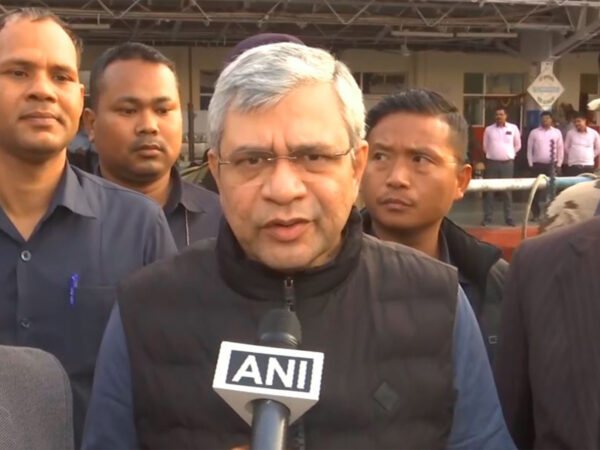
Railways Minister Ashwini Vaishnaw said that the Prime Minister Narendra Narendra Modi was “gifting” a dozen new trains to West Bengal, underlining that the first service of the Vande Bharat Sleeper Train will begin from Guwahati to Kolkata.

The Vande Bharat Sleeper Train will be inaugurated by the Prime Minister.

Speaking to ANI, the Vaishnaw said that 101 railway stations are being reconstructed with major development works underway at the New Jalpaiguri (NJP) Railway Station, a major railway hub in the state.

“PM Modi is giving West Bengal a gift of more than one dozen new trains. The first service of Vande Bharat sleeper trains will start from Guwahati to Kolkata. PM Modi will inaugurate it. Amrit Bharat Express trains are going to run. Along with it, 101 stations are being reconstructed in West Bengal. Under this, the New Jalpaiguri (NJP) Railway Station is in the process of turning into a world-class station, with the addition of two new platforms. A lot of area will emerge where IT hubs can be built,” he said.

India’s first Vande Bharat Sleeper Train will be flagged off between Howrah and Guwahati (Kamakhya) by PM Modi today.

PM Modi is visiting West Bengal and Assam on January 17 and 18.

On January 17, at around 12:45 pm, the Prime Minister will visit Malda and flag off India’s first Vande Bharat Sleeper Train between Howrah and Guwahati (Kamakhya) at Malda Town Railway Station.

Thereafter, at around 1:45 PM, the Prime Minister will dedicate to the Nation and lay the foundation stone of multiple rail and road infrastructure projects worth more than Rs 3,250 crore in a public function at Malda.

On January 18, the Prime Minister will also flag off 2 New Amrit Bharat Express trains between Guwahati (Kamakhya)-Rohtak and Dibrugarh-Lucknow (Gomti Nagar).

These new train services will strengthen rail connectivity between the Northeast and Northern India, enabling safer and more convenient travel for people.

The Prime Minister will visit Malda and dedicate to the nation, and lay the foundation stone of multiple rail and road infrastructure projects worth Rs 3,250 crore, aimed at strengthening connectivity and accelerating development in West Bengal and the North-Eastern region.

The Prime Minister, from Malda Town Railway Station, will flag off India’s first Vande Bharat Sleeper Train between Howrah and Guwahati (Kamakhya).

He will also virtually flag off the Guwahati (Kamakhya)-Howrah Vande Bharat Sleeper Train. (ANI)