India, EU Sign 13 Deals Including Comprehensive Strategic Agenda, FTA, Security & Defence Partnership

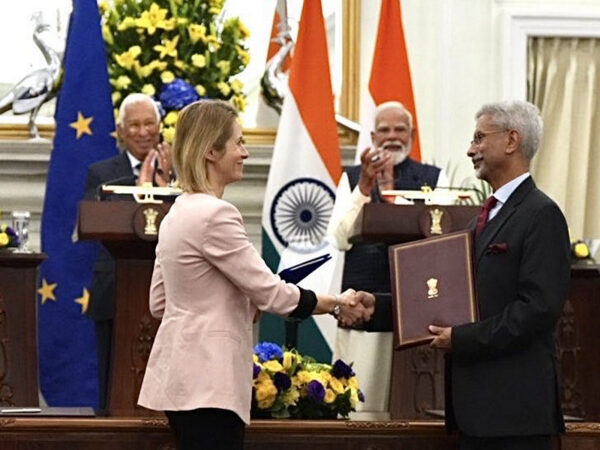
India and the European Union on Tuesday signed 13 agreements and arrangements during the state visit of European Council President Antonio Costa and European Commission President Ursula von der Leyen, covering areas such as trade, security, defence, mobility, clean energy, science, and disaster management.

The agreements were signed during the 16th India-EU Summit co-chaired by Prime Minister Narendra Modi.

According to the List of Outcomes issued by the Ministry of External Affairs, the leaders welcomed the signing of the ‘Towards 2030: A Joint India-European Union Comprehensive Strategic Agenda,’ an overarching framework guiding the India-EU strategic partnership.

The visit also marked the conclusion of negotiations on the India-EU Free Trade Agreement (FTA), the largest trade deal in India’s history, aimed at boosting economic and investment ties between the two sides.

Prime Minister Narendra Modi hailed the conclusion of the India-European Union FTA, describing it as “not just a trade agreement, but a blueprint for shared prosperity.”

He noted that India-EU relations have grown exponentially in recent years, rooted in shared democratic values, economic synergy, and strong people-to-people ties, acknowledging that the India-EU trade stands at EUR 180 billion, during a joint press meet with the European leaders.

In defence and security, the India-EU Security and Defence Partnership (SDP) was formalised, creating a first-of-its-kind framework to deepen cooperation in maritime security, defence industry and technology, cyber and hybrid threats, space, and counter-terrorism. Negotiations were also launched for an India-EU Security of Information Agreement to facilitate the exchange of classified information and enhance defence collaboration.

With the signing of the deal, India becomes the third Asian country to have such a deal with the EU after Japan and South Korea.

Financial and technological cooperation was also strengthened through an MoU between the Reserve Bank of India and the European Securities and Markets Authority, as well as an administrative arrangement on advanced electronic signatures and seals.

Mobility agreements were also reached, which included a framework for cooperation and the announcement of a pilot EU Legal Gateway Office in India to enhance skill mobility.

Disaster management cooperation was reinforced through an arrangement between India’s National Disaster Management Authority (NDMA) and the EU’s Directorate-General for European Civil Protection and Humanitarian Aid Operations.

In science, technology, and clean energy, the two sides renewed the India-EU Agreement on Scientific and Technological Cooperation for 2025-2030, constituted a Green Hydrogen Task Force, and launched exploratory talks for India to join the Horizon Europe Programme.

Both sides also agreed to jointly implement four trilateral projects in areas such as digital innovation for women and youth, solar-based solutions for farmers, early warning systems, and sustainable energy transitions in Africa, the Indo-Pacific, the Caribbean, and Small Island Developing States.

The 13 agreements and arrangements underscore the expanding breadth and depth of India-EU cooperation, reflecting shared priorities in strategic, economic, and global governance arenas, and reinforcing the partnership between two of the world’s largest democracies. (ANI)

‘The Belief That Bollywood Was Always Secular is a Comforting Myth’

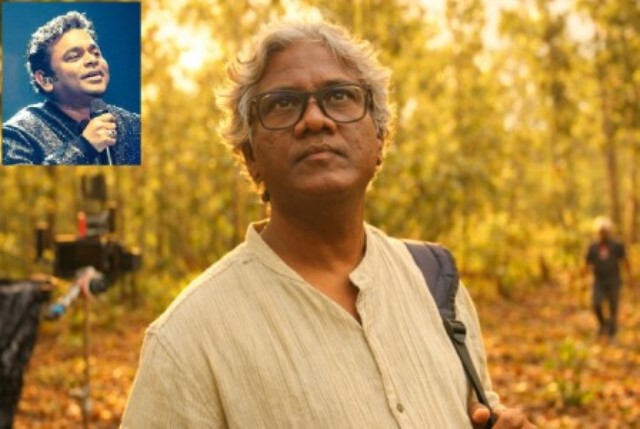
Avinash Das, director of several acclaimed movies, says communal narratives in Bollywood existed earlier too but now they are incentivised, patronised. His views:

Renowned music composer AR Rahman has been in news for his comments on changing power structure and a ‘communal bias’ in Bollywood. In my opinion, his statement needs to be read less as an individual opinion and more as a symptom of a larger cultural anxiety. When someone of Rahman’s stature speaks cautiously or ambiguously, it is not necessarily an ideological confusion; it is a reflection of the narrowing space available to public figures today.

In highly polarised environments, silence is not neutrality. It is often enforced.

What we are witnessing in contemporary times is not just the fear of backlash, but the fear of being algorithmically punished, economically isolated, or culturally erased. The market, the state, and a certain dominant section of public sentiment now work in tandem. This convergence leaves very little room for moral clarity.

As a filmmaker, I see this as a dangerous pattern and phenomenon. Authentic art thrives on dissent and discomfort. When even the most respected artists begin to self-censor, it signals a deeper structural problem — not an individual failure of courage.

The idea that Bollywood was always fully secular is itself a comforting myth. It was plural, yes. But pluralism is not the same as secularism. What has changed today is not ideology alone, but the power structure that governs storytelling.

Earlier, communal narratives existed at the margins. Today, they are incentivised. Patronised.

Films that simplify history into moral binaries are rewarded with visibility, protection, and amplification. Indeed, this is not simply a case of organic cultural expression. It is the relentless process of wilfully ‘manufacturing consent’ through cinema.

When storytelling starts aligning more with power than the lived reality, communalisation becomes inevitable. The danger is not that Bollywood is becoming communal. The danger is that it is being trained to see communal narratives as safe, profitable, and “nationalist”.

Yes, the industry is loaded, but not in a crude or conspiratorial way. It is loaded structurally.

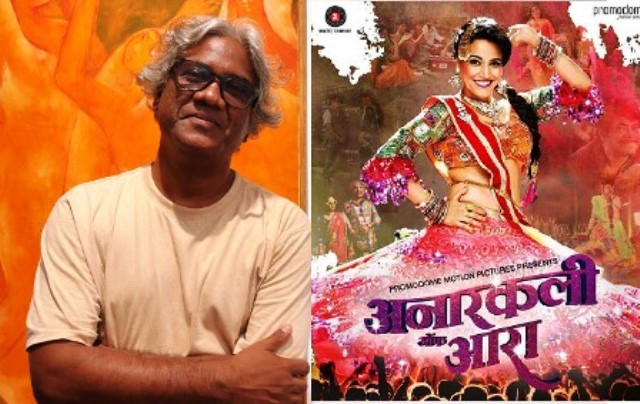
Das with a poster of his directorial debut ‘Anaarkali of Aarah’

Meaningful cinema requires time, risk, and ambiguity. The current ecosystem discourages all three. Financing is tied to optics. Distribution is tied to political mood. Exhibition is tied to outrageous economics.

Films like The Kerala Story succeed not because of ideology, but because they fit perfectly into a system that rewards provocation and polarisation, over creative and critical inquiry. Meanwhile, filmmakers who once made layered, aesthetic and morally complex films, are pushed into silence or compromise. Not because they lack ideas, but because the cost of honesty has become unsustainably high.

This is how censorship (invisible or otherwise) works in modern democracies. You don’t ban films. You make certain kinds of films impossible to make.

So what is the best way for the film industry in the future?

Surely, the future of the industry does not lie in appeasement or neutrality. Both are illusions. It lies in decentralisation.

Bombay cinema needs to unlearn its dependence on validation from power, whether political or corporate. Smaller budgets, independent distribution, regional collaborations, and direct audience engagement are not romantic ideals anymore. They are survival strategies.

Most importantly, filmmakers need to reclaim ethical clarity. Not slogans, not propaganda, but intellectual honesty. Cinema does not need to shout. It needs to insist. On complexity. On contradictions. On human truth.

If the industry forgets this idea of realism, it will continue to exist, but it will end up becoming futile. Finally, it will simply not matter.

(The narrator began his career as a journalist, working in both print and television, and transitioned into the world of cinema. His directorial works include Anaarkali of Aarah, Runaway Lugaai, Raat Baaki Hai and In Galiyon Mein among others)

As told to Amit Sengupta

Electoral Rumble In The Neighbourhood

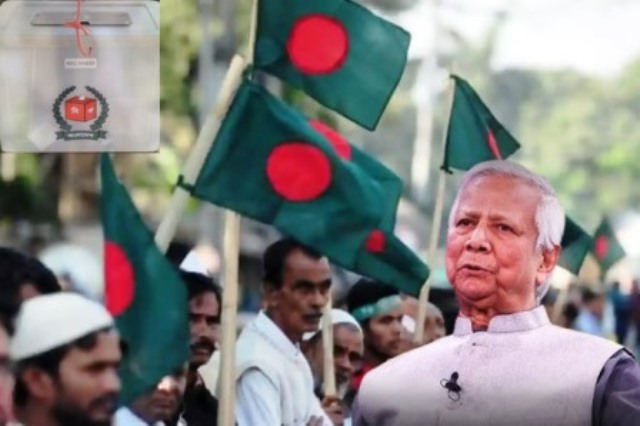
Elections have determined Bangladesh’s course even before its birth, which was triggered by the way they were held in 1970 in Pakistan. Compounding an intense internal turmoil, the ones due on February 12 are for the first time being held with a foreign military presence on its soil, along a troubled border with Myanmar, where a pro-Beijing military junta has lost control to rebel groups. A global power play of the United States-led efforts to confront China is underway.

In a repeat, history has judged Bangladesh’s founding leader, Sheikh Mujibur Rahman, and now, his daughter. India’s former envoy to Dhaka, Pinak Ranjan Chakravarty, reminds: “Sheikh Hasina had annoyed both the US and Pakistan. She refused to submit to American demands for facilitating a military base on St Martin’s Island and the so-called “Humanitarian Corridor”, to pump in arms into Myanmar to help rebels fighting the ruling Military Junta.”

A December 2025 news clip, gone viral, has US President Donald Trump declaring, “We have decided that elections in Bangladesh would be free and fair”, and that “no extremist elements” will win. However, America’s need to confront China in a country that straddles South and Southeast Asia cannot be overlooked.

Assiduously cultivated by the Mohammed Yunus-led regime, Pakistan has returned to its erstwhile eastern province, aiding the resurgence of the Islamist forces. That questions the raison d’etre of separation. The frequent visits by Pakistani military and ISI officials have strengthened military ties and joint defence outreach with China, the biggest beneficiary of the 2024 change. And since anything happening in Bangladesh spills over to its eastern region, India sees red.

In the ensuing elections, leading an 11-party alliance, the Jamaat-e-Islami Bangladesh has disciplined cadres and wide support among the conservative Muslims in the countryside. It is in a tight race for power with the largely city-based Bangladesh Nationalist Party (BNP) of the Zia family, which lacks such a base. According to a survey by the US-based International Republican Institute, Jamaat is the “most liked” party.

The Islamist alliance includes the National Citizens Party (NCP), of student leaders whose protests led to the toppling of the Hasina regime in August 2024. Some of its women leaders, fearing a clampdown from fundamentalist elements, chose to quit. Bangladesh has one of the largest women’s workforces in the Muslim world.

Struggling to retain identity among the entrenched Islamists, the NCP’s student leaders have forced a referendum along with the election. But the elections could minimise, if not eliminate, their future role.

The entire right-wing phalanx is anti-India. Among many things, the larger neighbour hosting Hasina has been a talking point, even with the BNP.

Hasina’s first audio conference on January 23, beyond lambasting Yunus, should have included a pre-poll, manifesto-like declaration to “stay in the race”, albeit notionally. An opportunity was missed.

Unable/unwilling to control crowds, a recalcitrant Yunus regime has sullied the diplomatic pitch. For the first time, India’s visa offices have been attacked, forcing Delhi to suspend these facilities and withdraw families of its staff for safety reasons.

The BNP is galvanised by the return from exile of Tarique Zia, just before Khaleda Zia, his mother and two-term prime minister, died. The family of slain former president General Ziaur Rahman enjoys respect and semi-official support. Tarique, the new ‘dynast’ (replacing Sheikh Mujib and Hasina), is the top favourite. After his Western ‘approval’, Yunus met him during the London exile and facilitated his return.

The stage is set for Tarique as the prime minister, it is speculated, with Yunus as the likely future president. Or, a graceful retirement for the Nobel laureate after having ‘delivered’ to his mentors.

One big hurdle is the Islamists. Yunus’ perceived proximity to the student leaders, now in his administration and in the NCP, could deny Tarique a parliamentary majority, forcing him to form a coalition government. But the BNP’s founder, Ziaur Rahman, was a soldier/freedom fighter. Despite its ‘nationalist’ ethos, during 2001-2006, Khaleda had shared power with the Jamaat. Post-polls exigencies and external pressures may dictate a repeat.

Nor can one ignore the general approval of the Yunus regime by the Western governments and the media, which has overlooked the exclusion of the Awami League, Bangladesh’s largest political party. Yunus told the BBC that the AL was “still there”, his government had no role in its exclusion, and the Election Commission had ordered it. He wasn’t asked who appointed that poll body, or, for that matter, the judges of the Crimes Tribunal who have delivered the death sentence against Hasina.

Besides having played a role in Bangladesh’s liberation, India supported Hasina, even her many autocratic ways at home, because she met Delhi’s security concerns by curbing militancy and closing down terror camps run by Pakistan’s ISI. Fostering revenge as the motive, the Yunus regime has allowed Awami League leaders and workers to be hunted down and killed, and their properties destroyed. But that is how the “winner-takes-all” politics, of the Awami League, as well, has worked in Bangladesh.

Sheltering Hasina, because Britain did not issue her a visa, hugely adds to India’s dilemma. It has exercised strategic restraint and kept up a difficult relationship, although attacks on minorities, Hindus and Buddhists have a direct bearing on India’s domestic scene.

While rights groups have documented numerous such attacks, Yunus claims that only 645 “incidents” occurred in 2025, and that just 71 of them were communal in nature. He has termed allegations of atrocities on the minorities as ‘propaganda’, pointing the finger at India. But the Dhaka Tribune newspaper (January 20, 2026) has, in an editorial, said that such attacks “are a deeply troubling reminder of a persistent and corrosive mentality that insists on retaliation over reason, and instant judgment over justice.”

Yunus had earlier argued that most attacks on minorities were “political.” He now insists they are primarily criminal rather than communal. This shifting terminology is not incidental; it reflects a deliberate effort to strip the violence of its definite religious character and obscure the identity of the victims. In reality, the choice of targets is driven by religious vulnerability.

Islamist groups have grown more visible and assertive, as evidenced by the destruction of shrines and statues and the torching of minority homes. The pattern is unmistakable. The Army Chief, Gen Waqer-uz-Zaman, citing huge quantities of arms in illegal hands, including the Islamist cadres, has cited it as one of the obstacles to a fair election.

India’s dilemma is that it feels the need to speak up for Bangladesh’s minorities because of the spill-over effect. At the same time, this hurts these minorities who are feeling persecuted and sour Delhi-Dhaka relations.

Consequently, India, while remaining diplomatic, has done little to stop the anti-Dhaka stance in its media and has allowed issues like a cricket tournament to become part of the acrimony. When Bangladesh projects a Hindu as its cricket team captain, how should India react? This symbolises the delicate Delhi-Dhaka relationship, different from other neighbours.

The international community is likely to put its stamp of approval on the election’s outcome. Its impact on Bangladesh’s constant search for national identity, however, is unclear.
Light Rain, Fresh Snowfall In Himachal; IMD Warns Of Cold Conditions

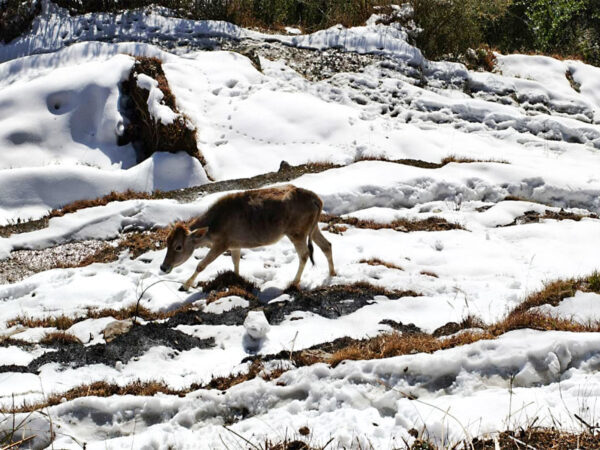
Himachal Pradesh witnessed isolated rainfall and widespread snowfall in the higher reaches over the past 24 hours, while minimum temperatures rose appreciably at several places, the India Meteorological Department (IMD) said on Tuesday.

According to the IMD’s Meteorological Centre in Shimla, significant snowfall was recorded in Lahaul-Spiti and adjoining tribal and high-altitude regions, with Gondla receiving 22 cm, Kukumseri 21.3 cm, Kothi 20 cm and Koksar 19 cm of snow. Keylong recorded 12.5 cm, while Kalpa and Sangla reported 5.5 cm and 1.8 cm, respectively.

Light to moderate rain was reported in parts of Chamba and Kullu districts, with Saloni recording 9.3 mm and Manali 6 mm. Thunderstorm activity was observed in Shimla, while shallow fog reduced visibility to about 500 metres in Kalpa. Gusty winds were reported from Kufri and Narkanda, with speeds reaching up to 52 kmph.

“Minimum temperatures have shown an appreciable rise at many stations, with a few places recording values 2 to 5 degrees Celsius above normal,” the IMD said, adding that maximum temperatures showed no large change and remained below normal at several locations.

Tabo in Lahaul-Spiti recorded the lowest minimum temperature at minus 8.9 degrees Celsius, while Paonta Sahib in Sirmaur district recorded the highest maximum temperature at 23 degrees Celsius.

The weather office has forecast isolated rain and snowfall in the state on January 27, with the possibility of thunderstorms accompanied by lightning and gusty winds of 40-50 kmph, gusting up to 60 kmph, at isolated places.

Cold-day conditions are also likely in parts of the lower and mid-hill regions, while cold wave and dense fog conditions may prevail at isolated locations over the next few days.

IMD further said that a fresh western disturbance is likely to affect northwest India from the night of January 30, bringing another spell of rain and snow to Himachal Pradesh. (ANI)

Ranbir Calls Rani,’ One Of The Greatest Ever Actors’

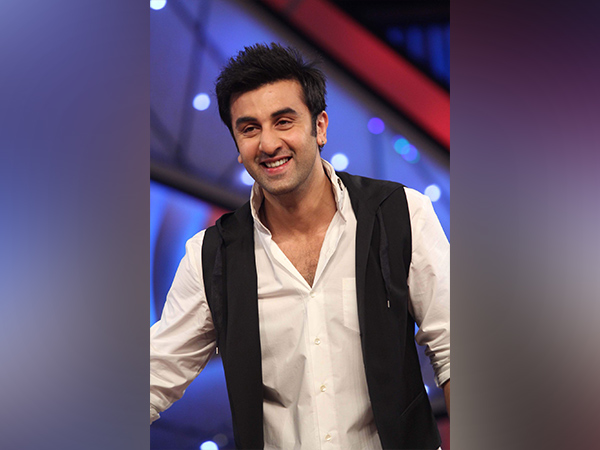
Actor Ranbir Kapoor is showering praise for ‘Mardaani’ star Rani Mukerji, hailing her three-decade-long journey in Indian cinema.

Ranbir Kapoor, who worked with Rani Mukerji in his debut film ‘Saawariya’, also weighed in on his experience working with her, calling her “one of the greatest ever actors”.

Speaking to Variety, the ‘Animal’ star shared, “It is really amazing to see the entire industry come forward to celebrate 30 years of her iconic legacy,” referring to the recent applause that Rani Mukerji has received with the upcoming release of ‘Mardaani 3’.

Reflecting on his debut film with the National Award-winning actor, Ranbir added, “I have always felt that Rani is one for the ages, one of the greatest ever actors in India and someone who has defined our industry through her work. Her choice of projects and roles has shaped how women are portrayed on the screen today. Rani is the co-star of my first film ‘Sawaariya’ and she is the first person who told me that if I worked hard, I would go a long way. I will never forget that interaction because it gave me so much confidence when I needed it the most.”

Noting that he has been “bowled over by her grace, charm, and brilliance”, having seen her closely as a person, Ranbir Kapoor went on to describe Rani Mukerji as an “entertainer who has dedicated her life to make people happy.”

“I don’t have words to describe the impact her films have had on me,” he added.

Rani Mukerji’s much-awaited ‘Mardaani 3’ marks her return as the bold and fearless cop Shivani Shivaji Roy. As per the film’s trailer, the focus remains on the kidnapping of young girls from low-income communities. https://www.youtube.com/embed/V4TJKSEftkU

Directed by Abhiraj Minawala and produced by Aditya Chopra under Yash Raj Films, ‘Mardaani 3’ will hit theatres on January 30, 2026. (ANI)

‘Concluded The Mother Of All Deals’: EU Commission Presz Ursula On FTA With India

European Commission President Ursula von der Leyen said that India and the European Union have concluded the much-anticipated free trade agreement, touted as the ‘Mother of all Deals’.

In a post on X on Tuesday she called the moment historic and expressed optimism on further strengthening the strategic relationship.

She said, “Europe and India are making history today. We have concluded the mother of all deals.We have created a free trade zone of two billion people, with both sides set to benefit. This is only the beginning. We will grow our strategic relationship to be even stronger.”

Union Commerce Minister described the agreement as “A formidable partnership for the world.”

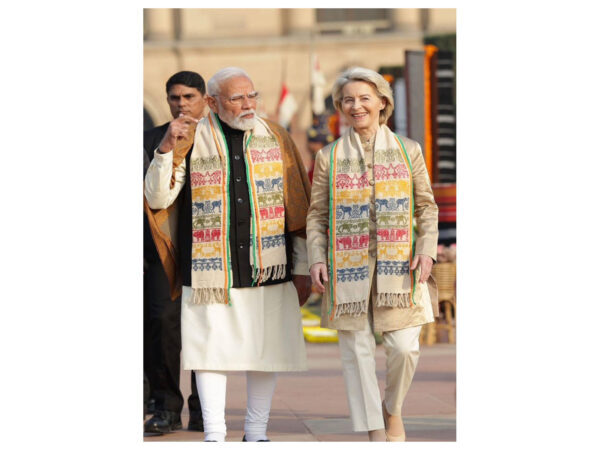
On Tuesday, Prime Minister Narendra Modi met President of the European Council, Antonio Luis Santos da Costa and President of the European Commission, Ursula Von Der Leyen here in the national capital. The leaders held a bilateral meeting which took place at Hyderabad House, with EU High Representative for Foreign Affairs and Security Policy Kaja Kallas also in attendance.

The leaders displayed the spirit of bonhomie as they met at the Hyderabad House.

Earlier, the EU leaders paid tribute to the Father of the Nation, Mahatma Gandhi, by laying a wreath at his memorial in Raj Ghat, as part of their state visit to India.

The ceremony, held in the presence of senior Indian officials, was part of their ongoing state visit and coincided with the 16th India-EU Summit in New Delhi, which will be co-hosted by Prime Minister Narendra Modi.

The European leaders also signed the guestbook at the memorial site after the wreath-laying ceremony and paid floral tributes to the Mahatma.

European Council President Antonio Costa shared visuals from his visit to Rajghat and reflected upon the timeless values of Mahatma Gandhi. He said, “Paying tribute to Mahatma Gandhi. His words continue to resonate with the same force today as in the past: “Peace will not come out of a clash of arms but out of justice lived and done by unarmed nations in the face of odds.”

The visit comes at a time when both sides have concluded their discussion of a free trade agreement, which is expected to strengthen their shared commitment to democracy and the rule of law.

On Tuesday, Prime Minister Narendra Modi hailed the India-EU Free Trade Agreement, reiterating it as the ‘Mother of all deals’ and how it illustrates the partnership between two major economies of the world. The deal becomes significant as it links two major economies that command a quarter of the world’s GDP.

PM Modi made the remarks while virtually addressing the Opening Ceremony of India Energy Week 2026.

He added that the free trade agreement with the EU will complement existing agreements with the United Kingdom and members of the European Free Trade Association (EFTA).

Extending his congratulations to those associated with different sectors, the Prime Minister said the agreement would be highly beneficial for industry stakeholders. He added that the trade deal would have a positive impact on both manufacturing and services in the country.

Emphasising the broader global impact, PM Modi said the FTA would boost global confidence in India. “This Free Trade Agreement will further strengthen global confidence in India for businesses and investors across the world,” he said, adding that India is actively working on global partnerships across all sectors.

With the signing of the deal, India becomes the third Asian country to have such a deal with the EU after Japan and South Korea. (ANI)

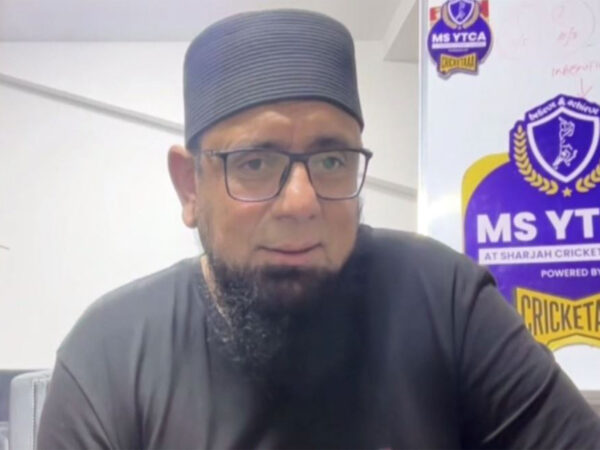
‘Politics Should Be Eradicated’: Saqlain Mushtaq On Strained Relations Between India-Pakistan

Pakistan’s legendary spinner Saqlain Mushtaq spoke on strained relations between India and Pakistan, slamming politics, saying it’s against humanity and detrimental to cricket and believes cricket unites nations, not drives them apart.

India and Pakistan have not played any bilateral series since 2012-13. In December 2012, Pakistan visited India for a 3-match ODI and 2-match T20I series. The T20 was a draw with India and Pakistan winning a match each, while the visitors took the ODI series 2-1.

In an exclusive interview with ANI, Saqlain Mushtaq said, “I believe politics should be eradicated as it’s detrimental to humanity. Politics is our enemy, and it’s not just harming cricket, but humanity as a whole. It’s a loss for the sport and its players. Cricket is meant to unite nations, not drive them apart.”

India and Pakistan only play against each other in international tournaments (Asia Cup, World Cup, Champions Trophy). Pakistan last visited India in the 2023 ODI World Cup. However, following Pakistan’s terrorist attack on tourists in Pahalgam, Jammu and Kashmir last year, the Indian goverment made a policy of playing matches on “third soil” – either in India or abroad, but not in Pakistan.

Mushtaq also emphasised that cricket should be about entertainment, not politics or conflict. He chose not to comment on Bangladesh’s decision not to play the T20 World Cup in India, reiterating his stance against mixing politics with sports.

“Cricket is about entertainment, not a battlefield or war. I prefer not to comment on Bangladesh’s decision not to play in India, as I’ve made it clear and told you already that I don’t believe in politics,” Mushtaq added.

Mushtaq’s comments come amid tensions between Bangladesh and India over the T20 World Cup, with Bangladesh refusing to play in India due to security concerns after Mustafizur Rahman was removed by Kolkata Knight Riders (KKR) from their IPL 2026 roster in response to a directive from the BCCI regarding atrocities committed against minorities in Bangladesh.

However, after Bangladesh’s refusal International Cricket Council (ICC) replaced them with Scotland in the T20 World Cup. (ANI)

India Hits Back At Pakistan At UN, Rejects ‘False’ Op Sindoor Narrative

India on Monday strongly rejected Pakistan’s remarks made on New Delhi’s retaliatory action through Operation Sindoor following the April 22 Pahalgam terror attack, calling them “false and self-serving”, and asserted that Islamabad has “no locus standi” to comment on matters internal to India, particularly on the Union Territory of Jammu and Kashmir.

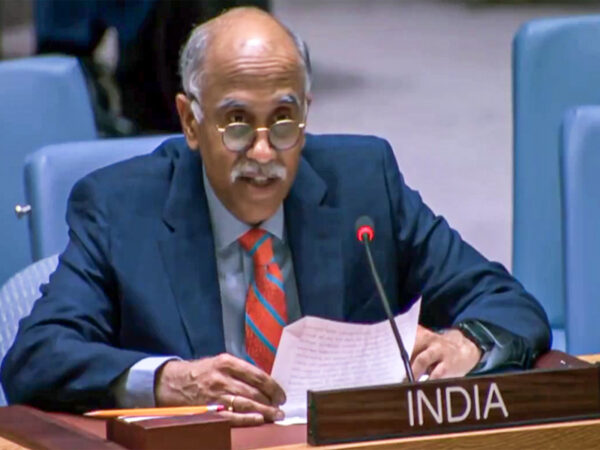
India’s Permanent Representative to the United Nations, Ambassador Harish Parvathaneni, made the remarks while responding to Pakistan during the UN Security Council Open Debate, stating that the Pakistan representative has “a single-point agenda” to harm India and its people.

Ambassador Parvathaneni said Pakistan had advanced a “false and self-serving account” of Operation Sindoor carried out in May last year, stressing that the facts were clear and well documented.

He recalled that Pakistan-sponsored terrorists killed 26 innocent civilians in a brutal attack in Pahalagam, an act of terrorism that was condemned by the Security Council itself.

“This august body itself called for holding the perpetrators, organisers, financiers and sponsors of this reprehensible act of terrorism accountable and brought to justice. That is exactly what we did,” he said.

The Indian envoy underlined that India’s response was “measured, non-escalatory and responsible” and was aimed solely at dismantling terrorist infrastructure and disabling terrorists.

The Indian Armed Forces launched Operation Sindoor in the early hours of May 7, 2025, which targeted nine terror camps in Pakistan and Pakistan-occupied Jammu and Kashmir (PoJK) as a retaliatory response to the April 22 terror attack in Pahalgam, Jammu and Kashmir.

He added that Pakistan had continued to threaten further attacks on India until May 9, following which the Pakistani military reached out to India seeking a cessation of hostilities.

“The destruction caused to multiple Pakistani airbases by the Indian operation, including images of destroyed runways and burnt-out hangars, are in the public domain,” he said.

Responding to Pakistan’s reference to a “new normal”, Ambassador Parvathaneni asserted that terrorism could never be normalised.

“It is not normal to tolerate Pakistan’s continued use of terrorism as an instrument of state policy,” he said, adding that the Security Council must not become a forum to legitimise terrorism.

“We will do whatever required to protect and ensure the safety and security of our citizens,” he added.

The Indian envoy further stated that Pakistan has no locus standi to comment on Jammu and Kashmir, reiterating that the Union Territory “has been, is, and will always remain an integral and inalienable part of India.”

On the Indus Waters Treaty, Ambassador Parvathaneni said India had entered into the agreement 65 years ago in good faith, but Pakistan had repeatedly violated its spirit through wars and sustained cross-border terrorism. He said India was compelled to place the treaty in abeyance until Pakistan credibly and irrevocably ends its support for terrorism.

He further advised Pakistan to introspect on its own adherence to the rule of law, pointing to the role of its armed forces in constitutional developments, including the 27th amendment and the granting of lifetime immunity to its Chief of Defence Forces.

“Pakistan is well advised to introspect about the rule of law. It could start by asking itself how it has let its armed forces engineer a constitutional coup through the 27th amendment and giving life-time immunity to its Chief of Defence Forces,” the envoy said.

In conclusion, Ambassador Parvathaneni reiterated that strengthening the international rule of law and reforming multilateralism remain strategic necessities for the United Nations to effectively fulfil its mandate of maintaining international peace and security.

“India would like to reiterate that strengthening the international rule of law framework and reforming multilateralism are a strategic necessity for the United Nations to effectively discharge its responsibilities with regard to maintenance of international peace and security,” he added. (ANI)

Canadian PM Carney To Visit India In March First Week: Reports

Canadian Prime Minister Mark Carney is set to visit India in the first week of March, the Globe and Mail reported on Tuesday citing Reuters.

As per the Globe and Mail the visit of the Canadian PM would see the signing of deals on uranium, energy, minerals and artificial intelligence, Dinesh Patnaik, India’s High Commissioner to Canada said in an interview.

It further reported that Canada’s Energy Minister Tim Hodgson is visiting India this week who while confirmed that PM Carney would visit India, did not mention any dates.

“There are plans for the Prime Minister to visit at some point this year, it will depend on the progress we make,” Hodgson said in a Sunday interview.

As per Globe and Mail, formal negotiations for a Comprehensive Economic Partnership Agreement with India should also start in March, Patnaik said.

Citing Patnaik it further reported that PM Carney would sign smaller agreements with the India on nuclear energy, oil and gas, environment, AI and quantum computing as well as deals on education and culture during his visit, with a 10-year $2.8-billion uranium supply deal is likely to be included.

While Hodgson did not confirm the deal, he said that Canada is happy to sell uranium under the Canada-India nuclear co-operation agreement as long as India abides International Energy Agency safeguards.

As per Globe and Mail, Patnaik said that the visit of Commerce Minister Piyush Goyal and Finance Minister Nirmala Sitharaman to Canada will also take place soon, adding that National Security Advisor Ajit Doval will visit Ottawa next month as part of regular engagements between India and Canada to exchange intelligence and discuss security measures.

Earlier on Monday, External Affairs Minister S Jaishankar on Monday had a productive conversation with Canadian Foreign Minister Anita Anand, focusing on strengthening India-Canada bilateral ties. They discussed deepening cooperation in various sectors, including economic partnership, artificial intelligence, and high-level exchanges.

These developments follow as US President Donald Trump warned Canada against making trade deals with China. Prime Minister Mark Carney has urged Canadians to “Buy Canadian” to protect the country’s economy from global economic threats, signalling a shift toward focusing on local business rather than relying heavily on international trade.

Carney’s message comes amid escalating transnational tensions, particularly in North American trade relations and Canada’s outreach to Asia. Canadian Prime Minister Mark Carney also stated that Ottawa, to diversify its global trade landscape, will be doubling its non-US exports by the next decade.

In November last year, Carney accepted Prime Minister Narendra Modi’s invitation to visit India in early 2026 on the sidelines of the G20 Leaders’ Summit in South Africa, according to a statement from the Office of the Prime Minister of Canada.

Following the return of high commissioners in August 2025, the two prime ministers agreed to increase diplomatic staffing to meet growing consular demand and strengthen people-to-people ties. They also agreed to support reciprocal knowledge transfer as part of ongoing engagement between the two countries.

Carney welcomed the progress being made in the law enforcement dialogue between India and Canada.

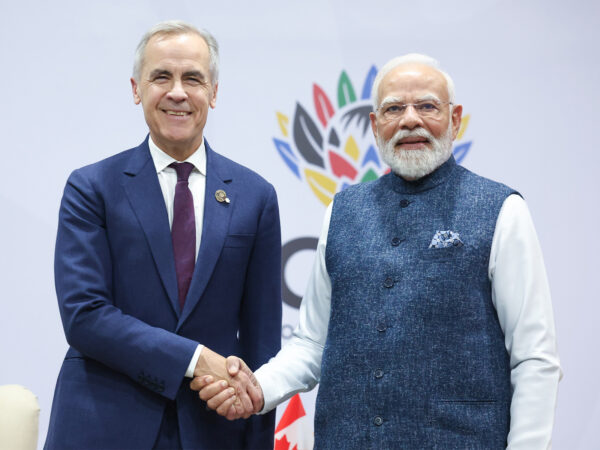
India and Canada have agreed to begin negotiations on a high-ambition Comprehensive Economic Partnership Agreement (CEPA) following a bilateral meeting between PM Modi and his Canadian counterpart, Mark Carney, on the sidelines of the summit. The planned CEPA talks aim to raise bilateral trade to USD 50 billion by 2030. (ANI)

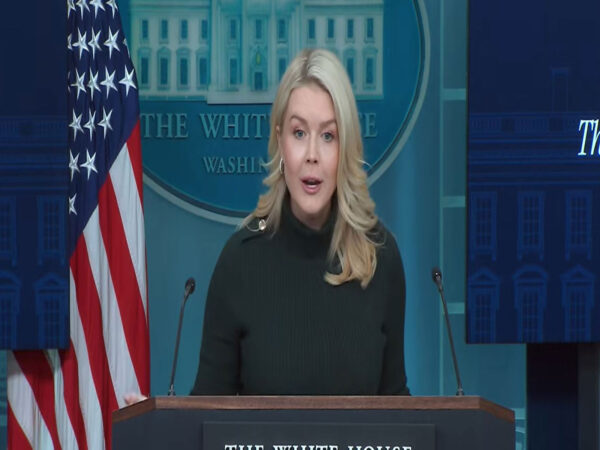
20 More Countries Sign Up For Trump’s ‘Board of Peace’ Initiative: White House

White House Press Secretary Karoline Leavitt on Monday stated that 20 additional countries have “signed up to join US President Donald Trump’s Board of Peace,” though she did not disclose the names of the new participants.

Leavitt said the Board of Peace, originally mandated by the UN Security Council to oversee the management of Gaza for the next two years, is now being positioned by the Trump administration to address conflicts in other parts of the world. She acknowledged that the initiative has faced resistance from some Western nations uneasy about what they view as the board’s attempt to sideline the United Nations.

Addressing reporters at the White House, Leavitt also described the return of the last remaining Israeli hostage from Gaza as a “huge foreign policy feat” for Trump, Israel and the global community.

The announcement follows Trump signing the charter to formally launch his “Board of Peace” initiative at the World Economic Forum in Davos on January 22.

Trump has previously described the body as potentially the “most prestigious board ever formed.”

Calling it a “very exciting day, long in the making,” Trump said, “We’re going to have peace in the world,” adding, “And we’re all stars.”

In his opening remarks, Trump said, “Just one year ago the world was actually on fire, a lot of people didn’t know it,” but claimed “many good things are happening” and that threats worldwide “are really calming down.”

Trump said his administration was “settling eight wars” and claimed “a lot of progress” had been made towards ending Russia’s war in Ukraine.

The initiative originated from the US president’s 20-point Gaza ceasefire plan endorsed by the UN Security Council but has since expanded beyond its original scope. Administration officials said around 35 nations had committed to join, while 60 received invitations, with Trump suggesting the new body could assume roles currently held by the United Nations.

Trump said, “We have a lot of great people that want to join,” during a meeting with Egyptian President Abdel-Fattah el-Sisi, whose country has confirmed membership. He added that some leaders required parliamentary approval before committing, while other countries not invited were seeking inclusion.

Defending the inclusion of Russia’s Vladimir Putin and other leaders, Trump said he wanted “everybody” who was powerful and could “get the job done.”

Several European allies declined participation, citing concerns over the board’s expanded mandate and its impact on the international system based on the UN Charter. The UK also said it would not sign the treaty during Trump’s ceremony, British Foreign Secretary Yvette Cooper said, referencing concerns over Putin’s invitation.

According to a copy of the charter cited by media outlets, countries seeking permanent membership would need to contribute USD 1 billion, while non-paying members would receive a three-year mandate. The charter also designates Trump as permanent chairman even after leaving office.

Trump linked the initiative to his approach on Iran and said it played a role in securing the Israel-Hamas ceasefire. “If we didn’t do that, there was no chance of making peace,” he said. (ANI)