Car Falls Into Canal In UP’s Mathura, 4 Persons Killed

A car lost control and fell into a canal in the Magorra police station area, killing four young men on the spot, police said on Wednesday.

The deceased were residents of the Mahavan police station area and were on their way to attend a wedding in Deeg, Rajasthan. They have been identified as 23-year-old Rahul, 22-year-old Amit, 22-year-old Mohit, and another friend.

Speaking to ANI, SP Rural Suresh Chandra Rawat said, “The four young men were travelling from Mahavan to Deeg via the bypass via Govardhan in a car. A sharp turn on the road caused the car to crash into a cemented tank and the car then overturned into a canal approximately 6 meters deep. The locals tried to save them but it was too late. Police and administration teams immediately arrived at the scene and began a rescue operation. After considerable effort, the car was pulled out of the canal with the help of a crane, but by then all four young men had died.

The police have launched an investigation into the matter.

“The police have taken possession of the bodies and sent them for post-mortem examination and have launched an investigation into the matter. The four young men were residents of the Mahavan police station area and were travelling to Deeg, Rajasthan, to attend a wedding. The deceased have been identified as 23-year-old Rahul, 22-year-old Amit, 22-year-old Mohit, and another friend,” the SP added. (ANI)

Abhishek Sharma Joins Unwanted List After Registering Third Duck In T20 WC

Indian opener and World No 1 T20I batter Abhishek Sharma registered an unwanted record after he was dismissed for a three-ball duck during the ICC Men’s T20 World Cup Group A match against the Netherlands at the Narendra Modi Stadium on Wednesday.

Netherlands spinner Aryan Dutt struck early, cleaning up Sharma in the opening over. This was Sharma’s third consecutive duck in the ongoing tournament after registering ducks against the USA and Pakistan in India’s earlier group A matches.

The left-handed batter is yet to open his account in the T20 World Cup.

With the latest dismissal, Sharma has registered five ducks in T20Is in 2026, putting him with some of the openers scoring the most ducks in a single calendar year in the shortest format.

The unwanted list includes Pakistan’s Saim Ayub, who registered six ducks in 2025.

Sharma, who has now five ducks as an opener, has the second-most alongside Chaloemwong Chatphaisan (Thailand, 2024), Kushal Bhurtel (Nepal, 2024), Dharma Kesuma (Indonesia, 2025) and Parvez Hossain Emon (Bangladesh, 2025) — all with five ducks apiece.

Coming to the match, India’s crisis man Shivam Dube delivered yet again with a majestic half-century, which helped his side to reach 193/6 against the Netherlands in their last group stage fixture of the ongoing T20 World Cup on Wednesday in Ahmedabad.

Dube slammed his maiden fifty in the T20 WC in just 25 balls. Dube smashed 66 runs off 31 balls, including 4 fours and 6 sixes. Dube, along with Hardik Pandya, stitched a brilliant partnership of 76 for the fifth wicket.

India captain Suryakumar Yadav won the toss and elected to bat. Abhishek Sharma’s nightmare continues with three matches, three ducks in the. After two straight zeroes, he looked jittery and tried to swing his way back into form, but Dutch off-spinner Aryan Dutt’s delivery slipped past his bat and rattled the stumps.

Dutt troubled the Indian batters early on and also dismissed Ishan Kishan (18) as the ball trickled onto the stumps–India finish powerplay at 51/2.

Roelof van der Merwe, 41, pulled off a stunning, diving catch at long-off to end the budding partnership between Suryakumar Yadav and Tilak Varma (31). India is 74/3 after 10 overs.

After a quiet few overs, India launched into the attack in the 12th over, with Yadav picking up a six on the leg side. Shivam Dube then got into the act, hitting two sixes and a four, as India amassed 19 runs in the 13th over.

Despite Yadav departing for 34, Dube carried on in the same vein, muscling the ball all around the park. India took the driving seat in the final five overs as it added 75 runs to take their total past 190.

For the Netherlands, Logan van Beek (3/56), Aryan Dutt (2/19) and Kyle Klein (1/38) were among the wickets. (ANI)

Bill Gates To Skip AI Impact Summit Keynote; Ankur Vora To Represent Foundation

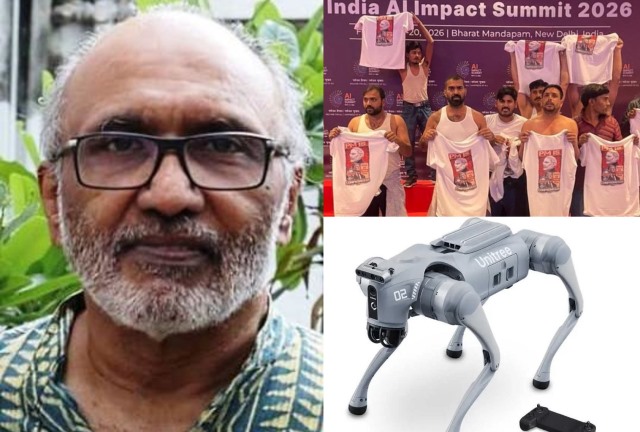
Microsoft Co-Founder Bill Gates will not deliver his keynote address at the India AI Impact Summit 2026, the Gates Foundation India announced on Thursday.

The announcement was made via the foundation’s official account (@BMGFIndia), which posted, “After careful consideration, and to ensure the focus remains on the AI Summit’s key priorities, Mr. Gates will not be delivering his keynote address”. The organization further clarified that it will be represented by Ankur Vora, President of Africa and India Offices, who “will speak later today at the Summit”.

It added, “The Gates Foundation will be represented by Ankur Vora, President of Africa and India Offices, who will speak later today at the Summit.”

Reaffirming its engagement, the foundation stated, “The Gates Foundation remains fully committed to our work in India to advance our shared health and development goals.”

The announcement comes amid the ongoing summit in New Delhi, which features prominent global figures in technology and AI and aims to highlight India’s leadership in responsible and inclusive artificial intelligence development.

In this context, Ankur Vora, who serves as President of the Africa and India Offices at the Gates Foundation, is expected to represent the organisation and deliver remarks during today’s sessions.

The foundation also emphasised its continued dedication to collaborative efforts in India focused on health, equity, and broader development objectives through technology and innovation.

The India AI Impact Summit 2026 brings together nations and international institutions, reflecting India’s focus on multilateral collaboration and the use of AI to address global challenges and unlock new opportunities for shared growth.

India is hosting the AI Impact Summit 2026 from February 16 to 20. It is anchored in three foundational pillars, or ‘Sutras’: People, Planet and Progress.

The Prime Minister inaugurated the India AI Impact Expo 2026 at Bharat Mandapam in New Delhi on Monday. (ANI)

‘Assi’ Exposes A Society That Fails Its Rape Victims

Film director Anubhav Sinha returns with his new film Assi. The film’s first screening was held on Friday at PVR, Connaught Place, Delhi. It is not an easy watch; it raises questions that can shake you to the core. Rarely has Hindi cinema shown the courage to deal with an issue as grave as rape with such honesty and seriousness.

Anubhav Sinha, who began his career with commercial films like Tum Bin, Dus, and Ra.One, has already demonstrated his ability to examine sensitive social issues through films like Mulk and Article 15. Assi appears to be a further extension of the same stream.

The film releases on February 20. Writing about it before the release may seem like a spoiler, but it really isn’t. In his interactions with the media, Sinha has made it clear in the trailer what audiences are coming to watch. The difference is: if the trailer feels like a single-angle shot, the full film unfolds like a multi-layered narrative. In Hindi cinema, rape has often been used as a formulaic plot device. Assi, however, stands apart because of the sensitivity and depth with which it examines the issue.

After watching the film, you remain in a state of shock for a long time. It forces you to confront how hollow the inner layers of the society we live in really are. The film portrays the pain of a rape survivor—but the story is not limited to just one victim. Against this backdrop, the film investigates the issue from every possible angle.

Assi—the title refers to the official average number of rape cases reported daily in the country. According to data from the National Crime Records Bureau (NCRB), on an average, 86 rape cases were daily registered in 2021—one every 20 minutes. And these were the cases that made it to police records; the unreported numbers will remain hidden from public data. From six-month-old infants to 80-year-old women—no one is spared. Every 20 minutes, the film reminds you that somewhere, another incident has already occurred. Every time that number appears on screen, it tugs one’s conscience. At one point, the survivor herself says that more than 30,000 girls and women endure this pain every year—enough to fill an entire stadium.

Her pain deepens further when she tells the court that while the face she sees in the mirror is still her own, what has changed inside her—where does she go to complain about that?

Unlike typical masala films, Assi does not attempt to offer easy solutions. It simply confronts you with a terrifying reality. The survivor is a schoolteacher. The very students she once taught turn her trauma into memes. Ninth-grade children make obscene comments about her in social messaging groups. When the school principal reveals this, the pain is clearly visible on both their faces. The principal asks, “What are we really teaching—debate, dance, medicine, IIT? But where are we heading?” That question lingers, echoing in everyone’s ears.

ALSO READ: ‘Lax Legal System, Patriarchal Mindset Behind Rise In Rape Cases’

The film also does not advocate killing the rapist, or similar Bollywood bravado. Instead, it confronts the truth that this cannot be a solution. Punishing one or two culprits will not end the problem. How do we eliminate the mindset that leads to such crimes? In one scene, the director explains that killing can never be heroic. It may sometimes feel necessary, but it is never heroic. Yet, he also presents the contradiction—that in certain circumstances, the killing of the guilty seems unavoidable. Still, the film makes one thing absolutely clear: capital punishment is not the solution.

Assi does not provide answers; it sparks a debate. It calls for social change, without prescribing a clear path for it. Perhaps that was never the director’s intention. All he wants is for us not to shut our eyes. A dialogue is necessary—and maybe the road to change begins there.

After the screening, actress Taapsee Pannu echoed the same sentiment. The film makes powerful use of poet Uday Prakash’s verses. Taapsee repeated the lines:

A dead man does not think
Nor does a dead man speak up
Perhaps, when a man cannot think or speak up
The man can be declared dead

Taapsee plays the lawyer fighting the rape survivor’s case, and she convincingly portrays the frustration, anger, and exhaustion of a woman lawyer battling the system. When she says in court that true justice will only be delivered the day a woman can step off the metro at night without fear while walking home, the audience feels that pain with her.

Kerala actress Kani Kusruti brings the survivor’s agony vividly to life. Renowned actress Revathi plays the woman judge presiding over the case, powerfully portraying the helplessness of accepting fabricated evidence despite knowing the truth. Actors like Kumud Mishra, Zeeshan Ayyub, and Manoj Pahwa do full justice to their roles. Naseeruddin Shah, Supriya Pathak Shah, and Seema Pahwa also appear, leaving a strong impact despite their brief screen time.

There is only one point where Anubhav Sinha seems to falter. The presentation of facts is so forceful that storytelling occasionally takes a backseat, and at times the film feels almost like a documentary. But perhaps that was necessary—for the story the film needed to tell.

(Amit Sharma is an academician and a media professional)

Delhi: CAQM Revokes GRAP Stage II As AQI Improves; Stage I Remains In Effect

The Commission for Air Quality Management (CAQM) in NCR and adjoining areas on Wednesday issued an order revoking actions under Stage II (‘Very Poor’ Air Quality) of the existing Graded Response Action Plan (GRAP).

However, the notice clarified that measures under Stage I of the GRAP will continue across the National Capital Region (NCR) to ensure that air quality does not deteriorate further.

The announcement followed a review by the Sub-Committee on GRAP, which examined the current air quality and the meteorological forecast for the region.

The committee noted that the Air Quality Index (AQI) in Delhi improved due to favourable meteorological conditions, with a reading of 214 at 4 PM today, remaining in the ‘poor’ category.

Furthermore, forecasts from the India Meteorological Department and the Indian Institute of Tropical Meteorology indicate that AQI is likely to remain in the poor to moderate category over the coming days.

The latest reading showed a marginal improvement today after rainfall, compared with the previous day, when the AQI was recorded at 249 at 4 PM.

According to data from the Central Pollution Control Board (CPCB), several monitoring stations across Delhi reported AQI between moderate and poor categories.

These areas included Pusa (164), Shadipur (259), IGI T3 (165), Lodhi Road (157), DTU (207), Anand Vihar (270), Bawana (247), Sirifort (237), among others.

According to CPCB, the AQI, which ranges from 0 to 500, is divided into six categories, each reflecting the level of pollution and associated health risks.

An AQI between 0 and 50 is classified as “Good”, indicating minimal or no health impact. AQI levels from 51 to 100 fall into the “Satisfactory” category, where air quality remains acceptable, though sensitive groups such as children, the elderly, and those with respiratory issues may experience slight discomfort.

The “Moderate” category, ranging from 101 to 200, indicates rising pollution levels that can trigger respiratory difficulties for people with asthma, lung conditions, or heart disease.

An AQI between 201 and 300 is considered “Poor”, a range in which prolonged exposure can cause breathing discomfort to most people, not just those with pre-existing health issues.

Levels between 301 and 400 are classified as “Very Poor” and pose a risk of respiratory illness, even for healthy individuals, when exposure continues for extended periods. The most hazardous category, “Severe,” includes AQI values from 401 to 500. At this stage, air quality becomes dangerous for everyone. (ANI)

‘Psycho Saiyaan’ Trailer: Ravi Kishan, Tejasswi Starrer Shows Love Turning Dark

The trailer for actors Ravi Kishan and Tejasswi Prakash’s upcoming series ‘Psycho Saiyaan’ has been unveiled.

The two-minute trailer introduces viewers to Kartik (played by Anud Singh Dhaka), a young man from Ujjain, whose world turns upside down when he meets Charu, portrayed by Tejasswi Prakash. Initially, their bond seems like a beautiful romance, but as the trailer progresses, it becomes evident that Kartik’s feelings for Charu evolve into something much more toxic. His love turns into obsession, as he follows her across cities and even takes drastic measures to remove anyone who threatens his grip on her. Ravi Kishan plays a pivotal role that shifts the story’s balance. His character adds pressure, authority, and threat as events take a serious turn.

Take a look

Speaking about the show, Kishan, as per a press note, said, “My character has the power of influence, and he derives pleasure from it. He plays by his own rules and brings a certain unpredictability to the table with him. It is a role that gave me the opportunity to be intense, unapologetic, and have a lot of fun with the chaos that follows.”

Tejasswi Prakash, who is set to make her OTT acting debut with this series, spoke about her character Charu. “Psycho Saiyaan marks my acting OTT debut, and I am grateful for the layered character I play.”

“Charu may appear rooted in trust and comfort at first, but her world keeps shifting. What makes her journey compelling is how she responds to that change, the doubt, the fear, and the growing awareness that something isn’t right. As the stakes rise, she is forced to confront realities she never imagined,” she added.

The series also stars Srishti Shrivastava, Surbhi Chandna, Vaarun Bhagat, Ashwini Kalsekar, and Yashpal Sharma in supporting roles.

Psycho Saiyaan will stream for free on Amazon MX Player from February 25 across platforms, including MX Player, Prime Video, Fire TV and Airtel Xstream. (ANI)

Many BJP Leaders Unhappy With Interim Trade Agreement With US: CPI-M’s John Brittas

Communist Party of India-Marxist (CPI-M) MP John Brittas has claimed that many Bharatiya Janata Party (BJP) leaders are not happy with the Interim Trade Agreement between India and the United States and alleged that the government has followed “dictates of the United States”.

In an interview with ANI, Brittas blamed the treasury benches for frequent disruptions and prolonged stalemates in Parliament, saying the government wants to have to have “its way” as also “its say”.

“Many BJP leaders are unhappy with the deal…see this great country, which we claim to be the mother of democracy, has gone by the dictates of the United States,” he said.

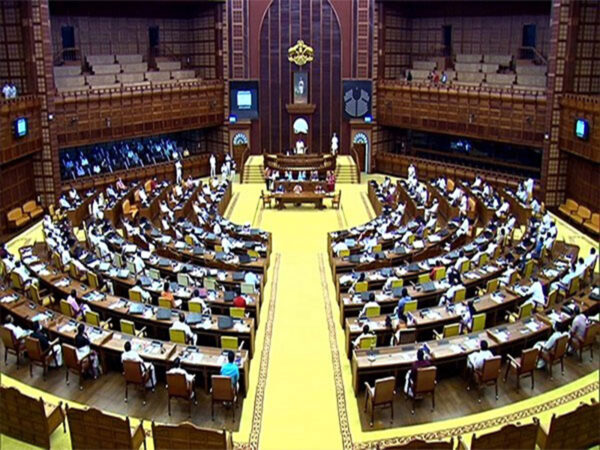
“Now somebody is saying that zero per cent versus 18 per cent is the normal. See, what was the philosophy of trade deals between developing and developed countries? Developing countries will have to impose certain barriers because they have, they need to develop. Developed countries will have to, I mean, give some concessions to the developing countries. Now it has been completely upended. We have to give zero. We have to remove all the barriers. Whereas, US will impose 18 per cent (tariff). If the BJP was in the opposition, do you think that Parliament would have allowed to be functioned? After signing such a lopsided deal?” he asked.

The United States and India, earlier this month, announced that they have reached a framework for an Interim Agreement regarding reciprocal and mutually beneficial trade. The framework reaffirmed the countries’ commitment to the broader US-India Bilateral Trade Agreement (BTA) negotiations, launched by President Donald Trump and Prime Minister Narendra Modi on February 13, 2025, which will include additional market access commitments and support more resilient supply chains.

A joint statement said that India will eliminate or reduce tariffs on all US industrial goods and a wide range of US food and agricultural products, including dried distillers’ grains (DDGs), red sorghum for animal feed, tree nuts, fresh and processed fruit, soybean oil, wine and spirits, and additional products.

The United States, the joint statement said, will apply a reciprocal tariff rate of 18 percent under Executive Order 14257 of April 2, 2025 (Regulating Imports With a Reciprocal Tariff to Rectify Trade Practices That Contribute to Large and Persistent Annual United States Goods Trade Deficits), as amended, on originating goods of India, including textile and apparel, leather and footwear, plastic and rubber, organic chemicals, home decor, artisanal products, and certain machinery, and, subject to the successful conclusion of the Interim Agreement, will remove the reciprocal tariff on a wide range of goods identified in the Potential Tariff Adjustments for Aligned Partners Annex to Executive Order 14346 of September 5, 2025 including generic pharmaceuticals, gems and diamonds, and aircraft parts.

Speaking about Congress leader Rahul Gandhi’s intention to speak about a reference in former Army Chief NN Naravane’s “unpublished book,” Brittas said that the book should have been allowed to be discussed.

“The Parliament discourse has plummeted like anything. Even the government, the primary responsibility of running the Parliament rests with the government. What is that being done by the government to ensure there is a smooth functioning of the parliament? Absolutely no. Why should the government not discuss the book of Naravane?” he asked.

“I am not at all happy the way in which our Parliament is functioning. And you can accuse the opposition of not being very serious in participating in the debate. Why should the government be that skeptic about issues? See, the government in any way will have its way. Let the opposition have the say. Here is a case where the government thinks that they should have the say and the way. That’s not right. What is harm in discussing Manipur? What is the harm in discussing the Epstein files?” he asked.

The first part of Parliament’s budget session concluded on February 13 and the second part will start on March 9. Lok Sabha witnessed repeated disruptions over Rahul Gandhi’s intention to speak on a specific reference from Gen Naravane’s unpublished book. Rajya Sabha also witnessed acrimonious exchanges between the government and treasury benches. (ANI)

Chandrababu Naidu Using Tirumala Laddu For Corruption, Propaganda: Botsa Satyanarayana

Legislative Council Opposition Leader Botsa Satyanarayana strongly criticised Andhra Pradesh Chief Minister N Chandrababu Naidu, alleging that the latter was indulging in corruption and misleading propaganda by dragging the sacred Tirumala laddu prasadam into political discourse.

Addressing the media, he said Chandrababu’s earlier allegations that animal and pig fat were found in laddu ghee were made purely for political gain and have been proven false by the Supreme Court-monitored CBI-SIT report. He accused the Chief Minister of not sparing even temple offerings in pursuit of financial gain and said, “God would not forgive a conspiracy done to benefit private interests.”

According to the release, Botsa alleged that the ghee that was earlier procured at about Rs 320 per kg is now being supplied at around Rs 700 per kg through Indapur Dairy, which he said has links with Chandrababu’s “own heritage company, resulting in a doubling of price and looting of public money.”

He demanded an open discussion on the corruption behind the jump from Rs 320 to Rs 700 and questioned why the government was avoiding debate if it had nothing to hide. He said the entire laddu controversy and adulteration narrative were baseless accusations created by Chandrababu and that the SIT findings have now exposed these as lies, as stated in the release.

He further criticised the state budget as hollow and diversionary, saying it contains no real benefits for farmers, students, youth, the unemployed, or any section of society, and does not reflect implementation of the promised “Super Six” guarantees.

According to him, the government is avoiding both a discussion on ghee procurement and on people’s issues because the truth would come out. He said the opposition is ready for discussion and will present facts, including evidence already shown on links between Heritage and Indapur, but the government prefers issuing indirect explanations instead of facing debate.

Botsa also questioned the justification that milk prices caused the rise in ghee prices, asking what milk prices were when ghee was bought at Rs. 320 and what they are now at Rs. 700, and whether the government is willing to debate this transparently.

He accused the Chief Minister and coalition leaders of arbitrarily increasing rates to favour their own linked firms while assuming the public is unaware. He called on the BJP to break its silence and clarify whether it supports such actions. He said leaders entrusted with protecting public wealth have no moral right to remain in power if they misuse it in this way.

He concluded that the Tirumala laddu issue was brought up mainly to divert attention from a weak budget and unfulfilled promises, and that in doing so, Chandrababu alone disrespected the sanctity of the laddu. He demanded that the government at least now come forward for a full discussion on both the budget and ghee procurement. (ANI)

SC Hints It Will Examine Validity Of Places Of Worship Act Soon

The Supreme Court on Wednesday hinted that it will soon hear and adjudicate a batch of pleas challenging the validity of the Places of Worship (Special Provisions) Act, 1991.

The Act prohibits converting the religious character of any place of worship to that as it was on August 15, 1947, and maintaining that religious character as of that date. Violations of this act are deemed unlawful.

The verbal observation came from a bench of Chief Justice of India (CJI) Surya Kant, Justices Joymalya Bagchi and Vipul M. Pancholi while refusing to entertain a plea filed by one Imran A. challenging a decision of an Ajmer court to initiate proceedings on a suit seeking a survey by Archaeological Survey of India (ASI) on the Ajmer Sharif Dargah claiming that the structure was built over an ancient Shiva Temple.

The apex court had, in December 2024, directed that no court in the country shall register any suit, initiate proceedings or pass effective orders in cases pertaining to the Places of Worship Act, while the issue is pending to be adjudicated by the apex court.

Based on the aforesaid directions, the counsel appearing for the applicant argued that the (Ajmer) court should be restrained from doing anything contrary to the Supreme Court’s (earlier) order.

Dismissing the plea, which was filed as an intervention application (IA) in the batch of pleas challenging the validity of the Places of Worship Act, the apex court expressed that if it ever notices any court passing an order in defiance of the Court’s earlier directions, it will certainly examine it.

“We have passed an order, and it’s binding on one and all one. If someone places an order in defiance of that, we will review it. And if yes, then consequences will follow”, the CJI said.

During the hearing, Advocate Vishnu Shankar Jain sought that his plea seeking vacation of the apex court’s December 2024 direction be listed for hearing.

The Court assured Jain that his plea would be listed and advised him to check with the Court’s registry.

The Court also expressed that the pending issue with respect to the validity of the Places of Worship Act will be examined by it. However, it did not specify a hearing date, as yet.

“Let us see. We will finalise the hearing dates after the 9-judge bench case (the larger issue on Sabrimala case). We will adjust it somewhere. Show must go on!”, the CJI said. (ANI)

No Let Up In Israeli Aggression

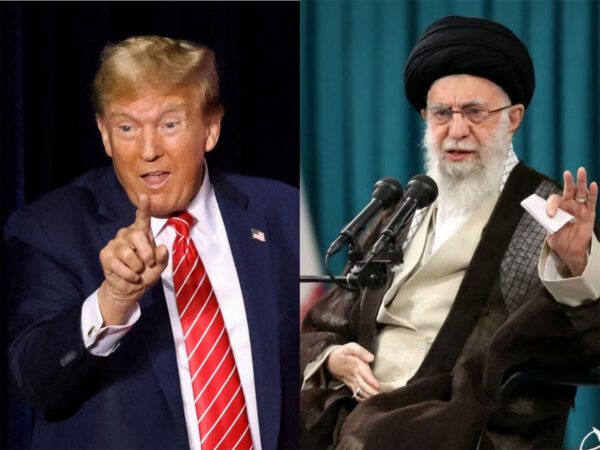
A White House official has reiterated Donald Trump’s opposition towards Israel annexing the West Bank, after Israeli plans were announced that would pave the way for more settlements in the occupied Palestinian territory.

The measures, announced on Sunday (February 8), included allowing Jewish Israelis to buy West Bank land directly, and extending greater Israeli control over areas where the Palestinian Authority exercises power. It is still unclear when the new rules, approved by Israel’s security cabinet, would take effect but they do not require further approval.

As regional states and others condemned the plan, a White House official on Monday (February 9) said that “a stable West Bank keeps Israel secure and is in line with this administration’s goal to achieve peace in the region.”

UN spokesperson Stephane Dujarric in a statement said that the UN Secretary-General Antonio Guterres is “gravely concerned” about the situation, He said Guterres warned that “the current trajectory on the ground, including this decision, is eroding the prospect for the two-State solution.”

More than 500,000 Israelis live in settlements and outposts in the West Bank, which are illegal under international law. Around three million Palestinians live there.

Palestinian President Mahmoud Abbas – who heads the Palestinian Authority (PA), governing parts of the West Bank – called the measures “dangerous” and an “open Israeli attempt to legalise settlement expansion, land confiscation and the demolition of Palestinian properties, even in areas under Palestinian sovereignty”. He called for the US and UN Security Council to intervene immediately.

The Israeli NGO Peace Now said the cabinet’s decision risked toppling the PA and involved cancelling agreements and imposing de facto annexation. It accused the Israeli government of “breaking every possible barrier on the path to massive land theft in the West Bank”.

The UK has said it “strongly condemned” the move and called on Israel to reverse the decision, saying “any unilateral attempt to alter the geographic or demographic make-up of Palestine is wholly unacceptable and would be inconsistent with international law”.

The foreign ministers of Egypt, Jordan, the United Arab Emirates, Indonesia, Pakistan, Turkey, Saudi Arabia and Qatar described the announcement as “accelerating attempts at its illegal annexation and the displacement of the Palestinian people”.

Their statement “warned against the continued expansionist Israeli policies and illegal measures pursued by the Israeli government in the occupied West Bank, which fuel violence and conflict in the region”.

They further said the move meant to entrench Israeli settlement of the West Bank, displacing Palestinians and imposing unlawful Israeli sovereignty there. Annexing the territory has long been a priority of far-right parties in Netanyahu’s coalition.

Jordan, Egypt, the United Arab Emirates and Turkey all have diplomatic relations with Israel. Saudi Arabia has said it will not establish such relations until the formation of a Palestinian state.

Controversial Decision

Sunday’s decisions by Israel’s security cabinet will make it easier for Jewish settlers to buy land in the West Bank and give Israeli authorities more power to act in areas supposedly under full Palestinian control, two senior Israeli ministers said.

One of them, ultranationalist Finance Minister Bezalel Smotrich, said in announcing the decisions that the government would “continue to kill the idea of a Palestinian state.”

Most nations have long backed the creation of a Palestinian state alongside Israel as the best way to resolve the generations-old conflict and see the West Bank, which Israel has occupied since 1967, as the largest part of that future state.

Israeli Defence Minister Israel Katz and Smotrich issued a joint statement explaining the decisions of the five-member security cabinet, which were not published in full.

The security cabinet decided to repeal a law dating from Jordan’s control of the West Bank before 1967 to make land registries public rather than confidential, and to remove a requirement for a permit from a civil administration office.

Hagit Ofran from the Israeli settlement watchdog group Peace Now said the decision was barred by international law and represented a step toward annexation of the West Bank.

The Yesha Council, a gathering of illegal settlements, celebrated the decision as the “most important in 58 years”, stating that the Israeli government is now declaring, in practice, that “the land of Israel belongs to the Jewish people”.

What the Move Entails

Perhaps the most aggressive shift in the new directives is the authorisation for Israeli forces to conduct enforcement and demolitions in Area A and B zones, which under the Oslo Accords, are supposed to be under Palestinian civil and security control.

Area C, which is under total Israeli control, constitutes 60 percent of the West Bank. More than 700,000 illegal Israeli settlers live in Area C and occupied East Jerusalem across more than 250 illegal settlements.

To bypass international law, Israel has introduced a new legal mechanism: the “Protection of Antiquities and Environment”.

“Israel has erased the distinctions between Areas A, B, and C,” Daoud noted, explaining that this policy was financially primed three years ago when the cabinet allocated 120 million shekels ($39m) to “protect Jewish heritage sites” in the West Bank.

The decision also institutionalises a system of “municipal apartheid” in key Palestinian cities, removing them from PA jurisdiction.

Overall, these decisions might sound as continuation of Israel’s expansionist policies flouting all international norms and rule of law, but they also have long-term religious and political implications. E,g. the Ibrahimi Mosque, a Muslim holy site which was earlier managed by the Palestinian Awqaf is no longer treated as a Muslim site, as its management has been transferred to the Jewish Religious Council in Kiryat Arba. Israel has effectively Judaised its identity by law, not just by force”. In 2010, the Israeli government had already proclaimed the Ibrahimi Mosque located in Hebron as a “Jewish Heritage site”.

If the international community continues to keep silent on the issue, a day is not far off before Israel annexes the whole West Bank and other Palestinian settlements, coupled with its plan to commercialise the Gaza front for the benefit of its American supporters.