World Leaders, Tech Giants To Gather In New Delhi For India’s 1st Global South AI Summit

As New Delhi transforms itself into the epicentre of the world’s most consequential conversation on artificial intelligence, an unprecedented roster of Presidents, Prime Ministers, Crown Princes, and the brightest minds from Silicon Valley and beyond will converse at the Bharat Mandapam as India is set to host the AI Impact Summit 2026 next week.

From February 16 to 20, the Impact Summit, the first international AI summit hosted in the Global South, showcases New Delhi’s ambition: to shape an AI future that is inclusive, responsible, and impactful.

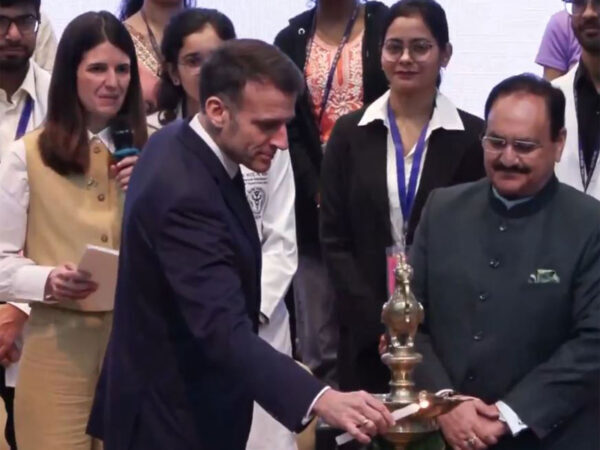
French President Emmanuel Macron, making his fourth visit to India, will arrive with a clear focus on deepening AI cooperation and emerging technologies.

His presence underscores the strength of the India-France strategic partnership, culminating in the joint inauguration of the India-France Year of Innovation 2026 in Mumbai.

Brazilian President Luiz Inacio Lula da Silva will visit from February 18 to 22, leading a large business delegation of up to 200 executives eager to forge new ties in this burgeoning market. Finland’s Prime Minister Petteri Orpo, fresh from his own AI engagements in Paris last year, will hold bilateral talks with Prime Minister Modi and highlight Finland’s prowess in ethical AI innovation, accompanied by executives from Nokia and two dozen other cutting-edge firms.

Slovakia’s President Peter Pellegrini is set to meet PM Modi and other leaders, emphasising technological sovereignty and responsible AI as strategic priorities for his nation.

The United Arab Emirates will be represented by Crown Prince Sheikh Khaled bin Mohamed bin Zayed Al Nahyan, who will lead a delegation on behalf of President Sheikh Mohamed bin Zayed Al Nahyan.

And in a powerful nod to multilateralism, UN Secretary-General Antonio Guterres will join the fray, alongside ministerial delegations from over 45 countries.

The full list of heads of state and government is dazzling: Bhutan’s Prime Minister Tshering Tobgay, Bolivia’s Vice President Edmand Lara Montano, Croatia’s Prime Minister Andrej Plenkovic, Estonia’s President Alar Karis, Greece’s Prime Minister Kyriakos Mitsotakis, Guyana’s Vice President Bharrat Jagdeo, Kazakhstan’s Prime Minister Olzhas Bektenov, Liechtenstein’s Hereditary Prince Alois, Mauritius’s Prime Minister Navinchandra Ramgoolam, Serbia’s President Aleksandar Vucic, Spain’s President Pedro Sanchez, Sri Lanka’s President Anura Kumara Dissanayake, Seychelles’ Vice President Sebastien Pillay, Switzerland’s President Guy Parmelin, and the Netherlands’ Prime Minister Dick Schoof.

Beyond the world leaders, the summit’s real energy is expected to come from the tech industry’s heavyweights, who see India not just as a participant but as a pivotal player in AI’s next chapter.

Leading the charge from the United States is a powerhouse delegation organised by the US-India Strategic Partnership Forum (USISPF) and the US-India Business Council (USIBC)–the largest American industry presence at such an event to date.

The delegation from the USISPF will be co-led by Adobe Chairman and CEO Shantanu Narayen and FedEx President and CEO Raj Subramaniam, and will include more than 120 senior executives from more than 100 companies, including luminaries such as Microsoft Vice Chair and President Brad Smith.

White House adviser Michael Kratsios, Assistant to US President Donald Trump and Director of the Office of Science and Technology Policy, will lead the official US government delegation, joined by senior officials from the US Department of State, Commerce, and other agencies.

“Looking forward to leading the US delegation to the AI Impact Summit in India this month,” Kratsios posted on X, adding, “America is setting the gold standard for AI innovation, and we want to share it with our global partners.”

Vishal Sikka, founder and CEO of Vianai Systems and a vocal champion of India’s AI ecosystem, captured the excitement perfectly: “India is so important to AI that this is really going to be, I think, the best AI conference that has ever happened in the last several years.”

He pointed to India’s unique blend of talent, infrastructure, and societal challenges as the perfect crucible for tackling AI’s biggest questions–from energy demands to ethics and safety.

John Chambers, Chairman of USISPF, echoed the optimism: “As Prime Minister Modi said best, AI stands for America and India.”

The delegation’s mission is clear: to accelerate collaboration across AI infrastructure, quantum computing, critical minerals, and trusted technologies, under the banner of “Together, we can lead the future of AI.”

Even former UK Prime Minister Rishi Sunak will lend his voice, addressing a curtain-raiser event organised by Carnegie India titled “AI for All: Reimagining Global Cooperation”.

Iran’s participation, led by Minister of Communications and Information Technology Sattar Hashemi, signals deepening tech bonds, while a high-level Israeli delegation–headed by Ilan Fluss, policy coordinator at Israel’s Foreign Ministry–will spotlight bilateral innovation in AI for climate resilience and ethical governance.

“India and Israel have a joint responsibility to lead with innovation guided by ethics,” Fluss declared.

At the core is India’s audacious vision for sovereign AI.

Under the IndiaAI Mission, the country is unveiling 12 indigenous foundation models developed by homegrown startups and consortia, trained on vast Indian datasets and tailored to the nation’s 22 official languages.

From Sarvam AI’s multilingual reasoning engines to BharatGen’s sector-specific tools from IIT Bombay, Gnani AI’s voice-first breakthroughs, and Fractal Analytics’ pioneering reasoning models–these innovations promise to democratise AI for everything from agriculture to healthcare and governance.

The summit will showcase them alongside the AI Impact Expo, a sprawling 70,000-square-metre showcase of real-world applications, from precision farming to accessible education.

The agenda is structured around three guiding “sutras”–People, Planet, and Progress–with seven thematic “chakras” delving into skilling, sustainable AI, trusted governance, and economic empowerment.

Seven working groups, co-chaired by voices from the Global North and South, will deliver actionable proposals: shared compute resources, AI commons for the public good, and compendia of use cases that could transform lives in the developing world.

For India, a nation projected to see its AI market surge past USD 17 billion by 2027, this summit is more than a diplomatic triumph–it’s a declaration of intent.

With 800 million internet users, a booming startup scene, and world-class digital public infrastructure, India is positioning itself as the bridge between innovation and impact.

As PM Modi himself has said, “We are at the dawn of the AI age that will shape the course of humanity. Some people worry about machines becoming superior in intelligence to humans. But no one holds the key to our collective future and shared destiny other than us humans.”

As the world’s eyes turn to New Delhi, the India AI Impact Summit 2026 isn’t just about technology–it’s about rewriting the rules of the AI era.

In a world racing toward intelligent machines, India is ensuring that the future remains equitable, ethical, and human. (ANI)

‘Trump Wants To End Russia-Ukraine War Once And For All’: US Secy Of State Marco Rubio

United States President Donald Trump intends to end the Russia-Ukraine war “once and for all,” US Secretary of State Marco Rubio said on Sunday (local time).

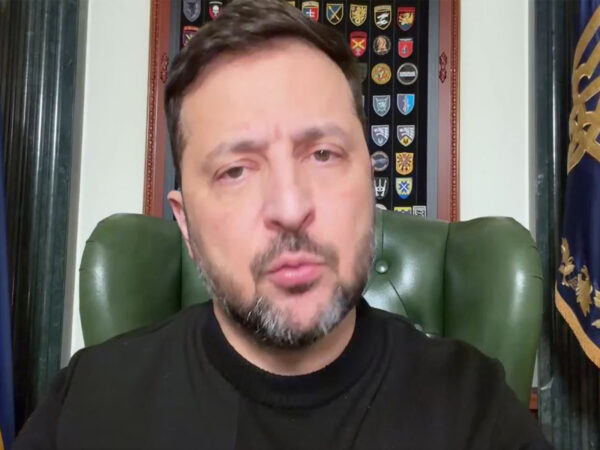
Rubio met Ukrainian President Volodymyr Zelenskyy on the sidelines of the Munich Security Conference.

“Met with Ukrainian President @ZelenskyyUa on Ukraine’s security and deepening defence and economic partnerships. President Trump wants a solution that ends the bloodshed once and for all,” Marco Rubio wrote on X.

The meeting comes in the backdrop of a trilateral meeting between Ukraine, Russia, and the US, which is expected be held in Geneva on February 17-18.

Earlier, Zelenskyy stated that he briefed Rubio on Ukraine’s situation amid the ongoing war, ahead of the peace talks. He also discussed with Rubio the impact of Russian strikes on Ukraine’s energy resources.

“During the meeting with US Secretary of State Marco Rubio @SecRubio, I briefed him on the situation at the front, Russian strikes, and the impact of attacks on Ukraine’s energy system. We discussed how to help Ukraine protect lives during the winter cold and strengthen our resilience. We also had a detailed discussion about the diplomatic process and trilateral meetings. It is crucial that the talks planned in Geneva be productive, and I thank the United States for their constructive approach. We also addressed the matter of sequencing steps. It is important to make progress on the issues of security guarantees and economic recovery. I am grateful to the United States and to every American heart for the substantial support provided to Ukraine,” the Ukrainian premier wrote on X.

Volodymyr Zelenskyy on Saturday (local time) discussed the upcoming trilateral meetings in Geneva with United States envoys, Steve Witkoff and Jared Kushner, stating that Kyiv expects the peace talks to be “truly productive.”

In an X post, the Ukrainian President wrote, “I had a conversation with envoys of President Trump, @SteveWitkoff and @JaredKushner, ahead of the trilateral meetings in Geneva. We count on the meetings being truly productive. We also discussed some developments following the meetings in Abu Dhabi. Not everything can be shared over the phone, and our negotiating team will present Ukraine’s position next week.”

“I also spoke about our meeting with US Secretary of State Marco Rubio. We greatly appreciate that America consistently maintains a constructive approach and is ready to assist in protecting lives. I thank President Trump, his team, and the people of the United States for their support,” he added.

Earlier, the US, Russia and Ukraine held trilateral talks in Abu Dhabi, UAE, in January 2026.

As reported by TASS, the Russian delegation will be headed by Presidential aide Vladimir Medinsky for the fresh rounds of talks on February 17 and 18. (ANI)

10 Lakh Devotees Take Holy Dip On Mahashivaratri At Sangam Ghats In Prayagraj

The devotees turned up in large numbers at the Sangam ghats on Sunday to take part in the holy Mahashivaratri snan of the Magh Mela.

The administration has implemented strict security measures, with Uttar Pradesh ATS mobile patrol squads actively monitoring the Prayagraj Magh Mela 2026 as pilgrims continue to arrive for the sacred dip.

Magh Mela officer Rishi Raj said that Mahashivaratri marks the last ‘snan parv’ of the Magh Mela, drawing a massive influx of devotees. He informed that around 10 lakh people have already taken the holy dip so far.

“Today is the last ‘snan parv’ of the Magh Mela, and devotees are coming in large numbers to take a holy dip on the occasion of Mahashivratri 2026. 10 lakh devotees have already taken a holy dip so far. The administration has made proper arrangements,” Rishi Raj told ANI.

In addition to Prayagraj, devotees gathered in large numbers at the Kashi Vishwanath Temple in Varanasi to celebrate the auspicious occasion of Mahashivaratri. The temple premises witnessed an overwhelming turnout, with worshippers lining up since early morning to seek blessings.

Similarly, devotees flocked together at temples across the country. Aarti ceremonies were performed at the Mini Somnath Temple in Ahmedabad, the Aap Shambhu Mahadev Temple in Reasi, and the Nageshwarnath Temple in Ayodhya, where devotees offered prayers with deep reverence.

Mahashivratri, celebrated across India with great devotion, marks the divine union of Lord Shiva and Goddess Parvati. Devotees observe fasts, offer prayers, and participate in night-long vigils to seek the deity’s blessings.

According to Hindu mythology, on the night of their wedding, Lord Shiva was escorted to Goddess Parvati’s house by a diverse group of Hindu gods, goddesses, animals, and demons. The Shiva-Shakti duo is considered the epitome of love, power, and togetherness. The festival marking their sacred union, Mahashivratri, is celebrated with great devotion and enthusiasm across India. (ANI)

Ranbir Kapoor Names ‘Dhurandhar’ As His ‘Current Favourite Movie’

Actor Ranbir Kapoor has shared his admiration for Ranveer Singh’s blockbuster release ‘Dhurandhar’, even listing the film’s songs among his current favourites.

In a special video, shared on the official Instagram page of the actor’s lifestyle brand ‘ARKS’, Ranbir responded to fan questions when he expressed appreciation for Ranveer’s latest work.

“My current favourite song…I am still listening to all the amazing tracks from Dhurandhar. That’s right up there,” Ranbir said, further mentioning music sensation Talwiinder.

The ‘Animal’ star also went on to call ‘Dhurandhar’ his current favourite movie.

“My current favourite movie is Dhurandhar. I think the entire cast and crew really smashed it…Really good times at the movies,” he added.

Earlier in the day, Ranbir Kapoor stepped out in the city to visit the ‘ARKS’ Bandra store, marking one year of his lifestyle brand.

Before entering the outlet, he met with paps, fan and happily posed for them. And as expected, he once again won the hearts of fashion aficionados with his look.

On the work front, Ranbir will be seen playing Lord Ram in Nitesh Tiwari’s much-awaited two-part epic ‘Ramayana.’ He also has Sanjay Leela Bhansali’s directorial ‘Love and War’ and ‘Brahmastra 2’ in the pipeline.

Coming to ‘Dhurandhar’, the film is currently regarded as the biggest hit, achieving cult status. It has rewritten box office history by surpassing ‘Pushpa 2: The Rule’ to become the highest-grossing Hindi film of all time.

Apart from Ranveer Singh, the film features Akshaye Khanna, Sanjay Dutt, Arjun Rampal, and R Madhavan in pivotal roles.

The makers are set to bring the sequel ‘Dhurandhar: The Revenge’ in March this year.

The official teaser for the film was unveiled earlier this month, featuring a relentless, blood-soaked action montage that underscores the psychological and physical transformation of Jaskirat Singh Rangi into the spy Hamza Ali Mazari.

Glimpses of returning cast members Sanjay Dutt, Arjun Rampal and R. Madhavan are featured.

Produced by Jio Studios and B62 Studios, with T-Series taking over as the music label, ‘Dhurandhar: The Revenge’ is slated for a pan-India theatrical release on March 19, 2026, coinciding with Eid, Gudi Padwa and Ugadi.

It will release in Hindi, Telugu, Tamil, Kannada and Malayalam. (ANI)

Imran, Bushra Move IHC Seeking Suspension Of Toshakhana-2 Sentence On Legal Grounds

Former Pakistan prime minister and PTI founder Imran Khan and his wife Bushra Bibi have approached the Islamabad High Court seeking suspension of their sentences in the Toshakhana-2 (Bulgari jewellery) case, Dawn reported.

The petition, filed by Advocate Salman Akram Raja, along with Barristers Salman Safdar, Gohar Ali Khan, and Qausain Faisal Mufti, under Section 426 read with Section 561-A of the Criminal Procedure Code, 1898, seeks their release on bail pending the final decision on their criminal appeal.

On December 20, 2025, the Special Court Central-I convicted the couple and imposed a 10-year simple imprisonment term under Section 409 of the PPC (criminal breach of trust by a public servant), along with a fine of PKR 16.425 million. They were also sentenced to seven years’ simple imprisonment under Section 5(2) of the Prevention of Corruption Act, 1947.

The petition argued that such a dual conviction for the same alleged act is wholly beyond the mandate of law, as the petitioner could, at best, have been convicted under either of the two provisions, but not under both. It contended that this violated the principle of double jeopardy under Section 26 of the General Clauses Act, 1897.

Medical concerns featured prominently in the plea. Dawn reported that the petition referenced a Supreme Court proceeding on February 10, 2025, where a medical report from Muhammad Arif of the Pakistan Institute of Medical Sciences indicated severe damage to Imran Khan’s right eye, with a blood clot leaving only 15 per cent vision, and treatment not feasible within jail premises.

The petitioners challenged the trial court’s classification of Imran Khan as a “public servant” under Section 21 PPC, citing PLD 2024 SC 102 to argue that elected officeholders do not qualify for Section 409 PPC applicability.

They maintained that the gifts from the Toshakhana were properly deposited and retained after paying 50 per cent of the value above the basic exemption of PKR 30,000, in line with the Toshakhana Policy 2018.

The plea objected to treating prosecution witness Sohaib Abbasi as an approver without following the mandatory procedure under Section 337 CrPC. It further argued that witness Syed Inamullah Shah, as a material participant in the alleged transaction, should have been arrayed as an accused rather than examined as a routine prosecution witness, reflecting a “selective approach manifestly demonstrative of mala fide intent”.

The petitioners noted that they remained on bail throughout the trial and complied with all conditions set by the trial court.

The accompanying criminal appeal raises substantial questions of law and fact, with no immediate hearing likely, making sentence suspension essential to avoid “manifest miscarriage of justice”.

Separately, Imran Khan and Bushra Bibi filed petitions for an early hearing of the 190 million pound corruption case. The registrar’s office is expected to place the matter before a bench next week. (ANI)

Bhojpuri Actress Akshara Expresses Solidarity With Rajpal Yadav

Bhojpuri actress Akshara Singh has expressed deep concern and solidarity with actor Rajpal Yadav, days after he surrendered at the Tihar Jail for a series of cheque dishonour cases against him.

Speaking to the media, Akshara urged people to come forward and support Rajpal Yadav.

“Every artist is very saddened by this. His fans are also very saddened. I want those who are capable and can help at their level to provide help,” she said.

Akshara Singh also reacted to the financial assistance provided by National President of Janshakti Janta Dal, Tej Pratap Yadav and added, “Thank you very much to Tej Pratap Yadav, who helped them. They are very good people.”

Earlier this month, Tej Pratap Yadav announced financial assistance of Rs 11 lakh to the family of Rajpal Yadav, further expressing solidarity on the behalf of his party.

In a post on X, Tej Pratap Yadav wrote, “I just received information about the pain of the family of the honorable Rajpal Yadav ji through the post of my elder brother Rao Inderjeet Yadav ji. In this extremely difficult time, I and my entire JJD (Jan Shakti Janata Dal) family stand in complete empathy and solidarity with their grieving family. With a spirit of human compassion and support, on behalf of the JJD family, I am providing financial assistance of ₹11,00,000 (eleven lakh rupees) to their family.”

Many celebrities have also come forward to share financial help for the actor, including the likes of Sonu Sood, Mika Singh, Guru Randhawa, and Gurmeet Choudhary, among others.

The financial support comes after the Delhi High Court rejected Bollywood actor Rajpal Naurang Yadav’s final attempt to avoid imprisonment in a series of cheque-dishonour cases and directed that he must surrender to the jail authorities before any further hearing could be held.

The order came after Yadav failed to comply with the surrender deadline fixed by the Court, following repeated violations of undertakings regarding payment of settlement amounts to the complainant company. (ANI)

‘Rahul Made Baseless Allegations’: Jagdambika Pal On Parliament Ruckus

Bharatiya Janata Party (BJP) MP Jagdambika Pal on Saturday criticised the Opposition for obstructing proceedings in Parliament, stating that the discussion on the President’s address could not take place due to their disruptions.

Speaking to reporters, Pal specifically condemned the statements and allegations made by Lok Sabha Leader of Opposition Rahul Gandhi against the Centre, calling them “low-level and baseless.”

“The discussion on the President’s address could not take place…Rahul Gandhi made baseless and low-level allegations in the Parliament and created obstruction during the motion of thanks. Several opposition parties also wanted the discussion to take place, but it did not. The way they obstructed the House, the kind of statements they make in democracy, the kind of allegations they level, they should think about it…,” he said.

The first part of the Budget session concluded on Friday, which was marked by heated political debates over the India-US interim trade deal and the memoir of former Army Chief MM Naravane, whose publication had sparked controversy even outside the Parliament.

Meanwhile, the Lok Sabha will reconvene on March 9 after a three-week recess. The Rajya Sabha was also adjourned and is scheduled to meet again on March 9 after a three-week recess.

The Parliament budget session, which began on January 28 with the President’s address to a joint sitting of the two Houses, comprises 30 sittings over 65 days and is scheduled to conclude on April 2. The recess will allow Standing Committees to examine the Demands for Grants of various ministries and departments.

The first part of the session was devoted primarily to the Budget for 2026-27 and to a discussion of the Motion of Thanks on the President’s Address.

During the session, the INDIA bloc discussed proposals such as replacing MGNREGA with the Viksit Bharat-Guarantee for Rozgar and Ajeevika Mission (Gramin) (VB-G RAM G) Act, as well as the Special Intensive Revision (SIR) of the electoral roll before the start of the session.

During President Droupadi Murmu’s address to both Houses, opposition parties staged protests in a “dignified” manner against the scrapping of MGNREGA, highlighting their concerns over employment and rural livelihoods. (ANI)

Vicky Celebrates One Year Of ‘Chhaava’

Actor Vicky Kaushal is celebrating one year of his blockbuster period drama ‘Chhaava’.

Taking to his Instagram handle, Vicky shared a series of pictures including glimpses of his character as Chhatrapati Sambhaji Maharaj. This was followed by a few behind-the-scenes imagery.

“#1YearOfChhaava. I bow my head in gratitude to the great Maratha legacy and to all of you for celebrating it with us. Your love has truly been very special!” Vicky wrote in the caption.

Directed by Laxman Utekar, ‘Chhaava’ emerged as the first blockbuster of 2025, shattering several box office records. The film revolved around the story of Chhatrapati Sambhaji Maharaj, the son of Chhatrapati Shivaji, and his courage in defending his faith and country.

Besides Vicky Kaushal in the lead, the film also featured Akshaye Khanna and Rashmika Mandanna in prominent characters.

Others in the cast were Viineet Kumar Siingh, and Ashutosh Rana.

The film was released in cinemas on February 14 last year and quickly gained momentum at the box office. The film went on to become the actor’s most successful venture to date, surpassing his previous hits like ‘Uri: The Surgical Strike’, ‘Raazi’, ‘Sam Bahadur’, and ‘Zara Hatke Zara Bachke.’

Adding to its cultural impact, ‘Chhaava’ also received recognition from Prime Minister Narendra Modi, who mentioned the film during the 98th Akhil Bharatiya Marathi Sahitya Sammelan in New Delhi.

Acknowledging Maharashtra’s cinematic contributions, he remarked, “Aur in dino toh, Chhaava ki dhoom machi hui hai.”

He also credited Marathi author Shivaji Sawant’s acclaimed novel Chhava for bringing Sambhaji Maharaj’s legacy into the spotlight.

Responding to the Prime Minister’s remarks, Vicky Kaushal expressed his gratitude on Instagram, stating, “Honoured beyond words! Grateful to Hon. PM Narendra Modi Ji. #Chhaava.”

On the work front, Vicky Kaushal is set for Sanjay Leela Bhansali’s film ‘Love and War’, alongside Ranbir Kapoor and Alia Bhatt. (ANI)

‘Mamata Seeks Power On Strength Of Infiltrator Votes’: Dharmendra Pradhan On SIR

Union Education Minister Dharmendra Pradhan on Saturday accused West Bengal Chief Minister Mamata Banerjee of attempting to retain power by relying on the votes of infiltrators, amid the ongoing Special Intensive Revision (SIR) exercise in the state.

Responding to petitions filed by the Chief Minister alleging irregularities in the SIR exercise before the Supreme Court, Pradhan said the people of West Bengal will deliver a “befitting reply” to Mamata Banerjee in the forthcoming 2026 Assembly elections.

“Mamata Banerjee wants to return to power on the strength of infiltrators’ votes. The people of Bengal will give her a befitting reply this time. The youth of Bengal, the women of Bengal, and the common people of Bengal will bring change in Bengal,” Pradhan said.

Earlier, the Supreme Court heard a batch of pleas filed by various petitioners, including Chief Minister Mamata Banerjee, alleging irregularities in the SIR exercise carried out by the ECI in West Bengal. Banerjee has alleged that voters’ names were placed on the Logical Discrepancy list due to minor dialectal spelling differences and that objection notices were issued without reasons.

The state Chief Minister also appeared in person before the Court and submitted that the State was being selectively targeted by the ECI to delete voters rather than to include them or correct errors.

Following the hearing, the Supreme Court extended the deadline for the publication of the final electoral roll under the Election Commission of India’s (ECI) Special Intensive Revision (SIR) exercise in West Bengal by one week.

Additionally, the Court issued a show-cause notice to the West Bengal Director General of Police (DGP) regarding allegations of violence during the revision process.

In response to these developments, the Union Minister stated that Chief Minister Mamata Banerjee must comply with the Supreme Court’s orders, asserting that the country must be governed by the rule of law.

“The state government here, Mamata ji, herself approached the Supreme Court. They should obey the Supreme Court’s orders. The country will run on the basis of law, not under anyone’s pressure,” added Pradhan.

Meanwhile, following a Supreme Court order, the ECI announced a revised schedule for the ongoing SIR process in the state on February 10. In its statement, the WB Chief Electoral Officer said the hearing of notices will be completed by February 14. The review of the documents and disposal of the claim will be completed by February 21.

The statement also said that the rationalisation of polling stations will be completed by February 25. The health parameter checks are to be conducted by February 27. The final electoral roll will be published on February 28. (ANI)

‘Indo-US Trade Deal Will Trigger Loss of Jobs in MSME Sector’

Samali Banerjee, who is pursuing her Master’s in Economics from the South Asian University, New Delhi, shares her thoughts on tariff wars and their implication. Her views:

Before opening up a discussion on the recent tariff impositions by the United States of America on countries across the world, and India, it is imperative to understand how tariffs work. That can be better understood in context of the recent trade deal between the USA and India. An Interim Agreement, touted as the way forward for “reciprocal and mutually beneficial trade”, was drawn up on 6 February, 2026, and is set to come into effect from 13, February, 2026. This begets an investigation into the extent of reciprocity and mutuality of this stop-gap accord.

The first couple of clauses say that India will reduce or entirely eliminate tariffs on all industrial goods and most agricultural products coming from the USA to India, while the USA will impose on India a reciprocal, ad-valorem tariff of 18% on goods originating in India, “including, textile, apparel, leather and footwear, plastic and rubber, organic chemicals, home décor, artisanal products, and certain machinery”. 

This 18% tariff imposed by the USA means an additional 18% over and above the existing prices at which these goods are being sold to the consumers in the USA. This placed nearly 64% of the increased cost burden of the goods on the importers in the USA in June 2025.

But this is projected to decline to only 8% by June 2026, as it ultimately gets passed on to the American citizens and final consumers who then shoulder nearly 67% of this price increase due to tariff, and pay to their government as a sort of domestic tax. Only if the exporting country is desperately in need of the exports to continue, will they reduce the export price (and thus shoulder the tariff burden), so that the importing country doesn’t experience a (sudden and) large rise in prices, thereby ensuring the amount of goods exported do not experience a sudden decline.

Why then would a government in an electoral system wish to bring about such an abrupt change in a policy that affects the entire citizenry at a time when a large portion of the population is already dealing homelessness crisis, increasing high cost of living, unaffordable healthcare and education, amongst other issues in America?

One is because the country wishes to reduce imports by imposing export tariffs on their trading counterparts. That can be because they want to strengthen domestic production, as was India’s logic when domestic, infant-industry protection was a key agenda in policy-making.

However, in a globalised work of fragmented but deeply intertwined supply-chains, such a drastic reduction in overall imports (with a 10% baseline tariff on all countries) would only aggravate the domestic producer’s difficulties. The other reason is also related to how the USA calls the tariffs reciprocal in all their policy-documents.

When trading countries set the same tariff rates, on the same goods, it is referred to as reciprocal tariff. So if India imposed 18% on American imports and USA counteracted with 18%, then, it would have been reciprocal, which this deal clearly is not. The term ‘reciprocal’ was used to indicate a tariff rate that would bridge USA’s trade deficit, i.e. balance out the volume of exports and imports.

Having established that the current exorbitant tariff rates are not doing much for the citizens of the USA, the discussion can be opened as to how much mutual benefit are Indians going to get out of this deal.

India’s core competence lies in cheap labour, especially for “goods originating in India” like textile, footwear, apparel, etc. A large hit will basically befall the MSME sector, which is the second largest source of employment after agriculture. As an immediate (and USA’s intended effect), the quantum of exports are bound to decline. As a consequence, especially if there is no proportionate increase in domestic demand — which seems very unlikely given how the Budget 2026-27 continues to pay heed to supply-side measures, most business-owners dabbling in this export market would choose to downsize in this uncertain economy so as to reduce losses.

A direct consequence will be unemployment of those workers who get meagre wages, if not a plain reduction in wages. A large chunk of those workers would then be forced to revert to the farm sector (since it has a relatively large elasticity to absorb workers), or push them to the precarious gig economy.

This is at a time when MGNREGA has been diluted with VB-G RAM G, and there is widespread protest on the new Labour Codes which further precaritises workers, by diluting guaranteed rights into schemes, like doles.

Under these circumstances, India continued with bridging and building relationships with other trading partners, (like it did with importing cheaper Russian oil, after USA’s sanctions on Russia, around the time when the tariff wars were just announced), alongside focussing more on the domestic demand.

I would have liked to have gone more into more depth and talked about sectoral impact, including MSME and agri, along with discussing why USA’s behaviour is imperialistic in nature, but I am limiting my thoughts to this.

As told to Amit Sengupta