M’rashtra ATS Raids 21 Locations In Anti-Terror Crackdown

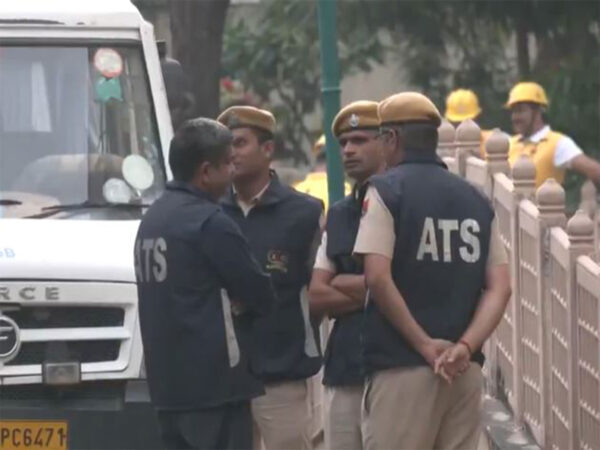
The Maharashtra Anti-Terrorism Squad (ATS) carried out coordinated raids at 21 locations across Ahilyanagar and Yavatmal districts as part of a major operation against alleged attempts to radicalise youth and establish links with terrorist organisations, officials said on Sunday.

According to the Mumbai ATS, searches have been underway since Saturday morning in Pusad and Umarkhed towns of Yavatmal district and at multiple sites in Ahilyanagar district. The action follows inputs about activities aimed at activating several youths by contacting terrorist organisations.

“Maharashtra ATS conducts major operations across the state. Raids were conducted on 14 locations in Pusad and Umarkhed in Yavatmal, and 7 locations in Ahilyanagar (Ahmednagar). ATS launched a search operation after discovering activities to activate several youth by contacting terrorist organisations. Searches have been underway at a total of 21 locations since morning,” Mumbai ATS said in a statement.

In a subsequent press note, the agency said that between February 14 and February 15, 2026, it executed search warrants at 12 locations in Ahilyanagar district. Meanwhile, intensive questioning of 14 suspects is currently underway in Pusad and Umarkhed in Yavatmal district.

“Between 14 February 2026 and 15 February 2026, the Maharashtra Anti-Terrorism Squad conducted raids at a total of 12 locations in Ahilyanagar district based on warrants. Additionally, in the Yavatmal district, intensive questioning of 14 suspects is underway in Pusad and Umarkhed. During the operation in Ahilyanagar, swords were seized. Objectionable documents, mobile phones, electronic gadgets, and CCTV equipment are also being examined and seized peacefully as part of the action. No arrests have been made in this operation so far, and detailed questioning of the suspects is ongoing,” the Maharashtra ATS said.

Officials confirmed that the searches were carried out peacefully and in accordance with legal procedures. The seized electronic devices and documents are being analysed for potential links to extremist networks and possible digital communications with banned outfits.

The ATS has not disclosed the suspects’ identities, stating that the investigation is at a sensitive stage.

Authorities are examining whether any organised module was being developed in the region and whether the suspects were in contact with handlers outside the state.

Further investigation is still underway. (ANI)

“Death deal”: Kisan Mazdoor Morcha Warns To Intensify Agitation Against India-US Interim Trade Agreement

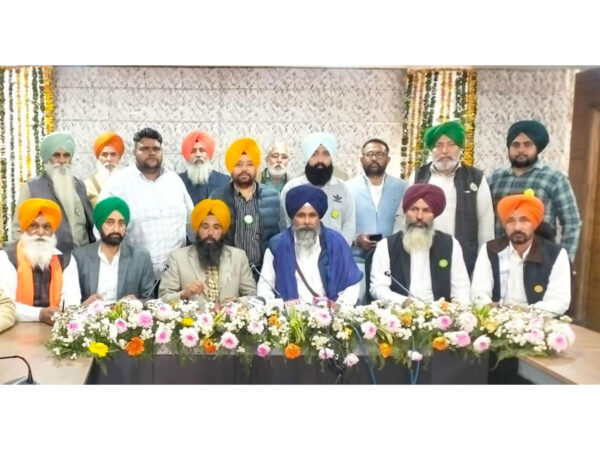
The Kisan Mazdoor Morcha (KMM) termed the proposed India-US agriculture trade understanding a “death deal for the farm sector” and announced plans to intensify protests across Punjab and beyond at a meeting held at Kisan Bhawan in Chandigarh on Sunday.

Farmer leaders alleged that the Central government and BJP leaders were misleading farmers by portraying the agreement as beneficial, echoing claims made during the farm laws agitation. They claimed the understanding could gradually open India’s entire agricultural market, including wheat, paddy, maize, soybeans, fruits, dairy, and processed food, to foreign imports.

According to KMM leaders, heavily subsidised agricultural produce from the United States could hurt Indian farmers, who receive limited financial support, such as Rs 6,000 per year under PM-Kisan. They warned domestic farmers would not be able to compete with foreign produce backed by higher subsidies.

The organisation also expressed concern that the agreement could pave the way for genetically modified crops, patented seeds, and provisions under a new Seed Act that could restrict farmers from saving and reusing seeds.

Leaders also feared the removal of non-tariff barriers and the opening of markets for processed foods, ethanol, maize, soy products, and dairy products, which they said could benefit multinational corporations at the expense of small traders and the rural economy.

On domestic policy, the KMM opposed the proposed Electricity Amendment Bill and the installation of prepaid power meters, alleging they could lead to disconnections if balances run low. The group also criticised the replacement of 29 labour laws with four labour codes and raised concerns about the weakening of MNREGA and worker protections.

The farmers’ body said it would question the Punjab Chief Minister on the legal guarantee of MSP, farm debt relief, the Centre’s agriculture agreement, and compensation for damages during the Shambhu-Khanauri protest crackdown. KMM claimed that tractors, trolleys, and stage equipment were damaged, and compensation of about Rs 2.77 crore remains pending.

Announcing protest plans, the organisation said a statewide agitation against the Punjab government would be held in the third week of March, and farmers would peacefully question ministers during their visits. February 21 will be observed across districts as a martyrdom day for farmers who died during the agitation, including Shubhkaran Singh.

KMM further said it would attempt to unite different farmer unions, including SKM-affiliated groups and independent organisations, to launch a joint large-scale agitation if required.

Raising economic concerns, leaders cited earlier maize imports allegedly lowering domestic prices and claimed the dairy sector is already witnessing falling procurement rates. They warned that continued policies could force farmers to leave agriculture and become labourers.

Accusing government spokespersons of spreading misinformation, KMM demanded full disclosure of the agreement and a public debate with BJP representatives on agriculture policy.

Prominent leaders present at the meeting included Sarwan Singh Pandher, Coordinator of the Kisan Mazdoor Morcha and General Secretary of the Kisan Mazdoor Sangharsh Committee (KMSC); Guramneet Singh Mangat; Jaswinder Singh Longowal; Baldev Singh Zira; Manjit Singh Rai; and Sukhdev Singh Bhojraj, among others. (ANI)

IND vs PAK: Fans Outside R Premadasa Stadium Express Excitement

Cricket fans outside Colombo’s R Premadasa Stadium expressed their excitement for the much-awaited India vs Pakistan T20 World Cup 2026 match on Sunday.

India, led by Suryakumar Yadav, and Pakistan, led by Salman Ali Agha, will face each other in their third group-stage match at the marquee tournament.

Fans of both teams flocked to the R Premadasa Stadium in Colombo even hours before the match.

An Indian fan, Kuldeep Singh, while speaking to ANI, said that he travelled from India out of excitement and is confident India will win, as they have in the past.

“The excitement has pulled me to come here all the way from India. We have full belief that India will win, like they always have in the past,” he said.

Another Indian fan, Mohammad Afsar, said there is great excitement for the India vs Pakistan match, with supporters coming to cheer the team, noting India’s strong record in the recent times and expressing eagerness to watch Indian opener Abhishek Sharma play.

“There’s a lot of excitement for the match. We have come here to support our team. If you look at the history of records of the last 10-15 years, we have won. We are excited to see Abhishek Sharma,” he said.

A Pakistani fan, on the other hand, warned that Pakistan will dominate India, citing historical head-to-head records and claiming India’s overconfidence could cause their downfall.

“Pakistan fans will wash you away like a cyclone. Take a look at the complete history of India-Pakistan matches, and you will see who has dominated more. India’s overconfidence will lead to their downfall,” he said.

Both India and Pakistan have played two matches each in the tournament so far. Both have registered victories in those games. While India will enter the contest on the back of wins against the United States of America and Namibia, Pakistan has defeated the Netherlands and the USA.

While the Suryakumar Yadav-led India are placed on top of Group A standings with four points and the Net Run Rate (NRR) of +3.050, Pakistan are placed second with four points, too, and an NRR of +0.932. (ANI)

China Shuns Any Nuclear Commitments For Itself

The New START agreement between the USA and Russia is dead, and there are concerns this will lead to a nuclear-testing resurgence. Simultaneously, China spurns invitations to join a voluntary nuclear limitation treaty with the world’s largest nuclear powers.

As New START – the Treaty between the USA and the Russian Federation on Measures for the Further Reduction and Limitation of Strategic Offensive Arms – expired on 5 February 2026, the USA has been calling for a new nuclear-arms control treaty encompassing itself, Russia and China.

The latter has been conducting the world’s fastest-ever expansion of a nuclear arsenal. The People’s Liberation Army Rocket Force (PLARF) had an estimated nuclear-warhead stockpile “in the low 600s” by late 2024, according to a Pentagon report issued last December. Maintaining this blistering pace, the Pentagon predicted China will reach more than 1,000 warheads by 2030.

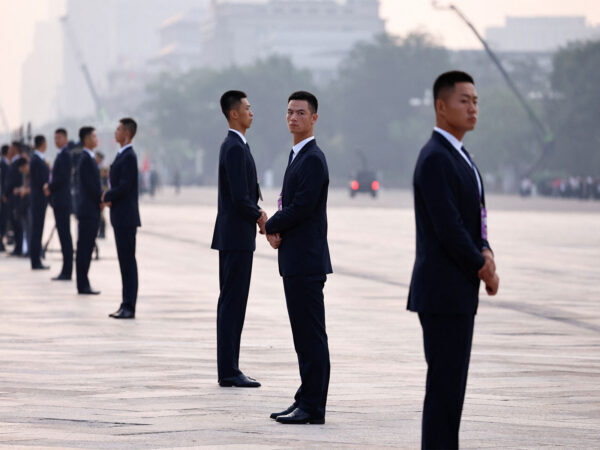
At its 3 September 2025 parade in Tiananmen Square, China proudly strutted five nuclear-weapon types: DF-61, DF-5C and DF-31BJ intercontinental ballistic missiles(ICBM); JL-1 air-launched nuclear-tipped missiles; and JL-3 submarine-launched missiles. The Pentagon estimates the PLARF has 400 ICBMs and 550 intermediate-range ballistic missiles in service. China also has three massive missile silo fields in Hami, Yumen and Yulin containing 320 silos.

The Federation of American Scientists estimates the USA and Russia have about 4,000 warheads each. Incidentally, the American arsenal has decreased in recent years, whereas Russia’s has been growing.

Notably, Washington DC accused China of secretly conducting a “yield-producing nuclear test” in 2020. This is despite Beijing claiming a moratorium on such activities and being a signatory to the Comprehensive Nuclear Test Ban Treaty (CTBT), even though it never ratified it.

Thomas DiNanno, the US Under Secretary of State for Arms Control and International Security, said at the Conference on Disarmament in Geneva on 6

February: “Today, I can reveal that the US government is aware that China has conducted nuclear explosive tests, including preparing for tests with designated yields in the hundreds of tons. The PLA sought to conceal testing by obfuscating the nuclear explosions, because it recognized these tests violate test ban commitments.”

DiNanno continued, “China has used decoupling – a method to decrease the effectiveness of seismic monitoring – to hide its activities from the world. China

conducted one such yield-producing nuclear test on June 22nd of 2020.”

However, the USA provided no further evidence. Oddly, nor has the USA’s annual international arms control compliance report ever listed this event. The most recent April 2025 report simply stated, “Due to the lack of transparency with regard to their respective nuclear-testing activities and previously identified adherence issues, the US remains concerned about China and Russia’s adherence to their respective moratoria.”

Nonetheless, in 2019 the State Department did raise concerns about Chinese activities at its Lop Nur test site. A 2020 report said, “China’s possible preparation to operate its Lop Nur test site year round, its use of explosive containment chambers, extensive excavation activities at Lop Nur and lack of transparency on its nuclear testing activities…raise concerns regarding its adherence to the ‘zero yield’ standard…”

The US allegation raised eyebrows. Robert Floyd, Executive Secretary of the Comprehensive Nuclear-Test-Ban Treaty Organization (CTBTO), stated, “Regarding reports of possible nuclear tests with yields in the hundreds of tons, on 22 June 2020, the CTBTO’s International Monitoring System did not detect any event consistent with the characteristics of a nuclear-weapon test explosion at that time. Subsequent, more detailed analyses have not altered that determination.”

Dr. Jeffrey Lewis, Distinguished Scholar of Global Security at Middlebury College in the USA, highlighted DiNanno’s statement too: “It’s very carefully worded. China ‘prepared’ tests with ‘designated yields in the hundreds of tons’, including ‘one such yield-producing test on June 22, 2020’. The first wrinkle is that we don’t see such an event in China on June 22, 2020.”

Lewis noted the CTBTO International Monitoring System can detect low-yield events at Lop Nor down to a body wave magnitude of mb=3.4. He also found the

International Seismological Centre detected no events within 200km of the Chinese test site.

Explaining decoupling, Lewis said it refers to exploding a nuclear device inside a cavity, usually one created by a prior nuclear explosion. This makes the yield look 20-40 times smaller than it really is. He admitted scientists do not have too much data about decoupling, although most analysts typically use the 20-40 figure for tests conducted in rock. Using this figure, Lewis estimates the monitoring threshold for detection is a 400-900-ton explosion. “A few-hundred-ton test might go undetected, although that’s a worst-case scenario, and China probably couldn’t count on it.”

The CTBT allows sub-critical testing, where a full-fledged nuclear reaction does not occur. However, part of the problem is that it does not define what an explosion is. Possibly China interprets it to mean it can conduct small nuclear chain reactions – sometimes called hydronuclear tests – short of a full-scale detonation.

“So, what to make of all this?” Lewis mulled. “One possibility is that China is doing one-point safety tests, with overrun ranges in the hundreds of tons. That might explain the strange wording about preparing for dedicated yields repeatedly, but no events appearing.” Such one-point safety evaluations ensure the accidental detonation of a single high-explosive detonator does not cause a nuclear yield.

Lewis said safety lapses can still occur with such tests if they overrun predicted yields. In 1993, for example, a Chinese experiment resulted in contamination of

laboratory space and a subsequent move of such activities to Lop Nor. Alternatively, and more sinister, China may be testing low-yield nuclear warheads in the tens of kilotons range for new weapons such as hypersonic missiles.

Unsurprisingly, China hit back angrily at DiNanno’s accusations. Chinese Foreign Ministry spokesman Lin Jian said on 11 February that the USA’s “persistent distortion and slander of China’s nuclear policy essentially constitute political manipulation, through which the United States aims to pursue nuclear hegemony and evade its own nuclear disarmament responsibilities”.

New START had been signed in 2010, but DiNanno said “its limits on warheads and launchers are no longer relevant in 2026, when one nuclear power is expanding its arsenal at a scale and pace not seen in over half a century, and another continues to maintain and develop a vast range of nuclear systems unconstrained by New START’s terms”. He was referring to China and Russia respectively. He highlighted how China’s “buildup is opaque and unconstrained by any arms control limitations”.

US Secretary of State Marco Rubio also commented, “The president’s been clear in the past that, in order to have true arms control in the 21st century, it’s impossible to do something that doesn’t include China because of their vast and rapidly growing stockpile.”

Washington DC’s biggest problem is facing two nuclear peers simultaneously. Even then, Trump seems more intent on building defenses – such as Golden Dome – rather than expanding the US stockpile. The problem is compounded by the fact that Beijing categorically refuses to countenance joining any international arms control agreement.

Dr. Malcom Davis, Senior Analyst at the Australian Strategic Policy Institute, commented, “Here’s the hard strategic reality now emerging post-New START. With China racing to build up its nuclear arsenal and Russia now able to expand its existing nuclear arsenal, the United States must ensure it has sufficient strategic nuclear delivery systems and deployed warheads to effectively deter both China and Russia simultaneously, and deter their growing non-strategic nuclear forces, plus ensure credible, extended nuclear deterrence security guarantees to allies.”

Davis continued, “This is especially true given that Moscow and Beijing are coordinating their actions against the United States and its allies. Arms control is nice to have, but it must involve China, and it must have effective verification and monitoring provisions as part of any agreement. An effective balance of power must be restored first if future arms control is to be meaningful. Arms control cannot be an opportunity for Moscow and Beijing, working together, to gain a decisive nuclear warfighting advantage over the United States and its allies.”

On 27 November 2025, China set out its nuclear posture in a white paper entitled “China’s Arms Control, Disarmament, and Nonproliferation in the New Era”. Unfortunately, it left many questions unanswered. Indeed, the only explanation of its nuclear modernization and build-up was that it was “to safeguard China’s own strategic security and overall global strategic stability”.

However, illustrating its true nature as a political document, the white paper did a lot of finger pointing at the USA, and failed to list culprits like Russia or North Korea as concerns. For example, it said of the USA, “A certain country seeks absolute strategic superiority by constantly expanding its armaments, strengthening combat readiness and provoking bloc confrontation … In particular, this country has strengthened military alliances in the Asia-Pacific region, exercised extended deterrence and forward-deployed ground-based intermediate-range missiles, provoking tension and opposition, and severely undermining the security and interests of countries in the region.”

Although increasing dramatically, it is correct that China’s nuclear stockpile does not approach the size of Russia’s or the USA’s. “Countries possessing the largest nuclear arsenals should fulfill their special and primary responsibilities for nuclear disarmament and continue to make drastic and substantive reductions in their nuclear arsenals in a verifiable, irreversible and legally binding manner, so as to create the conditions for complete and thorough nuclear disarmament,” Beijing pleaded.

China wants others to make reduction pledges, but it refuses to engage in any voluntary restrictions itself. In fact, China warned in its white paper that it will not entertain arms control or risk reduction measures until the USA abandons its “aggressive nuclear deterrent policy based on first use,” and ceases its “hypocritical policy of inciting confrontation and creating crisis”.

As Chinese Foreign Ministry’s spokesperson Lin Jian said: “On New START, China has made clear its position on multiple occasions. We hope the US will resume dialog with Russia on strategic stability to discuss the arrangements beyond the treaty’s expiration, which is what the world would hope to see.” China is conveniently using the USA as a scapegoat, refusing to blame Russia for violating New START first, and at the same time absolving itself of the need to undertake any voluntary limitations.

Beijing paradoxically noted, “From the day it came into possession of these weapons, China has advocated their complete prohibition and thorough destruction.” It is somewhat ironic then that China is busily multiplying its nuclear stockpile rather than dismantling it.

China generously excuses itself from the treaties and limitations it feels others are obliged to follow. As the latest Pentagon report on the PLA stated, “China has not demonstrated a willingness to advance discussions on nuclear risk reduction measures, bilaterally or multilaterally among the five permanent members of the UN Security Council, except for affirming the need to maintain human control over the decision to use nuclear weapons. China unilaterally suspended a bilateral consultative mechanism with the United States on arms control and nonproliferation in April 2024.”

In light of all these developments, Lewis warned: “What I do worry about is a return to real nuclear explosions, largely because China has a lot more to gain than we do in terms of data. China has amazing supercomputers to model nuclear explosions, computers as good as the ones in the US – but what it doesn’t have is the test data. China only conducted 45 nuclear tests, most of which were atmospheric and poorly instrumented.”

Lewis explained, “If the US resumes testing, I suspect China would jump at the chance to follow suit and catch up in terms of data. Honestly, if I were the Chinese, I’d be baiting Trump to do it.”

While newer and bigger nuclear tests might occur, it is nonetheless unlikely that Russia and the USA will splurge on a nuclear-weapon arms race. Both have parity in warhead numbers, and Russia is already deeply engrossed in its invasion of Ukraine. In the meantime, China seems intent on carrying on with its secretive and unexplained nuclear buildup. (ANI)
M’rashtra Min Bawankule Calls Harshwardhan Sapkal Worthless Over Shivaji Maharaj Remarks

Maharashtra Minister Chandrashekhar Bawankule on Sunday termed state Congress chief Harshwardhan Sapkal as a “worthless” person, accusing him of insulting Chhatrapati Shivaji Maharaj.

Speaking to reporters in Nagpur, Bawankule suggested that Sapkal be admitted into a mental hospital, highlighting the presence of a “creature” in his mind.

This comes after Harshwardhan Sapkal’s earlier remarks on Chhatrapati Shivaji Maharaj and Tipu Sultan sparked controversy.

“The way Harshvardhan Sapkal insulted Chhatrapati Shivaji Maharaj was done by a worthless person who is not worthy of anything. It seems like some creature has entered Harshvardhan Sapkal’s mind; he should be admitted to a mental hospital,” said Bawankule.

The Pune City Police registered a case against Harshwardhan Sapkal earlier in the day, following a complaint by Dhiraj Ghate, Pune BJP City President, alleging that Sapkal made objectionable remarks about Chhatrapati Shivaji Maharaj and compared him to Tipu Sultan.

According to Dhiraj Ghate, BJP Pune City President, “the case has been registered at Parvati Police Station against Harshwardhan Sapkal for comparing Chatrapati Shivaji Maharaj with Tipu Sultan, he hurt the sentiments of Hindus who believe and consider Chatrapati Shivaji Maharaj as God. I don’t understand by making such a statement, which hurts the sentiments, what point Harshwardhan Sapkal wants to prove? This is why we are here at Parvati Police, who made the complaint against him, and a case has been registered against Harshwardhan Sapkal.”

Earlier on Saturday, speaking to reporters on the controversy surrounding a portrait of Tipu Sultan displayed in the office of Malegaon Municipal Corporation Deputy Mayor Shan-e-Hind Nihal Ahmed, which was opposed by the Shiv Sena and other groups, Sapkal said in Marathi that the Mysore ruler had followed Shivaji Maharaj’s ideals.

“The kind of bravery that Chhatrapati Shivaji Maharaj possessed and the concept of ‘Swarajya’ (self-rule) that he introduced… much later, following in that very tradition and taking inspiration from his ideals, Tipu Sultan waged war against the British,” Sapkal said.”

In that sense, Tipu Sultan was a great warrior who displayed immense bravery and was a true son of India. He never allowed any poisonous or communal ideas to sway him. As a symbol of bravery, we should view Tipu Sultan as equivalent to Chhatrapati Shivaji Maharaj,” he added.

The case against Harshwardhan Sapkal is registered under sections 192, 196(1), 196(2), 352 and 356(2) of the Bharatiya Nyaya Sanhita. The complaint alleges that Sapkal’s remarks hurt the sentiments of Hindus and followers of Chhatrapati Shivaji Maharaj and had the potential to disturb communal harmony. (ANI)

BLA Announces Seven-Day Deadline For Pakistan On Prisoner Exchange

In a statement issued by Hakkal, the media wing of the Baloch Liberation Army, BLA’s spokesperson Jeeyand Baloch claims the group has detained 17 members of Pakistani security forces during what it describes as the second phase of “Operation Herof,” releasing ten of them while keeping seven in custody and conditioning their fate on a potential prisoner exchange.

According to BLA, those freed were identified as ethnic Baloch connected to local policing structures, including Levies personnel. The group said they were let go after warnings, arguing that the move reflected what it termed ground realities and the broader interests of the Baloch population.

The remaining detainees are described by the BLA as members of regular units of the Pakistan Army. The armed group says it convened proceedings in what it calls a Baloch National Court, where the captives faced accusations ranging from involvement in actions against civilians to aiding enforced disappearances and taking part in what the organisation labels genocide.

Hakkal maintains that, during the hearing, the men were allowed to respond to the allegations, evidence was presented and statements were recorded before a guilty verdict was delivered.

Despite announcing the convictions, the BLA leadership says it has granted Islamabad seven days to formally indicate readiness for an exchange of prisoners of war. If such willingness is demonstrated within the timeframe, the group claims the seven detainees could be swapped for Baloch prisoners.

The statement further alleges that previous offers of exchanges were not pursued and accuses Pakistani authorities of failing to prioritise the lives of their personnel. It reiterates that implementation of the sentences would follow if no practical progress is made within a week. There has been no immediate official response from the military or the government, and independent verification of the claims remains difficult given limited access to conflict-hit regions. (ANI)

Mahesh Babu Unveils ‘World of Nagabandham’ Teaser

On the occassion of Mahashivaratri, Telugu superstar Mahesh Babu unveiled the teaser of ‘World of Nagabandham’, a visually expansive, dialogue-free spectacle that blends Indian mythology with historical action.

Released on Sunday, the teaser introduces audiences to a mystical world rooted in temple legends and sacred traditions.

Opening with sweeping, atmospheric shots of the Himalayas, the video transitions into haunting temple corridors, establishing a tone steeped in devotion and mystery. Mounted on a grand scale, the teaser relies purely on imagery, high-end visual effects and meticulous period detailing set in the 1750s.

A devotionally charged musical score by Junaid Kumar underlines the visual narrative, amplifying the spiritual undertones.

Striking imagery includes a majestic cobra coiled around a hidden treasure, a symbolic nod to the titular Nagabandham ritual. Large-scale battle sequences further hint at an action-driven storyline.

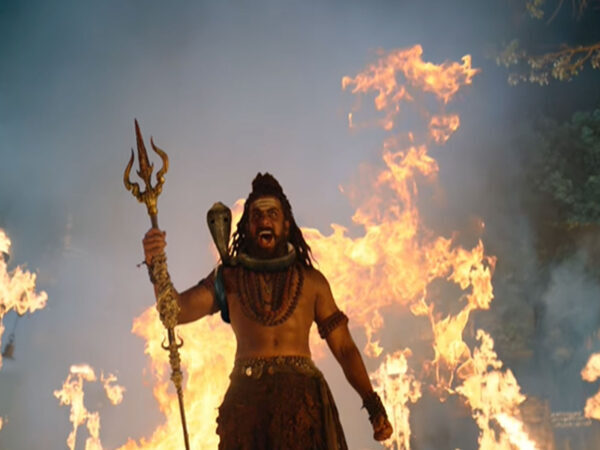
Actor Virat Karrna is showcased in multiple intense avatars throughout the teaser, culminating in a ferocious transformation into a Lord Shiva-inspired look. The project also stars Nabha Natesh, Ishwarya Menon, Mahesh Manjrekar and Jagapathi Babu.

Directed by Abhishek Nama, the film is positioned as a Pan-India action drama. International action experts, including Kecha Khamphakdee, have been roped in to design the film’s combat sequences.

Presented by Lakshmi Ira and Devansh Nama, and produced by Kishore Annapureddy and Nishitha Annapureddy under Abhishek Pictures and NIK Studios, ‘World of Nagabandham’ is slated for a Summer 2026 release across Telugu, Hindi, Tamil, Kannada and Malayalam. (ANI)

Devotees Gather At Kolkata’s Bhootnath Temple To Offer Mahashivratri Prayers

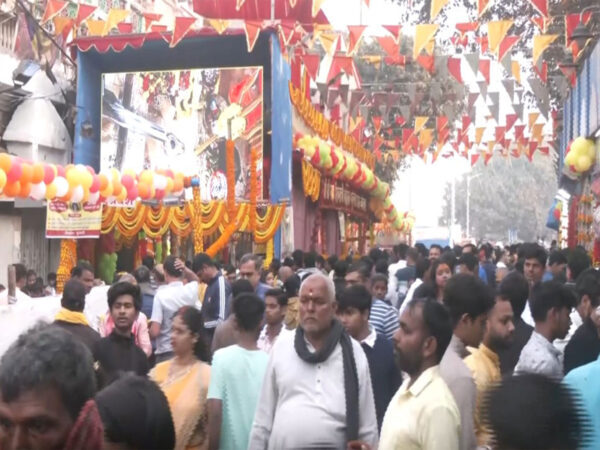
Thousands of devotees on Sunday thronged the historic Bhootnath Temple in Kolkata to perform special rituals and offer prayers on the auspicious occasion of Mahashivratri. A huge crowd was witnessed by devotees at the temple as they offered their puja.

Bhootnath Temple is located near Nimtala Ghat in the capital city of West Bengal and is more than 300 years old. It is famous for its unique ritual, Bhasmarati, in which Aarti is performed using wood from burning pyres, a tradition that has continued since an ascetic near the cremation ground established the temple.

Meanwhile, Prime Minister Narendra Modi on Sunday extended Mahashivratri greetings to citizens, praying for their well-being and prosperity. In an ‘X’ post, the Prime Minister invoked the blessings of Lord Shiva, emphasising that the divine grace of Lord Shiva brings peace, prosperity, and spiritual strength to individuals and the nation.

“To all my family members across the country, countless best wishes on Mahashivratri. My prayer is that Adidev Mahadev always keeps His grace upon everyone. By His blessings, may all be blessed with well-being and may our Bharatvarsh sit enthroned at the peak of prosperity,” PM Modi wrote on ‘X’.

Mahashivratri, celebrated across India with great devotion, marks the divine union of Lord Shiva and Goddess Parvati. Devotees observe fasts, offer prayers, and participate in night-long vigils to seek the deity’s blessings.

According to Hindu mythology, on the night of their wedding, Lord Shiva was escorted to Goddess Parvati’s house by a diverse group of Hindu gods, goddesses, animals, and demons. The Shiva-Shakti duo is considered the epitome of love, power, and togetherness. The festival marking their sacred union, Mahashivratri, is celebrated with great devotion and enthusiasm across India.

Defence Minister Rajnath Singh also extended his greetings on Sunday on the occasion of Mahashivratri. Singh is scheduled to visit Coimbatore later today to participate in the Mahashivaratri festivities at the Isha Yoga Centre.

Taking to X, he wrote, “On the auspicious occasion of Mahashivratri, I extend my heartfelt greetings to everyone. Today, I shall be at Isha Yoga Center in Coimbatore to attend the ‘Maha Shivratri’ celebrations. Looking forward to it.” (ANI)

Rahul Intensifies Attack On Centre Over US Trade Deal

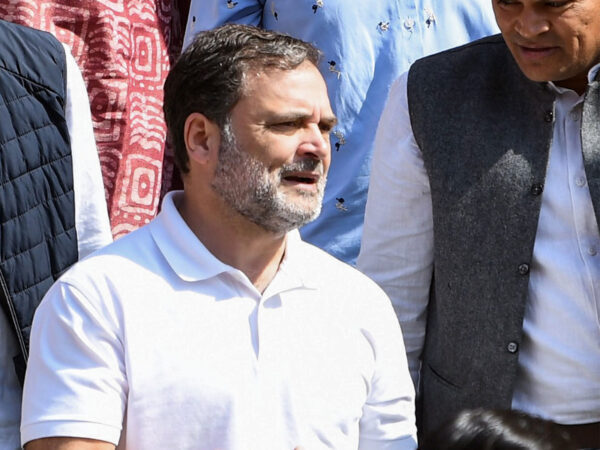
Leader of Opposition in the Lok Sabha Rahul Gandhi on Sunday continued his attack on the Centre over the framework of India-US trade deal, stating that the country is witnessing a “betrayal of Indian farmers” in the name of the pact.

In an ‘X’ post, Gandhi asked Prime Minister Narendra Modi about the meaning of importing Distillers Dried Grains (DDG) crops from the US. He said this would mean Indian cattle would be fed distillers’ grain made from Genetically Modified (GM) American corn, and questioned whether it would effectively make Indian milk production dependent on the US agricultural industry.

“We are witnessing a betrayal of India’s farmers in the name of a US trade deal. I want to ask the Prime Minister a few simple questions: What exactly does importing DDG mean? Does it mean Indian cattle will be fed distillers grain made from GM American corn? Won’t this effectively make our milk production dependent on the American agricultural industry?,” said Rahul Gandhi.

The Congress MP further highlighted that if imports of US GM soybean oil are allowed, what would be its impact on Indian soybean farmers in Madhya Pradesh, Maharashtra, Rajasthan, and across the country? He also asked the meaning of the term “additional products”, stating that whether it is a signal that, over time, there will be pressure on India to open up pulses and other crop markets to US imports.

“If we allow the import of GM soybean oil, what will happen to our soybean farmers in Madhya Pradesh, Maharashtra, Rajasthan and across the country? How will they survive yet another price shock? When you say “additional products”, what exactly is included? Is this a signal that over time there will be pressure to open up pulses and other crops to American imports?,” Rahul Gandhi said.

Gandhi also questioned whether India would face any pressure to soften its stance on GM crops, adding that Indian farmers deserve clear answers to these questions.

“What does removing “non-trade barriers” actually mean? Will India face pressure in the future to soften its stand on GM crops, weaken procurement, or reduce MSP and bonuses? Once this door is opened, how will we stop it from being opened wider every year? Will there be any safeguards, or will more and more crops be quietly placed on the table in every successive deal? Farmers deserve clear answers to these questions. This is not just about today. This is about the future — are we allowing another country to establish a long-term grip over India’s agricultural sector?,” said Rahul Gandhi on ‘X’.

Earlier on Saturday, Rahul Gandhi accused Prime Minister Narendra Modi and his government of misleading the country about tariff provisions in the India-US interim trade agreement, alleging that the deal would adversely affect India’s cotton farmers and textile exporters.

Gandhi said that while Indian garments face an 18 per cent tariff in the United States, Bangladesh is being given a zero per cent tariff benefit on garment exports on the condition that it imports US cotton.

Questioning the policy framework, he alleged that importing US cotton would harm domestic farmers, while not importing it would harm the textile industry. He further claimed that Bangladesh was signalling a possible reduction or halt in cotton imports from India, which, he said, could worsen the situation for Indian producers.

In a post on X, the Congress MP wrote, “18% Tariff vs 0% — Let me explain how the expert liar Prime Minister and his cabinet are spreading confusion on this issue. And how they are cheating India’s cotton farmers and textile exporters through the India-US trade deal. Bangladesh is being given 0% tariff benefit on garment exports to the US — the only condition is that they import American cotton. After the announcement of 18% tariff on Indian garments, when I raised the question in Parliament about the special concession being given to Bangladesh, the reply from a minister of the Modi government was: “If we also want the same benefit, we will have to import cotton from America.” Why was this fact hidden from the country till now?”

He said that the agreement would push millions towards unemployment and economic distress.

He also criticised the government’s handling of the negotiations, stating that a deal in the national interest should have safeguarded both cotton farmers and textile exporters.

“And what kind of policy is this? Is this really any kind of choice — or is it a trap designed to push us into a “well in front, ditch behind” situation? If we import American cotton, our own farmers will be ruined. If we don’t import it, our textile industry will lag behind and get destroyed. And now Bangladesh is also giving signals that it may reduce or even stop importing cotton from India,” the post read.

“The textile industry and cotton farming are the backbone of livelihood in India. Crores of people’s daily bread depend on these very sectors. Attacking these sectors means pushing millions of families into the pit of unemployment and economic crisis. A visionary government that thinks in the national interest would have negotiated a deal that protects and ensures the prosperity of both cotton farmers and textile exporters. But exactly the opposite has happened — Narendra “Surrender” Modi and his ministers have made an agreement that is likely to inflict deep damage on both sectors,” the post further read. (ANI)