Trump Orders Federal Agencies To Stop Using Anthropic AI, Cites Military Security Concerns

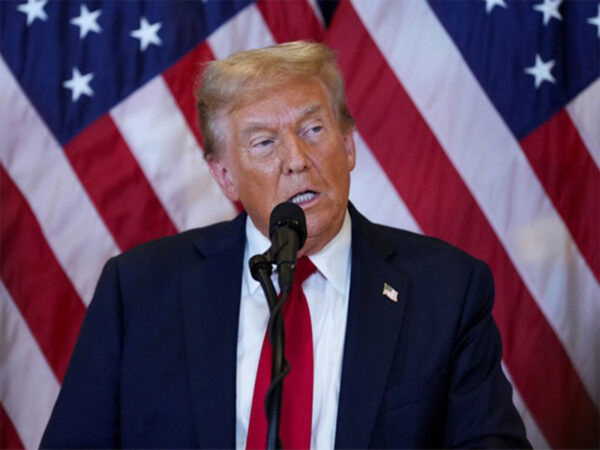
President Trump on Friday (local time) ordered all federal agencies to immediately stop using Anthropic technology amid a growing dispute between the AI company and the Pentagon.

He accused the firm of trying to interfere with how the US military operates and threatening further action if it does not cooperate during a six-month phase-out period.

In a post on Truth Social, Trump said, “THE UNITED STATES OF AMERICA WILL NEVER ALLOW A RADICAL LEFT, WOKE COMPANY TO DICTATE HOW OUR GREAT MILITARY FIGHTS AND WINS WARS! That decision belongs to YOUR COMMANDER-IN-CHIEF, and the tremendous leaders I appoint to run our Military. The Leftwing nut jobs at Anthropic have made a DISASTROUS MISTAKE trying to STRONG-ARM the Department of War, and force them to obey their Terms of Service instead of our Constitution. Their selfishness is putting AMERICAN LIVES at risk, our Troops in danger, and our National Security in JEOPARDY.” https://truthsocial.com/@realDonaldTrump/116144552969293195/embed

“Therefore, I am directing EVERY Federal Agency in the United States Government to IMMEDIATELY CEASE all use of Anthropic’s technology. We don’t need it, we don’t want it, and will not do business with them again! There will be a Six Month phase out period for Agencies like the Department of War who are using Anthropic’s products, at various levels. Anthropic better get their act together, and be helpful during this phase out period, or I will use the Full Power of the Presidency to make them comply, with major civil and criminal consequences to follow,” the post read.

“WE will decide the fate of our Country — NOT some out-of-control, Radical Left AI company run by people who have no idea what the real World is all about. Thank you for your attention to this matter. MAKE AMERICA GREAT AGAIN!” the post read.

A day earlier, the US Department of War (DOW) sharply criticised the CEO of Anthropic, Dario Amodei, after the US-based artificial intelligence firm declined to remove certain safeguards on its AI systems for military use.

US Under Secretary of War Emil Michael accused Amodei of attempting to control military decision-making while calling him a “liar” who has a “God complex”. (ANI)
Karan Aujla Meets With CM Rekha Gupta Ahead Of Delhi Show

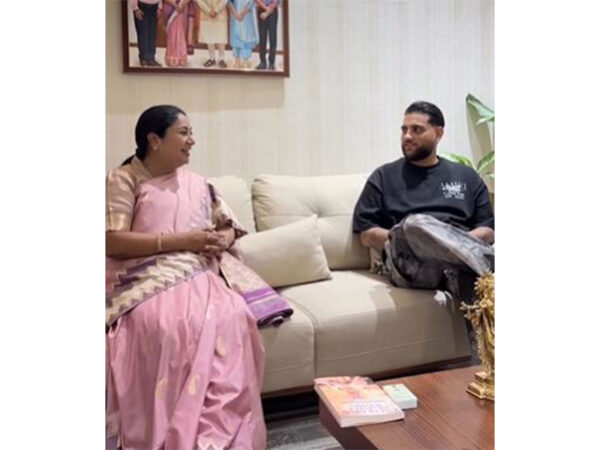
Ahead of his concert in the national capital on Saturday evening, Punjabi singer Karan Aujla met with Delhi’s Chief Minister Rekha Gupta.

On Friday, CM Rekha Gupta took to her Instagram handle and posted a video from her meeting with the ‘Winning Speech’ hitmaker.

“Met Karan Aujla! Artists like him don’t just perform they move generations. And Delhi? We’re not just part of the culture. We’re shaping its future. The capital is stepping into its next cultural chapter,” she wrote.

Karan Aujla is all set to kick off the highly anticipated P-POP CULTURE India Tour 2026 with a potentially record-shattering stadium show at Jawaharlal Nehru Stadium on 28 February 2026. The tour is organised and promoted by the company Team Innovation.

The P-POP CULTURE tour is part of Aujla’s global run, which began in late 2025 in Abu Dhabi and spans the United States, Europe, Canada, and the United Kingdom before returning to India. The India leg, from February 2026 through April 2026, brings stadium-scale production and arena energy nationwide.

The 11-city India run begins in New Delhi on February 28, followed by Mumbai and Pune on March 3 with special Holi Edition shows. The tour then travels to Ahmedabad (March 7), Chandigarh (March 14), Indore (March 21), and Bengaluru (March 29). April dates include Kolkata (April 3), Jaipur (April 5), Lucknow (April 10) and Ludhiana (April 12). (ANI)

JNUSU Condemns Police For Breaking Dr Ambedkar Portrait On Campus

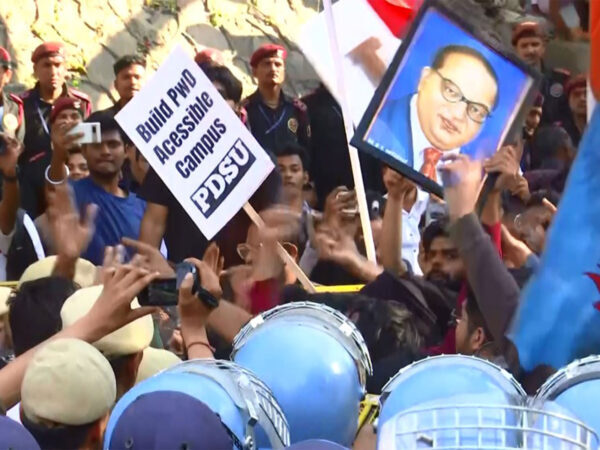
The Jawaharlal Nehru University Students Union (JNUSU) on Friday expressed its gravest outrage over the police action and mass detention of over 50 students during the “Long March” to the Ministry of Education (MoE).

14 students of JNU, including three JNUSU office bearers, were arrested as clashes occurred between the police and the students during the protest. The Patiala House Court has granted bail to all of the students, directing each of them to furnish a bail bond of Rs 25,000.

JNUSU, in a statement, said that the “Long March” was organised to demand the implementation of the Rohith Act, the restoration of university funds, and the immediate removal of Vice-Chancellor Santishree D Pandit for her alleged casteist remarks and “complicity in campus corruption”.

The protestors were demanding the Pandit’s resignation over her alleged hateful remarks regarding Dalits and Blacks, which were made on a podcast on February 16.

JNUSU said that Delhi Police intentionally locked the main gates with chains and erected multiple layers of heavy barricading to block the protesters within the campus.

“When students collectively asserted their democratic right to move forward, the police responded with extreme violence. Around 50 students were forcibly bundled into buses and taken to various Police Stations. Numerous students, including women, sustained serious injuries. Despite these injuries, the police brazenly denied medical assistance. Further, in an act of profound disrespect, police personnel were seen breaking the portrait of Dr BR Ambedkar, further underscoring the casteist nature of this crackdown,” JNUSU alleged.

JNUSU held the university administration and the Ministry of Education directly responsible for this “police-raj” on campus.

They demanded immediate and unconditional release of the 14 students sent to Tihar Jail and all other detained protesters. Resignation of the Vice-Chancellor for her alleged casteist rhetoric against Dalit and Bahujan communities, and her inability to protect students from state violence.

They also demanded immediate suspension of the police personnel who desecrated the portrait of Babasaheb Ambedkar and the withdrawal of all FIRs and proctoral actions initiated to silence student activists.

Meanwhile, the police said that the protesting students broke open the university’s locked main gate and attempted to march by crossing the baricades they had erected, leading to a scuffle with the police in which several of their personnel were injured.

“We tried to reason with them that they should conduct any protests inside the campus, not outside, as they have not been granted any permission. However, they were also explained today that if they wanted to take a delegation, they could be facilitated. However, they ignored all these requests, gathered four to five hundred people, broke the gate, and came out around 3.00 pm, insisting that they would march outside for a protest,” DCP South West district Amit Goel said.

Police also accused the student protestors of physically assaulting the security personnel during yesterday’s protest.

The Delhi Police claimed that the student protestors turned violent and “pelted banners and sticks, threw shoes, and even bit the personnel,” following which those who violated the law were detained.

“During the protest, barricades were damaged, and the demonstration turned violent. Protestors pelted banners and sticks, threw shoes, and even physically assaulted Delhi Police personnel, including biting. As a result, several police personnel were injured. The protestors were stopped and contained at the North Gate of the JNU campus and were gradually moved back inside. Those who became violent and did not obey lawful orders were detained. Further details will be shared in due course,” the Delhi police said.

The controversy stems from Pandit’s remarks on a podcast while discussing the UGC’s proposed 2026 Equity (Anti-Discrimination) Regulations aimed at addressing caste-based discrimination in higher educational institutions.

In a purported clip circulating online of the podcast, she was heard saying that Dalits and Blacks “cannot progress by being permanently victims or playing the victim card,” triggering sharp reactions from student groups.

The VC has clarified that her comments were taken out of context and misrepresented for “political purposes” by certain groups. (ANI)

Just Married Vijay-Rashmika Meet, Greet Fans

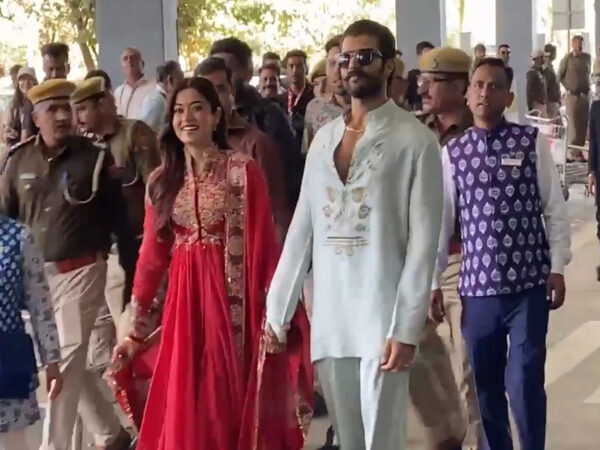
Newlyweds Vijay Deverakonda and Rashmika Mandanna arrived at the Udaipur Airport on Friday for a meet and greet session with their fans.

The star couple, who tied the knot on Thursday in the presence of family and close friends in Udaipur, made their first public appearance at the airport.

Rashmika was seen wearing a red dress while Deverakonda donned a kurta pyjama that he teamed with sunglasses. The couple were seen sending flying kisses to fans.

Sharing pictures from their wedding ceremony that looked straight out of a dream, Rashmika took to Instagram and penned a heartfelt note about her husband.

She thanked Vijay for teaching her “what true love feels like” and showing her “what being in peace feels like.”

She began her note, “Hi my loves, Introducing to you now “My Husband”! Mr. Vijay Deverakonda!! The man who taught me what true love feels like, the man who showed me what being in peace feels like! The man who told me everyday that dreaming big was absolutely ok and constantly telling me I was capable of achieving something much more than what I could possibly think I ever could!”

“The man who’s never stopped me from dancing like no one’s watching…the man who showed me travelling with friends is the best thing ever, and trust me I could write a book on this man! I’ve become the woman I have always dreamt of being, because you made her who she is today! I’ve truly been blessed,” Rashmika added.

In her post, she affectionately referred to Vijay as “Viju.”

“Vijju I am always short of words to describe the feelings I have for you!! I’ve always told you that!! But you know suddenly all of my achievements, struggles, happiness, sadness, joy, life – everything just makes a lot more sense now – it is because I have you – witnessing it all.. being the biggest part of it all! I am so so so so soooo excited to becoming your wife! to be your wife! To be called your wife!! It’s full party time now!! Let’s have the bestestest life ever together!I love you,” wrote Rashmika as she poured her heart out for Vijay.

Rashmika and Vijay have shared screen space in two notable Telugu films, the 2018 romantic comedy blockbuster ‘Geetha Govindam’ and the 2019 action drama ‘Dear Comrade’. (ANI)

Modi Meets With Team Of ‘Fauda’ In Israel

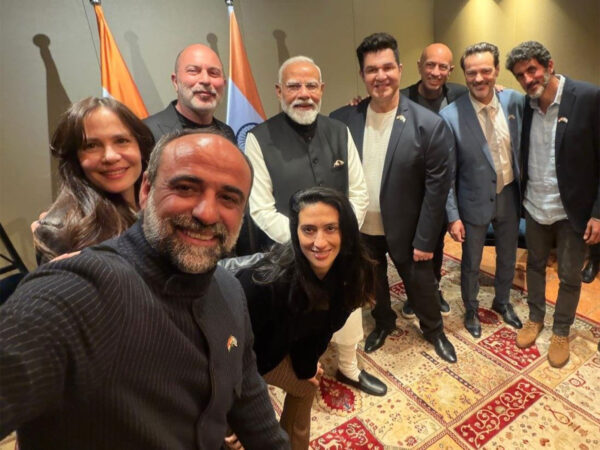
During a two-day official visit to Israel, Prime Minister Narendra Modi met with several delegates, engaging in discussions that aimed to deepen bilateral ties across various sectors including science, technology, innovation, research, cybersecurity, agriculture, water, defense, and trade. He also took some time off his schedule to get to know Israeli filmmaking by meeting the team behind the popular series ‘Fauda’.

On Thursday evening, PM Modi shared a selfie with the Fauda team on X, with a catchy caption that quickly grabbed everyone’s attention.

“Thankfully, this interaction required only a selfie, no undercover work! #Fauda,” PM Modi wrote.

In the image, PM Modi could be seen sharing smiles with Avi Issacharoff, Lior Raz, and Tsahi Halevi among others.

The Israeli series Fauda has garnered significant popularity in India, and in recent years, several of its actors have visited the country.

In 2022, Halevi visited India for the first time and met with many celebrities from the Indian cinema including Anupam Kher, Imtiaz Ali, and Vivek Agnihotri.

He was also featured in Bollywood film ‘Akeli’ alongside Nushrratt Bharuccha.

Speaking about the opportunity, Halevi earlier said, “It is a great opportunity to be a part of such a colourful world of Indian cinema! I’m super excited and was amazed with the script when I first heard it! It was truly nice working with the entire cast and crew in Akelli and I’m sure it is going to be an impactful and unforgettable movie. “

In 2022, Lior Raz and Avi Issacharoff attended the Asia premiere of the season fourth of their hit project at the 53rd International Film Festival of India (IFFI) in Goa. (ANI)

‘Flashy Parents & Reel-Crazed Minors Behind The Wheel Are A Curse On Road’

Shailesh Sinha, a road safety expert, says a vehicle in the hands of an underage driver can act like a weapon if not used responsibly. His views:

Underage and rash drivers are causing mayhem on Indian roads. Parents allowing their underage children to take vehicles on the road is not just irresponsible—it is dangerous, and at times, fatal. To understand this issue, we need to look at the basic psychology of our country.

India is a developing nation where growth often becomes the priority—sometimes at any cost. In this race, the value of human life unintentionally moves to the last pedestal. Since childhood, we are taught to chase speed, targets, and achievements. That same restless energy often reflects on our roads.

India loses almost 2 lakh lives every year due to road crashes. That translates to nearly 480 deaths every single day. Every 24 hours, countless families are shattered. These are not just numbers—they are human lives.

One major concern is why parents allow underage children to drive. There are two basic reasons. First, many parents themselves have not experienced the surge in automobile culture that India has witnessed in the last 15-16 years. The sudden expansion of high-speed vehicles, easy access to powerful cars, and the rapid growth of social media-driven lifestyles are new phenomena. Many parents do not fully understand the magnitude of risk and its consequences, which makes them less effective guides for their children.

Second, today’s youth are surrounded by reels, thrills, speed, instant gratification, loud music, and high-performance vehicles. When all these influences enter a teenager’s life at once—especially in upwardly mobile environments—it becomes extremely difficult to manage impulses. In such situations, even parents feel helpless.

Recent incidents like the Porsche case in Pune, the Toyota Innova crash in Dehradun, and the Lamborghini and Lucknow Swift cases reported in the media are clear warning signs. These are not isolated incidents; they reflect a growing pattern.

The core problem is that underage drivers—and even many licensed young drivers—do not realise that a vehicle in their hands can act like a weapon if not used responsibly. As I always say, “A vehicle is a weapon, if not used right.”

Speed alone does not kill. An underprepared, unskilled, and irresponsible driver kills. This understanding needs to be firmly cemented in the minds of both present and future drivers.

Authorities must intervene with a strong message focused not only on enforcement but also on education and civic sense. Only the right education can bring sustainable change. We are already aware of traffic laws, and honestly, the basics are enough to keep everyone safe—if followed sincerely.

We must start respecting our journeys and every individual sharing the road with us. Automobile technology is progressing at rocket speed, but the human brain and reflexes remain almost unchanged for thousands of years. There is a clear imbalance between technological advancement and human preparedness.

Strict enforcement is also necessary. Fines should be high enough to create real financial deterrence. High-speed accident drivers should face stringent legal charges. Underage drivers caught on the road should face long-term consequences, including delayed eligibility for a permanent driving license even after reaching legal age.

There can be many laws and principles for road safety. But before anything else, we must correct the basics—because even the basics are not right.

As told to Deepti Sharma

Mass Exodus Threatens Indian Rural Ecosystem

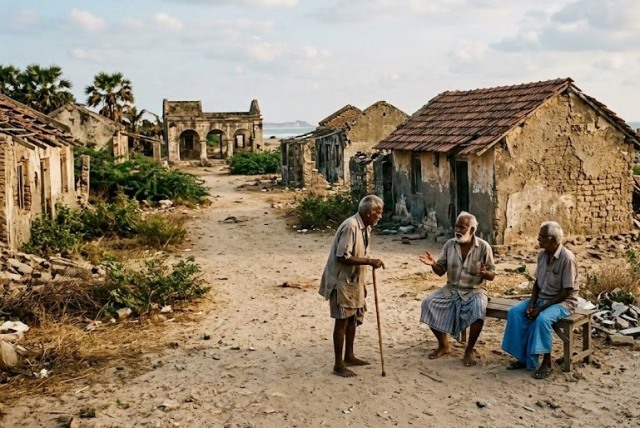
The silence of the afternoon in most of the Indian villages seems heavier than before. Courtyards where the laughter of children was heard are silent now. Houses are locked and walls are fading, and they tell no stories. The elderly parents are sitting outside their houses waiting to be called by the cities that are far away. Rural India is gradually facing a painful reality. The migration of young people to school and jobs is abandoning a more vulnerable elderly population.

Aspiration is common in the start of the story. Men and women go out of their villages with hopes of securing jobs and opportunities. This movement is motivated by economic need, educational aspirations and increased living expenses. Migration itself is not new. It has traditionally enhanced revenues and broadened horizons. But the social impacts of it are now more apparent in the countryside. It is estimated that close to 12% of the rural aged individuals live without regular family support. That figure indicates a silent revolution in the village.

Most of the aged parents are living alone as their children establish careers in urban areas. Money can come in the form of bank transfers but emotional presence cannot come in the same way. Festivals turn into telephone calls. Disease turns into a personal battle. Everyday communication is lost. Companionship, reassurance and joint responsibilities cannot be substituted with financial remittances.

Historically, Indian villages were based on joint families. The aged were honored counselors and nannies. Their experience informed the choices of farming, family conflicts, and social practices. Migration of the youth interferes with this set up. As the younger generations become permanent residents in the urban areas, the cycle of interdependence is compromised. Some are reluctant to move due to attachment to ancestral houses or a lack of comfort in the city. People are afraid to lose social identity. Physical distance slowly turns into emotional distance.

The problem is further enhanced by healthcare issues. Access and affordability have gaps in rural health services. The isolated elderly might postpone medical attention due to lack of transport or support. Patients with chronic illnesses (diabetes and hypertension) have to be monitored regularly. Routine treatment is hard without the support of the family. Emotional health is also affected. Loneliness over a long period poses the risk of depression and anxiety.

Another issue is social dignity. Elderly people used to hold visible positions in village life. Some of them are marginalised today. Occasional assistance can be provided by neighbours, but long term care is uncommon. In the long run, isolation will lead to less involvement in local events and decision making. The lack of younger family members undermines the stability of households and communities.

Things are made worse by economic realities. Not every migrant is successful in cities. The increase in urban costs and insecure jobs restrict their capacity to remit money back home. Coverage of rural pensions is not even. A large number of the elderly rely on savings or small-scale agriculture. Financial pressure is imposed by climate uncertainty and unstable crop prices. For landless or asset-less people, vulnerability is acute.

This is not a matter of migration. It is indicative of larger social change. The expectations and responsibilities are being transformed by urbanisation and nuclear families. Younger generations have to make hard decisions between survival in the profession and parental care. Accusation is of no help. The difficulty is to develop systems that can keep abreast with evolving realities.

It is necessary to strengthen rural social security programmes. Dependence on family support can be minimized by having reliable pensions and having healthcare available. A sense of belonging can be regained through community based programs like the senior activity centres and volunteer networks. The mobile medical units will be able to reach individuals who have challenges with transport. Local governance institutions can be more involved in the identification of at risk elderly residents.

Technology is a partial solution. Video calls and mobile phones help families to be in touch. Elderly villagers can be assisted in accessing welfare schemes and telemedicine services with the help of digital literacy programmes. Nevertheless, technology should not substitute human interaction but rather supplement it. Emotional care is not something that should be neglected.

The quiet courtyards of rural India reflect more than migration. They reveal a social transition that demands thoughtful response. Ensuring dignity and care for the rural elderly is not merely a private obligation. It is a collective responsibility. If progress is to be meaningful, it must include those who once sustained village life with their labour and wisdom.

Court Discharges Kejriwal, Sisodia In Delhi Liquor Scam Case

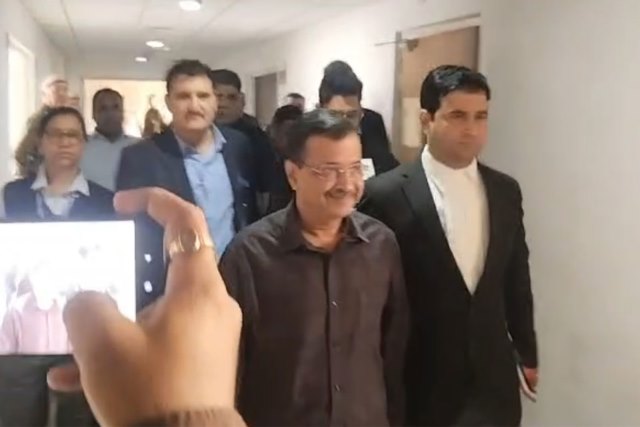
The Rouse Avenue Court on Friday discharged Former Delhi Chief Minister Arvind Kejriwal and former Deputy Chief Minister Manish Sisodia in the Delhi Excise Policy case.

The court observed that the alleged central conspiratorial role could not be substantiated.

The court noted that the allegations “failed judicial scrutiny” and found “no criminal intent” on the part of Manish Sisodia. It further stated that the conspiracy theory “cannot survive against one constitutional authority.”

Expressing her joy at the verdict, Sunita Kejriwal the wife of Arvind posted, “In this world, no matter how powerful one becomes, one cannot rise above Shiva Shakti. Truth always prevails.”

The CBI filed its first chargesheet in 2022, followed by multiple supplementary chargesheets. The agency has alleged that Rs 100 crore was paid by a “south lobby” to influence the now-scrapped excise policy in its favour.

In total, 23 accused have been chargesheeted, including Arvind Kejriwal, Manish Sisodia, K Kavitha, Kuldeep Singh, Narender Singh, Vijay Nair, Abhishek Boinpally, Arun Ramchandra Pillai, Mootha Goutam, Sameer Mahendru, Amandeep Singh Dhall, Arjun Pandey, Butchibabu Gornatla, Rakesh Joshi, Damodar Prasad Sharma, Prince Kumar, Chanpreet Singh Rayat, Arvind Kumar Singh, Durgesh Pathak, Amit Arora, Vinod Chauhan, Ashish Mathur, and P Sarath Chadra Reddy.

During arguments, the CBI maintained that the offence of criminal conspiracy must be viewed in its entirety and that the sufficiency of evidence should be tested during trial. Represented by Additional Solicitor General D P Singh and advocate Manu Mishra, the agency argued that there is adequate material to frame charges against all the accused.

On the other hand, senior advocate N Hariharan, appeared for Kejriwal, contended that there is no incriminating material linking his client to the alleged conspiracy. He argued that the fourth supplementary chargesheet naming Kejriwal merely repackages earlier allegations and that Kejriwal was performing his official duties as Chief Minister.

Hariharan further submitted that Kejriwal was not named in the initial chargesheet or in three earlier supplementary chargesheets. His name appeared only in the fourth. The defence also questioned the basis of further investigation and the evidentiary value of statements, including that of approver Raghav Magunta. (ANI)

Tamil Nadu Ex-CM Panneerselvam Joins DMK In Chennai

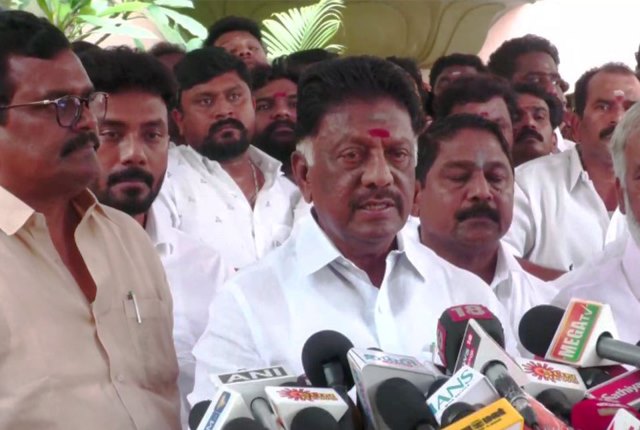
Expelled AIADMK leader and former Tamil Nadu Chief Minister O Panneerselvam on Friday joined Dravida Munnetra Kazagham (DMK) in the presence of party chief and CM MK Stalin in Chennai.

Along with OPS, his son P Ravindhranath Kumar also joined DMK ahead of the forthcoming Tamil Nadu polls.

O Panneerselvam was expelled from the party after a leadership tussle with Edappadi K Palaniswami back in 2022.

This comes after Panneerselvam’s praise for Tamil Nadu Chief Minister MK Stalin and his prediction regarding the return of the DMK government in the state.

On Friday, Tamil Nadu MLA P Ayyappan, who is seen as part of former CM O Paneerselvam’s camp, expressed his desire to see M. Stalin lead the state again following the next assembly polls.

Ayyappan stated in the Assembly that M K Stalin must once again become the Chief Minister of Tamil Nadu. He further said, “The Breakfast Scheme was introduced with a visionary outlook. For small children who come to primary schools, the Chief Minister provides hot meals like a mother.”

“Those who once raised slogans claiming that the Chief Minister had merely given Rs 5,000 are nowhere to be seen today. As long as Tamil Nadu exists, the Breakfast Scheme will continue to praise the Chief Minister. In the upcoming election, M.K. Stalin should once again win and return as the Chief Minister of Tamil Nadu. With the blessings of Puratchi Thalaivar M.G.R. and Puratchi Thalaivi Amma, and with the wishes of our elder brother O. Panneerselvam, I express my gratitude at this moment,” Ayyappan added.

Earlier this week, NDA ally and AMMK general secretary TTV Dhinakaran hit back at OPS, saying he’s got the right to choose alliances, but can’t drag Jayalalithaa’s name into it.

He called out OPS’s remarks about CM MK Stalin getting blessings from Amma and Puratchi Thalaivar as unacceptable.

He further said, “As far as O Panneerselvam is concerned, he has every right, in his personal capacity, to decide which alliance he wants to join or contest with. However, the remarks he made in the Legislative Assembly, suggesting that Stalin of the DMK would return to power with the blessings of Puratchi Thalaivar and Amma, are unacceptable to me and to any of Jayalalithaa’s loyal supporters. We will not accept statements that bring disrepute to the legacy and honour of our leaders.”

The 234-member Tamil Nadu Assembly will go to the polls in the first half of 2026, where the MK Stalin-led alliance will look to project the ‘Dravidian Model 2.0’ for the win against the BJP-AIADMK alliance.

Actor-turned-politician Vijay’s entry with his Tamilaga Vettri Kazhagam (TVK) is expected to turn the Tamil Nadu polls into a three-way contest.

In the 2021 polls, the DMK won 133 seats in the 2021 Assembly polls. Congress won 18, PMK won five, VCK won four, and others won eight seats. The Secular Progressive Alliance (SPA), led by DMK, which consisted of Congress, won 159 seats collectively. While the NDA won 75 seats, the AIADMK emerged as the largest party in the alliance with 66 seats. (ANI)

Pakistan Declares War On Afghanistan, Strikes Kabul & Kandahar

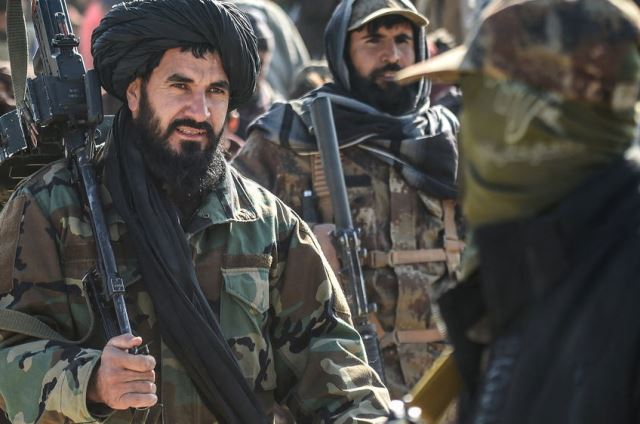
Cross-border clashes between Afghanistan and Pakistan escalated sharply on Friday, with Islamabad declaring “open war” on Kabul after carrying out airstrikes in parts of Kabul, Kandahar and Paktia, further intensifying tensions between the two neighbouring countries.

In a post on X, Pakistan’s Defence Minister, Khawaja Asif, issued a strong statement declaring the “open war” against Afghanistan, stating that Islamabad has lost its patience and accusing the Taliban-led administration of harbouring militants.

“After the withdrawal of NATO forces, it was expected that there would be peace in Afghanistan and that the Taliban would focus on the interests of the Afghan people and peace in the region…They gathered all the terrorists of the world in Afghanistan and began exporting terrorism. They deprived their own people of basic human rights. They snatched away the rights that Islam grants to women,” his post read.

“Our cup of patience has overflowed. Now it is open war between us and you. Now it will be ‘Dama Dam Mast Qalandar’. Pakistan’s army did not come from across the seas. We are your neighbours; we know your ins and outs. Allahu Akbar,” the Pakistani Defence Minister added.

Following the Pakistani strikes on Afghan soil, Afghanistan’s spokesperson, Zabihullah Mujahid, condemned the attack, calling the act by the Pakistani military “cowardly”.

“The cowardly Pakistani military has carried out airstrikes in certain areas of Kabul, Kandahar, and Paktia; fortunately, there have been no reported casualties,” Mujahid said in a statement on X.

The escalation comes amid heightened tensions between Islamabad and the Taliban-led administration in Kabul over cross-border security concerns along the Durand Line, the border drawn by the British in the 19th century, which has remained a topic of dispute between the two countries.

Meanwhile, the Ministry of National Defence of Afghanistan said that 55 Pakistani soldiers were killed in retaliatory operations carried out along the Durand Line on Thursday.

In a press release, the ministry said the action was launched at 8:00 PM on the 9th of Ramadan, corresponding to February 26, in response to what it described as a violation of Afghan territory by Pakistani military forces days earlier.

“A few days ago, the Pakistani military circles, with great audacity, violated Afghan territory, breached our borders, and martyred women and children here,” the statement read.

“In these retaliatory operations along the Durand Line, a total of 55 Pakistani soldiers were killed, two bases and 19 posts were captured,” the statement added.

In retaliation, Pakistan initiated the ‘Ghazab Lil Haq’ operation targeting the Afghan Taliban regime, as reported by ARY News.

Spokesperson of Pakistani Prime Minister Mosharraf Zaidi alleged that 133 Afghan Taliban fighters have been killed and over 200 wounded, with 27 Taliban posts destroyed and nine captured. (ANI)