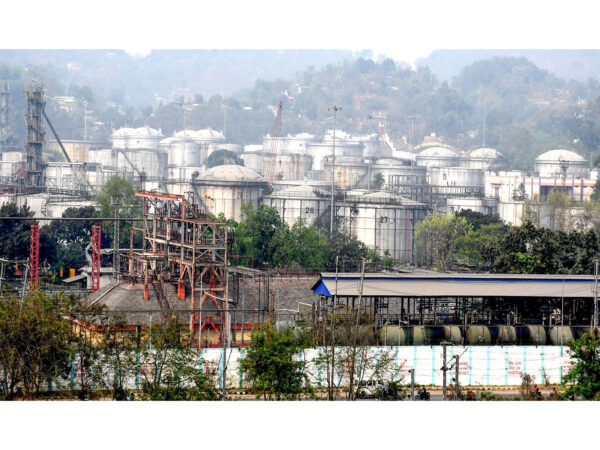
New Mangalore Port Authority Waives Crude, LPG Cargo Charges Till March 31

The Shipping Ministry on Friday informed that New Mangalore Port has waived cargo-related charges for crude oil and Liquefied Petroleum Gas (LPG) from March 14 to 31, and there is no congestion reported at any port.

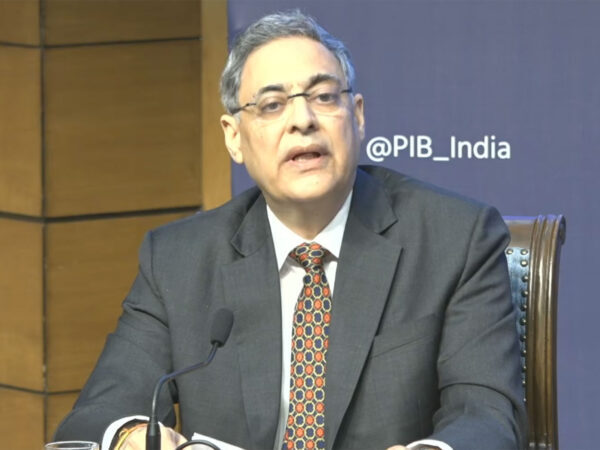
In an inter-ministerial briefing, Special Secretary of the Shipping Ministry, Rajesh Kumar Sinha, also said all 22 Indian ships and 611 sailors in the Persian Gulf are safe amid the West Asia conflict.

“There has been no report of any maritime incident in the last 24 hours. All our 22 ships and 611 Indian sailors in the Persian Gulf region are safe, and we are continuously monitoring them… There is no congestion in any port…New Mangalore Port has issued a circular for waiver of all cargo-related charges for crude and LPG, which is valid from 14 March to 31 March,” the Shipping Ministry official said.

“Ministry of Port, Shipping and Waterways continues to closely monitor the shipping movements, port operations, safety of Indian seafarers and continuity of maritime trade in view of the evolving situation in West Asia,” Sinha said.

This comes as the conflict in West Asia entered its 21st day, with trade routes through the Strait of Hormuz hampered.

Six Indian nationals have lost their lives, and one remains missing in separate incidents across the Gulf region amidst the West Asia conflict, the Ministry of External Affairs said on Friday, adding that Indian missions are coordinating with local authorities for assistance and repatriation.

Earlier today, Additional Secretary (Gulf) in the MEA, Aseem R Mahajan, said Indian missions in multiple countries are working closely with authorities to locate the missing person and facilitate the early repatriation of mortal remains of the deceased Indian nationals to the country.

“Six Indian nationals have unfortunately lost their lives, and one is missing in various incidents. Our missions in Saudi Arabia, Oman, Iraq and UAE are in regular touch with the concerned authorities regarding the missing Indian national and for the early repatriation of mortal remains of the deceased Indian nationals to India,” Mahajan said.

He added that the travel situation from the Gulf region is gradually improving, with a significant number of passengers already returning to India.

“Situation continues to improve with additional flights operating from the region. Since February 28, around 300,000 passengers have returned from the region to India,” the MEA official said.

These remarks come as the escalating conflict in West Asia reaches its 21st day, following the joint US-Israeli offensive against Iran on February 28, in which 86-year-old Iran’s Supreme Leader, Ayatollah Ali Khamenei, was also killed. Following his death, Mojtaba Khamenei, son of the former leader, was appointed as the new Supreme Leader of the Islamic Republic.

As Iran reportedly exerts pressure on the strategic Strait of Hormuz, the resulting disruptions to oil, gas, and maritime trade routes continue to pose a mounting threat to global economic stability. (ANI)

6 Indians Dead, 1 Missing In Gulf Incidents: MEA

Six Indian nationals have lost their lives, and one remains missing in separate incidents across the Gulf region amidst the West Asia conflict, the Ministry of External Affairs said on Friday, adding that Indian missions are coordinating with local authorities for assistance and repatriation.

Addressing the Inter-Ministerial Briefing, Additional Secretary (Gulf) in the MEA, Aseem R Mahajan, said Indian missions in multiple countries are working closely with authorities to locate the missing person and facilitate the return of the deceased to India.

“Six Indian nationals have unfortunately lost their lives, and one is missing in various incidents. Our missions in Saudi Arabia, Oman, Iraq and UAE are in regular touch with the concerned authorities regarding the missing Indian national and for the early repatriation of mortal remains of the deceased Indian nationals to India,” Mahajan said.

He added that the travel situation from the Gulf region is gradually improving, with a significant number of passengers already returning to India.

“Situation continues to improve with additional flights operating from the region. Since February 28, around 300,000 passengers have returned from the region to India,” the MEA official said .

According to the MEA, airlines from the United Arab Emirates are continuing to operate limited non-scheduled flights depending on operational and safety considerations.

“From the UAE, airlines continue to operate limited non-scheduled flights based on operational and safety considerations. Today, again, around 90 flights are expected to operate from various airports in the UAE to India,” he added.

Flights are also continuing from Oman and Saudi Arabia to India, while the partial reopening of airspace in Qatar has allowed some commercial movement.

“With the Qatar airspace partially open, Qatar Airways is expected to operate 10 non-scheduled commercial flights to India today,” Mahajan said.

However, he noted that airspace in Kuwait and Bahrain remains closed.

He said, “Kuwait airspace remains closed. Airways of Kuwait is expected to commence special non-scheduled commercial flights to various destinations in India from the Al Qaisumah-Hafar Al Batin Airport in Saudi Arabia, with the first flight today to Kochi.”

To assist stranded passengers, Kuwait Airways will begin special non-scheduled commercial flights from Al Qaisumah International Airport to India, with the first flight scheduled to depart for Kochi on Friday.

“This will facilitate the travel of Indian nationals from Kuwait to India,” Mahajan said.

He added, “Bahrain airspace remains closed. Gulf Air of Bahrain continues to operate special non-scheduled commercial flights from Dammam Airport of Saudi Arabia to India.”

Meanwhile, Gulf Air of Bahrain continues to operate special non-scheduled commercial flights from King Fahd International Airport to India to support the movement of passengers amid the airspace restrictions. (ANI)

A Love Story on Bullock Cart

Although critically acclaimed, Teesri Kasam was a commercial disaster when pushed out of cinema theatres to make way for potboilers. It recovered after winning two National Film Awards and was publicised thus.

That was an era when good, wholesome cinema received, if not always funds, official recognition. Today, much of the recognition is reserved for ‘Files’ that align with a political agenda and fuel hatred among communities.

Made in 1966 on a story written in 1954 by the renowned Hindi writer from Bihar, Phanishwarnath Renu, the film, although shot largely in Maharashtra and Madhya Pradesh, depicted the simplicity of a poor, rural Bihar. That poverty persists. Bihar remains underdeveloped, in the news for many wrong reasons.

Deeply embedded in the prevailing values of rural India, healthy or otherwise, Teesri Kasam was based on Renu’s original short story, Marey Gaye Gulfam. Nabendu Ghosh, who wrote many films for Bimal Roy, introduced it to Shailendra, the renowned lyricist, himself a son of the Bihar soil.

In a rare literary and cinematic confluence, Ghosh wrote the script as well as the screenplay. Cinematographer on Satyajit Ray’s early films, Subrata Mitra, lensed it. Basu Bhattacharya was its debutante director. He went on to make some significant films.

Nautanki is a major prop in the film. Developed in the ‘Bhagat’ and ‘Swang’ musical theatre traditions of north India, it was once the biggest form of entertainment in its villages and towns. Today, Nautanki, like Tawaif, is a bad word. Waheeda Rahman’s Nautanki performance in the film looks way too decent when compared to the present-day vulgar, public performances, patronised in the Hindi belt.

This then-and-now comparison would be incomplete without asking how many filmmakers, in their race to join the global cinema, explore themes rooted in India.

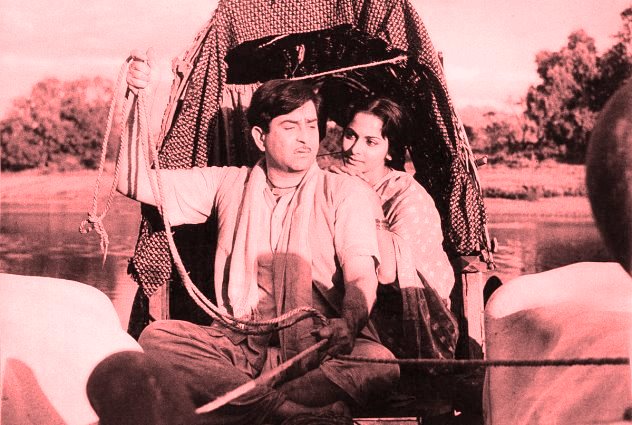
Teesri Kasam took five years to make and contributed to Shailendra’s death before it was released. Short of funds, he wanted to make a simple, low-budget film. He selected comedian Mehmood and Mumtaz to play cart-rider Hiraman and Hirabai, performing for a Nautanki company. But Bollywood biggie Raj Kapoor, whose discovery ‘Kaviraj’ Shailendra was, insisted on playing the lead.

Although he charged only one rupee, the canvas widened with Kapoor’s entry. He advised Shailendra to add some commercial elements to an otherwise melancholic story. Shailendra disagreed and did the movie the way he wanted.

Shankar-Jaikishan composed ten songs, each one a masterpiece that made the film memorable. Shailendra delivered his best, including the award-winning Sajan Re Jhooth Mat Bolo. Yet, the most heart-rending song, crooned by Mukesh, was Hasrat Jaipuri’s Dunia Banane Waley. Each line of these songs carries deep philosophical meaning, each word resonating with our individual journey of life wherever we be.

With his light eyes, Kapoor looked too well-fed for a poor cart driver. However, shorn of the Chaplin-sque image that had won him global fame in Awaara and Shree 420, his performance, comparable with his earlier Jagte Raho, is among his best.

Waheeda, riding on her previous year’s performance in Guide, was outstanding. On Shailedra’s tearful pleading, it is said, she worked for a nominal token amount. She is perhaps the only survivor of that magnificent experiment in cinema.

Six decades is a long time to judge a film for its critical content and the relevance of its message in the present times to be called a classic. It is tempting to say that Teesri Kasam fills all the slots. Had it been made on a larger budget and in colour (arguable, since its black & white photography was excellent), it would have been a greater film than it is.

Bhattacharya won the National Award for direction and was nominated for the Grand Prix at the Moscow International Film Festival. But not everyone was satisfied with his treatment of a simple, yet deeply meaningful theme.

Underlining the differing approach between an art-laced film and a Bollywood commercial, Kapoor disapproved. In an interview in 1977, he said, “Basu (Basu Bhattacharya) is a pseudo, and I didn’t like the film. He was risking somebody else’s money. What did he have to lose?”

Looking back, it would be unfair to blame Kapoor and his RK team’s support. Views have also differed about the film’s ending, and blamed it for the box office failure. Some felt that rather than separating Hiraman from Hirabai, the two should have walked away from the world. Comparison has been made with another classic, Pyaasa, where a roadside hooker, incidentally, also played by Waheeda Rehman, joins a poet that society has rejected.

Such a debate marks out Teesri Kasam. But note what Hirabai has to say of her own identity. Hiraman thinks she is a goddess, and the landlord who wants to bed her thinks she is a prostitute. But both are wrong, she insists.

She definitely loves Hiraman, the first man who has treated her with respect. But she realises that if she hides her tainted social status from him, they would live in falsehood. The shock for him on knowing the truth would be unbearable and would ruin their relationship.

‘Libbers’ today may fault Hirabai for lack of courage to break her social shackles, but not for allowing her head to reject the heart’s desire. She comes across as a worldly-wise winner, even as Hiraman, rejected and dejected, takes his frustration out on the poor bullocks. He takes his third vow: never to seat another “company ki bai” on his cart.

In a noteworthy flaw, the first two vows, rushed through at the film’s onset, are of no real consequence to the story. They only lay the ground for the third.

Yet, it remains a simple story simply told of the fragile love between two social misfits. It does not have a happy ending, but it is not a tragedy either. A character-driven film, it offers several insights into human relationships, the likes of which are seldom seen on the Indian screen these days.

Much like its protagonists, Teesri Kasam was also a victim of its fate. Watching it today, it is hard to decipher why a film with such emotional depth, popular music and stellar actors did not get accepted in that “Golden Age” of Hindi cinema.

Despite the abundance of talent, money and technology, a “fourth vow” to pursue meaningful cinema seems remote in this era.

West Asia Conflict May Impact Economy, India Should Diversify Energy: Shashi Tharoor

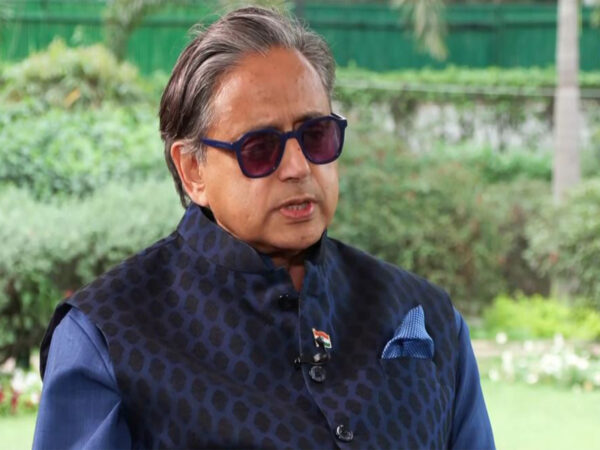
Disruption in energy supplies from Gulf region due to West Asia conflict and the rise in international crude prices will have knock on effect on the economy, Congress leader Shashi Tharoor has said and emphasised that India needs to diversify its energy sources and have more trade agreements to deal with the impact.

In an interview with ANI, Tharoor also said that if the conflict with Israel and the US on one side and Iran on the other, goes on for long time, “we don’t have a whole lot of options”. This round of conflict started on February 28.

“I think what we need to do is we can diversify sources of supply as long as the war lasts, as long as there is a shortage in the world markets. We can also, in the broader sense, have more free trade agreements with other countries, so we can have our exports going to a wider variety of countries on better terms than has been the case so far. For this particular crisis, we are, as the expression goes, caught over a barrel, as are many other countries. We don’t have a whole lot of options to cope with this if it drags on much longer,” he said.

Tharoor, who is also Chairman of Parliamentary Standing Committee on External Affairs, noted that oil, petrol, diesel, LNG, and LPG shipments from Gulf countries, which supply 60-80 per cent of India’s gas needs, are now arriving in limited quantities and there are disruptions in kitchens, restaurants, and businesses.

“There have been tremendous disruptions, particularly of the economy, because if you look at the fact that so many oil and gas supplies have been affected. Oil, petrol, and diesel are coming from the oil-producing countries of the Gulf. Gas, something like 80 per cent, I think about it around 60 to 80 per cent of our LNG, LPG is coming from Qatar and the other countries in that region, and we are not able to receive it anymore, except in very small instalments. A couple of ships come, that’s one and a half days’ supply. So we are not able, as a result, to be able to fuel our kitchens, our dhabas, our restaurants. You’re seeing stories from all over the country now,” Tharoor said.

“So there is a genuine problem…it’s affecting all of us. Secondly, there is a knock-on effect for all economic activity. If factories start slowing down, that affects employment, that affects purchases,” he added.

Tharoor said that crude oil prices have surged from USD 64 a barrel at the start of the West Asia conflict to between USD 100 and USD 120 and there can be a serious situation of “petrol inflation”.

“You find that oil prices have shot up. It was USD 64 a barrel for crude oil when the war began. Today, it’s been alternating between USD 100 and USD 120. We’re looking at a very serious situation of petrol inflation, which in turn has a knock-on effect on everything that is transported by petrol. We’ve been allowed, in terms of the sanctions being lifted on those Indian companies that are buying Russian oil. That means we can buy more Russian oil. And we are buying a lot of Russian oil. But that is not a solution yet on the gas front,” Tharoor said.

Tharoor earlier said that India should take a lead in trying to end the West Asia conflict.

He said that the continuation of conflict will create severe shortages and major world leaders should take responsible steps to try and stop the war.

India said on Thursday that the recent attacks against energy installations in different locations across the Gulf region are deeply disturbing and only serve to further destabilise an already uncertain energy scenario for the whole world.

In response to media queries regarding attacks against energy infrastructure in the Gulf region in the last few days, MEA Spokesperson Randhir Jaiswal said that attacks against civilian infrastructure, including energy infrastructure, are unacceptable and need to cease.

“India had previously called for the avoidance of targeting civilian infrastructure, including energy infrastructure, across the region. Recent attacks against energy installations in different locations across this region are therefore deeply disturbing and only serve to further destabilise an already uncertain energy scenario for the whole world. Such attacks are unacceptable and need to cease,” he said.

Answering queries during weekly media briefing, Jaiswal said India is trying to buy LPG from everywhere and if it is available from Russia, the option would be exercised.

He said India wants to have a wide range of options and is buying oil from various sources, including Russia.

“We’re trying to buy LPG from everywhere, wherever it’s available. So if Russia is available, we’ll go there too. Because the current situation is such that we have to ensure that our people’s fuel needs are met… I can say that we want to have a wide range of options,” Jaiswal said.

He said India has continuously emphasised that one of its priorities has been the need to ensure unimpeded transit of goods and energy.”We have also called for the avoidance of targeting civilian infrastructure, including energy infrastructure, across the region. We believe that these are priorities of a large part of the global community since the impact of the conflict is being felt globally,” he said. (ANI)

West Asia conflict: Iran Launches Five Multi-Warhead Missiles

Iranian state media Press TV said on Friday that the country launched its 66th wave of Operation True Promise 4, deploying 5 super-heavy and multi-warhead missiles. Meanwhile, reports have also emerged of drone and missile attacks and alerts in West Asia and the Gulf region.

According to the IRGC the 66th wave of Operation True Promise 4 featured deployment of a large-scale reprisal involving multiple missile systems targeting locations across Israel and US military positions in the region.

In a statement on Friday, the Corps’ Public Relations Office said the latest phase was carried out “successfully” striking targets in the heart and south of the occupied territories, including the city of Tel Aviv, as well as bases of the US military in the region.

Meanwhile, the Israeli Defence Forces said that it had identified missiles that were launched from Iran towards Israel. In a post on X, it said that the defence systems are operating to intercept the threat and called on the public to exercise responsibility and act in accordance with the directives.

Al Jazeera Breaking reported on Friday that Kuwait was targeted by missile and drone attacks, while the UAE was defending against a missile threat. Dubai Media Office confirmed the success of all air interception operations, with no injuries reported.

Explosions were also reported from Tehran as air defence engaged targets, Al Jazeera Breaking said citing the Saudi Defence Ministry that the country intercepted 5 drones in its eastern region.

The strikes come after heightened tensions in West Asia and the Gulf after several energy infrastructure facilities were attacked across the region.

After the Israeli attack on Iran’s South Pars Gas Field on Wednesday night, in retaliation, Iran struck Qatar’s Ras Laffan Industrial City, resulting in extensive damage, as per the country’s Ministry of Defence.

Later on Thursday, an Iranian ballistic missile struck a major oil refinery complex in northern Israel, CNN reported.

According to CNN, the Iranian missile hit the Haifa oil refinery complex, with Israeli sources confirming the strike.

Amid these developments, Iranian Foreign Minister Seyed Abbas Araghchi said on Thursday that Tehran’s response to the Israeli attack was employed only a “fraction” of power–with the reason for restraint being a request for de-escalation.

He warned of “zero restraint” if Iranian infrastructure was targeted again and said in a post on X, “Our response to Israel’s attack on our infrastructure employed FRACTION of our power. The ONLY reason for restraint was respect for requested de-escalation. ZERO restraint if our infrastructures are struck again. Any end to this war must address damage to our civilian sites.”

The development comes amid heightened tensions between Israel and Iran, with both sides engaged in an escalating conflict marked by missile exchanges and military operations. (ANI)

Qatar LNG Output Capacity Cut 17% For 5 Years After Missile Hit, India Faces Risk

Missile attacks on Qatar’s Ras Laffan Industrial City have significantly disrupted global energy supplies, reducing the country’s liquefied natural gas (LNG) export capacity by 17 per cent and raising concerns for import-dependent nations like India.

In an official statement, QatarEnergy said the strikes, which occurred on March 18 and early March 19, 2026, caused extensive damage to key production facilities and are expected to result in an estimated loss of USD 20 billion in annual revenue.

The company added that repairs could take up to five years, forcing it to declare long-term force majeure on some LNG contracts.

Providing an update, Minister of State for Energy Affairs and QatarEnergy President and CEO Saad Sherida Al-Kaabi said “The missile attacks reduced Qatar’s LNG export capacity by 17 per cent and caused an estimated loss of USD 20 billion in annual revenue- Extensive damage to our production facilities will take up to five years to repair and will compel us to declare long-term force majeure”

The disruption has raised concerns for India, which relies heavily on Qatar for its energy needs. Official data from the Petroleum Planning & Analysis Cell (PPAC) and the Ministry of Commerce shows that Qatar accounts for nearly half of India’s LNG imports.

In 2024, India imported about 27.8 million metric tonnes (MMT) of LNG, with Qatar supplying 11.30 MMT worth USD 6.40 billion, representing nearly 47 per cent of total LNG imports. Official 2025-26 data from the Petroleum Planning & Analysis Cell (PPAC) and the Ministry of Commerce also confirmed that Qatar remains India’s primary gas supplier

The ongoing disruption is expected to increase vulnerability for India’s energy imports amid rising geopolitical tensions, as reduced supply from its largest supplier could impact availability and pricing in the domestic market.

As per official statement by Qatar, the attacks damaged two liquefied natural gas (LNG) producing Trains 4 and 6 totaling 12.8 million tons per annum (MTPA) of production, representing approximately 17 per cent of Qatar’s exports.

Train 4 is a joint venture between QatarEnergy (66 per cent) and ExxonMobil (34 per cent), and Train 6 is a joint venture between QatarEnergy (70 per cent) and ExxonMobil (30 per cent).

Minister Al-Kaabi said: “The damage sustained by the LNG facilities will take between three to five years to repair. The impact is on China, South Korea, Italy and Belgium. This means that we will be compelled to declare force majeure for up to five years on some long-term LNG contracts.”

The attacks also targeted the Pearl GTL (Gas-to-Liquids) facility, a production sharing agreement operated by Shell, that converts natural gas into high-quality cleaner burning drop-in fuels and produces base oils used to make premium engine oils and lubricants, and paraffins and waxes.

“The damage caused to one of the two trains at Pearl GTL is being assessed and is expected to be offline for a minimum of one year” Minister Al-Kaabi added. (ANI)

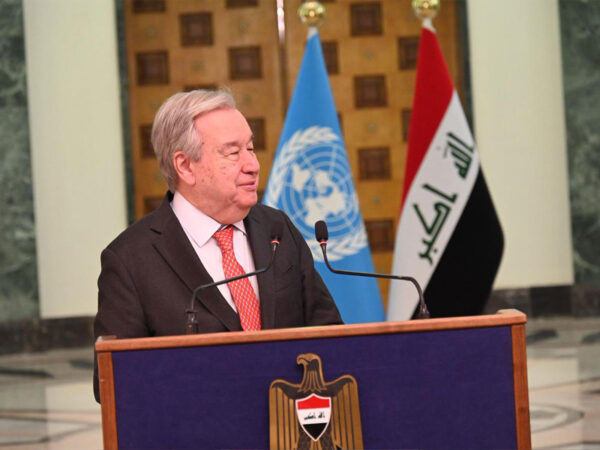
UN Calls For De-escalation As Global Leaders React To Iranian Strikes

United Nations Secretary-General Antonio Guterres has issued a stark warning to both the United States and Israel, urging an immediate end to hostilities in the Middle East that he says are spiralling out of control and causing immense civilian suffering.

In a post on X, Guterres wrote, “I have two clear messages: First, to the United States & Israel: It’s high time to end this war that is risking to get out of control, causing immense suffering on civilians, with dramatic effects on the global economy & potentially tragic consequences, especially for the least developed countries.

Second, my message to Iran: Stop attacking your neighbours, they were never parties to the conflict. The Security Council has condemned these attacks, has ordered them to stop, as it has order to open the Strait of Hormuz. The prolonged closure of the Strait of Hormuz causes enormous pain for so many people around the world who have nothing to do with this conflict. It’s time for the force of the law to prevail over the law of the force. It’s time for diplomacy to prevail over war.”

Guterres’ comments came in response to the recent Iranian strikes targeting regional infrastructure, which have escalated tensions across the Middle East and raised concerns over global energy supplies. The Secretary-General’s appeal reflects the growing alarm over the humanitarian and economic repercussions of the ongoing conflict.

French President Emmanuel Macron also weighed in, emphasising the need for immediate de-escalation.

Macron wrote on X, “It is time to open a path towards de-escalation in order to restore stability in the Middle East. France calls for the immediate implementation of a moratorium on strikes targeting civilian infrastructure, whether related to water or to energy. Freedom and security of navigation must be restored.

As the region enters a period of religious celebrations and renewal, tempers must cool and hostilities must cease, in order to give a real chance to the prospect of a negotiated and sustainable solution,” Macron added, highlighting the urgency of diplomatic efforts during sensitive periods of social and religious observance.

Meanwhile, British Prime Minister Keir Starmer condemned the overnight Iranian strike on a Qatari gas facility. “I condemn in the strongest terms the overnight Iranian strike on a Qatari gas facility. We are working towards a swift resolution to the situation in the Middle East, in the best interests of the British people, because there is no question that ending the war is the quickest way to reduce the cost of living,” Starmer said.

Global leaders’ statements signal a concerted call for restraint, restoration of navigation freedoms, and urgent diplomatic engagement to prevent the conflict from escalating further and creating wider humanitarian and economic crises. (ANI)

Mahieka Sharma Turns Showstopper For Designer Anamika Khanna

The spotlight turned on model Mahieka Sharma as she turned showstopper for designer Anamika Khanna, delivering a stunning appearance on the first day of Lakme Fashion Week in Mumbai.

Dressed in one of Khanna’s runway outfits, Mahieka looked graceful as she took the lead.

She walked the show in a flowy white drape ensemble, further accentuated with a customised hangbag with frills, which she held in her hand. She completed the look with frilled footwear and drop earrings.

Mahieka kept her hair neatly tied in a bun, with a few loose strands at the front.

While speaking to the media, she shared, “This is my second time walking for Anamika. But this time I am exclusive to her.. so you won’t see me again.”

Designer Anamika Khanna, who delivered a grand finale on Day 1, spoke to ANI and detailed her latest collection.

“My collection is inspired by imperfect flowers. The whole idea was focused on the fact that the rose grows where it doesn’t belong,” she said.

During the media interaction, Mahieka also reacted to the Indian Cricket Team’s victory in the ICC Men’s T20 World Cup.

“I am proud of our country.. I am proud of our team. They have all done such a phenomenal job. But obviously, he (Hardik Pandya) is my player of the team,” Mahieka said.

Coming back to Anamika Khanna’s showcase, her label AK|OK’s latest collection focused on garments that can serve multiple purposes like styling, layering, and more.

“From draped dhoti pants and ruffled asymmetric tops to relaxed co-ord sets and floor-length gowns, the garments moved effortlessly between statement dressing and everyday wearability.

She also included hand-painted textures, unfinished details, asymmetry, 3D embroidery, intricate hand embroidery, and gold Zari work.

One of the key highlights from the show was the introduction of menswear with the AK|OK initiative. (ANI)

‘Dhurandhar: The Revenge’ Delivers Big, Fans Say It’s Total ‘Paisa Wasool’

After fans waited for months through teasers, trailers and endless buzz online, ‘Dhurandhar: The Revenge’ finally arrived in theatres on March 19, and if the reactions pouring out of cinemas across the country are anything to go by, the much-anticipated sequel has clearly struck a chord with audiences.

Directed by Aditya Dhar and headlined by Ranveer Singh, the spy thriller had preview shows on the evening of March 18. With the first film, Dhurandhar, becoming a massive success last year, expectations from the sequel were sky-high.

For many moviegoers stepping out of theatres after the early screenings, the film seemed to deliver on the hype. Viewers, after watching the film, shared their excitement, with some even going as far as calling it one of the “greatest” Indian films they had watched.

Agrima, a viewer from Bhopal, said the film impressed her with its action and suspense. Speaking about the “fantastic” performance by Ranveer Singh and the film’s strong detailing, she said, “Action and fighting scenes are really good. Ranveer Singh’s acting is fantastic… The suspense buildup is really good… Detailing in the film is really good…”

Similar enthusiasm was seen among moviegoers in Lucknow, where viewers appreciated the film’s theme and scale.

One viewer said the movie handled the subject of terrorism in a “positive” way and felt the sequel was better than the first film.

“The movie was very good on the subject of terrorism. This movie works in a positive way. This movie is better than the first part of the same film,” he told ANI.

However, the film’s runtime, an imposing three hours and 55 minutes, has also become a talking point among audiences. While some viewers felt the length was a bit “too long,” others said the film’s pace kept them engaged throughout.

In New Delhi, a fan who arrived wearing a Dhurandhar-printed T-shirt said he had already watched the first film several times and had high expectations from the sequel. Describing the experience as “amazing,” he said the film was worth every penny and even revealed plans to watch it again the next day.

He added that despite the nearly four-hour runtime, the film never felt slow. According to him, the story kept moving at a pace that didn’t make the duration noticeable.

“I’m a huge fan of the first part. I had already watched it six or seven times in theatres. I came in with expectations that the movie would be amazing, and Part 2 turned out to be even more spectacular. We’ve even decided that we’re going to watch it a second time tomorrow. So “amazing” basically means it was totally worth the money.”

“We didn’t feel bored at all. Not even for a second did it feel like a 4-hour movie. It didn’t feel that way in the first movie either, and it didn’t feel that way in this one as well,” he added.

Not everyone, however, felt the same. Another viewer said he found the film “okay” but preferred the first instalment, adding that the long runtime sometimes made him check the time during the screening.

“The movie was okay, but I liked Part 1 more. I didn’t find this one as special. I feel that when you have to keep checking the time to see when the movie will end, your interest doesn’t stay as high,” he told ANI.

Actor Preity Zinta also shared her appreciation for the film and its team on social media. “@AdityaDharFilms you have turned me into a fan girl & I love it. Thank you for this incredibly immersive experience. Your skill, your talent and most of all your heart is in the right place. @RanveerOfficial You have my heart. What a stunning performance. What range, what depth, what sincerity. I still need to process everything before I can articulate my thoughts,” she wrote.

Apart from Ranveer Singh, the film also features R Madhavan, Arjun Rampal, Sanjay Dutt, Sara Arjun, and Rakesh Bedi in key roles. (ANI)

God Walks Backwards: War as a Video Game

Mother, do you think they’ll drop the bomb?
Mother, do you think they’ll like this song?

[Verse 1: Roger Waters] Pink Floyd

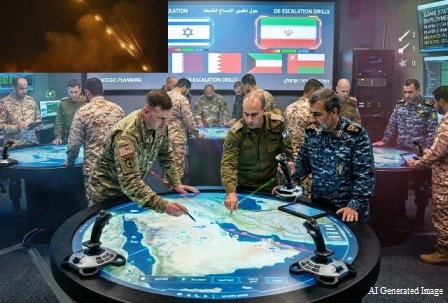
War as a video game. Fast-forward, rapid action, video game. Like the rattling of a machine gun. Full power AI driven animation. Like regressive childhood hallucinations.

Fire, fireballs, hell fire, explosions rocking the screen, the screen rocking like hell, a hulk walks, the bombs talk, the sky, earth, river, forest, flowers, birds – children, mothers, they all evaporate in this goddamned fire of hell on earth.

This is Armageddon, the final day of judgement (the New Testament), as in the concentration camps of Hitler where naked bodies, in dark, dingy ghettos, were gassed en masse to death. Adolf Hitler’s ‘Final Solution’.

Now, the Israeli Zionist regime of fanatic Jews replicated it in the genocide in Gaza. This too was a religious war: On October 28, 2023, before the mass murder machine was activated, Benjamin Netanyahu reportedly announced that “remember what Amalek has done to you, says our Holy Bible. And we do remember”. He allegedly gave a similar message to Israeli armed forces on November 3, 2023.

He was apparently referring to theBook of First Samuel (1 Samuel 15:3) in the Old Testament/Torah, where the prophet Samuel tells King Saul: “Now go, attack the Amalekites and totally destroy all that belongs to them. Do not spare them; put to death men and women, children and infants, cattle and sheep, camels and donkeys”. (The Amalekites were their enemies following the Exodus from Egypt.)

Now, bombs and missiles are flying like yellow-orange fantasies – war as an addictive video game. AI guided Tomahawk missiles have hit schools in Iran – and this is no video game. This is as real as it gets.

(As in a school in Minab, Iran – bombed, even while the meaningless Trump war had just about started. So why did they choose a school of little boys and girls? Was it a diabolical military installation? More than 180 people killed, especially school girls and boys, their school bags and books soaked with blood, their scattered limbs all over the place.)

Precision attacks from the paedophile factory of AI warriors?

The Armageddon begins.

The religious crusaders at the White House are at work.

The video: suddenly, you can hear a man scream: Fire ball!

Guess his name?

US Secretary of War: Pete Hegseth.

(Please note: He is not the Secretary of Defence, the usual nomenclature used by governments across the world. War! As a designation, a medal of honour, a fanatic tattoo inscribed on the body. Holy war!)

Writes Zachary B Wolf (March 13, 2026, CNN,Pete Hegseth wanted an ‘American Crusade.’ Now he’s leading a war in the Middle East: “…not long after returning from a dignified transfer of soldiers killed in action, Hegseth quoted Psalm 144 at a Pentagon press conference: “Blessed be the Lord, my rock, who trains my hands for war and my fingers for battle…

“America was founded as a Christian nation,” he said at a recent National Prayer Breakfast. “It remains a Christian nation in our DNA, if we can keep it,” he added, splicing some religion onto a famous Benjamin Franklin quip about whether the US was a republic or a monarchy…

… Not only are we warriors armed with the arsenal of freedom, we, ultimately, are armed with the arsenal of faith,” he said, adapting Franklin D. Roosevelt’s idea that the US should be the arsenal of democracy to his own religious worldview…

… Hegseth says one of his tattoos — a Jerusalem Cross, a religious symbol tied to the Crusades— led him to be labelled an extremist and disinvited from his unit’s detail to President Joe Biden’s inauguration in 2021. The imagery has roots in the Crusades, when European Christians tried to reclaim the Holy Land from Muslims.”

… The term Deus Vult, “God Wills It,” is also tattooed on Hegseth’s body. In his 2020 book American Crusade, he describes the term as “the rallying cry of Christian knights as they marched to Jerusalem.”

Now, it’s Tehran. For no rhyme or reason, with Israel taking them for a jolly good ride. Every expert and politician in the US, who knows the inside story, are telling again and again: there was no imminent threat from Iran.

So, was it just for fun? Like a regressive video game?

“We may hit it a few more times just for fun,” said the US president, reportedly, after hitting the Kharg island oil installations in Israel. (March 15, 2006, Al Jazeera, AP and Reuters.)

A holy war, a crusade, an Armageddon – just for fun?

It’s only that they can’t even cross the Strait of Hormuz, all their NATO allies have abandoned them despite a desperate Trump seeking help, oil prices have sky-rocketed globally, the entire Middle East is in flames, Tel Aviv has been ravaged, their cabinet reportedly meets in bunkers, and their citizens, psychologically under a siege mentality, trapped in underground spaces, and traumatised by relentless genocides, killings and war.

Most American military bases in the Gulf Countries have been crippled, all airports are shut, millions are stranded, the US has abandoned everybody and left them to their dark destiny, apparently the Mossad headquarters, apart from other buildings like Bibi’s house and military bases, has been hit by Iran’s barrage of hypersonic and ballistic missiles, multinational data centres aligned with US-Israel have been targeted, and so have scores of oil tankers, financial hubs, business districts, airports and five star hotels in the Gulf.

Ironically, Bibi seems to have disappeared, and so has his hardliner defence minister (car crash? Iranian missile?). Rumours are floating, reinforced by the video of six-fingered Bibi — another AI work of genius.

Clearly, things are not at all looking good for both Bibi, or Trump.

Writes Sara Braun (The Guardian, March 3, 2026): “Military commanders have been invoking extremist Christian rhetoric about biblical “end times” to justify involvement in the Iran war to troops, according to complaints made to a watchdog group…The Military Religious Freedom Foundation (MRFF) says it has received more than 200 complaints from service members across all branches of the armed forces, including the marines, air force and space force.”

“One complainant, identified as a non-commissioned officer (NCO) in a unit that could be deployed “at any moment to join” operations against Iran, told MRFF in a complaint viewed by the Guardian that their commander had “urged us to tell our troops that this was ‘all part of God’s divine plan’ and he specifically referenced numerous citations out of the Book of Revelation referring to Armageddon and the imminent return of Jesus Christ”.

“He said that ‘President Trump has been anointed by Jesus to light the signal fire in Iran to cause Armageddon and mark his return to Earth’”, the NCO added.

War as a fantastic, cathartic, fanatic, White Supremacist, racist, masculine ‘Game of Thrones’ with Trump as the newest prophet of doom, and Hegseth his sidekick with a crusader’s tattoo on his body.

War as wish-fulfilment. “I do believe I’ll be … having the honour ​of taking Cuba. That’s a big honour. Taking Cuba in some form… I ​mean, whether I free it, take it. Think I can do anything I want with it…”

This is Trump chatting with reporters at the Oval Office. With Cuba facing sanctions since more than 60 years. Fidel Castro and Che Guevara’s Cuba. Forever cocking a snook at the face of the American establishment – barring Barack Obama, who removed the sanctions.

(Obama also removed the sanctions on Iran, while Iran agreed to stop nuclear enrichment. Exactly what it had agreed to during the talks in Geneva with Jared Kushner and Steve Witkoff, US point-men for the Middle East. So what happened? While Iran agreed to stop all nuclear enrichment, Trump and his war secretary played Armageddon, and bombed them. Earlier, Trump had claimed that he has bombed the hell out of Iran, and all of Iran’s nuclear installations have been effectively destroyed. Finito!

So why this action replay now?

So what will happen now to the Crusade? And the video game?