Cong Questions India’s Sovereignty Amid US ‘Permission’ To Buy Russian Oil

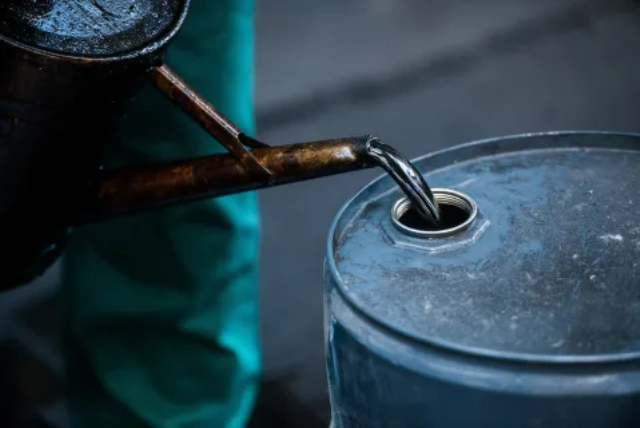
Congress on Saturday slammed the Centre after United States Treasury Secretary Scott Bessent reiterated that Washington DC has granted India the 30-day “permission” to purchase Russian oil, questioning Prime Minister Narendra Modi’s “silence” on the waiver.

Calling the Prime Minister “weak” and the US’s move “humiliation” for India, Congress sought an explanation from the Centre.

Citing Scott Bessent’s interview with Fox Business, Congress wrote on X, “‘Indians have been very good actors. We asked them to stop buying Russian oil, and they did. Now we have given them ‘permission’ to buy Russian oil.’ These are the words of the United States Secretary of the Treasury, Scott Bessent. Permission? For India? A country of 1.4 billion people, waiting for Washington’s approval. This is the cost of a compromised Prime Minister.”

In a strong-worded statement, the Opposition party said that India did not gain independence for a foreign nation to dictate its terms.

“India fought for freedom so that no foreign power could dictate terms to us. Yet today, under a weak Prime Minister, the US is openly talking about giving India ‘permission’. This is not diplomacy. This is humiliation. Indians are not actors in someone else’s script. PM Modi, your silence on this statement is deafening. The people of India deserve an explanation,” the X post read.

This comes after Bessent yet again said, “The Indians have been very good actors. We had asked them to stop buying sanctioned Russian oil this fall. They did. They were going to substitute it with US oil. But to ease the temporary gap of oil around the world, we have given them permission to accept Russian oil. We may un-sanction other Russian oil.”

With the crisis in the Gulf severely hampering shipping routes that pass through the Strait of Hormuz, the United States on Thursday (local time) allowed a 30-day waiver for India to purchase Russian Oil to meet its energy requirements.

India sources nearly 40 per cent of its oil imports from West Asia, with a significant portion transported through the strategically important Strait of Hormuz.

The US’ “permission” statement has sparked heavy criticism from the Opposition parties.

However, according to sources, India is reviewing its energy situation twice a day and is in a very comfortable position regarding its energy security. India’s current stock position is also seen to be comfortable, with stock being replenished every day.

As per the sources, there is no shortage of LPG or LNG, as well as crude oil, in the world.

Petroleum and Natural Gas Minister Hardeep Puri also said on Friday that there is no shortage of energy in India and there is no cause for worry for its energy consumers.

“Our priority is to ensure the availability of affordable and sustainable fuel for our citizens, and we are doing it comfortably. There is no shortage of energy in India, and there is no cause of worry for our energy consumers,” the Union Minister posted on X.

The conflict in West Asia, which began with US-Israel joint strikes on Iran, killing its Supreme Leader Ayatollah Ali Khamenei on February 28, has entered its eighth day. Tehran has hit back by attacking Israel and US military bases in West Asian countries. (ANI)

Iran Forces Launch 23rd Wave Of Strikes At US Bases In Gulf

The Islamic Revolutionary Guard Corps (IRGC) has initiated the 23rd phase of “Operation True Promise 4,” deploying a new generation of missile technology against American regional bases and targets within the occupied territories, Iranian state broadcaster Press TV reported on Friday.

According to a statement released by the IRGC’s Public Relations Office on Friday, this latest stage of the campaign involved a “combined drone and missile strike” executed earlier in the day.

The military wing noted that the offensive utilised sophisticated systems capable of engaging various high-priority objectives.

“In this wave, new-generation solid-fuel and liquid-fuel missiles targeted objectives in the occupied territories and American bases in the region,” the Corps stated, as relayed by the Tehran-based news outlet.

The IRGC confirmed that several US military facilities were hit during the barrage. “The headquarters of US terrorist forces at the Sheikh Isa, Juffair, Ali al-Salem, and al-Azraq bases were among the targets struck in this wave,” the statement detailed, identifying outposts located in Bahrain, Kuwait, and Jordan.

Reporting on the geographic reach of the strike, the Iranian state media house noted that the IRGC also focused on the “important and sensitive area of Be’er Sheva.”

Within this technological hub, the Corps claimed that “advanced technology centers, cybersecurity facilities, and military support centers were among the targets” successfully engaged.

Earlier on Friday, the IRGC heralded the start of another segment of the operation, praising the “flawless execution of missile launches from the unbreakable chain of IRGC missile bases.”

This phase was reportedly intended to “decisively shattered the arrogant propaganda of global oppression claiming Iran’s defensive capabilities are weakening or that missile and drone operations are faltering.”

Official Iranian broadcasts further specified that the arsenal used in the operation included the Khorramshahr-4, Kheibar, and Fattah missiles.

These strikes follow a week of what Tehran describes as a “new bout of unprovoked aggression” by US and Israeli forces against Iranian territory.

The IRGC maintains that its retaliatory campaign has reached “deep inside the cities of Tel Aviv and the holy occupied city of al-Quds.”

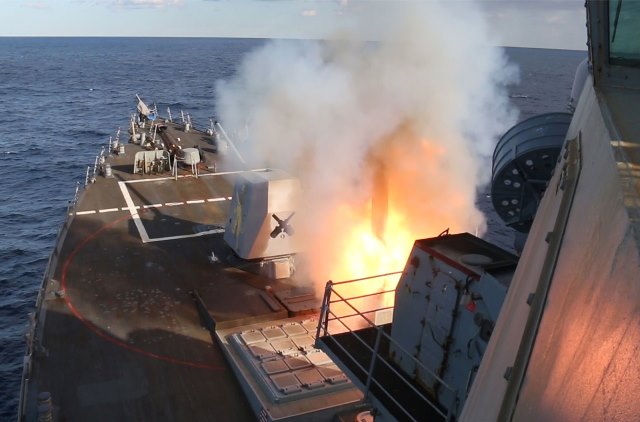
Furthermore, the statement asserted that Iranian forces have struck significant maritime assets, including the “Abraham Lincoln aircraft carrier and a US destroyer” situated in the Indian Ocean. (ANI)

Pakistani Man Asif Merchant Convicted For Plotting To Kill Trump

Asif Merchant, a Pakistani accused of plotting with Iranian authorities to assassinate US President Donald Trump has been convicted by a court in Brooklyn, reported the New York Times. Merchant was found guilty of attempted terrorism and murder for hire by the Federal District Court.

Earlier, Merchant testified that Iranian intelligence operatives coerced him into a plot targeting Donald Trump and Joe Biden, the New York Post reported. Asif Merchant, provided his account in court on Wednesday, claiming he was pressured into the scheme to protect his relatives.

During his testimony to the Brooklyn federal court, he stated that he felt compelled to act. “I had no other options. My family was threatened,” Merchant informed the jury. The accused, a former banker, allegedly paid USD 5,000 to two undercover FBI agents who were masquerading as assassins.

According to the New York Post, Merchant claimed that an Iranian handler instructed him in April 2024 to travel to the United States to “maybe to have somebody murdered. While the handler allegedly did not specify a single individual initially, Merchant testified that three names were provided.

“He did not tell me exactly who it is, but he named three people to me: Donald Trump, Joe Biden and Nikki Haley,” he explained.

At that time, Trump and Biden were the frontrunners for the 2024 presidential race. Merchant, claimed he was already involved in helping the Iranian regime evade sanctions through money laundering. The New York Post noted that he identified his handler as Mehrdad Yousef, a member of the Islamic Revolutionary Guard Corps.

The trial and judgement comes as the US-Israel continued to strike on Iran and the Islamic regime responding with counter attacks targeting US assets in the region.

Meanwhile, US President Donald Trump on Friday (US local time) praised the military operations being undertaken by the United States in Iran and claimed that the Persian Gulf country has lost its army, navy and communications along with its leaders. He made the remarks while speaking during a round table on collegiate sports in the White House.

Trump told the press, “We’re doing very — by the way, in Iran. Somebody said, how would you score it from zero to 10? I said I’d give it a 12 to a 15. Their army is gone. Their Navy is gone. Their communications are gone. Their leaders are gone. Two sets of their leaders are gone. They’re down to their third set. Their air forces wiped out entirely. Think of it. They have 32 ships. All 32 are at the bottom of the ocean.”

Saturday is day 7 of the conflict in West Asia and with neither side relenting the conflict shows no sign of abating. (ANI)

Oil Prices Cross $90/Barrel Amid Prolonged West Asia Conflict

Crude oil prices shot up sharply, reportedly after the US President Donald Trump sought what he called “unconditional surrender” from Iran, intensifying worries about a prolonged conflict that could disrupt global energy supplies.

Crude Oil WTI Futures were 12.2 per cent up at USD 90.90 at the time of filing this report. It has seen its biggest weekly gain since April 2020, as per reports.

Escalating tensions in Iran and the wider West Asia region have intensified concerns over global crude oil supplies, with experts warning of sustained volatility that could potentially impact global energy sector, including India.

Apurva Sheth, Head of Market Perspectives and Research, SAMCO Securities said it seems that the ongoing conflict between the United States and Iran is likely to keep the prices elevated.

“The war has significantly disrupted energy markets and heightened concerns about supply flows through the Strait of Hormuz, one of the world’s most critical oil shipping routes. Approximately 20% of global oil supply passes through this chokepoint, making it highly sensitive to geopolitical disruptions,” Sheth said.

The war between the United States and Israel against Iran has the potential to be the largest oil supply disruption in history if oil flows via the narrow Strait of Hormuz remain low or come to a halt, said Jim Burkhard, Global Head of Crude Oil Research at S&P Global Energy.

“Initially, energy infrastructure had not been targeted by Iran, but that has changed with attacks on facilities in Saudi Arabia and Qatar. This adds a critical further dimension to the shock wave hitting oil and gas markets, according to a new S&P Global Energy analysis,” Jim Burkhard said.

S&P Global Energy Commodities at Sea data shows that on March 1 only 5 oil tankers transited the Strait compared with around 60 tankers per day recently. (ANI)

No One Is Watching ‘Kerala Story 2’: Rahul Slams Filmy Propaganda

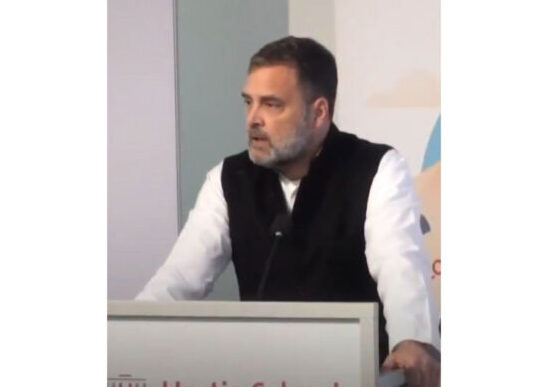
Lok Sabha Leader of Opposition (LoP) Rahul Gandhi criticised the use of cinema and media for political propaganda, referring to the debate around “The Kerala Story 2”, asserting that films and media should unite rather than divide society.

Sharing a video of his interaction with students of Marian College in Idukki, Kerala, on social media, Gandhi said cinema and media were increasingly being “weaponised” to vilify communities and create social divisions.

Captioning the post, Gandhi wrote, “The real Kerala story – compassion, unity, and always standing by one another. Cinema and media should bring people together, not be weaponised to divide society or vilify communities.”

In the video, a student asked Gandhi whether cinema was increasingly being used as a political propaganda tool to shape public perception, referring to controversies around films such as “The Kerala Story.”

Responding to the question, Gandhi said that the public understands the social and cultural fabric of Kerala. “‘The Kerala Story’s’ hall seems to be empty, and nobody’s really watching it. And it shows you that there are people, the majority of this country, have an understanding of what Kerala is and Kerala’s traditions and cultures,” Gandhi said.

He also reflected on his experience as the then Member of Parliament from Wayanad for five years and the lessons he learnt from the people of the state.

“I spent five years being an MP from Wayanad. I learnt a lot from the people of Kerala, and also the people of Wayanad. When I first arrived there, there was a big landslide, and a lot of people had died. I was very surprised at the reaction of the people to that landslide. In fact, I was very impressed by it,” Gandhi said.

Describing the response of local residents during the tragedy, he highlighted the spirit of solidarity among the people.

“It was quite amazing to see that somebody who’s lost his family, lost his house, he’s interested in helping somebody else. And it didn’t matter what community that person was from, what religion, none of that mattered. It was that there’s a problem, and all of us have to get together to solve the problem. I found that to be a very powerful thing,” he said.

Gandhi further said the people of Kerala are widely respected across the country. “Of course, you people have made us very proud. The only thing one hears about the people of Kerala is praise,” he said.

He also reiterated his concerns about the role of media and films in shaping narratives. “Movies, TV, media have been weaponised to vilify people, to alienate people, to create division in society so that certain people can benefit and other people are harmed,” Gandhi said. (ANI)

Allu Arjun Celebrates ’15 Yrs Of Togetherness’ With Sneha

Actor Allu Arjun is celebrating 15 years of his marital bliss with his “cutie” wife Sneha Reddy, marking more than a decade of togetherness.

Allu Arjun shared a picture with his wife and wrote, “Happy Anniversary, Cutie. 15 years of togetherness. The journey could not have been this without you.”

The ‘Pushpa’ star also shared a string of photographs on his Instagram stories and added, “15th anniversary. Life of Laughter & companionship.”

On the other hand, Sneha Reddy reflected on building a family together and wrote, “15 years later We’ve built a life full of love, a family that means everything to me, and a home filled with warmth — our two beautiful kids, our two dogs, and countless memories in between. Thank you for being my partner in every chapter. Happy anniversary.”

Allu Arjun and Sneha Reddy got married on March 6, 2011. They are proud parents of two lovely kids, Ayaan and Arha.

On the work front, Allu is currently busy shooting for his next project, tentatively titled AA23, in collaboration with acclaimed filmmaker Lokesh Kanagaraj, the visionary behind the Lokesh Cinematic Universe (LCU) and some of Indian cinema’s biggest blockbusters.

Earlier in February, Allu Arjun won the Best Actor Award at the 70th Filmfare Awards South for his performance in Sukumar’s ‘Pushpa 2: The Rule’. The actor celebrated the feat on Instagram as he shared a glimpse from the ceremony.

Directed by Sukumar B, ‘Pushpa 2: The Rule’ was released in 2024, emerging as a big hit at the box office. A sequel to 2021’s ‘Pushpa: The Rise’, the film featured Allu Arjun in the lead, alongside Rashmika Mandanna, Fahadh Faasil, Jagapathi Babu, Sunil and Rao Ramesh.

The team is expected to return for the third instalment of ‘Pushpa’. (ANI)

Nagpur’s Vikram-Ajinkya Gandhe Crowned Winners Of ‘MasterChef India’ 2026

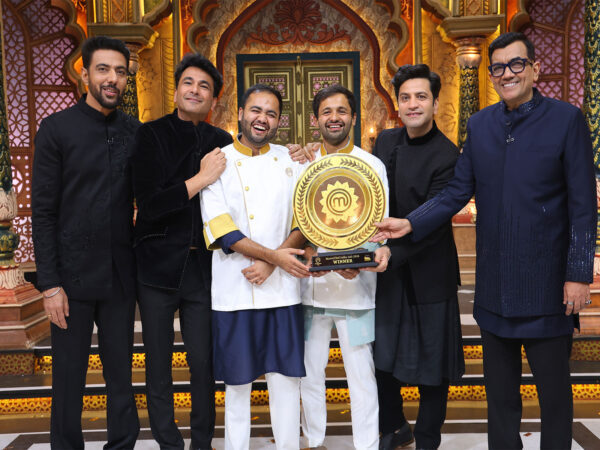
The latest edition of ‘MasterChef India’ has culminated in a spectacular grand finale, with Nagpur’s brother duo, Vikram and Ajinkya Gandhe, crowned as the winners of the season.

The grand finale was graced by celebrated chef Sanjeev Kapoor, alongside judges Vikas Khanna, Ranveer Brar, and Kunal Kapur, where the brothers lifted the coveted trophy and donned the prestigious Golden Apron.

The season introduced a unique format, starting with 50 pairs from across the country, each bringing their unique bond and culinary heritage to the MasterChef kitchen.

Talking about being a part of MasterChef India, chef Sanjeev Kapoor shared, “Over the years, MasterChef and I have shared a long-standing association built on a common vision, to celebrate India’s diverse culinary heritage and to give passionate cooks a national platform. What makes this season special is how it reflects a confident, forward-moving India, ambitious and proud of its roots. The contestants aren’t just showcasing their skills, but also representing their states, their hometowns, and their culinary heritage with pride. This time India won’t just get one winner, but two chefs who will rise together from this incredible platform,” as per a press release.

Chef Vikas Khanna reflected, “As this season comes to a close and life returns to its everyday rhythm, the memories we created together will stay with us forever. Every winner carries the MasterChef legacy forward, and I truly hope Vikram and Ajinkya continue to shine and inspire many more.”

Chef Ranveer Brar added, “MasterChef India has always been more than work, it’s family. Goodbyes are never easy, but I firmly believe the best always wins, and this season was no exception. Vikram and Ajinkya proved that with every dish.”

Chef Kunal Kapur described the season as “one of the finest.”

“The level of talent, creativity, and resilience displayed by the contestants has set a new benchmark. I have seen the grit in Vikram and Ajinkya’s eyes, and that determination has rightfully earned them this victory. I feel immensely proud to have been part of a journey that celebrated such extraordinary passion and excellence,” he added. (ANI)

Crude Politics: Centre Hails US Oil Waiver As ‘Diplomatic Win’; Opposition Slams ‘Surrender’

The decision by the US Treasury Department to grant a 30-day temporary waiver (effective March 5 to April 4, 2026), citing disruptions in global oil supplies due to the Iran-Israel conflict, allowing Indian refiners to purchase stranded Russian crude, has sparked a fierce domestic political debate.

While the government frames the move as a pragmatic victory for energy security amid the escalating West Asia conflict, the Opposition argues it exposes a newfound Indian dependency on Washington’s “permission.”

The ruling BJP party hails this as a “diplomatic win” and a success of PM Modi’s strategic oil diplomacy, while the opposition Congress party slams it as “strategic surrender” and “American blackmail.”

What seemed to be a short-term relief for India to avoid potential risks linked to energy supply disruptions in the Middle East quickly posed a question mark on the country’s “sovereignty” as the Opposition leaders launched scathing attacks on the Prime Minister Narendra Modi-led BJP government, calling him “compromised” yet again.

US Treasury Secretary Scott Bessent, on Thursday (local time), while announcing the waiver, said that the waiver only authorises “transactions involving oil already stranded at sea,” adding that the US expects India to “ramp up purchases of US oil” once the crisis is averted

India sources nearly 40 per cent of its oil imports from the Middle East, with a significant portion transported through the strategically important Strait of Hormuz.

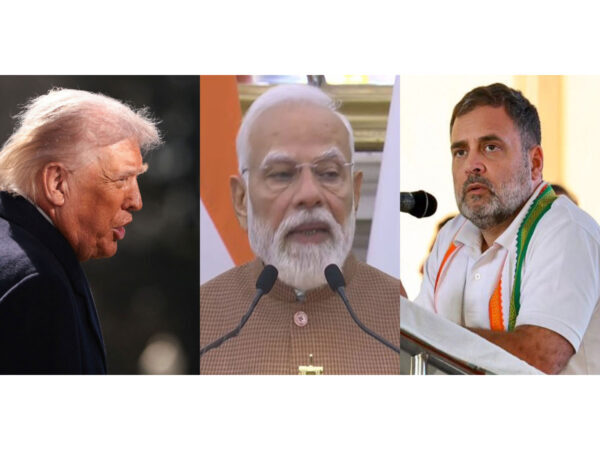
Reacting to the news, Leader of Opposition in Lok Sabha, Rahul Gandhi, took a jibe at PM Modi and the Central Government over the question of sovereignty and described Indian foreign policy as “exploitation of a compromised individual.”

“India’s foreign policy emerges from the collective will of our people. It should be rooted in our history, our geography, and our spiritual ethos based on Satya and Ahimsa. What we are witnessing today is not policy. It is the result of the exploitation of a compromised individual,” Gandhi wrote on X.

Similarly, Congress MP Jairam Ramesh also cornered the Central government and termed the waiver “American blackmail.”

He questioned the silence of the Centre and Prime Minister Narendra Modi over the issue, saying that the statement issued by US Treasury Secretary Scott Bessent was “extremely catastrophic.”

Labelling PM Modi as “afraid and nervous”, Ramesh said that the opposition has demanded a debate on the workings of the Foreign Ministry.

“Why are our Prime Minister, External Affairs Minister, and Petroleum Minister silent? This is an attack on our sovereignty. An American Minister says that we are granting permission to India to buy oil from Russia for 30 days. In 1971, the same language was used by Nixon and Kissinger. Indira Gandhi gave them a fitting reply. In present times, the Prime Minister goes to Israel after which the attack on Iran happens,” Ramesh told ANI.

Congress President Mallikarjun Kharge recalled PM Modi’s “Main desh nahi jhukne doonga” (would not let the nation bow down), calling it a mere slogan to win elections. He strongly criticised the PM claiming that he was being “blackmailed” by the US.

Additionally, Congress MP KC Venugopal on Friday criticised the Centre over the US waiver granted to Indian refiners to purchase Russian oil, calling it a humiliating development for India’s sovereignty and international standing.

He said it was deeply humiliating that India needed a US “waiver” to purchase oil from a long-standing partner like Russia.

Venugopal added that India must take a strong and independent stance in deciding what is in its supreme national interest, rather than allowing other countries to dictate its foreign policy or force it to seek permission for such decisions.

Furthermore, Chairman of Congress’ Media and Publicity Department, Pawan Khera, called the 30-day waiver “alms” for India.

“When is a waiver given? When someone is bound by an agreement. Has the agreement been signed? When there is no agreement, what is the need for a waiver? They have given us 30 days’ worth of alms, and they (BJP) are celebrating,” the Congress leader said.

Meanwhile, former Delhi CM and Aam Aadmi Party convenor Arvind Kejriwal, angered over the waiver, demanded the resignation of the Prime Minister, questioning why India needed permission from the United States to buy oil from Russia.

He alleged that in recent months the country had witnessed the Prime Minister repeatedly “bowing” before Donald Trump and failing to speak up strongly.

“Who is America to grant India permission to buy oil from Russia? Why does India even need permission from America? In the past few months, the countrymen have watched in great anguish as, one after another, at every step, you have bowed before Trump, and you didn’t even have the courage to speak up in front of him. Mr. Modi, what exactly is this compulsion of yours that has you bowing before Trump?,” Kejriwal wrote on ‘X’.

AAP Delhi President Saurabh Bhardwaj asserted that the move represents a “humiliation” for India, adding that, ” PM Modi has made this country a slave again.”

Moreover, Tamil Nadu Chief Minister MK Stalin lambasted the Narendra Modi government over the waiver and the sinking of the unarmed IRIS Dena that claimed the lives of nearly 87 sailors, saying that the central government looks “totally compromised” on the country’s strategic autonomy and an independent foreign policy.

“When the United States decides to allow India to purchase Russian oil for just 30 days, it raises a fundamental question. Why should India need another country’s approval to secure its own energy needs?” Stalin questioned in a post on X.

Voicing similar concerns, former External Affairs Minister Salman Khurshidsaid said that the Bharatiya Janata Party-led (BJP) government at the Centre doesn’t know its own foreign policy, and there was no visible outcome of the diplomatic efforts.

“It is very dangerous, that from time to time we will grant you permission on what you can do and what you cannot do. Has India’s condition now become such that it would act only with the permission of others? Does India no longer have the right to act in its own interest? This is a question. There should be a discussion on this,” Khurshid told ANI.

Meanwhile, the BJP on Friday described the move as a success of the “strategic oil diplomacy” under Prime Minister Narendra Modi, and said it was a “big egg on the face of anti-India Rahul Gandhi and the Congress.”

“Rahul Gandhi and Congress hate seeing India act with strategic restraint and strategic clarity under Prime Minister Narendra Modi,” BJP national spokesperson Pradeep Bhandari said in a post on X.

With Brent crude surging toward $85, the ruling party argues that securing this oil prevents a massive hike in domestic petrol and diesel prices. Petroleum Minister Hardeep Singh Puri recently noted that India’s strategic reserves are well-stocked, but this waiver provides the “necessary flexibility” to navigate the current maritime crisis in the Middle East.

Notably, according to sources, India is reviewing its energy situation twice a day and is in a very comfortable position regarding its energy security. India’s current stock position is also seen to be comfortable, with stock being replenished every day.

As per the sources, there is no shortage of LPG or LNG, as well as crude oil, in the world.

This comes amid escalating tensions in West Asia after a joint US-Israel military strike on February 28 on Iranian territory resulted in the death of its Supreme Leader, Ayatollah Ali Khamenei and other senior figures, prompting a fierce response from Tehran.

In retaliation, Iran launched waves of drone and missile attacks across multiple Arab countries as the conflict now entered its seventh day. (ANI)
Karan Aujla Announces Special Return Concert After Holi Show Backlash

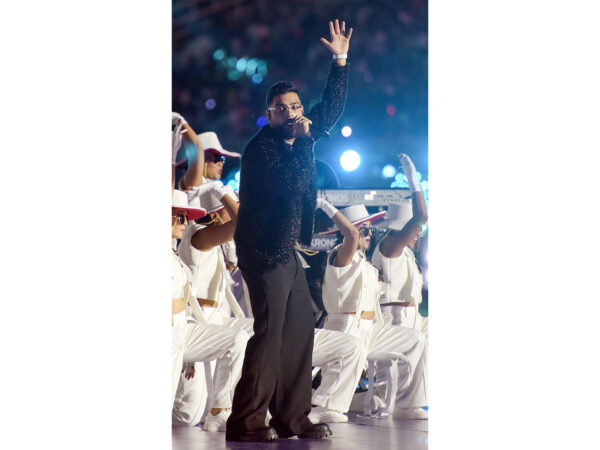
Days after teasing a comeback concert, Punjabi music sensation Karan Aujla is set to return to Mumbai for an electrifying concert, reigniting excitement among fans.

Team Innovation, the primary organiser of the tour, announced the singer’s special return concert titled ‘Karan Aujla P-POP Culture India Tour – Mumbai 2.0’, scheduled to be held on April 12, 2026.

As confirmed by the organisers, access to the concert will be offered without any ticketing charge to all the original ticket holders from the March 3, 2026, Mumbai concert.

It is worth mentioning that the special return concert arrives on the heels of the recently-concluded Holi concert, which was held on March 3 at MMRDA Grounds. A large number of fans gathered to celebrate Holi and enjoy the music. However, after the show, many fans shared videos online, saying they were “disappointed.”

The upcoming concert will feature a global, state-of-the-art production environment, designed to elevate the scale, technology and overall immersion of the performance.

Speaking on the same, Aujla shared, “Mumbai has always shown me incredible love, and this concert is dedicated to my day ones! I want every fan to know they are valued, acknowledged and respected. For everyone who came out to celebrate with us, we’re coming back to create magic again, and this time it’s going to be one wild party,” as per a press release.

In response to the criticism faced by the artist and the organisers after the Mumbai concert, Siddhesh Kudtarkar, Co-Founder, Team Innovation, stated, “The concert was conceived and promoted as a daytime Holi-themed festival at an open-ground venue, and the format, timing and venue environment were clearly communicated across all ticketing and promotional platforms prior to purchase. The weather conditions on the day affected not only fans but also the artist and the on-ground operational teams, as these are natural factors beyond our control. Based on security monitoring, no stampede or crowd-safety incidents were recorded, and the venue operated within planned capacity in a safe manner. Drinking water was available for purchase at multiple designated counters across the venue.”

The concert forms part of Karan Aujla’s 10-city P-POP Culture India Tour, which will be next held in Chandigarh, Indore, Bengaluru, Kolkata, Jaipur, Lucknow, and Ludhiana through March and April 2026. (ANI)

Siddaramaiah MUDA

Siddaramaiah Announces Social Media Ban For Under-16s

Amid growing concerns over the impact of excessive screen time on young minds, the governments of Karnataka and Andhra Pradesh are considering restrictions on social media access for children.

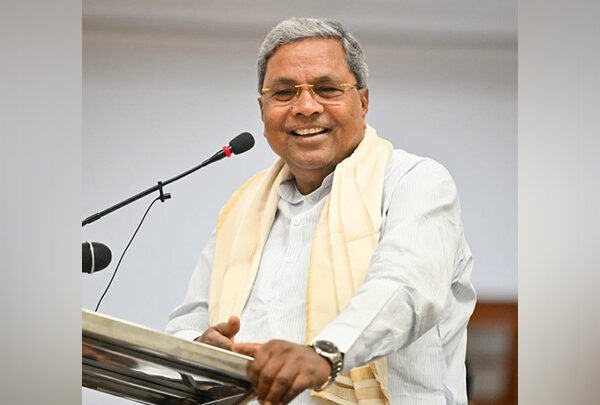
While Karnataka Chief Minister Siddaramaiah announced that social media will be banned for children below 16 years in the state, Andhra Pradesh Chief Minister N Chandrababu Naidu said his government is examining a similar move, with discussions underway on whether the age limit should be set at 13 or extended to 16.

These state-level moves reflect a 2026 global trend. Several nations have recently moved toward similar restrictions: Australia implemented a total under-16 ban in late 2025; France & Greece introduced bans for those under 15, and Spain mandated age verification for minors under 16.

While presenting the ₹4,48,004 crore State Budget in the Assembly in Bengaluru, Siddaramaiah announced that social media will be banned for children under the age of 16 in the state. Explaining the move, he said the government aims to curb the growing impact of excessive mobile usage among children.

Meanwhile, in neighbouring Andhra Pradesh, N Chandrababu Naidu said the state government is considering restricting access to social media for children below 13 years of age, though discussions are still underway on whether the cutoff should be 13 or 16.

“We have received a suggestion to ban social media for children aged below 13 years. Definitely, we will ensure there will be no access to the children below 13 years of age in the coming 90 days,” Naidu said in the Assembly.

He added that the final decision will depend on broader consultations. “Discussion is going on whether it should be 13 years or 16 years. If everyone agrees on it, we will decide.”

Leaders from the ruling Congress in Karnataka backed the proposed restrictions, saying families across the country are struggling with the impact of unregulated social media use among children.

Congress leader Rizwan Arshad said the issue affects many households and requires a structured policy response.

“Social media usage by young children is a social issue that every family is facing. If children get exposed to a lot of unfiltered information through social media, that affects their mental and emotional capabilities,” he said.

Arshad added that the government must consult society while framing the policy. “The government needs to take society into confidence and formulate a policy for implementation. We need to sit and deliberate on this issue.”

Karnataka minister Santosh Lad also welcomed the proposal but acknowledged challenges in implementing such a restriction.

“I welcome it, but implementation is always a challenge. The involvement of society is required in this. It is difficult to monitor everyone,” Lad said, adding that the move should receive broader support. “I don’t understand why they are protesting against it. They should welcome it instead,” he added.

However, the Opposition Bharatiya Janata Party criticised the broader state budget presented by Siddaramaiah, accusing the government of poor financial management.

BJP MP and former chief minister Basavaraj Bommai called the budget disappointing and alleged that the state’s finances were under stress.

“This is the most disappointing budget. Despite taking ₹1,32,000 crore loan and imposing an additional burden of ₹25,000 crore tax, there is a deficit of ₹32,000 crore,” Bommai said. He added that the financial situation suggested, “There is no money for development.”

In another statement, Bommai described the financial plan as “a directionless, zero-progress budget which will take the state to the brink of debt.”

Responding to the criticism, Siddaramaiah said the opposition’s remarks were politically motivated.

“BJP is reacting politically. They are opposing it politically,” the chief minister said, defending the fiscal planning of his government.

Meanwhile, the ₹4.48 lakh crore budget presented by Siddaramaiah, his 17th as chief minister, focuses heavily on technology, infrastructure development and social welfare programmes.

The chief minister said the size of the budget represents a 9.4 per cent increase over the previous year. He also noted that changes in GST rates have affected the state’s revenue.

“Even though we have been hit by GST, we are number two in the country in GST collection. We have lost about ₹10,000 crore in taxes due to this,” he said.

Highlighting welfare initiatives, Siddaramaiah said the government has allocated significant funds for its flagship guarantee schemes.

“We are spending ₹51,000 crore on all guarantee schemes. We have spent ₹1,21,598 crore on guarantees,” he said, adding that the government has maintained fiscal discipline.

The chief minister said the state’s total debt would be around ₹8.24 lakh crore, which remains within permissible limits. “It will be 24.94 per cent, so we are within the limit,” he said.

Among the major infrastructure announcements, the government approved a ₹40,000 crore North-South and East-West corridor network in Bengaluru. The North-South corridor will connect Hebbal Junction to HSR Layout-Silk Board Junction, while the East-West corridor will run from KR Puram to Mysore Road.

In the first phase, tenders have been invited for a 17-km North-South corridor project estimated at ₹17,780 crore.

The budget also proposes the creation of a “Bangalore Robotics and AI Innovation Zone” in collaboration with the Indian Space Research Organisation (ISRO) and the Indian Institute of Science (IIS) to promote artificial intelligence and robotics research.

Other announcements include the construction of a 450-bed multi-speciality hospital in Karwar, new peripheral cancer centres in Mysuru and Tumakuru, a trauma care centre in Raichur, and infrastructure expansion in Bengaluru, including tunnel and elevated roads.

The government also proposed enacting the Rohith Vemula Act to prevent caste-based discrimination against students in educational institutions.

As discussions continue over children’s digital safety and the economic direction of the state, the proposals from Karnataka and Andhra Pradesh have sparked a broader national conversation on regulating social media access for minors while balancing technological growth with social responsibility. (ANI)