Experts At Raisina Dialogue Warn Of West Asia Conflict’s Spillover Into Indo-Pacific

Highlighting the interconnected nature of modern warfare, foreign policy experts at the Raisina Dialogue 2026 stated that the ongoing conflict in West Asia is no longer a regional affair but one that is “bleeding together” with global security theatres, including the Indo-Pacific.

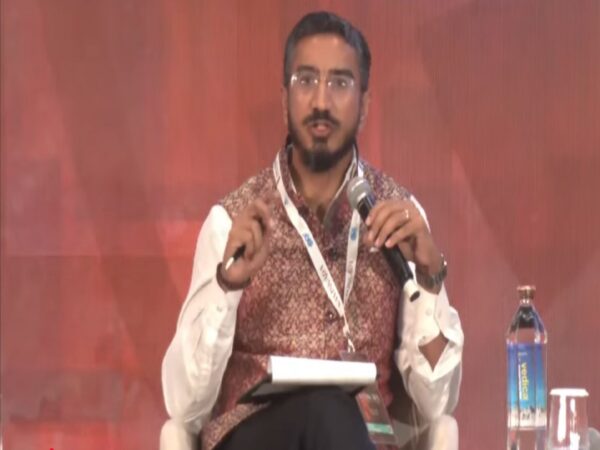
Speaking at a session titled ‘Beyond Strategic Ambiguity: Rethinking Deterrence in the Taiwan Strait’, Dhruva Jaishankar, Executive Director of the Observer Research Foundation (ORF) America, noted that the scope of the Middle East conflict is “obviously widening.”

“From Cyprus, we have had drone strikes against British military facilities in Cyprus, so a European country was listed directly, obviously off the coast. And I think that, in some ways, indicates the expanding interest, you know, the range that both in terms of the missile and drone capabilities that Iran has demonstrated,” Jaishankar remarked.

He emphasised that both the US and Iran are aware that their “war is not going to be contained to a very narrow area,” creating a significant spillover effect.

Drawing a parallel to the Indo-Pacific, he added: “All this indicates is that these conflicts, whether in Ukraine or Iran, have nothing pertained to those regions. These theatres are bleeding together in ways that we had not been okay.”

Addressing the shift of American military resources from East Asia to West Asia amid the Iran conflict, Bonnie Glick, Adjunct Senior Fellow at the Foundation for Defence of Democracies, maintained that the United States remains capable of addressing multiple crises simultaneously.

“I think one of the things that we focus on in the United States is addressing conflicts individually, while also simultaneously having access to an ability to respond elsewhere in the world,” Glick said.

She noted that while there is concern over China using the “opportunity vis-a-vis Taiwan,” the messaging from Washington remains firm.

“I think China views bottom line American intervention in Iran right now as a moment for consideration of Taiwan, but also as a moment of this probably does not make sense right now, because we know that the United States will be able to respond if needed,” she added.

Helena Legarda, Head of Program Foreign Relations at the Mercator Institute for Chinese Studies, suggested that while Beijing might use these foreign conflicts for “rhetorical ammunition,” they do not necessarily legitimise military action against Taiwan.

“Beijing does want to present itself as a responsible global power and force for peace and a defender of the interests of smaller countries,” Legarda noted, adding that these narratives find a “receptive audience in some parts of the world.”

However, she cautioned that the timeline of these conflicts impacts European response capabilities.

“If the war in Ukraine is still ongoing, and Europe is facing that one alone, I would find it unlikely that most European or EU member states, rather, will be able to muster military assets or substantial military assets to send to the Indo-Pacific region,” she said, though she noted economic sanctions would remain a viable form of involvement.

Providing a perspective from Taipei, I-Chung Lai, Senior Advisor to the Taiwan-Asia Exchange Foundation, stated that current regional conflicts do not yet shift the fundamental military balance in the strait.

“When we look at the Chinese capability, we do not think that China possess the kind of invasion capability. They cannot just accept invasion of Taiwanese movement. No, they can’t, and probably even they won’t be able to do it next year as well,” Lai remarked.

He emphasised that the primary concern remains the “longer term the military supply” of weaponry and ammunition to ensure Taiwan’s security is not compromised by global demand elsewhere. (ANI)

‘Goal Of Eliminating Khamenei Set In November’: Israel Katz On Decision To Kill Iran’s Top Leader

The Israeli government decided to eliminate Iran’s former Supreme Leader Ali Khamenei as early as November, with initial intentions to execute the mission approximately six months thereafter, according to a report by The Jerusalem Post citing Defence Minister Israel Katz.

Speaking on Thursday, Katz revealed that the strategic objective was established during a high-level security meeting late last year.

“Already in November we were convened with the prime minister in a very tight forum and the prime minister [Benjamin Netanyahu] set the goal of eliminating Khamenei,” Katz told N12 News. He further noted that the operation was originally scheduled for the middle of 2026.

According to The Jerusalem Post, the operational timeline was accelerated following a period of domestic unrest within Iran. Israel shared the strategy with Washington and brought the mission forward around January.

Katz explained that the adjustment was prompted by concerns that the pressured clerical leadership in Tehran might initiate hostilities against Israeli and United States assets throughout the Middle East.

The killing was carried out during the opening hours of Operations Roaring Lion and Epic Fury, which commenced on Saturday. This strike marks the first instance of a sovereign nation’s top leader being eliminated via an airstrike.

Israel has maintained that its primary objectives are to dismantle what it perceives as an “existential threat” stemming from Iran’s ballistic missile project and nuclear programme, while also facilitating “regime change.”

Following the initial high-profile strike, the Israel Defence Forces (IDF) have continued to intensify their air campaign. On Thursday, the IDF announced it had completed its 12th wave of strikes in Tehran, targeting key Iranian security and military infrastructure.

Among the high-priority targets was the headquarters of a special unit in Alborz province, which is responsible for all internal security forces. “IDF Completes 12th Wave of Strikes in Tehran: Headquarters of the Iranian Terror Regime’s Special Unit in ‘Alborz’ Province Attacked, Along with Basij Forces Bases and Internal Security,” the Israeli Air Force (IAF) stated.

In a series of posts on X, the IDF confirmed that the Alborz headquarters commands all special units in the region and serves to direct the regime’s armed forces. Additional facilities belonging to the Islamic Revolutionary Guard Corps (IRGC) and the Basij paramilitary force were also hit.

The IAF further targeted a central command centre for Iran’s armed internal security forces. Dozens of additional sites used for storing and producing weaponry were also struck as part of the campaign against the “Iranian terror regime.”

“The IDF continues to deepen the impact on all the mechanisms of the Iranian terror regime in Tehran,” the IAF stated, describing the offensive as part of a sustained military action against Iranian infrastructure.

These escalating strikes follow the broader outbreak of conflict earlier this week. In retaliation for the death of Ayatollah Ali Khamenei, Iran launched waves of drone and missile attacks across multiple Arab countries, targeting American military bases and Israeli assets. (ANI)

US Grants India 30-Day Waiver to Buy Russian Oil Amid Strait of Hormuz Tensions

With the crisis in the Gulf severely hampering shipping routes that pass through the Strait of Hormuz, the United States on Thursday (local time) allowed a 30 day waiver for India to purchase Russian Oil to meet its energy requirements.

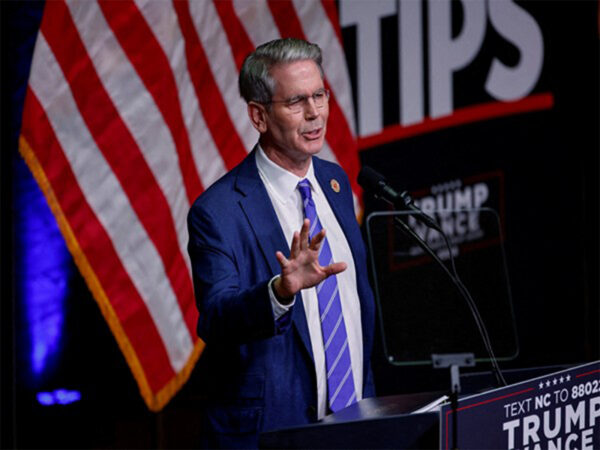
US Treasury Secretary Scott Bessent said, “President Trump’s energy agenda has resulted in oil and gas production reaching the highest levels ever recorded. To enable oil to keep flowing into the global market, the Treasury Department is issuing a temporary 30-day waiver to allow Indian refiners to purchase Russian oil. This deliberately short-term measure will not provide significant financial benefit to the Russian government as it only authorizes transactions involving oil already stranded at sea. India is an essential partner of the United States, and we fully anticipate that New Delhi will ramp up purchases of U.S. oil. This stop-gap measure will alleviate pressure caused by Iran’s attempt to take global energy hostage.”

The waiver comes at a time when India continues to face potential risks linked to energy supply disruptions in the Middle East amid escalating tensions in West Asia after a joint US-Israel military strike on February 28 on Iranian territory resulted in the death of its Supreme Leader, Ayatollah Ali Khamenei and other senior figures.

India sources nearly 40 per cent of its oil imports from the region, with a significant portion transported through the strategically important Strait of Hormuz.

According to sources, India is reviewing its energy situation twice a day and is in a very comfortable position regarding its energy security.

India’s current position of stock is also seen to be comfortable, with stock being replenished every day. As per the sources, there is no shortage of LPG or LNG as well as crude oil, in the world.

Sources noted that India is in touch with other suppliers as well. Sources said India is closely monitoring developments in the region but is well-prepared to manage any potential supply-side challenges due to adequate inventory levels and diversified sourcing.

India continues to import Russian crude as per previous contracts. The government, according to sources, is keeping a close watch on the global energy market to ensure uninterrupted supplies for the country. (ANI)

Major Governors Reshuffle, R N Ravi Moves To Bengal, V K Saxena To Ladakh

President Droupadi Murmu has effected a major administrative reshuffle of Governors and Lieutenant Governors across the country on Thursday, just ahead of the upcoming Rajya Sabha elections.

According to an official communique from the Rashtrapati Bhavan, Tamil Nadu Governor R N Ravi has been appointed as the new Governor of West Bengal, succeeding Dr C V Ananda Bose, who resigned earlier on Thursday.

As part of the comprehensive administrative restructuring, Vinai Kumar Saxena has been transferred from his position as Lieutenant Governor of Delhi to serve as Lieutenant Governor of Ladakh, while former diplomat Taranjit Singh Sandhu has been appointed as the new Lieutenant Governor of Delhi.

In other key changes, Himachal Pradesh Governor Shiv Pratap Shukla has been named Governor of Telangana, while Telangana Governor Jishnu Dev Varma has been transferred to serve as Governor of Maharashtra.

Additionally, senior leader Nand Kishore Yadav has been appointed Governor of Nagaland, and Lieutenant General (Retired) Syed Ata Hasnain has been named Governor of Bihar.

Furthermore, Kavinder Gupta, the outgoing Lieutenant Governor of Ladakh, has been appointed Governor of Himachal Pradesh, and Kerala Governor Rajendra Vishwanath Arlekar will discharge the additional functions of the Governor of Tamil Nadu.

According to an official communique issued by the Rashtrapati Bhavan, these appointments will take effect from the dates on which the respective appointees assume charge of their offices.

Meanwhile, Delhi Chief Minister Rekha Gupta has formally welcomed the newly appointed Lieutenant Governor, Taranjit Singh Sandhu, expressing confidence that Delhi will benefit significantly from his extensive diplomatic experience.

“Heartfelt welcome and congratulations to Delhi’s newly appointed Honorable Lieutenant Governor, Shri Taranjit Singh Sandhu Ji.Congratulations once again to you for this important responsibility. We are fully confident that the people of Delhi will benefit from your extensive diplomatic experience. Under your guidance, we will continue to move forward relentlessly in the capital’s progress and public welfare initiatives. My heartfelt best wishes for your successful tenure,” said Gupta in a post on X.

Alongside, the Chief Minister also praised the outgoing Lieutenant Governor, V K Saxena, saying he has been “dedicated to the development of the capital.”

“For most of his tenure, even amidst diverse challenges and circumstances, you have discharged your duties with patience, restraint, and adherence to constitutional propriety. This reflects your unwavering commitment to duty. Your broad vision towards transparency and public welfare in Delhi will always remain memorable. Heartfelt congratulations to you on assuming the new and important responsibility as the Hon’ble Lieutenant Governor of Ladakh, and infinite best wishes for a glorious tenure,” said Gupta. (ANI)

Telangana CM Revanth Reddy Visits Newlyweds Vijay Deverakonda, Rashmika Mandanna

Telangana Chief Minister Revanth Reddy on Thursday evening visited actor Vijay Deverakonda’s residence to bless him and Rashmika Mandanna after their recent wedding.

Deverakonda, took to his X to share a series of pictures from the CM’s visit and also wrote about how much the gesture meant to him. His post read, “Heartfully touched that the Hon’ble Chief Minister of Telangana, Shri. @revanth_anumulagaru, took the time to visit our home this evening and bless us on our wedding. Grateful for the love and affection he always shares.”

The visit came a day after Rashmika Mandanna and Vijay Deverakonda hosted a grand wedding reception. Many well-known names from the film industry and political circle attended the event.

Rashmika Mandanna and Vijay Deverakonda got married on February 26 in Udaipur in the presence of their close friends and family members.

Last week, taking to her X, Rashmika shared pictures from the meeting when she and Vijay visited PM Modi and invited him for their wedding. “Meeting Honourable Prime Minister @narendramodi sir and spending time talking about our culture and history was so special. The sweetest surprise was the thoughtful letter he wrote to my parents. Some moments just stay with you forever.”

The ‘Pushpa’ actor also shared images from their meeting with Union Home Minister Amit Shah, expressing gratitude on receiving a beautiful Ganesh idol from the leader. “Had the honour of meeting the Honourable Home Minister @AmitShah Sir. Grateful for the beautiful Ganesh idol that now has a special place in our home,” she wrote. (ANI)

281 Flights Cancelled As India Monitors West Asia Situation: MoCA

A total of 281 flights scheduled to operate on Thursday by Indian domestic carriers have been cancelled, confirmed the Civil Aviation Ministry, adding that it continues to closely monitor the evolving situation in West Asia.

As of March 5, a total of 281 flights scheduled to operate on Thursday by Indian domestic carriers have been cancelled.

Passengers are advised to regularly monitor their flight status and remain attentive to updates shared through their registered contact details by their respective airlines.

“The Ministry of Civil Aviation continues to closely monitor the evolving situation in West Asia. As of 5 March, a total of 281 flights scheduled to operate today by Indian domestic carriers have been cancelled. Passengers are advised to regularly monitor their flight status and remain attentive to updates shared through their registered contact details by their respective airlines,” the MoCA posted on X.

“A dedicated Passenger Assistance Control Room (PACR) is functioning 24×7 to provide real-time passenger support. A total of 1,461 grievances have been addressed during this period through AirSewa, social media platforms, and dedicated helpline calls, in coordination with airlines and other concerned stakeholders,” the ministry added.

For assistance, passengers may reach out to the Ministry’s PACR helpline numbers: 011-24604283 / 011-24632987.

Earlier on Wednesday, the Ministry of Civil Aviation said that Special arrangements are being made to facilitate the movement of stranded passengers in the Gulf region as tensions in West Asia rise.

The Ministry is in continuous touch with airlines and is closely monitoring airfares to ensure that there is no undue surge in ticket prices during this period.

Ministry advised passengers to check the latest flight status directly with their respective airlines before proceeding to the airport and to rely only on official sources for updates.

The Ministry remains in continuous coordination with airlines, airport operators, regulatory authorities, and the Ministry of External Affairs to ensure safe operations, orderly restoration of services, and facilitation of affected passengers.

The conflict in the Middle East has entered its fourth day following the US and Israeli strikes on Iran that killed Supreme Leader Ayatollah Khamenei, along with other key figures in the Persian Gulf country. In retaliation, Tehran has responded with counter-strikes targeting American military bases and other Israeli assets across the region. (ANI)

T20 World Cup: Records Tumble In Mumbai As India Beat England To Enter Final

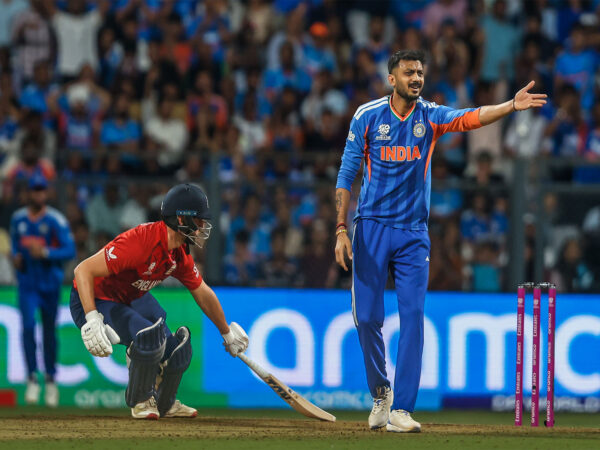
India pulled off a close victory over England in the semi-final clash of the ICC Men’s T20 World Cup 2026 at the iconic Wankhede Stadium in Mumbai on Thursday and entered the final for the second consecutive time.

It was a run-fest in Mumbai as India won the match by just seven runs despite making 253 runs while batting first. An aggregate of 499 runs was recorded in the match, which is the second highest ever in Men’s T20Is after 517 runs, which was made during a T20I match between South Africa and West Indies at the Centurion in 2023.

The third and fourth-highest match aggregates also involve India. The third-highest was against New Zealand, where 496 runs were made. It was played in Thiruvananthapuram just before this tournament started. The fourth-highest match aggregate is 488 runs, which was between India and West Indies, during a bilateral T20I series in Lauderhill in 2016.

India were asked to bat first and posted a mammoth total of 253 runs for the two-time champions in the knockout fixture.

Sanju Samson made 89 runs with the help of eight fours and seven sixes. Shivam Dube (43 off 25 balls) and Ishan Kishan (39 off just 18 balls) helped him from the other end.

Tilak Varma (21 off 7 balls) and Hardik Pandya’s (27 off 12 balls) quick knocks at the end helped India post the biggest total in a T20 World Cup knockout match. Will Jacks and Adil Rashid took a couple of wickets each for England, while Jofra Archer grabbed the crucial wicket of Varma.

In response, Jacob Bethell’s maiden T20I ton kept England alive in the game for most of the time, but the Three Lions failed to reach the total by seven runs.

The match witnessed 34 sixes, which is the most in a T20 World Cup match. Earlier, the record was 31 sixes, which was made during the match between Zimbabwe and the West Indies in this tournament.

Overall, 73 boundaries were hit in the match, including 39 fours and 34 sixes, which is the most in a T20 World Cup match, well clear of the next best — 61 between England and South Africa at this venue in 2016.

Now, India will face New Zealand in the final to be played at the Narendra Modi Stadium in Ahmedabad on Sunday. (ANI)

T20 WC Semi-Final: Alia, Ranbir, Raha Spotted Rooting For Men In Blue

What better way to soak in a World Cup semi-final than cheering from the stands with family?

As India faces England in a high-voltage ICC Men’s T20 World Cup 2026 semi-final at Mumbai’s iconic Wankhede Stadium, the match turned into a star-studded affair, with Bollywood couple Alia Bhatt and Ranbir Kapoor stepping out to support Team India, accompanied by their little daughter, Raha.

The trio was spotted in the stands, enjoying every moment as India dominated proceedings. Ranbir was seen holding Raha on his lap, cheering animatedly, while Alia joined in, making it a picture-perfect family moment. Dressed in Indian jerseys, the Kapoor-Bhatt family was all smiles as they rooted for the Men in Blue.

Caught up in the cricket fever, Alia and Ranbir were also seen cheering for Sanju Samson, celebrating every big hit. The couple clapped after a stunning six and a thrilling four, clearly enjoying the electrifying atmosphere of a World Cup knockout clash.

Samson delivered a memorable performance on the big stage, smashing a breathtaking 89 off just 42 balls. His knock, laced with eight fours and seven sixes, powered India to a flying start against England. Samson’s explosive innings finally ended when he was dismissed by leg-spinner Adil Rashid.

On the field, India posted a mammoth total of 253/7 in 20 overs. Alongside Samson’s heroics, valuable contributions came from Ishan Kishan, Shivam Dube, Hardik Pandya, and Tilak Varma. England was made to pay dearly after Samson was dropped early in his innings.

The team that emerges victorious will face New Zealand in the final on Sunday. (ANI)

IRIS Dena Sinking: Indian Navy Deploys Tarangini, Ikshak To Aid Sri Lanka-Led Search Efforts

The Indian Navy has deployed INS Tarangini and INS Ikshak, along with maritime patrol aircraft, to assist in the Sri Lanka-led search and rescue operations for the Iranian frigate IRIS Dena, which sank on Wednesday after being struck by a US submarine torpedo.

The vessel sank on March 4, 2026, approximately 20 nautical miles west of Galle, after reportedly being struck by a torpedo from a United States submarine.

“A distress call from IRIS Dena was received at the MRCC Colombo in the early hours of 04 March 26, as reported by the Sri Lankan Navy. The ship was operating 20 NM West of Galle in the SAR region under Sri Lankan responsibility. On receipt of the information, the Indian Navy promptly launched its SAR efforts commencing with a long-range maritime patrol aircraft at 1000 hr on 04 March 26 to augment the search efforts led by Sri Lanka,” according to the Indian Navy press release.

“Another aircraft with air-droppable life rafts was also kept on standby for immediate deployment. INS Tarangini, which was operating in the vicinity, was deployed to aid the rescue efforts and arrived in the search area by 1600 hr on 04 March 26. By this time, SAR had been undertaken by the Sri Lankan Navy and other agencies. INS Ikshak has also sailed from Kochi to augment the search efforts and continues to remain in the area to search for missing personnel as a humanitarian measure for shipwrecked personnel. Coordination with the Sri Lankan side on Search and Rescue efforts is ongoing,” added the press release.

US Defence Secretary Pete Hegseth confirmed that a US Navy submarine torpedoed the vessel as part of an expanding military campaign against Iranian assets.

Of the estimated 180 crew members on board, approximately 87 sailors are reported dead, with roughly 32 survivors rescued by the Sri Lanka Navy and admitted to hospitals in Galle.

Meanwhile, the Indian Navy warships are mission-deployed in the Middle East region amid the ongoing conflict between the US and Iran.

Indian Navy warships are in the Gulf of Oman for Operation Sankalp and carrying out anti-piracy operations in the Gulf of Aden. The warships in the Gulf of Aden are helping Indian merchant vessels to reach their destinations safely, sources in the defence establishment said.

There has not been any communication regarding this, but if there is a need, they can be used for helping stranded Indian nationals there, they said.

Meanwhile, Chief of Defence Staff (CDS) Gen Anil Chauhan on Monday reviewed the armed forces’ preparedness after being part of a Cabinet Committee on Security (CCS) meeting chaired by Prime Minister Narendra Modi on the emerging situation.

Sources said that there is also a possibility of using civilian aircraft to help Indian citizens in the Middle East.

The CCS meeting was held on Sunday in the national capital at 7, Lok Kalyan Marg, the official residence of the Prime Minister. According to a release, the Committee was briefed on the air strikes in Iran on 28 February and the subsequent escalation, including attacks in several Gulf countries. It expressed serious concern over the safety and security of the large Indian expatriate community in the region.

The CCS also reviewed the difficulties faced by Indian travellers transiting the region and students appearing for scheduled examinations, as well as the broader implications for regional security and economic and commercial activities. The CCS directed all concerned departments to take necessary and feasible measures to assist Indian nationals affected by the developments. It underscored the importance of an early cessation of hostilities and a return to dialogue and diplomacy. (ANI)

Trump Desires To Be Involved In Choosing Iran’s Next Leader

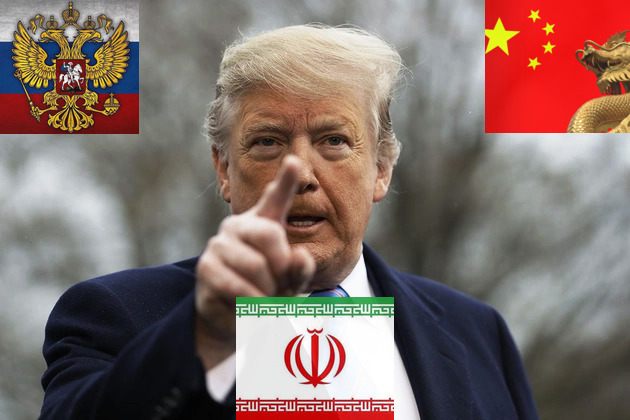
President Donald Trump on Thursday expressed his desire to be personally involved in selecting Iran’s next Supreme Leader following the death of Ayatollah Ali Khamenei in a US-Israel joint military strike last week, as reported by Axios.

In an exclusive interview with Axios, Trump said he wanted a role in the appointment of Iran’s next leader, drawing a comparison to his involvement in political developments in Venezuela in January following the capture of its former President Nicolas Maduro and his wife in a US military operation.

He also criticised the possible succession of the son of the late supreme leader of the Islamic Republic, Mojtaba Khamenei, who is widely viewed as a leading contender for the position.

“They are wasting their time. Khamenei’s son is a lightweight. I have to be involved in the appointment, like with Delcy [Rodriguez] in Venezuela,” Trump said, as quoted by Axios.

Trump described Mojtaba Khamenei as “unacceptable” and said he would prefer a leader who could bring “harmony and peace” to Iran, warning that a continuation of his father’s policies could lead to renewed conflict with the United States in the future.

“Khamenei’s son is unacceptable to me. We want someone that will bring harmony and peace to Iran,” the US President added, according to Axios.

According to reports, Iranian authorities have delayed announcing a successor after the death of Khamenei, though political signals from Tehran suggest a decision on the next supreme leader could come soon.

Reports further suggested that Mojtaba Khamenei, a 56-year-old cleric with close ties to the Islamic Revolutionary Guard Corps (IRGC), is widely seen as the frontrunner for the position.

However, the Iranian government, via the Consulate General in Mumbai, refuted reports of Mojtaba Khamenei being named as his late father Ayatollah Khamenei’s successor.

In a post on X on Wednesday, the consulate said, “Reports circulating on media regarding potential candidates for leadership selected by Iran’s Assembly of Experts have no official source and are officially denied.”

According to Axios, the US president also argued that Washington should not accept a new Iranian leader who would pursue policies similar to those of the late Khamenei.

His remarks come amid escalating tensions in West Asia after a joint US-Israel military strike on February 28 on Iranian territory resulted in the death of its Supreme Leader, Ayatollah Ali Khamenei and other senior figures, prompting a fierce response from Tehran.

In retaliation, Iran launched waves of drone and missile attacks across multiple Arab countries as the conflict now entered its sixth day.

Tehran’s counter-strikes have also targeted American military bases and Israeli assets throughout the region, with Israel also continuing its strikes on Tehran and widening the conflict to Lebanon, targeting Hezbollah. (ANI)