‘Real Kerala Story’: Cong Leader VD Satheesan Highlights Communal Harmony On Attukal Pongala

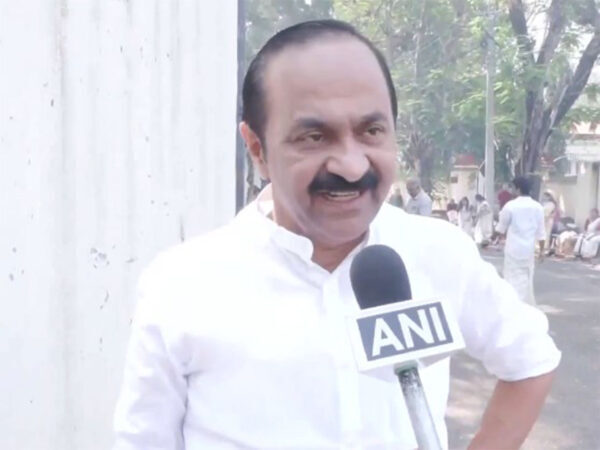
Kerala MLA and Leader of Opposition VD Satheesan on Tuesday hailed the Attukal Pongala 2026 as the “real Kerala story”, highlighting that different communities came together to host the devotees during the festival.

His remarks come amid the mounting controversy over the surrounding the film The Kerala Story 2: Goes Beyond, which has triggered debate over the alleged misrepresentation of Kerala.

Emphasising the state’s secular fabric, he said, “All the communities are the host for the devotees coming from various parts of Kerala. This is our legacy.”

“This is the real Kerala Story, we must declare that the state is secular… After the elections, we will declare that this is secular Kerala,” he further added.

The Attukal Pongala is a 10-day festival celebrated at the Attukal Bhagavathy Temple, with the ninth day witnessing a massive gathering of women devotees.

The Pongala ceremony, regarded as the highlight of the 10-day festival, was held today with the ceremonial lighting of the hearth, known as ‘Pandara Aduppu.’

Millions of women prepare divine offerings made of rice, jaggery, and banana in earthen pots and offer them to the Goddess Attukal Devi.

Attukal Bhagavathy Temple, which is known as “women’s Sabarimala”, is famous for its Pongala festival. Women in huge numbers throng to the temple during the festival.

As part of the ritual dedicated to Goddess Bhagavathy, women devotees will prepare the sacred offering in earthen pots in makeshift brick hearths set up across the temple premises and surrounding areas.

The festival holds a special place in world records, having been listed in the Guinness Book of World Records in 2009 for the largest gathering of women, with 2.5 million participants.

Thiruvananthapuram Mayor V V Rajesh has assured that all necessary arrangements have been put in place for the smooth conduct of the festival, as lakhs of devotees thronged the city.

“The KSRTC has already deployed vehicles for the convenience of the people. There is no problem; everything is in place,” he added. (ANI)

Meat Eating Vegetarian Versus Non Vegetarian

Purity on My Plate: Politics of Bihar’s Meat Shop Order

The Bihar government’s recent order banning the open sale of meat near religious places and schools has triggered a debate that goes well beyond questions of hygiene or urban regulation. Deputy Chief Minister Vijay Kumar Sinha’s remarks—that visible meat sale hurts the “purity of our sentiments” and may foster “violent tendencies” among children—have added a moral and psychological dimension to what might otherwise have been viewed as a civic order. While the government insists it is not interfering with anyone’s right to eat what they choose, critics argue that the framing risks turning a personal dietary preference into a matter of moral suspicion.

At one level, the order can be defended as an attempt to regulate public spaces. Governments routinely issue guidelines concerning food vending near schools and religious sites, often citing concerns of sanitation, crowd management, and sensitivity to local sentiment. In a diverse society like India’s, where certain spaces carry deep religious significance, authorities sometimes try to prevent friction by discouraging activities that may be perceived as offensive. If the Bihar order is implemented neutrally—without targeting any particular community—and strictly on grounds of public hygiene and order, it may fall within the ambit of administrative discretion.

However, the controversy stems less from the regulation itself and more from the language used to justify it. When meat consumption is linked to “violent tendencies,” it moves from the realm of civic management into moral judgment. There is no established scientific consensus suggesting that dietary preference for meat correlates with aggression or criminality. Human behaviour is shaped by complex social, psychological and economic factors. To imply that exposure to meat sales could predispose children to violence risks simplifying a deeply complex issue and reinforcing stereotypes.

The political context also cannot be ignored. In Bihar and beyond, food habits have increasingly become electoral talking points. Leaders such as Lalu Prasad, Tejashwi Yadav, and Rahul Gandhi have found their dietary choices amplified during campaigns. The timing of Sinha’s remarks—just before Holi and ahead of elections in states like West Bengal—has led opposition parties to question whether the order is partly symbolic. In a climate where cultural signals often carry political weight, even administrative decisions can be read through a partisan lens.

Moreover, the idea that vegetarianism represents a singular Hindu norm is historically contestable. Hindu traditions are not monolithic. Shakta practices, several regional Brahmin communities—such as Kashmiri, Bengali, Maithili and Odia Brahmins—and numerous other groups have long included meat in their diets. The National Family Health Survey (2019–21) indicates that a large majority of Indians consume meat at least occasionally. Thus, framing meat consumption as culturally alien to “our sentiments” overlooks the diversity within Hindu society itself.

There is also a social dimension to the vegetarian–non-vegetarian binary. Over centuries, diet has often been used as a caste marker. Vegetarianism came to be associated with certain upper-caste groups, while meat consumption was linked—often pejoratively—to Dalits, tribal, and other marginalised communities. While many Indians today make dietary choices for reasons of health, environment, or ethics, historical hierarchies still influence perceptions. When state action appears to privilege one dietary culture over another, it can revive old anxieties about social exclusion.

Supporters of the order may argue that restricting visible meat sale near temples and schools is about respecting sensitivities rather than asserting superiority. Yet, critics counter that respect must be mutual. A plural society cannot function if one group’s discomfort consistently dictates public norms. The Constitution protects personal liberty, including food choice, subject to reasonable restrictions. Any policy that indirectly stigmatizes lawful dietary habits must therefore tread carefully to avoid crossing into moral policing.

Another concern is economic. For many low-income households, eggs, fish, and affordable meat provide vital protein. If regulatory measures gradually shrink the spaces where such food can be sold or consumed, the burden may fall disproportionately on small vendors and poorer communities. Public policy must ensure that health and nutrition are not compromised by cultural signaling.

The broader debate also touches on a philosophical question: does abstaining from meat confer moral superiority? Indian intellectual history offers varied answers. Vedic rituals included animal sacrifice; later traditions debated or symbolically reinterpreted these practices. Jain and Buddhist philosophies emphasised non-violence toward all living beings, influencing dietary habits across communities. At the same time, ethical conduct has never been reducible solely to diet. A vegetarian individual can participate in environmentally destructive or socially unjust systems; a meat-eater can live an ethically mindful life. Violence and compassion are shaped by actions, not merely ingredients.

Indeed, modern India presents striking contradictions. The country is among the world’s largest exporters of beef, even as domestic debates over meat grow sharper. Large businesses involved in such exports are sometimes owned by families who identify as vegetarian. This economic irony highlights the gap between symbolic politics and structural realities.

Ultimately, the challenge before the Bihar government is to clarify intent and ensure proportionality. If the goal is to maintain cleanliness and prevent public nuisance near sensitive locations, the order should be framed and implemented strictly within that limited scope. The rhetoric should avoid equating dietary practice with moral threat. Public communication matters in a society where identity politics can easily inflame tensions.

Social harmony in India has historically depended on negotiated coexistence rather than enforced uniformity. A confident society does not fear diversity in food, language, or custom. It regulates public order without ranking lifestyles as pure or impure. The state’s role is to uphold law, hygiene, and equality—not to adjudicate virtue.

The Bihar episode, therefore, is less about meat per se and more about the boundaries between governance and moral commentary. It invites reflection on how language, policy, and politics intersect in shaping everyday freedoms. In navigating this terrain, governments would do well to remember that pluralism is not merely a constitutional promise; it is a lived reality that must be respected in both letter and tone.

(Sidharth Mishra is an author, academician and president of the Centre for Reforms, Development & Justice)

APNRT Monitoring 10 L AP Workers In Gulf: CEO Vemuri Ravi

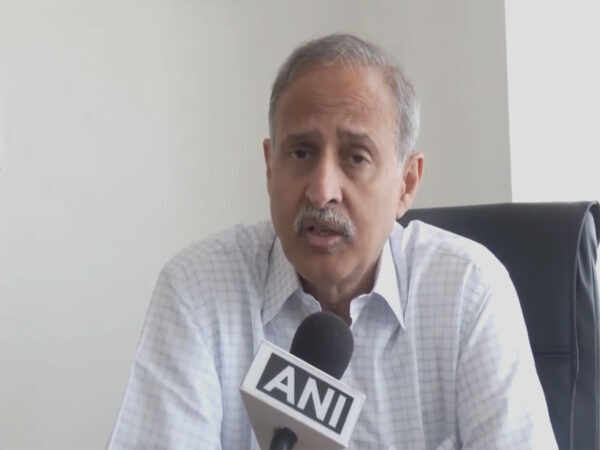
The Andhra Pradesh Non-Resident Telugu Society (APNRTS) is closely monitoring around 10 lakh people from Andhra Pradesh working in Gulf countries amid the ongoing Middle East crisis, with APNRT CEO Dr Ravi Vemuru stating that the situation is particularly critical in Bahrain.

Speaking to ANI, Dr Vemuru said APNRT has deployed nearly 100 coordinators who are closely monitoring the situation on the ground and arranging transportation support for people wherever required.

“From AP, we have about 10 lakh people in seven Middle Eastern countries and Iran. The situation is changing daily. Initially, everyone was worried and panicked, especially the residents. We alleviated their fears, thinking the war would be short-lived. But, as it extended, we called, and many of the residents felt safe and supported by their governments,” Dr Vemuru said.

He added that many people got stuck in Dubai and Kuwait due to halted flights, and APNRT offered them three options: stay at the airport or a hotel, contact coordinators for support, or go to Muscat and fly back to India.

“Many people took that route, so we arranged for transportation. By evening, Dubai, Abu Dhabi, and Saudi Arabia opened their airspace. However, people had to cross borders, and getting transit visas was a nuisance,” he said.

Dr Vemuru highlighted that Bahrain was the hardest hit among all Gulf countries.

“Bahrain was hardest hit, with some buildings near the American base also being struck. The government evacuated people to shelters. We had a long Zoom call yesterday with about 250 people from all 7 countries. They said only Bahrain had the problem. There wasn’t enough food. We also have a lot of Telugu workers in the camps. Our local coordinators in Bahrain are doing an excellent job, even financing the food themselves. If the situation continues, they may need state assistance, which we are prepared to provide,” he said.

He added that Andhra Pradesh Minister Kondapalli Srinivasagar and Chief Minister have been closely monitoring the situation through real-time updates, with reports of every event reaching them.

Dr Vemuru said a new challenge emerged on Tuesday morning regarding workers classified as essential by local governments.

“This morning, we encountered a new issue. Many people planning to return to India are now classified as essential workers by local governments, especially those working in construction or oil and gas. They cannot leave, though they still receive pay. This is the challenge we will address today,” he said.

He also noted that due to the ongoing war, the Indian rupee has weakened and oil prices are rising sharply, warning that this conflict will have a significant global impact.

“Due to the ongoing war, the Indian rupee has weakened, and oil prices are rising sharply. This conflict will have a significant global impact,” Dr Vemuru added.

Both the Government of India and the Government of Andhra Pradesh are actively working on addressing the situation and ensuring the safety and welfare of Indian nationals in the Gulf region. (ANI)

US Forces Say Iran’s IRGC Command Destroyed, Iran Claims Massive Attack On US Base In Bahrain

The United States Central Command (CENTCOM) said on Tuesday that the US forces carried out sustained operations targeting key Iranian military infrastructure, including facilities linked to the Islamic Revolutionary Guard Corps (IRGC).

In a post on X, CENTCOM said, “U.S. forces have destroyed Islamic Revolutionary Guard Corps command and control facilities, Iranian air defense capabilities, missile and drone launch sites, and military airfields during sustained operations. We will continue to take decisive action against imminent threats posed by the Iranian regime.”

CENTCOM also said that multiple squadrons of F/A-18s are supporting sustained operations against Iran. According to CENTCOM U.S. forces are flying day and night to deliver overwhelming firepower. U.S. B-1 bombers also struck deep inside Iran to degrade Iranian ballistic missile capabilities. This enhanced use of firepower comes amid escalating hostilities between Washington and Tehran.

Separately, Al Jazeera reported that Iran claimed to have launched a “massive missile and drone” attack on the US air base in Bahrain. Iran’s IRGC said it destroyed the main command building of a US air base in Bahrain during a drone and missile attack early Tuesday. It said that 20 drones and 3 missiles struck the Sheikh Isa base, also setting fuel tanks on fire.

Iran’s Ambassador to the United Nations, Amir Saeid Iravani, stated that Iran will continue to defend itself decisively for as long as the US-Israeli aggression persists.

The conflict has also spread to Lebanon with Israel mounting an offensive against the Hezbollah. Israel said that the head of Hezbollah’s intelligence arm was killed in an overnight strike. The IDF said Makled was responsible for “forming the intelligence picture using various intelligence collection tools to provide the Hezbollah terror organization with intelligence assessments regarding IDF troops and the State of Israel.” The Israeli Air Force also intercepted two unmanned aerial vehicles that crossed from Lebanon

Earlier, US Secretary of State Marco Rubio said that the US military operation against Iran was aimed at “eliminating” the threat posed by Iran’s short-range ballistic missiles and its naval capabilities, particularly regarding threats to global shipping. Echoing US President Donald Trump he said that the hardest hits were yet to come.

“The hardest hits are yet to come from the U.S. military. The next phase will be even more punishing on Iran than it is right now… The world will be a safer place when we’re done with this operation,” Rubio said

“Our mission and our focus is the destruction of their ballistic missile capabilities and their ability to manufacture them, as well as the threat posed by their Navy to global shipping,” he aded.

The scope of the conflict continues to widen with the Gulf States now drawn into it. (ANI)

Rashmika, Vijay Deverakonda Share Pictures From Their Sangeet

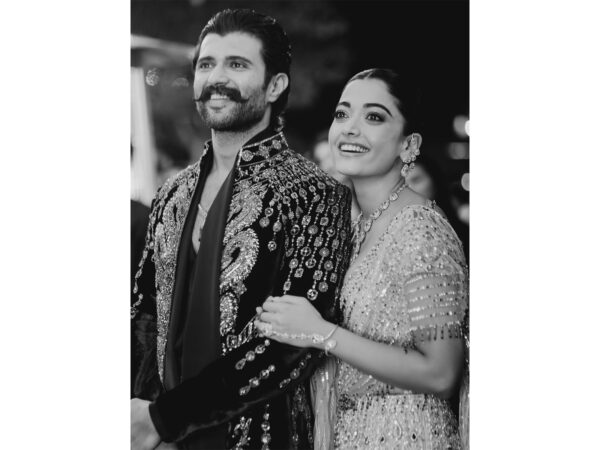
Days after sharing photographs of their dreamy wedding, newlyweds Rashmika Mandanna and Vijay Deverakonda on Tuesday gave fans a sneak peek into their sangeet ceremony, describing it as the night filled with “love, tears, laughter, music and dance.”

Taking to their respective Instagram accounts, Vijay and Rashmika dropped several pictures from their pre-wedding function, where the two dedicated special performances to each other. The celebrations were made even more memorable as both the ladkiwale and ladkewale joined in with full enthusiasm, delivering lively performances and adding to the joyous spirit of the occasion.

For the occasion, both Rashmika and Vijay were dressed in exquisite outfits designed by Falguni Shane Peacock.

One video that truly caught our attention was the one in which Vijay lifted Rashmika in his arms and twirled her around. The couple looked completely in love. The night filled with love, tears of joy, laughter, music, singing, glitters and us dancing through the night. It was really the most fun night ever!! From Vijju and I wanting to surprise each other… to family wanting to surprise us..

to being fully excited and surprised to see our families dance so freely and so so well! @falgunishanepeacockindia!! Guys!!!!! The stunning piecesss!! Guys!! Amazing!! It was super heavy but I was still in it all night!! 24.2.26! The night Vijay and I danced as one, surrounded by the love of our families and friends,” Rashmika captioned the post.

Their sangeet ceremony was held on February 24, and on February 26, the duo solemnised their relationship by taking vows as husband and wife at a traditional ceremony in Udaipur. (ANI)

Holi 2026 Festivities Begin Across India With Colourful Celebration

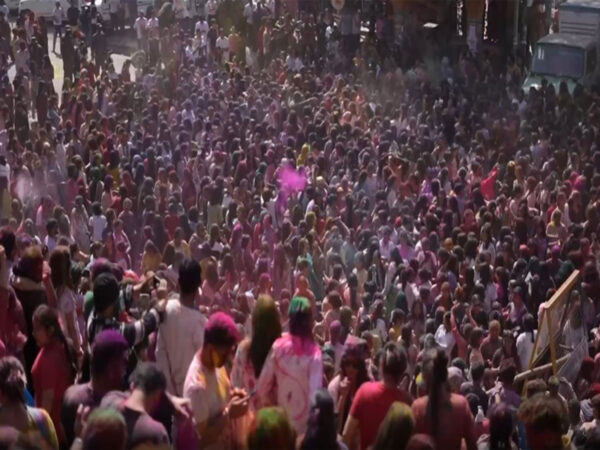
With Holi 2026 just around the corner, the country is already slipping into celebration mode, and from temples to town squares, colours, music and tradition are bringing people together once again.

Across India, early Holi festivities have begun, drawing locals and tourists alike into vibrant gatherings that reflect the festival’s deep cultural roots and joyful spirit.

In Himachal Pradesh, Holi festivities started early in Mandi, where a large number of devotees gathered at the Raj Madhav Rai Temple. The temple complex came alive with dance, devotional songs and colourful celebrations as people played with gulal and enjoyed the festive spirit. Visitors from across India were seen joining the locals in the celebrations.

A tourist who visited Mandi to experience Holi shared his thoughts while speaking to ANI. Talking about his first Holi experience in the town, he said that he found the arrangements very well managed. He added that separate barricades for men and women made the celebration comfortable for everyone.

Encouraging others to visit, he said, “This was my first Holi experience. I found Mandi’s system very beautiful. There were proper barricades, with separate areas for women and men. I would tell everyone to come to Mandi and experience Holi here.”

In Madhuri, women celebrated a special version of the festival known as Widow’s Holi at the Gopinath Temple premises. Women were seen playing with colours and flowers, smiling and enjoying the moment together. The celebration stood as a symbol of joy, togetherness and new beginnings.

Meanwhile, Madhya Pradesh witnessed a unique Holi celebration at Mahakal Van in Ujjain. Devotees dressed up as Lord Shiva and Goddess Parvati, along with Nandi and ‘bhoot-pishach’ characters. They played with gulal and took part in the celebrations, creating a colourful and spiritual atmosphere.

In Uttar Pradesh, the famous Lathmaar Holi was celebrated in Barsana, in Mathura district. Following age-old traditions, women playfully chased men with sticks as crowds gathered to witness this special form of Holi that attracts visitors from across the country.

Holi, also known as the Spring Festival, marks the arrival of spring and the harvest season. The celebration is deeply rooted in Hindu mythology, symbolising the triumph of good over evil.

The festival begins with Holika Dahan, where a bonfire is lit to mark the death of Holika, a symbol of evil and a special Puja to burn evil spirits is performed. (ANI)

NIA Seeks China’s Assistance To Trace GoPro Camera Used In Pahalgam Terror Attack

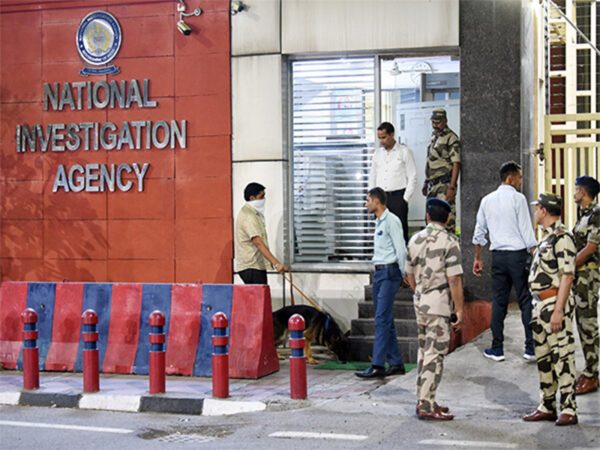
The National Investigation Agency (NIA) has sought China’s judicial assistance to trace a GoPro Hero 12 Black camera linked to the April 22, 2025, Pahalgam terror attack, which killed 26 tourists.

The camera is considered crucial in establishing pre-attack reconnaissance, movement patterns and operational preparations of the terror module in the Pahalgam terror attack on April 22, as it was supplied to China-based AE Group International Limited more than a year before the deadly terror attack.

The camera was activated on January 30, 2024 at Dongguan–an industrial metropolis in China, and is among various material objects and electronic devices found and examined by the investigators connected with conspiracy and execution of terrorist attack which left 26 tourists dead, including a Nepali citizen, when terrorists started gunfire around 2 pm on April 22, 2025 in Baisaran picturesque meadow which is located around five kilometres from Pahalgam town in Kashmir’s Anantnag district.

To trace the purchaser, end-user and associated technical records of the GoPro Hero 12 Black Camera, bearing serial No.C3501325471706, the National Investigation Agency (NIA)– the Indian probe agency of the case– would soon issue a Letter Rogatory or LR to the competent judicial authority of the People’s Republic of China. LR is a formal and diplomatic request from a court in one country to the judiciary of another country.

The Ministry of Home Affairs has given the concurrence for issuance of LR to China for seeking legal assistance in the investigation of the case (RC-02/2025/NIA/JMU) dated April 27, 2025.

A special court in Jammu on March 2 allowed the NIA to seek judicial assistance from China to trace the purchaser and end-user of a GoPro camera allegedly linked to the conspiracy based on an application presented by the agency in Jammu court seeking approval for issuance of an LR to the competent judicial authority of the People’s Republic of China, through the Ministry of External Affairs.

The NIA had stated in its application in the Jammu court that “during the course of investigation of the aforesaid case, various material objects and electronic devices connected with the conspiracy and execution of said terrorist attack have been examined. One such crucial electronic device is a GoPro Hero 12 Black Camera, bearing serial No.C3501325471706, which is relevant for establishing pre-attack reconnaissance, movement and operational preparation of the terrorist module involved in the Pahalgam attack.”

The NIA informed the court that it had issued a lawful notice under the Bharatiya Nagarik Suraksha Sanhita (BNSS) to the manufacturer GoPro B V, seeking details regarding the supply chain and activation of the device.

“In its official response, GoPro BV has informed that the camera was supplied to AE Group International Limited, a distributor based in the People’s Republic of China. The camera was activated on January 30, 2024 at Dongguan, People’s Republic of China. The manufacturer has further stated that it does not possess downstream transaction details or end-user records of the said device,” NIA mentioned in its application.

NIA moved the application as the activation, initial use and commercial trail of the camera lie within the territorial jurisdiction of China, and the information necessary to trace the purchaser, end-user and associated technical records can only be obtained through judicial assistance of the Chinese authorities.

Since India and China are not signatories to any mutual treaty, such as the Mutual Legal Assistance Treaty Agreement (MLAT) on the subject, in such an eventuality, resort is taken to the United Nations Convention against Transnational Organized Crime (UNTOC) for seeking assistance as requested, as both nations have ratified the UNTOC.

The information linked to the seized GoPro Hero 12 Black camera is important in establishing the chain of custody, user, attribution and evidentiary linkage as it was supplied to China’s AE group International Limited.

The court, on March 2 given its nod to the NIA based on its application to issue the LR to the competent judicial authority of the People’s Republic of China for seeking assistance and tracing the purchaser, end user and associated technical records to unearth the larger conspiracy.

The NIA formally registered a First Information Report in the case on April 26 night following an order issued from Counter Terrorism and Counter Radicalisation (CTCR) division of the MHA, considering the gravity of the case as Pakistan-based terror outfit Lashkar-e-Taiba’s proxy, the Resistance Front (TRF), has claimed responsibility for the attack.

The NIA took over the case from the Jammu and Kashmir Police five days after the incident, which is considered the deadliest assault on civilians in the region in almost twenty years.

The incident occurred at around 2 pm on April 22, 2025, when terrorists came down from the mountain in Baisaran valley and started firing at the tourists who frequent the place, which is often dubbed as ‘mini Switzerland’ because of its long, lush green meadows. (ANI)

Security Remains At High-Alert In Srinagar’s Lal Chowk After Killing Of Khamenei

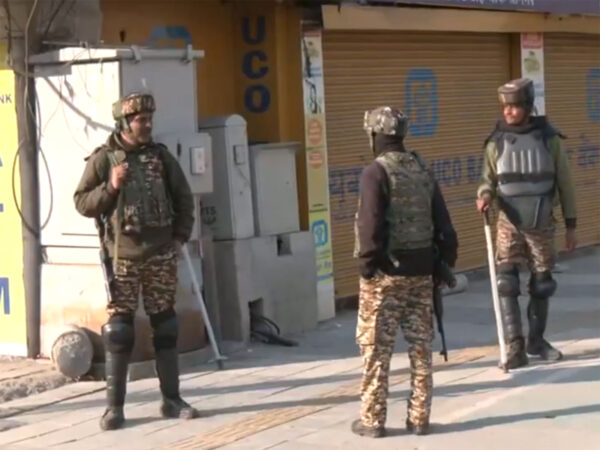
Security remains at high alert in Srinagar’s Lal Chowk for the second day following the protests by Shia Muslims against the killing of Iranian Supreme Leader Ayatollah Syed Ali Khamenei.

The security forces have tightened security as a precautionary measure after Monday’s protest forced police to use tear gas shells to disperse the crowd.

This comes as the Shia Muslim community in the region mourned the killing of Iran’s Supreme Leader Ayatollah Ali Khamenei in the airstrikes launched by the US and Israel.

On Sunday, members of the Shia community in Jammu and Kashmir staged a massive protest outside the United Nations Military Observer Group in India and Pakistan (UNMOGIP) headquarters in Srinagar following the news of the death of Iranian Supreme Leader Ayatollah Ali Khamenei in US and Israel-led strikes.

The protests were peaceful, with participants carrying pictures of Khamenei and banners supporting Iran. Black flags, portraits of the Ayatollah, and traditional mourning chants (Nauha) were witnessed on the streets of Srinagar.

Protests were held across the country with Shia Muslims mourning the death of Ayatollah Khamenei and raising slogans against US and Israel attacks on Iran.

Tensions continued to escalate across West Asia with multiple strikes reported in Iraq, Saudi Arabia and Lebanon.

An Iraqi armed group has claimed responsibility for an attack on a hotel in Erbil that it alleges houses US troops, Al Jazeera reported.

In Saudi Arabia, the Saudi Defence Ministry said eight drones were intercepted and destroyed near the cities of Riyadh and Al-Kharj, according to Al Arabiya.

Meanwhile, in Lebanon, IRNA News Agency reported that the Israeli regime attacked the headquarters of Al-Manar, a broadcaster affiliated with Hezbollah. According to IRNA, Al-Manar resumed broadcasting its programmes minutes after the reported strike. Earlier, Israel said that the head of Hezbollah’s intelligence arm was killed in an overnight strike, and Beirut said it would ban the terror group’s military activities.

The Israel Defence Forces confirmed that the overnight strike in the Lebanese capital killed Hussein Makled, whom it called “the head of Hezbollah’s intelligence headquarters.” (ANI)

US: Indian American Among Two Killed In Texas Shooting On Sunday

An Indian American has been identified as one of the victims of the shooting outside a bar in Austin, Texas, on Sunday, when a gunman opened fire, killing 2 and injuring 14 others.

The Officials have identified the victims as Indian American Savitha Shan (21) and Ryder Harrington (19). The gunman was also killed in an exchange of fire with police.

In a press conference on Monday, Police Chief Lisa Davis said that she did not know if Shan and Harrington attended any local colleges, but several online reports indicated that Shan was a student at the University of Texas at Austin and Harrington was a student at Texas Tech University in Lubbock.

The Federal Bureau of Investigation (FBI) Joint Terrorism Task Force has joined the investigation into the mass shooting. According to officials, there were indicators on the suspect and in his vehicle suggesting a “potential nexus to terrorism,” though investigators cautioned that it remains too early to determine the motive, CBS News reported.

FBI Acting Special Agent Alex Doran said during a Sunday briefing that authorities are probing all possible angles, including whether the suspect may have self-radicalised, CBS News reported.

Sharing a post on X, FBI San Antonio expressed condolences to the victims of the Austin bar shooting and confirmed that federal authorities are assisting in the ongoing investigation. The FBI further confirmed that its Joint Terrorism Task Force is working closely with the Austin Police Department to probe the incident that took place in Austin, Texas.

In its statement, the FBI wrote, “We extend our deepest condolences to the families and loved ones of those who lost their lives in this tragic incident and thank the Austin Police Department for their swift response in addressing the threat. The FBI responded alongside the Austin Police Department to the shooting that occurred early this morning in the 600 block of Rio Grande St. in Austin, Texas, deploying multiple resources, including our Evidence Response Team. Our Joint Terrorism Task Force is jointly investigating this incident in close coordination with the Austin Police Department. This remains an active and ongoing investigation. Additional information will be shared as updates become available. If you have any information that may assist with this investigation, please contact the FBI at http://tips.fbi.govor call 1-800-CALL-FBI (225-5324).”

Multiple US officials identified the suspect as Ndiaga Diagne, a naturalised American citizen born in Senegal. Sources told CBS News that the suspect was 53 years old and had arrived in the United States in 2006 before becoming a citizen in 2013. He reportedly spent time in New York before relocating to Texas. Investigators believe he acted alone, CBS News reported.

Police said the shooting occurred at Buford’s, a beer garden located in Austin’s entertainment district. Austin Police Chief Lisa Davis stated that officers received a call at 1:39 am, reporting a man shooting at the establishment. Within 57 seconds, paramedics and officers were on the scene and began treating victims, Austin-Travis County EMS Chief Robert Luckritz said.

Sources indicated that the gunman drove around the block in an SUV before opening fire from the vehicle’s open window at patrons seated outside the bar. He then exited the SUV and continued shooting while walking up the street, CBS News reported.

Responding police officers fatally shot him. Authorities recovered a handgun and a rifle at the scene, while multiple weapons were found inside the SUV, CBS News reported.

Law enforcement sources said the suspect had prior mental episodes in Austin, and investigators are examining whether he was influenced by extremist ideology or had any links to international terrorism. The Office of the Director of National Intelligence said its National Counterterrorism Center is coordinating with the FBI and local authorities to assess any potential foreign ties.

US President Donald Trump has been briefed on the incident, according to White House press secretary Karoline Leavitt.

Texas Governor Greg Abbott announced that he has directed the Texas Military Department to activate service members under Operation Fury Shield and increase patrols and surveillance in downtown Austin’s 6th Street District, CBS News reported.

“Texas mourns with the families and loved ones of those who were horrifically killed in last night’s attack in Austin. Cecilia and I pray for them, and we pray for the swift recovery of those who were injured,” Abbott said, adding that the state would respond with “decisive and overwhelming force” to any threats.

US Senator Ted Cruz said that authorities “don’t know for sure” whether the shooting was related to terrorism. (ANI)

Israel Hacked Iran Traffic Cameras For Years To Pinpoint Khaemnei Location Prior To Strike

A news report from the London based Financial Times has revealed a long term plan hatched by Israel’s spy agencies that led to the targeted killing of Iran’s erstwhile supreme leader Ayatollah Khamenei and members of the top echelon of Iran’s military.

According the Financial Times which cited multiple sources, Israel spent years hacking Tehran’s traffic cameras and gaining access to mobile phone networks to monitor the movements of Khamenei and his security detail. Nearly all traffic cameras in Tehran had been hacked for years, with footage encrypted and transmitted to servers. The hack allowed the Israeli and American forces to pinpoint Khamenei’s location leading to his elimination in a targeted strike.

Meanwhile, Israeli Prime Minister Benjamin Netanyahu justified the strikes on Iran. In an interview to Fox News, Netanyahu said that Islamist regime was committed to destroying America.

“Iran for 47 years has been chanting death to America. They bombed your embassies. They tried to assassinate Donald Trump, the President of the United States, twice. They murdered their own people, they massacred so many. And they spread a worldwide web of terror. This is a regime committed to destroying the United States of America,” he said

US Vice President JD Vance further told Fox News that US President Donald Trump wanted to ensure that Iran could never have a nuclear weapon.

“What the president determined is he didn’t want to just keep the country safe from an Iranian nuclear weapon for the first three, four years of his second term. He wanted to make sure that Iran could never have a nuclear weapon, and that would require fundamentally a change in mind set from the Iranian regime. So he saw that the Iranian regime was weakened, he knew that they were committed to getting on that brink of a nuclear weapon, and he decided to take action because he felt that was necessary in order to protect the nation’s security,” Vance told Fox News.

Earlier, US Secretary of State Marco Rubio said that the current wave of retaliation from Iran showed what they could have been capable of in the future had the strike not been carried out

“This operation needed to happen because Iran, in about a year… they would have so many short-range missiles, so many drones, that no one could do anything about it… look at the damage they’re doing now, and this is a weakened Iran. Imagine a year from now. The bottom line is no matter who governs that country a year from now, they’re not going to have these ballistic missiles and they’re not going to have these drones to threaten us. That’s the objective of this mission,” Rubio said in a news conference.

That line was met with an immediate counter from Syed Abbas Araghchi the Iranian Foreign Minister who said that Rubio had proven that there was no such thing as an Iranian threat.

“Mr. Rubio admitted what we all knew: U.S. has entered a war of choice on behalf of Israel. There was never any so-called Iranian “threat”. Shedding of both American and Iranian blood is thus on Israel Firsters. American people deserve better and should take back their country,” he posted on X.

The conflict in West Asia continues unabated as the Iranian leadership targets the Gulf States and American assets in the region, while the United States says that the hardest hits from the US Armed forces are yet to come. (ANI)