Rahman Was Sidelined Because He Chose Modernity Over Melody

Music composer AR Rahman is in news these days for wrong reasons. The Oscar-winning music director is reported to have stated in an interview to the BBC Asian Network that his work in the Hindi film industry has slowed down in recent years, which he attributes to a shift in power dynamics over the last eight years and, possibly, to a subtle communal bias that he does not directly encounter.

This raised a huge hue and cry, and Rahman quickly came out with a statement which expresses gratitude to India and reaffirms his commitment to creating music that, in his words, “honours the past, celebrates the present and inspires the future.” He has also made, what is being interpreted as ‘politically correct’ remarks, of having performed “in front of the Honourable Prime Minister and the honour of scoring Ramayana alongside Hans Zimmer.”

For the most the discussion on Rahman’s action could end with this clarification. However, this should also call fo an unbiased analysis of the composer’s claim to virtuosity. A music award, even if its Oscar or Grammy, at best is a certificate but certainly not an inevitability of virtuosity.

Beyond the political interpretations of his statement lies a deeper and far more significant conversation. What does Rahman’s legacy actually mean for Indian film music? Core artistic question whether his approach to music, particularly his heavy reliance on technology, enriched or impoverished the melodic traditions of Indian cinema.

To many, Ilaiyaraaja and MM Kreem (MM Keeravani) are any day more melodious and enchanting composers from down South than AR Rahman ever could be. Ilaiyaraaja and Kreem built their music around classical Indian scales, folk motifs, and live orchestration. Their compositions breathed, every violin, flute, and mridangam carried emotional weight. The orchestra was the protagonist.

Ilaiyaraaja, in particular, mastered the art of blending Western harmony with Indian ragas without allowing technology to dominate. His melodies lingered in the listener’s heart long after the film ended. Even his complex symphonic arrangements never overwhelmed the core tune. Similarly, Kreem’s music from Sur to Baahubali demonstrated that grandeur could coexist with melody, devotion, and simplicity.

The Oscar winning composer broke on the Hindi film industry scene with Roja, a 1992 terrorism story placed in Jammu and Kashmir. The film had catchy songs, fresh, slick, and modern but their brilliance lay less in traditional melody and more in sound design, orchestration, and digital layering.

Rahman did not merely compose tunes, he engineered soundscapes. He was rightly felicitated more for the technology used in delivering the melody than the melody itself. Technology sustained him, he commanded a market, Rahman’s music dazzled with synthesizers, drum machines, digital effects, and multi-layered production.

However, with time, the emotional directness of melody started to recede behind technical spectacle but not many cared. Directors got lured, even a Shyam Benegal could not resist hiring him for Zubeiddaa for his longtime composer Vanraj Bhatia. This despite Bhatia having given extra-ordinary compositions with Sardari Begum.

Vanraj Bhatia, who had composed hauntingly minimalist and deeply evocative music for Sardari Begum and many other films of Benegal, represented a dying breed of composers who trusted silence, simplicity, and live instrumentation. Rahman, by contrast, represented the new age of glossy, digitised cinema.

While Zubeidaa’s music was aesthetically pleasing, one cannot escape the feeling that Bhatia’s austere, classical sensibility would have been more thematically appropriate. Rahman’s lush arrangements, though beautiful, softened the film’s raw emotional texture.

His Oscar win for Slumdog Millionaire, celebrated Rahman’s global appeal but not his rootedness in Indian musical traditions. The film’s soundtrack was universally accessible, but far removed from the classical or folk idioms that shaped Indian music for centuries.

Rahman may have got venereable Gulzar the Oscar tag for having written the lyrics of the award winning composition but it was always Vishal Bhardwaj (and Rahul Dev Burman before him) who gave soul to poet-filmmaker’s cinematic and poetic compositions. Films like Maachis, Omkara, Maqbool, and Haider carried a musical soul that felt organic, earthy, and deeply Indian, something which came to be missing in Rahman’s later, more internationally tailored work.

Today, as Rahman reflects on his place in the industry, perhaps the deeper question is not whether Bollywood sidelined him, but whether he himself, in his quest for modernity, distanced Indian film music from its own heart. Composers like Ilaiyaraaja, Kreem and Vishal Bhardwaj proved that one could be innovative without sacrificing melody. They showed that technology should serve music, not dominate it.

Rahman tipped the balance too far toward technology. The natural melody of the orchestra, the soul of Indian cinema gradually gave way to programmed perfection. Emotional spontaneity was replaced by studio precision. Rahman, for all his brilliance, often let technology take the lead.

As Indian cinema continues to evolve, this melody versus technology debate remains relevant. The future of film music must balance innovation with tradition, ensuring that orchestras do not become museum relics, and that melody does not become a casualty of modernity.

Rahman’s legacy, therefore, is neither purely celebratory nor dismissive. It is complex, contradictory, and worthy of serious, unbiased reflection beyond politics, beyond awards, and beyond celebrity.

(Sidharth Mishra is an author, academician and president of the Centre for Reforms, Development & Justice)
AR Rahman

Rahman Reaches Nagore Dargah In Auto To Attend Kanduri Festival

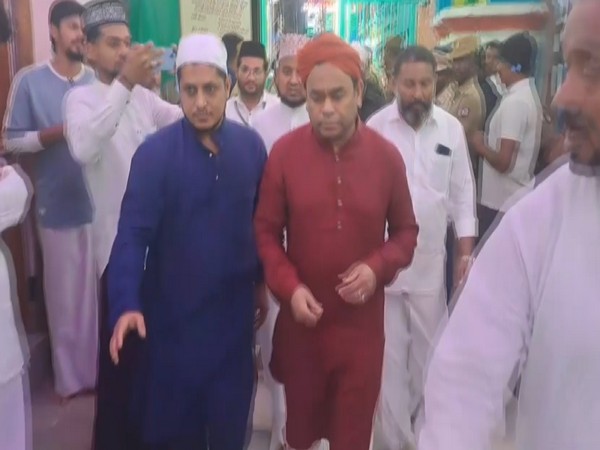
Music maestro AR Rahman visited the Nagore Dargah in Nagapattinam to attend the Kanduri festival.

The ace musician arrived in an auto-rickshaw to participate in the festival yesterday. In the visuals, the Oscar award winner was seen wearing a maroon kurta.

The 14-day Kandhuri Festival, also known as the Nagore Dargah Festival, is celebrated from the first to the fourteenth day of saint Shahul Hamid’s death anniversary during the Islamic month of Jamathul Aagir.

Saint Hazrath Syed Shahul Hamid was the revered 13th-generation descendent of Saint Sufi. He achieved wider recognition for treating the physical illness of Thanjavur’s 16th-century Hindu king Achuthappa Nayak. This historic significance allures the peculiar participation of Hindu devotees during the Kandhuri Festival.

The festival’s opening day is commemorated by the hoisting of a sacred flag, which is then carried by chariots to the Nagore Dargah. From the second to the seventh day, holy saints read the Quran along with various prayers. The devotees flock to the Dargah to witness the Light of Allah which is displayed in the Dargah.

On the eighth day, the Kandhuri Festival’s fireworks display is one of its many attractions. The fireworks have two purposes- first, to enhance the festive atmosphere, and second, to represent how truth drives away falsehood.

On the ninth day of Jamaidul Akhir, the Fakirs visit the site of Hazarath Mohsin meditation site called the “Peer Mandapam”. On this occasion, the devotees start a holy fast for the next three days.

On the tenth day, a parade-like chariot ride carrying sandalwood paste is organised. The Rawla Shariff and the Great Saint’s tomb will then be anointed with the auspicious paste as it is brought inside the premises.

The fast that was initiated on the ninth day of the festival is ended by the devotees on the eleventh day. The Al Quran’s message is recited throughout the 14 days, and its blessings are given to the Great Soul.

The flags and lights are taken down after the conclusion of the Kandhuri Festival, leaving only the spiritual light of the Nagore Dargah.

Talking about music legend AR Rahman, he attended the UAE’s 52nd National Day celebrations in Abu Dhabi and unveiled a ‘song of hope’.

On the special occasion, AR Rahman and a 52-member all-female Firdaus Orchestra paid a special tribute to UAE’s founding Father, the late Sheikh Zayed bin Sultan Al Nahyan, at a hospital in Abu Dhabi.At the event, which brought together patients, healthcare professionals, and esteemed dignitaries, Rahman announced his forthcoming song born from a collaborative effort with Indian entrepreneur Dr Shamsheer Vayalil and Abu Dhabi-based Burjeel Holdings.

Speaking at the event, Rahman said, “The idea is to create a song of hope. This is a song to honor everyone who is selflessly working. The world needs hope today. I hope the song brings peace, understanding, and joy. My prayers to all the people who need to get healed in this hospital.”

A groundbreaking ensemble comprising the Firdaus Orchestra and 50 others echoed through the corridors of the hospital during an event titled ‘Singing for the Children of Zayed’. (ANI)

For more details visit us: https://lokmarg.com/

Annamalai

Rahman Row: Annamalai Claims Women Sexually Harassed

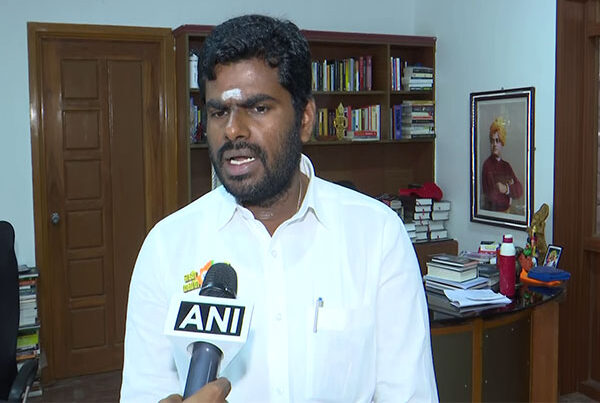
Amid the row over the alleged mismanagement during celebrated music composer AR Rahman’s concert in Chennai a few days ago, the BJP’s Tamil Nadu chief K Annamalai on Tuesday alleged that some women in the crowd were sexually harassed, adding that the DMK government took no action in the matter.

Many fans of the Oscar-winning music composer took to social media to vent their outrage over the alleged mismanagement during the concert.

It was alleged that there were no parking facilities provided for by the organisers of Rahman’s concert in Chennai’s Panaiyur on Sunday evening.

The soiree, titled ‘Marakkuma Nenjam’, saw overcrowding and resulted in severe traffic congestion on the East Coast Road, which connects Puducherry, leaving the fans of the composer miffed.

Several ticket holders, including those with Platinum and Diamond tickets which cost over Rs 25,000, claimed they couldn’t reach the venue on time owing to traffic congestion on ECR, on September 10.

The BJP’s state unit alleged that women’s safety was compromised at the concert.

“Music composer AR Rahman’s concert was held in Chennai, a day before yesterday. I came to know that the concert has caused a lot of trouble to the public due to various defects in the program arrangement,” Annamalai said in a statement. 

He said that the public faced issues arising out of inadequate seating, overcrowding, and no parking arrangements.

“Due to the total failure of the event organizers, the public has suffered. More than all this, the news of women being sexually harassed in the crowd is shocking and saddening. What action has this government taken against event organizers who do not ensure women’s safety?” the statement read. 

Annamalai said he was surprised that the Tamil Nadu government was yet to act despite the large number of complaints, including those of sexual harassment, lodged.

In the face of a severe backlash, the event managers involved with the concert issued an apology saying they were taking full responsibility for the inconvenience. 

ACTC Events, an event organiser involved with the soiree, took to X to post, “Grateful to Chennai and the legendary @arrahman Sir! The incredible response, the overwhelming crowd made our show a massive success. Those who couldn’t attend because of overcrowding, Our sincere apologies. We take full responsibility and accountable. We are with you. #MarakkumaNenjam (sic).”

Rahman, too, promised a refund to fans to bought tickets to the concert but couldn’t reach the venue because of the crowding and traffic issues.

“Dearest Chennai Makkale, those of you who purchased tickets and weren’t able to enter owing to unfortunate circumstances, please do share a copy of your ticket purchase to arr4chennai@btos.in along with your grievances. Our team will respond asap. @BToSproductions @actcevents,” he wrote on X. 

In a separate post, Rahman wrote, “Some people call me G.O.A.T …………let me be the sacrificial goat this time for all of us to wake up ..let Chennai’s live art flourish with a world class infrastructure, increase in tourism, efficient crowd management, traffic management, refining audiences to follow rules ..creating a safe and surreal experience for children and women ..Triggering a cultural renaissance at Chennai celebrating our deserving, illuminated local and international talent.” (ANI)

Read More: http://13.232.95.176/

Filmmaker Rajkumar Santoshi, whose upcoming directorial 'Gandhi Godse -Ek Yudh' recently triggered a controversy, on Monday, stated that the criticisms were based on the trailer

‘Gandhi-Godse…’: Director Says Watch It With Open Mind

Filmmaker Rajkumar Santoshi, whose upcoming directorial ‘Gandhi Godse -Ek Yudh’ recently triggered a controversy, on Monday, stated that the criticisms were based on the trailer.

He requested the critics to watch the film with an ‘open mind’.

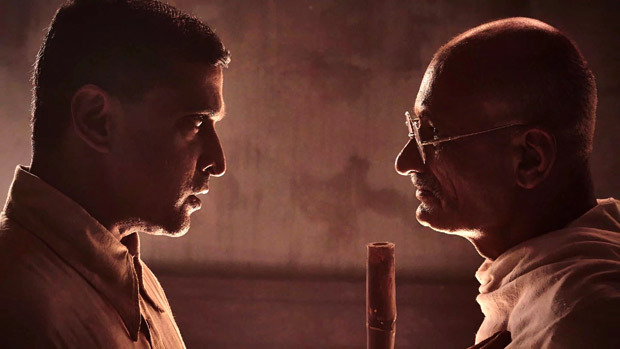
Set in post-independence India of 1947-48, ‘Gandhi Godse-Ek Yudh’ depicts the war of ideologies between Nathuram Godse and Mahatma Gandhi. The trailer showcased a powerful glimpse into the tumultuous period following India’s partition.

Following the trailer release of the period drama film on January 11, the Congress recently sought a ban on the film in Madhya Pradesh.

Speaking to ANI, the veteran filmmaker, who has many blockbusters such as ‘Ghayal’ and ‘Damini’ to his credit, said, “It is important because historically, Gandhiji and Godse are two leaders against whom various allegations have been levied. While there are many who respect Gandhiji, there are also those who bad-mouth him. Same is the case with Godse, with some even calling him a terrorist.”

“So, I felt that there should be a stage for both of them where they are put together to put forth their viewpoints and debate on them. It will enable viewers shape an objective opinion on Gandhiji and Godse. The film will make them question if they really know Gandhiji or Godse as they thought they would. As a filmmaker, we have tried to put aside our personal choices and honestly put forward the opinions of both these characters from our political history,” he continued.

On the criticism he has been receiving for the film, Santoshi said, “It has come to my notice that some people, claiming to be followers of Gandhiji, burnt my effigies and it might happen in future too. This surprises me because people who truly believe in him will never resort to violence. They will never come out on the streets with lathis and burn effigies. It only goes to show that they actually don’t believe in Gandhian principles. They haven’t even seen the film and are reacting to the trailer. It shows that their motive is something else.”

He added, “I request people to watch the film with an open mind and not come to theatres with any preconceived notions. Those coming with an open mind will truly enjoy the film. There’s not been a single complaint against the film’s previews, not even from the censor board.”

Meanwhile, on Sunday, Mahatma Gandhi’s great-grandson, Tushar Gandhi, waded into the controverry over the film, saying, “I’m not surprised because for them (the makers of the film), Godse is a hero, and if they portray him as a hero, it should not surprise any of us. But I cannot comment on the merits or the demerits of the film because I haven’t seen it and I don’t intend to see films which glorify murderers.”

‘Gandhi Godse Ek Yudh’ is set in an India of the filmmaker’s imagination where Mahatma Gandhi survives an assassination bid and meets his attacker, Nathuram Godse, in prison. What follows is a fiery debate and a clash of ideologies between them.

Produced by Manila Santoshi, with music composed by maestro AR Rahman, the movie is set to hit the theatres on Republic Day, January 26. (ANI)

Read more: http://13.232.95.176/