The Commonwealth of Dominica Modi

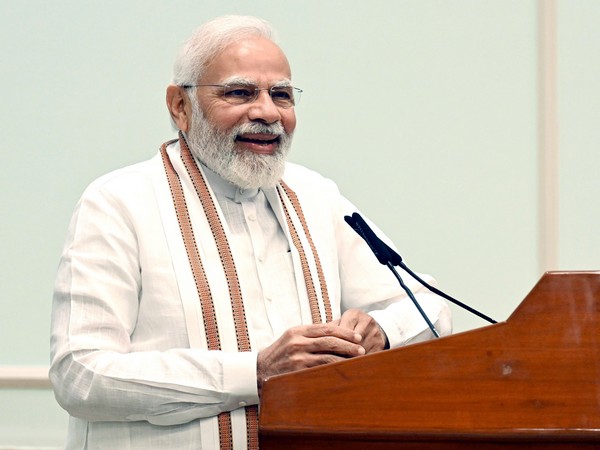
People Can Trace Their Photos With Modi Through AI, NaMo App

If you have a picture clicked with Prime Minister Narendra Modi and don’t know how to trace it, there is a way to get the recorded memories.

A new feature ‘Photo Booth’ has recently been added to the NaMo app and this helps trace the photograph which can also be downloaded.
All that one needs to do is to scan one’s face and hit the search button and all the relevant pictures will pop up.

“We are using Artificial Intelligence for this and through this technology, photos come up during the search process,” an official told ANI.

It’s not just leaders or MPs who can access the feature.

“During any event of PM Modi, several people come to welcome him. AI feature will use technology and get them their photographs too,” a source said.

A team working on NaMo App is working on the features of this initiative.

As of now, the AI-process can track a photograph up to 30 days old but this will soon trace photos that are much older, sources said.

“For MPs and leaders it’s easy to trace their photographs but for others who have no way to get access to their photographs, this is phenomenal,” an MP told ANI.

Sources said it is the one-of-kind feature and is NaMo App is one of the first platforms to use it so extensively in line with PM Modi’s penchant for technology.

At a meeting of BJP MPs this morning, PM Modi asked them to make use of technology.

“One needn’t be a technical expert but must learn to evolve and adapt by constantly learning,” PM Modi is learnt to have told the MPs. (ANI)

Read More: https://lokmarg.com/

AI Is Here: Fasten Your Seatbelts For The Ride

Are you ready to step into a world where artificial intelligence (AI) breathes life into our boldest visions, revolutionizing the way we live, work, and connect? As AI continues to evolve, we find ourselves on the brink of a transformative era, where machine intelligence intertwines with human ingenuity to propel us forward. From enhancing healthcare and reshaping transportation to unleashing creativity and amplifying productivity, the future with AI promises unparalleled possibilities. In this piece we explore the infinite potential of AI, where innovation knows no bounds, and together we shape a future that once seemed unimaginable.

Every time a new technology is introduced, it disrupts the status quo. There is some something catastrophic too, like jobs destruction in the AI case. Then, it goes through a familiar arc: the economy grows and more jobs are generated, society adopts new ways and betterment follows on. This is a repetitive pattern true of every new technology.

Technology always brings a plethora of adaptive measures with it. AI for instance has the potential to transform various professions across different industries and significantly impact the way we live and work. Here are some examples of how AI can shape the future of professions and the new world it may create:

Efficiency and Automation: AI can automate tedious and repetitive processes, freeing experts to concentrate on more difficult and imaginative areas of their work. In industries like manufacturing, logistics, customer service, and data analysis, this might result in an increase in productivity and efficiency.

Healthcare and Medicine: AI can revolutionize healthcare by enabling faster and more accurate diagnosis, personalized treatment plans, and drug discovery. AI-powered systems can analyze vast amounts of medical data, assist in surgery, and provide remote healthcare services, improving patient outcomes and access to healthcare. For example, Google’s AI system,

DeepMind, has created an algorithm to predict the likelihood of developing acute kidney injury up to two days before it occurs, allowing for earlier intervention.

Education and Training: AI can enhance education by providing personalized learning experiences tailored to individual student needs.

Intelligent tutoring systems, virtual reality simulations, and adaptive learning platforms can help students learn at their own pace and style, leading to improved educational outcomes. For example, Carnegie Learning has developed an AI-powered math tutor that adapts to each student’s learning style and provides real-time feedback.

Finance and Banking: AI can improve financial services through fraud detection, risk assessment, algorithmic trading, and customer service chatbots. It can analyze financial data in real-time, identify patterns, and make predictions, aiding in making informed decisions and managing risks. For example, the Japanese bank, Mitsubishi UFJ Financial Group, uses AI software to quickly read and analyze borrower data, expediting the loan approval process.

Transportation and Logistics: AI can optimize transportation routes, manage traffic, and enhance the safety and efficiency of autonomous vehicles.

Supply chain management can also benefit from AI-powered systems that improve inventory management and reduce costs. For example, self-driving cars from Tesla and Google use AI-powered sensors to detect obstacles, read road signs, follow traffic laws, and learn from other cars’ behavior.

Another major impact that AI can bring into our life is by combatting global warming and addressing environmental issues, one of the biggest existential matters on global level. Here are a few ways AI can contribute:

Energy Optimization: AI can optimize energy consumption by analyzing patterns and data from various sources. It can help identify areas of inefficiency and suggest ways to reduce energy usage, leading to reduced greenhouse gas emissions.

Climate Modeling and Prediction: AI can analyze vast amounts of climate data to improve climate modeling and prediction capabilities. It can assist in understanding the complex interactions within Earth’s systems and provide more accurate forecasts, enabling better planning and mitigation strategies.

Sustainable Agriculture: AI can enhance agricultural practices by optimizing crop yields, monitoring soil quality, and managing water resources. It can help farmers make data-driven decisions, reduce resource wastage, and mitigate the environmental impact of agriculture. As agriculture is one of the major economic growth industries.

Smart Grid Management: AI can optimize the operation of power grids by analyzing real-time data and predicting energy demand. It can balance the supply and demand of electricity, integrate renewable energy sources, and improve the overall efficiency of the grid.

To fully leverage AI in combating global warming, collaboration between scientists, policymakers, and technologists is crucial. It is essential to develop AI systems that align with sustainability goals, promote renewable energy adoption, and ensure ethical and responsible use of AI technologies in addressing environmental challenges.

ALSO READ: Artificial Intelligence, Actual Challenges

Furthermore, AI could impact family life by creating more job opportunities, increasing efficiency and productivity, and improving overall quality of life. The impact of AI on family and normal life will depend on how it is integrated into society. While AI can streamline processes and provide convenience, it may also disrupt certain industries and lead to job displacement. It is essential to ensure that the benefits of AI are distributed equitably and to provide Support for individuals affected by these changes. Adapting to AI may require adjusting work-life balance, reevaluating career paths, and embracing new opportunities that emerge because of AI advancements.

As AI technology advances, there are concerns around job displacement, privacy and security, and ethical considerations. Therefore, people need to prepare for the technology’s impact and potential changes in their professions and industries.

We as human beings don’t understand the impact of having that level of intelligence next to us in our daily, minutes and hours. That is because we have been living in a world where we were not exposed to such high level of intelligence.

Now to prepare for the AI-driven future, individuals need to develop skills that complement and leverage AI technologies. This includes cultivating critical thinking, creativity, complex problem-solving, and adaptability. Lifelong learning and upskilling will become crucial to stay relevant in the changing job market.

So how do we prepare for the AI revolution that is around the corner?

Learning new skills: Individuals need to keep up with the latest AI technologies and acquire new skills that will make them valuable in the changing job market.

Emphasizing human creativity and empathy: Jobs that require creativity, critical thinking, and emotional intelligence will be less susceptible to automation.

Developing ethical standards and regulations: As AI technologies become more prevalent and powerful, ethical guidelines and standardized regulations are needed to ensure their responsible use.

In conclusion, the impact of AI and the optimism behind it is substantial and will require individuals, businesses, and governments to adapt to the changing landscape while prioritizing ethical considerations. The future with AI presents immense opportunities and potential for transformative changes that could improve society.
Chatbot Of IRCTC

Newly Launched Chatbot Of IRCTC Getting Remarkable Response

The newly launched Chatbot of IRCTC (Indian Railway Catering and Tourism Corporation Limited) is getting remarkable response from the train passengers during the beta launch as over 1 billion people have used it, a senior IRCTC official said.

While talking to ANI, the official said that the new conversational and convenient feature to book railway tickets enables customers to interact with the system via voice, chat and click based system. Additionally, the system requires no passwords and works based on the One Time Password (OTP).
The official also told that the technology is powered by CoRover, a conversational AI Platform which is being used by more than 1 billion users.

“In our constant pursuit to enhance the user experience, leveraging new age technologies, we are today taking a giant leap. Now, passengers can book their train ticket in a conversational manner, leveraging our AI Virtual Assistant, AskDISHA 2.0, powered by CoRover, the Conversational AI platform, used by more than 1 billion users.”

The improved Virtual Assistant, AskDISHA 2.0 has many features like booking tickets, checking PNR status, cancelling tickets, changing boarding station, checking refund status and answering queries like Tatkal timings.

The official further informed that this is a landmark step towards enhancing the passenger experience.

“First time, the users can book ticket without knowing their IRCTC password, it will be possible just with an OTP. AskDISHA 2.0 has also proven to be a very effective instrument and the addition of voice booking and will make it even easier for travellers to plan their trips,” the official added.

The senior official also estimated that at least 25 percent of clients will be switching to this option in the future.

“It is expected that at least 25 per cent of clients will be switching to this option in the future and also attracting new users who want to book their tickets using the conversational tool rather than chatting. In August 2022, AskDISHA has got around 95 lakh queries, which includes booking request, cancellation and more. Also, it had 88% positive feedback with the AI Accuracy rate of 99 per cent,” the official told ANI.

The official further talked about the “Technological Revolution” in the Indian Railways under the current leadership and government.

“It is notable that the Indian Railways, under the leadership of the Minister for Railways and IT have been undergoing a massive technological revolution in pursuance of Prime Minister’s vision of ‘Digital India’, ‘Made in India’ and ‘Aatmanirbhar Bharat’,” the official further said.

“Under the aegis of the present government, the Indian Railways, being one of the largest rail networks of the world have been achieving new milestones of transformation every day in various spheres for improving the travel experience of the passengers,” the official added.

The new avatar of IRCTC’s chatbot, AskDISHA 2.0, aims to help users get authentic, correct and instant answers to their queries. It will not just save time and enhance the user experience, but will also help them in doing end-to-end real-time transactions, the official said. (ANI)

Read More:https://lokmarg.com/

Artificial Intelligence, Actual Challenges

People in power expectedly seek comfort in the fact that India has more than achieved the World Health Organisation (WHO) recommended doctor to population ratio of 1:1,000, described as the ‘golden finishing line’ in 2018. In fact, the ratio is approaching 1.5. This is, however, taking into account the registered medical practitioners of both modern medicine (MBBS and higher degrees) and traditional medicine (AYUSH, the acronym for Ayurveda, yoga & naturopathy, unani, siddha and homeopathy). The yearly intake of nearly 70,000 MBBS students at institutions regulated by the Medical Council of India may look impressive on paper, but this is to be seen in the context of pathetic state of health services beyond cities in vast expanses of semi-urban and rural areas.

People living in Bharat are the sufferers for the low allocation for healthcare in the Union and state budgets year after year ignoring the sane advice of the world’s leading development economists. Indian leaders nurse the ambition that the country be counted among super powers. Nothing wrong in that. But how can that happen when the country is among the lowest budget allocator of GDP in healthcare in the world. Not to cite instances of developed countries, India is distressingly spending less in healthcare, as a percentage of GDP, than Brazil, Bangladesh and Pakistan.

Outside tier 1 to 3 cities in India, people may get good, if they are lucky, to indifferent services of general medical practitioners and rarely of specialists. But relief is likely to come to the vast majority living wherever they maybe, depending on how soon the healthcare system will be enabled by artificial intelligence (AI) to be of universal service. The challenge then is to go on feeding the computer with enormous amount of data culled from international and domestic sources relating to diseases, their symptoms, identification and diagnosis, the tests to be done and treatment to be followed thereafter.

The problem that will still be there is the lack of equipment and trained doctors and nurses in rural hospitals and health centres. When it comes to India, the major problem, as has been identified by Anandalal Roy of National Institute of Health, Washington and Kunal Sen, global chief information officer of Encyclopaedia Britannica is the lack of reliable health related data. They say most of the data are illegibly handwritten, almost impossible to decipher and therefore, it is difficult to create an appropriate database.

According to Roy and Sen, in the absence of an ideal training data in database, the computer will not be able to diagnose diseases and recommend ways of treating them. The basic premise is if wrong or incomplete data is fed into the computer, then it will generate wrong results. They, therefore, recommend that steps should be taken to centrally digitise all health related records. Once this enormous time-consuming work is done, it will be possible to access any health record from anywhere by using the computer. In course of time, once sufficient records are collated and fed into the computer they are to become part of database. Roy and Sen say though India is making progress slowly in this direction, it mercifully has remained in course.

Health is, however, one of the many areas where AI will work wonders in terms of service improvement, booster of efficiency sparing people from doing routine work over and over again and operational cost reduction. No wonder then a growing number of companies engaged in manufacturing from metals to automobiles, FMCG products and financial groups are doubling down on introduction of digitisation and AI in their systems in the wake of the globally disruptive Covid-19 pandemic.

ALSO READ: How Artificial Intelligence Fuels Hatred

From logistical planning to supporting sales without being physically in touch with buyers to scripting overall business strategy, AI is proving to be of major aid. Who did coin the word ‘artificial intelligence’ and when? Stanford University professor John McCarthy was the first to use the word in 1955 when he proposed a ten-man summer research on the subject. In proposing the research, McCarthy wrote: “The study is to proceed on the basis of the conjecture that every aspect of learning or any other feature of intelligence can in principle be so precisely described that a machine can be made to simulate it.” Moreover, his invention of computer programming language LISP remains the universal language of choice for AI.

As AI continues to make inexorable march to perform humongous amount of work, there are concerns not confined to India that machines progressively taking over many tasks routinely performed by human beings will lead to job losses. But H. James Wilson and Paul R Daugherty say in an article published in Harvard Business Review that “while AI will radically alter how work gets done and who does it, the technology’s larger impact will be in complementing and augmenting human capabilities, not replacing them.”

In their research involving 1,500 companies, the principal finding is that companies achieve maximum performance improvements when humans and machines work in harmony. “Through such collaborative intelligence, humans and AI actively enhance each other’s complementary strengths: The leadership, teamwork, creativity and social skill of the former and the speed, scalability and quantitative capabilities of the latter.”

This and many other similar research findings will help in dispelling misgivings about growing AI application. What must also be taken into consideration are the emerging links between AI and creativity. The survey of a large number of global businesses and leaders in information technology (IT) by MIT Technology Review Insights found that nearly half of them agreed that because of AI “we could dedicate more time to thinking creatively about the business challenges we and our clients face.” AI is exactly freeing people from tedious routine work to be able to be engaged in creative and innovative pursuits.

India has a unique advantage in rapidly employing AI in sectors from health to industry to finance to farming. Not only are the world’s maximum number of students are majoring in the subject in Indian colleges, but this country also hosts the globe’s largest number of companies engaged in development and application of AI, ahead of the US and China. Even while India has this distinctive edge in AI education, Roy and Sen, both residents of the US, regret that beyond graduation, the students migrate to foreign countries to pursue further study, including PhD on the subject. As is expectedly the case, once they leave India, they settle down abroad where employment opportunities in the field are growing fast. Roy and Sen recommend the ways to staunch the brain drain of this intelligent kind will be to create condition for appropriate investment in AI higher education, including facilitating research work and assured jobs after completion of education.