Impact Of Ukraine Conflict Is Not Limited To Europe: India

India highlighted that the impact of the Ukraine conflict is not just limited to Europe, adding that it has exacerbated concerns over food, fertilizer and fuel security, especially in the developing countries.

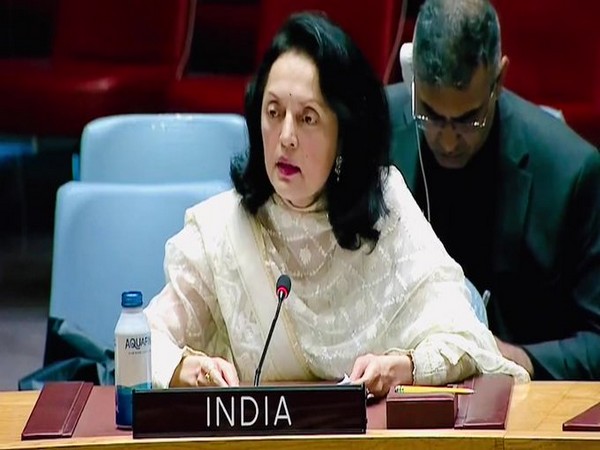
Assuring the Security Council, India’s Permanent Representative at United Nations Ruchira Kamboj said that New Delhi will continue to work with the International Community to mitigate economic hardships resulting from the Ukraine conflict.
“India will continue to work with the international community and partner countries to mitigate the economic hardships that are resulting from this conflict. The impact of the Ukraine conflict is not just limited to Europe,” she said at UNSC briefing Ukraine Forced displacement of Ukrainian civilians/Russian filtration camps on Wednesday.

“The conflict is exacerbating concerns over food, fertilizer and fuel security, particularly in the developing countries. It is necessary for all of us to appreciate the importance of equity, affordability and accessibility adequately,” she added.

Ruchira Kamboj highlighted that in the last three months, India has exported more than 1.8 million tons of wheat to countries in need, including Afghanistan, Myanmar, Sudan and Yemen.

“We continue to emphasize to all member states that the global order be anchored on international law, the UN Charter and respect for the territorial integrity and sovereignty of states,” she said.

India’s Permanent Representative also said, that the Council would recall that since the commencement of the conflict in Ukraine, India has been consistently calling for an immediate cessation of hostilities and an end to violence.

She emphasized that the situation in Ukraine has not shown any significant improvement since the Council last discussed the conflict in Ukraine and its humanitarian consequences.

The security situation remains serious, as do the humanitarian consequences. Reports of civilian killings in Bucha were deeply disturbing.

India hoped that the international community will continue to respond positively to the call for humanitarian assistance. India has recently dispatched its twelfth consignment of humanitarian aid to Ukraine. This humanitarian aid and assistance is in keeping with the human-centric approach of the Indian Government. (ANI)

India Successfully Test-Fires Quick Reaction Surface To Air Missile System

India on Thursday successfully completed six flight tests of the Quick Reaction Surface to Air Missile (QRSAM) system off the Odisha Coast.

According to Defence Research and Development Organisation (DRDO), the flight tests have been conducted as part of evaluation trials by the Indian Army.
The flight tests were carried out against high-speed aerial targets mimicking various types of aerial threats to evaluate the capability of the weapon systems under different scenarios including long-range medium altitude, short-range high, altitude maneuvering target, low radar signature with receding and crossing target and salvo launch with two missiles fired in quick succession.

The system performance was also evaluated under day and night operation scenarios.

During these tests, all the mission objectives were met establishing pin-point accuracy of the QRSAM weapon system with state-of-the-art guidance and control algorithms including the warhead chain.

The system’s performance has been confirmed from the data captured by a number of Range instruments like Telemetry, Radar and Electro-Optical Tracking Systems (EOTS) deployed by ITR.

Senior officials from DRDO and the Indian Army participated in the launch.

These tests were conducted in the final deployment configuration consisting of all indigenously developed sub-systems including the missile with indigenous RF seeker, mobile launElectro-Optical Tracking Systemscher, fully automated command and control system, surveillance and multi-function Radars.

The uniqueness of the QRSAM weapon system is that it can operate on the move with search and track capability and fire on a short halt. This has been proven during the mobility trials conducted earlier. (ANI)

Semiconductors At The Heart Of US-China ‘War of Chips’

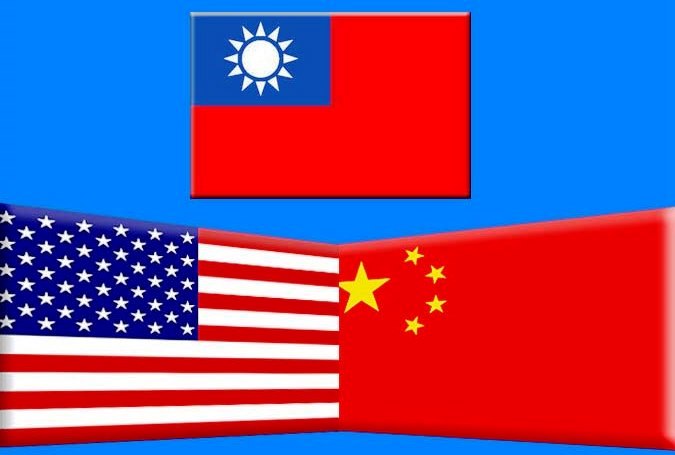
Amid the Russia-Ukraine war, the United States has placed its eyes firmly on the semiconductor powerhouse Taiwan which China threatens to seize by force.

Writing for the Times of Israel, Italian political advisor and geopolitical expert Sergio Restelli argued that one of the great battlefields of the Ukraine war and the growing closeness of China-Russia friendship has been the high-tech space that China and Taiwan control.

“At the G20 head of states summit in Rome in October 2021, leaders discussed supply chain resilience. Alarm bells have rung in all global democratic capitals, but especially Washington DC, New Delhi and Paris, about a tomorrow where most modern economic and industrial growth may be hostage to China’s dominance in the semiconductor industry,” said Restelli.

According to him, Israel here sees itself transformed into a key political player where its technological prowess, makes it a leader of the free world. “Intel’s purchase of Israeli Tower Semi-conducter for USD 5.4 billion, is one key example of the Israeli semiconductor industry coming of age.”

The Italian expert highlighted how 2 per cent of the world’s leading-edge semiconductors, circuits just 10 nanometers in size or smaller, are produced in Taiwan. He said the only reason TSMC remains below the radar is that it serves as a foundry focused on the manufacture of silicon wafers.

“It specialises in supplying companies that outsource their production, so-called fab-less semiconductor companies: TSMC chips are built into consumer branded products like an Nvidia graphics processor or a Qualcomm logic chip in a smartphone,” the geopolitical expert explained.

Only last month, US technology firm Nvidia said that the Biden administration has imposed restrictions on the sale of a number of high-tech computer chips to Russia and China as they can be used for military purposes.

“On August 26, 2022, the U.S . government, or USG, informed NVIDIA Corporation, or the Company, that the USG has imposed a new license requirement, effective immediately, for any future export to China (including Hong Kong) and Russia of the Company’s A100 and forthcoming H100 integrated circuits,” the company said in a statement that was published by the US Securities and Exchange Commission.

The company said the license is required to export and support technologies, thereby eliminating the risk that these technologies could be used for military purposes.

US President Joe Biden signed an executive order to implement the USD 280 billion CHIPS and Science Act of 2022. This includes more than USD 52 billion in subsidies for US semiconductor manufacturers in an effort to counter China’s growing technological clout.

In a column for Sydney Morning Herald, Stephen Bartholomeusz said the world’s largest maker of artificial intelligence chips has found itself in the front line of a fresh push by the US to frustrate China’s ambition of overtaking the US to become the world’s technology superpower.

Bartholomeusz said the US effort to slow the rate of China’s technological progress goes beyond the investment in domestic manufacturing and R&D and bans on exports by US manufacturers.

“The semiconductor industry is a complex global ecosystem. The US dominates design of advanced chips and the equipment that manufactures and the intellectual property that supports them but the manufacturing is dominated by Taiwan,” he added.

China has opposed the new US chip law that aims to support the local producers of semiconductors. Chinese Foreign Ministry spokesman Wang Wenbin had said that the new Chips and Science Act adopted by the US will disrupt global supply chains and hamper international trade.

“The United States stated that the act aims to increase the competitiveness of US technologies and the semiconductor production, however, this act provides huge subsidies to US enterprises producing chips and introduces a differentiated policy of industry support, some provisions of which, among other things,” said Wang at the briefing. (ANI)

Asia Cup: Pakistan Beat Afghanistan In A Nail-biting Match

Team India is out of contention for final as Naseem Shah’s two back-to-back sixes in the first two balls off the final over undid brilliant bowling by Afghanistan throughout the innings, securing a one-wicket win for Pakistan in a thrilling Super Four clash at the ongoing Asia Cup 2022 on Wednesday.

Afghanistan has been shown the exit door but they would be extremely happy with brilliant bowling from Fazalhaq Farooqi (3/31) and Fareed Ahmad Malik (3/31) despite posting just 129/6 on the board. They almost took their side towards a win but Naseem’s two sixes in the last over sealed a win for Pakistan.

Iftikhar Ahmed (30) and Shadab Khan (36) posted valuable contributions for Pakistan. A final between Sri Lanka and Pakistan is set.

Chasing 130, Pakistan was off to a poor start as they lost their skipper Babar Azam for a golden duck. Azam’s horrific run in the tournament continued and he became the first skipper in Asia Cup history to have a golden duck registered to his name.

Another wicket fell soon for Pakistan as left-hander Fakhar Zaman was run out by Najibullah Zadran for 5, reducing Pakistan to 18/2.

After this Mohammed Rizwan and Iftikhar Ahmed rebuild the innings for Pakistan and kept the scoreboard moving with their good running between the wickets. At the end of six overs, Pakistan was at 35/2, with Iftikhar Ahmed (13) and Mohammad Rizwan (15).

Rashid Khan gave Afghanistan their third wicket of the match and his first, trapping Rizwan lbw for 20 off 26 balls. Pakistan was left reeling at 45/3.

Ifthikhar Ahmed carried on while Shadab Khan joined him on the crease. At the end of 10 overs, Pakistan was at 52/3, with Shadab (6) and Iftikhar (19).

Shadab and Iftikhar continued to bat, playing some sensible cricket and sending bad balls out of the fence. They brought Pakistan back into the contest.

At the end of 15 overs, Pakistan was at 85/3, with both batters at 29* each.

A 42-run stand developed between two, which ended after Iftikhar was dismissed for 30 off 32 balls. Fareed Ahmad got the wicket after Ibrahim Zadran caught him at deep-midwicket. Pakistan was now at 87/4 in 15.3 overs.

All-rounder Mohammad Nawaz was the next on the crease. Heading into the final four overs, Pakistan needed 39 runs.

Shadab started the next over bowled by Rashid with a huge six, only to be dismissed by him on the very next ball for 36 runs off 26 balls after he was caught by Azmatullah. Half of the Pakistan team was back in the hut at 97 runs.

Asif Ali was the next batter to join Nawaz and he started his innings with a six. Pakistan needed 25 off the final three overs at this point.

Afghanistan continued their brilliant fight back in the match, with Fazalhaq Farooqi trapping Nawaz leg before wicket for four off five balls. Pakistan was at 105/6. Farooqi continued to build pressure on Pakistan with his superb bowling, cleaning up new batter Khusdil Shah’s stumps in the final ball of the over. At the end of 18 overs, Pakistan needed 21 in the final two overs.

Haris Rauf was up next for Pakistan. But he was clean bowled by Fareed Ahmad for a duck, who got his second wicket in the match.

Naseem Shah was next to join Asif, who was running out of partners at the other end. Fareed Ahmad got his third wicket of the match after he dismissed the dangerman, Asif Ali for 16 off 8 balls after he was caught by Karim Janat.

Mohammad Hasnain was the last man to turn up for Pakistan on the crease, with his side needing 11 in the final over.

Naseem Shah started the next over with a huge six, reducing the deficit to five runs needed off five balls. He also hit the next ball, a full toss for a six, securing a one-wicket win for his country.

Farooqi was Afghanistan’s leading bowler with 3/25. Fareed Ahmad Malik also took a brilliant 3/31. Rashid Khan also took two wickets.

Earlier, brilliant bowling by the Pakistan unit restricted Afghanistan to a subpar 129/6 in their 20 overs in their Super Four clash at the ongoing Asia Cup 2022 in Sharjah on Wednesday.

Pakistan had a nice outing with the ball as they did not let any big partnerships develop. Afghanistan would not be happy at all with the show put on by their batters except Ibrahim Zadran (35) to an extent as none of them capitalised on the good starts they got.

Haris Rauf was the pick of the bowlers for Pakistan with 2/26.

Put to bat first by Pakistan, Afghanistan openers Hazratullah Zazai and Rahmanullah Gurbaz put their team to a solid start. Both batters adopted an attacking approach suited for the powerplay. Gurbaz hit pacer Mohammad Hasnain for two consecutive sixes in the second over.

Pacer Haris Rauf gave Pakistan their first breakthrough. He dismissed the danger-man Gurbaz for 17 off 11 balls. Gurbaz attempted to slog the ball, but his off-stump was dislodged before he could.

Ibrahim Zadran was next up on the crease. Soon, Hazratullah Zazai was dismissed by Hasnain for 21 off 17 balls. He had struck four solid boundaries and looked really good, but Hasnain removed his leg-stump. Afghanistan lost their second wicket at 43-runs before powerplay.

Karim Janat was next up on the crease. At the end of the power-play in six overs, Afghanistan was at 48/2, with Zadran (5) and Janat (2). Two early wickets had lowered Afghanistan’s run flow and the challenge was to complete the first half of their innings with a solid score.

Janat and Zadran helped their side do just that as they kept the scoreboard running with some singles and boundaries. At the end of 10 overs, Afghanistan was at 72/2 in 10 overs, with Janat (15) and Zadran (16).

A promising stand ended prematurely at 35 runs when Janat tried to hit big over long-on but was caught by Fakhar Zaman. Janat was back in the hut for 15 off 19 balls and spinner Mohammad Nawaz got his first wicket. Afghanistan was 78/3 at this point.

Najibullah Zadran was next up, joining the other Zadran. Najibullah tried to dominate spinner Shadab Khan in the 14th over with a six, but the bowler got the best of him as the batter had to walk back for 10 off 11 balls after Fakhar took another catch.

Skipper Mohammad Nabi was also dismissed at the very next ball. Pacer Naseem Shah got his first wicket of the match. The ball touched the inside edge of his bat and went straight into his stumps. Half of Afghanistan was back in the pavilion by 91/5.

At the end of 15 overs, Afghanistan stood at 93/5, with Zadran (26) and Omarzai (1).

Azmatullah Omarzai joined Ibrahim on the crease. A six by Ibrahim helped Afghanistan cross the 100-run mark in 15.3 overs.

Zadran looked highly important for Afghanistan’s chances heading into death overs, but he was dismissed for 35 off 37 balls by Rauf after he was caught behind by Mohammad Rizwan.

Rashid Khan was next up to the crease. Pakistan continued to build pressure on Afghanistan batters and did not give them much opportunities to score runs. Rashid Khan did reduce some pressure with a four and six in the final over, but still, Afghanistan ended with a subpar score of 129/6 in their 20 overs. Rashid Khan played a solid cameo of 18* off 15 balls and Azmatullah Omarzai ended with 10*.

Pacer Haris Rauf was the leading bowler for Pakistan with a spell of 2/26 in four overs. Naseem Shah, Mohammad Hasnain, Mohammad Nawaz, Shadab Khan also took one wicket each for Pakistan. (ANI)

Alia’s Kashmir Pic From ‘Rocky And Rani…’ Goes Viral

Alia Bhat Opens Up On Negativity, #Boycott Culture

Bollywood actor Alia Bhatt, during a recent interaction in Delhi, opened up on the negativity in the environment due to which a film suffers.

Alia said,” There’s no such thing, it’s a beautiful environment to release a film in any environment. Right now we need to be healthy, happy and safe. All those things we should feel grateful. So please don’t spread anything like that, there’s no negative environment, everything’s good and we are so thankful that theatres are functioning, films are back in the theatres. We are very grateful that we can do our jobs and put a film out there for the audience to watch.”

Recently, due to the ongoing Boycott trend and the cancel culture, many big Bollywood films like Aamir Khan’s ‘Laal Singh Chaddha’, Vijay Deverakonda’s ‘Liger’ and Taapsee Pannu’s ‘Dobaaraa’ failed at the box office.

Ranbir Kapoor and Alia Bhatt’s upcoming sci-fi action film ‘Brahmastra’ is the latest to face the boycott trend from netizens.

Although going by the box office trends, it looks like the film has some loyal audience interested to watch the extravaganza. If reports are to be believed, advance bookings for the film have sprung a surprise. According to reports and statistics, the film has sold around 1.31 lakh

Helmed by Ayan Mukherji, ‘Brahmastra’ also stars Amitabh Bachchan, Mouni Roy and south actor Nagarjuna in the lead roles, which is all set to hit the theatres on September 9, 2022, in Hindi and Tamil, Telugu, Malayalam, and Kannada. (ANI)

NIA Rameshwaram Cafe blast case.

NIA Conducts Searches At 5 Locations In Bihar In Naxal Terror Funding Case

The National Investigation Agency (NIA) on Wednesday conducted searches at five locations in the Naxal terror funding case.

The raids were carried out in Jehanabad, Gaya and Aurangabad districts of Bihar in the terror financing network operated by CPI (Maoist) cadres and Over Ground Workers in the Magadh Region of Bihar for the revival of the Magadh Zone of CPI (Maoist), a banned terrorist organization.
During the searches conducted at the premises of the accused persons, incriminating materials and documents have been seized, said the agency, adding further investigations in the case are in progress.

The counter-terror agency registered a suo-moto case by the NIA on December 30, 2021. (ANI)

Cabinet Approves Scheme To Develop 14,500 Schools In Country As PM SHRI Schools

The Union Cabinet on Wednesday approved a new centrally sponsored scheme – PM SHRI Schools (PM Schools for Rising India).

This will be a new scheme for the development of more than 14,500 schools across the country as PM SHRI Schools by strengthening select existing schools being managed by central or state governments and local bodies.
PM SHRI Schools will showcase all components of the National Education Policy 2020, act as exemplar schools and also offer mentorship to other schools in their vicinity.

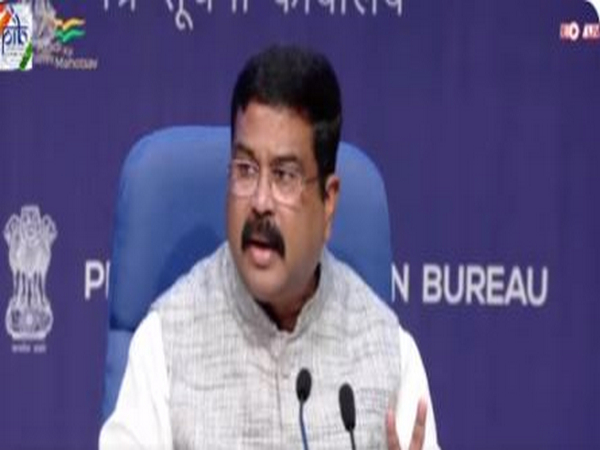
Briefing the media here after cabinet meeting, Education Minister Dharmendra Pradhan said the PM SHRI schools will deliver quality teaching for the cognitive development of students and will strive to create and nurture holistic and well-rounded individuals equipped with key 21st-century skills.

The scheme of PM SHRI schools (PM ScHools for Rising India) is to be implemented as a Centrally Sponsored Scheme with a total project cost of Rs. 27360 crore which includes a central share of Rs 18,128 crore for five years from 2022-23 to 2026-27.

The minister said PM SHRI Schools will provide leadership to other schools in their respective regions by providing mentorship.

Pradhan said more than 18 lakh students are expected to be direct beneficiaries of the scheme and further impact will be generated through the mentoring and handholding of the schools in the vicinity of PM SHRI schools.

An official release said PM SHRI will provide high-quality education in an equitable, inclusive and joyful school environment that takes care of the diverse background, multilingual needs, and different academic abilities of children and makes them active participants in their own learning process as per the vision of NEP 2020.

The PM SHRI Schools will be developed as green schools, incorporating environment-friendly aspects like solar panels and LED lights, nutrition gardens with natural farming, waste management, plastic-free, water conservation and harvesting, the study of traditions/practices related to the protection of the environment, climate change related hackathon and awareness generation to adopt a sustainable lifestyle.

The pedagogy adopted in these schools will be more experiential, holistic, integrated, play/toy-based (particularly, in the foundational years) inquiry-driven, discovery-oriented, learner-centred, discussion-based, flexible and enjoyable.

The focus will be on the learning outcomes of every child in every grade. Assessment at all levels will be based on conceptual understanding and application of knowledge to real-life situations and will be competency-based.

Assessment of the resources available and their effectiveness in terms of availability, adequacy, appropriateness, and utilisation for each of the domains and their key performance indicators will be done and gaps will be filled in a systematic and planned manner.

Linkage with Sector Skill Councils and local industry for enhancing employability and providing better employment opportunities will be explored.

The release said a School Quality Assessment Framework (SQAF) is being developed, specifying the key performance indicators to measure outcomes. Quality evaluation of these schools at regular intervals will be undertaken to ensure the desired standards.

Major illustrative interventions of the scheme include quality and innovation, encouraging flexibility in the choice of subjects offered, vocational interventions and enhancing internship and entrepreneurship opportunities, especially with local industry.

All PM SHRI Schools will receive Science and Maths Kits. PM SHRI Schools would be implemented through the existing administrative structure available for Samagra Shiksha, KVS and NVS. The other autonomous bodies would be involved on a specific project basis as required.

These schools shall be monitored vigorously to assess progress and understand the challenges faced in the implementation of National Education Policy 2020.

The release said the selection of PM SHRI schools will be done through Challenge Mode wherein schools compete for support to become exemplar schools. Schools would be required to self-apply on the online portal. The portal will be opened four times a year, once every quarter, for first two years of the scheme.

The elementary schools (Class 1-5/1-8) and the Secondary/ Sr. Secondary Schools (Class1-10/1-12/6-10/6-12) managed by the centre, state or local self-governments having UDISE+ code would be considered for selection under the scheme.

Selection would be done through a three-stage process with definite time lines.

Stage-1: States/UTs would sign MoU agreeing to implement NEP in entirety with Centre laying down the commitments for supporting these schools for achieving specified quality assurance as PM SHRI schools.

Stage-2: In this stage, a pool of schools that are eligible to be selected as PM SHRI Schools would be identified based on prescribed minimum benchmark through UDISE+ data.

Stage-3: This stage is based on the challenge method for fulfilling certain criteria. Only the schools from the eligible pool of schools would compete to fulfill the challenge conditions. Fulfillment of conditions would be certified by states/KVS/JNV through physical inspection.

Maximum two schools (one elementary and one secondary/senior Secondary) would be selected per block/ULB.

Under quality Assurance of PM SHRI Schools, steps will be taken to ensure that every secondary grade child passes out with at least one skill.

The release said that schools will be developed as vibrant schools focusing on all-round development of children. (ANI)

Ranbir Kapoor

Ranbir Kapoor Reacts To Cancel Culture And Boycott Trends

Bollywood actor Ranbir Kapoor, in a recent media interaction, reacted to Bollywood films and said that they are not performing well at the box office.

Ranbir said,” I will not speak about other films, I will give my own example. I had a film released a few weeks back called ‘Shamshera’, I didn’t feel any negativity, if the film doesn’t run at the box office, it’s probably because the audience didn’t like the film. Eventually, it is about the content, of course, who doesn’t want to go to the movies and experience a different emotion, cry, laugh, we all want to feel that.”
“So if the film doesn’t work, it’s because the content is not good” Ranbir added.

Post pandemic, many highly anticipated films like Aamir Khan’s ‘Laal Singh Chaddha’, Akshay Kumar’s ‘Prirthviraj’, ‘Raksha Bandhan’, and ‘Bachchan Paandey’ and Vijay Deverakonda, Ananya Panday starrer ‘Liger’ failed to impress the audience at the box office and the collections of the film were not as expected.

Previously, Aamir, on Karan Johar’s chat show ‘Koffee with Karan 7’ also stated, “If you want movies to work, then eventually you have to work on the story.”

Helmed by Ayan Mukerji, ‘Brahmastra Part-1: Shiva’ stars Ranbir Kapoor, Alia Bhatt, Amitabh Bachchan and Mouni Roy in the lead roles.

The film is all set to hit the theatres on September 9, 2022. (ANI)

Ananya Panday Drops Vacation Pics From Italy

Actor Ananya Panday, on Wednesday, dropped photos from her vacation in Italy.

She took to her Instagram handle and shared a series of pictures where she can be seen wearing a floral print dress and posing in different parts of destinations. She can also be seen enjoying ice cream.
She also wrote the post, “just a girl obsessed with lemon sorbet.”

https://www.instagram.com/p/CiNGksCNfB1/embed

Ananya again, treated her fans with a couple of pictures where she can be seen soaking up the sun in a green bikni.

She captioned the post, “capri-sun”.

https://www.instagram.com/p/CiNeVI0tAkh/embed

As soon as she dropped the post, people from the film industry and netizens showered love in the comment section.

She also shared some glimpses of Capri in the Instagram Story section.

Meanwhile, on the work front, Ananya was recently seen in Puri Jagannadh’s ‘Liger’, alongside Vijay Deverakonda. The film was backed by Karan Johar’s Dharma Productions, marking Vijay’s Bollywood debut. For the film’s promotions, the actor travelled across many cities in India. (ANI)

WHO Warns Of Worsening Situation In Pakistan

As Pakistan struggles to deal with the unprecedented floods situation in the country, the World Health Organisation (WHO) has warned about the worsening situation in the country ravaged by the record rains.

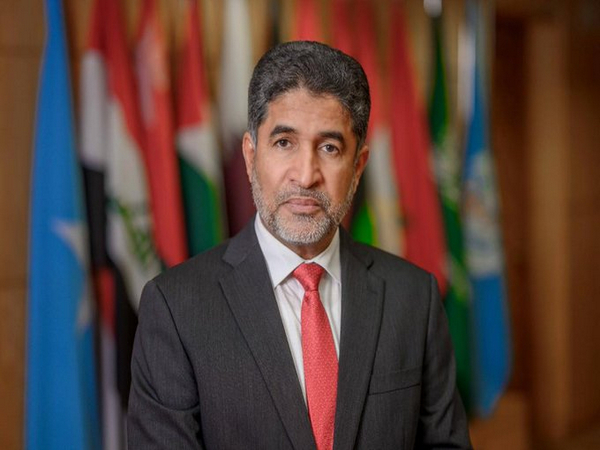
“We are following closely and with deep concern the humanitarian crisis currently facing the people of Pakistan as a result of devastating monsoon floods,” said Dr Ahmed Al-Mandhari, WHO Regional Director for the Eastern Mediterranean, on the floods in Pakistan.
In a press statement issued on September 5, Dr Al-Mandhari said the current scale of damage and destruction due to the floods is like none seen before in Pakistan – a result of long-term global climate change leading to more severe weather conditions.

Tens of millions of people are now forced to use unsafe water, both to drink and for their daily needs; they are also exposed to the elements due to flood damage and destruction of their homes, and many are displaced.

This has resulted in increased exposure to diseases already circulating in the country, including acute watery diarrhoea, malaria, dengue fever, typhoid, measles and leishmaniasis, the WHO official said.

Early disease surveillance reports are already showing an increase in cases of diarrhoea, malaria and typhoid. Other diseases in the country, such as polio and COVID-19, are also at increased risk of spreading if the situation is not rapidly contained.

According to Dr Al-Mandhari, thousands of pregnant women have lost access to health facilities and services for safe delivery of their babies, increasing the risk of medical complications as their options are limited to delivery at home.

The WHO official said those needing medical attention for existing conditions will face diminished access, while tens of thousands of people, including children, need psychosocial support and mental health services to cope with the enormous losses they are experiencing and the destruction they are witnessing.

“With almost 10 per cent of the country’s health facilities damaged or destroyed, WHO has stepped in quickly to support the ongoing efforts of the Government of Pakistan and the Ministry of National Health Services Regulations and Coordination to ensure that the affected people have access to the essential health services that they need. Our goal is to prevent this natural disaster from evolving into a complex public health catastrophe that results in further unnecessary loss of life,” he added.

According to WHO, mobile health teams have been redirected to flood-affected areas to provide health and nutrition services for pregnant women, new mothers and their babies, and children.

The world health body added that more than 4500 medical camps have been set up by the Pakistani government, WHO and health partners to ensure that people have access to basic and essential health services. (ANI)