Inside Rashmika, Vijay’s Vibrant Mehendi Evening

Actors Rashmika Mandanna and Vijay Deverakonda have set social media abuzz with unseen pictures from their vibrant mehendi and Pradhanam ceremony.

Looking radiant as ever in stunning traditional ensembles, Rashmika and Vijay celebrated the intimate pre-wedding ritual surrounded by their close friends and family members.

The mehendi evening was held on February 25.

Sharing the pictures on Instagram, which show the couple soaking in the festivities with bright smiles and heartfelt laughter, Rashmika wrote, “It was the Pradhanam and Mehendi evening. It was too perfect but it went off too fast.”

In a couple of frames, Rashmika could be seen sharing an emotional moment with her sister, followed by pictures with their close-knit squad.

The actor looked stunning as minimal mehendi designs adorned her hands, complementing her festive look. Among many highlights were the candid shots that showcased the couple exchanging playful glances at each other.

Vijay Deverakonda also shared a set of pictures, appearing regal as he posed with family and friends, adding to the celebratory spirit of the occasion. One of the most priceless moments showed Vijay planting a sweet kiss on Rashmika, reflecting their love and affection.

“The Pradhanam and Mehendi evening. An evening most fun, an evening that was lived fully, an evening i wish had a 100 more hours in it,” he wrote in the caption.

For the evening, Vijay and Rashmika chose colour-coordinated traditional outfits. While Vijay chose a hip-length jacket with motifs, he paired it with a deep-blue dhoti and a green short kurta.

Rashmika went for a matching ensemble, accented with mirror-work and motifs.

Rashmika Mandanna and Vijay Deverakonda got married on February 26 in Udaipur in the presence of their close friends and family members. The newlyweds also hosted a grand wedding reception, with many well-known names from the film industry and the political circle in attendance. (ANI)

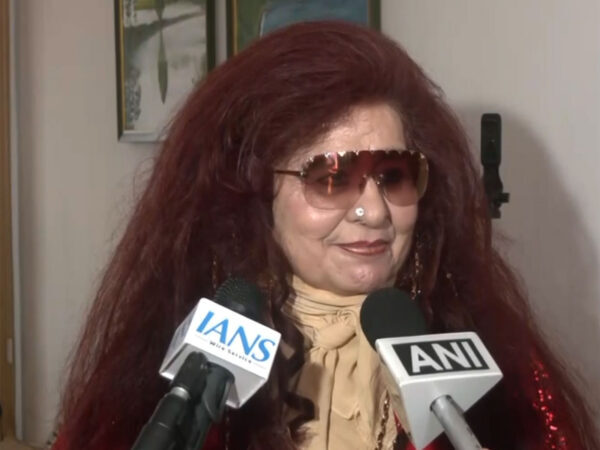
Shahnaz Urges Women To Have A Career

Renowned beauty expert and entrepreneur Shahnaz Husain has advocated stronger participation of women in workforce and emphasised promoting “woman power.”

Speaking with ANI on the sidelines of an event, Shahnaz Husain urged women to pursue what they like.

“I think that every woman should work to do something that she likes. It’s not important what you want; what really matters is how badly you want it. If you want something, nothing can stop you. There’s something called woman power and that she must promote,” Husain said.

“Women need to have a career. Have to do something to prove your presence. You can achieve anything; you must want it that much. If I want something, nobody can stop me. If I’m walking and I see a wall, I don’t turn my back and walk home. I break the wall and walk through it and let the world fall into place,” she added.

During the conversation, Husain also reflected on her own journey in the industry of cosmetics.

“When I started my career, there were no women in the cosmetic world, just men. And I started cosmetics for women’s power, for them to show the world how lovely they are.”

Shahnaz Husain’s remarks come at a time when conversations around women’s empowerment and career opportunities continue to gain momentum, especially in the wake of International Women’s Day, which was observed on Sunday, March 8. (ANI)

Ananya Drops Adorable Birthday Wish For Sis Rysa

Actor Ananya Panday dropped the most adorable birthday wish for her younger sister, Rysa Panday.

In a message for her “favourite person in the whole wide world”, Ananya wrote, “Happy birthday to the love of my life, my sweet Chuchu. You are my favourite person in the whole wide world and you’re so cute. Why did you become so big and stop answering my calls.”

Along with the note, Ananya also shared a cute childhood video of Rysa, showing her as a kid.

Their mother, Bhavana Pandey, also wished Rysa much love and blessings.

“Happy Birthday to the love of my life!!!! My cutest sweetest most adorable pudding. Wishing you loads of love good health and happiness!!! Shine on!!! May all your dreams come true,” she wrote on Instagram, alongside a carousel of pictures of her daughter.

Bhavana Pandey also shared glimpses from one of Rysa’s birthday parties when she was a little kid.

Many took to the comment section and wished Rysa, including Zoya Akhtar, Farah Khan, Riddhima Kapoor Sahni, and Malaika Arora.

Actor Chunky Panday also joined in the chorus, sending all the love for his youngest daughter.

“Happy Happy Birthday to the Sweetest, Cutest, Bestest Girl in the World,” he wrote.

Ananya and Rysa are the daughters of Bollywood actor Chunky Panday and his wife Bhavana Pandey. Their adorable camaraderie has often been a delight for fans and followers on social media.

On the work front for Ananya Panday, she is gearing up for the second season of her hit series ‘Call Me Bae’.

The first season, which was released in 2024, revolves around the life of Bella Chowdhary a.k.a Bae (Ananya Panday) and chronicles her journey as she goes from being a heiress to a hustler. (ANI)

Canada: Shooting At US Consulate In Toronto Damages Building

A shooting incident was reported at the United States Consulate General in Toronto early Tuesday morning, prompting an investigation by the Toronto Police Service.

Authorities said no injuries were reported, though damage to the building was found.

According to a statement issued by the Toronto Police, officers responded to a call at around 5:29 am (local time) in the area of University Avenue and Queen Street West in Toronto following reports of gunfire at the consulate building.

According to investigators, a white car travelling westbound on Dundas Street West turned southbound onto University Avenue and stopped in front of the consulate.

Two male suspects exited the vehicle and fired multiple rounds at the building before getting back into the vehicle and fleeing southbound on University Avenue.

When officers arrived at the scene, they found evidence consistent with a firearm discharge, including damage to the building’s glass and door, along with shell casings.

Police said several people were inside the building at the time of the incident, but no injuries have been reported.

Investigators have released an image of the suspect vehicle and are working to identify witnesses, review surveillance footage from the area, and collect additional evidence to determine those responsible.

Following the incident, Premier of Ontario Doug Ford strongly condemned the attack in a post on X.

“The shooting that took place at the U.S. consulate early this morning is an absolutely unacceptable act of violence and intimidation aimed at our American friends and neighbours,” the post read.

He added that he expects law enforcement agencies to deploy all available resources to identify those responsible, adding that there must be “zero tolerance” for such acts of intimidation and violence.

“I’m glad to see that the Toronto Police are investigating and I expect that police at all levels will bring every resource to bear to find the people who did this. Everyone at all levels of government and across Canada needs to make clear that there is zero tolerance for this sort of intimidating and dangerous behaviour, and that we will do whatever it takes to prosecute and punish the people responsible to the fullest extent of the law,” the post added.

Meanwhile, Canada’s Minister of Public Safety Gary Anandasangaree, also condemned the shooting, calling it “absolutely unacceptable”.

“Canada will never tolerate intimidation and violence of any kind, including towards our American friends in Canada,” Anandasangaree said in a statement on X.

He also expressed relief that no one was injured and thanked the police for their swift response.

The minister further urged anyone with information to contact authorities, as the Toronto Police and the Royal Canadian Mounted Police continue their investigation into the incident. (ANI)

Reliance Industries Limited

Taking Proactive Steps To Maximize LPG Production: Reliance

Reliance Industries said on Tuesday that it is taking proactive steps in line with the Government guidelines to maximize LPG production from its refining and petrochemicals complexes at Jamnagar, the world’s largest integrated refining hub.

In a statement, Reliance Industries said that it will continue to work closely with the Government and remain fully compliant with all national guidelines and allocation priorities.

The West Asia crisis has implications for India’s energy security, and the government has taken several steps to ramp up the supply of domestic cooking gas.

“At a time when global energy markets are experiencing volatility, ensuring uninterrupted access to essential fuels for Indian households remains a national priority. Reliance Industries is taking proactive steps and in line with the Government guidelines, to maximize LPG production from our refining and petrochemicals complexes at Jamnagar — the world’s largest integrated refining hub,” Reliance Industries Limited (RIL) statement said.

The statement said that its teams are working around the clock to optimize refinery operations and enhance LPG output.

“Our teams are working around the clock to optimize refinery operations and enhance LPG output so that supplies to the domestic market remain stable and reliable,” it said.

“At the same time, natural gas produced from the KG-D6 Basin will be diverted to support supply to priority sectors, in line with national energy priorities and Government guidelines,” it added.

Reliance Industries said it remains committed to doing everything possible to support India’s energy security in times of global uncertainty.

“For Reliance, India’s energy security and the well-being of millions of Indian families always come first. We will continue to work closely with the Government of India and remain fully compliant with all national guidelines and allocation priorities, ensuring that energy supplies reach the sectors and communities that need them the most,” the statement said.

“As always, Reliance will stand firmly with the nation in its time of need. In times of global uncertainty, we remain committed to doing everything possible to support India’s energy security and ensure reliable access to essential fuels for the country,” it added.

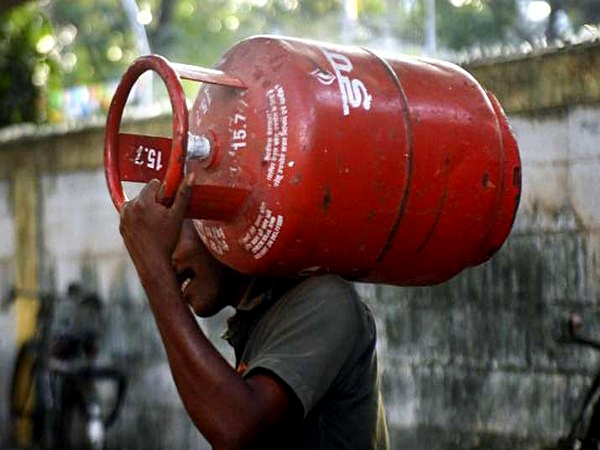
The government has invoked the Essential Commodities Act to ensure an uninterrupted supply of domestic cooking gas, directing refineries and petrochemical units to maximise production of liquefied petroleum gas (LPG) and divert key hydrocarbon streams to the LPG pool.

According to the order, the supply of natural gas to the certain sectors shall be treated as priority allocation and shall be maintained subject to operational availability to hundred per cent. of their average past six-month average gas consumption.

These sectors include: Domestic Piped Natural Gas supply; Compressed Natural Gas for transport; LPG production including LPG shrinkage requirements; Pipeline compressor fuel and other essential pipeline operational requirements.

The order further states that supply of natural gas to the fertilizer plants shall ensure seventy per cent. of their past six-month average gas consumption, subject to operational availability. It has also asked gas marketing entities to ensure that gas supply to tea industries, manufacturing and other industrial consumers supplied through the national gas grid is maintained at eighty per cent. of their past six-month average gas consumption subject to operational availability.

All City Gas Distribution entities have been asked to ensure that industrial and commercial consumers supplied through their networks receive eighty per cent. of their past six-month average gas consumption subject to operational availability.

The oil refining companies have been ordered to absorb the impact of LNG supply disruption to the extent feasible by reducing gas allocation to refineries to approximately sixty-five per cent. of the past six-month gas consumption, subject to operational feasibility.

Every producer, importer, transporter, marketer or distributor of natural gas including LNG and regasified LNG has been asked to furnish information relating to production, imports, stocks, allocation, supply and consumption to the Central Government or to any officer authorised by it.

Meanwhile, the Ministry of Petroleum and Natural Gas issued orders to oil refineries to increase Liquefied Petroleum Gas (LPG) production and directed that such additional output be channelled specifically for domestic use.

The government prioritised domestic LPG supply to households to ensure energy security for citizens amidst the ongoing uncertainty in the global oil and energy market due to West Asia crisis

“In light of current geopolitical disruptions to fuel supply and constraints on supply of LPG, Ministry has issued orders to oil refineries for higher LPG production and using such extra production for domestic LPG use,” the Ministry of Petroleum and Natural Gas said in a post on X.

To manage the current supply environment, the ministry introduced a 25-day inter-booking period for consumers to avoid hoarding and prevent black marketing. (ANI)

Trump: Iran’s New Supreme Leader ‘Won’t Live in Peace’

US President Donald Trump expressed concern over the appointment of Mojtaba Khamenei, son of late Ayatollah Seyyed Ali Khamenei, as Iran’s new Supreme Leader, stating that he does not believe the newly appointed leader of the Islamic Republic will be able to “live in peace” as US military operations in the region against the regime continues.

During an interview with Fox News, the US President also discussed the timing and rationale behind the recent US military strikes on Iran.

Trump said the operation was necessary to prevent imminent attacks from Iran, claiming that the strikes had neutralised about half of Iran’s missile capabilities.

“When we attacked them first, we knocked out 50 per cent of their missiles. If we didn’t, it would have been a much harder fight. No other president has the guts to do it. I don’t want a president who hasn’t got the courage in five or 10 years to go in,” he told Fox News.

Trump added that without the strikes, Iran could have launched attacks within three days and that obtaining nuclear weapons would have posed an immediate threat.

Regarding potential diplomatic engagement, Trump suggested that talks with the Iranian regime are possible but would depend on the terms.

“It’s possible–it depends on what terms. Possible, only possible. We sort of don’t have to speak anymore if you really think about it, but it’s possible,” Trump stated.

The development comes amid heightened tensions in West Asia after the killing of 86-year-old Iran’s Supreme Leader, Ayatollah Ali Khamenei, in joint military strikes by the US and Israel on February 28, following which Iran, in its retaliation, targeted Israeli and US assets in several Gulf countries. The US-Israel strikes also killed several senior leaders of the Islamic Republic.

Following this, on Sunday, Iran’s Assembly of Experts, the clerical body responsible for selecting the supreme leader of the Islamic Republic, announced the appointment of the late leader’s son, 56-year-old cleric Mojtaba Khamenei, to the position.

The leadership transition marks a significant moment in Iran’s political history, as Mojtaba Khamenei becomes the third supreme leader of the Islamic Republic.

Trump, in his first reaction following the appointment of Mojtaba Khamenei as the Supreme Leader, said that he was “not happy” with the selection.

The clerical body confirmed that Khamenei was “appointed and introduced as the third leader of the sacred system of the Islamic Republic of Iran, based on the decisive vote of the respected representatives of the Assembly of Experts”. (ANI)

Will Iran Survive the War?

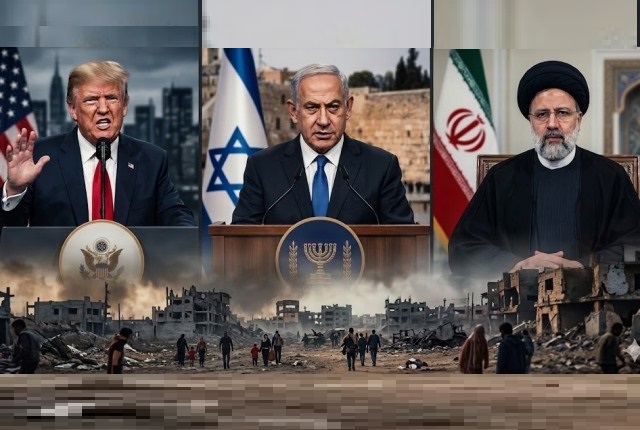
Feeling confident after Venezuela, President Donald Trump set eyes on Iran, goaded by Netanyahu. The USA appears to have expected that decapitation of the leadership (Ayatollah Khamenei) and others in the government, and with some help from a mass rising, would convince the rest to embrace American terms. That hasn’t happened.

It also appears that the late Ayatollah Khamenei prepared for martyrdom through an expected assassination. Being in poor health, rather than die a normal death, he chose not to hide but go in Shia history as a martyr a great honour in Shia Islam. What Ayatollah Khamenei may not have planned for is an attack when his family was there who were wiped out as well except his son, Mojtaba Khamenei, who has now become the new Supreme Leader.

An Angry Trump has promised to pound Iran even more with mutterings from others in the administration that the new Supreme Leader’s days are numbered. America expected a Venezuelan type capitulation.

Iran on the other hand has not shown any sign of wanting to waive the white flag. Is it being delusional, foolish or does it really have a plan to survive the most powerful country in the world?

It would be an error to characterise Iran as a country run by hardline Mullahs with little understanding of the modern world, science or global politics. It will be equally simplistic to think of the Iranian Shia Mullahs as priests in other religions, putting trust in God or Allah and thinking all will be well, until it goes unwell and then run for cover.

It was at a Biodiversity conference in Teheran that I first came to understand the Shia clerics of Iran. In a session on cloning, the keynote speaker was a Shia Cleric. His opening statement was that it is ‘haram, that is blasphemous’ and against the teachings of the Qur’an to say that man can create. Resigned to hearing a long lecture, as one would from a religious cleric, that cloning is a sin, an act against God and will never succeed, I was completely shocked by his follow up statement. “Cloning isn’t creation; it’s simply replication of what God has already created. But mankind isn’t ready for this yet!”

I spent a long coffee with another young cleric at a Coffee bar. He told me about the training of an Iranian cleric. It is three years of studying the Qur’an. Then a year of western philosophy, followed by a year of eastern philosophy including Hinduism, then a year of science and lastly a year of deconstruction of all ideas relative to Islam. It takes seven years to become a modest cleric in Iran! His grasp of both western and eastern philosophy was remarkable.

What struck me was that the clerics interpret the Qur’an in a way that it does not hinder scientific or economic progress. In most countries, clerics support the crown or regime but in Iran they were supporting progress and science. They were not preaching long sermons about wrath of God. The clerics were enabling scientific and modern life except modern liberal social developments such as freedom of expression etc.

The University medical school where the conference was held, had 60% female students. There were four women chancellors from various Universities at the conferences. I saw many taxis and buses being driven by Iranian women, albeit in a Hijab. This was another surprise. I also saw young couples canoodling in coffee bars.

On coming back, I told a UK think tank conference that I didn’t think a rebellion would succeed in Iran simply so that women can wear mini-skirts or some people can make political statements against the regime. They are neither holding back science nor economic progress.

In the 46 years since Ayatollah Khomeini ousted the Shah in 1979 and took over, the clerics have built a very resilient system of continuing leadership, institutions, educational establishment and training. The system isn’t dependent on one person or a small group of hardline dictators. It is diffuse, built on consensus and very difficult to crack. It isn’t like the Indian Maharajahs, including the Sikh Maharajah, whose Kingdoms collapsed within a few years after death of a tough Maharajah. They never built institutions to survive.

Iran’s majority population is Shia. The Shia, like the Jews, have spent most of their history in a state of persecution. They believe that the Caliph or Imam after Prophet Muhammad should be from his family while the Sunnis took a different view. After the killing of the third Shia Caliph Husayn Bin Ali at the Battle of Karbala in 680, the Shia have spent long periods as persecuted group within the larger Muslim world, dominated by Sunnis. They have been in power from time to time, and have held on to it in Iran (Persia) since 18th century when Sunni Persians were converted to Shia. Over the centuries they have developed sophisticated approaches to survival as dispersed groups, as insurgents and set up resilient institutions.

The Jews also have a long history of being persecuted and living intermittent centuries of exile since the 8th century BCE when the Neo Assyrian Empire took over their lands. Subsequently Romans took over Jewish lands and put many into slavery. This was followed by Christian crusaders. Jews were forced to disperse in various parts of Europe, facing marginalisation and persecution and even further exiles from adopted lands such as the one from England in 1290 and from Spain in 1492 . The most recent and inhuman was the Holocaust by Germans. The Jewish word for this form of exiled existence is Galut, a sense of negative existence always seeking the homeland from where they were dispersed.

Hence, Jewish civilisation and culture have a number of days of remembrance and a long memory that influences sensitivity to possible exile and persecution again. This is particularly evident in Jews whose historical roots have been of living in ‘galut’ in Europe. There are Jewish communities in India (Cochin Jews and Paradesi Jews) from ancient times of exodus who have never faced persecution, whose outlook is different and are quite well integrated.

It is a sad and ironic fate of history that the two communities who have faced so much persecution in history from others are now at each other’s throats, fighting each other for what both think is survival. Rather than respect each other’s history they see each other as the greatest threat.

Both communities have survived history by leveraging other powers. Currently the Jewish community has enjoined the patronage of United States while Iran’s Shias have drawn Russia and China closer to them. Whereas China avoids theatres of proxy wars, Russia and America are long players of that war game.

Where this ends is anyone’s guess. As a highly intelligent community with deeply entrenched institutional structures, Iran has developed strategies of dispersal defence guided by Ayatollah Khomeini. They have what is called the ‘four’ leadership structure. Expecting decapitations, destruction of their infrastructure and first line of defence, they have set up a multi-tier leadership line with at least four trained to take over in succession when one dies. This is in every field and organisation. So killing the head of Army or the Supreme Leader makes little difference as the successors have already been trained to take over.

Similarly they also have a decentralised defence structure with commanders of different units having autonomy to continue when others fall. It is not dependent on a CENTCOM. They have factored in bombing of their military headquarters or blasting off all their military gear, air force etc. They have satellite forces such as Houthis and Hezbollah. Their tactic is to make war very expensive for the enemy, so it hurts financially rather than just in human terms. They have been masters of asymmetrical warfare for centuries. The Assassins creed were Shia. And as the Iranian commander said, they have studied American warfare and prepared for it for 20 years.

In Indian history, this was the form of warfare practiced by Sikh misls against the Mughals. They had a semi spiritual leader at Harmandir Sahib, but the misls were autonomous war groups who bled the Mughals to final defeat. The Sikhs unfortunately did not prepare for victory and left no enduring institutions to resist occupation.

Iran is going for desalination plants in the Gulf States who are dependent on this as source for nearly 90% of their water supply They are choking oil supplies and making the Gulf states unattractive for investments. They have gone for the new AI centres in the Middle East in which Gulf investments have been significant. They are hoping that the economic fallout will affect United States and Europe, thus forcing America to withdraw from this conflict.

The USA does not really have a civilisational gravitas to have a sense of self contentment. Since early settlers it has been a country of political or economic migrants from all over the world. It is a nation defined by a combination of power, opportunity and victimhood usually seeking comfort in being ‘great’. It was not surprising that Trump’s call for Make America Great Again resonated with voters, who sought being ‘great’ after the humiliations in Afghanistan and Iraq. But it is also pragmatic with ‘Project Great’ and takes a step back when it becomes too costly in human and economic terms.

James Baldwin, a Black civil rights activist in USA famously said that American history and identity are built on destruction of others. He was talking of destruction of Black people but in the new America where Blacks also hold significant parity, it is now destruction of a weaker country in the world. ‘No more foreign wars’ doesn’t really work for the USA. Besides its military-industrial complex survives on them. Winning is an option, not a necessity. Iran is the victim now.

The question whether Iran’s Shia regime will survive war against the most powerful army in the world will most likely depend on if Iran continues with the strategy of asymmetrical warfare, bleeding the American driven economic architecture of the world and exhausting America’s commitment to a conflict that has no real ideological or strategic purpose for it other than expression of power and perhaps access to resources.

On the larger tapestry of Middle East, the region could be a lot more peaceful and stable if the Jewish State of Israel and the Shia State of Iran could find a common bond to survive as both have suffered long histories of persecution. Their enemies were also common, Christian Europe and Sunni Islam for Jews, and Sunni Muslims and now Christian West for Shias. A shared history in different temporal spaces – surely something to bond over at a coffee table.

Zeenat Outfits flamboyant

Zeenat Recalls Her Grooving Days, Says She Was Never A Confident Dancer

Veteran actor Zeenat Aman took a nostalgic walk down memory lane this week, sharing a candid reflection on her dancing days in Hindi cinema while revisiting a memorable song from her 1979 film ‘The Great Gambler.’

Posting a video snippet of the song ‘Oh Diwano Dil Samhalo’ on Instagram, Zeenat described the track as her personal favourite from the film, even though the romantic number ‘Do Lafzon Ki Hai Dil Ki Kahani’ became the most widely loved song among audiences.

The song, sung by legendary playback singer Asha Bhosle, captures what Zeenat called “the confidence and sass of a woman who knows her desirability.”

“Another hit from ‘The Great Gambler’! ‘Do Lafzon Ki’ was the movie’s most loved song by popular consensus, but this one is my personal favourite. None of that drippy romance stuff here. Just the confidence and sass of a woman who knows her desirability,” the actress wrote in her post.

The actor also reminisced about the styling and choreography of the song sequence, which featured multiple costume changes. One particular outfit, a shimmering gold track-pant set, stood out in her memory.

“The sequence had three outfit changes, of which the shimmering gold track-pant set tickled me the most! Not only was the outfit completely over the top, the hair team decided to give me a short pageboy wig to go with, and the dance master decided to add in some high kicks for good measure,” she recalled.

Zeenat also candidly admitted that dancing was never her strongest suit during her film career. Unlike many of her contemporaries, she said she never received formal dance training, which sometimes influenced how directors approached choreography for her songs.

“As I’ve mentioned before, I wasn’t a very confident dancer as I never had formal training unlike most of the actresses of the time. Still, I could ‘groove’, and many a director realised it’s better to leave me to my own swaying device than frustrate themselves trying to coax complicated choreography out of me,” she wrote.

Directed by Shakti Samanta, ‘The Great Gambler’ starred Amitabh Bachchan in a dual role- as Jai, a skilled gambler working for an underworld don, and Vijay, a CID inspector, whereas Zeenat Aman played the character Shabnam in the film.

The film’s music was composed by the late RD Burman, whose soundtrack remains popular decades after the film’s release.

Ending her post on a playful note, Zeenat invited fans to revisit the clip and guess the voice behind the song, continuing the actor’s recent tradition of sharing stories from her cinematic past with followers online. (ANI)

Commercial LPG cylinders price

Siddaramaiah Writes To Puri, Requesting Intervention In Commercial LPG Shortage In Bengaluru

Karnataka Chief Minister Siddaramaiah has urgently requested Union Minister for Petroleum and Natural Gas, Hardeep Singh Puri, via a letter to intervene in the severe commercial LPG shortage in Bengaluru.

He claimed that disruption in supply following a central directive is forcing restaurants, hotels, and catering services to the brink of temporary closure.

Highlighting that a revised order issued by the Ministry of Petroleum and Natural Gas, which he said prioritises domestic LPG, has caused an unintended supply crisis for commercial users.

In a letter to the Union Minister for Petroleum, he said, “While the intention behind the order to ensure uninterrupted LPG supply to households across the country is well understood and appreciated, its implementation appears to have led to an unintended shortage of commercial LPG in Bengaluru.”

“Several hotels and restaurant associations in the city have reported that they are unable to procure commercial LPG cylinders, and many establishments are expressing concern that they may have to temporarily shut operations if supplies are not restored soon,” the letter said, further highlighting that the city hosts large ecosystem of small restaurants, mess facilities, and catering units that serve lakhs of people every day.

He said that the “sudden disruption” in the state’s traditional supply is affecting hotels, catering establishments, and other commercial users in Bengaluru.

The letter further said, “This issue also affects a large number of students and working professionals who live away from their homes and depend on hotels and mess facilities for regular meals. In addition, Choultries (wedding halls), hostels, and event venues that rely on commercial LPG for food preparation are also facing uncertainty, particularly with scheduled social and community events.”

The CM requested the union minister to intervene to ensure “adequate” commercial LPG supply is made available for hotels, restaurants, choultries, community halls and any other pure commercial establishments.

The letter further stated, “Appropriate directions to the Oil Marketing Companies to address the current supply constraints would help ease the situation. A timely resolution will help ensure that businesses continue to operate smoothly while also avoiding inconvenience to thousands of citizens who rely on these services on a daily basis.” (ANI)

Bringing Down Regime In Iran In The Hands Of Iranian People: Netanyahu

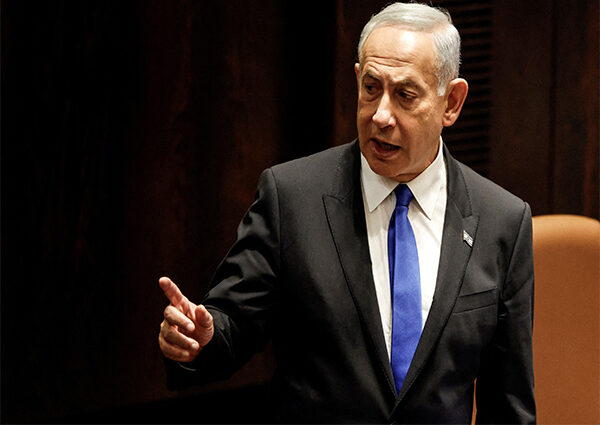
Israeli Prime Minister Benjamin Netanyahu on Tuesday said that the future of Iran’s current political leadership ultimately rests in the hands of the Iranian people, asserting that any change in the regime would depend on their willingness to challenge what he described as oppressive rule.

Speaking during a visit to the National Health Emergency Operations Centre, Netanyahu stated that Israel’s broader aspiration is to see the Iranian population free itself from what he termed a system of tyranny.

“Our aspiration is to enable the Iranian people to cast off the yoke of tyranny; ultimately, it is up to them. But there is no doubt that through the actions taken so far, we are breaking their bones and we are still active,” he said.

“If we succeed together with the Iranian people, we will bring about a permanent end to the extent that such things exist in the lives of nations. We will bring about change, and we are already bringing about a massive shift in Israel’s international standing,” he added.

During his visit to the National Health Command Center with Health Minister Haim Katz, as part of Operation Roaring Lion, Netanyahu was briefed by Health Ministry Director-General Moshe Bar Siman Tov, on the healthcare system’s activities during the campaign.

Earlier, Iran issued a defiant response to US President Donald Trump’s claims regarding the conclusion of hostilities, asserting that it will be the sole authority to “determine” the end of military actions against American and Israeli targets.

In a strongly worded statement, Iran’s Islamic Revolutionary Guard Corps (IRGC) rejected Washington’s timeline for the conflict. The elite force maintained that the future of the region is now guided by Tehran’s military strategy rather than US intervention.

“It is we who will determine the end of the war,” the IRGC said in a statement.

“The equations and future status of the region are now in the hands of our armed forces; American forces will not end the war.”

The IRGC spokesperson accused the US president of using “cunning and deceit” to manipulate public opinion following what Tehran described as “shameful defeats”. (ANI)