‘Assi’ Exposes A Society That Fails Its Rape Victims

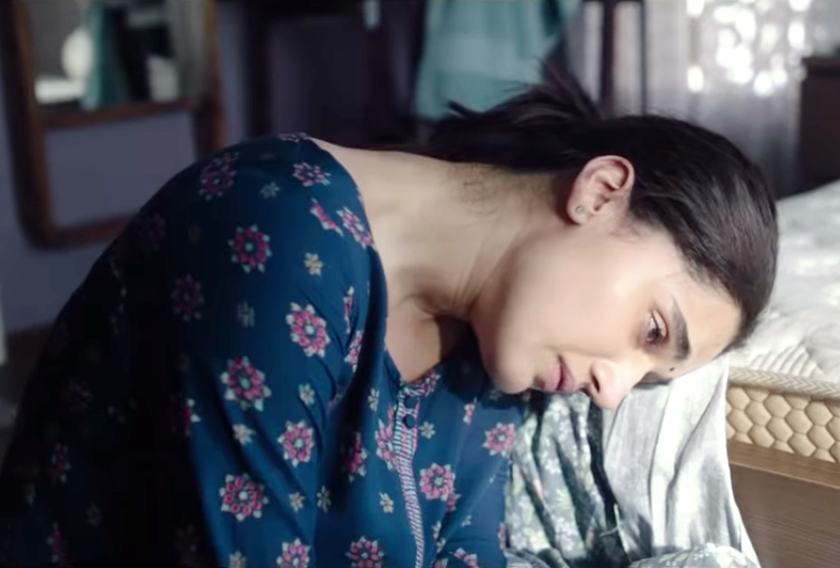
Film director Anubhav Sinha returns with his new film Assi. The film’s first screening was held on Friday at PVR, Connaught Place, Delhi. It is not an easy watch; it raises questions that can shake you to the core. Rarely has Hindi cinema shown the courage to deal with an issue as grave as rape with such honesty and seriousness.

Anubhav Sinha, who began his career with commercial films like Tum Bin, Dus, and Ra.One, has already demonstrated his ability to examine sensitive social issues through films like Mulk and Article 15. Assi appears to be a further extension of the same stream.

The film releases on February 20. Writing about it before the release may seem like a spoiler, but it really isn’t. In his interactions with the media, Sinha has made it clear in the trailer what audiences are coming to watch. The difference is: if the trailer feels like a single-angle shot, the full film unfolds like a multi-layered narrative. In Hindi cinema, rape has often been used as a formulaic plot device. Assi, however, stands apart because of the sensitivity and depth with which it examines the issue.

After watching the film, you remain in a state of shock for a long time. It forces you to confront how hollow the inner layers of the society we live in really are. The film portrays the pain of a rape survivor—but the story is not limited to just one victim. Against this backdrop, the film investigates the issue from every possible angle.

Assi—the title refers to the official average number of rape cases reported daily in the country. According to data from the National Crime Records Bureau (NCRB), on an average, 86 rape cases were daily registered in 2021—one every 20 minutes. And these were the cases that made it to police records; the unreported numbers will remain hidden from public data. From six-month-old infants to 80-year-old women—no one is spared. Every 20 minutes, the film reminds you that somewhere, another incident has already occurred. Every time that number appears on screen, it tugs one’s conscience. At one point, the survivor herself says that more than 30,000 girls and women endure this pain every year—enough to fill an entire stadium.

Her pain deepens further when she tells the court that while the face she sees in the mirror is still her own, what has changed inside her—where does she go to complain about that?

Unlike typical masala films, Assi does not attempt to offer easy solutions. It simply confronts you with a terrifying reality. The survivor is a schoolteacher. The very students she once taught turn her trauma into memes. Ninth-grade children make obscene comments about her in social messaging groups. When the school principal reveals this, the pain is clearly visible on both their faces. The principal asks, “What are we really teaching—debate, dance, medicine, IIT? But where are we heading?” That question lingers, echoing in everyone’s ears.

ALSO READ: ‘Lax Legal System, Patriarchal Mindset Behind Rise In Rape Cases’

The film also does not advocate killing the rapist, or similar Bollywood bravado. Instead, it confronts the truth that this cannot be a solution. Punishing one or two culprits will not end the problem. How do we eliminate the mindset that leads to such crimes? In one scene, the director explains that killing can never be heroic. It may sometimes feel necessary, but it is never heroic. Yet, he also presents the contradiction—that in certain circumstances, the killing of the guilty seems unavoidable. Still, the film makes one thing absolutely clear: capital punishment is not the solution.

Assi does not provide answers; it sparks a debate. It calls for social change, without prescribing a clear path for it. Perhaps that was never the director’s intention. All he wants is for us not to shut our eyes. A dialogue is necessary—and maybe the road to change begins there.

After the screening, actress Taapsee Pannu echoed the same sentiment. The film makes powerful use of poet Uday Prakash’s verses. Taapsee repeated the lines:

A dead man does not think
Nor does a dead man speak up
Perhaps, when a man cannot think or speak up
The man can be declared dead

Taapsee plays the lawyer fighting the rape survivor’s case, and she convincingly portrays the frustration, anger, and exhaustion of a woman lawyer battling the system. When she says in court that true justice will only be delivered the day a woman can step off the metro at night without fear while walking home, the audience feels that pain with her.

Kerala actress Kani Kusruti brings the survivor’s agony vividly to life. Renowned actress Revathi plays the woman judge presiding over the case, powerfully portraying the helplessness of accepting fabricated evidence despite knowing the truth. Actors like Kumud Mishra, Zeeshan Ayyub, and Manoj Pahwa do full justice to their roles. Naseeruddin Shah, Supriya Pathak Shah, and Seema Pahwa also appear, leaving a strong impact despite their brief screen time.

There is only one point where Anubhav Sinha seems to falter. The presentation of facts is so forceful that storytelling occasionally takes a backseat, and at times the film feels almost like a documentary. But perhaps that was necessary—for the story the film needed to tell.

(Amit Sharma is an academician and a media professional)

Thappad: The Slap Is On Us

Contradictions constantly rush at one another in India where the most progressive and the most regressive trends co-exist at any given time. The context here is society and cinema.

It was Deepika Padukone and her film Chhapaak two months back. Now it is the turn of another landmark film, Thappad. The former was trolled and boycotted by those angry at Deepika’s expressing solidarity with agitating students and teachers at the turbulent Jawaharlal Nehru University. The latter faces similar wrath since its director Anubhav Sinha and many of the actors led by Taapsee Pannu were part of similar protests at Mumbai’s Gateway of India.

While Chhapaak reportedly suffered at the Box Office and bowed out of most cinema halls, Thappad is seemingly surmounting the boycott from quarters preoccupied with violence in Delhi and its aftermath. Taapsee has dismissed prospects of any damage to her film coming from “a few thousand trolls.”

ALSO READ: Deepika Chooses Conscience Over Caution

The basic argument of both the actors is that it is stupid to condemn and punish a film because those behind it have publicly expressed their views on issues that is controversial. But we are living in highly polarized times.

Coincidentally, but significantly, both films challenge set social norms and prejudices that presumably cause discomfort to the trolls, their allies across the social media and more importantly, their political mentors. Chhapaak, already written in detail in this space earlier, is about brutal acid attack on women who reject unwanted male advances. Thappad is about domestic violence and the impact on an individual’s sense of self-respect, especially when it comes from loved ones and life-partners.

Domestic violence afflicts all societies, but more so those where patriarchy rules, where men dominate, irrespective of their ability to earn and carry out other responsibilities as family persons, family heads in most cases. Inbuilt male supremacy boosts male ego.

ALSO READ: ‘We Rooted Out Domestic Violence’

One can argue endlessly whether it is prevalent more in traditional societies or those that follow Western norms, or whether it is in the joint family or a nuclear one. But the universality of it is not in doubt.

Conventional wisdom is that education (for all) and economic independence in the case of the woman help better relationship. But there is no rule of the thumb with changing societal values and perceptions and complexities of growing urbanization and the rate race to make it big in material terms. In India, dowry deaths and in-laws’ harassment may or may not have diminished, but a working woman’s autonomy to spend from her earnings does lead to domestic violence.

India’s Protection of Women from Domestic Violence Act, 2005 begins and ends with the issue of violence. But it does not, and cannot, touch upon long-set social norms where a woman once married is expected to leave her parental home and not expect any relief or help if she is in trouble. They could include dowry demand, ill-treatment by in-laws who often side with the son against the daughter-in-law. Not just the mother-in-law, but the sister-in-law could also play a negative role. A daughter-in-law, but not daughter, is advised to accept a flawed relationship, occasional violence, even the son’s cheating. These are the realities.

ALSO READ: ‘I Wash Thrashed For Dowry, Given Talaq’

Traditional social norms in India have ensured that women by and large live with injustice and violence for fear of losing ‘izzat’ or else, being socially ostracized. A million women complained of domestic violence between the year 2005, when the law was enacted and 2016. Yet, the rate of reporting such incidents to the police are still considered small compared to the Western societies. Though illegal since 1961, dowry demand, at times camouflaged, remains ingrained in Indian society. Data reveals that 72 women die every day.

The law works, but only to the extent the society evolves and the State helps. For instance, “honour killing” is the norm, if not so much in India then certainly to its West where in some societies, women complaining of rape are punished.

This is all in the public domain, while domestic violence mainly occurs within the four walls of the home.  In Thappad, it is a mix of the two. One tight slap falls on the cheek of a loving, caring wife from an equally loving, caring husband. It is delivered at home but in the midst of a party, before several guests.

A still from the movie Thappad

It triggers a mini revolution. After failing to reconcile, the wife is determined to preserve her self-respect, even if it means a divorce. Just everyone, particularly women, including her woman-lawyer, dissuade her. Your place is there, not with us, parents tell her. All this is when each of them has story of aspirations suppressed at the altar of family life.

Reconcile and move on, the in-laws advise. All relationships are flawed, the lawyer counsels. Much ado over “just one slap?” she is told. “Not even one slap,” she responds. It is a wake-up call, not one to revolt. It’s a thin line, though.

The most effective parts of the film are the ones in which we are shown just how women are always being told how to feel, how to keep their feelings in check, how not to give into them.

Indian Express film critic Shubhra Gupta sums up: “Thappad bears its message, more essential than ever, on its chin: Women are not property. Wives are not owned. Dreams have no gender, and everyone is allowed to realise them. And how all it takes, from a woman who just wants self-respect, is a decision to say no, Not Even One Slap.”

Sadly, films speaking out against dowry are passé these days. But like domestic violence, there is another ‘No’, as more and more women join India’s work force. Pannu was the lead actor in another remarkable film, Pink (2016), about consent in sexual relationship. Amitabh Bachchan played the lawyer whose baritone “No means no. Only no”, drew the Lakshman Rekha.

All three films cited here are well-written, diligently performed, are not preachy, yet convey their respective messages forcefully.

This is where, and how, cinema comes, as it should. Undoubtedly, it has its limitations. The society cannot duck its responsibility. Not even when political leaders attribute increase in cases of rape and divorce to women going to work. The society has itself to set acceptable norms armed with legal sanctions and follow it diligently.

The writer can be reached at mahendraved07@gmail.com