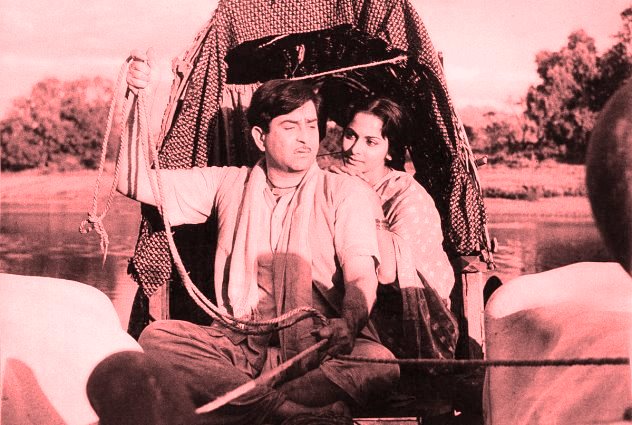
A Love Story on Bullock Cart

Although critically acclaimed, Teesri Kasam was a commercial disaster when pushed out of cinema theatres to make way for potboilers. It recovered after winning two National Film Awards and was publicised thus.

That was an era when good, wholesome cinema received, if not always funds, official recognition. Today, much of the recognition is reserved for ‘Files’ that align with a political agenda and fuel hatred among communities.

Made in 1966 on a story written in 1954 by the renowned Hindi writer from Bihar, Phanishwarnath Renu, the film, although shot largely in Maharashtra and Madhya Pradesh, depicted the simplicity of a poor, rural Bihar. That poverty persists. Bihar remains underdeveloped, in the news for many wrong reasons.

Deeply embedded in the prevailing values of rural India, healthy or otherwise, Teesri Kasam was based on Renu’s original short story, Marey Gaye Gulfam. Nabendu Ghosh, who wrote many films for Bimal Roy, introduced it to Shailendra, the renowned lyricist, himself a son of the Bihar soil.

In a rare literary and cinematic confluence, Ghosh wrote the script as well as the screenplay. Cinematographer on Satyajit Ray’s early films, Subrata Mitra, lensed it. Basu Bhattacharya was its debutante director. He went on to make some significant films.

Nautanki is a major prop in the film. Developed in the ‘Bhagat’ and ‘Swang’ musical theatre traditions of north India, it was once the biggest form of entertainment in its villages and towns. Today, Nautanki, like Tawaif, is a bad word. Waheeda Rahman’s Nautanki performance in the film looks way too decent when compared to the present-day vulgar, public performances, patronised in the Hindi belt.

This then-and-now comparison would be incomplete without asking how many filmmakers, in their race to join the global cinema, explore themes rooted in India.

Teesri Kasam took five years to make and contributed to Shailendra’s death before it was released. Short of funds, he wanted to make a simple, low-budget film. He selected comedian Mehmood and Mumtaz to play cart-rider Hiraman and Hirabai, performing for a Nautanki company. But Bollywood biggie Raj Kapoor, whose discovery ‘Kaviraj’ Shailendra was, insisted on playing the lead.

Although he charged only one rupee, the canvas widened with Kapoor’s entry. He advised Shailendra to add some commercial elements to an otherwise melancholic story. Shailendra disagreed and did the movie the way he wanted.

Shankar-Jaikishan composed ten songs, each one a masterpiece that made the film memorable. Shailendra delivered his best, including the award-winning Sajan Re Jhooth Mat Bolo. Yet, the most heart-rending song, crooned by Mukesh, was Hasrat Jaipuri’s Dunia Banane Waley. Each line of these songs carries deep philosophical meaning, each word resonating with our individual journey of life wherever we be.

With his light eyes, Kapoor looked too well-fed for a poor cart driver. However, shorn of the Chaplin-sque image that had won him global fame in Awaara and Shree 420, his performance, comparable with his earlier Jagte Raho, is among his best.

Waheeda, riding on her previous year’s performance in Guide, was outstanding. On Shailedra’s tearful pleading, it is said, she worked for a nominal token amount. She is perhaps the only survivor of that magnificent experiment in cinema.

Six decades is a long time to judge a film for its critical content and the relevance of its message in the present times to be called a classic. It is tempting to say that Teesri Kasam fills all the slots. Had it been made on a larger budget and in colour (arguable, since its black & white photography was excellent), it would have been a greater film than it is.

Bhattacharya won the National Award for direction and was nominated for the Grand Prix at the Moscow International Film Festival. But not everyone was satisfied with his treatment of a simple, yet deeply meaningful theme.

Underlining the differing approach between an art-laced film and a Bollywood commercial, Kapoor disapproved. In an interview in 1977, he said, “Basu (Basu Bhattacharya) is a pseudo, and I didn’t like the film. He was risking somebody else’s money. What did he have to lose?”

Looking back, it would be unfair to blame Kapoor and his RK team’s support. Views have also differed about the film’s ending, and blamed it for the box office failure. Some felt that rather than separating Hiraman from Hirabai, the two should have walked away from the world. Comparison has been made with another classic, Pyaasa, where a roadside hooker, incidentally, also played by Waheeda Rehman, joins a poet that society has rejected.

Such a debate marks out Teesri Kasam. But note what Hirabai has to say of her own identity. Hiraman thinks she is a goddess, and the landlord who wants to bed her thinks she is a prostitute. But both are wrong, she insists.

She definitely loves Hiraman, the first man who has treated her with respect. But she realises that if she hides her tainted social status from him, they would live in falsehood. The shock for him on knowing the truth would be unbearable and would ruin their relationship.

‘Libbers’ today may fault Hirabai for lack of courage to break her social shackles, but not for allowing her head to reject the heart’s desire. She comes across as a worldly-wise winner, even as Hiraman, rejected and dejected, takes his frustration out on the poor bullocks. He takes his third vow: never to seat another “company ki bai” on his cart.

In a noteworthy flaw, the first two vows, rushed through at the film’s onset, are of no real consequence to the story. They only lay the ground for the third.

Yet, it remains a simple story simply told of the fragile love between two social misfits. It does not have a happy ending, but it is not a tragedy either. A character-driven film, it offers several insights into human relationships, the likes of which are seldom seen on the Indian screen these days.

Much like its protagonists, Teesri Kasam was also a victim of its fate. Watching it today, it is hard to decipher why a film with such emotional depth, popular music and stellar actors did not get accepted in that “Golden Age” of Hindi cinema.

Despite the abundance of talent, money and technology, a “fourth vow” to pursue meaningful cinema seems remote in this era.
Waheeda Rehman

Waheeda Gets Emotional As She Receives Dadasaheb Phalke Award

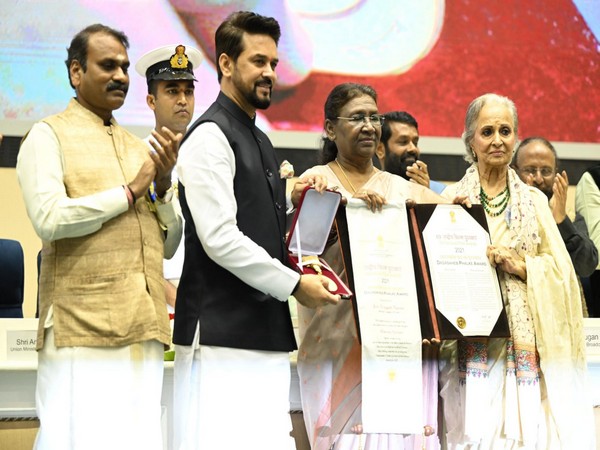
Veteran actress Waheeda Rehman was conferred with the Dadasaheb Phalke Lifetime Achievement Award on Tuesday.

She received the prestigious award from President Droupadi Murmu for her stupendous contribution to Indian cinema at a ceremony held at Vigyan Bhawan in the national capital.

The ceremony saw Waheeda Rehman receiving a standing ovation as she went up to the stage to receive the award.

After the honour, the veteran actress, in a speech, said, “I feel very honoured, very humbled. But the place where I am standing today is all because of my love for the film industry. Luckily, I got to work with the best directors, producers, technicians, writers, and music directors, and they all supported me. They gave me love and respect.”

A short video was also played at the ceremony that showcased Waheeda Rehman’s film work over the years.

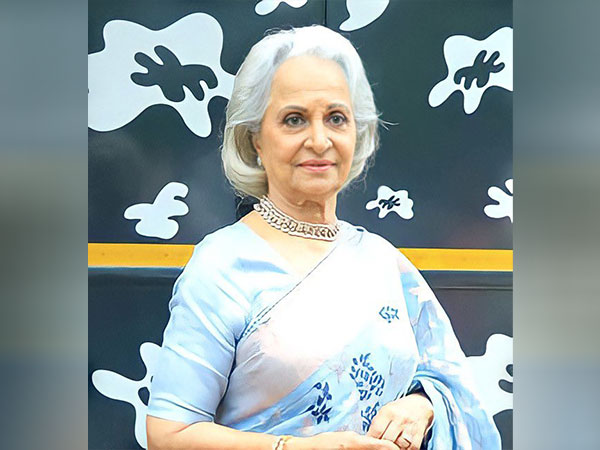
Waheeda Rehman attended the ceremony in a graceful cream saree. She looked extremely emotional when she received the honour for her immense contribution to Indian cinema.

After the ceremony, Waheeda Rehman spoke to the media and said that she was “very happy.”

Other winners including Alia Bhatt and Kriti Sanon met Waheeda Rehman and posed with her for pictures.

Have a look

Waheeda Rehman is best known for her her work in films like Guide, Pyaasa, Kaagaz Ke Phool and Chaudhvin Ka Chaand. Her accolades include the Padma Bhushan and Padma Shri. (ANI)

Read More: https://lokmarg.com/

Waheeda And Dev Anand – A Reunion of Sorts

If time can be measured in terms of the past merging with the present, it occurred with the honouring of two ‘timeless’ personalities last week. Whether anyone in the government planned it or not, the coincidence was too delicious to be missed.

The announcement of the Dadasaheb Phalke Award to Waheeda Rehman on Dev Anand’s birth centenary is a fitting tribute to two of the Indian cinema’s most enduring personalities. She was before the camera, yet again, to express her happiness at this.

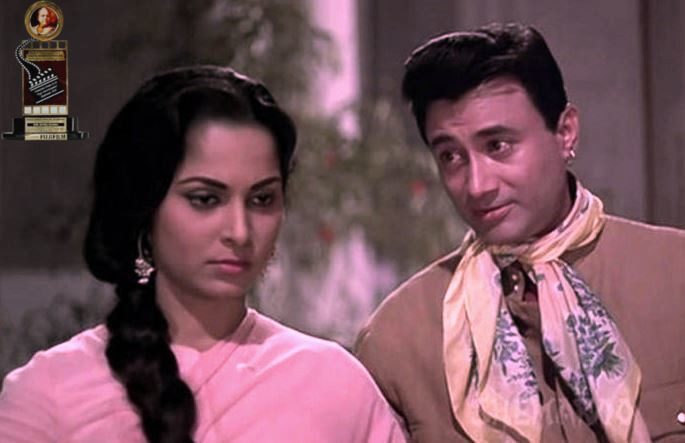
It is also significant for both. Waheeda began her Hindi cinema career with C.I.D. one of Dev Anand’s landmark, albeit under-rated films. Of their six other films together, Kala Bazar had a perfect mix of romance and social commentary, a recurring theme in their cinematic journey. Arguably though, Waheeda is the most significant of Dev’s co-stars from among the numerous heroines, from Suraiya to Tina Munim.

Like Guru Dutt whose find she was, Waheeda also inspired confidence in Dev. She almost didn’t do Guide as director Vijay Anand felt she was unsuitable. Only Dev’s perseverance made her part of the film that all three were proud of. “Guide is not just my most iconic film. It is also Dev’s most celebrated work,” Waheeda has aptly said.

Mostly S D Burman-composed, songs linked Dev and Waheeda and are sung even today. Both set fashion trends till a globalised India emerged at the turn of the century.

Guide remains a landmark for Indian cinema. Dev transformed from a swashbuckling tourist guide to a ‘feminist’ who stands by a married woman in trouble before actually falling in love. He is her promoter who becomes insecure as she takes charge of her life. And finally, he is an accidental philosopher who personifies the Bhagwad Geeta’s message.

Given his self-created Westernised image, none among his fans and critics expected Dev to pull off the last part the way he did. It was as much brother Vijay’s triumph considering he bounced back to directing Shammi Kapoor, a role that Dev almost bagged, in Teesri Manzil the next year.

No matter what novelist R K Narayan, thought of his literary creation on celluloid (he called it “Misguided Guide”), the theme and its treatment by the Anand brothers were well ahead of their time. Waheeda performs with grace the difficult role of a married woman fulfilling her life’s ambition using another man’s support but does not stand by him when he falters. That ‘Rosie/Nalini’ got the Filmfare Award that year over ‘Debjani’ in Mamata played by another stalwart, Suchitra Sen, is also significant.

As it happens, be it in personal life or professional, the two lost touch in Dev’s last years. But she kept track of Dev’s compulsive latter-day film-making, most of which flopped being an exercise in self-indulgence. When he died in 2011, Waheeda said: “Without meaning any disrespect to him, I’d like to say that as the years went by Dev’s script sense went more and more haywire. I think he got too involved with himself. Dev was a very good producer. But he needed to look out for better scripts.”

ALSO READ: Sahir – The Poet of The Underdog

If personal asides be forgiven, I began my writing career by converting ‘points’ furnished by Waheeda’s PR man into a readable piece. She telephoned and I earned my editor’s first pat on the back. The present is her moment at the Phalke Award. When Dev received it, although reporting on a ‘routine’ event, unusually earned me a by-line at the Times of India.

The most appropriate film clip to go with the award ceremony was of Mein Zindagi Ka Saath Nibhata Chala Gaya. It was thought of by then Information Minister Ravi Shankar Prasad. These hope-as-heaven-and-hell lines written by Sahir Ludhianvi and composed by Jaidev remain relevant for all times to come.

To touch upon the trivia that matters, Dev not only acted and behaved young – remarkably, he looked young for long years when camera techniques and de-ageing processes did not exist. An American journalist meeting him on the sets called him “what Indians call fair complexioned”. Given the Indian fetish for fair complexion, Waheeda required a different layer of make-up than her north Indian counterparts. It was the same as Raj Kapoor with Vyjayanthimala or Padmini. Today, not that Indians have changed their preferences, but these techniques have largely ended this apartheid.

Waheeda was conscious that she had acting and dancing skills, but not the glamour to sustain her in films. She switched to purposeful roles quite early in her career. For Satyajit Ray’s Abhijaan, she waived her fees and committed to an uninterrupted shooting schedule.

She partnered with top men of her time impacting their careers as well as hers. She was the underdog, a fallen woman, to a well-heeled Mala Sinha in Pyasa. Saheb Bibi Aur Ghulam was as much her film as it was Meena Kumari’s. For all the thematic and technical wizardry and their brilliant performances, Kagaz Ke Phool, a landmark in Guru Dutt’s career, flopped. She contributed to recovery with Chaudahvin Ka Chand. She was definitely his muse and leaving behind the talk of her role in his family life, it is not difficult to guess how her career would have evolved had Guru Dutt lived longer.

Besides Dev, she was the perfect foil to Dilip Kumar in Dil Diya Dard Liya, Ram aur Shyam and Aadmi. With Raj Kapoor she shone in a multi-layered role in Teesri Kasam and Sunil Dutt in Reshma Aur Shera and Mujhe Jeene Do. With Raaj Kumar, it was Neelkamal and she outshone Rajesh Khanna in Khamoshi. No matter the age these roles placed her in, she was the compassionate figure that Indian audiences adored.

As young India grows older, nostalgia is gripping the minds of young and old. To borrow a paragraph from what celebrated writer Santosh Desai observed when Dev Anand passed away in 2011: “Old legends can carry the past gracefully, or become its embarrassment; Dev Anand’s unique ability was to speak of the past as if it were present and to act in the present as if it were the past. He spoke of his latest film Chargesheet with the same enthusiasm as he did of a film like Guide; to him, they were both accounts of a present — separated by a few decades.”

When Zeenat Aman, 71, is busy giving interviews, it is nice to see Waheeda, 85 and Vyjayanthimala, 90, amidst us.

The writer may be contacted at mahendraved07@gmail.com

Waheeda Dadasaheb Award

Waheeda To Be Conferred Dadasaheb Phalke Lifetime Achievement Award

Union Information and Broadcasting Minister Anurag Singh Thakur on Tuesday announced that veteran actor Waheeda Rehman will be conferred the prestigious Dadasaheb Phalke Lifetime Achievement Award for her stellar contribution to Indian cinema.

Taking to X (formerly known as Twitter), Thakur penned down a long note and made the announcement.

“I feel an immense sense of happiness and honour in announcing that Waheeda Rehman ji is being bestowed with the prestigious Dadasaheb Phalke Lifetime Achievement Award this year for her stellar contribution to Indian Cinema,” he said. 

“Waheeda ji has been critically acclaimed for her roles in Hindi films, prominent among them, Pyaasa, Kaagaz ke Phool, Chaudhavi Ka Chand, Saheb Biwi Aur Ghulam, Guide, Khamoshi and several others. In her career spanning over 5 decades, she has essayed her roles with extreme finesse, leading to a National Film Award for her role as a clanswoman in the film Reshma and Shera. A Padma Shri and Padma Bhushan awardee, Waheeda ji has exemplified dedication, commitment and the strength of a Bharatiya Nari who can achieve the highest level of professional excellence with her hardwork,” he added.

Thakur referred to Parliament passing the Women’s Reservation Bill and said Waheed Rehman getting a Dadasaheb Phalke Lifetime Achievement award is a fitting tribute to one of the leading ladies of Indian Cinema.

“At a time when the historic Nari Shakti Vandan Adhiniyam has been passed by Parliament, her being awarded with this lifetime achievement award is a fitting tribute to one of the leading ladies of Indian Cinema and one who has dedicated her life after films to philanthropy and the greater good of society.”

Thakur congratulated the veteran star and concluded, “I congratulate her and humbly pay my regards to her rich body of work that is an intrinsic part of our film history,” Thakur said. 

Waheeda Rehman is known for her outstanding performances in films like ‘Guide’, ‘Pyaasa’, ‘Kaagaz Ke Phool’, ‘Chaudhvin Ka Chand’, and ‘Sahib Bibi Aur Ghulam’. (ANI)

Read More: https://lokmarg.com/