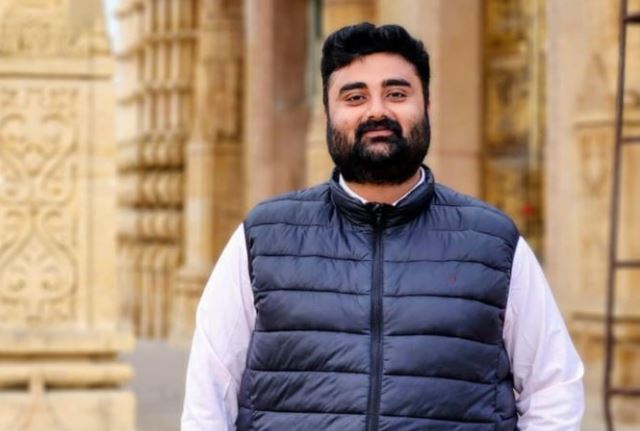
‘India’s Strategic Neutrality Safeguards Our Interests In War Situations’

Abhay Singh, an ICSSR Doctoral Fellow in Banaras Hindu University, says India’s multi-alignment foreign policy insulates it from global crises. His views:

In recent years, India has emphasized strengthening its relations with countries around the world and multilateral engagement. Furthermore, India has demonstrated its strategic neutrality in various conflicts between other countries, neither openly supporting nor openly condemning any side. This is the reason that through its foreign policy, even in various conflicts in the world, India has ensured the safe evacuation of its citizens and protected its national interests by fulfilling the needs of civil security and energy without any pressure.

In the current geopolitical landscape—particularly amidst the on-going conflict involving Iran, Israel, and the United States in West Asia and the Gulf region—India has steadfastly maintained its strategic neutrality, prioritizing its national interests above all else. India has adopted a balanced and cautious diplomatic stance regarding this conflict. India has refrained from openly supporting any specific side; instead, it has emphasized dialogue, restraint, and diplomatic resolution. This approach reflects the core tenet of India’s foreign policy: Strategic Autonomy.

Currently, India has placed particular emphasis on safeguarding the security of Indians residing in West Asia—specifically in the Gulf nations—as well as on securing the country’s energy requirements.

Throughout this conflict, India has accorded top priority to the safety of the large Indian population residing in countries such as Saudi Arabia, the UAE, Qatar, Kuwait, Bahrain, and Oman—a demography consisting predominantly of migrant workers.

It was for this very reason that, following the retaliatory bombardment of these nations by Iran in response to US attacks, Prime Minister Narendra Modi himself personally engaged with the heads of state of all these Gulf countries to ensure, first and foremost, the safety of the Indians living there. India initiated dialogue with Iran on other levels only after ensuring the safety of Indians residing in these countries and the safe repatriation of those returning from there.

India sources a significant portion of its energy requirements from various countries in West Asia. A major share of global oil trade passes through the Strait of Hormuz, making it of paramount importance to India. In addition to crude oil, India imports 60 per cent of its LPG requirements—90 per cent of which traverses this very Strait of Hormuz.

Consequently, the security of energy supplies and maritime trade routes constitutes a key priority for India. This is precisely why India has maintained engagement with Iran at various levels; even amidst the on-going conflict—during which numerous incidents have unfolded in the Strait of Hormuz—India has successfully leveraged its diplomatic channels to ensure the safety of vessels transporting energy supplies to the country.

This conflict constitutes a major test for India’s diplomacy—a realm in which India has historically managed its relations with Iran, Israel, and the Arab nations distinctively, operating on multiple levels simultaneously. In this critically important region, India positions itself as a responsible power committed to fostering regional stability and peace.

It is for this reason that, in the context of the Iran–US–Israel conflict, India has adopted a balanced and pragmatic approach; while scrupulously avoiding complete alignment with any single party, it has prioritized dialogue and diplomatic solutions.

Consequently, at a time when other nations across the globe appear to be grappling with the various global repercussions stemming from this conflict, India is proving successful in its diplomatic endeavours by steadfastly safeguarding its national interests—a success exemplified by the safe evacuation of Indian vessels from Iran and the continued safety of Indian nationals residing in the Gulf nations.

(The narrator is pursuing his research on ‘Narratives of Strategic Autonomy – A qualitative study of India’s foreign policy Discourse towards United States’)

As told to Rajat Rai
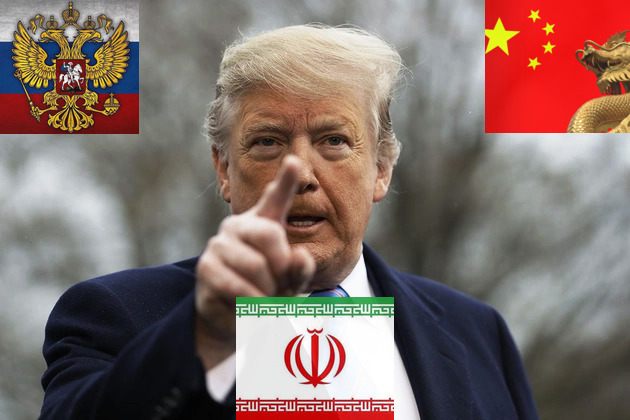
Iran War, Hubris or Rise of Pax America

As United States and Israel bombard Iran mercilessly, assassinating some of its top leadership, hoping a compliant regime change that will give up nuclear technology, there could be a few outcomes, some unexpected and some hoped for. For the United States this could be an opportunity to resurrect Pax America, often being relegated to history books after 9/11 and the Middle East wars. For Israel, this could offer the scope to negotiate with its neighbours from a position of considerable strength. And for Iran, the future could be better economic stability, a less oppressive leadership and better integration in the modern world.

But it could also go the other way with United States facing further hubris, rebellions in the Gulf monarchies and equivalent of the worst period of Iraq magnified all over Middle East. What happens in Iran could also determine the future trajectory of China and Russia.

The United States has faced formidable challengers in the last two decades that have grown bigger.. It was distracted after 9/11 with wars that it lost. That gave opportunity for other powers to rise. Both China and Russia are almost equals of USA now wither in might or economically. They have been expanding their network of ‘friendly’ countries around the world, especially those that don’t seem to get on with the United States or are dictatorships themselves and have found company in the China-Russia axis.  

Since taking power, Trump’s America appears however to be weakening China and Russia by prizing away its ‘friendly’ circle of friends and draw them into the US orbit. Syria was almost gifted to Trump during the twilight period of American political change between winning election in November and taking over power in January. Assad of Syria was indebted to Russia and was solidly in its camp. But the rebellion he was trying to put down overthrew him with the help of Saudis and USA. Then Israel hammered Hammas and Hezbollah, weakening Iran. Iran has been a solid pillar in the China Russia camp.

The USA bombarded Islamic groups in Nigeria, obliging the Nigerian government to become partners. It also attacked Islamic State operatives in Somalia drawing the Somali government closer into its influence. Between March and May 2025, it attacked the Houthis of Yemen. The bombing wasn’t all that successful but it was clear that Saudi Arabia was in further debt to USA.

The most spectacular military operation was the clinical extraction of Venezuela’s dictator Maduro and his wife from their ‘palace’. Without a large scale attack on the Venezuelan dictatorship Trump secured Venezuela with this decapitation. Venezuela’s oil is now at the disposal of USA instead of China which was importing around 5% of its crude oil from Venezuela. China has shifted supply chains

Iran’s supply of oil to China is more significant. China imports about 12% its crude oil from Iran. This is a significant amount for a country dependent on oil imports for its otherwise export driven economy that need energy for manufacturing.

Gradually, the USA appears to be strangling China’s economic bloodline. It appears not only to be shrinking the China-Russia axis but exposing both countries as impotent partners when one of their medium sized friends faces threats from the USA.

Countries around the world will think carefully before jumping into the China-Russia camp now. Iran along with North Korea, have perhaps been the most lanyard wearing members of this axis. So was Syria. Syria’s president Assad got sanctuary in Russia but little more. Neither China nor Russia seems to have assisted Iran much in facing the inevitable show down with USA.

Iran supplied Russia with drones for its war against Ukraine. There are Russians working in Iran’s nuclear program. But there is no evidence of any powerful Russian missiles or defence systems capable of outsmarting American missiles yet evident on Iran’s soil.  

China too appears to be sitting on the sidelines, perhaps resigned to lose another international partner. This will affect its relationships with quite a few countries as they see China’s unwillingness to get involved. The United States has made threatening noises at South Africa and is not too happy with Lula of Brazil either. Both countries are in the BRICS camp.

America’s next target is likely to be Cuba, thus truncating one of Russia’s longest asset in South America and that gets up America’s nose. Cuba has survived sanctions and the notorious standoff between Soviet’s Khruschev and America’s Kennedy, an episode that tested nuclear brinkmanship to the last minute before the Soviet backed off. Soon after the Soviet also collapsed but more due to the disastrous war in Afghanistan than this single episode. However the episode did bring a truth home to many countries, that in a ‘who blinks first’, America is the winner.

If Iran capitulates within the next couple of weeks, the USA will be back on course to regain this century, or at least the next few decades as Pax America. It has pushed away Europe and Europe’s obsession with Russia. It does not rely on Britain being its junior partner. Robin to Batman now is Israel. Israel has few scruples as has been evident in the war against Hammas and mass scale killings of Palestinians. The United States under Trump is now weary of the very foundations of world order that the United States created after World War II. It has been the architect of rules based order and human rights principles formed an ideological framework to keep order. The creator is now destroying its creation as it doesn’t  suit its ambition to remain top dog.

Politics however is not an exact science and predictions are usually risqué. Tables could turn. Both America and the Iranian clerics are driven forces. They are driven by ambitious ideologies for which they are willing to take immense risks and destruction.

The Iranians must have game planned many scenarios of attacks by the US-Israel coalition.  It may have planned for wipeout and then come back as the Taliban did. Ideology is a strong motivator. Maduro’s Venezuela and the Iran of Shia Clerics are worlds apart. The Venezuelan regime was simply hungry for power and the high life. The Iranians are in power to do God’s work as they understand it.

Iran is also one of the most intelligent and advanced countries embracing modern science in the Islamic world. It has creatively interpreted Islam to justify scientific progress. Its image problems are due to human rights violations.

By attacking the Gulf monarchies, Iran is deliberately or unwittingly opening the doors to organisations like Al Qaeda to achieve their ambition of removing American bases or ‘infidels’ from the holy land as they see it. For Al Qaeda and ISIS this is a poisoned chalice. They depend on patronage from the powerful in these countries. They hate the Shia, calling them worse evil than America and they are now being helped in their mission by that same ‘devil’. If they start moving towards weakened monarchies, all hell could break loose in the Middle East. That more than Iran surviving the American onslaught is the greatest danger to world economy and stability now. If it happens, Pax America will certainly find refuge in history books while China’s patience will pay off.

There are many unexpected turns in wars, once started. Iraq was a classic case in our times. The resilience of the Pushtun dominated Taliban has been another one that has defied odds. It is too soon to make predictions about outcomes from Iran. The best the world can hope is that President Trump will throw an olive branch to the Iranian regime, accept some nuclear programme and begin talks to ease sanctions. This will guarantee peace for some time, keep the Gulf states intact and avoid a worst nightmare than what followed Bush’s ‘victory’ over Iraq.