A Lantern in Stark Daylight

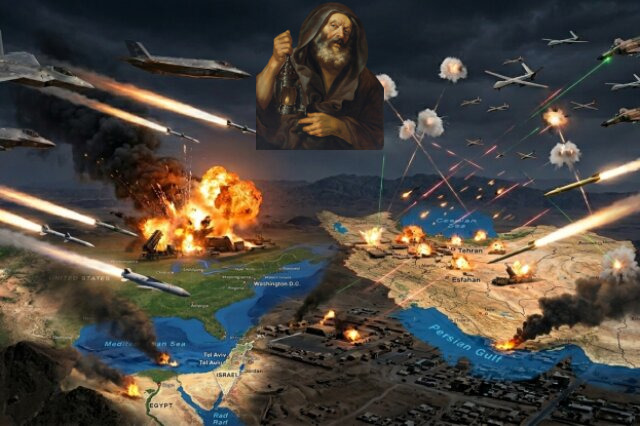
“Have you ever heard of the madman who on a bright morning lighted a lantern and ran to the market-place calling out unceasingly: “I seek God! I seek God!” …”Where is God gone?” he called out. “I mean to tell you! We have killed him,—you and I! We are all his murderers!
Friedrich Wilhelm Nietzsche, The Gay Science 

Is the war over?

Can wars ever be over?

Will they ever stop killing children and mothers?

With a terrible economic crisis stalking the world, and the gulf economy in shambles, is this mindless war Donald Trump was trapped into by Israel and his ‘crusading aides’ – finally over? 

Like the fake ceasefire and bombings in Gaza, will it go on and on, with Iran refusing to bend or crawl?

With a beleaguered Trump shifting ground on the war, first he said it will be only for four to five weeks, then, five/10 days of no attacks on power plants, after Iran said it will do a tit for tat in its already devastated neighbourhood of stooge regimes.

Then, “we have won the war” – game over. And, finally, the White House spokesperson, Karoline Leavitt, said in a kind of Hegelian dialectic turned upside down, that Iran should realise that they have lost the war. 

According to a Reuters report, she said, President Trump does not bluff and he is prepared to unleash hell. “Iran should not miscalculate again,” Leavitt told reporters in a press briefing. “If Iran fails ⁠to accept the reality of the current moment, if they fail to understand that they have been defeated militarily, and will continue to be, President Trump will ensure they are hit harder than they have ever been hit before,” she said.

The report stated: Iran is still reviewing a US ⁠proposal ⁠to end the war, despite an initial response that was negative, a senior Iranian official told Reuters, indicating that Tehran had so far stopped short of rejecting it outright. Talks with Iran were still under way, Leavitt said. “Talks continue. They are productive, as the president said on Monday, and they continue to be,” she added.

Talks were on before the war as well, with Oman as moderator, with Iran agreeing to the most difficult demands: no nuclear enrichment, inspection by IAEA, while US sanctions should end. Every impartial observer in the American establishment has categorically stated that there was “no imminent threat” from Iran, including Joe Kent, who recently quit as the head of the US National Counterterrorism Centre. “I cannot in good conscience support the on-going war in Iran. Iran posed no imminent threat to our nation, and it is clear that we started this war due to pressure from Israel and its powerful American lobby,” he announced in a social media media.

The latest flip-flop is Trump is saying he is ready to end the war, and it does not matter if the Strait of Hormuz is open or shut.

Trump said in a Tweet, and he has been repeating this: The Iranian Air Force is gone. The Navy is gone. Many ships SUNK. Total OBLITERATION.

So, pray, how come US stealth aircrafts, worth billions (one shot in Saudi Arabia, experts say, will cost $700 million now), its war carriers, its military bases in the Gulf, have been destroyed? How come all airports are shut and millions stranded, including Ben Gurion airport in Tel Aviv? So how many oil tankers and other installations of the Gulf nations have been blown up?

How is Tel Aviv so ravaged, and also Haifa, with its nuclear installations apparently hit, and scores of its generals eliminated? One report said that the Israel army chief has said that his force is totally demoralised and weakened – that it’s just not possible to carry on. Besides, when the US is sending troops on the ground (“to die for Israel”, as is the folklore in America), why is Israel refusing to put their own troops on the ground?

Surely, with troops on the ground, the US should remember Vietnam – the two-decade war they waged against a small, poor country, so far away. The mighty US lost.
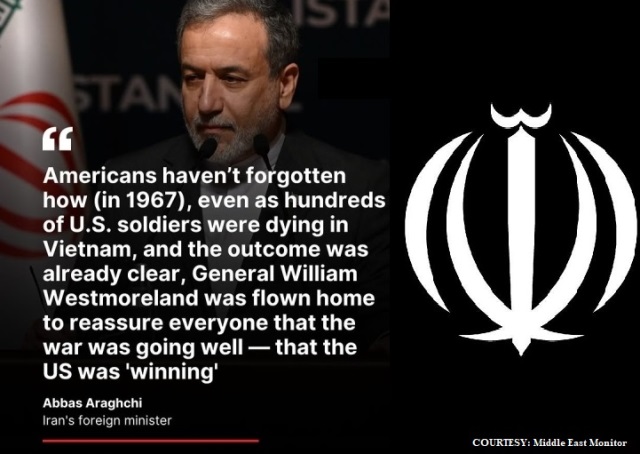
Thousands of marines, having murdered ordinary folks without impunity, as in the My Lai massacre, were trapped forever in a post-traumatic stress disorder. For an elementary lesson, Trump and Pete Hegseth should watch Coppola’s Apocalpse Now, orOliver Stone’s Platoon.

Now, if the US has won the war and if that is so, the war has indeed seen its gory end, and Iran has been decimated. Is it so?

In the last and recent 12-day war, with, again, the Israelis as the sinister plotter, Trump claimed to have bombed the hell out of the Iran nuclear reactors, after an uprising which the MOSSAD tried to manipulate. It got exposed, and eliminated thereby, while this authentic restless movement against economic hardships was compelled to fizzle out.

Come to think of it, it’s a strategy they have applied umpteen times and exactly what they are trying out in Cuba now, with no success. Sometimes they succeed, at other times they fail miserably – and it’s funny that their crusaders do not even choose to change this squeezed- out strategy.

First, prolonged, endless, terrible sanctions for decades, crippling the economy, creating mass suffering and social unrest, propelling thereby civil society protests; then arrange the diabolical entry of MOSSAD and CIA, entrenched in ‘enemy’ countries.

Soon after, starts an orchestrated media campaign — of how democracy is being restored. In Iraq it was the mythical WMDs, and in Iran it is pro-democracy ‘regime change’.

The women’s freedom card failed, with the war starting with a trademark Israeli signal: 170 school children murdered by a Tomahawk missile fired from a naval destroyer.

(The two navy officers who did it have been identified, like the IDF officers who pumped 355 bullets into six-year-old Hind Rijab’s body, trapped in a car with dead relatives in Gaza.)

Besides, if they had bombed the hell out of all the nuclear reactors in the 12-day war, what was the ‘imminent threat’ this time?

Epstein Files?

The everyday sleazy revelations of a grotesque Paedophile Establishment? With Epstein operating as a confirmed Mossad agent!

Or, was it because after getting away with yet another genocide in occupied Palestine, the “war criminal” in Tel Aviv, an international pariah, and his fanatic extreme-right cabinet, now aimed to go for its most favourite civilizational project: Greater Israel, with a ‘regime change’ in the only country in the Middle East which has refused to succumb. All they wanted is another stooge regime in Tehran.

Hence, Trump was trapped, with his Zionist son-in-law, a real estate businessman, playing the negotiator/strategist, and another Zionist white supremacist, with a crusader’s cross tattooed on his chest (Trump’s secretary of war) — pumping for war.

As if war is a mindless video game.

The fact is as long as the ‘Axis of Evil’ is around, forcible occupation, full-scale banditry, mass murders of innocents, targeted killing of school children, military or ‘peaceful coups’, assassinations of elected leaders, among other total violations of international law will continue.

The latest is the abduction of a president and his wife, in the middle of the night, from their bedroom. For this evil Axis, this has been done ad infinitum, this was normal before, and this is post-normal now, like ‘Truth Social’ — Trump’s aptly named Twitter handle.

However, the truth is that with 8 million people marching against him across America last week and his approval ratings abysmally low, a trapped Trump wants to desperately wriggle out of this war in which he and Bibi have been decisively decimated.

If anything, it has shown the world, yet again, what an Iranian propaganda video is now showing, going viral: From Vietnam to Iran and Cuba, from Nelson Mandela to Hind Rijab, from Hitler to Mussolini – when your time is up, you don’t have to hold a lantern in bright daylight to see it.

Like Neitzsche’s mad man — with a lantern in the middle of a market place, in stark daylight.
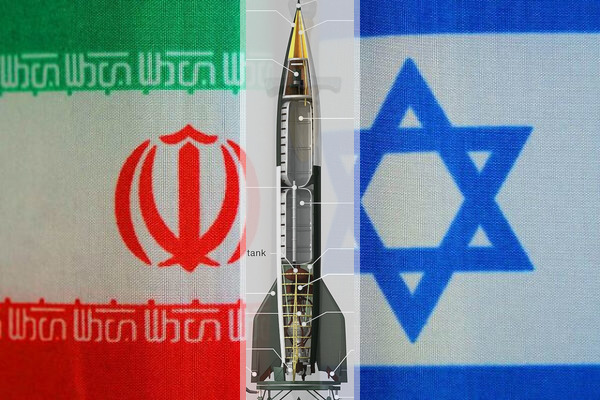
Are Iran’s Nuclear Assets Destroyed Completely?

US President Donald Trump has repeatedly said the US attack on Iran obliterated its nuclear program and prompted the ceasefire. However, a US official briefed on the Defence Intelligence Agency’s initial assessment told USA TODAY the core components of Iran’s nuclear program appeared to remain intact.

An outraged Defence Secretary Pete Hegseth on Thursday (June 26) countered by calling the bombings a “resounding success” and accusing some media outlets of “trying to make the president look bad.”

Iran’s Supreme Leader Ayatollah Ali Khamenei maintained that the bombings “failed to achieve anything significant,” forcing Israel and the US to abandon their attacks. “They could not accomplish anything,” he said. “They failed to achieve their goal. They exaggerate to conceal and suppress the truth.”

Rafael Grossi, the director general of the International Atomic Energy Agency (IAEA), took a middle path, saying the Iranian program suffered “enormous damage.” He said three primary sites – Fordow, Natanz and Isfahan – were hit hard but that other locations were not affected at all. The nuclear program can be rebuilt, he said, but he declined to put a timeline on it.

As far as Iran’s response to the Israeli attacks were concerned,  R Swaminathan,  Governor of India to the IAEA, Vienna, in his article for the Indian Express has rightly summed it up by saying that the most striking feature of Iran’s response was not what it did, but what it deliberately avoided — it did not withdraw from the Non-Proliferation Treaty (NPT), and refrained from activating its regional proxies or disrupting the Strait of Hormuz. Further, the Supreme National Security Council has not yet endorsed the decision of Iran’s Parliament to suspend its cooperation with the International Atomic Energy Agency (IAEA).

Meanwhile, Times of Israel’s report on the issue,  based on a The Times’ report assessed that Iran’s ability to store enriched uranium remains intact, with most of Iran’s estimated stockpile of some 400 kilogrammes (900 pounds) of nearly bomb-grade Uranium were likely moved before its facilities were bombed, according to one preliminary classified US intelligence report.

The US administration has rejected such assertions, saying the Uranium is thought to have been buried by the strikes. But, on the other hand Israeli Defence Minister Israel Katz has said Israel does not know the whereabouts of all of Iran’s enriched Uranium.

Iran’s ability to convert enriched uranium into solid metal form, which is necessary for assembling a nuclear warhead, was possibly destroyed, as the facility where that process occurs was in Isfahan, reported The Times.

Still, one expert told The Times that Iran may possess the capability at other secret locations, as it has converted Uranium to solid metal at other locations in the past.

While Israel said it severely damaged Iran’s ballistic missile infrastructure during the campaign, The Times assessed it is unlikely Iran no longer has missiles capable of carrying a nuclear warhead.

Iran’s Obsession with Nuclear Capacity

Meanwhile, there is a bigger question that why a country with large oil reserves feels such a need to have home-grown civil nuclear energy?

A persuasive new account by Vali Nasr, entitled Iran’s Grand Strategy, helps unlock the key to that question by placing the answer in Iran’s colonial exploitation and its search for independence, reports The Guardian.

Nasr wrote, “Before the revolution itself, before the hostage crisis or US sanctions, before the Iran-Iraq war or efforts to export the revolution, as well as the sordid legacy of Iran’s confrontations with the west, the future supreme religious guide and leader of Iran valued independence from foreign influence as equal to the enshrining principles of Islam in the state”. Khamenei was indeed asked once what was the benefit of the revolution, and he replied “now all decisions are made in Tehran.”

Nasr argues that while many of the lofty ideals of the revolution such as democracy and Islam have been eroded or distorted, the principle of Iranian independence has endured.

The quest for sovereignty, he argues, arose from Iran’s benighted history. In the 19th century, Iran was squeezed between the British and Russian imperial powers. In the 20th century its oil resources were exploited by British oil companies. Twice its leaders – in 1941 and 1953 – were removed from office by the British and Americans.

The popular prime minister Mohammad Mosaddegh was removed in a CIA-engineered coup in 1953 due to his demand to control Iran’s oil resources. No event in contemporary Iranian history is more scarring than Mosaddegh’s toppling. For Khomeini it confirmed Iran still did not control its destiny, or its energy resources.

Although civil nuclear power and the right to enrich became a symbol of independence and sovereignty after the revolution, Ellie Geranmayeh from the European Council on Foreign Relations points out it was the British and the Americans, themselves who introduced nuclear power to Iran in what was named an “atoms for peace” programme.

The shah of Iran, with US approval, embarked on a plan to build 23 civil nuclear power stations, making it possible for Iran to export electricity to neighbouring countries and achieve the status of a modern state.

In an interview with the Washington Post, Henry Kissinger later admitted that as US secretary of state he raised no objections to the plants being built. “I don’t think the issue of proliferation came up,” he said.

However, the shah recognised the dual use for nuclear power, and in June 1974 even told an American journalist that “Iran would have nuclear weapons without a doubt sooner than you think”, a remark he later denied. Gradually the US became more nervous that the shah’s obsession with weaponry might mean Iran’s civil programme turning military.

Before the strikes, all believed Iran had developed a large stockpile, and at a sufficiently enriched level, to sustain a nuclear reaction that could be used in a bomb if it decided to. But how quickly Iran would have been able to “sprint to a nuclear weapon” as General Michael E Kurilla, Commander of the CENTCOM put it on June 10, is also a matter of dispute, and estimates ranged from one week to one year.  

While military confrontation has paused for now, the geopolitical stakes remain high. Iran still retains a significant portion of its long-range missile arsenal, and airstrikes alone cannot permanently dismantle a nuclear program.

But it also forces us to question, who gave the right to Israel, itself a nuclear power, the right to act as the big daddy and strike Iran. Perhaps Bibi needed this more for to ensure his win in the next polls and divert the global attention from Gaza.

 (Asad Mirza is a New Delhi-based senior commentator on national, international, defence and strategic affairs, environmental issues, an interfaith practitioner, and a media consultant.)

Pakistan US

US Ducks Questions On Reports Pak Consulted Washington Before Striking Back At Iran

The US on Thursday (local time) evaded a question on whether Pakistan held prior consultations with Washington before conducting retaliatory air strikes on Iran.

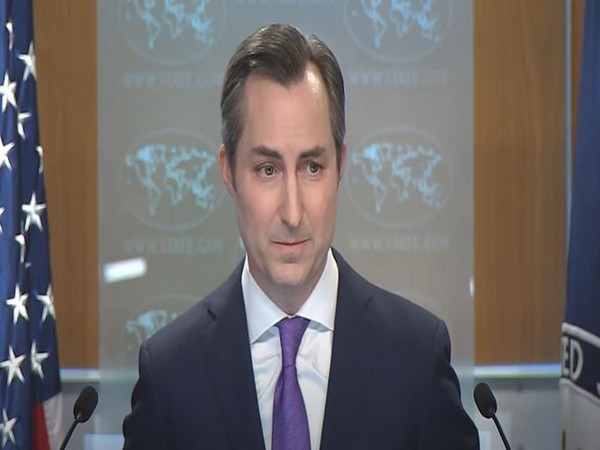
On media reports claiming Pakistan consulted the US before conducting strikes in Iran, State Department Spokesperson Matthew Miller, during a regular press briefing in Washington, said, “I do not have any private conversations to read out.”

Miller said the US is concerned about the escalating tensions in the region and has urged restraint on all sides.

He said there is no need for escalation in the matter and that the country has noted the Pakistani government’s comments about the importance of “cooperative relations between Pakistan and its neighbours.

In response to a question on how the US administration reads the situation between Iran and Pakistan, Miller said, “We are concerned about escalating tensions in the region. It’s been something we have spoken a number of times, we’ve focused on. We’ve been incredibly concerned about the potential for escalation since October 7.”

“That’s why we have engaged in intense diplomatic efforts to try to prevent escalation. We noted the comments from the government of Pakistan, about the importance of cooperative relations between Pakistan and its neighbours. We thought those were productive useful statements, and certainly, there’s no need for escalation and we would urge restraint on all sides in this case,” he added.

Matthew Miller called Iran a major funder of Hezbollah and a principal supporter of Hamas for years.

In another query about the ongoing tensions between Iran and Pakistan after strikes and counterstrikes, Miller said, “I think I made pretty clear yesterday what we think about Iran’s attacks, not just the strikes that were launched in the past three days against three of its neighbours but its long history of funding terrorism, funding instability and sowing discord in the Middle East. That’s something we have seen contribute to conflict in Gaza.”

Iran’s strikes in Pakistan came after Iran’s Islamic Revolutionary Guard Corps (IRGC) launched missiles into Iraq’s Kurdistan region at what it called an Israeli “spy headquarters” and at alleged ISIS-linked targets in Syria, Al Arabiya News reported.

In response, Pakistan on Thursday launched missile strikes into Iran and codenamed it operation ‘Marg Bar Sarmachar’.

Pakistan’s Ministry of Foreign Affairs (MoFA) in a statement said it had undertaken a series of “highly coordinated and specifically targeted precision military strikes against terrorist hideouts” in the Siestan-o-Baluchistan province of Iran.

“A number of terrorists were killed during the intelligence-based operation codenamed “Marg Bar Sarmachar,” it said.

Meanwhile, US State Department spokesperson Miller said: “You have seen Iran as the principal supporter of Hamas for years. They are the major funder of Hezbollah. They are one of the major funders of the Houthis. We have seen the consequences of the actions that Iran has taken to add to regional instability and that’s why we continue to take actions to hold Iran accountable and also send clear very messages to Iran that we don’t believe this should escalate in any way, shape or form.”

“Pakistan is a major non-NATO ally of the United States, and that will remain the case, but we would urge restraint in this case. We do not want to see escalation and don’t think there’s a need for escalation,” he added.

US National Security Council Coordinator for Strategic Communications at the White House, John Kirby, said the US is monitoring the situation regarding Iran and Pakistan “very very closely” and they do not want to see escalation. (ANI)

For more details visit us: https://lokmarg.com/

Mahasa Amini

Protests Erupt In Iran On Death Anniv On Mahsa Amini

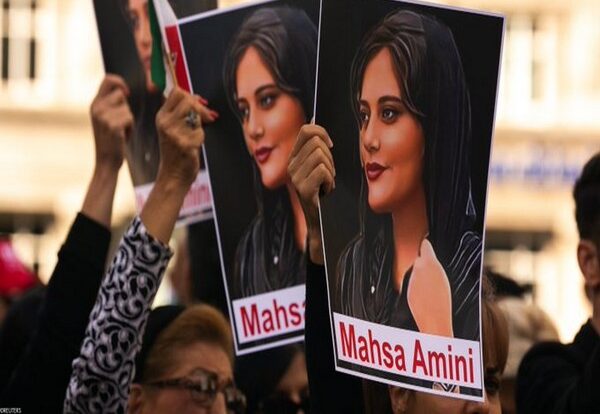
Protests broke out across Iran to mark the one-year anniversary of the death of Mahsa Amini, a 22-year-old woman who passed away while being held by Iran’s morality police after being detained for allegedly not wearing her headscarf properly in September last year, reported CNN.

Mahsa was imprisoned for allegedly violating Iranian law about headscarves.

According to CNN, the protests took place in a number of Iranian cities, including the capital Tehran, Mashad, Ahvaz, Lahijan, Arak, and the Kurdish city of Senandaj.

Some demonstrators also shouted anti-Supreme Leader Ali Khamenei’s death slogans.

As a show of force, the authorities stationed armed guards in various places, and Lahijan in the north saw images of police pursuing protestors, CNN reported.

Even as Saturday marked the first anniversary of the death of Mahsa Amini, a progressive Iranian woman who stood up against the draconian Hijab rule and whose alleged custodial death sparked furious protests, the Iranian authorities detained her father, CNN reported citing Iranian journalists and rights group. 

Amini, a 22-year-old Kurdish-Iranian woman, died last September after being detained by the regime’s infamous morality police and taken to a “re-education centre,” allegedly for failing to wear her headscarf properly. 

According to an Iranian journalist, Amini’s father, Amjad, was regularly summoned by the security officers in recent months following her daughter’s death. “Today he was detained for a few hours,” CNN reported, citing the journalist.

Amini’s family visited her grace in the western Kurdish city of Saqqez on the eve of the one-year anniversary of her death, CNN reported citing IranWire. 

However, following that day, Amjad was detained by the authorities for three to four hours with his son. 

Moreover, Amjad’s son was warned that he would be banished to a remote village if he encouraged people to attend Amini’s death anniversary ceremonies, the report claimed. 

However, Iranian authorities denied reports of Amjad’s detention.

IRNA, Iran’s local media outlet, described the reports as “false” in a Telegram post, according to CNN. Earlier, on Tuesday, Amini’s uncle, Sada Aeli, was apprehended by the Iranian authorities, according to a member of her family and reports from the Human Rights Activists News Agency (HRANA).

Amini’s death triggered the largest protests Iran had witnessed in years, turning into a larger social movement with demonstrators protesting the regime’s treatment of women among other issues as well. 

Earlier, on Saturday, over 20 Iranian individuals and entities connected to the harsh repression of protests after Amini’s death a year ago were subjected to penalties by the Joe Biden administration on Friday, reported CNN.

The newest round of sanctions was in retaliation for Tehran’s ruthless crackdown on the demonstrators, who took to the streets after Amini passed away while in the custody of Iran’s morality police. (ANI)

Read More: https://lokmarg.com/

Mahasa Amini

US Imposes More Sanctions On Iran On Mahasa Amini’s Death Anniv

More than 20 Iranian individuals and entities connected to the harsh repression of protests after Mahsa Amini’s death one year ago were subject to penalties by the Joe Biden administration on Friday, reported CNN.

The newest round of sanctions is in retaliation for Tehran’s ruthless crackdown on the demonstrators who took to the streets after Amini passed away while in the care of Iran’s purported morality police.

The morality police, against whom the US levied penalties last year was allegedly arrested by the morality police for wearing her hijab ‘improperly’.

The sanctions targeted, “18 key members of the regime’s security forces, the Islamic Revolutionary Guard Corps (IRGC) and the Law Enforcement Forces (LEF); the head of Iran’s Prisons Organization; three individuals and one company in connection with the regime’s systematic censorship and blocking of access to the internet; and three IRGC and regime-controlled media outlets—-Fars News, Tasnim News and Press TV—-and three senior officials,” a news release from the US Treasury Department said.

According to the Treasury Department, the US sanctions were implemented in collaboration with allies such as the United Kingdom, Canada, and Australia.

The US Secretary of State Antony Blinken revealed in a separate statement that the US State Department is taking steps “to impose visa restrictions on 13 Iranian officials and other individuals for their involvement in the detention or killing of peaceful protestors or the inhibition of their rights to freedom of expression or assembly,” reported CNN.

“Since Mahsa Amini’s death and the protests that followed, we have pursued visa restrictions on 40 Iranian officials and other individuals for their involvement in these acts targeting peaceful protestors,” CNN quoted Blinken as saying.

Meanwhile, according to CNN, US President Joe Biden said in a statement on Friday that he and First Lady Jill “join people around the world in remembering her—and every brave Iranian citizen who has been killed, wounded or imprisoned by the Iranian regime for peacefully demanding democracy and their basic human dignity.”

“As we have seen over the last year, Mahsa’s story did not end with her brutal death. She inspired a historic movement—Woman, Life, Freedom—that has impacted Iran and influenced people across the globe who are tirelessly advocating for gender equality and respect for their human rights,” US President Joe Biden said.

The US looks to be nearing an agreement with Tehran to secure the release of five Americans who have been classified as being unfairly detained in Iran when the latest round of sanctions was announced on the night of the anniversary of Amini’s death.

Just weeks before the one-year anniversary of the major protests caused by Mahsa Amini’s death, Iranian authorities are prepared a new Bill on hijab-wearing that experts fear would put unprecedentedly harsh punitive measures into law, according to CNN.

The 70-article draft law sets out a range of proposals, including much longer prison terms for women who refuse to wear the veil, stiff new penalties for celebrities and businesses who flout the rules, and the use of artificial intelligence to identify women in breach of the dress code.

Experts said the Bill, which has yet to be passed, was a reminder to Iranians that the regime will not back down from its stance on the hijab despite the country’s enormous protests last year, according to CNN.

Notably, many Iranian women have chosen to start showing their hair since the death of Mahsa Amini in September 2022 after being detained by Iran’s morality police for “improperly” wearing her headscarf. Iranian celebrities, athletes and actresses have followed suit in solidarity.

Amini, a 22-year-old Kurdish-Iranian woman, died last September after being detained by the regime’s infamous morality police and taken to a “re-education centre,” allegedly for not abiding by the country’s conservative dress code.

While not officially disbanded, the morality police had largely pulled back following last year’s protests, which have gradually waned.

But earlier this month, police spokesman General Saeed Montazerolmahdi said the morality police would resume notifying and then detaining women who are caught without the Islamic headscarf in public.

The hijab has long been a point of contention in Iran. It was barred in 1936 during leader Reza Shah’s emancipation of women until his successor lifted the ban in 1941. In 1983 the hijab became mandatory after the last shah was overthrown in the Islamic Revolution of 1979, CNN reported.

Iran has traditionally considered Article 368 of its Islamic penal code as the hijab law, which states that those in breach of the dress code face between 10 days to two months in prison, or a fine between 50,000 to 500,000 Iranian rials, what is today between USD 1.18 to USD 11.82.

Another section states that in order to enforce the new law, Iranian police must “create and strengthen AI systems to identify perpetrators of illegal behaviour using tools such as fixed and mobile cameras.”

Earlier this year, state media reported that cameras would be installed in public places to identify women who violate the country’s hijab law. (ANI)

Read More: https://lokmarg.com/

Nobel Foundation

Nobel Foundation Withdraws Invitation To Russia, Belarus

After facing widespread criticism, the Nobel Foundation finally withdrew its invitations to three countries: Russia, Iran and Belarus, saying that the invitations had provoked “strong reactions,” CNN reported. 

In a press release, the Nobel Foundation on Saturday said that the ambassadors from the three countries (Russia, Belarus and Iran) would not be invited, after initially saying that it wanted to involve even those who did not share the values of the Nobel Prize.

Ukraine had condemned the decision to invite the Russian and Belarusian ambassadors. A Swedish member of the European Parliament called the decision “extremely inappropriate.”

Last year, Russian and Belarusian ambassadors were left out of Stockholm’s Nobel Prize awards ceremony because of the war in Ukraine. 

“The decision by the Nobel Foundation to invite all ambassadors to the Nobel Prize award ceremony, in accordance with previous practice, has provoked strong reactions,” the foundation said in its statement on Saturday, adding that the basis for the decision is the belief that “it is important and right to reach out as widely as possible with the values and messages that the Nobel Prize stands for.”

“For example, through last year’s clear political message with the peace prize awarded to human rights fighters from Russia and Belarus as well as to Ukrainians who work with documenting Russian war crimes,” CNN quoted a statement saying.

The foundation further stated that they recognize the strong reactions in Sweden, which completely overshadowed this message. And, therefore, choose to repeat last year’s exception to regular practice – that is, to not invite the ambassadors of Russia, Belarus and Iran to the Nobel Prize award ceremony in Stockholm.

The move on Saturday was welcomed by the Swedish prime minister and Ukrainian officials.

“I welcome the new decision of the board of the Nobel Foundation regarding the Nobel Prize award ceremony in Stockholm,” Sweden’s Prime Minister Ulf Kristersson said in a post on X, formerly known as Twitter.

Oleg Nikolenko, a spokesperson for Ukraine’s Ministry for Foreign Affairs, called the reversal a “restoration of justice” in a post on Facebook, as per CNN.

The Nobel Banquet takes place annually in Stockholm on December 10, where five out of six Nobel Prizes are awarded. The Nobel Peace Prize is awarded in Oslo, Norway.

The Russia-Ukraine war that started on February 24, 2022, has taken numerous lives and the war continues to escalate between the two nations even now. (ANI)

Read More: https://lokmarg.com/

India automobile industry

Iran Aims To Expand Its Automobile Sale Internationally, Indian Market On Cards

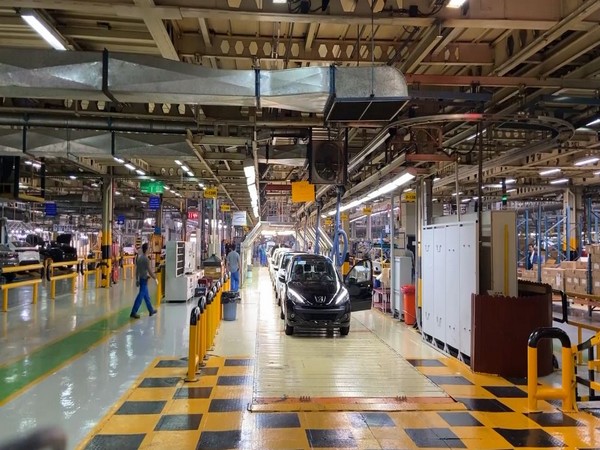
Iran Khodro Industrial Group (IKCO), Iran’s largest automobile manufacturer, is aiming for expansion of its automotive business to additional nations despite the US sanctions, following its successful car exports to Russia and has now set its sights on India.
After having captured the markets of Venezuela and Russia the company,  Iranian automaker Khodro, is determined to increase its car production to meet the demands of its partner countries.

Leila Yusufi, the logistics manager at Khodro, expressed confidence in expanding the market to India when questioned about the company’s plans for the Indian market. She stated, “Certainly, if India permits, we will enter the Indian market.”

Yusufi said, “Sure. If India will allow. We will come to India.”

According to Khodro, they have the capacity to produce more than 40 cars per hour.

“We are currently able to producing 43 cars per hour and we are sending our cars to Venezuela and Russia,” Leila told ANI.

Iran is confident to produce more cars to meet the demand of their partner countries.

On being asked if Iran is facing challenges in automobile manufacturing due to US sanctions, logistics manager of IKCO said “We have defeated that. There were many problems but we have been able to overcome the sanction, fortunately.”

“But it was very difficult,” she added.

The US has imposed restrictions on activities with Iran under various legal authorities since 1979, following the seizure of the US Embassy in Tehran.

The Department of State’s Office of Economic Sanctions Policy and Implementation is responsible for enforcing and implementing a number of US sanctions programmes that restrict access to the United States for companies that engage in certain commercial activities in Iran.

IKCO is also planning to take new technologies from other countries, said Leila, noting, “the development of the country is one of our most important plans and we are looking for new technologies from other countries.”

According to IKCO, Iran produces about 85 per cent of automobile parts in the country as Make in Iran products and the remaining 15 per cent in other countries. (ANI)

Read More: https://lokmarg.com/

Asian Kabaddi C’ship 2023: India Defeat Iran In Final

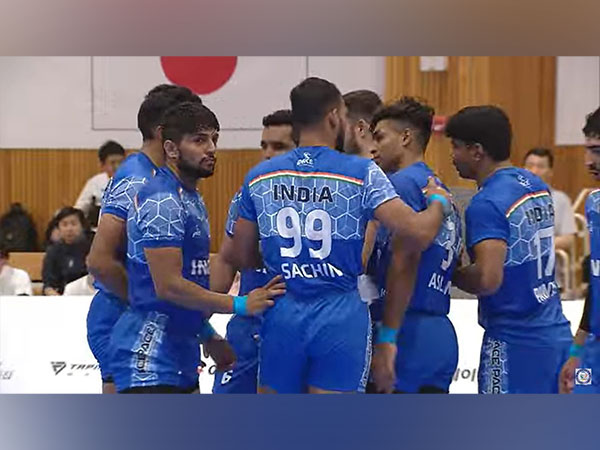
India put up a stunning performance to defeat Iran 42-32 in the final of the Asian Kabaddi Championship 2023 at the Dong-Eui Institute of Technology Seokdang Cultural Center in Busan, Republic of Korea, on Friday. This was India’s eighth title in nine editions.

Indian captain Pawan Sehrawat led from the front with a super 10.
In the opening five minutes of the match, the Indian men’s kabaddi team was down to Iran. However, in the 10th minute of play, Iran was forced to go all-out after a few tackle points by the defence and successful raids by Pawan Sehrawat and Aslam Inamdar.

As they gained momentum, the Indian kabaddi team swiftly increased their advantage while putting up an outstanding all-around performance. Iran received a few easy bonus points against India, the reigning champions, but in the 19th minute India inflicted a second all-out on Iran.

India held a 23-11 advantage going into the second half. However, Mohammadreza Shadloui Chiyaneh, the captain of Iran, assisted in inflicting the first all-out on India in the 29th minute with a two-point raid and a super raid.

With two minutes remaining, Iran cut the lead to 38-31, causing the game to get tense, but India held on to scrape out a 42-32 victory.

Earlier in the day, India had beaten Hong Kong 64-20 to end the league stage of the tournament undefeated. (ANI)

Read More: https://lokmarg.com/

Iran Public Execution

Iran Holds 2nd Public Execution Amid Anti-Govt Protests

Iran on Monday carried out a public execution, the second in less than one week, related to anti-government protests in the country, The Jerusalem Post reported.

According to Iranian state television, protester Majidreza Rahnavard convicted for stabbing and killing two security agents was hanged to death in public this morning in the city of Mashhad.

Rahnavard was allegedly denied access to a counsel and tortured before arriving in court with injuries, Jerusalem Post reported citing Iranian state media. According to Iranian official media, Rahnavard admitted to the charges.

Rahnavard who was publically executed today was convicted for stabbing and killing two members of the Iranian security forces and injuring four others during the ongoing protests sparked by the death of 22-year-old Mahsa Amini on September 16. Amini died in the custody of the state’s morality police who had detained her reportedly for not properly donning her headscarf.

On Thursday, Iran carried out its first execution related to the protests. It was the first such event that was made public.

The hanged person Mohsen Shekari, was found guilty of using a machete to injure a security official and for blocking a street in the Iranian capital of Tehran.

The security officer who was a member of the Basij paramilitary force — a wing of Iran’s Revolutionary Guard – was injured by Shekari with a knife at a protest in Tehran on September 23.

Shekari was sentenced to death on October 23, CNN reported citing Mizan Online, a news agency affiliated with Iran’s judiciary.

Several Iranians have received death-by-execution sentences during the nationwide demonstrations after the death of Mahsa Amini. According to Amnesty International, as of November, Iranian authorities are seeking the death penalty for at least 21 people in connection with the protests.

Last year, in Iran, at least 333 people were executed, according to the Iran Human Rights. The report further revealed that 55 executions, which contribute 16.5 percent, were announced by official sources.

As many as 83.5 percent of all executions included in the 2021 report (278 executions in total) were not announced by the authorities. At least 183 executions (55 percent of all executions) were for murder charges, according to the report.

Iran has suspended its so-called morality police, which penalized women for not adhering to a stringent dress code, the Iranian prosecutor general said after the anti-hijab protest continued into the third month, triggered by the death of Mahsa Amini.

Iran’s Attorney General Mohammad Javad Montazeri said the morality police “was abolished by the same authorities who installed it”, The New York Times reported.

He made this statement during the meeting where officials were discussing the unrest ignited by Amini’s death in the custody of the morality police.

The unrest has amounted to one of the biggest challenges in decades to Iran’s system of authoritarian clerical rule. (ANI)

Read More: http://13.232.95.176

US China Pak

US Places China, Pak On List Of Religious Freedom Violators

The Biden administration has placed China, Pakistan, and 10 others on a list of countries that “engaged in or tolerated particularly severe violations of religious freedom” during 2022.

“Today, I am announcing designations against Burma, the People’s Republic of China, Cuba, Eritrea, Iran, Nicaragua, the DPRK, Pakistan, Russia, Saudi Arabia, Tajikistan, and Turkmenistan as Countries of Particular Concern under the International Religious Freedom Act of 1998 for having engaged in or tolerated particularly severe violations of religious freedom,” US Secretary of State Antony Blinken said in a statement.
“I am also placing Algeria, the Central African Republic, Comoros, and Vietnam on the Special Watch List for engaging in or tolerating severe violations of religious freedom,” he added.

The United States has also designated nine groups including the Taliban, and the Russian paramilitary organization Wagner Group, as “Entities of Particular Concern.”

“I am designating al-Shabab, Boko Haram, Hayat Tahrir al-Sham, the Houthis, ISIS-Greater Sahara, ISIS-West Africa, Jama’at Nusrat al-Islam wal-Muslimin, the Taliban, and the Wagner Group based on its actions in the Central African Republic as Entities of Particular Concern,” he said.

Noting that governments and non-state actors harass and kill individuals on account of their beliefs, Blinken said the United States will not stand by in the face of these abuses.

“In some instances, they stifle individuals’ freedom of religion or belief to exploit opportunities for political gain. These actions sow division, undermine economic security, and threaten political stability and peace,” he said.

The US Secretary of State said the announcement of these designations is in keeping with US values and interests to protect national security and to advance human rights around the globe.

He said that the United States will continue to carefully monitor the status of freedom of religion or belief in every country around the world and advocate for those facing religious persecution or discrimination.

“We will also regularly engage countries about our concerns regarding limitations on freedom of religion or belief, regardless of whether those countries have been designated,” he added. (ANI)

Read More: https://lokmarg.com/