Kadam Kadam Badhaye Ja – Stepping Down Memory Lane

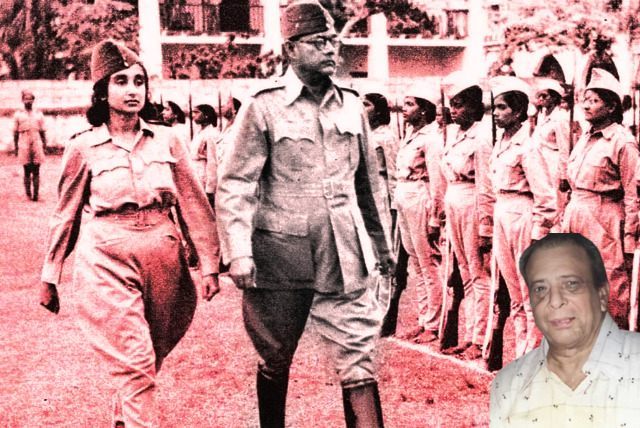
Of the Indian diaspora, none has memories of Netaji Subhas Chandra Bose, the last of the titans of the freedom movement, like the Indians in Singapore. Bose nurtured the Indian National Army (INA) to drive the British out. Although it failed, it paved the path to freedom.

Eight decades down, that memory remains fresh in the hearts and minds of those who witnessed it or their descendants. It is not surprising that the Tagore Society last month combined Singapore’s 60th founding with India’s 77th Republic Day.

The Society celebrated it with the launch of the book, Kadam Kadam – The Long March, which combines the most popular song of the Bose-led movement, Kadam Kadam Badhaye Ja, with the INA’s soul-stirring narrative.

It had the unmistakable touch of Indian cinema of yore, deeply influenced by Bose and the freedom movement. The book was originally written as a novel by Nabendu Ghosh, a renowned writer who scripted most of the Bimal Roy films.

There was also a contemporary touch. The novel was Ghosh’s last, and he had beckoned his daughter, Ratnottama Sengupta, to his deathbed and asked that she carry his legacy forward. A noted journalist and film curator, Ratnottama has fulfilled that mission with the launch, firmly linking Bollywood and the Bose legacy, and not just for the followers in Singapore.

The event and the book also lent another Bollywood touch by reviving memories of “Nazir Chacha” – actor-filmmaker Nazir Hussain, who did character roles in a hundred films during the 1950s-80s, including Parineeta, Do Bigha Zameen, and Devdas.

“Imagine my astonishment when Baba (Ghosh) declared that he must write about Nazir Chacha in INA,” Ratnottama says. Still a schoolgirl, she did not realise that her father had seen great potential in Hussain. He was the protagonist of the original novel Kadam Kadam.

“Empathise with my predicament when Baba handed me the last novel he had penned, entreating me to carry forward the torch of the freedom seekers who once were taken prisoners of war (POWs).”

A fireman with the Indian Railways, Nazir, had joined the British Indian Army that fought in Burma during World War II. When taken POW by the Japanese, like thousands of other Indian soldiers, he volunteered to join the INA.

The decision was not easy. The novel says: “Will you join the Indian National Army?” – the British soldiers taken POW by the Japanese were asked.

“Many agreed. Some were hesitant. ‘We don’t know who’ll command us. What sacrifices have they made for the country?’
“I also debated with myself. ‘Patriotism is commendable, but what’s the future of this Army?’ But Siraj joined the INA because he believed, ‘Those who fight for Freedom always sacrifice their own lives.’
‘Such love for the country!’ Nizam ridiculed Siraj. ‘How much opium have they fed you?’
‘You’re unaware of the intoxication I’ve tasted,’ Siraj smiled.”

Through Siraj, the novel describes Hussain’s transition from a soldier to a storyteller, staging plays as part of the INA’s propaganda campaign. Bose watched his play Balidaan and commended his effort and the message it sent to the Indian expatriates.

The most significant part of Nazir’s effort that gelled with Netaji was stressing Hindu-Muslim-Sikh unity. It ran through Bose’s years of fighting for freedom from outside India. And although INA’s effort failed, it culminated in the famous Red Fort trial of three of its officers – Prem Kumar Sehgal, Shah Nawaz Khan and G S Dhillon – a Hindu, a Muslim and a Sikh.

Sengupta says: “This is not only the story of a band of soldiers who were hirelings of the British Army. Nor is it about a war fought on the foreign shores of Malaya, Singapore and Burma. Kadam Kadam, for me, is part of my family lore. For I grew up in the tall shadows of the men who live behind the names, Sirajul and Shankar – the protagonists of “The Long March.”

Ghosh proved right in his judgment of Nazir Hussain. The first film directed by Bimal Roy, Pehla Aadmi, was hugely popular. Nazir had a role in many of Roy’s films. He met Dr Rajendra Prasad, India’s first President, and went on to make Ganga Maiya Tohe Piyari Chadhaibo, the first film in Bhojpuri, the language common to Prasad and Hussain. With its success, Hussain is called “father of Bhojpuri cinema.”

To return to Bose and his legacy in the present-day Singapore, Ambassador TCA Ragavan, who was India’s High Commissioner in the city-state,writes “I was constantly confronted by the somewhat unusual fact that so many Indians who had been living in Singapore for four or five, perhaps more, generations, preserved memories of their association with Netaji and the INA as part of their own distinctive Singaporean legacy.”

Singapore has the iconic Cathay Theatre, where Netaji had made his first public appearance in early July 1943 and where, later on 21 October 1943, he announced the formation of a Provisional Government of Free India.

Raghavan records being invited in February 2010 to attend a special screening at the Cathay Theatre in Singapore. “What made the evening unusual was that the film being screened was not a new release, but the occasion was nevertheless a special one. The then President of Singapore, S.R. Nathan (1924-1916) was the guest of honour, and the audience included those who had served in the Indian National Army (INA) or their descendants.” The screening was of Shyam Benegal’s 2004 film Bose-The Forgotten Hero.

Raghavan writes: “I recall finding many in the audience at the end of the film in tears. For them, Subhas Chandra Bose was not just a nationalist icon in distant India but a vital part of their own lives in Singapore.”

Raghavan says Bose’s legacy in Singapore “is not uncontested. The majority of Singaporeans – ethnic Chinese – suffered greatly during the Japanese occupation, and that is part of the island’s collective memory. So, memories of 1942-45 are divided.

“These memories inevitably form part of any discussion of Netaji and the INA in Singapore. Possibly, Singaporeans, both of Indians and Chinese origin, have wisely come to accept different readings and interpretations of the same history. If anything, their experience demonstrates that it is possible to live and even prosper with multiple, even conflicting, interpretations of history.”
Support Me In Repatriating Netaji's Last Remains From Taiwan: Prof. Anita Bose

Support Me In Repatriating Netaji’s Last Remains From Taiwan: Prof. Anita Bose

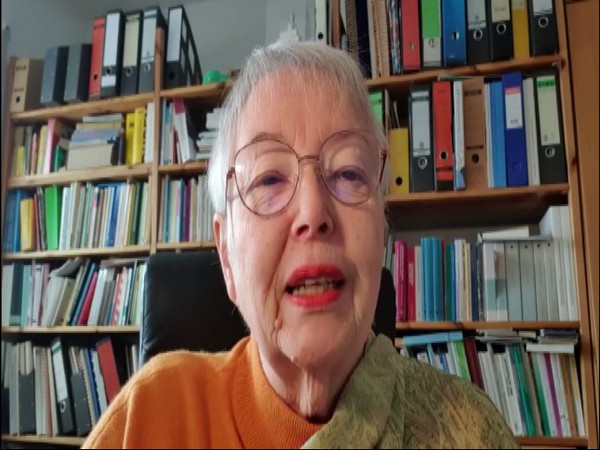
As Netaji Subhash Chandra Bose’s 126th birth anniversary was celebrated on January 23, his daughter Dr Anita Bose Pfaff on Monday requested all Indians to help in repatriating Netaji’s last remains from Taiwan.

“I request all Indians to support me to repatriate Netaji’s remains,” Dr Anita Bose Pfaff said while speaking to ANI.
“It is very unfortunate that he could not live to see free India. At least it would be a great substitute if his remains eventually could return to his motherland,” she added.

“And in that way, I support all men and women in India and invite them to participate in it,” she added.

She requested and invited all Indians to come forward and participate in helping her in repatriating Netaji’s last remains to India, his motherland.

“He (Netaji) could not set foot in free India. I wish at least his remains return to his motherland and find a final resting place. Documentation is proof that he died on August 18, 1945, in a plane crash in present-day Taiwan. I hope his ashes are brought back to the country,” added Netaji’s daughter when she spoke to ANI back in September 2022.

Netaji’s daughter also said while speaking to ANI on Monday that it was his (Netaji Subhash Chandra’s) dream that men and women of all castes and social strata lived equally in the country.

She said he can be honoured by putting up impressive statues, and naming islands for freedom fighters. She added, “If we are able to do that(gain equality), then that would be the greatest honour to him”.

“His only aim was to see a free India, he sacrificed his personal life and ultimately his own life for this goal. Countrymen will pay him for his sacrifice,” Dr Anita Bose Pfaff said.

She said that he can be honoured by putting up impressive statues, and naming islands, she further added that all that would make her happy but each and every human being should help each other for the betterment of each other’s lives.

Prime Minister Narendra Modi named the 21 largest unnamed islands of Andaman and Nicobar Islands after Param Vir Chakra awardees in a ceremony on Monday on the occasion of Parakram Diwas.

PM Modi also unveiled the model of the National Memorial dedicated to Netaji to be built on Netaji Subhas Chandra Bose Dweep, earlier known as Ross Islands. Union Home Minister Amit Shah was also present at the ceremony in Andaman and Nicobar Islands.

“This land of Andaman is the land where the tricolour was hoisted for the first time. Where the government of independent India was formed for the first time. Today is the birth anniversary of Netaji Subhash Bose. The country celebrates this day as Parakram Diwas, PM Narendra Modi said on Monday on the occasion of Parakram divas and Netaji’s 126th birth anniversary. (ANI)

Read more: http://13.232.95.176/

Kharge Announced To Implement Udaipur Declaration: Sachin Pilot

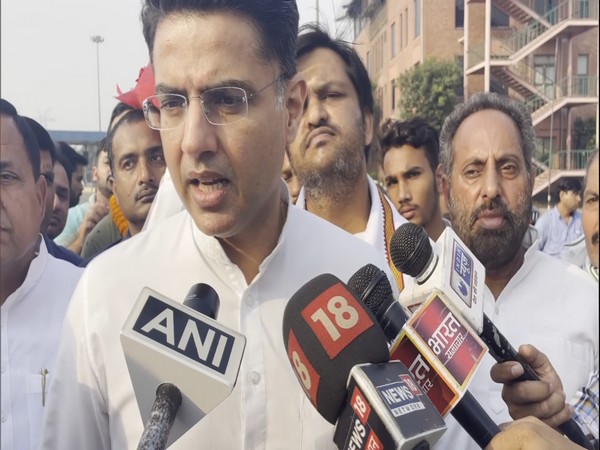
With Mallikarjun Kharge taking over at the helm of affairs in Congress, Sachin Pilot on Wednesday said that 50 percent of party posts would be given to party workers below 50 years of age as per Udaipur Declaration.

Sachin also reiterated that Sonia and Rahul Gandhi will always remain the leaders of the party.
Pilot, who arrived in Uttar Pradesh’s Noida earlier today, said that a message has been sent to the other parties through the election of Kharge as party president that Congress is capable of conducting free and fair elections.

“Mallikarjun Kharge has taken charge as the president of the party. It is a good sign for democracy that such a big election concluded successfully in such a large party. Congress has the ability to conduct fair elections with utmost transparency. Kharge has vast experience,” he said while speaking to the reporters.

“He has always worked as a worker of the Congress party. Sonia and Rahul Gandhi were and will always be leaders of our party, but we will fight all the challenges in front of us. We’ll start working for the upcoming elections,” he said while mentioning about the challenges in two states- Gujarat and Himachal Pradesh within this year, and then the 2024 Lok Sabha Polls.

“A message has been sent from Delhi that Congress has done something which no other party has done. Nobody knows how the BJP president is elected,” Pilot added.

Mentioning the Udaipur declaration that was adopted in May earlier this year in the three-day Chintan Shivir, Pilot said that Kharge would implement the declaration.

“The party has adopted the Udaipur declaration. Kharge Ji had announced to implement this as soon as he got elected. The party had passed a declaration with a consensus to give opportunities to the youth. The party will give 50 percent of the posts at all levels to those workers of the party who are below 50 years of age,” he said.

Soon after taking over the reins of Congress, Kharge said, “We decided at the Udaipur ‘Chintan Shivir’ to reserve 50 percent of the party posts for those below 50 years of age. We will move forward with that, with support from all of you.”

“We will defeat those who spread hatred,” he said, naming the ruling BJP and its parent body RSS as “those who want to divide India”.

Earlier today, Kharge, who succeeds Sonia Gandhi, said it was a matter of pride to carry forward the legacy of Congress.

“It’s an emotional moment for me. I want to thank Congress people for making a worker’s son, an ordinary worker, the president of Congress. It is a matter of pride to carry forward the legacy of the Congress,” he said.

The 80-year-old Congress veteran said that it was a matter of privilege and pride for him to handle the responsibility as a party that was led by leaders like Mahatma Gandhi, Jawaharlal Nehru, and Subhash Chandra Bose.

“As president, it will be my utmost duty to look after our workers. Together, we will build an India that will be enlightened, empowered, and equal for every citizen. We will uphold the Constitution of this country, respect everyone’s rights and give equal opportunities, defeat those who spread hate, and fight inflation, unemployment, and hunger,” he said. (ANI)

Read More:http://13.232.95.176/

Rajpath Gets A Makeover

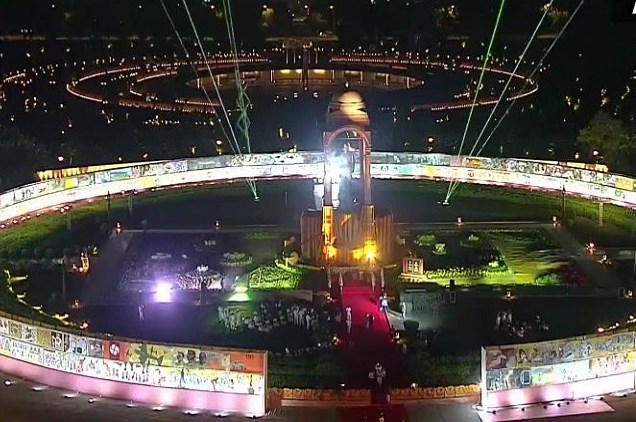
Modi Inaugurates Kartavya Path, Unveils Netaji Statue At India Gate

Inaugurating the ‘Kartavya Path’ at India Gate in the national capital, Prime Minister Narendra Modi on Thursday said a new era has begun in the form of Kartavya Path that will consign the symbol of colonialism ‘Kingsway’ to history.

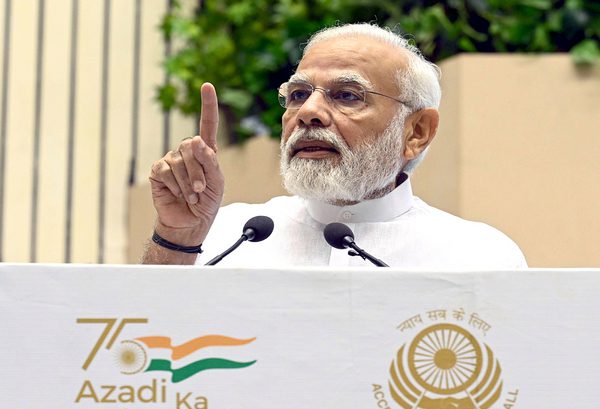
Speaking at the inauguration of the ‘Kartavya Path’, PM Modi said, “A new era has begun in the form of Kartvya Path. Symbol of colonialism ‘Kingsway’ will be history and has been erased forever. I congratulate all the people of the country as we come out from another symbol of colonialism.”

He said in the Amrit Mahotsav of Independence, the country has got new inspiration and new energy. “Today we are filling the picture of tomorrow, leaving behind the past, adding new colours to the picture of tomorrow. Today this new aura is visible everywhere, it is the aura of confidence of New India,” he said.

Prime Minister said the Rajpath was for the British Raj, to whom the people of India were slaves. He said Rajpath was also a symbol of slavery and its structure was also a symbol of slavery. “Today its architecture has also changed and its spirit has also changed,” PM stated.

PM Modi said a huge statue of Netaji Subhas Chandra Bose has also been installed near India Gate. At the time of slavery, he said there was a statue of the representative of the British Raj.

He said, “Kartavya Path is not just a road of bricks and stones. It is a living example of India’s democratic past and all-time ideals. When the people of the country come here, the statue of Netaji, the National War Memorial, all these will give them such a great inspiration, they will inculcate their sense of duty.”

“Today the country has also established the life of a modern, strong India by installing the statue of Netaji at the same place,” he said.

Prime Minister said the country has changed hundreds of laws that have been going on since the British era. The time and date of the Indian budget, which was following the time of the British Parliament for so many decades, has also been changed. Through the National Education Policy, he said now the youth of the country are being liberated from the compulsion of foreign language.

As a part of the Central Vista redevelopment project, PM Modi inaugurated the ‘Kartavya Path’ at India Gate on Thursday.

Before the inauguration, PM Modi interacted with the workers who were involved in the redevelopment project and told them that he will invite all of them who worked on the Central Vista redevelopment project for the January 26 Republic Day parade.

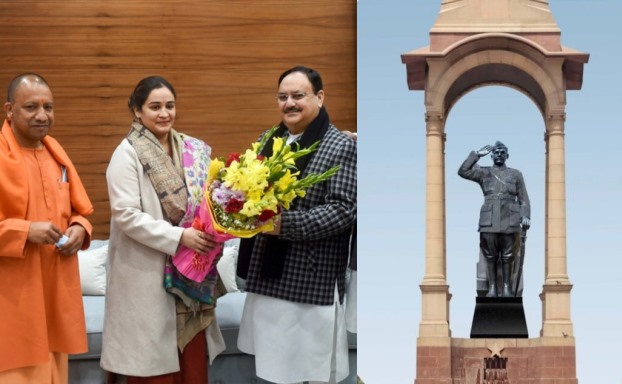
He also witnessed an exhibition on revamped Central Vista Avenue. Prime Minister Modi also unveiled a grand statue of Netaji Subhas Chandra Bose near India Gate today. The jet black granite statue, with a height of 28 feet will be placed under the Canopy near India Gate. According to Prime Minister’s Office (PMO), the move symbolises a shift from the erstwhile Rajpath being an icon of power to the ‘Kartavya Path’ being an example of public ownership and empowerment.

“These steps are in line with Prime Minister’s second Panch Pran for New India in Amrit Kaal: remove any trace of the colonial mindset,” said a PMO statement.

Over the years, Rajpath and adjoining areas of Central Vista Avenue had been witnessing pressure of increasing traffic of visitors, putting stress on its infrastructure. The PMO said that it lacked basic amenities like public toilets, drinking water, street furniture and adequate parking space. Further, there was inadequate signage, poor maintenance of water features and haphazard parking.

“Also, a need was felt to organise the Republic Day parade and other National events in a less disruptive manner with minimal restrictions on public movement. The redevelopment has been done bearing these concerns in mind while also ensuring the integrity and continuity of architectural character,” it said.

Kartavya Path will exhibit beautified landscapes, lawns with walkways, added green spaces, refurbished canals, new amenity blocks, improved signages and vending kiosks. Further, new pedestrian underpasses, improved parking spaces, new exhibition panels and upgraded night lighting are some other features that will enhance the public experience.

It also includes a number of sustainability features like solid waste management, stormwater management, recycling of used water, rainwater harvesting, water conservation and energy-efficient lighting systems, among others. (ANI)

National Logistics Policy

Modi To Inaugurate Unveil Statue Of Netaji At India Gate Tomorrow

Prime Minister Narendra Modi will inaugurate ‘Kartavya Path’ and unveil a statue of Netaji Subhash Chandra Bose at India Gate at 7 pm on Thursday.

According to a statement by the Prime Minister’s Office, the move symbolises a shift from erstwhile Rajpath being an icon of power to Kartavya Path being an example of public ownership and empowerment.
“Prime Minister will also unveil the statue of Netaji Subhash Chandra Bose at India Gate on the occasion. These steps are in line with Prime Minister’s second Panch Pran for New India in Amrit Kaal: remove any trace of colonial mindset,” the statement said.

Over the years, Rajpath and adjoining areas of Central Vista Avenue had been witnessing pressure of increasing traffic of visitors, putting stress on its infrastructure. The PMO said that it lacked basic amenities like public toilets, drinking water, street furniture and adequate parking space. Further, there was inadequate signage, poor maintenance of water features and haphazard parking.

“Also, a need was felt to organise the Republic Day parade and other National events in a less disruptive manner with minimal restrictions on public movement. The redevelopment has been done bearing these concerns in mind while also ensuring the integrity and continuity of architectural character,” it said.

Kartavya Path will exhibit beautified landscapes, lawns with walkways, added green spaces, refurbished canals, new amenity blocks, improved signages and vending kiosks. Further, new pedestrian underpasses, improved parking spaces, new exhibition panels and upgraded night lighting are some other features that will enhance the public experience.

It also includes a number of sustainability features like solid waste management, stormwater management, recycling of used water, rainwater harvesting, water conservation and energy-efficient lighting systems, among others.

The statue of Netaji Subhash Chandra Bose, which will be unveiled by the Prime Minister, is being installed in the same place where a hologram statue of Netaji was unveiled earlier this year on Parakram Diwas (January 23) by him.

The statue, made of granite, is a fitting tribute to the immense contribution of Netaji to our freedom struggle and would be a symbol of the country’s indebtedness to him.

Crafted by Arun Yogiraj, who was the main sculptor, the 28 feet tall statue has been carved from a monolithic granite stone and weighs 65 MT. (ANI)

Weekly Update: Time to Scrap Anti-Defection Laws; A Netaji Redux

The mockery of India’s anti-defection law for political parties is never as pronounced as it is before elections–whether they are at the state level for assemblies or for Parliament. Defections by elected political representatives, other leaders, and even sitting ministers have become so common that people are so accustomed to them that they take the phenomenon as given, a political vagary that has become almost intrinsic to the electoral process. It has become like an accepted culture of changing stripes for political opportunism.

The anti-defection law itself, passed first in 1985, could seem porous. For instance, mergers of a group of members of one political party to another is not considered a defection. However, individuals switching parties before elections could fall under its purview. Even so, punitive or other actions against such defections have been few and far between. And political parties, before, during, and after elections, commonly indulge in what has come to be known as “horse-trading” in which political parties entice members of other parties either through pecuniary incentives or the promise of power and position to switch sides, mainly with the intention of shoring up their support in assembly or in Parliament.

Thus, in India, the practice has become a norm. This year seven states, including Uttar Pradesh, Punjab, and Goa, will hold elections and already there has been a spate of defections–some high profile and others not so. The lines between inter-party ideologies and beliefs seem to be getting blurred and it is not rare to find politicians crossing over to parties that they hitherto opposed on grounds of ideology. Congress leaders have hopped across to what was till the other day an arch rival, such as the Bharatiya Janata Party; in Uttar Pradesh, Samajwadi Party (known for its inclusiveness of minorities) members have jumped ship to the BJP. In Bengal, Leftist party members have joined arch rivals, the Trinamool Congress, and so on.

Defections have become so rife that it probably doesn’t make sense for an anti-defection law to exist any longer, at least not in its current form. The other trend emerging in India is the rise of individual personality based politics over that of party-dominant politics. The trend really began with Prime Minister Narendra Modi’s rise to power in 2014 when he won the parliamentary elections with a distinctly presidential sort of campaign. The BJP’s win then (and subsequently, in 2019) can be construed as victory not so much by the party but that of a powerfully projected leader, Modi.

In the wake of that, strong personality led politics is becoming a trend in the states as well. In Bengal, Mamata Banerjee who is serving her third term is one such personality. In Kerala, M.K. Stalin is emerging as one; and in Odisha, Naveen Patnaik, who has been chief minister since 2000, is one. So is Arvind Kejriwal in Delhi. As regional politicians begin spreading their wings–Bengal’s Banerjee is eyeing other states such as Goa; Kejriwal has tried making forays in Punjab and other northern states–more such strong individual-driven political strategies could emerge. In such a scenario, the anti-defection law really makes little sense because politics in India is becoming less ideology driven and more powerful individual led.

The Enigma of Subhash Chandra Bose

For anyone who has lived in Bengal, the reverence bestowed by Bengalis towards Subhash Chandra Bose will be familiar. Every year on January 23, which is Bose’s birth anniversary (he was born in 1897) there is near religious fervour in the celebrations on that day. Besides official functions, on nearly every street corner there are shrine-like installations–of Bose’s portraits and busts. The national flag is hoisted and loudspeakers blare patriotic songs. In fact, the days, starting with January 23 and ending with Republic Day on January 26, are like an extended period of celebration.

Bose, who defied India’s erstwhile British rulers, is a hero among many Indians but nationally, at least officially, many believe that he has not got his due respect. This year, which happens to be his 125th birth anniversary, the chief minister of Bengal, Mamata Banerjee, has demanded that the Centre should declare it as a national holiday. And Prime Minister Modi has announced that a new statue of Bose will be installed at India Gate. Till that happens, there will be a hologram installation of Bose’s likeness.

The controversy over Bose owes its genesis to the early 1940s when he fell out with Mahatma Gandhi and, later, reached out to Nazi Germany in his quest to obtain funding and support for a Free India movement. He also collaborated with the then fascist Japan, using Japanese help to revamp the Indian National Army (INA). It is the connections with Germany and Japan of that era that have been problematic in the legacy of Bose.

Back in Bengal though, Bose has a deity-like status and while the Modi government’s decision to install his statue has been welcomed, the Bengal government’s view is that much more should be done to give their hero his due. Some even believe that the statue proposal may be a kind of political overture directed at Bengalis by the BJP-led central government–which strongly opposed by the Trinamool led Bengal government.